
Securing an oahu construction loan in 2026 requires getting your building permit *before* locking your interest rate. With Honolulu’s Department of Planning and Permitting (DPP) now taking an average of 11 months for a new home permit[1], and most lender rate locks expiring in just 90-120 days, the old way of financing a build is completely broken. Consequently, you must strategically time your financing to avoid costly rate lock extensions. Even worse, you could lose your rate entirely and have to re-qualify at a higher one. This is the new, unavoidable reality of building on Oahu.
For over two decades, our team at Warrior Construction has helped families navigate the unique challenges of building in Hawaii. Frankly, the financing piece has never been this complicated. The growing disconnect between the city’s timeline and the bank’s timeline has created a financial trap. This trap can cost homeowners tens of thousands of dollars if they don’t have a solid game plan for their oahu construction loan. We’ve seen it happen, and it’s heartbreaking. A client gets excited, locks a decent rate, and then helplessly watches it expire six months into the permit waiting game.
This guide is the exact conversation we have with our clients over coffee before we even start designing their home. It’s a strategic playbook based on what’s working right now, in 2026, with local lenders like First Hawaiian Bank and Central Pacific Bank. We’ll walk you through why the process has changed, how to perfectly time your rate lock, and what financial requirements you need to meet. This is your contractor’s insider guide to successfully funding your dream home without getting caught in the timing trap of a modern oahu construction loan.
Why Is Getting a Construction Loan on Oahu So Difficult Right Now?
The core problem is a fundamental conflict. The timeline for getting permission to build from the City and County of Honolulu is now four times longer than the timeline a bank will guarantee your interest rate. This mismatch creates enormous financial risk for homeowners. For years, you could get a loan commitment, lock a rate, and reasonably expect to have a permit in hand before it expired. Unfortunately, those days are gone.
Furthermore, this timing issue has forced a major shift in how banks underwrite an oahu construction loan. They’ve been burned by issuing loans for projects that never break ground, tying up capital on projects stuck in permit limbo. As a result, they’ve pushed the risk back onto the borrower and the builder. Our team now has to present them with a project that is truly “shovel-ready.” This doesn’t just mean a concept; it means a fully designed, engineered, and, most importantly, *permitted* project.
The New Lender Playbook: Permitted Plans Required Upfront
Local Hawaii lenders have completely changed their rules. They will no longer process a full construction loan application with just a set of architectural drawings and a builder’s contract. As of 2026, major lenders on Oahu require the DPP-stamped, fully issued building permit *before* they will finalize the loan.[2] This is a critical shift in the process of obtaining an oahu construction loan.
Here’s what that means for you in practical terms:
- Significant Upfront Investment: You must pay for the entire pre-construction phase out of pocket, long before you have your financing secured. This includes architectural design, structural engineering, soil testing, surveyor fees, and DPP submission fees. For a typical custom home in Kailua or on the North Shore, this can easily be $50,000 to $100,000.
- No Financing Guarantee: You are spending this money without a 100% guarantee that the bank will approve your loan at the end of the 11-month permit wait. This is why a solid mortgage pre-approval is critical, but it’s not the same as a final commitment. Your financial situation must remain stable throughout the entire permitting process.
- Builder Partnership is Key: Lenders need to see that you’re working with a reputable, licensed contractor. They will scrutinize our bids and contracts to ensure the budget is realistic for the current market. A vague cost-plus estimate won’t fly anymore; they demand a detailed, fixed-price contract to approve any oahu construction loan.
Ultimately, this shift protects the bank, but it puts immense pressure on the homeowner. You’re carrying all the risk during the long pre-construction and permitting phase. A good design-build team can help mitigate this by ensuring your plans are engineered to budget and designed for permitability from day one. This significantly reduces the chance of costly revisions deep into the DPP review process.
The DPP Reality: An 11-Month Wait for Your Permit
Let’s be clear about the Honolulu DPP timeline. The 11-month figure is an *average* for a standard single-family home on a straightforward lot.[1] Our team finds this to be accurate for projects in areas like Kapolei or Ewa Beach. However, if your project has any complexity, that timeline stretches out fast. For a deeper dive into the city’s process, you can read our guide on navigating Oahu building permits.
Factors that extend your permit wait well beyond 11 months include:
- Location: Building in a Special Management Area (SMA) or flood zone, common in Kailua or along the North Shore, can add another 6-8 months for additional environmental and coastal reviews.
- Lot Conditions: Steep slopes, poor soil conditions from volcanic rock, or properties with existing unpermitted structures require more extensive engineering and review cycles with multiple departments.
- Design Complexity: Anything outside of a standard build—like a large cantilever, a basement, or a home requiring multiple zoning variances—will trigger reviews from more DPP departments, each with its own separate queue.
- Utility Requirements: Simply getting a water meter commitment from the Board of Water Supply can sometimes take months, and the DPP will not proceed without it. HECO reviews for new service can also add unexpected delays.
For example, we recently managed a project in Lanikai. Because it was in the SMA and involved a tear-down of an old home, the total time from initial submission to permit-in-hand was 17 months. If that client had tried to lock a rate at the beginning of the process, they would have paid for five or six rate lock extensions. This likely would have cost them over $15,000 for absolutely no benefit.
How Do You Time a Rate Lock with Honolulu’s Permit Delay?
So, how do you handle this critical timing issue? You must follow a specific sequence of operations. The key is to separate the loan *approval process* from the *rate lock*. You want to get the bank fully comfortable with you and your project, getting everything underwritten and ready to go. However, you do this without starting the 90-day countdown clock on your interest rate until the last possible moment. Think of it as getting the plane boarded and pushed back from the gate, but waiting for clearance from the tower before you fire up the engines.
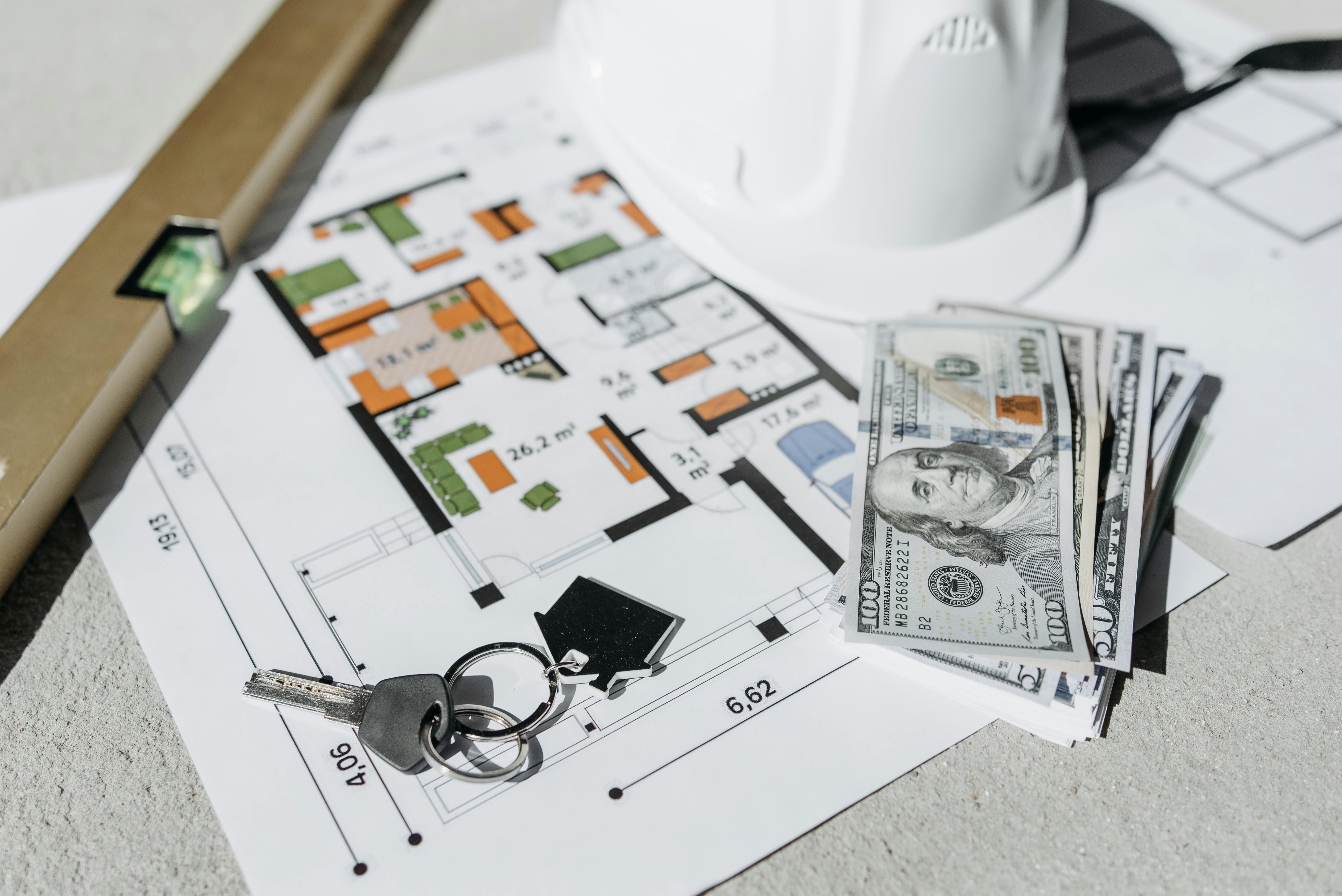
This strategic waiting game is the only way to safely secure an oahu construction loan in the current environment. It requires patience and a close partnership between you, your builder, and your loan officer. Rushing this step is the most common and costly mistake we see.
Step 1: Get Pre-Approved, But Don’t Lock Anything
This happens before you even finalize your architectural plans. A pre-approval is a lender’s initial assessment of your financial health—your income, assets, and credit score. It gives you a clear picture of your maximum borrowing power. Importantly, this is not a loan commitment, but it’s a critical first step. It tells us, your builder, what budget we need to design to.
During this preliminary phase, you should:
- Shop Lenders: Talk to at least three local lenders who specialize in construction loans. First Hawaiian, Central Pacific, and American Savings Bank all have experienced teams. Ask them specifically about their policy on locking rates relative to permit issuance for an oahu construction loan.
- Provide Financials: You’ll need to submit pay stubs, two years of tax returns, and bank statements. Be completely transparent about your financial picture.
- Establish a Budget: The lender will give you a pre-approval letter stating the maximum loan amount you qualify for. This number, combined with your cash down payment, sets the total “all-in” budget for your project (land, soft costs, hard costs, and contingency).
At this stage, you are only getting qualified. You are not applying for the final loan or locking in an interest rate. You’re just confirming you have the financial capacity to see the project through once it’s permitted.
Step 2: Submit to DPP and Wait (The Hard Part)
With your budget established, our team at Warrior Construction works with your architect to finalize the plans and all the required engineering. Then, we compile the entire package and submit it to the Honolulu DPP. And then… we wait. This is the 11+ month period where patience is everything.
During this long wait, you should be in constant communication with two parties:
- Your Builder: Our team will be tracking the permit’s progress through the DPP’s online portal. We actively respond to any comments or requests from their plan reviewers. This is an active process of nudging the application through the system.
- Your Loan Officer: Provide quarterly updates. Let them know the permit is still in process. It’s also vital to maintain your financial health during this time. Avoid changing jobs, taking on new debt (like a car loan), or having any major shifts in your credit profile. The bank will re-pull your credit and verify your employment just before funding, and any negative changes can derail your final approval for the oahu construction loan.
This is the most frustrating part of the process for homeowners. You’re spending money on rent or a mortgage for your current home, while your dream home project is just a file in a city queue. But trying to rush the financing at this stage is the costliest mistake you can make.
Step 3: Lock Your Rate When the Permit is 60 Days Out
Here is the critical move that makes the whole strategy work. Through our tracking of the DPP process, we can generally predict when a permit is moving into its final review stages. Once we get confirmation that all departmental reviews (building, zoning, grading, etc.) are complete and the permit is just waiting on final processing, we can estimate the issuance date with reasonable accuracy. This is usually when we’re about 45-60 days away from having the physical permit.
This is the moment to officially apply for the loan and lock your interest rate. Since a standard rate lock is 90 days, a 60-day runway gives you a 30-day buffer for any unexpected final delays. The process looks like this:
- Your Builder Gives the Green Light: We call you and your loan officer and say, “We’re in the home stretch. It’s time to lock.”
- Submit Final Application: You’ll provide the lender with updated financial documents, the signed fixed-price contract from us, and a copy of the near-final plans. This finalizes your application for the oahu construction loan.
- Lock the Rate: The lender will issue the final loan approval and you can lock in your interest rate, starting the 90-day clock.
- Permit Issuance & Loan Closing: Within the next 60 days, the DPP issues the permit. We provide that to the lender, who then schedules the loan to close. You now have your financing secured and a permit in hand, ready to break ground.
By waiting, you collapse the financing timeline into a predictable window that fits neatly inside the rate lock period. You avoid the stress and expense of extensions and the risk of market fluctuations over the long permitting wait. This is how you beat the timing trap for your oahu construction loan.
What Are the Current Requirements for an Oahu Construction Loan?
Understanding the financial benchmarks is just as important as the timing. Lenders have tightened their standards in response to increased building costs and economic uncertainty. When you approach a lender for an oahu construction loan in 2026, you need to be prepared for some significant requirements. The days of high-leverage construction financing are over, at least for now.
The Mandatory 25% Down Payment
The single biggest financial hurdle for most families is the down payment. Local lenders are firm on requiring a minimum of 25% equity in the project.[2] It’s crucial to understand how they calculate this. The 25% is based on the *total project cost*, which is the sum of the land value (or purchase price) and the total construction contract amount.
Let’s look at a real-world example:
- You own a lot in Kapolei appraised at: $800,000
- Our fixed-price contract to build your home is: $1,200,000
- Your Total Project Cost is: $2,000,000
- Your required down payment (25% of $2M) is: $500,000
If you own the land free and clear, the $800,000 in land equity can be used toward your down payment. In this case, you’ve already covered the $500,000 requirement and then some. This means you may not need to bring additional cash to closing. However, if you still have a $600,000 mortgage on the lot, you only have $200,000 in land equity. You would need to bring an additional $300,000 in cash to the table to meet the 25% threshold for your oahu construction loan.
Facing Today’s ~7.85% Interest Rates
Interest rates are a major factor in your overall budget. As of late 2026, we’re seeing rates for one-time close construction-to-permanent loans hovering around 7.85% for well-qualified borrowers.[2]
During the construction phase (typically 12-18 months), you only pay interest on the funds that have been drawn by your builder. For example, after we pour the foundation, we submit a draw request for that portion of the work. The bank then inspects our work and releases the funds. Your monthly payment is then calculated based on that drawn amount. As the house gets built and more money is drawn, your interest-only payments will gradually increase. Once the home is complete, the loan converts to a standard principal-and-interest mortgage for the remaining term (usually 29 years on a 30-year loan).
This rate makes the timing strategy even more critical. Locking in at 7.85% is one thing; having it expire and being forced to re-lock at 8.25% on a $1.5 million loan can add hundreds of dollars to your monthly payment for the next 30 years. This risk is a primary driver for correctly timing your oahu construction loan.
Why Lenders Demand a Fixed-Price Contract from Your Builder
A lender’s biggest fear is a project that goes over budget. If a contractor mismanages the funds or the costs spiral out of control, the bank is left with a half-finished house as collateral—a huge liability. To prevent this, they almost always require a fixed-price (or “stipulated sum”) contract when funding an oahu construction loan.
This means we, as your builder, agree to deliver the home as specified in the plans for a set price. This contract details every aspect of the build, from the foundation concrete mix to the brand of kitchen faucets. This gives the lender certainty about the total cost.
What this means for you:
- Less Risk: Cost overruns are the builder’s responsibility, unless you, the homeowner, make changes or additions (known as change orders).
- More Upfront Planning: A fixed-price contract requires that all decisions be made *before* construction starts. You’ll select every tile, fixture, and paint color during the design phase. This can feel overwhelming, but it’s essential for budget control and a smooth oahu construction loan process.
- Builder Scrutiny: The bank will vet your contractor. They’ll look at our license (BC-34373), our insurance, our financial stability, and our track record of completing projects on budget. Working with an established, reputable builder is non-negotiable from the lender’s perspective.
A Case Study: Financing a Custom Build in Kailua
Let’s make this real. Consider a client we recently worked with, the Tanaka family. They owned a lot in Kailua and wanted to build their dream 3,000 sq. ft. home. Here’s a breakdown of how they navigated the oahu construction loan process using our strategic approach.
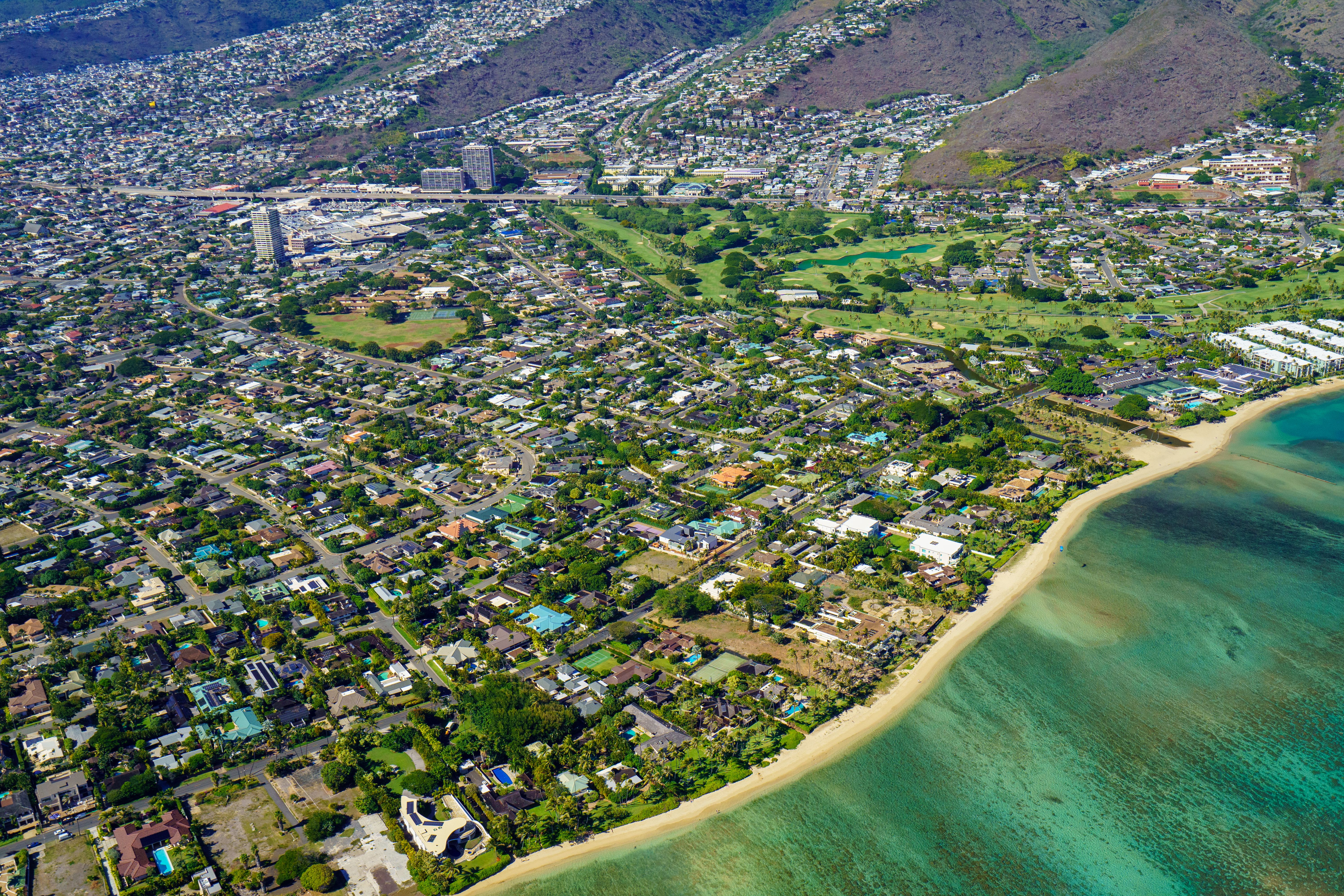
The Financial Picture:
- Land Value (Appraised): $1,500,000 (owned free and clear)
- Warrior Construction Contract: $2,100,000
- Total Project Cost: $3,600,000
- Required 25% Equity: $900,000
- Loan Amount Needed: $2,700,000
Because their land equity ($1.5M) far exceeded the required equity ($900k), they didn’t need to bring additional cash to closing for the down payment. However, they did need cash for soft costs.
The Timeline:
- Month 1: The Tanakas get pre-approved for a $2.7M loan. We use this to finalize their budget and begin architectural design.
- Month 3: Plans and engineering are complete. Total out-of-pocket soft costs for design and engineering: $85,000. We submit the full permit package to the Honolulu DPP.
- Months 4-15 (The Wait): The permit navigates the DPP review process. Because the property was in an SMA, it required extra reviews. During this year, the Tanakas provided quarterly financial updates to their loan officer but did not lock a rate.
- Month 16: We receive confirmation from the DPP that all departmental reviews are signed off. We estimate the permit will be issued in 45 days. We immediately call the Tanakas and their lender.
- Month 16.5: The Tanakas formally apply for their oahu construction loan and lock in their interest rate at 7.90% for 90 days. The bank completes its final underwriting.
- Month 18: The official building permit is issued by the DPP. We provide it to the bank.
- Month 18.5: The loan closes. We break ground the following week.
By waiting patiently, the Tanakas avoided paying for multiple rate lock extensions and eliminated the risk of rates rising during their 15-month permit review. Their successful oahu construction loan experience is a direct result of following this precise sequence.
What Other Hidden Costs Affect Your Construction Financing?
Beyond the primary loan, there are other significant costs that must be factored into your budget. Lenders will want to see that you have the cash reserves to cover these items, as they are essential for protecting their collateral—your future home. These aren’t optional add-ons; they are mandatory requirements for getting your oahu construction loan funded.
Builder’s Risk Insurance: The New 125% Coverage Rule
Builder’s risk insurance is a special policy that protects the home during the course of construction. It covers perils like fire, theft of materials, vandalism, and damage from storms. For years, the standard was to insure the project for 100% of the contract value. However, with rising material costs and the potential for long delays after a disaster, that’s no longer enough.
As of the 2026 hurricane season, underwriters in Hawaii are now requiring builder’s risk policies to provide coverage for 125% of the total contract value.[3] On a $1.2 million construction contract, this means you need a policy with a $1.5 million coverage limit. This increase is designed to cover:
- Cost Inflation: If a hurricane damages your half-built home, it might take 6-8 months to get materials and restart work. In that time, lumber and labor costs could rise. The extra 25% ensures there’s enough money to finish the job at the new, higher prices.
- Debris Removal and Demolition: A standard policy might not cover the full cost of tearing down a damaged structure and clearing the site before rebuilding can even begin.
- Soft Costs: The extra coverage helps pay for things like new architectural plans, engineering inspections, and permit renewal fees that are necessary after a major event.
This increased coverage has also led to higher premiums, which have jumped about 15% this year. For a typical custom home, you should budget between $15,000 and $25,000 for the builder’s risk policy for the entire construction period. This is a key part of your oahu construction loan budget.
Covering Materials in Transit from the Mainland
Another crucial detail, especially here in Hawaii, is ensuring your builder’s risk policy covers materials while they are on a container ship or sitting at the port in Honolulu. A state DFI bulletin recently clarified that this coverage is mandatory. Given that 90% of our building materials are shipped in, this is a huge point of risk. For instance, your custom window package from the mainland could be worth $100,000. If something happens to that container, you need to be sure the insurance policy will pay for a replacement without derailing the project.
At Warrior Construction, our policy includes a robust ‘inland marine’ provision. This covers materials from the moment they leave the factory on the mainland until they are permanently installed in your home. When you’re comparing builders, this is a critical question to ask: “Does your builder’s risk policy cover my materials while they’re on the water and stored off-site?” If the answer is anything but a confident “yes,” it’s a major red flag for your oahu construction loan provider.
What this means for Hawaii homeowners
Navigating the current financing landscape for a custom home on Oahu is more like a strategic chess match than a simple application process. The long permit times and short rate locks have created a new set of rules you must play by to be successful. Rushing the process or trying to do things the ‘old way’ will lead to unnecessary costs and immense stress. A successful oahu construction loan is all about process and patience.
Here is your action plan:
- Embrace the New Sequence: First, accept that you must fund the entire design and permitting process out-of-pocket *before* securing your final loan. This is the biggest mental and financial shift. You should budget for $50k-$100k in these upfront soft costs.
- Build Your Team Early: Next, partner with a design-build firm like us from day one. We can guide you through the process, ensure your design is aligned with your pre-approved budget, and manage the long DPP wait on your behalf.
- Be Patient and Strategic with Your Rate Lock: Most importantly, do not get tempted to lock a rate early. Trust your builder to give you the signal when your permit is approximately 60 days from issuance. This is the single most important timing decision you will make in the entire oahu construction loan journey.
- Prepare for a 25% Down Payment: Start organizing your finances now. The 25% equity requirement is firm. Understand whether your land equity will cover this or if you need to bring additional cash to closing.
- Don’t Forget the ‘Other’ Costs: Finally, budget for a comprehensive builder’s risk policy (at 125% of contract value). Additionally, ensure you have a 10-15% contingency fund set aside for unforeseen site conditions or desired upgrades. Your lender will want to see this liquidity before approving the loan.
Building a home here is a marathon, not a sprint. By understanding the new rules of the road for an oahu construction loan, you can navigate the process smoothly, protect yourself financially, and turn your vision into a reality.
Frequently Asked Questions
Can I get an Oahu construction loan with less than 25% down?
For a conventional oahu construction loan from a major local bank, it’s highly unlikely in 2026. The 25% equity position (down payment) is a standard underwriting requirement to mitigate the bank’s risk. The only common exception is a VA construction loan for qualified veterans, which can sometimes be secured with a lower down payment, but these have their own specific set of builder approvals and appraisal requirements.
What happens if my rate lock expires before my permit is issued?
If your rate lock expires, you have two unfortunate options. You can pay the lender a fee to extend the lock, typically costing 0.25% to 0.5% of the loan amount for a 30-day extension. On a $1.5M loan, that’s $3,750 to $7,500 per month. Alternatively, you can let it expire and ‘float down’ to the current market rate when your permit is ready. If rates have gone up, this could permanently increase your monthly payment for the life of the loan.
How much are the soft costs I need to pay before getting my Oahu construction loan?
You should budget approximately 8-12% of your total construction cost for upfront soft costs before getting your oahu construction loan. On a $1 million build, this means having $80,000 to $120,000 in cash available. This covers architectural design, structural engineering, soil reports, surveys, environmental studies (if needed), and all DPP permit application and review fees. You will spend this money long before the bank provides any funding.
Does a one-time close construction loan have a higher interest rate?
Yes, typically a one-time close (or construction-to-permanent) loan has a slightly higher interest rate—perhaps 0.125% to 0.25% higher—than a standalone mortgage on an existing home. You are paying a small premium for the convenience of closing only once and for the bank locking in your permanent mortgage rate before construction even begins. This eliminates the risk of having to re-qualify for a mortgage at a potentially higher rate once the home is built.
Why is a fixed-price contract so important for custom home financing Oahu?
Lenders for custom home financing oahu require a fixed-price contract because it defines their risk. The contract guarantees the home will be built for a specific total cost, allowing the bank to underwrite a loan for a known amount. A ‘cost-plus’ contract, where the final price is unknown, is seen as too risky for lenders as there’s no ceiling on potential budget overruns. A fixed-price contract protects both the bank and the homeowner from uncontrolled cost escalation, a key requirement for any oahu construction loan.
How does the Honolulu DPP permit time impact the overall building a house on Oahu cost?
The long honolulu dpp permit time adds significant indirect costs to the total building a house on Oahu cost. While waiting 11+ months for the permit, you are still paying property taxes on your land. You are also paying rent or a mortgage on your current residence. Furthermore, construction material and labor costs can escalate during that period, potentially increasing the final contract price if you haven’t locked it in with your builder early in the design process.
Is a construction loan rate lock Hawaii different from a regular mortgage rate lock?
Yes, a construction loan rate lock hawaii is more complex. While it also secures your interest rate for a set period (usually 90-120 days), it applies to a loan that will be disbursed in stages (draws) over many months. The lock is for your permanent financing, but it must be secured before the first draw. This is why the timing relative to permit issuance is so critical for your oahu construction loan, unlike a simple 30-day lock for buying an existing home.
Can I use a HELOC instead of a full Oahu construction loan?
For smaller renovations, possibly. However, for a new build or major gut renovation, a HELOC is generally insufficient and not preferred by builders. A proper oahu construction loan has a structured draw schedule, inspections, and lien releases that protect all parties. A HELOC often doesn’t provide enough capital and lacks the oversight needed for a large-scale project, making it riskier for both you and your contractor.
Start Your Custom Home Journey the Right Way
Navigating the complexities of an oahu construction loan and the DPP is the first, and most critical, phase of any successful build. Getting the strategy wrong can cost you tens of thousands in fees and interest before a single nail is hammered. At Warrior Construction, our pre-construction planning is designed to align your design, budget, and financing timeline from the very beginning.
If you’re ready to build a custom home and want a team that understands the intricate financial and permitting landscape of Oahu, we’re here to help. Start planning your custom home with a team that has the experience to guide you through today’s challenges.


