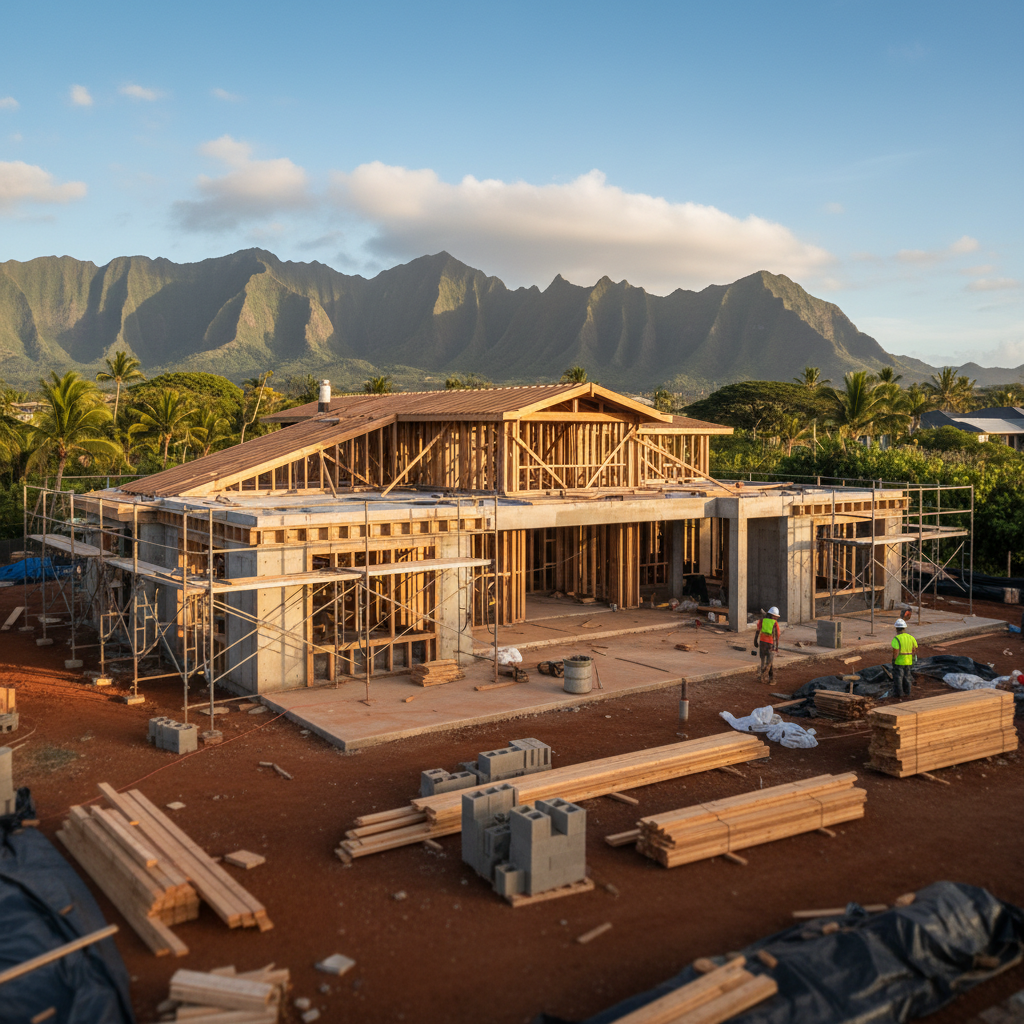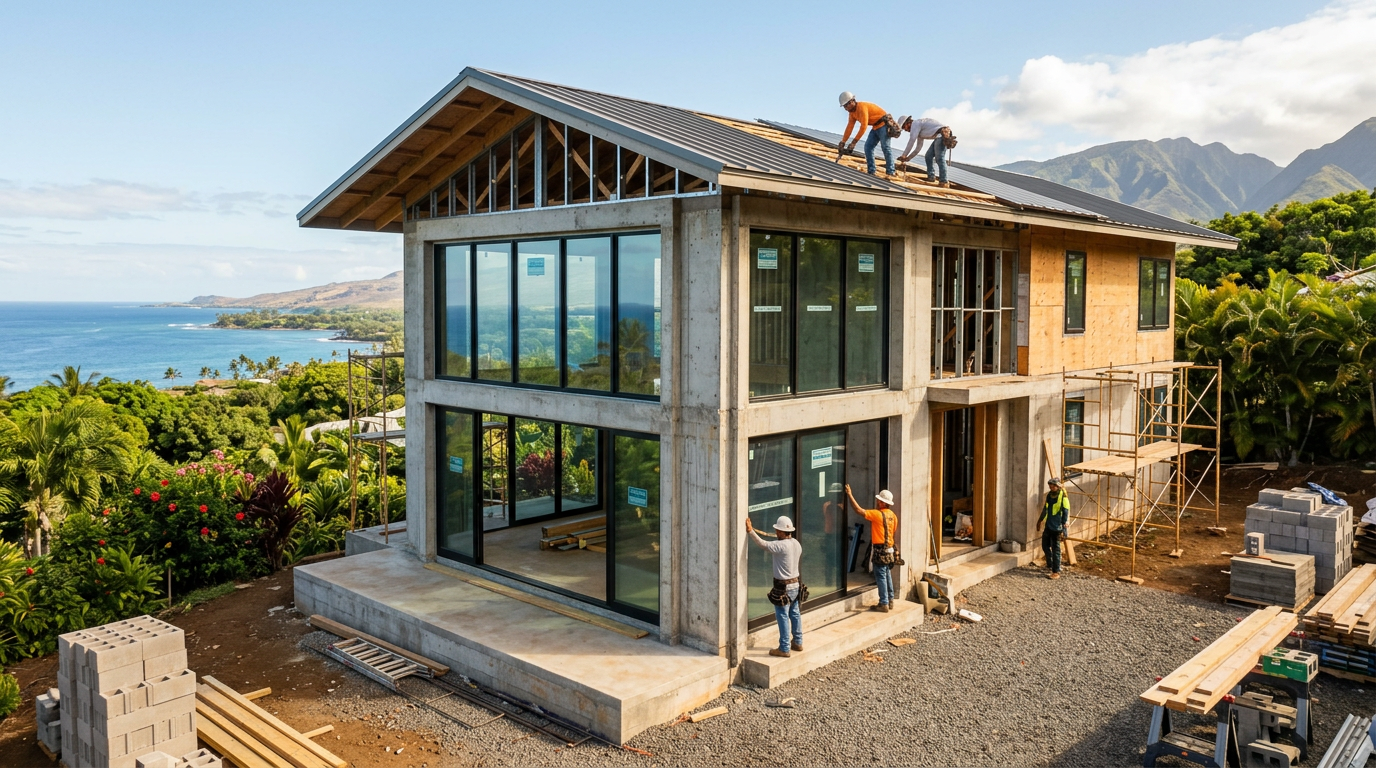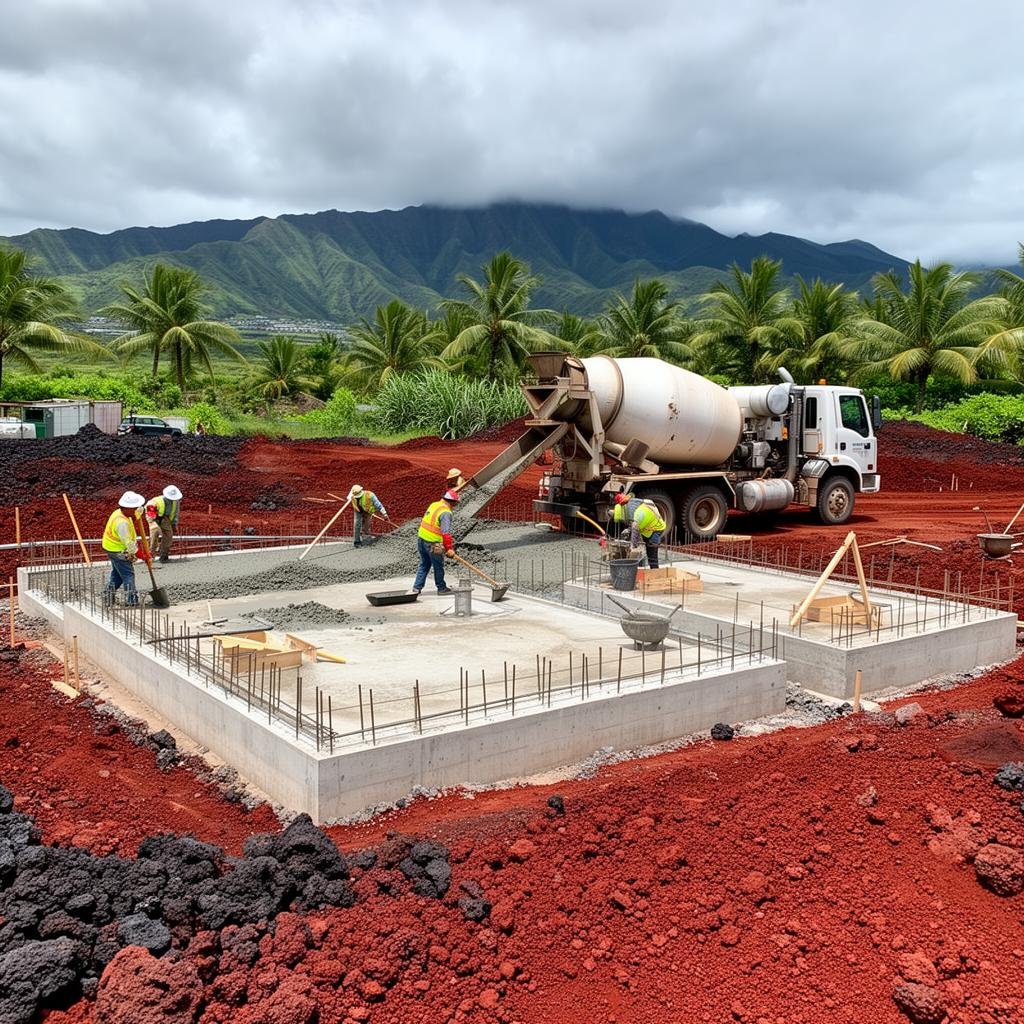
Building on Oahu’s volcanic soil presents unique foundation engineering challenges that mainland contractors and homeowners rarely encounter. Understanding how Hawaii’s geological conditions affect foundation design and concrete construction is essential for any building project on the islands — and for ensuring your investment stands for generations.
Hawaii’s Volcanic Soil: What Builders Need to Know
Oahu’s soils are derived from volcanic basalt and range dramatically in engineering properties across the island. Key characteristics that affect foundation design include:
- Expansive clays — Common in central and leeward Oahu; these soils expand when wet and contract when dry, causing differential foundation movement
- Residual soils over basalt — Variable depth to bedrock creates complex bearing capacity challenges
- Decomposed basalt — Can have deceptively high bearing capacity but dissolve when water paths change
- Fill soils — Much of Honolulu’s coastal development is built on engineered fill over coral and organic material
- High groundwater — Coastal and low-lying areas have shallow groundwater requiring special foundation waterproofing
Foundation Types for Hawaii’s Soil Conditions
The appropriate foundation type depends on soil conditions discovered through geotechnical investigation:
- Conventional spread footings on competent soil: Standard for areas with good bearing capacity and low expansive clay content
- Post-tensioned slabs: Preferred for areas with expansive clays; the PT cables hold the slab together and prevent differential cracking
- Deep foundations (piles or piers): Required when surface soils are inadequate — either drilled piers to bedrock or driven friction piles
- Mat foundations: Distributes loads over a large area; used for heavier structures or poor soil conditions
The Importance of Geotechnical Investigation
Before designing any foundation on Oahu, a geotechnical investigation (soil borings or test pits) is strongly recommended and often required by the structural engineer. A proper geo report includes:
- Soil boring logs with material descriptions and Standard Penetration Test (SPT) data
- Laboratory testing for Atterberg limits, swell potential, and bearing capacity
- Groundwater depth and seasonal variation
- Foundation recommendations with allowable bearing capacity
- Seismic Site Classification per ASCE 7
Concrete Mix Design for Hawaii’s Environment
Concrete mix design for Hawaii foundations must account for several environment-specific factors:
- Salt air exposure: Minimum 3-inch concrete cover over rebar (more in severe coastal exposure zones)
- High temperatures: Water-reducing admixtures to maintain workability without increasing water-cement ratio
- Sulfate exposure: Type V cement or sulfate-resistant mix in areas with high sulfate soils
- High volcanic aggregate absorption: Mix designs must account for Hawaii aggregate’s higher water absorption than mainland stone
Warrior Construction’s Foundation Expertise
Warrior Construction self-performs all concrete foundation work with crews experienced in Oahu’s specific soil and climate conditions. We work with licensed geotechnical engineers on every project, ensuring the foundation design matches the site’s actual soil conditions — not a generic mainland specification. Our foundation work carries a 10-year structural warranty.
Frequently Asked Questions
- Is a soil test required before building on Oahu?
- While not always mandated for small projects, most structural engineers require a geotechnical report before designing foundations. DPP may also require it for larger projects or in areas with known problematic soils. Skipping the geo report to save $3,000–$8,000 upfront often leads to foundation problems costing tens of thousands to repair.
- What is a post-tensioned slab and when is it used in Hawaii?
- A post-tensioned (PT) slab contains steel cables (tendons) that are tensioned after the concrete cures, putting the slab in compression. This makes it much more resistant to cracking from expansive soils — a common problem in central and leeward Oahu. PT slabs are the preferred foundation type throughout much of Ewa Beach, Mililani, and Kapolei.