
“
Yes, a structural lanai addition is one of the smartest upgrades a military family can make during a three-year tour on Oahu—but only if you begin the process the moment your boots hit the ground. The single biggest mistake we see is waiting a year to settle in before calling a contractor. Here in Hawaii, that delay means you’ll be listing your home for sale before the project is even finished. An Oahu PCS lanai investment requires a precise strategy that front-loads the longest part of the process: the government paperwork.
For many military homeowners we work with, the goal is twofold: dramatically improve your family’s quality of life for the short time you’re stationed here and generate a positive return on investment (ROI) when you get your next set of orders. A well-designed, properly permitted covered lanai achieves both. It transforms a sun-scorched Ewa Beach backyard into a true extension of your living space and creates a major selling point in a market where move-in ready homes are king. According to the Honolulu Board of REALTORS, the average single-family home is going into escrow in just 18 days[1], and properties with high-quality outdoor living spaces are often the first to go.
This playbook lays out the real-world timeline and budget you need to understand. We’ll walk through the three critical phases, from the initial design decisions in your first six months to navigating the notoriously slow Honolulu Department of Planning and Permitting (DPP), and finally, the construction itself. This isn’t theoretical; it’s the on-the-ground reality of building in Hawaii right now, based on our 20+ years of experience helping military families maximize their home value within a tight PCS window.
Is Adding a Lanai a Smart Investment for a 3-Year PCS Tour on Oahu?
Absolutely, adding a covered lanai is a smart financial move, provided the project is planned with military precision from your arrival date. The return isn’t just in dollars and cents at resale; it’s in the immediate lifestyle upgrade for your family. However, the success of your Oahu PCS lanai investment hinges entirely on understanding the timeline. You are racing against a fixed departure date, and the biggest hurdle isn’t the build time—it’s the permit approval time.
Outdoor living isn’t a luxury in Hawaii; it’s a fundamental part of the culture. Buyers, especially those new to the islands, expect it. When a family is looking at two similar homes in Kapolei or Ewa Beach, the one with a finished, covered lanai where they can immediately envision themselves grilling, hosting, and watching their kids play will always have the edge. It removes a major project from their to-do list and allows them to start enjoying the island lifestyle from day one. This emotional appeal translates directly into a higher perceived value and a faster sale.
Furthermore, from a pure numbers perspective, the ROI is solid. The cost of the addition is often recouped, and in many cases, exceeded by the increase in the home’s market value. We consistently see homes with quality outdoor living spaces sell faster and for a premium compared to their neighbors who only have a concrete slab or a patch of grass. This is especially true in the competitive Ewa Beach and Kapolei markets, which are heavily populated by military families who value move-in ready convenience. Think about it: a potential buyer who is also on a 3-year tour doesn’t have time to undertake a major construction project. They will pay more for a home that is already complete. A strategic Oahu PCS lanai investment capitalizes on this market dynamic.
The Catch: You Have to Start on Day One
Here’s the critical piece of advice we give every military family: you cannot wait. The typical homeowner mindset of “let’s live here for a year and see what we want” does not work with a 36-month PCS clock. Because of the lengthy Honolulu building permit timeline, you must commit to the project within your first few months on the island to ensure you have at least a full year to enjoy the space before you need to list it for sale.
If you close on your house in January, you should be meeting with design-build contractors like us by March at the latest. Waiting until the fall or the following year means you’ll be signing construction contracts around the same time you’re getting your next duty station assignment. The playbook works, but only if you follow the schedule.
What’s the Realistic Timeline for a Lanai Project in Hawaii?
The total timeline for a structural lanai addition, from our first conversation to your first barbecue, is roughly 20 months. This shocks many homeowners who assume the construction itself is the longest part. In reality, the build is the shortest phase. The administrative and permitting process is what consumes the majority of your 3-year tour.
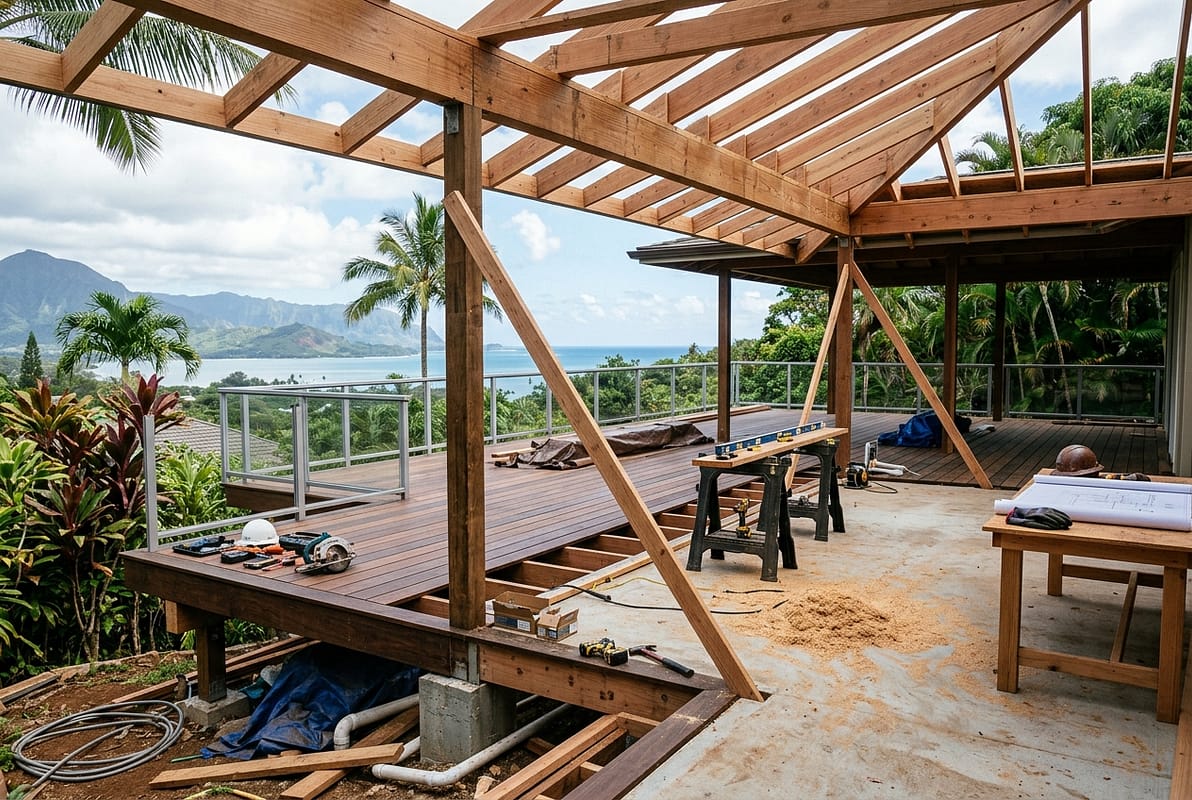
Here’s how that 20-month timeline breaks down against your PCS window:
Phase 1 (Months 1-6): Decision, Design & Engineering
This is the critical planning phase where you move with purpose. As soon as you have your keys, the clock is ticking. You’ll work with our design-build team to translate your vision into permit-ready construction documents.
- Conceptual Design (Weeks 1-4): We’ll sit down with you to discuss how you want to use the space. Is it for dining? An outdoor living room? A play area for the kids? We’ll look at your property survey to understand setbacks and lot coverage limitations. We develop initial sketches and 3D renderings so you can visualize the final product.
- Material Selection (Weeks 5-8): We guide you through choosing materials that can withstand Hawaii’s unique environment. This includes things like Trex composite decking versus traditional wood (which requires more maintenance), the type of roofing to match your existing home, and whether you want to use stainless steel fasteners to combat salt air corrosion, especially on the Windward side or in Ewa.
- Structural Engineering (Weeks 9-16): Once the design is finalized, our structural engineer gets to work. This is a non-negotiable step for a roofed structure. They will calculate the required footing depths based on your soil type, the size of the beams needed to support the roof, and, most importantly, the hurricane tie-down system required to meet Oahu’s stringent building codes. This engineering work is what the DPP plan reviewer will scrutinize the most.
- Final Construction Documents & Permit Package (Weeks 17-24): Our team consolidates all the architectural drawings, engineering calculations, and required forms into a comprehensive package ready for submission to the Honolulu DPP. By the end of your sixth month on island, your application should be officially in the queue.
Phase 2 (Months 7-16): The 9-Month Honolulu DPP Permit Wait
This is the most frustrating phase for homeowners, and it’s completely out of our hands. Once we submit your permit application, we enter the DPP’s review queue. The current average wait time for an initial review of a residential addition in 2026 is a staggering nine months.[2]
During this period, there is very little to do but wait. The application moves through various departments for review—building, zoning, electrical, and sometimes wastewater management. If a plan reviewer from any department has a question or requires a minor clarification (which is common), they send it back, and it can add weeks or even months to the timeline. A good design-build firm anticipates these common questions and provides as much detail as possible upfront to minimize back-and-forth.
Our team proactively tracks the permit’s status through the city’s online portal and maintains communication with the DPP, but the timeline is ultimately dictated by their workload and staffing. This nine-month waiting period is the single biggest reason why starting your Oahu PCS lanai investment on day one is essential. This is the immovable block of time your entire project schedule must be built around.
Phase 3 (Months 17-20): The 4-Month Build
Once we have that precious building permit in hand, our construction team can finally get to work. A typical 250-square-foot covered lanai build takes about 16 weeks, or four months. The efficiency here comes from the detailed planning done back in Phase 1.
Here’s a typical construction sequence:
- Week 1-2: Site Prep & Footings: We mark out the lanai footprint and excavate for the concrete footings. Inspections are required before we can pour concrete, ensuring the depth and steel reinforcement meet the engineered plans.
- Week 3-6: Framing: The main structure goes up. This includes setting the posts, installing the main support beams, and framing the roof structure. You’ll see the space take shape very quickly during this stage.
- Week 7-9: Roofing & Rough-In: We install the sheathing, waterproofing membrane, and roofing material to match your home. At the same time, our licensed electrician will run conduit for any planned outlets, ceiling fans, or lighting.
- Week 10-12: Finishes: This is where the details come together. We install the decking, wrap the posts, install the ceiling finish (like tongue-and-groove or beadboard), and any railings required by code.
- Week 13-15: Electrical Trim & Painting: The electrician returns to install the fixtures, switches, and outlets. Our painting crew then comes in to prime and paint everything to your specifications.
- Week 16: Final Inspections & Punch List: We schedule the final inspections with the city inspector. Once they sign off, we do a final walkthrough with you to identify any minor adjustments (the “punch list”). After those are complete, the project is officially done.
By following this timeline, construction is complete around your 20th month on island. This gives your family a solid 12-16 months to enjoy your beautiful new outdoor living space before it’s time to start thinking about your next PCS.
How Much Does a Covered Lanai Cost on Oahu in 2026?
A professionally designed and built 250-square-foot covered lanai in an area like Ewa Beach or Kapolei will cost approximately $45,000 in 2026. This works out to about $180 per square foot, which is a realistic, all-in number that includes design, engineering, permits, materials, and labor. While every project is unique, this figure serves as a solid baseline for a quality, structural addition that will add real value to your home.
It’s crucial for military homeowners to understand what’s included in that price. This isn’t just for a simple deck. This is a permanent, roofed structure tied into your existing home, built to withstand hurricane-force winds, and fully permitted by the city. The lanai addition cost Oahu residents face is driven by factors unique to our island market.
Breaking Down the $45,000 Budget for a 250 sq. ft. Ewa Beach Lanai
To understand where the money goes, let’s look at a typical budget breakdown. This isn’t a guess; this is what we see on our project cost sheets every day.
- Design, Engineering & Permitting (~$8,000): This covers the architectural plans, the structural engineer’s calculations and stamp, and all the fees associated with submitting and managing the permit application with the Honolulu DPP.
- Concrete & Foundation (~$7,500): This includes excavation, reinforcing steel (rebar), and the concrete itself for the footings and slab. Concrete is expensive in Hawaii due to shipping costs for raw materials, with prices having increased 7% over the last year alone.[3]
- Lumber & Framing Materials (~$10,000): This is the largest material cost. It includes all the pressure-treated lumber for the posts, beams, joists, and roof structure, as well as the required hurricane straps and structural hardware.
- Roofing (~$5,500): This line item covers the cost to match your existing roof, whether it’s asphalt shingles or standing seam metal, including the underlayment and flashing to ensure a watertight connection to the house.
- Electrical (~$4,000): This provides for a licensed electrician to install two outdoor-rated ceiling fans, four recessed lights, and two GFCI outlets, all run back to your main electrical panel.
- Finishes & Paint (~$3,000): This includes post wraps, a simple beadboard ceiling, and professional painting.
- Labor & Project Management (~$7,000): This covers our skilled carpentry crew, project supervision, site cleanup, and the general overhead required to run a licensed and insured construction company in Hawaii.
Why Material & Labor Costs Keep Rising in the Islands
The numbers above often surprise families moving from the mainland. Everything costs more here, and it’s not just the “paradise tax.” The reality of building on an island chain 2,500 miles from the nearest continent means every single two-by-four, every bag of concrete mix, and every box of screws has to be shipped here. Those logistics add significant cost.
Furthermore, skilled labor is a premium resource on Oahu. We have a limited pool of experienced, licensed tradespeople—carpenters, electricians, masons—and the demand for their services is incredibly high. At Warrior Construction, we believe in paying our team well to attract and retain the best talent. That commitment to quality is reflected in the final project cost but ensures your project is built right the first time, which is essential when you’re on a tight PCS schedule.
How Does a New Lanai Increase My Home’s Resale Value?
A new, permitted lanai directly increases your home’s resale value by creating a turnkey outdoor living space that buyers are actively seeking, which allows your property to sell faster and at a premium compared to similar homes without one. In a fast-paced market where homes sell in an average of 18 days[1], this is a significant competitive advantage. The ROI home improvement Hawaii buyers respond to most is one that enhances the island lifestyle they are moving here to enjoy.
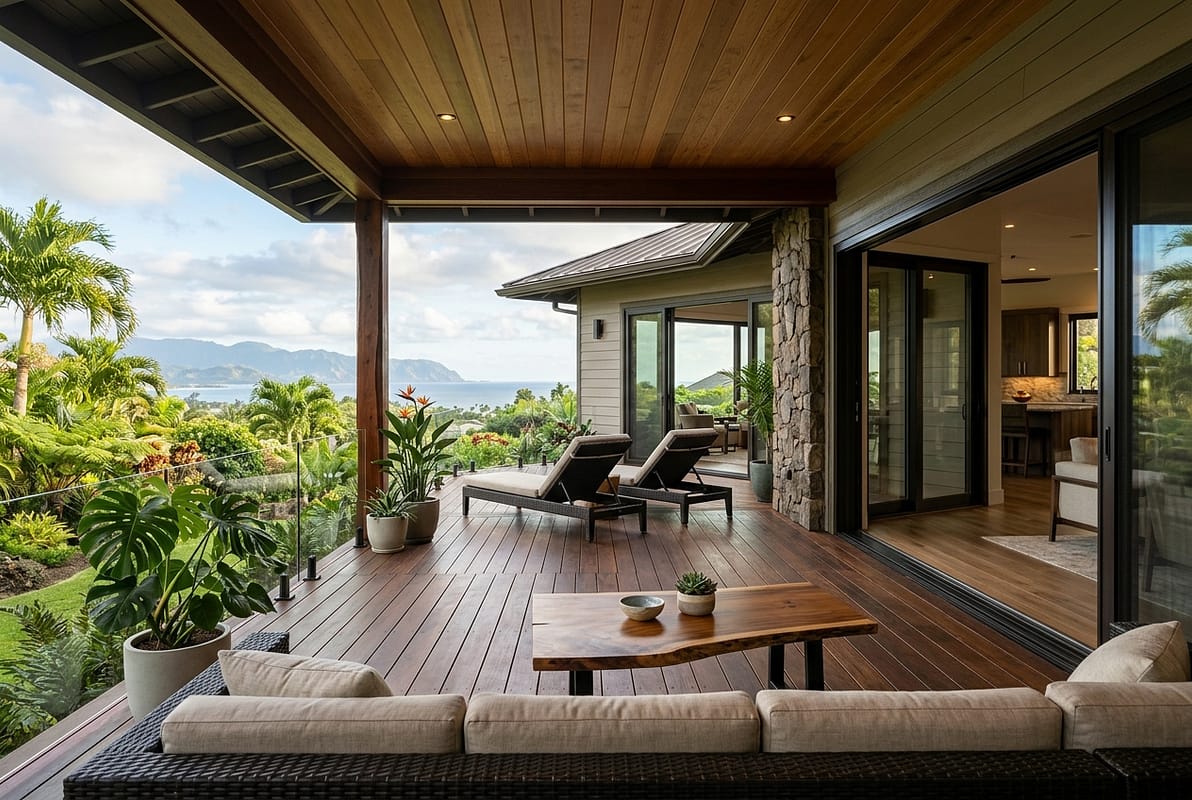
While an appraiser might not assign a dollar-for-dollar value increase equal to the project’s cost, the market value tells a different story. Buyers don’t think in terms of cost per square foot; they think in terms of usability and appeal. A finished lanai transforms a generic backyard into a functional, desirable living area, and that’s what drives offers.
The Ewa & Kapolei Market: Speed is Everything
The real estate markets in Ewa Beach and Kapolei are heavily influenced by the constant cycle of military families PCSing in and out. This creates a unique environment where the speed of sale and move-in readiness are paramount. An incoming family has a limited amount of time in temporary lodging to find and close on a home. They do not have the luxury of time to oversee a construction project.
Imagine two identical homes for sale on the same street. House A has a basic concrete slab in the back. House B has your new 250-square-foot covered lanai with ceiling fans and lights. A buyer can immediately see themselves enjoying House B, while House A represents a future project, a future cost, and a future headache. House B will almost certainly receive more offers and go into escrow faster. This is how you maximize your Ewa Beach home value within the PCS system.
Why Buyers Pay a Premium for Move-In Ready Outdoor Living
Buyers in Hawaii, both military and local, understand the difficulty and expense of construction. They’ve heard stories about permitting delays and high costs. By completing the lanai addition during your tour, you are selling them a finished product and saving them from the 20-month process you went through. That convenience has tangible value.
We’ve seen our clients’ homes sell for $30,000 to $50,000 more than comps without a comparable outdoor space. When you factor in the $45,000 investment, you are often looking at a nearly 100% return, and sometimes more. More importantly, you get to enjoy a fantastic new living space for a year or more, making your time in Hawaii that much better. It’s a rare win-win, but it’s only possible with a disciplined, front-loaded project plan.
Case Study: The Miller Family’s Ewa Beach Lanai
To see how this playbook works in the real world, let’s look at a recent project we completed for the Miller family, who had PCS’d to Schofield Barracks.
- The Homeowners: An Army officer, his wife, and their two young children on a 3-year assignment. They purchased a standard single-family home in an Ocean Pointe subdivision in Ewa Beach.
- The Goal: Create a safe, shaded outdoor area for their kids to play and a comfortable space for family dinners and entertaining, all while making a smart Oahu PCS lanai investment.
- The Timeline:
- Month 2 (Post-Arrival): The Millers contacted us. We began the design process for a 260-square-foot covered lanai that matched the home’s existing roofline and style.
- Month 6: The final plans were engineered and the permit package was submitted to the Honolulu DPP.
- Month 15: After a 9.5-month wait, the building permit was approved and issued.
- Months 16-19: Our crew was on-site for the 4-month build. We handled everything from the foundation to the final coat of paint.
- The Budget: The all-in project cost came to $46,800, right on target with our initial estimate of $180 per square foot.
- The Result: The Millers enjoyed their new lanai for 14 months. It became the heart of their home. When they received their PCS orders, their realtor listed the house highlighting the “brand new, permitted outdoor living room.” The home received multiple offers within the first week and sold for $45,000 above the price of a nearly identical model down the street that had sold a month prior. They fully recouped their investment and enjoyed a significantly better quality of life during their tour. Their story is a perfect example of the playbook executed correctly.
What Does This Lanai Strategy Mean for Your Family’s Finances?
For a military family on a tight budget, this strategy transforms a potential liability—a short-term home purchase—into a calculated financial asset. By strategically timing your Oahu PCS lanai investment, you’re not just spending money on a home improvement; you are actively increasing the liquidity and marketability of your home in a highly competitive real estate environment.
Here’s what this means for your bottom line:
- Reduces Risk at Resale: The biggest fear for any military homeowner is being unable to sell their home quickly when they get orders. A home with a desirable, completed feature like a covered lanai is far less likely to sit on the market. This speed reduces the risk of carrying two mortgages or renting out the property from a distance.
- Leverages BAH for Equity: Your Basic Allowance for Housing (BAH) is paying the mortgage. By using savings or a small HELOC for the lanai project, you are converting those funds into tangible home equity. When you sell, that investment comes back to you, often with a profit, which can then be used for a down payment at your next duty station.
- Creates a Competitive Edge: In neighborhoods with many similar models, differentiation is key. A beautiful, functional lanai makes your property stand out in online listings and in person, attracting more serious buyers and potentially creating a bidding situation that drives up the final sale price.
- Improves Your Own Tour Experience: Don’t discount the non-financial ROI. For 12-16 months, your family gets to live the Hawaii lifestyle to the fullest. That has immense value that doesn’t show up on a closing statement but makes your time here infinitely more enjoyable.
Essentially, by front-loading the hard work of planning and permitting, you turn the final year of your tour into a period of enjoyment, followed by a smoother, more profitable home sale process. It’s about playing the long game within a very short timeframe.
What’s the First Step to Start My Lanai Project?
The first step is to schedule a consultation with a licensed, experienced design-build contractor as soon as you close on your home. This initial meeting is about establishing a shared understanding of your goals, the realities of the timeline, and the feasibility of your budget. Don’t wait until you’re unpacked and settled; the most valuable resource you have is time.
Come to that first meeting prepared. Have a copy of your property survey (which you should have received at closing) and a general idea of how you want to use the space. Our team at Warrior Construction can take it from there. We’ll walk your property, listen to your ideas, and provide you with a clear, no-nonsense assessment of what’s possible within your 3-year PCS window.
We’ve helped dozens of military families execute this exact playbook. We understand the unique pressures of a PCS timeline and know how to navigate the complexities of the Honolulu DPP. The key is to start the conversation early. The Oahu PCS lanai investment is a winning strategy, but the game starts now.
Frequently Asked Questions
Can I use my VA loan to finance a lanai addition?
Yes, it’s possible through a VA Renovation Loan. This loan allows you to roll the cost of the home purchase and the renovation into a single mortgage. It’s a great tool, especially for older homes, but you must ensure the total loan amount stays under the 2026 Honolulu County conforming loan limit of $1,215,550. We’re seeing a significant rise in military families using this option.
What’s the difference between a permitted lanai and just a deck or patio cover?
A permitted, structural lanai is a permanent roofed addition that is engineered to be part of the house and built to code, including hurricane standards. A simple deck (under 30 inches high) or a pre-fabricated patio cover often doesn’t require the same level of permitting or engineering. While cheaper, these non-structural additions add very little to your home’s official appraisal value and don’t offer the same ROI or durability.
How does a lanai addition affect my property taxes?
A permitted lanai addition will increase the assessed value of your home, which will likely lead to a small increase in your property taxes. The city assesses property value annually. However, the increase is typically modest and is far outweighed by the gain in market value and the lifestyle benefits the space provides.
Why does the Honolulu building permit timeline take 9 months?
The Honolulu DPP is responsible for reviewing all construction plans for safety and code compliance. The 9-month average timeline is a result of high volume of applications, staffing levels, and a multi-departmental review process. Your plans must be checked by zoning, building, electrical, and sometimes other divisions before a permit is issued. Any request for information or revision can reset the clock on that department’s review, extending the wait.
What materials hold up best in Hawaii’s salt air and sun?
For longevity, we recommend composite decking like Trex over wood, which requires constant sealing. For hardware, using 316-grade stainless steel fasteners is crucial, especially near the coast, as standard galvanized hardware will corrode quickly. For roofing, standing seam metal is an excellent choice for durability and reflecting the intense sun.
Is a $45,000 budget for a lanai realistic in 2026?
Yes, for a 250 sq. ft. covered lanai, $45,000 (or $180/sq. ft.) is a very realistic all-in budget for 2026. This accounts for the 7% increase in concrete costs, high lumber prices due to island shipping logistics, and the cost of skilled, licensed labor on Oahu. Cheaper quotes likely mean a contractor is unlicensed, uninsured, or not pulling a permit, which can jeopardize your home’s value.
Can I just build a covered patio myself without a permit?
We strongly advise against it. Any roofed structure attached to your house requires a building permit in Honolulu County. Unpermitted work can lead to fines, orders to tear down the structure, and major problems when you try to sell the home. A buyer’s inspector will flag it, potentially killing the deal or forcing you to make costly repairs or retroactively permit the structure, which is often impossible.
Start Your PCS Lanai Project on the Right Foot
If you’re a military family that has just arrived on Oahu, the clock is ticking on your opportunity to make a smart, profitable home improvement. The key to a successful Oahu PCS lanai investment is starting the design and permitting process immediately. Our design-build team at Warrior Construction specializes in helping service members navigate this exact scenario.
We understand the PCS timeline and the Honolulu permitting system. Let us help you develop a clear plan and a realistic budget from day one. Contact our team to schedule your initial consultation and turn your backyard into a valuable asset and a beautiful living space.


