Hawai’i has always been at the forefront of environmental consciousness, and the construction industry is no exception. With the state’s ambitious goal of achieving 100% renewable energy by 2045, sustainable building practices have moved from “nice to have” to “must have” for any responsible construction company operating in the islands.
Solar Energy: Hawaii’s Greatest Construction Asset
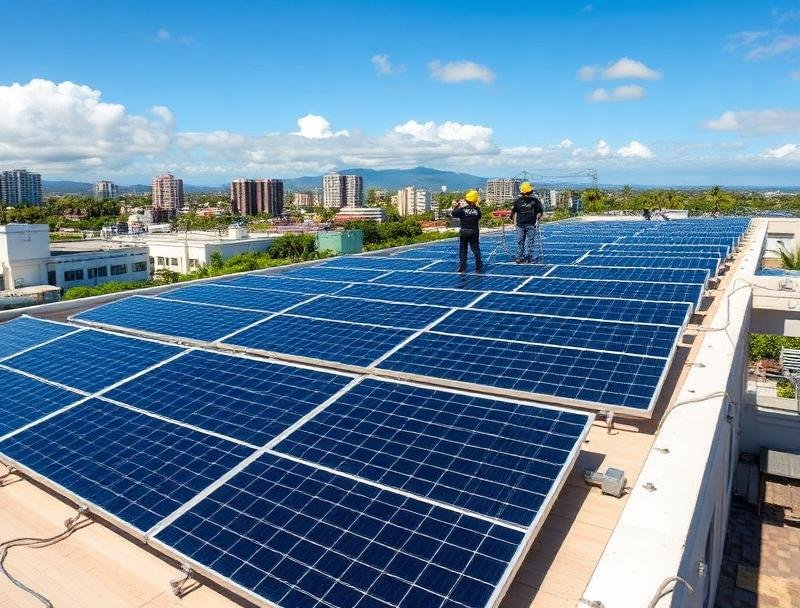
Solar energy is perhaps the most visible aspect of sustainable construction in Hawai’i. The state already leads the nation in rooftop solar installations per capita, and new construction projects are increasingly incorporating photovoltaic systems as a standard feature. At Warrior Construction, we work closely with solar engineers to integrate these systems seamlessly into our building designs, ensuring optimal energy production without compromising aesthetics.
Water Conservation in Island Construction
Water conservation is another critical consideration for island construction. Hawai’i’s water resources are finite, and the demand continues to grow with development. Modern sustainable building practices include:
- Rainwater harvesting systems for irrigation and non-potable use
- Greywater recycling systems for toilet flushing and landscaping
- Low-flow fixtures throughout (reducing water consumption 30–50%)
- Smart irrigation systems using drip lines and weather-based controllers
- Native Hawaiian drought-resistant landscaping (eliminates ongoing irrigation)
Sustainable Material Selection
Material selection plays a crucial role in sustainable construction. Warrior Construction prioritizes:
- Locally sourced materials to reduce transportation emissions and support the local economy
- Recycled and reclaimed materials where structurally appropriate
- Sustainably harvested FSC-certified wood products
- Low-VOC (volatile organic compound) finishes and adhesives for improved indoor air quality
- Concrete with recycled fly ash content to reduce Portland cement demand
Building Envelope Design for Hawaii’s Climate
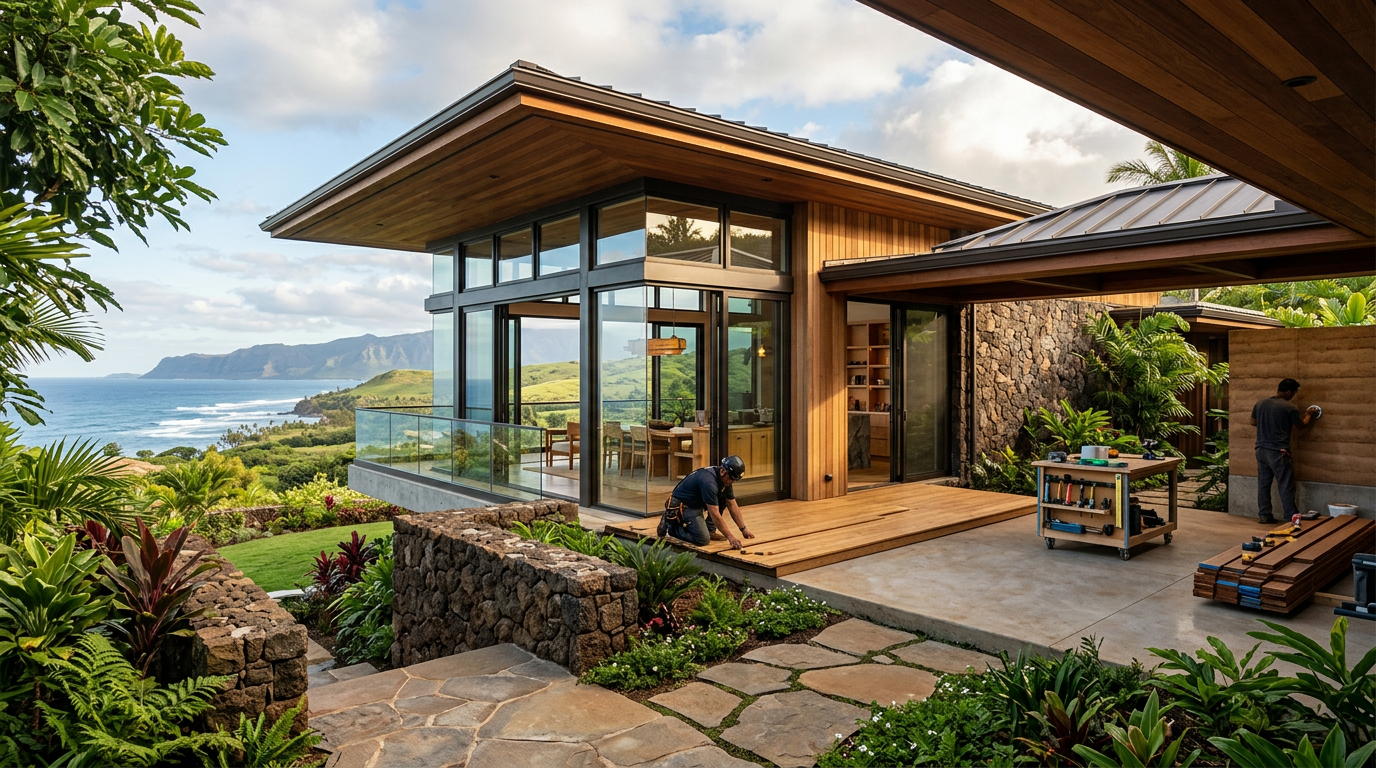
Building envelope design is particularly important in Hawai’i’s tropical climate. Proper insulation, high-performance windows, and strategic orientation can dramatically reduce cooling loads. We design buildings to take advantage of Hawai’i’s natural trade winds for cross-ventilation, often reducing or eliminating the need for air conditioning in common areas. Key strategies include deep overhangs, operable louvered walls, and high-ceiling designs that allow heat to stratify away from occupants.
The Financial Case for Green Building
The financial benefits of sustainable building are compelling. While there may be a modest premium in upfront construction costs (typically 3–7%), the long-term savings in energy, water, and maintenance costs typically provide a strong return on investment within 5–8 years. Additionally, green-certified buildings (LEED, Green Building Hawaii) command higher rents and resale values, making sustainability a smart business decision as well as an environmental one.
Frequently Asked Questions
- Does green building cost more in Hawaii?
- Sustainable features typically add 3–7% to initial construction costs, but energy and water savings typically recoup this premium within 5–8 years. Many features like solar and efficient HVAC have direct ROI.
- Are there tax credits for sustainable construction in Hawaii?
- Yes. Hawaii offers a 35% state income tax credit for photovoltaic systems (capped at $5,000 per system for residential), and federal ITC credits of 30% are available for commercial solar installations through 2032.
- What green building certifications are available in Hawaii?
- LEED (Leadership in Energy and Environmental Design) is the most widely recognized. Hawaii also has its own Green Building Hawaii program and participates in ENERGY STAR and NAHB Green Building certifications.