
In 2026, the real cost to build an Accessory Dwelling Unit (ADU) on Oahu is running between $475 and $550 per square foot for standard, quality finishes. When you see that a new 800-square-foot, two-bedroom ADU in Kailua is generating rental income of up to $4,400 per month, the math starts to look very compelling. For many Oahu homeowners, this investment can pay for itself in 10-12 years, all while covering a huge chunk of their own mortgage and significantly boosting their property’s long-term value. This isn’t just about adding a guest suite; it’s one of the most powerful financial moves you can make as a Hawaii property owner right now.
For over 20 years, our team at Warrior Construction has been building homes and Ohana units across Oahu. We’ve seen the market shift, building codes evolve, and permitting timelines stretch. The conversation we have most often with homeowners is about the numbers. They want to know the real, all-in Oahu ADU costs and whether the potential rental income justifies the upfront investment and the lengthy process. There’s a lot of noise out there, so we wanted to lay out the 2026 figures plainly, based on our current projects and the latest market data.
This guide will walk you through the entire financial equation. We’ll break down the hard construction costs, the often-overlooked ‘soft costs’ like permits and design, and then pivot to the income side of the ledger, showing you real-world rental rates from Kapolei to Kailua. Most importantly, we’ll connect those two sides with a clear return on investment (ROI) calculation, giving you a framework to decide if an ADU is the right move for your ohana and your financial future.
How Much Does It Cost to Build an ADU on Oahu in 2026?
The straightforward answer is that the hard construction cost for a standard-finish ADU on Oahu in 2026 is between $475 and $550 per square foot. This means an 800-square-foot, two-bedroom unit will have a construction budget of $380,000 to $440,000. This price reflects the persistent high cost of shipping materials to the island and a very tight market for skilled tradespeople.[1] But that’s just the construction itself; the total project cost is always higher.
The Real Numbers: $475 – $550 Per Square Foot
Let’s break down what that $475-$550 per square foot actually covers. This is the ‘hard cost’—the physical construction of the unit from the ground up. For a typical 800-square-foot ADU, that $440,000 budget gets allocated across several key areas. We manage these numbers every day on our projects, and the breakdown looks something like this:
- Site Prep & Foundation: $45,000 – $60,000. This includes excavation, grading, termite treatment, and pouring a concrete slab or setting a post-and-pier foundation. Costs here can fluctuate based on your lot’s slope and soil conditions. Volcanic rock, for example, requires more expensive equipment to excavate.
- Framing & Structure: $70,000 – $85,000. This is the skeleton of the home—the walls, floor joists, and roof trusses. We use lumber treated for Hawaii’s termite-heavy environment, which comes at a premium.
- Exterior & Roofing: $55,000 – $70,000. This includes your siding (like Hardie board, which holds up well in our salt air), hurricane straps and tie-downs required by code, windows, exterior doors, and a complete roofing system.
- MEP (Mechanical, Electrical, Plumbing): $75,000 – $90,000. This is a major cost center. It covers running new sewer and water lines from the main house, a full electrical system with a subpanel, and all the plumbing for the kitchen and bathroom(s).
- Insulation & Drywall: $30,000 – $40,000. This involves insulating the entire structure for energy efficiency and then hanging, taping, and finishing all the drywall.
- Interior Finishes: $100,000 – $130,000. This is the largest and most variable category. It includes everything the tenant will see and touch: kitchen cabinets and countertops, appliances, bathroom fixtures, flooring (typically LVP or tile), interior doors, trim, and paint.
Why High-End Finishes Can Push Costs to $650/sq ft
The standard-finish package we outlined above results in a durable, attractive rental unit that will command top dollar. However, some clients are building for family or want a luxury-level rental. That’s when costs can climb towards $600 or even $650 per square foot. For an 800-square-foot unit, this pushes the construction cost well over $500,000.
What kind of upgrades cause this jump? Here are a few examples we regularly install in high-end ADUs from Lanikai to the North Shore:
- Multi-Zone Split AC: While window units are cheaper, a quiet, efficient split AC system is a huge draw for tenants and adds $15,000-$25,000 to the cost.
- Custom Cabinetry & Stone Countertops: Standard cabinets are functional, but custom-built koa or mango wood cabinets and quartz or granite countertops can add another $20,000-$30,000 to the kitchen alone.
- Upgraded Flooring: Swapping Luxury Vinyl Plank (LVP) for engineered hardwood or high-end porcelain tile can add $10-$15 per square foot, or $8,000-$12,000 for the entire unit.
- High-End Window & Door Packages: Large sliding glass doors from brands like Fleetwood or LaCantina that open a living room to a lanai are incredible, but a single 12-foot door system can cost $25,000 installed.
- Solar PV & Battery Backup: Making the ADU energy-independent is a massive value-add, but a full solar and battery system will add $30,000-$40,000 to the project budget.
Factoring In ‘Soft Costs’: Surveys, Engineering, and DPP Fees
This is the part that often surprises homeowners. The construction budget is just one piece of the puzzle. Before we can even break ground, there’s a significant investment in planning, design, and permitting. These ‘soft costs’ typically add another 10-15% to the total project cost. For a $440,000 ADU build, you should budget an additional $40,000 to $60,000 for these items:
- Architectural & Design Fees: $15,000 – $25,000. A full set of architectural plans is required for the permit application.
- Structural Engineering: $8,000 – $12,000. A licensed Hawaii structural engineer must review and stamp the plans to ensure they meet hurricane code and other local requirements.
- Surveys & Geotechnical Reports: $3,000 – $7,000. You’ll need a recent, certified property survey. If you’re on a hillside or in an area with tricky soil, a geotechnical report might also be required.
- Honolulu DPP Permit Fees: $5,000 – $10,000+. This includes the building permit fee, wastewater system fees, and other miscellaneous charges from the city.
- Financing Costs & Contingency: It’s also wise to budget for loan origination fees if you’re financing, and to hold a 5-10% contingency fund for unforeseen issues.
So, that $440,000 construction project quickly becomes a total investment of closer to $500,000. Knowing this complete picture of the cost to build an ADU in Oahu in 2026 is the first step to making a sound financial decision.
How Much Rental Income Can an Oahu ADU Generate?
A new ADU on Oahu can generate significant rental income, from around $2,800 for a one-bedroom in Kapolei to over $4,400 for a two-bedroom in Kailua, thanks to extremely low vacancy rates hovering under 2%.[2] The demand for high-quality, modern rental units is intense, allowing ADU owners to command premium rates compared to the older rental stock on the island.
Case Study: Kailua & Kaimuki 2-Bedroom Rates ($4,400/mo)
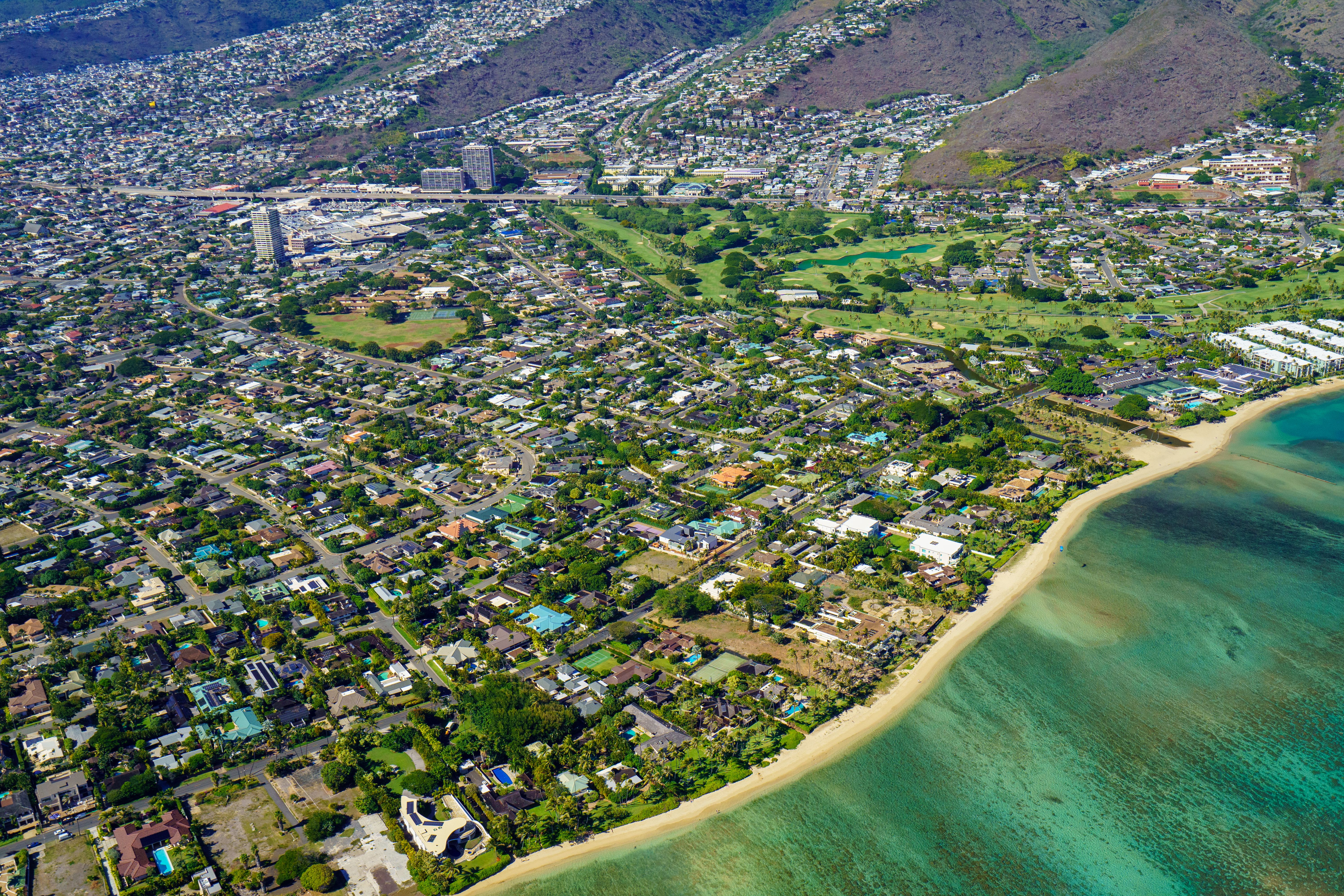
In desirable neighborhoods on the East side like Kailua, Lanikai, and Kaimuki, the rental market is on fire. A brand new, well-designed 800-square-foot, two-bedroom, one-bath ADU is consistently fetching between $3,900 and $4,400 per month. The latest Q1 2026 rental report from the Honolulu Board of REALTORS® confirms these figures, showing a steady climb in rates for single-family and Ohana unit rentals.[3]
Why are tenants willing to pay this much? It comes down to a few key factors:
- Lifestyle: These neighborhoods offer a highly sought-after lifestyle—close to world-class beaches, great restaurants, and boutique shopping, all while being a reasonable commute to downtown Honolulu.
- Quality of Life: Tenants are paying for modern amenities. A new ADU has split AC, new appliances, an in-unit washer/dryer, good insulation (for lower electricity bills), and the peace of mind that comes with new construction where things don’t break.
- Lack of Inventory: There is a severe shortage of quality rental units in these areas. An ADU offers a private, single-family living experience that is far more appealing than a crowded apartment building for a similar price. The high Kailua rental rates are a direct result of this supply and demand imbalance.
Case Study: Kapolei & Ewa 1-Bedroom Rates ($2,800/mo)
Over on the West side, in the growing communities of Kapolei, Ewa Beach, and Makakilo, the rental market is driven by different but equally powerful forces. Here, a smaller 500-square-foot, one-bedroom ADU is reliably renting for $2,500 to $2,800 per month. A larger two-bedroom unit can push upwards of $3,400.
The primary driver in West Oahu is the large military presence. Families PCS’ing to Oahu and assigned to Schofield Barracks or other nearby bases look for quality housing off-post. They have a Basic Allowance for Housing (BAH) that they want to maximize, and a new, private ADU is a perfect fit. We often work with military families looking to build an ADU as a way to house-hack, living in one unit and renting the other to a fellow service member. For more on this, check out our PCS Renovation Guide for military families.
Additionally, the commercial growth in Kapolei—the “Second City”—means more jobs are located on the West side, and people want to live close to where they work to avoid the brutal H1 traffic. This localized demand keeps the rental market for new units extremely tight.
Why New Construction Demands a 30%+ Premium Over HUD Rates
A useful baseline for understanding rental values is the Fair Market Rent (FMR) published by the U.S. Department of Housing and Urban Development (HUD). For 2026, the FMR for a two-bedroom property in Honolulu County is $2,980.[4] This figure represents the 40th percentile of gross rents for typical, existing rental units.
Here’s the key: new construction is not typical. Our clients are consistently able to rent their brand-new ADUs for 30-40% above this HUD baseline. A Kailua rental at $4,400 is nearly 50% higher than the FMR. This premium exists because you are offering a superior product. Tenants will gladly pay more for a home that is clean, safe, energy-efficient, and has modern features, rather than settling for a dated apartment with old appliances and no air conditioning. This premium is a fundamental part of what makes the ohana unit rental income so attractive from an investment perspective.
What is the Real ROI on an Oahu ADU?
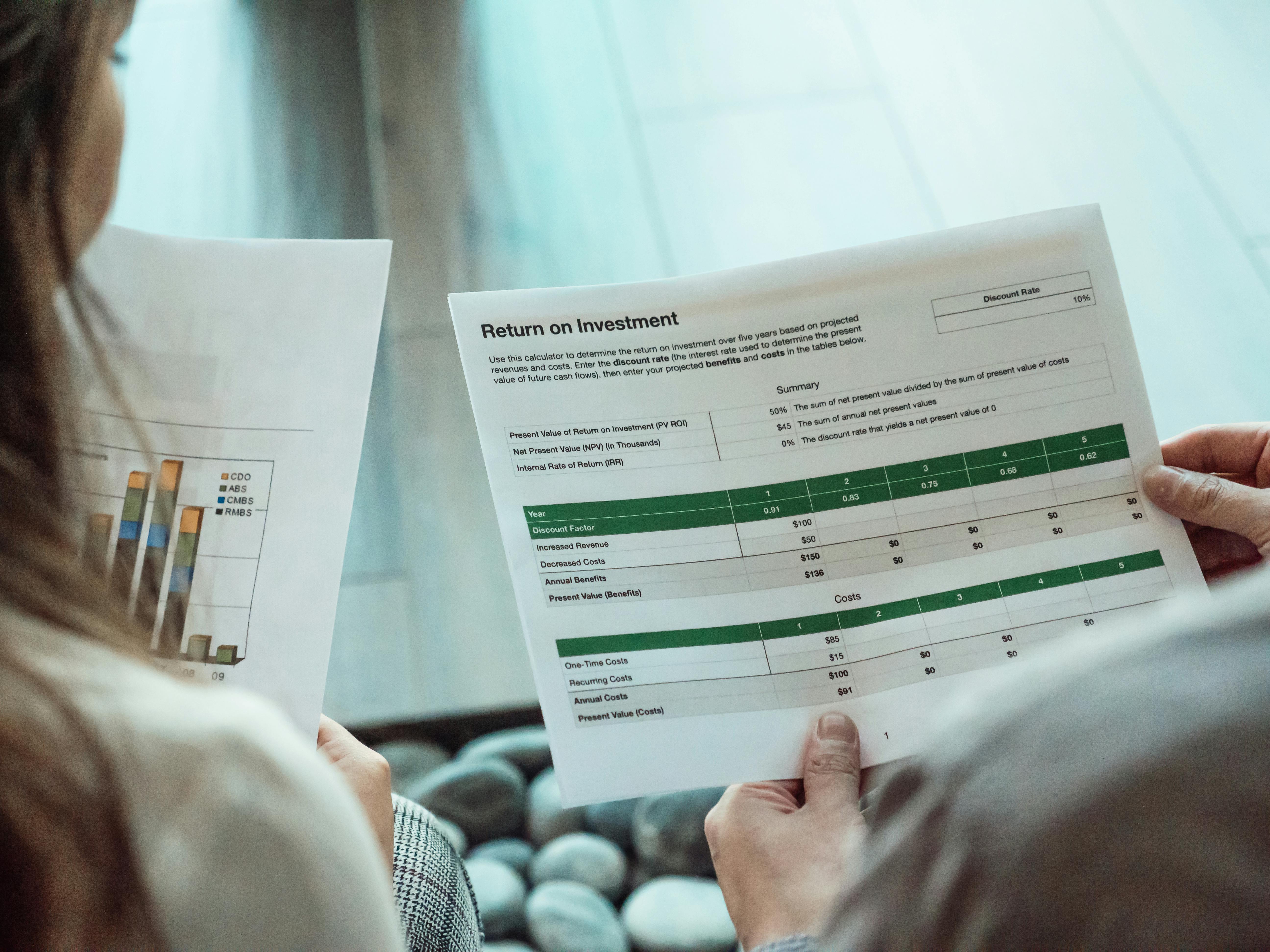
The return on investment for an Oahu ADU is strong, with a typical payback period of 10-14 years from rental income alone, not including the substantial increase to your property’s overall resale value. The combination of high rents, low vacancy, and forced appreciation makes it one of the more reliable long-term investments available to a homeowner in Hawaii. The key is to run the numbers honestly, accounting for all costs and expenses.
The Payback Calculation: A Step-by-Step Example
Math tells the story better than anything else. Let’s build a realistic scenario for an 800-square-foot, two-bedroom ADU in a desirable neighborhood like Kailua or Kaimuki. This is the kind of pro forma we build with our clients during the planning phase.
- Calculate Total Project Cost:
- Hard Construction Cost: 800 sq ft @ $550/sq ft = $440,000
- Soft Costs (Design, Engineering, Permits): ~$45,000
- Total Upfront Investment: $485,000
- Calculate Gross Annual Income:
- Monthly Rent: $4,400
- Annual Gross Income: $4,400 x 12 months = $52,800
- Estimate Annual Operating Expenses:
- Vacancy (2%): Even in a tight market, it’s wise to budget for a week or two of turnover. ($1,056)
- Property Tax Increase: Your property will be reassessed. A safe estimate is 1% of the added value annually. ($4,850)
- Insurance Increase: Your homeowner’s policy will go up. ($1,200)
- Repairs & Maintenance (5% of rent): A buffer for fixing appliances or other issues. ($2,640)
- General Excise Tax (GET at 4.5%): You must pay GET on rental income in Hawaii. ($2,376)
- Total Annual Expenses: ~$12,122
- Calculate Net Operating Income (NOI) and Payback Period:
- Net Annual Income: $52,800 (Gross Income) – $12,122 (Expenses) = $40,678
- Simple Payback Period: $485,000 (Total Cost) / $40,678 (Net Income) = 11.9 years
This step-by-step calculation shows a clear path to profitability. An adu return on investment hawaii homeowners can count on is built on these conservative, real-world numbers.
How an ADU Can Offset Your Own Mortgage
The payback calculation is great for understanding the long-term investment, but the immediate impact on your monthly cash flow is often more powerful. Imagine your mortgage on your main home is $7,000 per month. The net monthly income from the ADU in our example is roughly $3,390 ($40,678 / 12). That rental income is now covering nearly half of your own housing cost.
This changes the financial picture for many families. It can free up cash for college savings, retirement, or other investments. For some of our clients, it’s the strategy that allows them to afford to stay in their family home in a high-cost area. Instead of feeling house-poor, the property becomes an income-generating asset that works for them every month.
Long-Term Appreciation: Boosting Your Property Value
The final piece of the ROI puzzle is property appreciation. A permitted, well-built ADU doesn’t just add its construction cost to your home’s value; it adds a premium because it’s a legal, income-producing unit. A property with a main house plus an ADU generating over $40,000 in net income per year is functionally a duplex. It will be valued much higher by future buyers than a similar property without an ADU.
While the exact amount varies, it’s not uncommon for a $485,000 ADU investment to add $600,000 or more to the property’s resale value over time, especially once it has a proven rental history. You’ve essentially forced appreciation by converting underutilized yard space into a cash-flowing asset. This long-term wealth creation is a major reason why building an ADU remains one of the smartest things you can do with your property on Oahu.
How Long Does it Take to Get an ADU Permit in Honolulu?
Getting an ADU permit from the Honolulu Department of Planning and Permitting (DPP) is currently taking 9 to 12 months in 2026. This timeline is the single biggest bottleneck and source of frustration in the entire process. It’s a reality that requires careful planning and a lot of patience. From the moment we submit a complete and perfect set of plans, the clock starts on a long and complex review process.
The 9- to 12-Month Wait: Navigating the DPP Bottleneck
Why does it take so long? As reported by publications like Pacific Business News, the DPP has faced ongoing staffing shortages, which creates a significant logjam of projects awaiting review.[5] Your ADU plans don’t just go to one person; they circulate through multiple departments for approval:
- Zoning Review: The first stop. They verify that your lot is eligible for an ADU and that your plans meet all setback, height, and lot coverage requirements.
- Building Plan Review: A plan reviewer checks the architectural and structural plans for compliance with the building code.
- Civil Engineering Review: If your project involves significant grading or drainage changes, this department gets involved.
- Board of Water Supply Review: They must approve the connection and ensure there is adequate water service.
- Wastewater Management Review: They review and approve the new sewer connection.
A delay or request for more information from any one of these departments can send your application into a holding pattern for weeks or months. This is why it’s critical to have a contractor or architect who understands the ins and outs of the honolulu dpp adu permits process and can anticipate these hurdles.
Critical Documents: The Certified Survey and Stamped Plans
The best way to minimize delays at the DPP is to submit an absolutely flawless application package from the start. Any missing information or errors will get your plans rejected, and you’ll go to the back of the queue. Two documents are non-negotiable and must be perfect:
- A Certified Property Survey: This must be performed by a licensed Hawaii surveyor and be recent (typically within the last year). It needs to show your property lines, existing structures, easements, and the precise footprint and location of the proposed ADU. An old survey won’t be accepted.
- A Full Set of Stamped Plans: This includes the architectural plans (floor plans, elevations, sections) and, crucially, structural plans that have been reviewed, approved, and stamped by a Hawaii-licensed structural engineer.
Our team at Warrior Construction coordinates this entire pre-submission process, working with a network of trusted architects, engineers, and surveyors to ensure the package we submit to the DPP is complete and accurate on the first try.
How the 2026 Building Code Updates Affect Your Plans
Adding another layer of complexity are the 2026 updates to Hawaii’s building code. The DPP plan reviewers are scrutinizing every submission for compliance with these new, stricter standards. Two key areas impact ADU projects:
- Enhanced Hurricane Preparedness: The code now mandates more robust hurricane tie-down systems, stronger connections between the roof and walls, and in some cases, impact-rated windows and doors. This adds to the material cost but is essential for safety.
- Fire-Resistant Materials: For properties located in high-risk Wildland-Urban Interface (WUI) zones, such as the hills above Waialae Iki or parts of the North Shore, there are new requirements for using fire-resistant siding, roofing, and eave construction.
An experienced builder will incorporate these new requirements into the design from day one. Submitting plans based on outdated codes is a guaranteed way to face major delays and redesign costs during the DPP review.
So, Is Building an ADU on Oahu a Good Financial Decision?
For most Oahu homeowners who have the required lot space, the upfront capital, and a long-term perspective, building an ADU is an excellent financial decision in 2026. The combination of high and stable rental income, low vacancy rates, significant mortgage offset, and long-term property value appreciation creates a powerful financial engine in your own backyard. However, it’s not the right move for everyone, and it’s important to weigh the pros and cons honestly.
The Pros: Consistent Cash Flow with Sub-2% Vacancy Rates
The financial upside is clear and compelling. The demand for housing on Oahu is relentless, and quality rental units are incredibly scarce. State data from DBEDT consistently shows the rental vacancy rate for single-family homes and ADUs hovering below 2%.[2] This isn’t a speculative market; it’s a stable, long-term reality. This means your ADU will likely never sit empty, providing a reliable stream of cash flow month after month.
Beyond the pure rental income, an ADU offers priceless flexibility for your ohana. It can be a home for aging parents (kupuna), allowing them to live independently but close by. It can be a starter home for adult children saving up for their own place. This multi-generational value is something a stock portfolio can’t offer and is a core reason many of our clients choose to build.
The Cons: Upfront Investment and the Permitting Timeline
The challenges are just as real as the benefits. The primary hurdle is the significant upfront investment. A total project cost of around $500,000 is not something most people have sitting in a savings account. It typically requires financing through a home equity line of credit (HELOC), a cash-out refinance of your existing mortgage, or a new construction loan. Exploring your financing options early is a critical first step. For a detailed overview, our guide on securing a Hawaii construction loan can be a valuable resource.
The second major con is the timeline, specifically the 9-to-12-month wait for the building permit. This requires a tremendous amount of patience. From the day you decide to move forward, it can easily be a year or more before construction can even begin. If you’re looking for a quick turnaround, an ADU project is not it. It’s a long-term play.
Our Take: When an ADU Makes Perfect Sense for Your Ohana
After building dozens of these units all over the island, we have a clear picture of the homeowner who benefits most. An ADU makes perfect sense if you meet these criteria:
- You are a long-term homeowner. If you plan to sell in the next couple of years, the hassle and cost may not be worth it. The real financial benefit accrues over 5, 10, 20 years.
- Your lot can accommodate it. You have the physical space and your zoning allows for an ADU. We always recommend starting with a feasibility study. Our guide on why your lot size matters is a good place to begin your research.
- You see it as a multi-decade asset. You can see the value not just in the monthly rent check, but in its potential to house family members and increase your property’s fundamental value.
- You have the financial stability and the patience for the process. You understand the upfront cost and are prepared for the marathon of the permitting process.
If this sounds like you, then an ADU is likely one of the best investments you can make.
What this means for Hawaii homeowners
Understanding the costs and potential returns is the first step. Turning that knowledge into a successful project requires a clear, strategic approach. Based on our 20+ years of experience, here are the most important next steps for any Oahu homeowner seriously considering an ADU in 2026.
- Confirm Your Eligibility Immediately. Before you fall in love with a design or spend a single dollar on plans, you need to verify that your property is eligible for an ADU under Honolulu’s current ordinances. This involves checking your zoning, lot size, and any other specific restrictions. A quick consultation with a knowledgeable contractor or architect can save you thousands of dollars and months of wasted time.
- Line Up Your Financing Now. The 9-to-12-month permit wait is actually a perfect window to get your financing in order. Talk to your bank or a mortgage broker about a HELOC or construction loan. Get pre-approved. Knowing your exact budget from the outset allows us to design a project that meets your financial goals without compromises or surprises down the line.
- Budget for the *Total* Project Cost. It is critical to remember that the hard construction number is not the final number. The true Oahu ADU costs include design, engineering, surveys, and permit fees. We advise clients to add a 10-15% buffer on top of the raw construction estimate to cover these essential soft costs. A realistic budget from day one is the key to a smooth process.
- Choose a Design-Build Partner. Navigating the ADU process involves coordinating architects, engineers, surveyors, and the many departments at the DPP. A design-build firm like Warrior Construction manages all of these moving parts under one roof. This integrated approach streamlines communication, identifies potential issues early, and provides you with a single point of accountability from the first sketch to the final walk-through.
Frequently Asked Questions
What’s the realistic all-in cost for a new 800 sq ft ADU on Oahu in 2026?
In 2026, you should budget between $480,000 and $520,000 for a standard-finish 800-square-foot ADU. This includes the hard construction cost (around $440,000) plus an additional $40,000-$80,000 for essential soft costs like architectural design, structural engineering, surveys, and Honolulu DPP permit fees.
Can I use the City’s pre-approved ADU plans to speed up my permit?
Using the city’s pre-approved plans can sometimes shave a few weeks or a month off the initial architectural review, but it’s not a magic bullet. Your project still enters the same long queue and must go through all the same departmental reviews (zoning, wastewater, etc.). The overall timeline is still likely to be in the 8-10 month range.
How much will an ADU increase my Oahu property taxes?
Your property will be reassessed by the city after the ADU is completed. A conservative estimate is that your annual property taxes will increase by about 1% of the total ADU project cost. For a $500,000 project, you should budget for an increase of roughly $5,000 per year, which should be factored into your ROI calculation.
What are the biggest mistakes Oahu homeowners make when building an ADU?
The most common mistakes are underestimating the soft costs and the permit timeline. Many homeowners only budget for construction, forgetting the tens of thousands needed for plans and permits. The second mistake is not getting a new, certified survey at the very beginning, which can cause major delays at the DPP.
Is it cheaper to build on a concrete slab or a post-and-pier foundation in Hawaii?
For a flat, level lot, a concrete slab foundation is often slightly more cost-effective. However, for the many sloped lots we have in places like Manoa or on hillsides, a post-and-pier foundation is more practical and can be cheaper than extensive excavation and retaining walls. Post-and-pier also provides better air circulation underneath, which is a benefit in our humid climate.
Do I have to provide a parking space for my ADU tenant on Oahu?
Yes. The current City and County of Honolulu ordinance requires you to provide one dedicated, legal off-street parking stall for the ADU. This stall must be in addition to the two required parking stalls for the main dwelling. This is a critical zoning requirement that is checked early in the permit review process.
Thinking about how an Ohana unit could work for your property? The numbers in 2026 are strong, but the process is complex. Turning your backyard into a valuable financial asset requires a team with the experience to navigate the realities of building in Hawaii—from the DPP permitting office to the final finishes.
If you’re ready to have a serious conversation about the real costs and timeline for your specific project, our team is here to help. We can provide a detailed feasibility analysis for your property and build a transparent budget based on today’s numbers. Contact Warrior Construction (Hawaii License BC-34373) to schedule a consultation for your ADU or Ohana Unit project.
References
- Hawaii Contractors Association, 2026 Residential Construction Cost Survey
- DBEDT, 2026 Hawaii Housing Demand Study
- Honolulu Board of REALTORS®, Q1 2026 Oahu Rental Report
- U.S. Department of Housing and Urban Development, FY2026 Fair Market Rents
- Pacific Business News, Honolulu DPP Permit Delays Worsen


