
“
For Oahu homeowners, undertaking a major oahu exterior renovation by bundling your roofing, siding, and window replacement into a single project is the single most effective financial strategy in 2026. This “Trifecta” approach directly saves over $15,000 in redundant contractor fees, shipping costs, and permits. Furthermore, it can shorten your project timeline from a potential multi-year ordeal to a single, streamlined process and unlock annual homeowners insurance discounts of up to 25%. If your home’s exterior is showing its age, phasing these projects separately is no longer just inefficient—it’s a significant financial mistake.
For over two decades, our team at Warrior Construction has guided homeowners through the unique challenges of building and renovating in Hawaii. We’ve seen firsthand how the piecemeal approach—a new roof one year, new siding a few years later, and finally windows when the budget allows—incurs massive, unnecessary costs. The logistics of construction on an island, from the backlogs at the Honolulu Department of Planning and Permitting (DPP) to the steep price of shipping every single nail and window from the mainland, penalize smaller, separate projects. This guide breaks down the hard numbers from 2026, showing you exactly where the savings are and why a coordinated oahu exterior renovation is the smartest investment you can make in your property this year.
Why should I bundle my roof, siding, and windows on Oahu?
The Short Answer: The ‘Trifecta’ Strategy Saves You Time and Serious Money
The core logic behind bundling is simple: you consolidate three separate projects into one master project. This means one contract, one general contractor, one permit application, one consolidated materials shipment, and one unified crew. On the surface, this sounds like common sense. But in Hawaii, the financial and logistical benefits are magnified tenfold compared to anywhere on the mainland. Every step of a construction project here carries a significant base cost—what we call the “island tax.” By bundling, you pay that tax once, not three times. For example, instead of paying for three separate dumpster deliveries and removals, you have one. Instead of staging scaffolding three different times, it goes up once and is used by the roofers, then the siders and window installers, and then comes down. These efficiencies add up to thousands of dollars before we even talk about the bigger-ticket items like permits and mobilization fees.
Fighting Inflation: Locking in 2026 Material and Labor Costs
Another powerful reason for bundling is to hedge against Hawaii’s relentless construction cost inflation. The University of Hawaii Economic Research Organization (UHERO) is forecasting another 5-7% jump in the landed cost of building materials by mid-2027[1]. This isn’t a vague prediction; it’s a reality driven by mainland supply chain issues and the ever-increasing cost of Pacific freight. When you sign a contract for a full exterior renovation package in 2026, you lock in today’s prices for everything—your standing seam metal roof, your James Hardie siding, and your hurricane-rated Pella windows. If you wait and phase the projects, the windows you buy in 2028 will almost certainly cost 10-15% more than they do right now. A comprehensive bundling home renovation oahu strategy is your best defense against this predictable cost creep.
How much money do you save on contractor costs by bundling?
The Mobilization Fee: Paying Once vs. Three Times
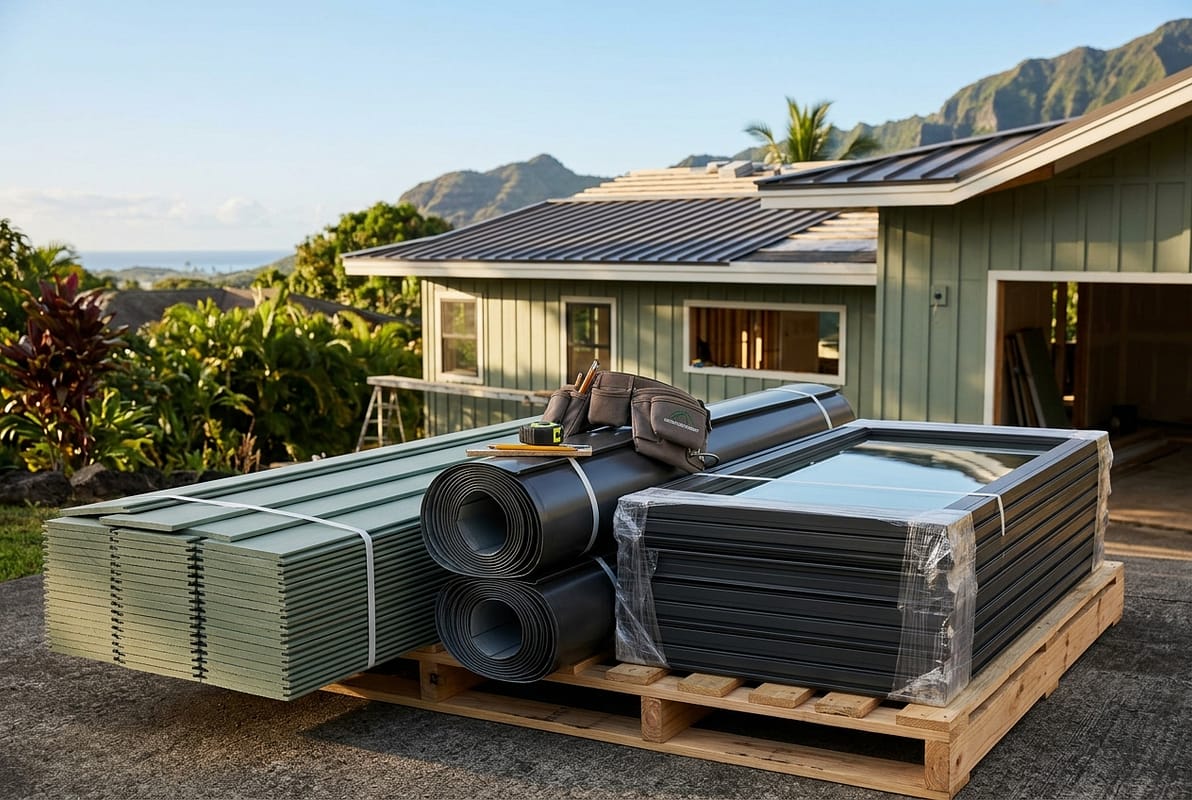
Every time a major trade—like a roofing crew or a siding team—starts a new project, there’s a significant upfront cost known as a mobilization fee. This isn’t just a random charge; it covers the real-world expenses of getting a project off the ground. Think about what’s involved: arranging for and delivering scaffolding, scheduling and paying for a 30-yard debris container, setting up a temporary job site toilet, initial project management hours for scheduling and material verification, and transporting specialized equipment. Here on Oahu, this mobilization cost runs about $4,500 per major trade. A recent analysis from the Hawaii Contractors Association confirms this figure, highlighting it as a major hidden cost in phased renovations[2].
Here’s the simple, painful math of doing it separately:
- Project 1 (Roofing): $4,500 mobilization fee.
- Project 2 (Siding): Another $4,500 mobilization fee.
- Project 3 (Windows): A third $4,500 mobilization fee.
That’s a total of $13,500 spent on redundant setup costs. With the Trifecta approach, you pay that mobilization fee *once*. The same scaffolding used for the roof tear-off is used by the siding and window crews. The same debris container takes the old shingles, the old siding, and the old windows. It’s one coordinated effort. This is the clearest example of saving money through efficiency, and it highlights a key area where homeowners lose thousands without realizing it. This is the very definition of `hawaii contractor mobilization costs` and how to beat them.
A Real-World Example: Saving $9,000 Before We Even Start
Let’s put this into a real-world context. We recently worked with a homeowner in Kapolei whose 25-year-old home needed a full exterior overhaul. They initially got separate quotes for each job. The total of those three quotes was roughly $135,000. When we priced it as a single, bundled project, our price came in at $122,000. The homeowner was shocked, asking where the $13,000 difference came from. A huge chunk of it—$9,000 to be exact—was simply the elimination of two redundant mobilization fees. The remaining savings came from better material pricing on a bulk order and more efficient labor scheduling. Before a single worker stepped on their property, they had already saved nearly 10% just by choosing a smarter project structure.
How does bundling renovations speed up Honolulu permit times?
The DPP Gauntlet: One 8-Month Wait is Better Than a 2-Year Nightmare
Anyone who has tried to get a building permit in Honolulu knows the challenge. The Department of Planning and Permitting (DPP) is notoriously backlogged. According to their own 2026 bulletin, the average review time for a standard single-family residential building permit is now a staggering 6 to 8 months[3]. That’s eight months of waiting from the day your plans are submitted until you can even think about starting work. Many homeowners don’t realize that a new roof, new siding, and new windows (especially if you’re changing the size of the openings) are all projects that typically require a permit.
Now, imagine facing that 8-month wait three separate times.
- Permit 1 (Roof): Submit plans, wait 8 months. Complete the project.
- Permit 2 (Siding): Submit plans, wait another 8 months. Complete the project.
- Permit 3 (Windows): Submit plans, wait a final 8 months. Complete the project.
In this scenario, you could easily spend over two years just waiting for approvals from the city. Your home becomes a perpetual construction zone. By bundling, we submit one comprehensive permit package that covers the entire scope of the oahu exterior renovation. You endure the 6 to 8-month `honolulu building permit timeline` once. It’s a huge difference, transforming a potential 24-month administrative headache into a single, manageable waiting period.
The Financials: A Single Permit Package Saves You $2,000 in City Fees
Beyond the timeline, there’s a direct financial saving on the permits themselves. The cost of a building permit isn’t just a flat fee; it includes charges for plan submission, multiple departmental reviews (structural, zoning, etc.), and various administrative costs. Submitting three separate, smaller permit applications is far more expensive than submitting one larger, consolidated one. Based on the DPP’s 2026 fee schedule, our clients who bundle their exterior renovations save an average of $2,000 in pure city fees and associated plan review costs compared to those who file separately. It’s another clear, quantifiable financial win for the Trifecta strategy.
Can you really save on shipping materials to Hawaii?
The Power of a Single Container
Absolutely. Shipping is one of the biggest cost drivers for any construction project in Hawaii. Nearly everything—from the architectural shingles to the vinyl window frames to the fiber cement siding panels—has to be brought in from the mainland on a ship. The logistics are complex and expensive. According to the state’s Department of Business, Economic Development and Tourism (DBEDT), the cost for a 40-foot container from the West Coast has seen an 8% year-over-year increase in 2026[4].
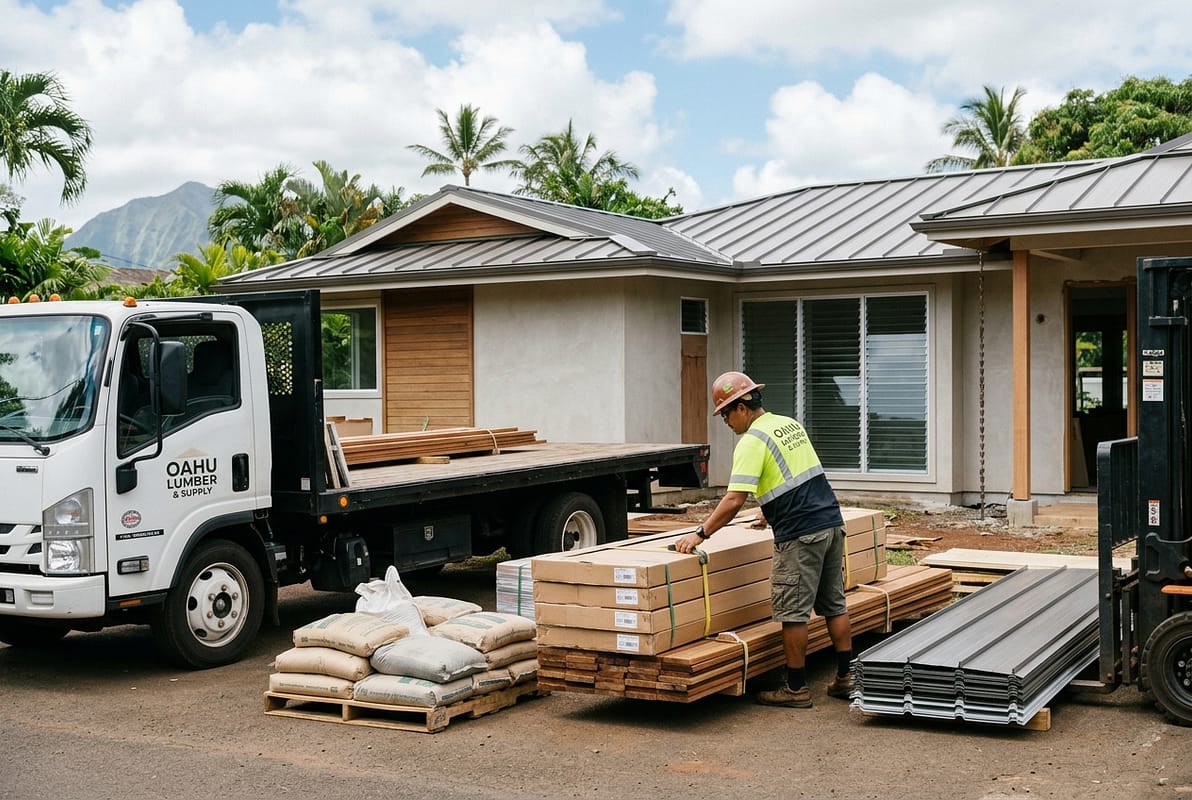
When you phase your projects, you’re forced to make multiple, smaller shipments. These are known as LCL (Less than Container Load) shipments, and they are notoriously inefficient and expensive on a per-pound basis. For a full Trifecta project, we can order all the materials at once and consolidate them into a single 40-foot container. This FCL (Full Container Load) shipment is dramatically cheaper per item. For a typical 2,000-square-foot home in Mililani or Hawaii Kai, consolidating materials for a `roofing siding windows package hawaii` can easily save $4,000 to $6,000 in pure ocean freight and island-side logistics costs compared to shipping everything in three separate batches over two years.
Beating the 8% Year-Over-Year Freight Increase
The savings from container consolidation are immediate. But there’s also a long-term benefit. That 8% annual freight increase is a real cost that gets passed directly to the homeowner. By buying and shipping all your materials in 2026, you avoid paying that inflated shipping cost on your windows in 2027 and your siding in 2028. It’s another way that bundling acts as a powerful hedge against the rising costs of building in the middle of the Pacific.
Will bundling my exterior renovation lower my homeowners insurance?
The ‘Hurricane Hardening’ Discount: Up to 25% Off Annually
This is one of the most significant, and often overlooked, financial benefits of the Trifecta strategy. Hawaii insurance carriers are becoming increasingly strict about how homes are protected against hurricanes. A new roof alone might get you a small discount, but the real savings come when you can demonstrate a complete upgrade of your home’s “exterior envelope.” This means a fortified, wind-rated roof, impact-resistant windows and doors, and a water-resistant siding system all working together. Insurance companies call this a comprehensive “hurricane hardening” package. According to guidelines from major local carriers like FICOH, homeowners who complete this full suite of upgrades can qualify for premium discounts of 20-25% annually[5]. On a typical $3,000 annual premium, that’s a savings of $750 every single year, for the life of those upgrades.
What Insurance Carriers Like FICOH Are Looking For
Insurance underwriters aren’t just looking for new products; they’re looking for an integrated system. When we complete a Trifecta renovation, we provide our clients with a documentation package for their insurance agent that proves the home is now a much lower risk. This package includes:
- Roofing Documentation: Proof of installation that meets the latest 157-mph wind-load requirements, including specifics on the type of fasteners used and the Miami-Dade certification of the materials. We often recommend a standing seam metal roof for maximum protection and insurance credits. You can learn more in our detailed guide to metal roofs vs. shingles in Hawaii.
- Window and Door Certifications: Spec sheets for all new windows and doors showing their impact rating (often referred to as the DP or Design Pressure rating).
- Siding and Water Barrier Details: Documentation of the new weather-resistant barrier (like Tyvek) installed behind the siding, and information on the siding material itself (e.g., James Hardie fiber cement, which is resistant to wind-driven rain and projectile impacts).
Presenting this complete package is what unlocks the top-tier discounts. This level of `hurricane hardening oahu cost` is an investment that pays for itself not just in safety, but in recurring annual savings.
Does a full exterior renovation increase my home’s value on Oahu?
Recouping 78% of Your Investment at Resale
Yes, and the data is very clear on this. While kitchens and baths often get the glory, exterior renovations provide one of the highest returns on investment (ROI) in the Oahu real estate market. The Honolulu Board of REALTORS®’ 2026 Cost vs. Value report shows that a comprehensive exterior replacement—including a new roof, siding, and energy-efficient, impact-rated windows—recoups an average of 78% of its cost when the home is sold[6]. For a $120,000 investment, that means you can expect to add about $93,600 to your home’s resale value. The reason is simple: a new exterior removes a massive list of potential worries and future expenses for a buyer. It signals that the home is well-maintained, durable, and ready for Hawaii’s climate.
Selling Faster: Why Buyers in Ewa Beach and Kaneohe Pay a Premium
Beyond the direct ROI, there’s a significant impact on how quickly your home sells. The same report found that homes marketed with a “full exterior hardening package” are spending an average of 18 fewer days on the market in competitive neighborhoods like Ewa Beach, Kapolei, and Kaneohe. In today’s market, buyers are savvy. They know about the cost of hurricane insurance. They know about the corrosive effects of salt air on the Windward side. When they see a home that has already addressed these issues with a modern, integrated system, they are willing to pay a premium for that peace of mind. It becomes a major selling point that sets your property apart from others with aging, mismatched exterior components.
Is it smarter to renovate now or wait until 2027?
The UHERO Forecast: Hedging Against a 5-7% Cost Hike
As we’ve mentioned, the economic data strongly suggests that waiting is a costly mistake. UHERO’s Mid-2026 Construction Forecast is explicit: they project a 5-7% increase in the landed cost of specialty building materials and labor by the middle of 2027[1]. On a $120,000 exterior renovation, a 6% increase means that same project will cost you an extra $7,200 if you wait just one year. The primary drivers are factors we can’t control: mainland inflation, diesel fuel prices for shipping, and the tight labor market on Oahu. Acting now allows you to lock in 2026 pricing for materials and labor, effectively insulating your project from next year’s inevitable price hike.
Getting Ahead of the Next Building Code Update
Building codes are not static; they are constantly updated to reflect new weather patterns and safety standards. Hawaii, and Honolulu in particular, is on a path toward making homes more resilient to hurricane-force winds. The next major update to the residential building code is anticipated in late 2027 or early 2028, and it will almost certainly include even stricter requirements for roofing, window anchoring, and structural tie-downs. You can read more about how to navigate these evolving standards in our guide to complying with Hawaii’s hurricane building codes. Completing your renovation under the current 2026 code is often more straightforward and cost-effective than waiting and having to engineer your project to meet a new, more stringent set of rules. It’s about getting the job done before the goalposts move.
What should Oahu homeowners do with this information?
Understanding the financial case for an oahu exterior renovation is the first step. The next is to take practical action. If your home’s roof, siding, and windows are all over 20 years old, it’s time to stop thinking of them as separate issues and start seeing them as one interconnected system. Here is a clear decision-making framework our team at Warrior Construction recommends:
- Assess Your Exterior’s Condition: Do an honest walk-around of your property. Are your asphalt shingles curling or losing granules? Is your wood siding showing signs of rot or termite damage? Are your old jalousie windows leaky and inefficient? If you answer yes to two or more of these, you are a prime candidate for the Trifecta approach.
- Get a Bundled Quote: Don’t waste time getting separate bids. Contact a licensed general contractor who has experience with large-scale exterior renovations. Ask specifically for a single, consolidated quote for a full roofing, siding, and window package. This will reveal the immediate savings from mobilization and project management efficiencies.
- Consult Your Insurance Agent: Call your homeowners insurance provider and ask them directly about discounts for “hurricane hardening.” Ask for their specific requirements. Knowing you can save 25% annually on your premium can significantly impact the overall financial calculation of the project.
- Review Your Finances: With a clear quote and potential insurance savings in hand, you can make an informed decision. Look at the cost of waiting—the projected 5-7% annual increase—and factor that into your budget. For many, financing the project now is cheaper than saving up and paying a much higher price in a few years.
The bottom line is that the data for 2026 is overwhelming. The practice of `bundling home renovation oahu` projects is no longer just a contractor’s tip for efficiency; it is a proven financial strategy for maximizing your investment and minimizing your costs and headaches.
Frequently Asked Questions
How long does a full exterior renovation trifecta take on Oahu?
Once we have the approved permit from the Honolulu DPP, the on-site construction for a typical 2,000 sq. ft. home takes approximately 8-12 weeks. This includes full tear-off and replacement of the roof, siding, and all windows. The biggest variable is the permit itself, which currently takes 6-8 months for approval, so the total timeline from signing a contract to project completion is usually 9-11 months.
What is the average cost for a bundled roof, siding, and window project in 2026?
For a standard single-story, 1,800-2,200 sq. ft. home on Oahu, a full oahu exterior renovation in 2026 typically costs between $110,000 and $150,000. This range depends heavily on material choices. For example, a hurricane-rated standing seam metal roof and high-impact windows will be at the higher end, while architectural shingles and standard vinyl windows would be at the lower end of that range.
Are there specific materials you recommend for Hawaii’s climate?
Absolutely. We almost always recommend James Hardie HZ10 fiber cement siding, as it’s specifically formulated to resist salt spray, high humidity, and intense UV exposure. For roofing, standing seam metal with a Kynar 500 finish offers the best long-term resistance to corrosion and hurricanes. For windows, vinyl or fiberglass frames hold up much better to salt air than aluminum, and we always specify stainless steel hardware.
Can I live in my house during the renovation?
Yes, homeowners can almost always remain in the home during an exterior renovation. The work is contained to the outside of the house. There will be noise, particularly during the roof tear-off and siding installation, and a debris container in the driveway, but our crews work hard to maintain a clean and safe job site to minimize disruption to your family.
Does this Trifecta strategy work for homes on the neighbor islands?
The financial logic is even more compelling on Maui, Kauai, or the Big Island. All the costs we discussed—mobilization, shipping, permits—are higher on the neighbor islands due to inter-island logistics. Consolidating everything into a single project saves even more on shipping and avoids the extreme cost of flying specialized crews back and forth for three separate jobs. The savings can easily exceed $20,000.
What’s a bigger risk: termite damage or water intrusion?
Both are huge risks in Hawaii, but a full exterior renovation addresses both directly. During tear-off, we get a clear look at your home’s framing and sheathing, allowing us to identify and perform any necessary structural or termite damage repairs before installing the new, more resilient materials. The new integrated system of roofing, flashing, house wrap, and windows creates a superior water barrier, which is the number one defense against future rot and termite infestation.
Protecting and improving your home is one of the most important investments you can make. The evidence is clear: a coordinated, bundled approach to your exterior renovation is the most intelligent way to enhance your home’s durability, increase its value, and save a significant amount of money and time in the process. It’s about working smarter, not harder, to combat the unique construction challenges we face here in Hawaii.
If your home is ready for a transformation, the next step is to get a clear, comprehensive plan. Our team specializes in these integrated exterior projects and can provide a detailed assessment and a single, transparent quote that shows you exactly how the Trifecta strategy can work for your property. Let’s start the conversation about making your home safer, more valuable, and ready for the next 30 years.
Ready to see how much you could save with an Oahu exterior renovation? Our team provides detailed assessments and bundled quotes to protect your home and your wallet. Explore our hurricane-resistant construction services and schedule your consultation today.


