
A full Oahu STR renovation on a property with a grandfathered Nonconforming Use Certificate (NUC) is one of the highest-risk projects a homeowner can undertake in Hawaii in 2026. The simple act of pulling a building permit can trigger a full review by the Honolulu Department of Planning and Permitting (DPP), potentially voiding the NUC license that makes your short-term rental legal. We get calls every week from investors who bought a legal STR thinking they could do a quick upgrade, only to find themselves facing a regulatory minefield defined by Ordinance 22-7. It’s a brutal reality.
Here’s the hard truth from our 20+ years on job sites across Oahu: you cannot treat this like a normal renovation. The DPP’s mandate is to reduce nonconforming uses, not help you expand them. Consequently, any renovation that alters the property’s footprint, layout, or major systems will almost certainly jeopardize your legal rental status. This isn’t speculation; it’s what we see happen to unprepared owners.
This guide is our playbook, developed from navigating these high-stakes projects. We’re going to walk through the specific renovations that put your NUC at risk, the painful reality of the 18-month permit and carrying cost timeline, why cost escalation clauses are now non-negotiable, and how to analyze if the potential ROI from surging STR rates is even worth the fight. This is the conversation we have with clients before a single dollar is spent on design.
What Renovations Can Void My Grandfathered STR Status on Oahu?
The single most important question in any Oahu STR renovation is whether the work requires a building permit. Under Ordinance 22-7, the moment you file a permit application for a property with an NUC, you invite scrutiny that can lead to the termination of your grandfathered status. The DPP’s position is clear: nonconforming uses should eventually be phased out, so they view any substantial change as an opportunity to enforce current zoning.[1]
The “Danger Zone”: Footprint, Layout, and Major System Changes
Think of your NUC as being tied to the exact state of your property when it was granted. Any deviation from that snapshot is a risk. Here’s a list of renovations our team considers the “danger zone”—work that absolutely requires a permit and will trigger a fatal DPP review:
- Expanding the Footprint: Adding a lanai, enclosing a carport, or building any kind of home addition is the fastest way to lose your NUC. You are fundamentally changing the structure the certificate applies to.
- Altering Bedroom/Bathroom Count: Converting a den into a bedroom or adding a bathroom, even within the existing footprint, changes the intensity of use. The DPP will argue this constitutes an expansion of the nonconforming use.
- Major Layout Changes: Moving load-bearing walls to create an open-concept living area is a structural change requiring a permit and detailed plans. This gives the DPP a perfect opening to re-evaluate the entire property against current code and zoning.
- Major Electrical or Plumbing Rerouting: If you’re moving a kitchen to another part of the house or relocating a main plumbing stack, you’re not doing a simple cosmetic update. These system-level changes require permits and inspections, flagging your project immediately.
- Adding a Wet Bar or Second Kitchenette: This is a massive red flag. The DPP will see this as an attempt to create a separate rental unit or intensify the transient vacation use, which is strictly prohibited for a grandfathered STR hawaii property.
Essentially, any work that goes beyond a surface-level, cosmetic refresh is a gamble. The core principle the DPP operates under is that a nonconforming use cannot be expanded, extended, or altered in a way that increases its nonconformity. An Oahu STR renovation that adds square footage or sleeping capacity does exactly that.
A Real-World Example: The Lanikai Lanai That Risked Everything
To make this concrete, let’s talk about a client we advised in Lanikai. They owned a classic beach cottage with a valid NUC, a true unicorn in that neighborhood. Their dream was to add a simple 200-square-foot covered lanai off the back for better indoor-outdoor living—a standard project for us. On paper, it seemed straightforward.
However, because the property was nonconforming, submitting the permit application for the lanai opened a Pandora’s box. The DPP plan reviewer immediately flagged the NUC status. They didn’t just review the lanai plans; they pulled the property’s entire history. They requested as-built drawings of the entire house to verify that no other unpermitted work had been done since the NUC was issued. They cross-referenced it with tax records. The process stalled for months as the owner had to hire an architect to document the existing conditions, costing nearly $15,000 before we could even talk about construction. Ultimately, the owner decided the risk of the DPP finding some other minor, decades-old discrepancy and voiding their multi-million dollar rental license wasn’t worth the lanai. They pulled the application. This is the brutal calculus NUC holders face.
The “Safe” List: What You Can Typically Do Without a Permit
So, what can you do? The key is to focus on improvements that don’t typically require a building permit. This is maintenance and cosmetic work. While you should always verify with a licensed contractor, here is a general list of what is usually considered safe for an NUC property:
- Interior and Exterior Painting: A fresh coat of paint can transform a space without touching the structure.
- Flooring Replacement: Swapping old carpet for luxury vinyl plank or tile is cosmetic.
- Cabinet Refacing or Replacement: As long as you aren’t changing the kitchen layout, replacing cabinets in the same location is generally fine.
- Countertop Upgrades: Installing new quartz or granite countertops is a high-impact cosmetic change.
- Replacing Fixtures: Swapping out lighting, plumbing fixtures (in the same location), and ceiling fans.
- Window Replacement: Replacing windows of the same size and in the same opening is typically considered maintenance, though it’s wise to double-check.
- Landscaping: Major changes to your yard, short of building large retaining walls, don’t require a building permit.
The crucial distinction is repair and maintenance versus altering and expanding. The moment your Oahu STR renovation crosses that line, you put your entire investment at risk.
How Long Does an STR Renovation Permit Take in Honolulu?
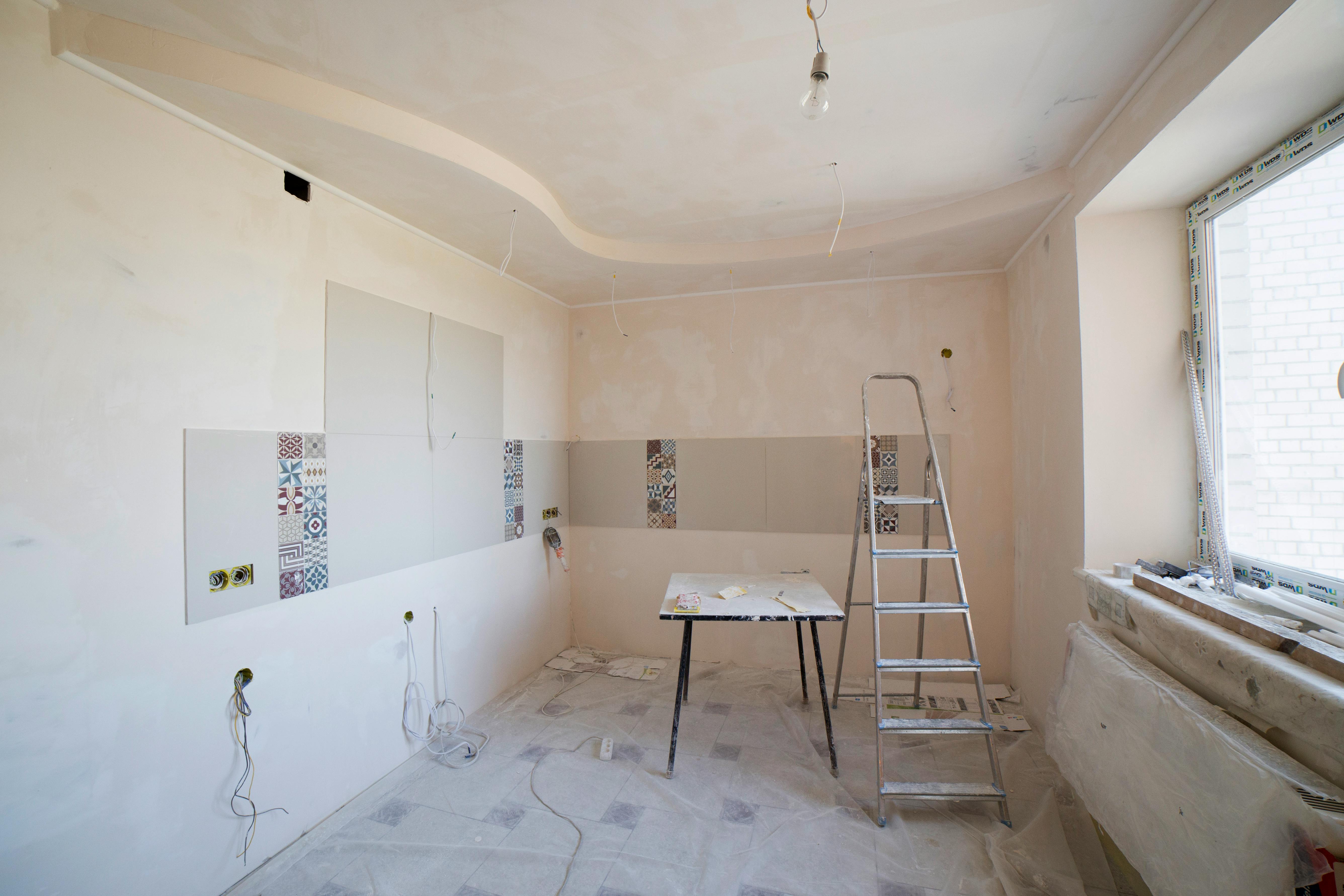
For a standard residential renovation on Oahu in 2026, we tell clients to brace for a 6- to 9-month wait for a building permit. But for a project involving a grandfathered Nonconforming Use Certificate, you must throw that timeline out the window. Based on data from our trade groups and our own project experience, the average DPP permit review time for any STR-flagged project is now a painful 14 months.[2] And that’s just the average; we’ve seen them stretch closer to two years.
Why the DPP Backlog Hits NUC Holders Hardest
The backlog isn’t just about staffing shortages at the DPP; it’s also about policy. An application for an Oahu STR renovation on an NUC property gets routed to a specialized queue. It’s scrutinized by senior zoning reviewers whose job is to protect the integrity of the Land Use Ordinance. It’s not a simple checklist review; it’s a forensic examination of your property’s history.
Here’s what happens behind the scenes:
- Initial Flagging: Your application is immediately flagged in the system due to the NUC status.
- Zoning Deep Dive: Before a building plan reviewer even looks at your structural drawings, a zoning specialist will pull all historical records, original permit drawings, and the NUC documentation.
- Requests for Information (RFIs): You can expect a barrage of RFIs. They will ask for certified surveys, as-built drawings, and documented proof that the nonconforming use hasn’t been abandoned or illegally expanded at any point in the past.
- Cross-Departmental Review: The application may be routed to other city agencies, further extending the timeline.
This process is intentionally rigorous. Each step adds weeks, if not months, to the timeline. For NUC holders, the DPP permit STR process is designed to be a deterrent. We have to plan for this reality from day one.
Calculating Your 18-Month Carrying Costs (Mortgage, Taxes, Insurance)
Given the 14-month average permit wait and the fact that you can’t rent the property during a major renovation, we tell every single client to budget for a minimum of 18 months of total carrying costs before we can even think about breaking ground. This is a non-negotiable part of our pre-construction financial planning. Forgetting this is the most common and catastrophic financial mistake we see investors make.
Let’s run the numbers on a hypothetical property, maybe a classic home in Kailua valued at $2 million that you’re planning to renovate.
Sample Monthly Carrying Costs (2026 Estimates):
- Mortgage Payment (on $1.6M loan at 7%): $10,640
- Property Taxes (Honolulu Residential A): $750
- Homeowner’s/Builder’s Risk Insurance: $600
- Landscaping/Pool Service: $400
- Basic Utilities (to prevent issues): $250
- Total Monthly Cost: $12,640
Total 18-Month Carrying Cost: $12,640 x 18 = $227,520
You need to have nearly a quarter-million dollars in liquid cash set aside just to hold the property while we fight for the permit. This is money that produces zero return. It doesn’t go toward materials or labor; it’s the cost of entry for attempting a permitted Oahu STR renovation. This single calculation stops about half of the potential projects we evaluate right in their tracks.
Why Do Hawaii Contractors Add Cost Escalation Clauses Now?
In 2026, any fixed-price contract for a major renovation in Hawaii that spans more than a year is a recipe for disaster for both the contractor and the homeowner. The long permitting delays, combined with persistent inflation in our island economy, make it impossible to accurately price a project 18 months in the future. This is why our standard contract for any permitted Oahu STR renovation now includes an 8% cost escalation clause.
The UHERO Forecast: What 5-7% Labor Inflation Means for Your Budget
The University of Hawaii Economic Research Organization (UHERO) provides the best data on our local construction market. Their latest 2026 forecast confirms what every contractor on the island knows: skilled labor costs are rising by 5-7% annually.[3] The demand for experienced carpenters, electricians, and plumbers far outstrips supply.
Let’s see what this means for your budget. Imagine we quote a $300,000 renovation for your North Shore property today. If we have to wait 18 months for the DPP to issue the permit, the labor portion of that bid (typically about 50%, or $150,000) will have increased significantly.
A 6% annual increase over 1.5 years isn’t just 9%. It compounds. The real cost of that labor will be closer to $163,800 by the time we can hire the crews. That’s almost $14,000 in labor cost increases alone that have to be accounted for. Add to that the shipping costs and price hikes for materials—especially specialty items for coastal construction like stainless steel fasteners and corrosion-resistant coatings—and you can see how a fixed bid becomes unworkable.
How Our 8% Clause Protects Your Project From Unforeseen Costs
Our 8% cost escalation clause isn’t a way for us to make more money. It’s a transparent mechanism to keep your project viable. Here’s how it works: the clause allows the total contract price to increase by up to 8% to cover documented increases in material and labor costs that occur between the date the contract is signed and the date construction begins.
This protects you, the homeowner, in several ways:
- It Prevents Surprise Bills: Instead of hitting you with unexpected change orders midway through the project, the potential increase is budgeted for upfront.
- It Ensures Quality Subcontractors: It gives us the ability to hire the best, most reliable subcontractors, not just the cheapest ones who might be available 18 months from now. Trying to hold subs to a year-and-a-half-old price is a losing battle.
- It Keeps the Project Moving: Without this protection, a contractor facing massive cost hikes might be forced to cut corners, use cheaper materials, or even walk away from the job, leaving you with a half-finished house. The escalation clause ensures we can build the project we promised to the standards you expect.
In this volatile market, especially with the extreme delays associated with any DPP permit STR application, this clause is a critical tool for risk management for everyone involved.
Is Renovating a Grandfathered STR Still a Good Investment?
After outlining the significant risks, timelines, and costs, the logical question is: why would anyone even attempt a major Oahu STR renovation? The answer comes down to a simple, powerful financial incentive. The very same regulations that make renovating difficult have also drastically reduced the supply of legal short-term rentals, causing daily rates to soar for those who remain.

The ROI Breakdown: Analyzing the 22% Surge in Daily Rates
According to data from DBEDT, the average daily rate (ADR) for legal Oahu STRs has jumped by a staggering 22% since 2024.[4] With thousands of illegal rentals removed from platforms like Airbnb and Vrbo, legally-operating NUC properties have become premium assets. A well-executed renovation can position your property at the very top of this lucrative market.
Consider a hypothetical scenario for a two-bedroom Kailua cottage:
- Pre-Renovation ADR: $450/night
- Pre-Renovation Occupancy: 75%
- Annual Gross Revenue: $450 x 365 x 0.75 = $123,187
Now, let’s say you undertake a $250,000 permitted renovation focusing on a modern kitchen, spa-like bathrooms, and improved outdoor living space. You also have to factor in the $227,520 in carrying costs. Your total investment is roughly $477,520.
- Post-Renovation ADR: $650/night (A 44% increase is realistic for a top-tier product)
- Post-Renovation Occupancy: 85% (A premium property attracts more bookings)
- New Annual Gross Revenue: $650 x 365 x 0.85 = $201,987
The renovation creates an additional $78,800 in gross revenue per year. The simple payback period on your $477,520 investment is just over 6 years. For a long-term real estate hold, that is an excellent return. The key is having the capital, the risk tolerance, and the expert team to navigate the process without losing your NUC.
The Alternative: Pivoting to a Long-Term Rental Upgrade
For many owners, the risk associated with a permitted Oahu STR renovation is simply too high. A smarter, safer alternative is often to pivot your strategy. Instead of renovating for transient vacationers, upgrade the property for the high-end long-term rental market. Think corporate relocations, military officers, or film production rentals.
The advantages are enormous:
- Simpler Permitting: A renovation for a long-term residence doesn’t carry the NUC flag at the DPP. The permit process will still take time, but it’s likely to be closer to the 6-9 month standard, not 14+ months.
- No NUC Risk: You are not jeopardizing your grandfathered STR status.
- Lower Carrying Costs: A shorter permit timeline means less cash tied up in a non-performing asset.
- Stable Income: You get consistent, stable income without the hassle of managing weekly turnovers.
You can still command excellent rent for a beautifully renovated Kailua or North Shore home, often with less wear and tear than a vacation rental would endure.
A Smarter First Step: The Pre-Sale “Permit-Readiness” Inspection
Before you even think about design or renovation, the most intelligent investment you can make is what we call a “Permit-Readiness” inspection. This is a crucial pre-construction service where we, along with our architect and permit expediter partners, conduct a deep dive into your property’s legal and physical history. This is especially important for anyone considering renovating Kailua home with an older construction history.
This process involves:
- A full DPP records pull: We find every permit, plan, and violation ever associated with your property’s address.
- On-site verification: We walk the property to see if the physical structure matches the approved plans on file with the city.
- NUC document review: We analyze the specific terms and conditions of your nonconforming use certificate.
The goal is to identify any unpermitted work done by previous owners. Finding an illegally enclosed patio or an unpermitted bathroom from 20 years ago during our review is a manageable problem. Finding it after you’ve submitted a new permit application is a catastrophe. As the Honolulu Board of REALTORS constantly advises, ambiguity is your enemy. The initial fees for this forensic-level work can run from $25,000 to $50,000, but it can save you from a multi-million dollar mistake.
What this means for Hawaii homeowners
Navigating an Oahu STR renovation on a grandfathered property in 2026 is less of a construction project and more of a strategic legal and financial mission. The rules are complex, and the stakes are incredibly high. One wrong move, one overly ambitious permit application, and the golden goose—your legal right to operate—is gone forever. Here is our direct advice:
- Assume Nothing is Simple: Do not listen to anyone who tells you a renovation will be easy or quick. The DPP is mandated to be strict with NUC properties. Any project requiring a permit will face extreme scrutiny.
- Prioritize Cosmetic Upgrades: The safest and often most profitable path is to focus on high-impact cosmetic upgrades that don’t require a permit. A new kitchen in the same layout, refreshed bathrooms, new flooring, and high-end furnishings can significantly boost your ADR without risking your license.
- Secure 18+ Months of Capital: If you are determined to proceed with a permitted renovation, you must have the liquid capital to cover at least 18 months of mortgage, taxes, and insurance *before* you start. Do not plan on rental income offsetting these costs; there won’t be any.
- Hire a Team Experienced with Ordinance 22-7: This is not a job for a handyman or a general contractor who primarily does new builds. You need a team—a contractor, an architect, and a permit expediter—who has successfully navigated the DPP’s nonconforming use certificate oahu review process post-Ordinance 22-7. Their experience is your most valuable asset.
- Get a Permit-Readiness Audit First: Before spending a dime on design, invest in a thorough audit of your property’s permit history. Uncovering past unpermitted work is the number one project killer. Knowing what you’re up against is the only way to make an informed decision.
Frequently Asked Questions
Can I add an ADU or Ohana unit to my property if it has an STR NUC?
Absolutely not. This is one of the clearest prohibitions. Adding a second dwelling unit, or an ADU, to a lot with a grandfathered STR is seen by the DPP as a massive expansion and intensification of use. The permit application for the ADU would almost certainly trigger the revocation of your NUC for the main house.
What is the real cost to start the DPP permit STR process?
Before any construction starts, you need to budget for significant soft costs. Initial architectural and engineering plans can run from $20,000 to $40,000 for a major renovation. On top of that, hiring a skilled permit expediter who specializes in complex cases can cost another $5,000 to $10,000. So, you’re looking at an initial, non-refundable investment of $25,000 to $50,000 just to submit your application, with no guarantee of approval.
If I lose my NUC, can I get it back?
No. Once a Nonconforming Use Certificate is voided, it is gone forever. There is no appeal process to have it reinstated. The property would then revert to the underlying zoning, which in most residential areas of Oahu, prohibits rentals for periods of less than 30 days (as of Ordinance 22-7’s update).
Does renovating my property reset the ‘nonconforming’ clock?
In a way, yes, and not in your favor. A major renovation can be viewed by the DPP as a discontinuation of the original nonconforming use. If a property is “substantially improved” (often defined as work costing more than 50% of its assessed value), the city can require the entire property to be brought into compliance with current zoning—which means no more short-term rentals.
What if my contractor says we can do the work without a permit?
Run, don’t walk. A contractor suggesting you perform work that legally requires a permit is advising you to break the law and is putting your entire property at risk. If a neighbor complains or a DPP inspector drives by, you’ll face stop-work orders, heavy fines, and a mandated review of your NUC that will almost certainly lead to its termination. It is never worth the risk.
How does Ordinance 22-7 affect renovations differently than the old STR laws?
Ordinance 22-7 drastically increased the enforcement and scrutiny. The DPP’s digital systems are now much better at cross-referencing property tax records, NUC databases, and building permit applications. Before, a small permit might have slipped through. In 2026, any application tied to a known NUC address is automatically flagged for a high-level zoning review, making the process much longer and riskier than it was in the past.
Is it easier to get a permit for an STR renovation in a resort-zoned area like Waikiki or Ko Olina?
Yes, significantly easier. If your property is in a designated resort-zoned area where STRs are a permitted use, you don’t have a nonconforming use certificate to protect. You can renovate it like a normal condominium (subject to AOAO rules, of course). The extreme risk and scrutiny described in this article apply specifically to those properties operating with a grandfathered NUC outside of these resort zones.
Thinking About an Oahu STR Renovation? Don’t Make a Move Without a Plan.
The stakes are too high to guess. Before you sketch a single idea or call an architect, you need a strategic assessment of your property’s legal standing and the real-world risks involved. Our team specializes in the critical pre-construction phase that can make or break a project like this.
We can help you analyze your property’s permit history, develop a realistic budget that includes the true carrying costs, and determine the safest path forward to maximize your investment without jeopardizing your NUC. It starts with a conversation about strategy, not just construction.


