
Your AOAO’s reserve study is almost certainly wrong, and that gap between paper and reality is what leads to a massive Hawaii condo special assessment. The problem with most studies is they use outdated national cost data that doesn’t reflect the on-the-ground reality of building in Hawaii in 2026. A generic cost estimator can’t price in the 12-month permit backlog at the Honolulu DPP or the fact that specialized concrete spalling repair crews now command $225-$250 per square foot. As a result, your association is likely underfunded by 30% or more for critical upcoming projects.
For over 20 years, our team at Warrior Construction has been on the front lines of major AOAO capital improvement projects across Oahu. We’ve seen firsthand how a flawed AOAO reserve study Hawaii boards rely on can create financial chaos. This isn’t about minor miscalculations. We’re talking about multi-million dollar shortfalls that force boards to levy huge, unexpected assessments on homeowners. These assessments can strain families financially, torpedo property sales, and create deep divisions within the community.
This guide isn’t theoretical. We’re opening up our books to show you the real numbers we’re seeing in bids and project costs for 2026 and 2027. We’ll break down the five biggest cost drivers your reserve study is probably missing, explain how unforeseen code triggers can double a project’s budget overnight, and provide a clear framework for pressure-testing your AOAO’s financial health before it’s too late. The goal is to equip your board with the knowledge to ask the right questions and plan proactively, ensuring the long-term stability and value of your property.
Why Is Your AOAO Reserve Study Underfunded by 30% or More?
The primary reason your AOAO reserve study in Hawaii is dangerously underfunded is that it relies on outdated, mainland-based cost data that fails to capture the unique and rapidly escalating expenses of construction on an island. Essentially, the software and data sets used by many reserve study specialists are not calibrated for Hawaii’s 2026 market realities. This creates a significant gap between their neat-and-tidy projections and the hard-hitting bids you’ll receive from local general contractors.
Furthermore, these studies often use a simple inflation escalator, maybe 3-4% annually, which is completely disconnected from what we’re actually seeing. Specialized construction costs here are not rising in a smooth, predictable line. Instead, they are surging in specific categories due to a perfect storm of supply chain disruptions, a severe skilled labor shortage, and crushing logistical challenges. For example, a standard inflation model will never predict a 15% shipping surcharge on specialty repair materials or a 30% spike in high-performance window costs in a single 24-month period. A well-prepared AOAO reserve study Hawaii must account for these volatile, island-specific factors.
The Price Shock You Don’t See: 25-30% Inflation on Windows & Materials
Let’s talk specifics. One of the biggest shocks for AOAO boards right now is the cost of building envelope components. High-performance window glazing and the associated aluminum framing have jumped 25-30% in cost since early 2024.[1] For a typical Waikiki high-rise built in the 1970s, this isn’t a small line item; that price hike alone adds over $1.5 million to a full window replacement project. Your reserve study might have the window replacement scheduled for 2028, but it’s likely budgeting based on 2024 prices with a generic inflation factor, leaving you millions short.
It’s not just windows. We see this across the board with materials that have to be shipped in. Specialized concrete spalling repair compounds, high-grade waterproofing membranes, and custom-milled railings all come with a hidden ‘island tax.’ As a result of increased shipping fuel costs and mainland supply chain bottlenecks, we are consistently seeing 15% surcharges on these critical materials. A reserve study that doesn’t explicitly factor in these logistical costs for a major concrete spalling repair project on Oahu is setting the AOAO up for failure. A detailed AOAO reserve study Hawaii needs this level of granular, local pricing.
The Real Cost of Skilled Labor: Securing a Crew in Hawaii
Materials are only half the battle. The other, more volatile factor is the cost and availability of skilled labor. There is a critical shortage of specialized tradespeople in Hawaii, particularly for the kind of work AOAOs need. The competition for experienced concrete restoration crews, certified waterproofers, and licensed plumbers is intense. This isn’t just a talking point; the Hawaii Contractors Association’s 2026 Labor Outlook report confirms this trend is stretching project timelines and driving up rates.[2]
What does this mean for your budget? It means the labor rate for a specialized concrete restoration crew on Oahu is no longer a simple hourly wage. For planning purposes in 2026, your board needs to budget $225-$250 per square foot for this work. A significant portion of that cost is simply to secure a qualified, reputable team and lock them into your project schedule. If your AOAO reserve study Hawaii is using a national average of $150/sqft for this work, your budget is already off by more than 50% before a single hammer swings. This is a common and costly error we see in many financial plans.
The ‘Permitting Tax’: Factoring in Honolulu’s 12-Month Delays
Time is money, and nowhere is that more true than in the world of Honolulu permitting. The Honolulu Department of Planning and Permitting (DPP) is facing a significant backlog. As of mid-2026, the official bulletin states that review times for major AOAO common area projects are averaging 9 to 12 months.[3] This is not the time from when you decide to do a project; this is the time from when your architect and engineer submit a complete set of plans.
This delay functions as a hidden tax on your project. During that 12-month waiting period, material prices continue to escalate, and labor rates can increase. A project you budgeted for in January 2026 might not get a permit until January 2027, by which time costs could have risen by another 8-10%. A sophisticated AOAO reserve study for a Hawaii property must include a significant cost escalation contingency specifically for permitting delays. We advise our clients to add a ‘permit lag’ contingency of at least 10% on top of standard inflation for any major project. Most reserve studies completely miss this crucial, location-specific variable.
What Hidden Code Requirements Can Double a Project’s Budget?
One of the most dangerous assumptions an AOAO board can make is that a repair project is a simple one-for-one replacement. In Hawaii, especially with older buildings, touching one part of the structure can trigger a cascade of mandatory code upgrades that were not part of the original scope. These are not optional suggestions from a contractor; they are legal requirements enforced by the DPP during the permit review process. An AOAO reserve study Hawaii that fails to account for these potential triggers is not a financial plan—it’s a financial fantasy.
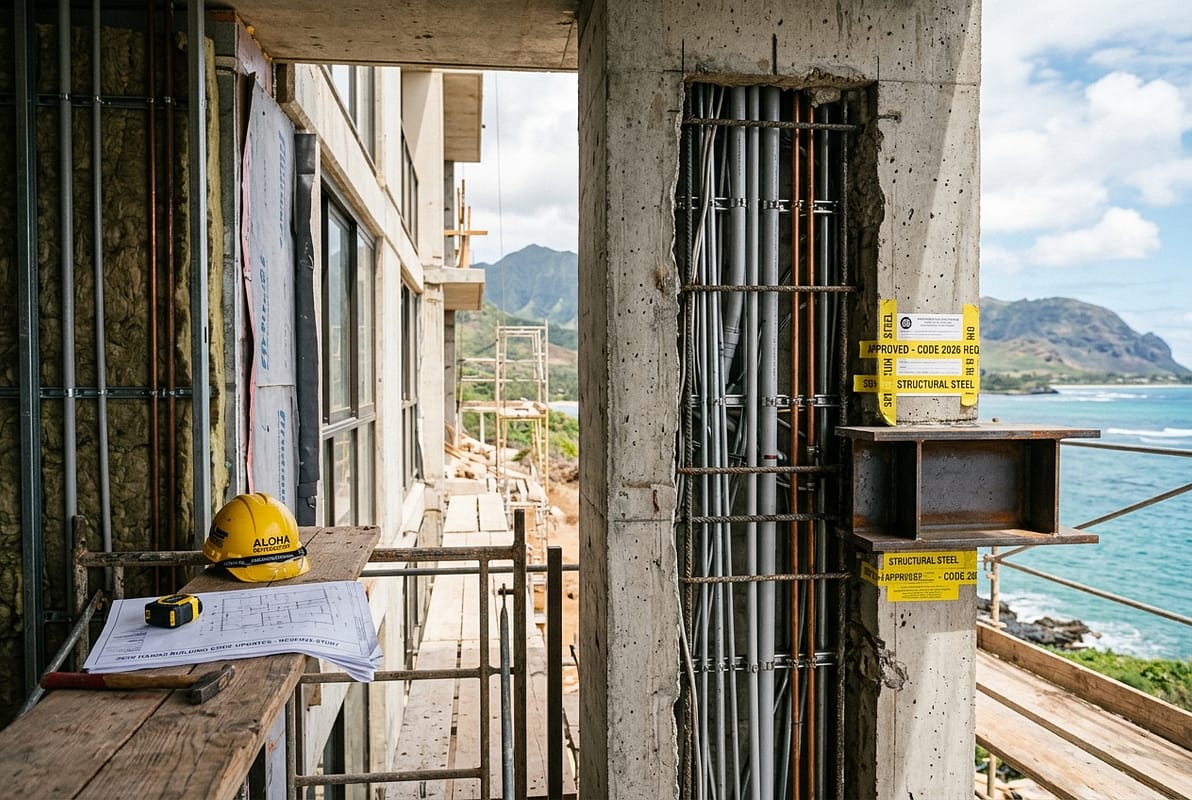
These code triggers are often the source of the most shocking cost overruns and are a primary driver of large special assessments. The issue is that the reserve study might correctly identify that the lanai railings have reached the end of their useful life. However, it budgets only for the cost of new railings. It doesn’t account for the expensive structural work the city will now require as part of that same project. For boards in older buildings from the 70s and 80s in areas like Makiki or Waikiki, understanding these hidden requirements is absolutely critical for responsible financial planning.
The Lanai Railing Nightmare: How a $750k Job Becomes a $2M Project
Here’s a real-world scenario we see play out constantly. An AOAO in a 40-year-old building plans to replace its corroded lanai railings. Their reserve study allocates $750,000 for the project, which seems reasonable for new aluminum railings. The board gets bids, selects a contractor, and submits plans to the DPP.
This is where the nightmare begins. Because they are altering a structural component of the building’s exterior, the DPP now requires the entire lanai connection to be brought up to the current hurricane code. This is a direct result of lessons learned from Hurricane Iniki. The city is now strictly enforcing rules that require new hurricane tie-downs and reinforced connections between the lanai slabs and the building itself.[4] Suddenly, your simple railing job has morphed into a major structural upgrade. The project scope explodes to include concrete demolition, steel reinforcement, and complex engineering. That $750,000 project is now a $2 million structural retrofit. This is the kind of detail that a generic AOAO reserve study Hawaii will never capture.
The Ticking Time Bomb: The $8 Million Surprise of 50-Year-Old Pipes
Another ticking time bomb in many of Oahu’s older high-rises is the plumbing. The cast iron drain, waste, and vent (DWV) pipes installed in buildings from the 1970s have a typical lifespan of about 50 years. We are now at that 50-year mark, and these systems are beginning to fail systematically across the island.
A reserve study might mention ‘plumbing repairs’ and allocate a few hundred thousand dollars. But this misses the scale of the problem entirely. We’re not talking about fixing a leak; we’re talking about a full-building repipe. This is one of the most invasive and expensive AOAO capital improvement costs a building can face. It involves opening up walls in every single unit, often requiring residents to move out temporarily. At Warrior Construction, we are currently bidding on several of these projects, and the price tags range from $5 million to $8 million. An AOAO board that hasn’t been aggressively funding for this inevitable, non-negotiable expense will have no choice but to levy a crippling special assessment on its owners. An accurate AOAO reserve study Hawaii should have identified this decades ago.
How Do Underfunded Reserves Impact Your Property Values?
The health of an AOAO’s reserve fund is not just an internal accounting issue; it has a direct and significant impact on the market value of every unit in the building. A poorly funded reserve study is a massive red flag for savvy homebuyers, lenders, and real estate agents. When a building has deferred maintenance and insufficient funds to address it, the market takes notice, and property values suffer. This financial instability creates risk that buyers are simply unwilling to take on in today’s market.
Think of it from a buyer’s perspective. They are not just purchasing a condo; they are buying into a multi-million dollar corporation—the AOAO. A weak balance sheet, indicated by a low reserve fund percentage, signals future financial trouble. It tells the buyer that a large Hawaii condo special assessment is not a matter of ‘if,’ but ‘when.’ This uncertainty can be enough to kill a deal, drive down offers, or make it impossible for a buyer to secure financing, as lenders are also scrutinizing AOAO financials more closely than ever before.
Why Savvy Buyers in Kaka’ako and Kailua Are Walking Away
In competitive real estate markets like Kaka’ako, Kailua, and even along the Gold Coast, buyers have choices. Their agents are trained to perform deep due diligence, which always includes a thorough review of the AOAO’s board minutes, financial statements, and the full AOAO reserve study Hawaii. They are specifically looking for large, unfunded future projects.
The Honolulu Board of REALTORS has noted a clear trend: units in buildings that have already completed major upgrades—like spalling repairs, repiping, or new windows—consistently sell for 10-15% more than comparable units in buildings where those projects are looming.[5] Buyers will do the math. If they see a $5 million plumbing project on the horizon and only $1 million in reserves, they know a special assessment of $40,000 or $50,000 per unit is coming. They will either walk away from the deal entirely or submit a lowball offer that factors in the future assessment. Your building’s reputation for financial health directly translates to higher, faster sales.
The Difference Between a Proactive Board and a Reactive Assessment
A proactive board uses its AOAO reserve study as a strategic roadmap. They update it annually, pressure-test the numbers against real-world contractor estimates, and communicate openly with homeowners about the need for steady, predictable increases in maintenance fees to fund future projects adequately. This approach builds owner confidence and protects property values. It demonstrates that the board is managing the building like a business and safeguarding the owners’ collective investment.
Conversely, a reactive board waits for systems to fail. They rely on an outdated AOAO reserve study and keep maintenance fees artificially low to avoid upsetting homeowners in the short term. This inevitably leads to a crisis: a major pipe bursts, concrete chunks fall from lanais, or the building’s insurance carrier threatens to cancel the policy due to deferred maintenance. At this point, the board has no choice but to pass a massive, emergency special assessment. This reactive approach erodes trust, creates financial hardship for owners on fixed incomes, and permanently damages the building’s reputation in the real estate market.
A Contractor’s Breakdown: Real 2026/2027 Project Costs in Hawaii
To truly understand the disconnect between a typical reserve study and reality, let’s put some hard numbers on the table. These are not national averages; these are the figures our team at Warrior Construction is using for budgeting and bidding on AOAO projects across Oahu in 2026. A functional AOAO reserve study in Hawaii needs to reflect these costs, not numbers from a mainland database.
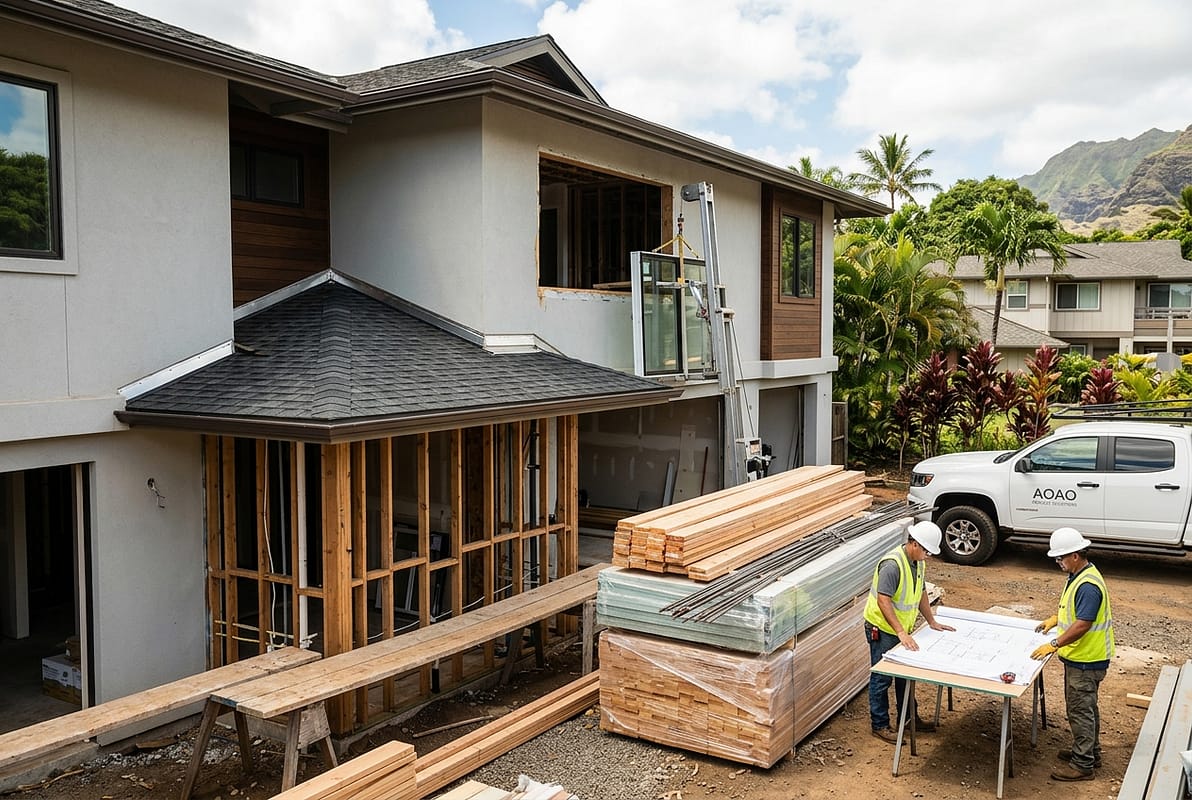
Below is a comparison of common capital projects, showing what a generic reserve study might estimate versus the actual costs we are seeing today. The difference is staggering and highlights the source of major funding shortfalls.
| Capital Improvement Project | Typical Reserve Study Estimate (2024 Data) | Warrior Construction 2026 On-the-Ground Cost | Primary Cost Drivers |
|---|---|---|---|
| Concrete Spalling & Lanai Repair | $125 – $150 / sq. ft. | $225 – $250 / sq. ft. | Skilled labor shortage, specialized material shipping surcharges (15%+), code-triggered structural tie-in requirements. |
| Full Building Window Replacement (150-unit high-rise) | $4.5 Million | $6.0 Million+ | 25-30% increase in high-performance glazing and aluminum framing costs, increased labor for installation. |
| Full Building DWV Re-pipe (150-unit high-rise) | $3.0 Million | $5.0 Million – $8.0 Million | Massive labor component, cost of resident displacement, limited number of qualified plumbing contractors for high-rise work. |
| Parking Garage Waterproofing | $45 / sq. ft. | $75 – $90 / sq. ft. | Cost of high-grade membrane systems, extensive concrete prep work, certified applicator labor rates. |
These figures should be a wake-up call for any AOAO board member. If your AOAO reserve study Hawaii is using numbers in the middle column, you are not planning for success. You are planning for a future special assessment. The data in the right-hand columns reflects the true, all-in AOAO capital improvement costs in today’s market.
What Is a Realistic Funding Goal for a Hawaii AOAO in 2026?
Given the escalating costs and unforeseen complexities, what should a responsible AOAO board aim for in terms of reserve funding? The state of Hawaii provides a legal minimum, but as we see in practice, meeting the minimum is often a direct path to financial trouble. A truly resilient AOAO needs to aim significantly higher to protect itself and its homeowners from the sticker shock of 2026 construction costs.
The goal is not just to have money in the bank. The goal is to have a funding level that provides stability, predictability, and flexibility. It allows the board to execute necessary projects on schedule without levying emergency assessments, thereby preserving and enhancing property values. A robust reserve fund is the hallmark of a well-managed building. To achieve this, a shift in mindset is required—from simply meeting a legal threshold to adopting a more conservative, business-like approach to financial planning. An AOAO reserve study Hawaii is the tool, but the funding philosophy is what matters.
Why the State’s 50% Minimum Is a Recipe for Disaster
The Hawaii Real Estate Commission requires AOAOs to maintain a reserve funding level of at least 50% of the calculated total. While well-intentioned, this 50% minimum is dangerously inadequate in today’s volatile market. Relying on this figure as a safe harbor is one of the biggest mistakes a board can make. Why? Because it assumes your cost calculations are perfect, and as we’ve demonstrated, they are almost certainly not.
Imagine your reserve study calculates a future project cost of $2 million. A 50% funding level means you have $1 million saved. But when the real bids come in at $3 million due to labor shortages and material inflation, you don’t just have a small shortfall—you have a massive $2 million gap. You’re not 50% funded for the real cost; you’re only 33% funded. This scenario plays out time and time again. The 50% rule creates a false sense of security that can lead directly to a Hawaii condo special assessment.
Our On-the-Ground Recommendation: Annual Updates and a 70%+ Funding Target
At Warrior Construction, based on decades of experience working with AOAOs across Oahu, we strongly advise our clients to ignore the state minimum and aim for a much more conservative target. Here’s our recommended framework for a healthy AOAO reserve study and funding plan in Hawaii:
- Target a 70% or Higher Funding Level: This provides a crucial buffer to absorb unforeseen cost increases and code-triggered scope changes without immediately resorting to an assessment. For older buildings with major systems nearing the end of their life, we even recommend pushing towards 80-90%.
- Update Your Reserve Study Annually: A study that is even two years old is useless in this market. An annual update, even a less formal one performed with the help of a contractor, is essential to keep your cost projections grounded in reality.
- Budget for ‘Soft Costs’ Aggressively: Your AOAO reserve study must include realistic line items for architectural fees, engineering reports, permit fees, and a healthy project contingency (we recommend 15-20% on major projects). These costs are often underestimated.
Adopting this more rigorous approach transforms your reserve fund from a liability into a strategic asset that protects every homeowner’s investment.
How Can Your Board Pressure-Test Its Financial Plan?
So, you have your AOAO reserve study. How do you know if it’s realistic? The single most effective thing your board can do is to stop relying solely on the reserve study specialist and bring in a qualified, experienced general contractor long before you finalize your budget. This is the ‘pressure test’ that can save your AOAO millions of dollars and prevent the agony of a special assessment. A contractor who is actively bidding on and building these types of projects in Hawaii has real-time data that no national database can match.
This process, often called preconstruction planning, involves having a contractor review the capital improvement plan outlined in your reserve study. They can provide realistic, order-of-magnitude budgets for your major upcoming projects based on current labor rates, material costs, and permitting timelines. This isn’t a formal bid; it’s a strategic partnership to align your financial plan with market reality. Checking your AOAO reserve study Hawaii against real-world numbers is the most responsible step a board can take.
Bring in a Contractor Before You Finalize Your Budget
The ideal time to engage a contractor is during your annual budget meeting, as you are reviewing the updated AOAO reserve study. Share the scope of your top three-to-five upcoming capital projects with a few reputable contractors. Ask them for a conceptual budget and a list of potential risks or hidden costs they see. For example, you can say, “Our reserve study says replacing the roof will cost $1.2 million in 2028. Does that number feel right to you based on what you’re seeing today?”
A good contractor will immediately ask critical questions that your reserve study likely ignored: Is it a concrete or wood-frame roof? Are we dealing with asbestos? Will we need to upgrade the hurricane strapping to meet current code? What’s the access like for a crane? The answers to these questions can dramatically impact the final cost. This early-stage collaboration provides the board with the realistic data needed to set appropriate maintenance fees and funding goals. It’s an invaluable step in validating the assumptions within your AOAO reserve study Hawaii. This proactive approach ensures you’re working with real numbers, not hopeful guesses.
Let’s Review Your Plan—Before You’re Facing a Special Assessment
The message is simple: don’t wait for a crisis. Don’t wait until the bids for your concrete spalling repair project come in 40% over budget. Don’t wait until your only option is to send a special assessment letter to hundreds of your neighbors. The time to get a realistic view of your AOAO’s financial future is now.
Our team at Warrior Construction offers AOAO boards a complimentary consultation to review their capital improvement plans. We can look at the projects outlined in your AOAO reserve study and provide our on-the-ground perspective on costs, timelines, and potential risks. We believe an educated board is an effective board. Our goal is to be a resource, helping you navigate the complexities of major construction projects and develop a financial plan that is both responsible and realistic. Proactively managing your AOAO reserve study in Hawaii is the key to long-term success.
What this means for Hawaii homeowners
If you’re an individual condo owner in Hawaii, this discussion about the AOAO reserve study isn’t just for board members—it directly affects your personal finances and the value of your largest asset. An underfunded reserve is a direct threat to your financial stability. Here’s what you need to understand and what you can do:
- Your Equity is at Risk: A large special assessment can easily wipe out years of equity growth. A $50,000 assessment on a $700,000 condo is a direct hit to your net worth.
- Assessments Can Force a Sale: For owners on a fixed income, like many of our kupuna, an unexpected five-figure bill is not just an inconvenience; it can be a financial catastrophe, potentially forcing them to sell their home.
- It Impacts Your Ability to Sell: When your building is facing a known, unfunded project, it becomes significantly harder to sell your unit. Potential buyers will be scared off, and those who do make an offer will demand a steep discount.
What You Can Do:
- Attend Board Meetings: This is the single most important action you can take. Listen to discussions about maintenance, upcoming projects, and the budget.
- Ask for the AOAO Reserve Study: You have a right to see it. Look at the funding percentage. If it’s hovering around 50%, start asking pointed questions. Ask when the last time the cost estimates were updated with input from a local contractor.
- Advocate for Proactive Funding: Support small, regular increases in maintenance fees now to avoid a massive special assessment later. It’s a much more manageable and responsible way to fund your building’s future.
Don’t be a passive observer. Be an engaged owner who understands that the financial health of your AOAO is directly tied to your own. A well-managed AOAO with a properly funded reserve study protects everyone’s investment.
Frequently Asked Questions
What is the biggest mistake AOAO boards make with their reserve study?
The biggest mistake is treating the AOAO reserve study as a one-time document that gets put on a shelf. In Hawaii’s 2026 market, a study that’s more than 12-18 months old is dangerously outdated. Boards must treat it as a living document, updating cost projections annually with real-world input from local contractors to avoid massive budget shortfalls.
How much should our AOAO have in reserves in Hawaii?
While state law requires a 50% funding level, we strongly recommend a target of 70% or higher. This provides a critical financial cushion to absorb the inevitable cost increases from material inflation, skilled labor shortages, and unexpected code requirements common in Hawaii. For older buildings with major systems nearing failure, aiming for 80% is even wiser.
Can a contractor help with our AOAO reserve study in Hawaii?
Absolutely. While a contractor doesn’t replace a reserve study specialist, they provide the essential real-world cost validation. We recommend AOAO boards engage a contractor during the preconstruction phase to review the study’s major project budgets. We can provide current, on-the-ground cost estimates for things like concrete spalling repair ($225+/sqft) or full building repipes ($5M-$8M) that are far more accurate than national data.
Why are Honolulu DPP permit times so long for AOAO projects?
As of 2026, Honolulu DPP permit times for major commercial alterations, which includes most AOAO capital projects, are averaging 9-12 months. This is due to a combination of high volume and a shortage of senior plan examiners. This delay acts as a hidden cost, as material and labor prices will increase during the waiting period, a factor your AOAO reserve study must account for.
What’s the real cost of concrete spalling repair on Oahu in 2026?
For budgeting purposes, boards should plan for $225-$250 per square foot for comprehensive concrete spalling repair. This all-in cost reflects not just materials and labor but also mobilization, scaffolding or swing stages, and the high premium for securing a qualified, experienced crew in a tight labor market. Any AOAO reserve study Hawaii using a figure below $200/sqft is not based on current market conditions.
How do we avoid a large Hawaii condo special assessment?
The key is proactive, realistic financial planning. First, get your reserve fund to 70%+ of the fully funded balance. Second, update your AOAO reserve study annually with real cost data from a local contractor. Third, communicate openly with owners about the need for modest, regular maintenance fee increases. This disciplined approach avoids the crisis management that leads to assessments.
Does an underfunded reserve affect my ability to get a mortgage?
Yes, increasingly so. Lenders are scrutinizing AOAO financials more carefully. If a building has a low reserve fund percentage and significant deferred maintenance, it can be flagged as a risky project. This can make it difficult or impossible for potential buyers to secure a loan, which directly impacts your ability to sell and the overall value of your unit.
Your Next Step: A No-Cost Reality Check for Your Capital Plan
Reading this guide is the first step. The next is taking action. Don’t let your AOAO be the next cautionary tale of a multi-million dollar special assessment that could have been avoided. An outdated AOAO reserve study is a liability, but a pressure-tested, realistic financial plan is your community’s greatest asset.
If you’re on your AOAO board and feeling uncertain about the numbers in your reserve study, our team at Warrior Construction is here to help. We offer a no-obligation consultation to review your upcoming capital projects and provide a real-world budget and timeline assessment. Let’s ensure your financial plan is built on a foundation as solid as the concrete we repair.
Protect your community and your investment. Contact our AOAO Capital Projects team today to schedule a complimentary review of your reserve study’s major project assumptions.


