
The most effective strategy for Oahu home hardening in 2026 is a complete ‘building envelope’ system designed to meet Honolulu’s stringent new 150 mph wind code. This is not about just one upgrade. It is a strategic trifecta. First, a standing seam metal roof costs $24-$29/sq ft. Second, fiber cement siding is a ~$15,000 upgrade over T1-11. Finally, you get impact-rated windows. For a typical 1,900 sq. ft. home, this comprehensive protection represents a significant investment. It often ranges from $85,000 to $115,000. But it is the only way to ensure true resilience. This protects against increasingly severe hurricane seasons for years to come.
At Warrior Construction, our team has seen this firsthand. This systems-based approach not only protects your family. It also delivers substantial long-term ROI for your property. This comes through insurance savings. You also get improved energy efficiency, especially with HECO rates at $0.48/kWh. There is also a massive boost in resale value. A proper Oahu home hardening strategy is one of the smartest financial decisions you can make for your property.
For years, conversations about hurricane prep were often limited to stocking up on water and batteries. We have learned lessons from past storms. There is also an undeniable shift in weather patterns. Because of this, the focus for Hawaii homeowners has rightly moved. It is now on proactive structural protection. This guide is our playbook, built on 20+ years of on-the-ground experience, explaining exactly what effective Oahu home hardening looks like in 2026. We will break down the new codes. Our team will compare the real costs of materials. This includes metal roofing and fiber cement siding. We will show you why thinking of your home’s exterior as a single, integrated system is smart. It is the smartest investment you can make this year.
Why Is ‘Oahu Home Hardening’ More Critical in 2026?
Hardening your Oahu home is more critical in 2026 than ever before. This is due to Honolulu’s adoption of a mandatory 150 mph wind code. This code applies to all new and replacement roofs. This is a significant regulatory change. It is combined with rising insurance costs and more intense storm seasons. This means proactive structural upgrades are no longer just a good idea. They are now a financial and safety necessity. The days of simply patching up an old roof or tacking on new siding are over for any project requiring a permit. The standards have been raised significantly, and for good reason. We’ve seen too many homes suffer catastrophic damage from high winds because one component of the exterior failed, causing a domino effect. Consequently, the entire approach to protecting your property, a process we call Oahu home hardening, has fundamentally changed, driven by new regulations and a deeper understanding of building science in our unique marine environment.
Understanding Honolulu’s New 150 MPH Wind Code
The single biggest driver for this shift is the Honolulu Department of Planning and Permitting (DPP) officially adopting what are essentially Miami-Dade hurricane standards. As of 2026, any new or replacement roof on Oahu must have a minimum 150 mph wind rating.[1] This isn’t a small change; it’s a complete overhaul of how we build and renovate.
What does this mean in practice? It is all about fighting ‘wind uplift’. During a hurricane, wind flows over your roof. This creates a powerful suction effect. It is much like an airplane wing. This effect tries to pull the roof off the house. The new code specifies the exact fastener patterns, clip strengths, and materials needed to resist these forces. For many traditional architectural shingles, meeting these new requirements is extremely difficult. It is often impossible. This is especially true in higher wind zones like the North Shore. It also applies to the ridges above Kaneohe. This code update effectively makes high-performance systems the new gold standard. Systems like standing seam metal are now essential for compliance and safety. This is a critical aspect of any serious Oahu home hardening project. It ensures long-term protection.
Beyond the Roof: The ‘Building Envelope’ Approach
A 150-mph roof is fantastic, but it’s only one part of the puzzle. We stress the importance of a complete ‘building envelope’ to our clients. Think of your home’s exterior—roof, walls, windows, and doors—as a single, integrated shield. That shield is only as strong as its weakest point. A powerful storm will find that weak link, whether it’s a poorly installed window, rotting T1-11 siding, or an unbraced garage door.
Here’s a real-world scenario we often encounter. A homeowner invests in a top-of-the-line standing seam metal roof but leaves the original, 30-year-old single-pane jalousie windows in place. During a high-wind event, a window shatters. Wind and water pour into the home, creating immense internal pressure that can push the walls outward and lift the new roof from underneath. The roof didn’t fail, but the building envelope in Hawaii did. Effective Oahu home hardening means addressing the entire system at once to ensure every component can withstand the same forces.
What’s the Best Hurricane-Proof Roof for a Hawaii Home?
When clients ask us for the absolute best roofing option for hurricane proofing in Hawaii, our answer is almost always the same. We recommend a 24-gauge standing seam metal roof. This roof features a Kynar 500 finish. It is attached securely with stainless steel clips and fasteners. This is not just a preference for us. It is a system engineered to meet and exceed the new 150 mph wind code. Honolulu enforces this code, which is critical. It also stands up to our corrosive salt air for 50 years or more. While high-wind architectural shingles have certainly improved, they simply cannot match certain aspects. They cannot match the holistic performance of a properly installed metal roof system. They also cannot match its longevity in our unique island environment. The investment in a premium roof is the cornerstone of any effective Oahu home hardening plan.
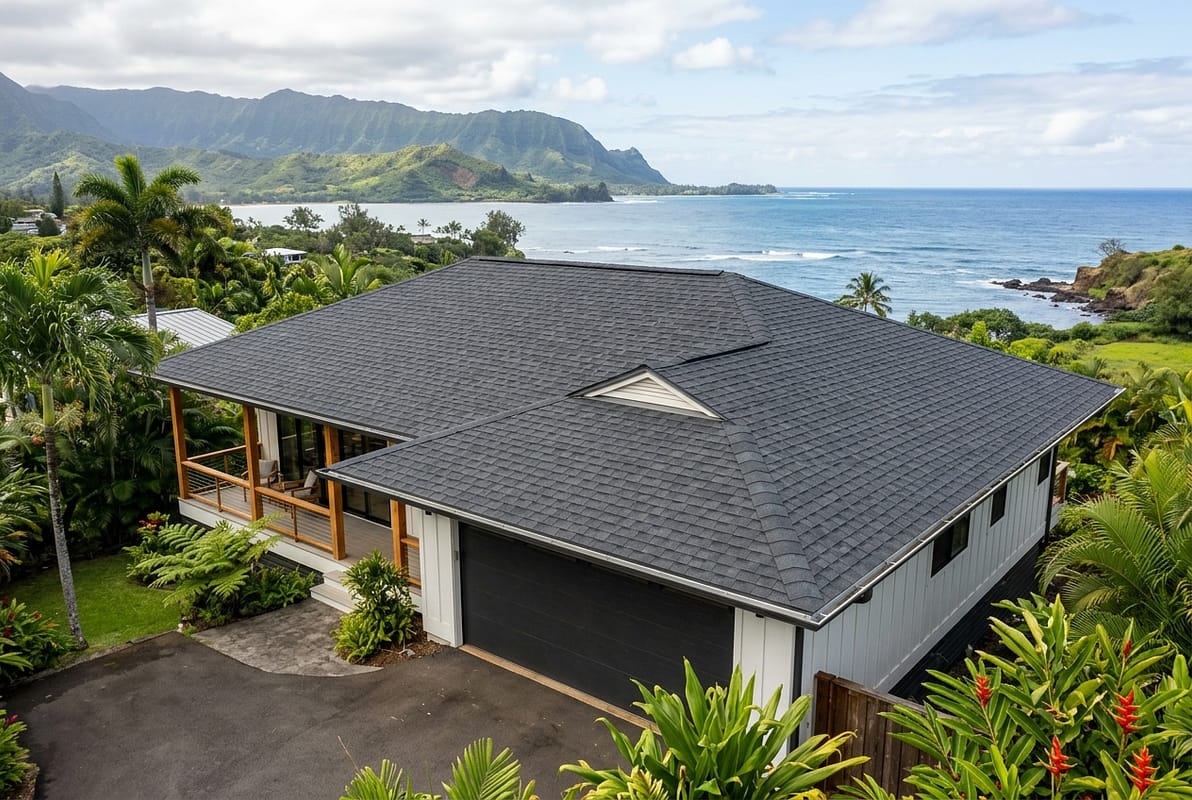
Standing Seam Metal vs. High-Wind Shingles: A Cost Breakdown
The upfront cost is where many homeowners pause, so let’s break down the 2026 numbers. According to the latest UHERO construction forecast, the installed cost for a standing seam metal roof on Oahu runs between $24 and $29 per square foot.[2] In contrast, a high-quality architectural shingle roof that is actually rated to meet the new wind code will cost you $16 to $20 per square foot.[2] For a deeper dive into these materials, our guide on metal roof vs shingles in Hawaii offers a detailed comparison.
For a typical 1,900 sq. ft. single-story home in Kapolei, that translates to:
- Standing Seam Metal Roof: ~$45,600 – $55,100
- High-Wind Architectural Shingles: ~$30,400 – $38,000
Looking at these numbers, the shingles seem like a bargain. But this is where we advise clients to look at the 50-year picture, not just the 5-year picture. A metal roof has a functional lifespan of 50+ years. The asphalt shingle roof, even a high-end one, will likely need replacement in 20-25 years in Hawaii’s intense sun. That means you’ll be paying to re-roof the house twice with shingles in the same timeframe you’d have one metal roof. Furthermore, the Contractors Association of Hawaii notes that while all material costs are rising, the price gap between premium shingles and metal is narrowing.[3] When you factor in the undeniable durability and potential for insurance discounts, the long-term value of metal becomes crystal clear. That’s why understanding the true standing seam metal roof cost Oahu is so vital for homeowners considering Oahu home hardening.
Why Stainless Steel Fasteners Are Non-Negotiable in Our Salt Air
This is a detail that can make or break your entire roofing investment. A beautiful, expensive metal roof is worthless if the screws holding it down rust away. We see this all the time on older installations. Here, galvanized fasteners have corroded. This leaves streaks down the panels. More dangerously, it compromises the roof’s ability to resist wind uplift. The UH Sea Grant’s research on coastal resilience is definitive on this point. Roofing systems with inferior fasteners can experience structural failure in as little as 10 years. This is due to salt spray corrosion in our climate.[4]
For any project our team undertakes, especially on the Windward side from Waimanalo to the North Shore, we use only 316-grade or 410-grade stainless steel clips and screws. They cost more, absolutely. But they are the only fasteners that provide true long-term resistance to Hawaii’s aggressive salt air. The Kynar 500 coating on aluminum panels is a high-performance, resin-based paint. It offers superior resistance to UV degradation. It also resists fading in our intense Hawaii sun. This ensures the roof looks good for many decades. It is not just for a few years. Insisting on stainless steel fasteners and a premium coating is one of the most important, non-negotiable specifications for any Oahu home hardening project. Skimping here is a classic example of being penny-wise and pound-foolish.
How Much Does It Cost to Replace Siding on Oahu?
On Oahu, the cost to replace siding on a typical 2,000 sq. ft. home varies. It ranges from a basic T1-11 plywood job at around $25,000. A full fiber cement system costs about $40,000. This is a significant difference. The key decision point is the ~$15,000 upgrade cost to move from wood to fiber cement, an investment that delivers significant durability, pest resistance, and resale value. After securing the roof, the siding is the next critical layer of your building envelope, and this upgrade is a core component of a successful Oahu home hardening plan.
The Real ROI: How Siding Recoups 88% at Resale in Honolulu
Investing in your home’s exterior isn’t just an expense; it’s a value-add. The latest 2026 Cost vs. Value report from the Honolulu Board of REALTORS® provides hard data on this. A comprehensive exterior renovation, specifically one that includes fiber cement siding replacement and a quality paint job, recoups nearly 88% of its cost at resale in desirable neighborhoods like East Honolulu.[5]
Why is the return so high? Buyers in 2026 are savvy. They know the maintenance headaches and termite risks associated with older wood siding. When they see a home with freshly installed fiber cement siding Hawaii, they see a durable, low-maintenance property that is clearly well-cared for. It immediately signals that the home has been updated to a modern standard, which justifies a higher price. It removes a major future expense from their mental calculation, making your home far more attractive than a comparable one with weathered, questionable siding. This is a key financial benefit of a proper Oahu home hardening effort.
From T1-11 to Fiber Cement: A Smart Energy Retrofit
Beyond the resale value, replacing old siding presents a golden opportunity for a ‘deep energy retrofit.’ This is something we’re passionate about at Warrior Construction because it pays dividends every single month on your HECO bill. With electricity rates hovering at an eye-watering $0.48/kWh, energy efficiency is no longer a luxury—it’s a financial necessity.
Here’s the process: when we remove the old T1-11 or wood siding, the wall cavities are exposed. This is the perfect time to:
- Add or Upgrade Insulation: Many older Hawaii homes have little to no wall insulation. We can install modern insulation that dramatically reduces heat transfer.
- Install a Weather-Resistive Barrier (WRB): We wrap the entire house in a high-quality house wrap. This acts as an air and moisture barrier, stopping drafts and preventing water intrusion that can lead to mold and rot.
- Seal all Penetrations: We meticulously seal gaps around pipes, vents, and electrical boxes to further stop air leakage.
Once this is done, we install the new fiber cement siding over the top. The result is a home that is not only tougher and more beautiful but also significantly more comfortable and cheaper to cool. This transformation from a leaky, uninsulated structure to a tight, efficient one is a major plus. It is one of the smartest side benefits of a comprehensive Oahu home hardening project.
What Is the Total Cost for a Full Exterior Hardening Project?
A full-scale Oahu home hardening project that addresses the entire building envelope—roof, siding, and potentially windows—is a major undertaking. For a standard single-family home on Oahu in 2026, homeowners should anticipate a total investment. This ranges from $85,000 to $115,000. The final cost depends on the home’s size, complexity, and specific material choices. This figure represents a complete system designed for resilience, energy efficiency, and compliance with the 150 mph wind code Honolulu enforces. It’s not just a repair; it’s a fundamental upgrade to the home’s core structure and performance.
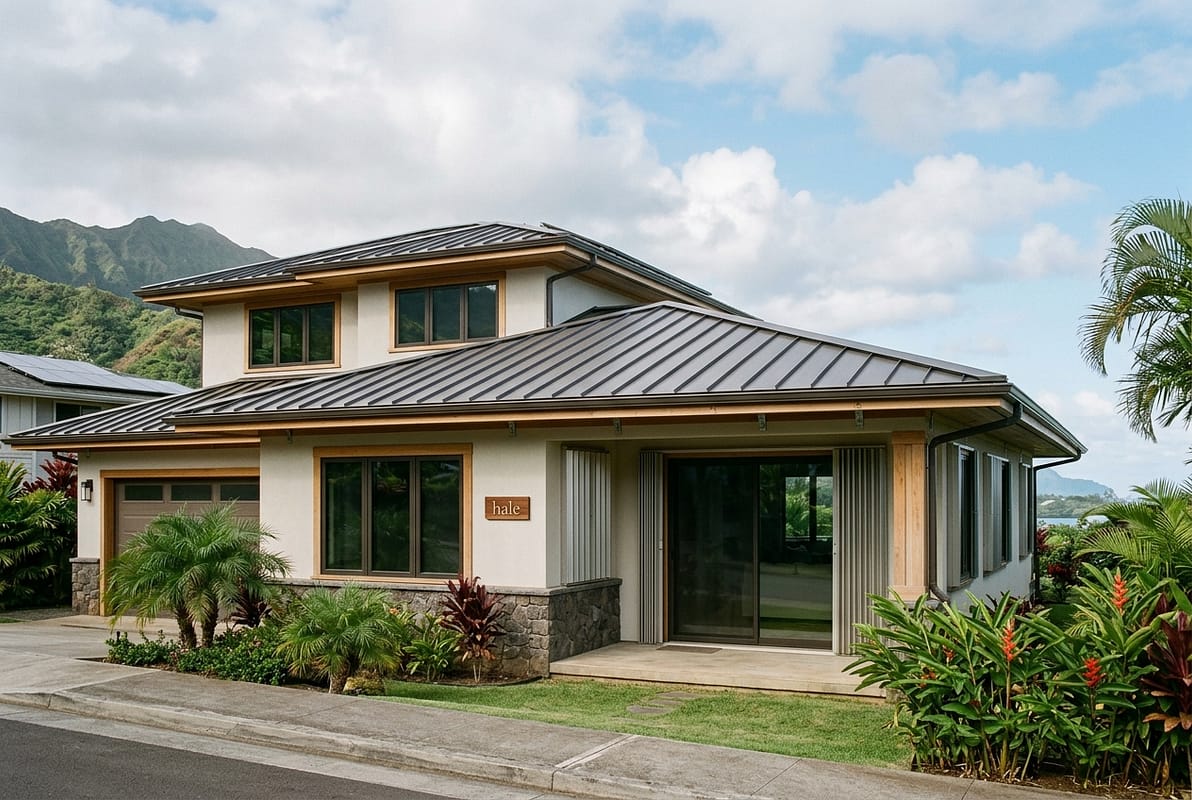
Breaking Down a Sample Budget for a 1,900 sq. ft. Home
Let’s get specific. Imagine a 1,900-square-foot, single-story home built in the 1980s in Manoa. The home has an old asphalt shingle roof and T1-11 siding that’s showing signs of water damage. Here’s a realistic budget breakdown for a complete exterior hardening project in 2026:
- Standing Seam Metal Roof (24-Gauge): Approximately 2,100 sq. ft. of roof area at $26/sq. ft. = $54,600. This price includes tear-off of the old roof, new underlayment, stainless steel fasteners, and all labor. The average re-roofing permit value issued by the DPP is currently around $41,200, but our system exceeds the basic requirements reflected in that average.[6]
- Fiber Cement Siding System: Approximately 2,200 sq. ft. of wall area. This includes removing old T1-11, installing new house wrap, adding R-13 insulation to wall cavities, installing James Hardie siding, and all trim work. Total cost = ~$40,000.
- Exterior Painting: A high-quality, two-coat job using elastomeric paint to seal hairline cracks and resist mildew = ~$12,500.
- Contingency Fund (10%): For any unforeseen issues like hidden rot or termite damage once the old siding is removed = ~$10,700.
Total Estimated Project Cost: ~$117,800
This budget doesn’t include new windows, which could add another $20,000-$35,000 if upgrading to impact-rated models. However, it provides a realistic picture of what it takes to properly harden a typical older home on Oahu today.
The Neighbor Island Factor: Why a Kapolei Job Costs Less Than a Maui Job
It’s crucial for homeowners on Maui, Kauai, or the Big Island to understand that these costs will be higher. The logistics of building in Hawaii are unlike anywhere else on the mainland. Everything comes in on a boat, and inter-island shipping adds a significant layer of cost and complexity. According to the Hawaii Contractors Association’s 2026 cost index, shipping a container of roofing materials and siding from Honolulu to a neighbor island adds between $3.00 and $4.50 per square foot to a project’s cost.[7]
What does this mean? A standing seam metal roof that costs $50,000 installed in Kapolei is one price. The exact same house in Wailuku or Lihue could easily cost $58,000 to $62,000. This “neighbor island tax” is a real factor driven by barging fees, local material handling, and the cost of mobilizing skilled labor. It’s a fundamental reality of construction that we have to budget for on any project outside of Oahu.
Beyond the Big Two: Addressing Your Home’s Vulnerable Openings
Your windows, garage door, and entry doors are the most critical failure points in a hurricane. High-velocity winds don’t just push on a house; they find an opening, rush inside, and create immense internal pressure. Consequently, this pressure can blow the roof clean off from the inside out, even if your roof and siding are strong. A complete Oahu home hardening plan must secure every opening in the building envelope.
Why Impact-Rated Windows Are Non-Negotiable
Standard residential windows are no match for flying debris in a 150-mph storm. Furthermore, once a window breaks, your home is compromised, allowing catastrophic amounts of wind and rain inside. Impact-rated windows, on the other hand, are built with a laminated glass system, similar to a car’s windshield. A heavy impact might crack the glass, but an inner polymer layer holds it together, keeping the opening sealed. This prevents the devastating pressure change that leads to roof failure.
Of course, this level of protection comes at a cost. For example, a standard 4-foot by 5-foot vinyl window costs us about $800. That is the price landed on Oahu. The equivalent impact-rated model from a quality brand like Andersen or Pella will run closer to $2,100, before installation. Additionally, these windows must be ordered from the mainland, so you should expect a lead time of 10 to 14 weeks. We have to factor this into any project schedule from the very beginning. It’s a significant investment, but it’s the only way to truly protect these vulnerable points.
Securing the Biggest Hole in Your House: The Garage Door
A standard two-car garage door is essentially a giant, flexible sail, representing the largest unreinforced opening on most homes. During a hurricane, immense negative pressure builds on the outside. Meanwhile, positive pressure from wind getting inside pushes out. This can cause a non-rated door to buckle. It can also fail catastrophically during the storm. This immediately pressurizes the largest open space in your home, creating a powerful lifting force directly under your roof trusses. We’ve seen this exact scenario peel the entire roof off a house in minutes.
Hurricane-Rated Door Components vs. Standard Doors
Replacing this weak link is a key part of any serious Oahu home hardening effort. A standard, non-insulated 16-foot steel garage door might cost $3,800 installed. In contrast, a hurricane-rated door that meets the 150 mph wind code starts around $7,500 and can easily exceed $10,000. This upgrade includes heavy-duty steel reinforcement struts on each panel, heavier gauge tracks, and a much more robust anchoring system to the home’s framing. It’s engineered specifically to resist both inward and outward pressure during a major storm event.
Finally, your entry doors and sliding glass doors require the same level of attention. An impact-rated fiberglass entry door uses a multi-point locking system. This system engages the frame at the top, middle, and bottom. This provides far more resistance to being blown in. It is much stronger than a standard deadbolt in a storm. For example, a quality impact-rated system from Therma-Tru costs around $6,000 installed, versus $2,500 for a standard door from a big-box store. Impact-rated sliding glass doors are built with laminated glass. They also have stronger frames. These are designed to prevent the panels from being lifted. They also stop them from being sucked out of their tracks. This is a critical upgrade for any home. It is especially important for homes with large lanais in places like Hawaii Kai or the North Shore.
The Unseen Protector: Hurricane Straps and Structural Connections
While a strong roof and siding are the visible armor of your home, the unseen connections holding it all together are just as important. A successful Oahu home hardening project must reinforce the structural load path—the chain of connections that ties your roof to your foundation. In a hurricane, wind forces are trying to tear the house apart at these joints. Older homes, especially those built before Hurricane Iniki, often lack the modern hardware to resist these forces.
For many of our projects on older single-wall or double-wall homes in areas like Kailua or Manoa, a key part of the scope is very important. This involves retrofitting hurricane straps. We often call these essential clips, for good reason. These are pieces of galvanized or stainless steel. They create a continuous connection from the roof rafters down to the wall studs. They also connect from the wall studs down to the foundation. This creates a stronger system. When we have the walls opened up for a siding project, it’s the ideal time to add these connectors. This process can add $5,000 to $10,000 to the project. But it is a fundamental upgrade. It ensures the entire house acts as a single, unified structure. This protects against hurricane-force winds very effectively. Neglecting this step is like building a strong helmet without a chin strap; it can fail under pressure.
The Permitting Gauntlet: Navigating Honolulu DPP for Your Project
The Honolulu permitting process is the single biggest variable impacting your project’s start date. For a comprehensive Oahu home hardening project involving structural changes like new roofing, siding, or windows, expect to add 4 to 8 months for plan preparation and review by the Department of Planning and Permitting (DPP). This administrative lead time occurs entirely before we can break ground, a fact that often surprises homeowners.
The Critical First Step: Architectural and Structural Plans
You cannot simply decide to re-roof or re-side your home with hurricane-rated materials. The DPP requires proof that the new components are properly integrated and that your home’s existing structure can handle them. Therefore, the first step is always important. You must hire a licensed Hawaii architect or structural engineer. They will produce a full set of plans. These plans must demonstrate compliance with the 150 mph wind code. This is not a simple drawing; it involves detailed calculations for shear walls, roof-to-wall connections, and foundation anchoring.
This planning phase alone takes time and money. For a typical 1,800-square-foot home in Ewa Beach, developing these engineered plans usually takes time. It typically takes 6 to 10 weeks. It also costs between $8,000 and $18,000. This depends on your home’s complexity. These plans are the non-negotiable ticket required to even get in line at the DPP. Our team at Warrior Construction manages this entire process for you. We work with engineers we have trusted for years. This ensures the plans are accurate and complete from the very start.
Navigating the Department of Planning and Permitting (DPP)
Once we submit the completed plans, the waiting game begins. The DPP’s backlog is substantial. In our recent experience, a permit application for a major renovation can sit in the queue. This is for 90 to 150 days. An examiner will not even provide their first comments before then. It is a slow, methodical process. This process operates on its own timeline. There is very little our team can do to accelerate this initial review period, unfortunately. We simply have to get in line and wait for our number to be called.
Common DPP Delays and How We Mitigate Them
Furthermore, it is extremely common for the DPP to return the plans with required corrections. This is a normal part of the process. The examiner might request additional structural details or clarification on waterproofing methods. Each revision requires the engineer to update the plans. Our team then has to resubmit them to the city. This can add another 4 to 6 weeks to the project timeline. Common mistakes that cause delays include:
- Incomplete Application: Missing owner signatures or outdated tax map key information.
- Unclear Scope of Work: Vague descriptions that don’t precisely match the plans.
- Conflicting Details: Architectural drawings that don’t perfectly align with the structural drawings.
- Ignoring Setbacks: Failing to clearly show property lines and building setbacks on the site plan.
This is where an experienced contractor who understands the DPP’s expectations is invaluable for any Oahu home hardening project.
Is It Worth Hardening Your Home Now?
Yes, completing an Oahu home hardening project now is absolutely worth it. Beyond immediate storm protection, you gain massive resale value. Siding jobs, for instance, recoup nearly 88% of their cost. This comes along with long-term savings from lower insurance premiums. You also see improved energy efficiency, a key benefit. From our perspective on the job site, it’s one of the most intelligent, forward-looking investments you can make. This isn’t just about preparing for the next big storm; it’s about fundamentally improving your home’s value, efficiency, and safety for decades to come.
The benefits create a powerful financial case:
- Code Compliance: The 150 mph wind code isn’t optional. Any major renovation will require you to meet these standards. Doing it proactively puts you ahead of the curve.
- Insurance Savings: We are seeing more and more insurance carriers offer significant premium discounts for homes with verified hurricane-rated roofs and window protection. These savings can add up to thousands of dollars over the life of the roof.
- Massive Resale Value: As we’ve seen, recouping 88% of your investment is a huge financial win. A hardened exterior is a prime selling feature that commands a premium in the Oahu real estate market.
- Energy Efficiency: The deep energy retrofit component directly combats high HECO bills, providing a tangible return on investment every single month.
- Peace of Mind: You can’t put a price tag on knowing your family and your biggest asset are protected by a system engineered to withstand the worst our climate can throw at it.
Putting it off doesn’t save money. Material and labor costs in Hawaii rarely go down. Waiting only means you’ll pay more later to meet the same requirements, all while leaving your home vulnerable in the interim. This makes a proactive approach to Oahu home hardening a wise choice.
What this means for Hawaii homeowners
For Hawaii homeowners, these new codes and material realities mean shifting from a mindset of simple repair to strategic investment. It requires prioritizing the entire building envelope. This starts with a compliant roof. We also understand that higher upfront costs for quality systems deliver long-term savings. These savings come through durability, energy efficiency, and lower insurance premiums. Navigating the requirements and costs of a full exterior renovation can be quite overwhelming for many homeowners. The key is to think strategically and long-term. Based on our experience helping Oahu families protect their homes, here is our straightforward advice for 2026.
Your Action Plan for a Resilient Home
- Prioritize the System, Not Just the Parts. Don’t just get quotes for a roof. Engage a qualified general contractor to perform a full ‘building envelope’ assessment. They can identify the weakest links—siding, windows, garage doors, structural connections—and help you create a phased plan if you cannot do everything at once. This holistic view is the essence of effective Oahu home hardening.
- The Roof Comes First. If your budget is limited, start with the roof. It is the most critical element for hurricane protection. A roof that meets the new 150 mph wind code is the foundation of any successful Oahu home hardening strategy. You can address siding and windows in a later phase.
- Talk to Your Insurance Agent Before You Begin. Contact your homeowner’s insurance provider and ask them what specific upgrades will result in premium discounts. Get it in writing. Knowing that a certified metal roof can save you $1,000 a year can make the higher upfront cost much easier to justify.
- Don’t Defer Maintenance. The longer you wait to replace a failing roof or rotting siding, the higher the risk becomes. You risk secondary damage like water intrusion. You also risk mold and structural rot. The cost of fixing that damage will always be higher than the cost of proactive replacement. Addressing these issues now is the most financially responsible path.
Frequently Asked Questions
How much does a full Oahu home hardening project cost in 2026?
For a typical 1,900-2,200 sq. ft. home, a comprehensive Oahu home hardening project is a smart investment. This project includes a standing seam metal roof, fiber cement siding, and a deep energy retrofit. It typically costs between $85,000 and $115,000. This is an important consideration. This complete investment is designed to address the entire building envelope to meet the new 150 mph wind codes and provide long-term protection.
Can I just replace my roof to meet the new 150 mph wind code?
Yes, you can start with just the roof, and for many, this is the most critical first step for compliance and protection. An installed standing seam metal roof on Oahu costs between $24-$29 per square foot and meets the code for the roof itself. But remember, overall storm resilience depends on the entire building envelope, including your siding and windows. This is just one step in a full Oahu home hardening plan.
How long does a full exterior hardening project take on Oahu?
From signing the contract to final inspection, a full exterior project takes time. This involves both roof and siding on a standard home. It can take 4 to 6 months to complete. This timeline includes 2-3 months for material procurement and permitting with the Honolulu DPP, followed by 6-10 weeks of active construction on-site. Delays in shipping materials to Hawaii can sometimes extend this timeline further.
Will these Oahu home hardening upgrades lower my homeowner’s insurance?
In most cases, yes. Installing a verified hurricane-rated roofing system is one of the most effective ways to lower your premiums in Hawaii. We advise clients to get documentation from us to submit to their insurer, as discounts can be significant. Combining a new roof with impact-rated windows often yields the best possible insurance rates, sometimes saving homeowners 15-25% on their hurricane coverage.
Is fiber cement siding better than stucco for Hawaii?
Both are excellent, durable choices for Hawaii. Fiber cement siding offers a more traditional look and is easier to repair in small sections if damaged. Stucco provides a seamless, modern finish but can be prone to cracking if the foundation settles, and repairs can be harder to blend. For homes on lots with expansive volcanic soil, the flexibility of fiber cement can be an advantage. The choice often comes down to aesthetics and your home’s specific site conditions.
What are the first steps for an Oahu home hardening project?
The first step is to consult with a licensed general contractor who specializes in building envelope work in Hawaii. They will assess your home’s current condition and help you develop a comprehensive plan and budget. This is followed by hiring an architect or engineer to create the necessary plans for the DPP permit application, which is a critical part of the Oahu home hardening process.
Do I need a permit for all Oahu home hardening upgrades?
Yes, any work that involves structural components like replacing a roof, siding, or windows requires a building permit from the Honolulu DPP. Minor repairs may not require this. However, a full-scale hardening project does. It ensures compliance with the 150 mph wind code. It absolutely requires a full set of engineered plans. It also needs a permitted, inspected process.
Protecting your home from hurricanes is no longer a seasonal thought—it’s a year-round strategy built on sound construction and smart material choices. Investing in a complete, hardened building envelope is the most effective way to secure your property. It lowers long-term costs significantly. You also gain invaluable peace of mind. A proper Oahu home hardening project is a legacy of safety.
If you’re ready to take the next step in your Oahu home hardening journey, our team at Warrior Construction is here to help. We can provide a detailed assessment of your home’s exterior. Our team will develop a clear, no-nonsense plan. This plan will bring it up to the highest standards of safety and resilience. Protecting Hawaii homes is what we do.
Ready to fortify your home against the next storm? Explore our hurricane-resistant construction services and let’s build a safer future for your family.
References
- Honolulu Department of Planning and Permitting (DPP) 2026 Construction Bulletin
- UHERO Hawaii Construction Forecast – September 2026
- Hawaii Contractors Association Q3 2026 Market Report
- UH Sea Grant Coastal Resilience Home Hardening Study 2026
- Honolulu Board of REALTORS® 2026 Cost vs. Value Report
- State of Hawaii Data Book 2026 – Section 19 Construction
- Hawaii Contractors Association Neighbor Island Cost Index Q3 2026


