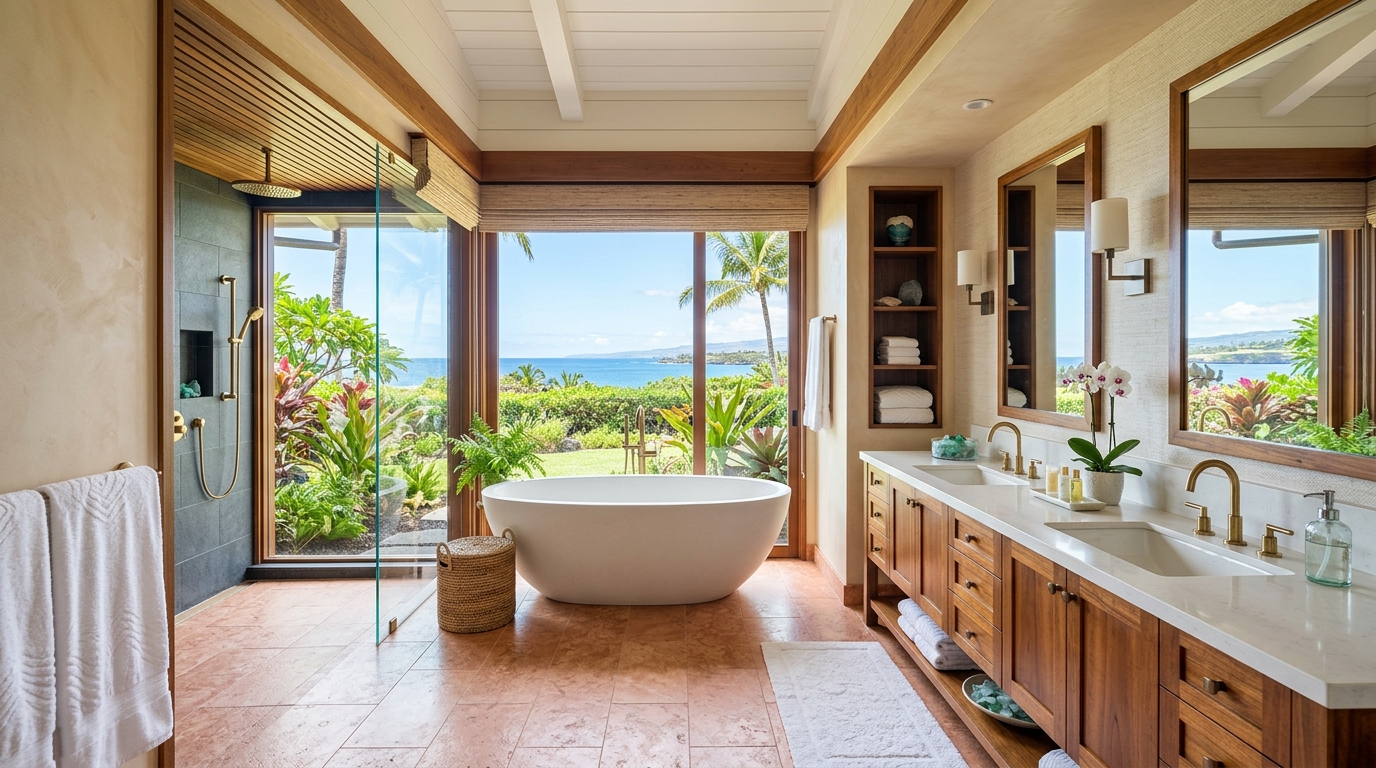
A standard 5-foot by 8-foot guest bathroom remodel in Kailua-Kona typically costs between $25,000 and $45,000 in 2026, while a larger master bathroom renovation can easily reach $70,000 or more. The complete process, from initial design to final walkthrough, usually takes between 10 to 16 weeks, accounting for design, permitting, materials shipping, and the actual construction. These numbers often surprise homeowners who are used to mainland pricing and timelines. Here on the Big Island, we operate under a different set of rules dictated by island logistics, climate, and local regulations. A successful bathroom remodel Kailua-Kona project isn’t just about picking nice tile; it’s about navigating these unique challenges with an experienced team.
For over two decades, our team at Warrior Construction has been managing these complexities for homeowners across Hawai’i. We’ve seen it all, from discovering crumbling pipes hidden in lava rock foundations in Keauhou to engineering ventilation systems that can withstand the humid Kona air without turning the space into a science experiment. It’s this on-the-ground experience that makes all the difference between a bathroom that looks good on day one and one that stands up to the rigors of island life for decades.
This guide cuts through the noise. We’ll give you the real numbers, realistic timelines, and practical advice you need to plan your bathroom renovation in Kailua-Kona. We’ll cover everything from precise cost breakdowns and permitting hurdles with Hawai’i County to selecting materials that won’t corrode in the salt air. Think of this as the conversation we’d have over coffee before we even start talking about designs—the essential knowledge every Big Island homeowner needs.
Why Kailua-Kona Homeowners Trust Warrior Construction for Bathroom Remodel
Choosing a contractor for your bathroom remodel in Kailua-Kona is about more than just finding someone who can hang drywall and lay tile. It’s about finding a partner who understands the specific DNA of building on the Big Island. That’s where our team at Warrior Construction (License BC-34373) has built its reputation. We’re not a mainland company with a satellite office; we live here, we build here, and we understand the nuances that can make or break a project.
First and foremost, our experience is hyper-local. We know that the plumbing in a 1980s Holualoa home might be completely different from a newer build in Kohanaiki. We understand the composition of the volcanic soil and how that impacts foundation work and plumbing rerouting. For example, on a recent project near Magic Sands Beach, we had to reroute a shower drain. What would be a simple trenching job on the mainland involved carefully working around dense lava rock, which required specialized equipment and added a day to the schedule. A contractor without that specific Big Island experience might have underbid the job or caused costly damage. We plan for these things because we’ve seen them countless times.
Furthermore, we manage the entire logistical chain. Getting the right materials to Kona in a timely manner is a massive challenge. You can’t just run to a big-box store and expect to find a wide selection of high-end fixtures or specialty tile. Most items need to be shipped from Oahu or the mainland. Our team has long-standing relationships with suppliers and freight forwarders, allowing us to coordinate orders and minimize delays. We ensure every single component—from the vanity and toilet to the last box of tile and bag of grout—is on-site and inspected *before* we begin demolition. This single step prevents the most common source of delays in Hawaii construction: waiting for a replacement part to be shipped across the ocean.
Finally, homeowners trust us because we operate with transparency. We provide detailed, line-item estimates so you see exactly where your money is going. Our design-build approach means our architectural team and construction crew are in constant communication, preventing the costly misinterpretations that often happen when design and construction are handled by separate firms. We’re not just your builder; we’re your project manager, your logistics coordinator, and your advocate from start to finish. That’s the standard of service a Kailua-Kona homeowner should expect.
What Does Bathroom Remodel Cost in Kailua-Kona?
Let’s get straight to the point: sticker shock is common for homeowners new to construction costs on the Big Island. The price for a bathroom remodel in Kailua-Kona is significantly higher than what you’d see advertised for a similar project in, say, Phoenix or Dallas. In 2026, you should be prepared for the following cost tiers, based on a standard 5′ x 8′ (40 sq ft) bathroom:
- Basic Pull-and-Replace Remodel: $25,000 – $35,000. This is primarily a cosmetic update. We keep the existing layout—toilet, sink, and shower stay in the same place. This tier includes good-quality, off-the-shelf materials like a new prefab vanity, a fiberglass shower/tub insert, standard ceramic tile for the floor, and new fixtures. The cost is lower because we avoid major plumbing or electrical rerouting, which minimizes labor and permitting requirements.
- Mid-Range Renovation: $40,000 – $65,000. This is the most common type of bathroom renovation Kailua-Kona homeowners undertake. It involves changing the layout. Maybe you want to replace that old tub with a spacious walk-in shower, move the toilet for a better flow, or add a double vanity. This price includes higher-quality materials like porcelain tile, a semi-custom vanity with a quartz countertop, a frameless glass shower door, and upgraded lighting. The jump in cost is due to the intensive labor for rerouting plumbing and electrical, plus the more complex permitting and inspections.
- High-End, Luxury Remodel: $70,000 and up. For a spa-like retreat, the sky’s the limit. This could involve expanding the bathroom’s footprint by moving walls, adding a window, or installing luxury features like a steam shower, a freestanding soaking tub, custom cabinetry, natural stone tile (like travertine or marble), heated floors, and smart-home integration. These projects are completely custom and require extensive design work, structural engineering, and the highest-end materials shipped to the island.
Cost Breakdown for a Mid-Range Kona Remodel
To understand where the money goes, here’s a typical percentage breakdown for a $50,000 project:
| Cost Category | Percentage of Budget | Estimated Cost | Notes |
|---|---|---|---|
| Labor (Plumber, Electrician, Tiler, Carpenter) | 45% – 55% | $22,500 – $27,500 | Skilled labor is in high demand on the Big Island. |
| Materials & Fixtures | 30% – 40% | $15,000 – $20,000 | Includes tile, vanity, countertop, toilet, tub/shower, faucets. |
| Design, Permitting & Admin | 10% – 15% | $5,000 – $7,500 | Covers architectural drawings, permit fees, project management. |
| Contingency | 10% | $5,000 | Essential for unexpected issues like hidden water damage or termite activity. |
The key drivers for these higher costs are simple: everything has to get here. Young Brothers shipping costs add a premium to every single item, from a box of screws to a bathtub. Furthermore, the on-island inventory is limited, so for anything beyond basic stock, we’re ordering from off-island. Skilled labor is also a premium commodity. A great plumber or tiler on the Big Island is worth their weight in gold, and their rates reflect that. When you work with our team at Warrior Construction, these costs are laid out clearly so there are no surprises.
How Long Does a Bathroom Remodel Take in Kailua-Kona?
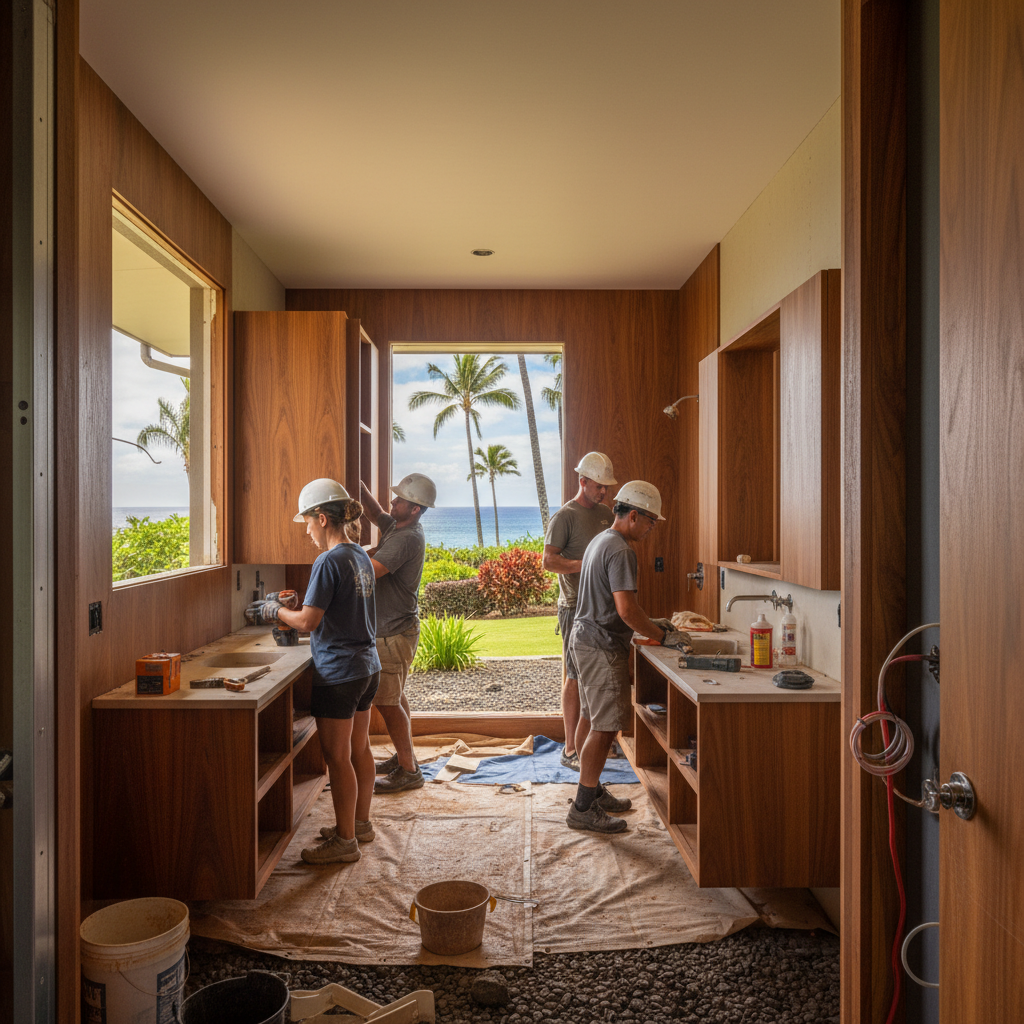
One of the biggest misconceptions we encounter is the timeline for a remodel. Home improvement shows have unfortunately created an expectation of weekend transformations. In Kailua-Kona, the reality is a multi-phase process where the actual construction is often the shortest part. A well-managed project is front-loaded with planning to ensure the construction phase is smooth and efficient.
Here’s a realistic timeline for a mid-range bathroom renovation on the Big Island in 2026:
- Phase 1: Design and Planning (4 – 8 weeks). This is the most critical phase. It starts with our initial consultation and moves into detailed design work. Our team creates architectural plans, you select every single material (tile, grout color, fixtures, vanity, paint), and we finalize the scope of work. Rushing this step is the single biggest mistake a homeowner can make. Making changes once construction starts leads to delays and budget overruns. During this phase, we also prepare and submit the building permit application to the Hawai’i County Department of Public Works.
- Phase 2: Permitting and Material Procurement (4 – 10 weeks). This phase runs concurrently with the end of design. The Hawai’i County permit review process can take anywhere from a few weeks for a simple project to several months for a complex one. While we wait for the permit, we place orders for all your materials. For a typical shower remodel Kailua-Kona project, this means ordering the shower pan, waterproofing system, tile, and glass enclosure. Since most of these items are coming from the mainland or Oahu, we need to account for manufacturing lead times and shipping. We had a project in Kona Palisades where the custom vanity had a 12-week lead time. We didn’t schedule demolition until we received confirmation that the vanity had physically arrived in our Hilo warehouse.
- Phase 3: Construction (4 – 7 weeks). Once the permit is in hand and every single material is on island, the physical work begins. This is what most people think of as the remodel.
- Week 1: Demolition and Rough-in. We tear out the old bathroom, and our licensed plumbers and electricians reroute pipes and wires according to the new plan. This is followed by a County inspection.
- Week 2-3: Drywall, Waterproofing, and Tile. We close up the walls, apply a robust waterproofing membrane like the Schluter-KERDI system in the shower area, and then begin the meticulous process of setting tile.
- Week 4: Grouting, Cabinetry, and Countertops. The tile is grouted and sealed, the new vanity is installed, and countertop fabricators come to template and install the new surface.
- Week 5-6: Fixture Installation and Painting. The toilet, faucets, showerhead, and lighting are installed. The room gets its final coats of paint.
- Week 7: Final Touches and Walkthrough. We install the shower glass, mirrors, and accessories. This is followed by a deep clean and the final County inspection, then the final walkthrough with you to ensure every detail is perfect.
So, from the day you sign a contract to the day you use your new shower, you should realistically plan for 3 to 5 months. Our job as your general contractor is to manage this timeline proactively, anticipating bottlenecks and keeping you informed every step of the way.
What Permits Do You Need for Bathroom Remodel in Kailua-Kona?
Navigating the permitting process is one of the most important roles a general contractor plays. In Hawai’i County, the rules are clear: if you are altering the structural, electrical, or plumbing systems of your home, you need a building permit. Homeowners who try to skip this step are taking a huge risk. Unpermitted work can lead to stop-work orders, fines, difficulty selling the home, and even the requirement to tear out the completed work.
Here’s a simple breakdown of what does and doesn’t require a permit for a bathroom remodel in Kailua-Kona:
Work Typically NOT Requiring a Permit:
- Cosmetic Updates: Painting, replacing a faucet with a similar model, installing a new light fixture in the same location, replacing a toilet in the same spot, or laying down new flooring over the old subfloor.
- Fixture Replacement: Swapping out a vanity or medicine cabinet without changing any plumbing or electrical wiring inside the walls.
Work Almost ALWAYS Requiring a Permit:
- Changing the Layout: Moving the location of a toilet, sink, or shower. This involves rerouting drain and supply lines, which absolutely requires a plumbing permit and inspections.
- Converting a Tub to a Shower: This changes the drain configuration and often requires moving plumbing in the wall. This is a common project that always needs a permit.
- Altering Electrical Systems: Adding new outlets, installing a new dedicated circuit for a jetted tub, or moving light switches.
- Moving Walls: Any structural change, including removing a non-load-bearing wall to expand the bathroom, requires a full building permit with architectural plans.
- Adding a Window or Skylight: This involves altering the exterior envelope and framing of the house.
The permitting process in Kailua-Kona is handled by the Hawai’i County Department of Public Works, Building Division. While it can sometimes feel bureaucratic, the system exists for your protection. It ensures that all work is done to current building codes, which are especially important in Hawaii for hurricane and seismic safety. For example, while Honolulu’s DPP[1] has its own set of complex procedures, the core principle is the same across the islands: ensure safe and compliant construction.
As your licensed general contractor, Warrior Construction handles the entire permitting process. We prepare the necessary drawings, fill out the applications, submit them to the county, and schedule all the required inspections. There are typically two main inspections for a bathroom remodel: the rough-in inspection (after plumbing and electrical are installed but before walls are closed) and the final inspection (once all work is complete). Passing these inspections is non-negotiable and provides a legal record that your renovation was done correctly.
Kailua-Kona-Specific Considerations: Climate, Materials, Regulations
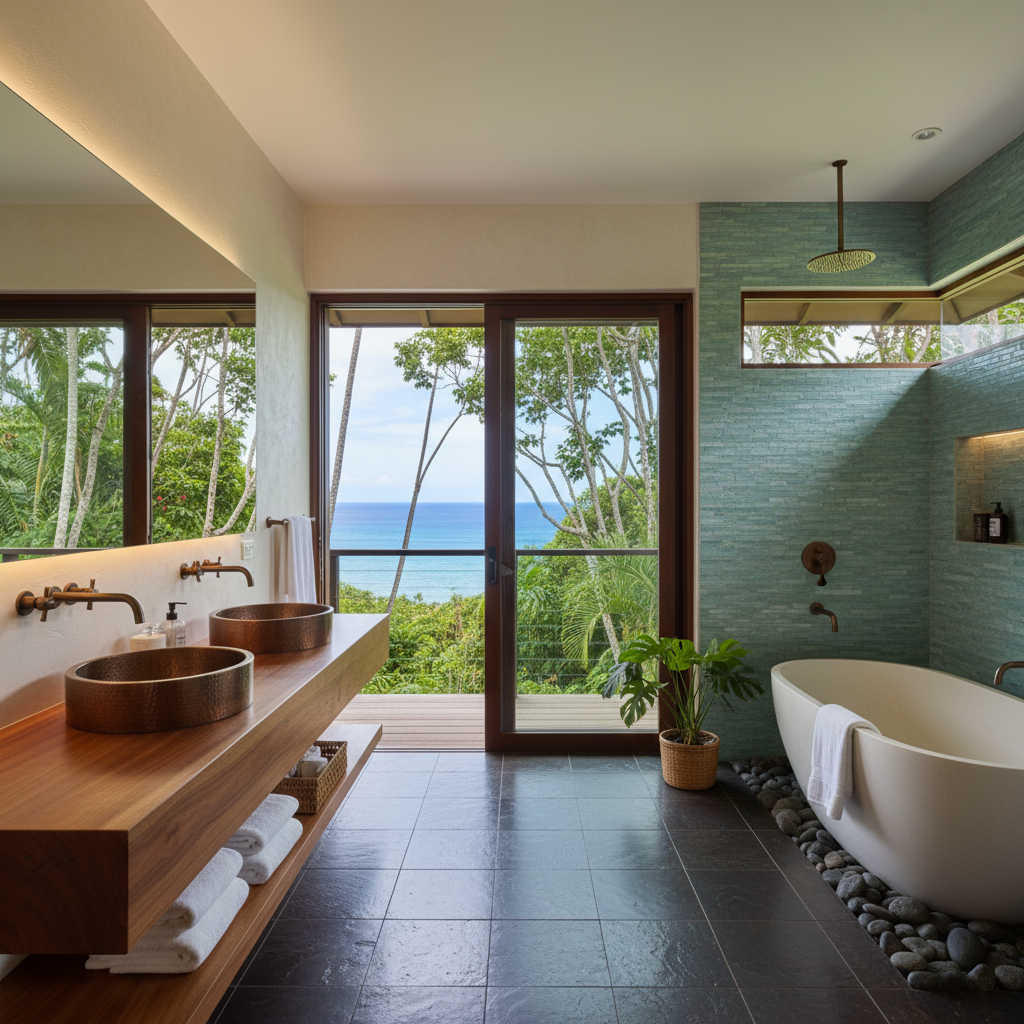
A bathroom in Kailua-Kona faces a unique set of environmental challenges that a bathroom in Arizona or California will never see. Designing and building for our specific climate isn’t an option; it’s a necessity for a remodel that will last. After decades of building on the Big Island, we’ve learned to prioritize certain materials and techniques.
1. Battling Humidity and Salt Air
The warm, humid, and salt-laden air of the Kona coast is relentless. It seeks out any weakness in a building’s envelope and can lead to mold, mildew, and rapid corrosion. For a bathroom, the wettest room in the house, this is a major concern.
- Ventilation is Non-Negotiable: A tiny, noisy fan won’t cut it. We specify high-capacity exhaust fans (rated by CFM, or cubic feet per minute) that are properly sized for the room’s volume. We also recommend running the fan for at least 20-30 minutes after every shower. Installing a fan with a built-in humidistat that turns on automatically is an even better solution.
- Mold-Resistant Materials: We use purple or green board (mold-resistant drywall) throughout the bathroom, not just in the shower area. For the shower itself, a topical waterproofing membrane system like Schluter-KERDI or Laticrete Hydro Ban is far superior to simply relying on a vapor barrier behind cement board.
- Corrosion-Resistant Fixtures: For homes right on the water, like those along Ali’i Drive, we strongly recommend fixtures made from 316-grade stainless steel or high-quality brass with a PVD (physical vapor deposition) finish. These are far more resistant to the pitting and corrosion caused by salt air than standard chrome-plated fixtures. This also applies to things you don’t see, like screws and fasteners.
2. Material Selection and Sourcing
Your choice of materials has a huge impact on both the longevity and cost of your project.
- Tile Choices: Porcelain tile is our go-to recommendation for Kona bathrooms. It’s virtually non-porous, making it highly resistant to water absorption and staining. While natural stone like travertine is beautiful, it’s porous and requires regular sealing to prevent moisture issues, especially in a humid environment.
- Cabinetry and Vanities: Solid wood can swell and warp in our humidity. We often recommend vanities made from marine-grade plywood or high-density fiberboard (HDF) with a durable factory finish. Custom vanities from local cabinet makers who understand our climate are also an excellent choice.
- Island Logistics: We have to be strategic about sourcing. While we prioritize local suppliers whenever possible, the reality is that a wide selection of tile, fixtures, and cabinets requires ordering from Oahu or the mainland. This adds cost and lead time, which must be factored into the project schedule from day one.
3. Water and Structural Concerns
The unique geology of the Big Island also plays a role.
- Hard Water: The water in many parts of Kona is very hard, meaning it has high mineral content. This leads to calcium buildup on fixtures and glass shower doors. We often advise clients on finishes that are easier to maintain (like brushed nickel over polished chrome) and may suggest installing a water softening system to protect their investment.
- Hurricane and Seismic Codes: All our work adheres to the latest building codes, which include provisions for hurricane-resistance and seismic activity. This can affect how we frame walls, secure fixtures, and even the type of windows we install. It’s a layer of security that’s essential for any construction in Hawaii.
Building a bathroom that thrives in Kona requires this kind of detailed, localized knowledge. It’s about thinking beyond aesthetics to create a space that is durable, healthy, and suited for a lifetime of use in paradise.
How to Choose the Right Bathroom Remodel Contractor in Kailua-Kona
Finding the right contractor is the single most important decision you will make for your project. A great contractor can make the process smooth and deliver a fantastic result, while a bad one can turn your dream remodel into a nightmare of delays, cost overruns, and shoddy work. Here’s a checklist to help you choose the best bathroom contractor Kailua-Kona has to offer.
1. Verify Their License and Insurance
This is the absolute first step and it’s non-negotiable. Anyone performing work over $1,000 in Hawaii must have a contractor’s license.
- Check the License: Go to the Hawaii Department of Commerce and Consumer Affairs (DCCA) Professional & Vocational Licensing (PVL) website[2]. You can search by business name or contractor name. Look for a “B” General Building Contractor license for a full remodel. Our license, for example, is Warrior Construction, BC-34373. A licensed contractor has met state requirements for experience, financial stability, and has passed exams on law and trade practices.
- Ask for Insurance Certificates: A legitimate contractor must carry both General Liability insurance (to cover property damage) and Workers’ Compensation insurance (to cover their employees if they get injured on your property). If they can’t provide current certificates, walk away. Hiring an uninsured contractor puts you at massive financial risk.
2. Evaluate Their Experience and Portfolio
You want a contractor with specific experience in the type of project you’re planning.
- Look for Local Kona Projects: Ask to see a portfolio of completed work specifically on the Big Island, preferably in the Kailua-Kona area. A contractor based in Hilo might not be as familiar with the supply chains and subcontractor networks on the Kona side.
- Ask for References: Talk to their past clients. Ask about their communication, how they handled problems (because problems always arise), whether they stuck to the budget and timeline, and the quality of the finished work.
3. Understand Their Process and Communication Style
A detailed contract and clear communication are signs of a professional operation.
- Get a Detailed, Written Proposal: A one-page estimate is a red flag. You should receive a multi-page proposal that details the scope of work, provides a line-item breakdown of costs, lists material allowances, and outlines a payment schedule.
- Discuss Change Orders: Ask them how they handle change orders. A professional contractor will have a formal process requiring written approval from you before any additional work is done or charges are incurred.
- Establish Communication Channels: Who will be your main point of contact? How often will you get updates? A good contractor will set up regular check-ins (e.g., a weekly site meeting or email update) to keep you informed.
Choosing a contractor is like hiring an employee who will be in your home for weeks. Take your time, do your due diligence, and trust your gut. The cheapest bid is rarely the best value, especially in a place with as many unique challenges as Kailua-Kona.
Real Kailua-Kona Bathroom Remodel Project Example
To put all this theory into practice, let’s walk through a typical master bathroom project our team recently completed in a 1990s home in the Kealakekua area, just south of Kailua-Kona.
The Homeowners’ Problem: The clients had a spacious but dated master bathroom. It featured a large, unused jacuzzi tub deck that consumed half the room, a cramped 36″ x 36″ fiberglass shower stall, and a single vanity. The tile was cracked, the fixtures were corroded from years of salt air exposure, and they suspected a slow leak from the shower pan.
Our Design-Build Solution: The goal was to create a modern, open, and functional space that felt like a spa and could better withstand the humid Kona environment. After several design iterations, we settled on a plan that completely reimagined the 150-square-foot space.
- Reconfiguring the Layout: We started by demolishing the entire room, including the massive tub deck. This immediately opened up the floor plan. We framed a new, larger walk-in shower where the old tub was, creating a 5′ x 6′ wet area. This allowed us to install a luxurious freestanding soaking tub in the corner where the tiny shower used to be.
- Upgrading the Plumbing and Electrical: Our licensed plumber ran new lines for a double vanity and installed a modern linear drain in the new shower. Our electrician added recessed LED lighting in the shower, installed new sconces at the vanity, and put the exhaust fan on a timer switch for improved moisture control.
- Selecting Kona-Appropriate Materials: The clients loved the look of natural stone but were concerned about maintenance. We sourced a high-quality Italian porcelain tile that perfectly mimics the look of travertine but is completely non-porous and easy to clean. For the vanity, we worked with a local cabinet maker to build a custom floating double vanity from teak, a wood known for its natural water resistance. We topped it with a low-maintenance quartz slab. All fixtures were specified with a brushed PVD finish for maximum corrosion resistance.
The Project by the Numbers:
- Location: Kealakekua, Hawai’i
- Size: 150 square feet
- Total Project Cost: $82,000
- Design & Permitting Timeline: 7 weeks
- Materials Procurement & Shipping: 9 weeks (special order tile and tub)
- Construction Timeline: 8 weeks
- Total Duration (Contract to Completion): 17 weeks
The result was a stunning transformation. The homeowners now have a bright, airy, and highly functional master bathroom that adds significant value to their home and is built with the right materials and methods to last for decades in the beautiful but demanding Kona climate.
What this means for Hawaii homeowners
Undertaking a bathroom remodel in Kailua-Kona is a significant investment, but one that can dramatically improve your quality of life and your home’s value. The key to a successful project lies in understanding and planning for the unique realities of building on the Big Island. Simply put, you cannot apply mainland assumptions about cost, timing, or materials here.
Here are the most important takeaways for your planning process:
- Budget Realistically: Start with the understanding that labor and materials cost more in Hawaii. A quality remodel isn’t cheap. Plan for a budget of at least $25,000 for even a basic cosmetic update, and always include a 10-15% contingency fund for unexpected issues that are common in older homes.
- Plan for a Longer Timeline: The process will take months, not weeks. The majority of this time is spent in the crucial pre-construction phase: design, material selection, permitting, and shipping. Embrace this planning period. A rushed project is an expensive project.
- Prioritize Durability Over Trends: The Kona climate is tough on buildings. Focus on materials and building techniques that are proven to resist humidity, salt air, and pests. Invest in superior waterproofing, excellent ventilation, and corrosion-resistant fixtures. These choices will pay dividends for years to come.
- Hire a Licensed, Local, and Experienced Contractor: Your contractor is your most important asset. Do not cut corners here. Verify their license on the DCCA PVL website, check their insurance, talk to their references, and make sure they have a portfolio of successful projects right here in West Hawaii. An experienced local contractor will know how to navigate the supply chain, manage the permitting process with Hawai’i County, and anticipate the unique challenges of your specific property.
By approaching your bathroom remodel with this informed perspective, you can avoid common pitfalls and ensure your investment results in a beautiful, functional, and durable space that you’ll enjoy for years.
Frequently Asked Questions About Bathroom Remodel in Kailua-Kona
What is the average cost per square foot for a bathroom remodel in Kailua-Kona?
In 2026, you can expect the cost to range from $600 to over $1,000 per square foot for a full bathroom remodel in Kailua-Kona. A simple pull-and-replace project might be closer to the $600-$700/sq ft range, while a mid-range remodel with layout changes will be around $800-$950/sq ft. High-end, luxury projects with custom finishes can easily exceed $1,000/sq ft. This is significantly higher than the mainland due to island shipping costs and the high demand for skilled labor.
Can I live in my house during a bathroom remodel?
If it’s a secondary bathroom, yes, absolutely. If it’s your only bathroom, it becomes extremely difficult. A full remodel means the room will be unusable for at least 4-7 weeks due to demolition, plumbing work, and curing times for materials. Most homeowners in this situation make arrangements to stay with family, friends, or plan a short-term rental. We always prioritize setting up temporary dust barriers and protecting your home, but the noise, dust, and lack of facilities can be very disruptive.
Do I need an architect for a bathroom remodel on the Big Island?
You don’t always need a licensed architect, but you do need professional plans for any project requiring a permit. For remodels that involve moving walls, changing window or door openings, or altering the home’s structure, an architect or structural engineer is required. For simpler layout changes, a skilled draftsman or a design-build firm like Warrior Construction can often produce the necessary drawings for the Hawai’i County permit application. We handle this entire process for our clients.
What’s the biggest hidden problem you find in Kona bathrooms?
The most common—and costly—hidden problem is water damage. This often stems from slow leaks in old shower pans, failed waterproofing behind tile, or corroded plumbing fittings inside the walls. During demolition, it’s not unusual for us to find rotted wall studs, damaged subflooring, and mold. This is why a contingency fund is so critical; it allows us to properly address these issues without derailing the project budget.
Is it cheaper to remodel a bathroom in Hilo than in Kailua-Kona?
Generally, costs are fairly similar across the Big Island, as the main drivers—shipping and labor—are island-wide issues. However, there can be slight variations. Hilo is the main port, so some material costs might be marginally lower due to reduced trucking fees. Conversely, the perpetually damp Hilo climate makes robust waterproofing and ventilation even more critical, potentially adding cost. The biggest factor remains the scope of work and level of finishes, not the location on the island.
What is the return on investment (ROI) for a bathroom remodel in Hawaii?
A mid-range bathroom remodel in Hawaii consistently offers one of the best ROIs for any home improvement project, often recouping 65-75% of its cost at resale. Buyers in the Kailua-Kona market expect updated, modern bathrooms, especially in master suites. A dated or damaged bathroom can be a major deterrent, so a well-executed renovation not only improves your daily life but is also a sound financial investment in your property’s marketability and value.
How can I save money on my Kailua-Kona bathroom renovation?
The best way to save money is to keep the existing plumbing layout. Moving a toilet or shower drain is a labor-intensive process that significantly increases costs. You can also save by choosing high-quality but standard-sized materials, like a 60-inch prefab vanity instead of a custom-built one, or by selecting porcelain tile that mimics expensive stone. Lastly, avoid making changes once construction has started, as change orders are a primary cause of budget overruns.
Start Your Kailua-Kona Bathroom Transformation
Planning a bathroom remodel on the Big Island requires a team that combines beautiful design with a deep understanding of our unique construction environment. At Warrior Construction, we bring over 20 years of Hawaii-specific experience to every project, ensuring your new bathroom is not only stunning but also built to last against the elements. If you’re ready to discuss your project, our team is here to provide the expertise and transparent guidance you need.
Learn more about our approach to expert bathroom remodeling services or contact us today to schedule your free, no-obligation estimate.