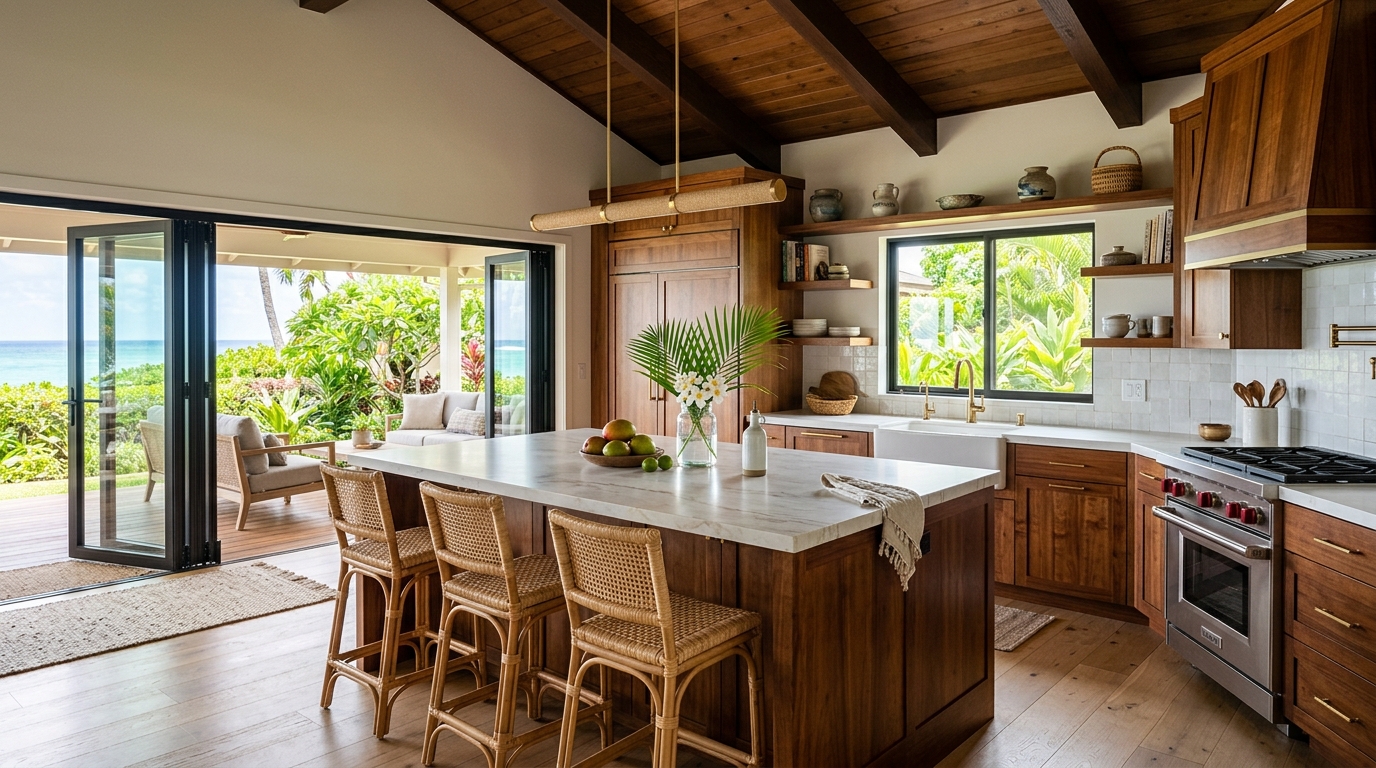
A kitchen remodel in Honolulu is one of the best investments you can make in your home, but it’s a different ballgame here in Hawaii. In 2026, a mid-range kitchen renovation on O’ahu for a typical 200-square-foot space will cost between $85,000 and $150,000 and take anywhere from four to seven months from initial design to final walkthrough. The process involves navigating Honolulu’s Department of Planning and Permitting (DPP), factoring in inter-island shipping logistics, and selecting materials that can withstand our unique salt-air climate. It’s not just about picking nice cabinets; it’s about building a space that lasts for decades in our island environment.
For over 20 years, our team at Warrior Construction has been on the ground, managing these projects from Kapolei to Hawaii Kai. We’ve seen it all: permitting delays that can stretch for months, supply chain hiccups that can halt a project, and the long-term effects of humidity and salt on the wrong materials. This isn’t mainland construction. Here, local knowledge isn’t a bonus—it’s essential. We understand that a successful kitchen renovation in Honolulu requires a deep understanding of local codes, climate challenges, and the right network of suppliers and subcontractors. This guide pulls from our decades of experience to give you the straight talk on what to expect, how to budget, and how to avoid the common pitfalls we see homeowners fall into. We’ll cover everything from realistic costs and timelines to the specific permits you’ll need and how to choose the right kitchen contractor for your O’ahu home.
Why Honolulu Homeowners Trust Warrior Construction for Kitchen Remodels
When you decide to undertake a kitchen remodel in Honolulu, you’re not just hiring a crew with hammers and saws; you’re entrusting a significant part of your home and finances to a team. Homeowners across O’ahu choose Warrior Construction (License BC-34373) because we’ve built our reputation on a foundation of local expertise and transparent communication. We’ve been doing this for over two decades right here in Hawaii. That means we’re not guessing about the Honolulu DPP’s review process or the lead time on custom cabinets from the mainland—we live it every day.
Our experience is intensely practical. For example, on a recent kitchen renovation in Kailua, the home was just a few hundred yards from the water. The client initially wanted standard stainless steel appliances and hardware. We were able to show them examples from other beachfront projects of how quickly standard 304-grade stainless steel can show tea staining and corrosion from the salt air. We guided them toward 316L marine-grade steel for fixtures and recommended specific cabinet finishes with factory-applied anti-corrosion coatings. It’s this kind of preventative, climate-specific advice that a mainland-based contractor simply wouldn’t know to give. Our team doesn’t just build to code; we build for the island lifestyle, ensuring your investment stands up to the elements.
Furthermore, we operate as a design-build firm, which streamlines the entire process. Instead of you having to hire an architect, then a designer, then bid the project out to multiple contractors, we handle everything under one roof. This single point of accountability saves time, reduces miscommunication, and ultimately controls costs. We manage the entire lifecycle, from the first sketch to the final punch list, ensuring the design is buildable within your budget from day one. This integrated approach is how we consistently deliver complex projects on schedule and build lasting relationships with our clients.
What Does a Kitchen Remodel Cost in Honolulu?
Let’s get straight to the point: the average mid-range kitchen remodel cost in Honolulu for 2026 is approximately $110,000. This typically covers a 200-square-foot kitchen and includes semi-custom cabinets, quartz countertops, a new appliance suite, updated electrical and plumbing, and professional labor. For a more high-end or luxury remodel with custom koa cabinetry, high-end appliances like Sub-Zero or Wolf, and significant structural changes, you can expect to invest $175,000 to $250,000 or more. Conversely, a smaller, more cosmetic refresh—keeping the same layout, refinishing cabinets, and replacing countertops—might run between $50,000 and $75,000.
It’s crucial to understand where that money goes. Unlike the mainland, our costs are heavily influenced by shipping and the higher price of skilled labor. Here’s a typical budget breakdown for a $110,000 Honolulu kitchen renovation:
- Cabinetry & Hardware (35%): $38,500. This is the biggest chunk of your budget. Semi-custom cabinets are popular, but the price can soar with custom work, especially with local woods.
- Labor & Installation (20%): $22,000. This includes demolition, framing, installation, and project management. Skilled labor is at a premium in Hawaii.
- Appliances & Ventilation (15%): $16,500. Don’t forget to budget for shipping and delivery fees, which can add another 10-15% to the appliance cost alone.
- Countertops (10%): $11,000. Quartz remains the top choice for its durability and low maintenance, perfect for busy families.
- Plumbing & Electrical (10%): $11,000. If we’re moving sinks, adding an island, or bringing old wiring up to code, this cost can increase. Many older Honolulu homes in areas like Manoa or Kaimuki require significant electrical upgrades.
- Flooring, Backsplash & Finishes (5%): $5,500. This includes tile, paint, and lighting fixtures.
- Design, Permits & Fees (5%): $5,500. This covers architectural drawings, engineering if needed, and Honolulu DPP permit fees.
We recently completed a project in Ewa Beach where the initial budget was tight. The homeowner wanted to open up a wall between the kitchen and living room. Once we did exploratory demolition, we discovered it was a load-bearing wall with plumbing running through it. The project required a structural engineer’s assessment, a new LVL beam, and rerouting the plumbing. This added about $12,000 and three weeks to the project. This is why we always advise clients to build a 15-20% contingency fund into their budget. In Hawaii construction, you have to be prepared for the unexpected, especially in older homes.
How Long Does a Kitchen Remodel Take in Honolulu?
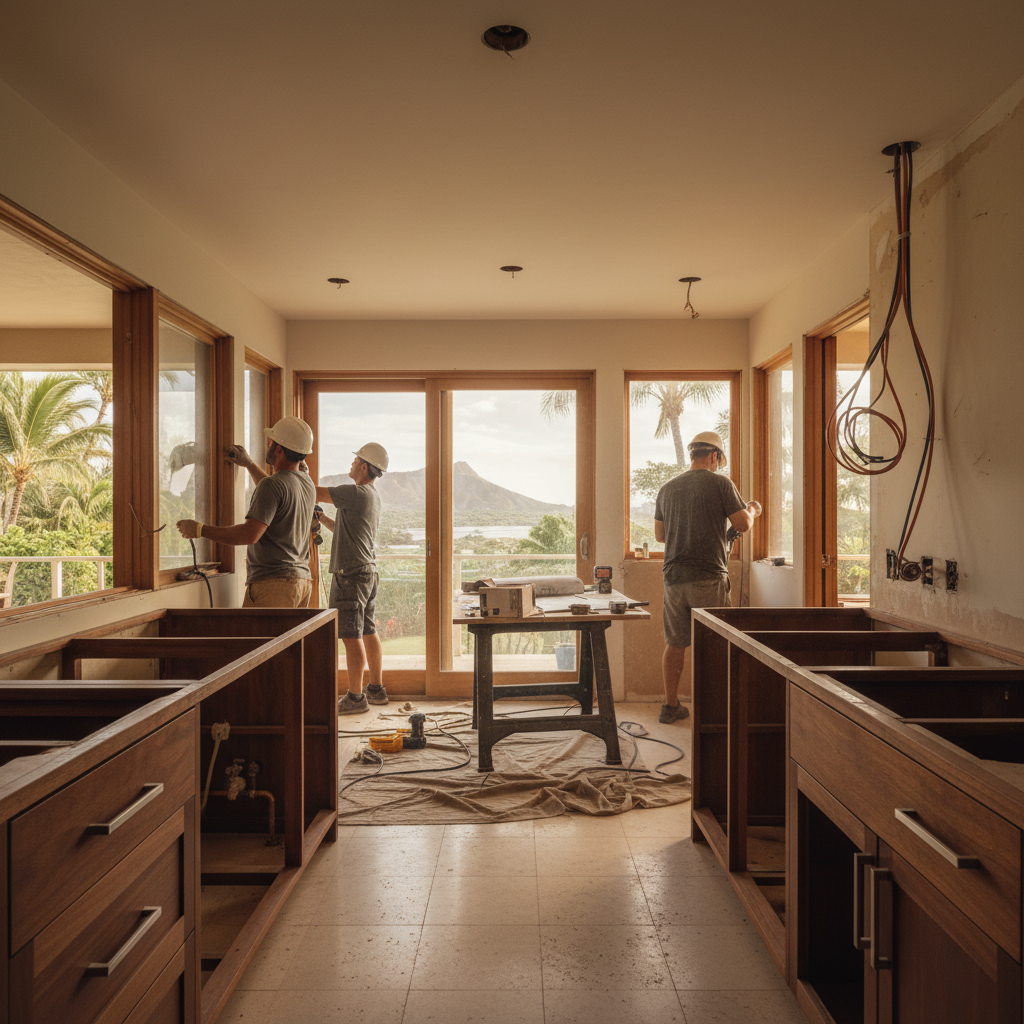
A common misconception is that the construction itself is the longest part of a kitchen remodel. Here in Honolulu, the pre-construction phase—planning, design, and especially permitting—often takes longer than the actual build. For a standard kitchen renovation, you should realistically plan for a total timeline of 16 to 28 weeks from the day you hire a contractor to the day you’re cooking in your new kitchen.
Let’s break that down into a realistic 2026 timeline for a project on O’ahu:
- Phase 1: Design & Selections (4-8 weeks): This is where we work with you to finalize the layout, cabinet styles, countertops, appliances, and all finishes. This phase is collaborative and involves detailed drawings and 3D renderings. Making all decisions upfront is critical to avoid delays later.
- Phase 2: Permitting with Honolulu DPP (8-16 weeks): This is the big variable. Once the design is finalized, we submit the plans to the Department of Planning and Permitting.[1] Even for a seemingly straightforward kitchen remodel, if you’re moving walls or altering plumbing and electrical, the review process can be lengthy. As of 2026, the DPP is still working through a backlog, and initial reviews can take a couple of months, plus more time for any corrections.
- Phase 3: Material Procurement & Shipping (4-12 weeks): We order cabinets, appliances, and tile during the permitting phase. Since most of these items are shipped from the mainland, we have to account for manufacturing lead times plus 3-4 weeks for ocean freight and delivery. On a recent project on the North Shore, the custom-ordered range was delayed by a month due to a shipping container backlog in Long Beach. We had everything else on-site, but couldn’t finish until it arrived. This is the reality of building on an island.
- Phase 4: Construction (6-10 weeks): This is the active demolition and building phase. It usually proceeds as follows:
- Week 1: Demolition and site prep.
- Weeks 2-3: Rough-in for electrical, plumbing, and mechanical. Wall framing or changes.
- Week 4: Drywall, taping, and mudding.
- Week 5: Priming, painting, and flooring installation.
- Weeks 6-7: Cabinet and countertop installation.
- Week 8: Appliance installation, plumbing and electrical final connections.
- Weeks 9-10: Backsplash, final paint, punch list, and final inspections.
The key takeaway is patience and planning. A good kitchen contractor in Honolulu will map this entire timeline out for you and manage expectations. Rushing the planning phase or trying to start construction before all materials are on island is a recipe for a stalled, frustrating project.
What Permits Do You Need for a Kitchen Remodel in Honolulu?
Navigating the permitting process with the Honolulu Department of Planning and Permitting (DPP) is one of the most critical and often underestimated parts of a successful kitchen renovation in Honolulu. The short answer is: yes, you will almost certainly need a building permit if your remodel is anything more than a simple cosmetic facelift. Homeowners often ask if they can skip this step to save time and money, and our answer is always an emphatic no. Unpermitted work can lead to fines, stop-work orders, and major problems when you try to sell your home.
So, what exactly triggers the need for a permit? According to the City and County of Honolulu’s building code, you need a permit for any of the following:
- Altering the structure: This includes removing, relocating, or adding any walls, even if you think they aren’t load-bearing.
- Changing the layout: If you move the location of your sink, dishwasher, or stove, you’re altering the plumbing and electrical systems, which requires a permit and inspections.
- New electrical circuits or outlets: Adding a dedicated circuit for a new induction cooktop or installing new outlets for an island requires an electrical permit.
- New plumbing lines: Running a new water line for a pot filler or an ice maker in the fridge requires a plumbing permit.
- Changing windows or doors: If your kitchen has an exterior wall and you’re changing the size of a window or door, this affects the building envelope and requires a permit.
Essentially, if you are only painting, replacing cabinet hardware, or installing new countertops on the *exact same* cabinet footprint, you likely won’t need a permit. Anything else, and you should plan on it. The process involves submitting professional architectural plans to the DPP for review. They will check them for compliance with building, electrical, plumbing, and energy codes. This process ensures the work is done safely and correctly.
A few years ago, we were called in to fix a kitchen remodel in Aina Haina that was done without permits. The homeowner had hired an unlicensed handyman who moved a wall to create an open concept. When the homeowner tried to refinance, the bank’s appraiser flagged the unpermitted work. We had to tear open the walls to prove to a structural engineer and a city inspector that the work was done correctly and that the proper support beam had been installed. The cost to open everything up, get after-the-fact permits, and close it all back up was nearly $25,000—a costly lesson in the importance of doing things by the book from the start.
Honolulu-Specific Considerations: Climate, Materials, and Regulations
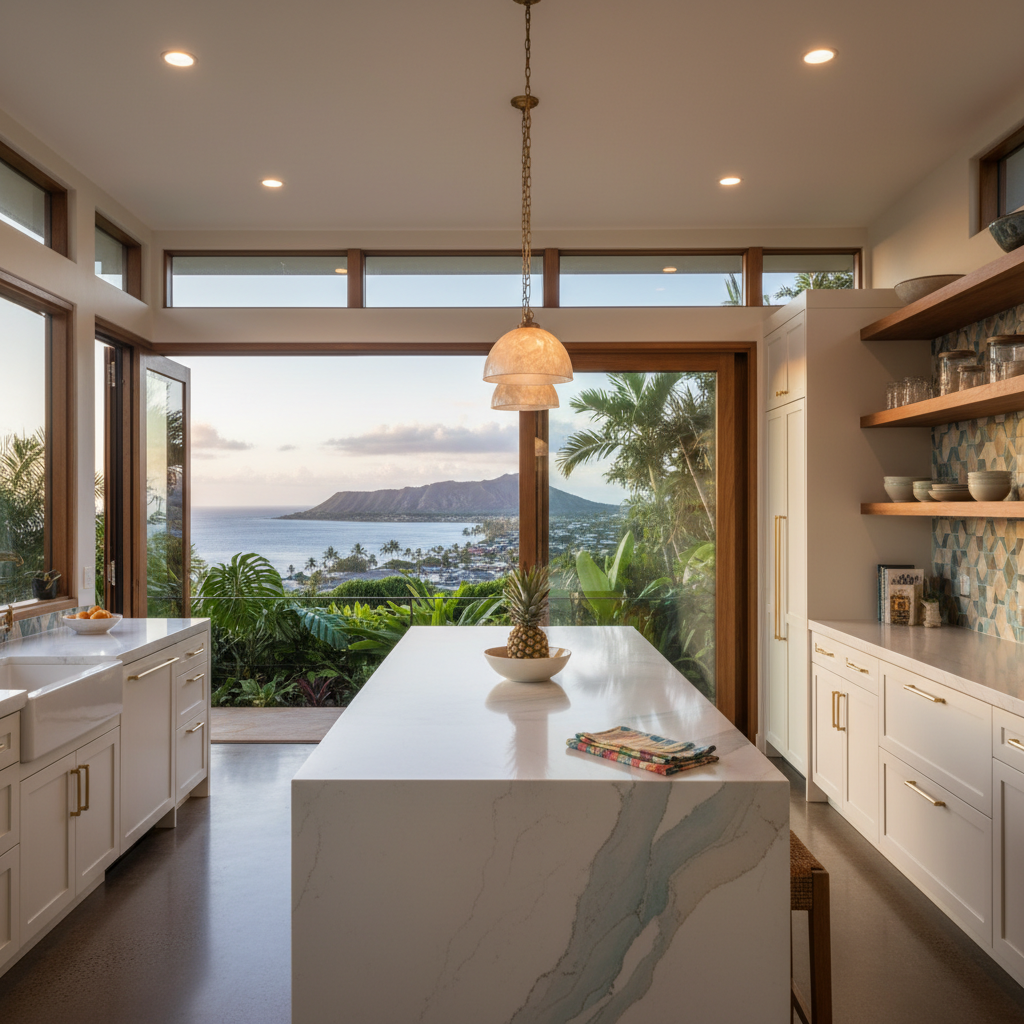
Remodeling a kitchen in Honolulu isn’t like remodeling one in Arizona or Ohio. Our island environment presents a unique set of challenges and considerations that must be addressed from the very beginning of the design process. Ignoring them can lead to a beautiful new kitchen that starts to fail within a few years.
Climate: Salt Air and Humidity
The number one enemy of building materials in Hawaii is our humid, salt-laden air. This is especially true for homes on the Windward side like in Kailua or Kaneohe, but it affects all of O’ahu. Here’s how we combat it in our kitchen designs:
- Cabinetry: We often advise against MDF (medium-density fiberboard) cabinets, especially for lower cabinets or under the sink. One small plumbing leak can cause MDF to swell up like a sponge and delaminate. Marine-grade plywood boxes are a much more durable, albeit more expensive, option. For finishes, factory-applied baked-on enamel or thermofoil offer better resistance to moisture than standard paint.
- Hardware and Fixtures: All your cabinet pulls, hinges, and drawer slides should be stainless steel. But not all stainless is created equal. We specify 304-grade for most inland projects, but for anything near the coast, we insist on 316L marine-grade stainless to prevent rust and corrosion. The same goes for faucets and light fixtures.
- Ventilation: A powerful, properly vented range hood is non-negotiable. It’s not just for cooking smells; it’s for removing moisture- and grease-filled air that can lead to mold growth and damage your cabinets over time. We make sure the ducting is routed correctly to the exterior, not just recirculating the air.
Materials and Logistics
Everything gets here on a boat. That simple fact impacts cost and timeline significantly. We have to factor in 3-6 weeks of shipping time for almost all materials—cabinets, appliances, special-order tile, you name it. This means meticulous planning is essential. We order everything the moment permits are submitted so it arrives on schedule for the construction phase. The cost of shipping also adds about 15-25% to the material cost compared to mainland prices. While we prioritize local suppliers whenever possible, many specialty items still have to be brought in.
Local Regulations and Building Codes
Hawaii has specific building codes designed for our environment. Since Hurricane Iniki in 1992, our hurricane code requirements are some of the strictest in the nation. If your kitchen remodel involves replacing an exterior window, it must meet current hurricane code, which means impact-rated glass or a rated shutter system. We also have to deal with volcanic soil conditions, which can affect foundations if your remodel is part of a larger addition. Furthermore, with the passing of ordinances like Bill 7 to encourage ADU (Accessory Dwelling Unit) construction, there are specific zoning rules if your kitchen renovation is part of creating a new rental unit on your property. A qualified general contractor needs to be well-versed in these local nuances to ensure your project is fully compliant.
How to Choose the Right Kitchen Remodel Contractor in Honolulu
Selecting the right kitchen contractor in Honolulu is the single most important decision you will make for your project. A great contractor will guide you through the process, manage the complexities, and deliver a high-quality result. A bad one can turn your dream project into a nightmare of delays, cost overruns, and shoddy workmanship.
Here’s a checklist to use when vetting potential contractors:
- Verify Their License and Insurance. This is the absolute first step. Don’t just take their word for it. Go to the Hawaii Department of Commerce and Consumer Affairs (DCCA) Professional & Vocational Licensing (PVL) website.[2] You can search by the company name or license number. Make sure their license is active, in good standing, and is the correct type (a B-General Building Contractor license is required for this work). For example, our license is BC-34373. Also, ask for certificates of general liability and workers’ compensation insurance. Without these, you could be liable for accidents on your property.
- Demand Local, Relevant Experience. Ask to see a portfolio of kitchen remodels they have completed *on O’ahu*. Ask for addresses you can drive by. A contractor from the mainland might show you beautiful pictures, but they won’t understand the unique challenges of building here. Ask them specific questions: “How do you handle DPP permitting?” “What cabinet materials do you recommend for a home in Manoa’s humid climate?” “Tell me about a time a project was delayed by shipping and how you handled it.” Their answers will reveal their depth of local knowledge.
- Get a Detailed, Itemized Bid. A one-page estimate with a single number at the bottom is a major red flag. A professional bid should be several pages long and break down the costs for demolition, framing, electrical, plumbing, cabinetry, countertops, flooring, and labor. This level of detail shows they’ve thoroughly thought through your project and allows you to compare bids accurately. Be wary of a bid that is significantly lower than others; they are likely cutting corners somewhere.
- Check References Thoroughly. Don’t just ask for a list of happy clients. Ask for the last three clients they completed a project for. This gives you a more realistic sample. When you call, ask questions beyond “Were you happy?” Ask: “How was their communication?” “Did they stick to the budget and schedule?” “How did they handle problems when they came up?” “Would you hire them again?” How a contractor deals with the inevitable challenges is what separates the pros from the amateurs.
- Communication is Key. During the interview process, pay attention to how they communicate. Do they return your calls promptly? Do they answer your questions clearly and patiently? A remodel is a long-term relationship. You need a contractor you can talk to and who will be responsive to your concerns throughout the entire process.
Real Honolulu Kitchen Remodel Project Example: A Kaimuki Transformation
To make all this information concrete, let’s walk through a recent project our team at Warrior Construction completed. It’s a perfect example of a typical kitchen renovation in Honolulu for a classic O’ahu home.
The Homeowner & The Problem: We worked with a family in a 1960s single-wall construction home in Kaimuki. Like many homes of that era, the kitchen was small, dark, and completely closed off from the living and dining areas. The cabinets were original and deteriorating, the Formica countertops were chipped, and there was only one outlet for the entire counter space. The family wanted a modern, open-concept space where they could cook and entertain, a space that felt connected to the rest of their home.
The Warrior Construction Solution: Our design-build process started with understanding their goals. The key was removing a non-load-bearing wall separating the kitchen from the living room. This single change instantly transformed the feel of the entire first floor. Our plan included:
- Demolition of the old kitchen and the dividing wall.
- Re-framing the opening and relocating electrical switches.
- A complete electrical upgrade for the kitchen, including dedicated circuits for all major appliances, under-cabinet lighting, recessed ceiling lights, and multiple outlets along the countertops, bringing it up to the 2026 code.
- All new plumbing for a new, larger sink and dishwasher located in a new central island.
- Installation of semi-custom white shaker-style cabinets with plywood boxes for durability, and a large 8-foot island in a contrasting navy blue.
- Durable, low-maintenance quartz countertops and a classic subway tile backsplash.
- A new luxury vinyl plank (LVP) floor was installed throughout the kitchen and living area to create a seamless look.
The Numbers:
- Final Project Cost: $122,500 (This included a small $7,500 contingency used for a necessary electrical panel upgrade discovered during demolition).
- Original Budget: $115,000
- Total Timeline: 24 weeks
- Design & Selections: 6 weeks
- Honolulu DPP Permitting: 10 weeks
- Material Procurement: (Happened during permitting)
- Construction: 8 weeks
The Outcome: The family was thrilled. We didn’t just give them a new kitchen; we completely changed how they use their home. The new open layout is filled with natural light, and the large island has become the central hub for homework, family meals, and hosting friends. By managing the design, permitting, and construction, our team was able to navigate the entire process smoothly, delivering a high-quality kitchen that added significant value and functionality to their Kaimuki home.
What this means for Hawaii homeowners
Embarking on a kitchen remodel in Honolulu is an exciting prospect, but success hinges on understanding and preparing for our unique local realities. It’s not a quick or simple project, and trying to apply mainland timelines or budget assumptions will only lead to frustration. The key is to shift your mindset from a simple construction project to a strategic investment in your property that requires careful planning and expert local guidance.
Here are the most critical takeaways for any O’ahu homeowner considering a kitchen renovation in 2026:
- Budget Realistically: Don’t anchor your expectations to mainland pricing you see on TV or online. Factor in a minimum of 15-25% extra for the “paradise tax”—the combined cost of shipping, GET, and higher labor rates. Always include a 15-20% contingency fund for unforeseen issues, especially in older homes. A realistic budget for a quality remodel starts around $85,000 and goes up from there.
- Embrace “Island Time” (For Permitting): The longest part of your project will likely be waiting for your permit from the Honolulu DPP. This is out of your and your contractor’s direct control. A good contractor can prepare a complete and accurate permit package to minimize back-and-forth, but you must plan for a 2-4 month review period. Do not schedule demolition or order final materials until your permit is in hand.
- Prioritize Durable, Climate-Appropriate Materials: Your biggest long-term enemy is moisture and salt. Invest in materials that will last. This means plywood cabinet boxes instead of particleboard, stainless steel (or even marine-grade) hardware and fixtures, and powerful, properly ducted ventilation. Making the right material choices upfront will save you thousands in repairs and replacements down the road.
- Hire a Licensed, Local, and Reputable Contractor: This cannot be overstated. Your choice of a kitchen remodel contractor in Honolulu will make or break your project. Verify their license on the PVL website, check their references, review their local portfolio, and make sure you have a good rapport. A great local contractor is your project manager, problem solver, and advocate through the entire complex process.
Planning a kitchen remodel is a major undertaking, but with the right preparation and the right team, it can be a smooth and rewarding process that dramatically improves your home’s value and your quality of life.
Frequently Asked Questions About Kitchen Remodels in Honolulu
Can I live in my house during a kitchen remodel?
Technically, yes, but we strongly advise against it if possible. A full kitchen demolition and remodel is extremely disruptive. You will be without a functioning sink, stove, or food prep area for 6-10 weeks. The construction zone will be dusty and noisy. Most clients set up a temporary kitchen in another room with a microwave, coffee maker, and mini-fridge, but it can be challenging, especially for families.
How much value does a kitchen remodel add to a home in Honolulu?
In the competitive Honolulu real estate market, a modern, well-done kitchen is a huge selling point. While you may not recoup 100% of the cost, local real estate agents generally agree that a mid-range kitchen remodel can yield a return on investment (ROI) of 60-80%. More importantly, it can make your home sell significantly faster than a comparable home with a dated kitchen.
What is the biggest mistake Honolulu homeowners make in a kitchen remodel?
The most common mistake is failing to plan for the long lead times required in Hawaii. Homeowners get excited and want to start demolition right away, but they haven’t ordered cabinets or appliances. This results in a gutted kitchen sitting idle for months while waiting for materials to arrive from the mainland. A professional contractor will create a detailed schedule that ensures all materials are on O’ahu before construction begins.
How long does a Honolulu DPP permit *really* take in 2026?
While the official target may be shorter, our experience in 2026 shows that homeowners should realistically budget 8 to 16 weeks for a building permit for a kitchen remodel that involves moving walls or utilities. If the plans are complex or if the DPP requires corrections, it can take longer. It is the single biggest variable in the project timeline, and patience is essential.
Are IKEA kitchens a good choice for Hawaii?
IKEA kitchens can be a budget-friendly option, but there are trade-offs. The cabinet boxes are primarily particleboard, which is highly susceptible to swelling and damage from Hawaii’s high humidity and any potential water leaks. While the finishes look good initially, they may not have the long-term durability of higher-quality cabinets with plywood construction. Furthermore, you’ll still have to pay significant shipping costs to get them here, and finding a contractor willing to install them can sometimes be a challenge.
What cabinet materials hold up best to Hawaii’s humidity?
For cabinet boxes, solid plywood is far superior to particleboard (MDF) in our humid climate. For doors and drawer fronts, solid wood is excellent but can be prone to expanding and contracting. High-quality engineered wood, thermofoil, or acrylic finishes are often more stable and moisture-resistant. Regardless of the material, ensuring all surfaces are properly sealed is the most critical factor for longevity.
Do I need an architect for a kitchen remodel in Honolulu?
If you are not moving any walls and keeping the existing layout, you typically do not need an architect. However, if you plan to remove walls (especially load-bearing ones), change window or door openings, or make any structural alterations, you will need plans stamped by a licensed Hawaii architect or structural engineer for the DPP permit submission. A design-build contractor like Warrior Construction can manage this entire process for you as part of our service.
A kitchen remodel is a complex job with a lot of moving parts, especially here on O’ahu. Doing it right means having a partner you can trust to manage the budget, navigate the permitting process, and deliver quality craftsmanship that will last for years in our island climate. At Warrior Construction, we’ve spent more than 20 years perfecting that process for Honolulu homeowners.
If you’re ready to transform your kitchen, our team is here to help. We combine expert design, transparent project management, and a deep understanding of Hawaii construction to bring your vision to life. Learn more about our kitchen remodeling services and contact us today for a complimentary estimate.