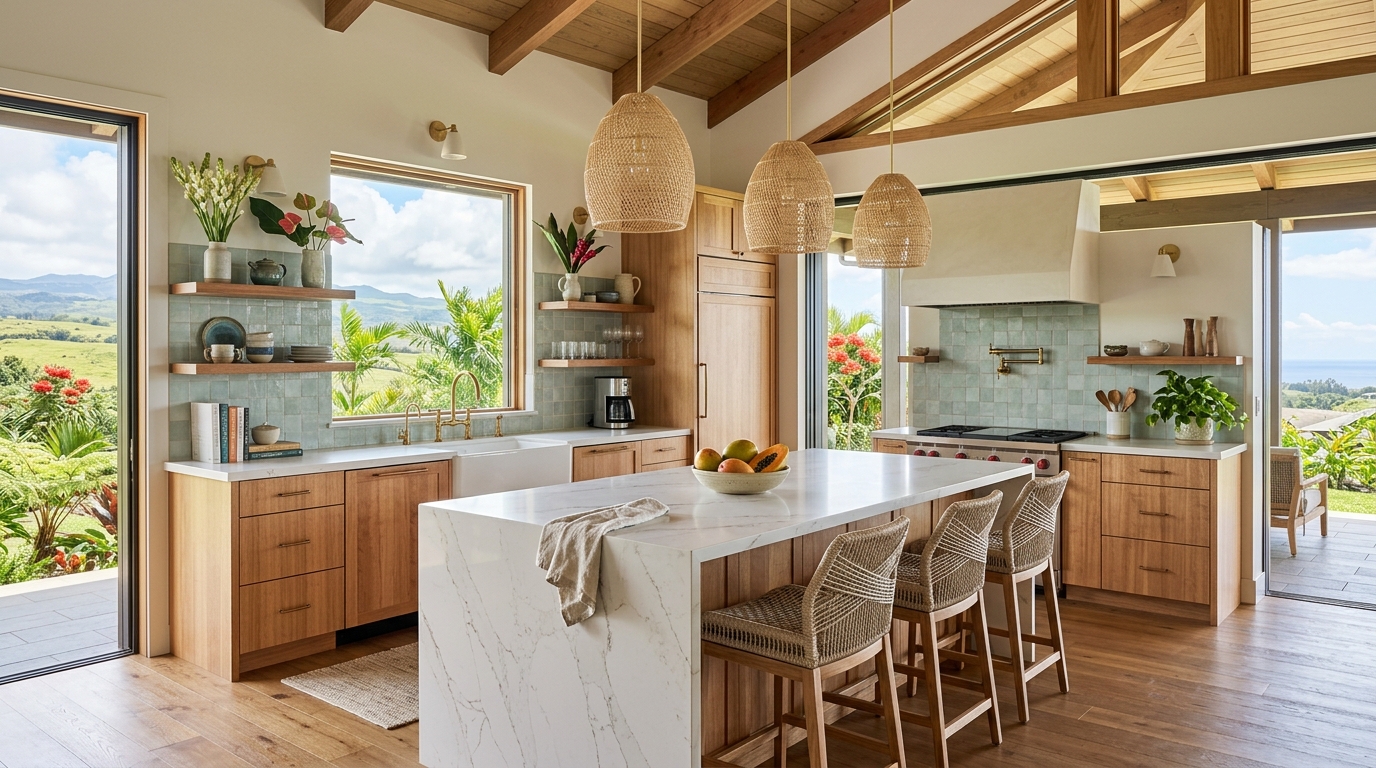
“A full kitchen remodel in Waimea, Big Island, in 2026 will typically cost between $75,000 for a solid mid-range renovation and can exceed $150,000 for a high-end luxury project. The entire process, from our first conversation to your final walk-through, usually takes between 12 to 20 weeks, factoring in design, Big Island permitting, and inter-island material shipping. These aren’t mainland numbers; they reflect the unique realities of building in upcountry Hawai’i, a place we’ve been working for over two decades.\n\nHere at Warrior Construction, we’ve seen it all when it comes to a kitchen remodel waimea homeowners are dreaming of. From historic Parker Ranch-style homes needing careful updates to modern residences looking for an open-concept great room, the goals are often similar: more function, better flow, and a beautiful space that stands up to the Big Island lifestyle. But getting there requires navigating a specific set of challenges—from the damp Waimea climate to the logistical puzzle of getting materials to the island. This isn’t like remodeling in Honolulu or on the mainland. Everything from the ground up is different.\n\nIn this guide, our team will break down the real costs, timelines, and Waimea-specific hurdles you’ll face. We’ll cover permitting with the County of Hawai’i, material choices that make sense for the cooler, wetter climate, and the seven most effective tactics we use to help our clients save money without cutting corners on quality. Think of this as the same straightforward advice we’d give you over a cup of coffee before we even start talking about blueprints.\n\n
Why Waimea Homeowners Trust Warrior Construction for Kitchen Remodel
\n\nChoosing a general contractor for your Waimea kitchen remodel is about more than just a license number and a quote. It’s about finding a team that understands the Big Island. We’re not just a company with a Hawaii license; we’re a team that has been on the ground here, solving problems unique to this island. Our license, BC-34373, is a mark of our commitment, but our real value comes from years of hands-on experience in places like Waimea, Kohala, and Kona.\n\nOne of the biggest hurdles for any Big Island project is logistics. We have established relationships with suppliers both on-island and on the mainland, which means we know how to navigate the shipping and trucking schedules to keep a project moving. For example, on a recent Waimea project, the specific high-end range the client wanted had a 16-week lead time. We knew this upfront and ordered it before we even submitted permits, ensuring it arrived at the port of Kawaihae right when we were ready for installation, not months later. This kind of foresight prevents costly delays that can plague less experienced contractors.\n\nFurthermore, our team understands the nuances of the local climate. Waimea isn’t the dry, sunny Kona coast. It’s cooler, gets more rain, and has a unique mauka environment. This directly impacts material selection. We guide our clients away from certain types of unsealed wood cabinets that might warp in the higher humidity and toward materials with more stable, durable finishes. We also pay close attention to ventilation, ensuring proper range hoods and even considering supplemental dehumidification systems to prevent the musty smell and potential for mold that can happen in older, tightly sealed Waimea homes. It’s this deep, location-specific knowledge that separates a standard kitchen renovation from a true Waimea-ready kitchen that will last for decades.\n\nFinally, we have a proven track record of working with the County of Hawaiʻi Department of Public Works. The permitting process here has its own rhythm and set of expectations. Our team knows the plan checkers, understands the specific code requirements for the island, and submits complete, accurate drawing sets that get approved faster. A simple mistake on a permit application can set a project back for months. We handle that entire process, ensuring every detail, from electrical load calculations to plumbing diagrams, is correct from the start. Homeowners trust us because we don’t just build kitchens; we manage the entire complex process from start to finish.\n\n
What Does Kitchen Remodel Cost in Waimea?
\n\nLet’s get straight to the point: understanding the true **kitchen remodel cost waimea** homeowners will face in 2026 is critical for planning. The numbers are higher than on the mainland due to shipping, labor costs, and the General Excise Tax (GET). Our team has found that breaking projects down into tiers helps clients align their vision with a realistic budget.\n\nHere’s a look at what you can expect for a standard 200-square-foot kitchen:\n\n
- \n
- \n Basic Refresh / Cosmetic Update: $40,000 – $65,000\n
This level is about improving the look and feel without major system changes. Think of it as a facelift. It typically includes refacing or painting existing cabinet boxes, installing new doors and hardware, putting in laminate or granite tile countertops, adding a new tile backsplash, a fresh coat of paint, and replacing appliances within their existing locations. You’re not moving plumbing or electrical, so permit requirements are minimal or non-existent.\n - \n Mid-Range Full Renovation: $75,000 – $120,000\n
This is the most common type of **kitchen renovation waimea** project we undertake. It involves a full gut of the existing space. This budget includes semi-custom cabinets, solid surface countertops like quartz or granite slabs, all-new mid-range appliances (think Bosch, KitchenAid, or GE Profile), new sinks and faucets, luxury vinyl plank or tile flooring, and new lighting. We are likely moving some plumbing and electrical lines to improve the layout, which definitely requires a full permit set from the county.\n - \n High-End Luxury Remodel: $150,000+\n
For this level of investment, the sky’s the limit. This involves significant structural changes, like removing walls to create a large open-concept space. The budget accommodates fully custom cabinetry (perhaps from a local woodworker using koa), professional-grade appliances (Sub-Zero, Wolf, Thermador), natural stone countertops with waterfall edges, high-end plumbing fixtures, and custom lighting design. Often, this includes architectural and engineering fees to ensure the structural changes are sound.\n
\n
\n
\n
\n\n
Cost Breakdown for a Typical $95,000 Mid-Range Waimea Remodel:
\n\n
| Category | Percentage of Budget | Estimated Cost | Notes |
|---|---|---|---|
| Cabinetry & Hardware | 30% | $28,500 | Includes inter-island shipping and installation labor. |
| Labor & General Conditions | 25% | $23,750 | Covers demolition, framing, drywall, project management. |
| Appliances & Ventilation | 15% | $14,250 | Higher-end appliances can easily double this. |
| Countertops | 10% | $9,500 | Quartz is a popular, durable choice for Waimea. |
| Plumbing & Electrical | 10% | $9,500 | Assumes moving some lines and adding new circuits. |
| Flooring & Finishes | 7% | $6,650 | Includes paint, backsplash tile, and flooring material. |
| Permits & Fees | 3% | $2,850 | County of Hawai’i plan review and inspection fees. |
\n\nIt’s also crucial to budget for a contingency fund of 10-15%. On a Big Island project, this isn’t optional. You might open a wall and find termite damage or old, ungrounded wiring that has to be brought up to code. That contingency fund is what keeps the project on track without causing financial stress.\n\n
How Long Does a Kitchen Remodel Take in Waimea?
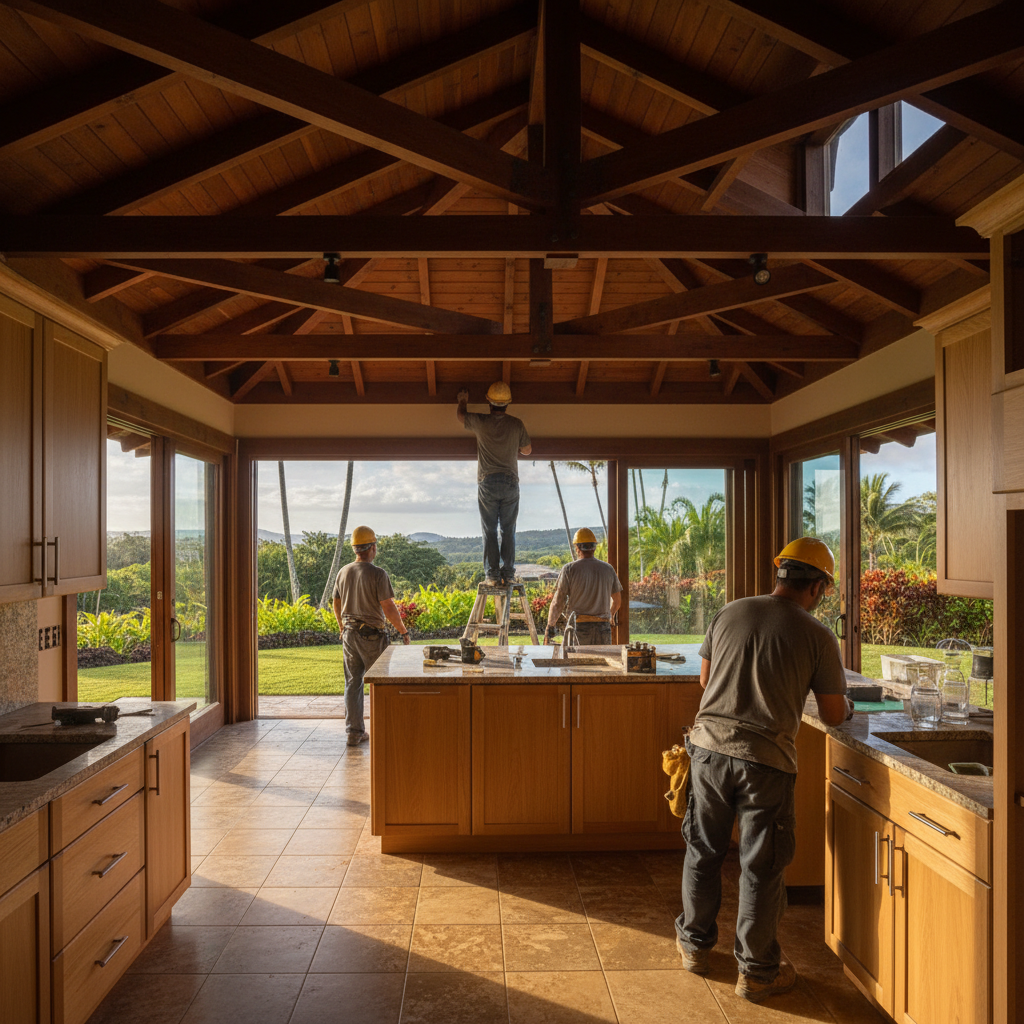
\n\nA common question we get is about the timeline. Homeowners are always surprised that the actual construction is often the shortest part of the process. For a Waimea kitchen remodel, patience is key, as permitting and material logistics add significant time compared to a mainland project. From the day you sign a contract with us to the day you can cook in your new kitchen, you should plan for a 12 to 20-week journey.\n\nHere’s a realistic timeline breakdown our team uses for planning:\n\n
- \n
- Phase 1: Design, Planning & Selections (4-6 weeks)
This is where we work with you to finalize the layout, create architectural drawings if needed, and make all your material selections. This means choosing your exact cabinets, countertops, appliances, flooring, tile, and paint colors. Making these decisions upfront is the single most important thing you can do to prevent delays later. We can’t order anything until these choices are locked in. - Phase 2: Permitting with County of Hawai’i (6-12 weeks)
Once the plans are finalized, we submit them to the County of Hawaiʻi Department of Public Works. This is often the biggest bottleneck. The county’s review process can be slow, and they may come back with questions or required revisions. This phase can sometimes overlap with material procurement, but no demolition can begin until we have that stamped, approved permit in hand. - Phase 3: Material Procurement & Shipping (4-10 weeks)
As soon as you’ve made selections, we start ordering. Semi-custom cabinets from the mainland typically take 6-8 weeks to be built and shipped. Appliances can have similar lead times. Everything has to be shipped to Hilo or Kona and then trucked up to Waimea. We meticulously track every single item to ensure it all arrives before we start demolition. Starting work before your cabinets arrive is a recipe for disaster. - Phase 4: Active Construction (6-10 weeks)
This is the phase where you see daily progress. It breaks down into several stages:\n- \n
- Week 1: Demolition and setting up dust protection.
- Weeks 2-3: Rough-in for plumbing, electrical, and any framing changes. This is followed by the first major inspection.
- Weeks 3-4: Drywall installation, taping, and texturing.
- Week 5: Flooring installation and painting.
- Weeks 6-7: Cabinet installation. This is a huge milestone.
- Week 8: Countertop templating and installation (typically a 1-2 week turnaround after cabinets are in).
- Week 9: Appliance installation, plumbing fixture hookups, and electrical trim-out (lights, switches).
- Week 10: Backsplash installation, final details, and punch list creation.
\n
\n
\n
\n
\n
\n
\n
\n
\n
- Phase 5: Final Inspections & Punch List (1-2 weeks)
Once the work is complete, we call in the county for the final building, electrical, and plumbing inspections. After we get the green light, our team will walk through the kitchen with you to create a “punch list” of any tiny adjustments needed. Once you’re 100% satisfied, the project is complete.
\n
\n
\n
\n
\n
\n\nThis detailed timeline shows why starting the conversation early is so important. If you want a new kitchen by Christmas, we need to be starting the design process in June or July at the latest.\n\n
What Permits Do You Need for Kitchen Remodel in Waimea?
\n\nNavigating the permitting process with the County of Hawaiʻi is one of the most critical services a good **kitchen contractor waimea** provides. It’s not an optional step, and trying to work around it can lead to huge fines, tear-out orders, and major problems when you try to sell your home. Our team handles this entire process, but it’s important for homeowners to understand what triggers a permit.\n\nYou will need a building permit for your Waimea kitchen remodel if you are doing any of the following:\n\n
- \n
- Altering the structure: This includes removing, adding, or changing any load-bearing or non-load-bearing walls. Even opening up a doorway requires a permit.
- Changing the layout: If you move the location of your sink, dishwasher, or refrigerator (if it has a water line), you are altering the plumbing layout. This requires a plumbing permit, which is part of the overall building permit.
- Altering electrical systems: Adding new outlets, relocating switches, adding dedicated circuits for new appliances (like a convection oven or induction cooktop), or installing new lighting all require an electrical permit.
\n
\n
\n
\n\nConversely, you generally **do not** need a permit for cosmetic work, such as:\n\n
- \n
- Painting or refacing cabinets.
- Replacing countertops, as long as the sink stays in the same place.
- Replacing flooring.
- Swapping out a faucet or light fixture in the same location without changing the wiring.
- Replacing an appliance with a similar model in the exact same spot.
\n
\n
\n
\n
\n
\n\nThe process involves submitting a full set of architectural drawings to the County of Hawaiʻi Department of Public Works. These plans must show the existing layout and the proposed new layout, with detailed electrical and plumbing plans. While the specific forms and submission process are managed by Hawaiʻi County, the principles are similar to those on other islands, like the process managed by the Honolulu Department of Planning and Permitting[1]. As licensed contractors, we prepare and submit this entire package on your behalf. Licensed electricians and plumbers are also required to pull their own respective permits under the umbrella of our main building permit.\n\nAttempting a remodel that requires a permit without getting one is a serious risk. If a neighbor reports the work or a county official drives by and sees the construction, they can issue a stop-work order immediately. You’ll then be required to submit for a permit after the fact, which often comes with penalties and the risk of having to tear out completed work so an inspector can see what’s behind the drywall. It’s never worth the risk. A professional contractor will insist on doing things the right way, protecting your investment and your safety.\n\n
Waimea-Specific Considerations: Climate, Materials, Regulations
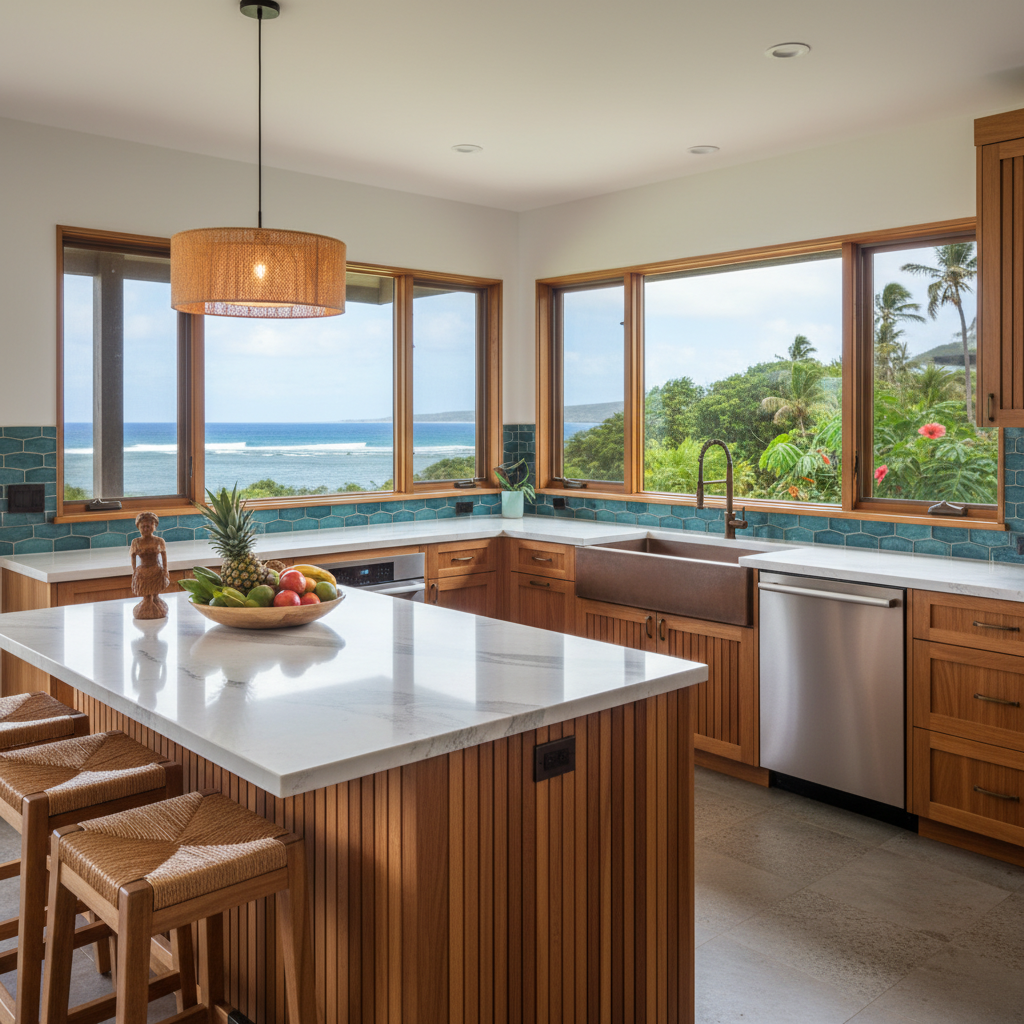
\n\nRemodeling a kitchen in Waimea is fundamentally different from a project in a dry, coastal area like Kona or a dense urban area like Honolulu. The unique upcountry environment on the Big Island dictates a different approach to design, material selection, and construction methods. At Warrior Construction, we’ve learned these lessons over many years on the job.\n\n
Climate Impact on Material Choices
\n\nWaimea’s climate is a mix of cool mornings, sunny days, and often damp, misty afternoons. This higher ambient humidity can be tough on certain building materials, especially wood.\n
- \n
- Cabinetry: While solid wood cabinets are beautiful, we often recommend engineered wood boxes with solid wood faces and doors, or high-quality thermofoil or acrylic finishes. These materials are more dimensionally stable and less prone to swelling, shrinking, or warping with the humidity swings. For clients set on wood, we ensure it’s properly kiln-dried and sealed on all six sides before installation.
- Countertops: Non-porous materials like quartz are an excellent choice for Waimea. They are impervious to moisture and highly resistant to staining and bacteria growth, which is a plus in a damp environment. While beautiful, some porous natural stones like marble require diligent sealing to prevent issues.
- Ventilation: Proper ventilation is non-negotiable. We always install high-CFM (cubic feet per minute) range hoods that are ducted to the exterior, not just recirculating. This removes cooking grease, smoke, and, most importantly, moisture from the air, protecting your cabinets and preventing mildew.
\n
\n
\n
\n\n
Material Sourcing and Logistics
\n\nThe biggest challenge for any Big Island construction project is logistics. There is no Home Depot Design Center with a massive in-stock cabinet selection. Almost everything for a full remodel must be ordered and shipped.\n
- \n
- Lead Times: We counsel our clients to expect 6-12 week lead times for cabinets, special-order appliances, and tile. This reality dictates our entire project schedule. We build this lead time into the plan from day one.
- Shipping Costs: The “Hawaii premium” is real. A pallet of flooring or a full set of cabinets has to be crated, shipped by barge from the mainland to Hilo or Kona, and then trucked up the mountain to Waimea. These costs are factored into the material prices and can add 15-25% to the raw cost of goods. This is a major reason why local cost estimates are higher than mainland ones.
- Local vs. Shipped: While most manufactured goods are shipped in, we do look for opportunities to use local materials when it fits the budget and design. For a high-end project, using locally sourced koa or mango wood for custom cabinetry can create a stunning, one-of-a-kind kitchen, though it comes at a premium price.
\n
\n
\n
\n\n
Local Regulations and Codes
\n\nBuilding on the Big Island means adhering to a specific set of codes designed for our environment. All work must comply with the latest International Building Code (IBC) as adopted by the state and county.\n
- \n
- Hurricane Code: Even though Waimea is inland, any project involving new windows or exterior doors must meet Hawaii’s stringent hurricane code requirements, which were put in place after Hurricane Iniki. This means using impact-rated glass and properly anchored frames.
- Electrical Code: With many older homes in Waimea, a kitchen remodel often triggers a necessary electrical upgrade. We frequently discover old, ungrounded wiring or overloaded panels that must be brought up to current code for safety. This includes installing GFCI (Ground Fault Circuit Interrupter) outlets near any water source.
- Volcanic Soil: While less of an issue for an interior remodel, any work affecting the foundation or slab must account for the unique volcanic soil conditions on the Big Island. Proper drainage and foundation design are critical for any new construction or additions.
\n
\n
\n
\n\n
How to Choose the Right Kitchen Remodel Contractor in Waimea
\n\nMaking the decision on which **kitchen contractor waimea** to hire is the most important choice you’ll make for your project. A great contractor can make the process smooth and deliver a beautiful result, while the wrong one can turn your dream kitchen into a nightmare of delays, budget overruns, and shoddy work. After more than 20 years in this business, we know what separates the professionals from the rest.\n\nHere are the key steps to vetting and selecting the right contractor:\n\n
- \n
- \n Verify Their License and Insurance. This is the absolute first step. Never consider hiring anyone who is not a licensed general contractor in the State of Hawaii. You can and should verify any contractor’s license number (ours is BC-34373) on the Hawaii Department of Commerce and Consumer Affairs (DCCA) Professional & Vocational Licensing (PVL) website[2]. Also, ask for proof of general liability insurance and workers’ compensation insurance. Without this, you could be held liable for any accidents on your property.\n
- \n Confirm They Have Big Island Experience. A contractor based on Oahu might have a Hawaii license, but do they really understand the challenges of a Waimea project? Ask them specific questions: \”Who is your go-to lumber supplier in Kona?\” \”How do you handle trucking from the port?\” \”Describe your last experience with a Hawai’i County plumbing inspector.\” Their answers will quickly reveal their level of local knowledge. Our team has a dedicated network of subcontractors and suppliers right here on the Big Island.\n
- \n Ask for Local References. Don’t just accept a list of past clients. Ask for references for projects they completed *in Waimea or the surrounding Kohala area* within the last two years. Call those references and ask about their experience. Was the project on time and on budget? How was communication? How did the contractor handle problems when they came up? \n
- \n Demand a Detailed, Itemized Proposal. A one-page quote with a single bottom-line number is a major red flag. A professional proposal should be several pages long, breaking down the costs for each phase of the project: demolition, framing, electrical, plumbing, cabinetry, countertops, etc. It should specify material allowances and detail exactly what is included and, just as importantly, what is excluded. This document becomes the foundation of your contract and prevents misunderstandings down the road.\n
- \n Evaluate Their Communication Style. During the bidding process, pay attention to how they communicate. Do they return your calls promptly? Do they answer your questions clearly and patiently? A remodel is a long-term relationship. You need a project manager you can talk to and who will keep you informed every step of the way. We use a cloud-based project management system that gives our clients 24/7 access to schedules, progress photos, and communications.\n
\n
\n
\n
\n
\n
\n\nChoosing the cheapest bid is often the most expensive mistake a homeowner can make. A suspiciously low bid usually means the contractor has missed something, is using subpar materials, or is cutting corners on labor or insurance. Invest the time to find a true professional partner. It will pay dividends in the quality and longevity of your new kitchen.\n\n
Real Waimea Kitchen Remodel Project Example
\n\nTo make all this information more concrete, let’s walk through a typical Waimea project our team recently completed in 2026. This case study illustrates the process, costs, and outcomes that are common for a mid-range kitchen renovation in the area.\n\n
- \n
- The Homeowner: A family with two children living in a 2,200 sq. ft. home built in the late 1980s in Waimea.
- The Problem: Their 180 sq. ft. kitchen was original to the house. It was dark, closed off from the living room by a non-load-bearing wall, and featured dated oak cabinets, worn laminate countertops, and old appliances. The workflow was inefficient, making it difficult for more than one person to cook at a time.
- The Goal: Create a bright, open-concept kitchen that connects to the main living area. They wanted an island with seating, more storage, better lighting, and durable, low-maintenance materials that would suit their active family lifestyle.
\n
\n
\n
\n\n
Our Process and Solution:
\n\n
- \n
- Design & Planning: Our design-build team worked with the homeowners to create a new layout. We planned to remove the wall separating the kitchen and living room and add a 7-foot island with a sink, dishwasher, and seating for three. We selected semi-custom white shaker cabinets, a durable light-colored quartz countertop, and a gray glass subway tile backsplash. For flooring, we chose a waterproof luxury vinyl plank that would run continuously from the kitchen into the living area.
- Budget & Timeline: We presented a detailed proposal with a total budget of $88,000. The projected timeline, from demolition to completion, was 14 weeks, which included a 10-week window for permitting and cabinet delivery.
- Construction Highlights: During demolition, we uncovered old, cloth-covered electrical wiring in the wall we removed. This wasn’t in the original scope but was a critical safety issue. We used the client’s 10% contingency fund to cover the $4,200 cost of running new, dedicated circuits for the kitchen, bringing the entire space up to the 2026 code. The project proceeded smoothly from there, with our project manager providing weekly updates and photos.
\n
\n
\n
\n\n
The Final Outcome:
\n\n
- \n
- Final Cost: $92,200 (including the electrical upgrade).
- Final Timeline: 15 weeks (the electrical work added one week to the schedule).
- Result: The family now has a beautiful, highly functional kitchen that serves as the true heart of their home. The open layout completely transformed the feel of their main living space. The improved lighting and durable materials make it a joy to use and easy to clean. The homeowners were thrilled with the result and the transparent communication throughout the process, especially when we encountered the unexpected electrical issue. This project is a perfect example of a successful **kitchen renovation waimea** that adds significant value and enjoyment to a home.
\n
\n
\n
\n\n
What this means for Hawaii homeowners
\n\nUndertaking a kitchen remodel in a unique place like Waimea requires a different mindset than it would on the mainland. It’s not just about picking out pretty finishes; it’s about strategic planning, patience, and partnering with a team that has proven local expertise. As a homeowner on the Big Island, you need to be prepared for the realities of island construction to ensure your project is a success.\n\nHere’s the bottom line and our most important advice:\n\n* **Start Earlier Than You Think:** The entire process, from initial design to final inspection, will likely take 4-6 months. The long pole in the tent is almost always permitting and material shipping. If you have a target completion date, you need to start the conversation with a contractor at least six months in advance.\n\n* **Budget for Reality, Not HGTV:** Mainland TV shows don’t reflect Hawaii’s costs. Labor is more expensive here, and every single nail, screw, and cabinet box has to be shipped across the ocean. Factor in the GET and a mandatory 10-15% contingency fund for unforeseen issues like termite damage or plumbing problems hidden in the walls.\n\n* **Prioritize Durability Over Trends:** The Waimea climate, with its humidity and temperature swings, demands durable materials. Invest in quality cabinets that won’t warp, non-porous countertops, and excellent ventilation. Making the right choices here will save you from costly repairs and replacements down the road.\n\n* **Hire a Licensed, On-Island Professional:** This cannot be overstated. Your contractor’s experience with the County of Hawaiʻi’s permitting department and their relationships with local suppliers and subcontractors are invaluable. A low-ball bid from an off-island or unlicensed contractor is a massive red flag. Verify their license, check their references, and make sure they have a portfolio of work specifically on the Big Island. Your peace of mind is worth the investment.\n\nUltimately, a well-planned and executed kitchen remodel can dramatically improve your home’s value and your daily life. By understanding these key principles, you can navigate the process with confidence and create a space that you and your family will love for years to come.\n\n
Frequently Asked Questions About Kitchen Remodel in Waimea
\n
How much value does a kitchen remodel add to my Waimea home?
\n
In the 2026 Waimea real estate market, a mid-range kitchen remodel typically recoups between 60% to 75% of its cost upon resale. For a $90,000 renovation, you could see an increase in home value of approximately $54,000 to $67,500. More importantly, a modern, updated kitchen is a major selling point that can make your home sell much faster than comparable homes with dated kitchens.
\n
\n
Can I live in my house during the kitchen renovation?
\n
Yes, it’s possible, but it requires planning. Our team sets up robust dust barriers and negative air pressure systems to contain the construction zone. However, you will be without a functioning kitchen for 6-10 weeks. We recommend setting up a temporary kitchen in another room with a microwave, coffee maker, and a refrigerator moved from the old kitchen.
\n
\n
What are the most common hidden costs in a Big Island kitchen remodel?
\n
The most common surprises we find in older Waimea homes are hidden termite damage in the walls, outdated electrical wiring that isn’t grounded or up to code, and cast iron plumbing that needs replacement. This is precisely why we insist our clients have a 10-15% contingency fund. It’s better to have it and not need it, than to need it and not have it.
\n
\n
How can I save money on my kitchen renovation in Waimea?
\n
The most effective way to save money is to keep your existing kitchen layout. Moving plumbing, gas, and electrical lines is expensive. Additionally, opting for high-quality stock or semi-custom cabinets instead of fully custom ones can save thousands. Choosing a granite or quartz from a supplier’s standard selection rather than an exotic slab also helps control costs significantly.
\n
\n
How long does it really take to get appliances delivered to the Big Island in 2026?
\n
For in-stock items at a Honolulu distributor, delivery to Waimea might take 2-3 weeks. However, for specific or high-end models that need to be ordered from the mainland, you should plan for a 6-12 week lead time. This is why we finalize all appliance selections and place orders before any demolition work begins to avoid project delays.
\n
\n
Do I need an architect or designer for my kitchen remodel?
\n
For a straightforward remodel within the existing footprint, a qualified general contractor or a design-build firm like Warrior Construction can handle the design and layout. If you plan to remove load-bearing walls or make significant structural changes to your home, we will bring in a structural engineer or architect to create the necessary drawings for the permit application.
\n
\n
Are there specific materials that hold up better to the salt-air corrosion, even in Waimea?
\n
While Waimea is upcountry, the marine layer can still carry salty air. For hardware like cabinet pulls and hinges, we recommend using high-grade stainless steel (316 grade) or solid brass with a PVD finish, as they are highly resistant to corrosion. For window frames, fiberglass or vinyl are superior to aluminum, which can pit and corrode over time from salt exposure.
\n
\n
\n\n
Ready to Plan Your Waimea Kitchen Remodel?
\n
Navigating a kitchen remodel on the Big Island has its challenges, but with the right partner, it can be a rewarding investment in your home. At Warrior Construction, we combine decades of statewide experience with a deep understanding of the local Waimea community. Our team is ready to bring your vision to life with professionalism, quality craftsmanship, and transparent communication.
\n
If you’re ready to discuss the possibilities for your home, our team is here to help. Learn more about our kitchen remodeling services and schedule your free, no-obligation estimate today.
\n\n
References
\n