“
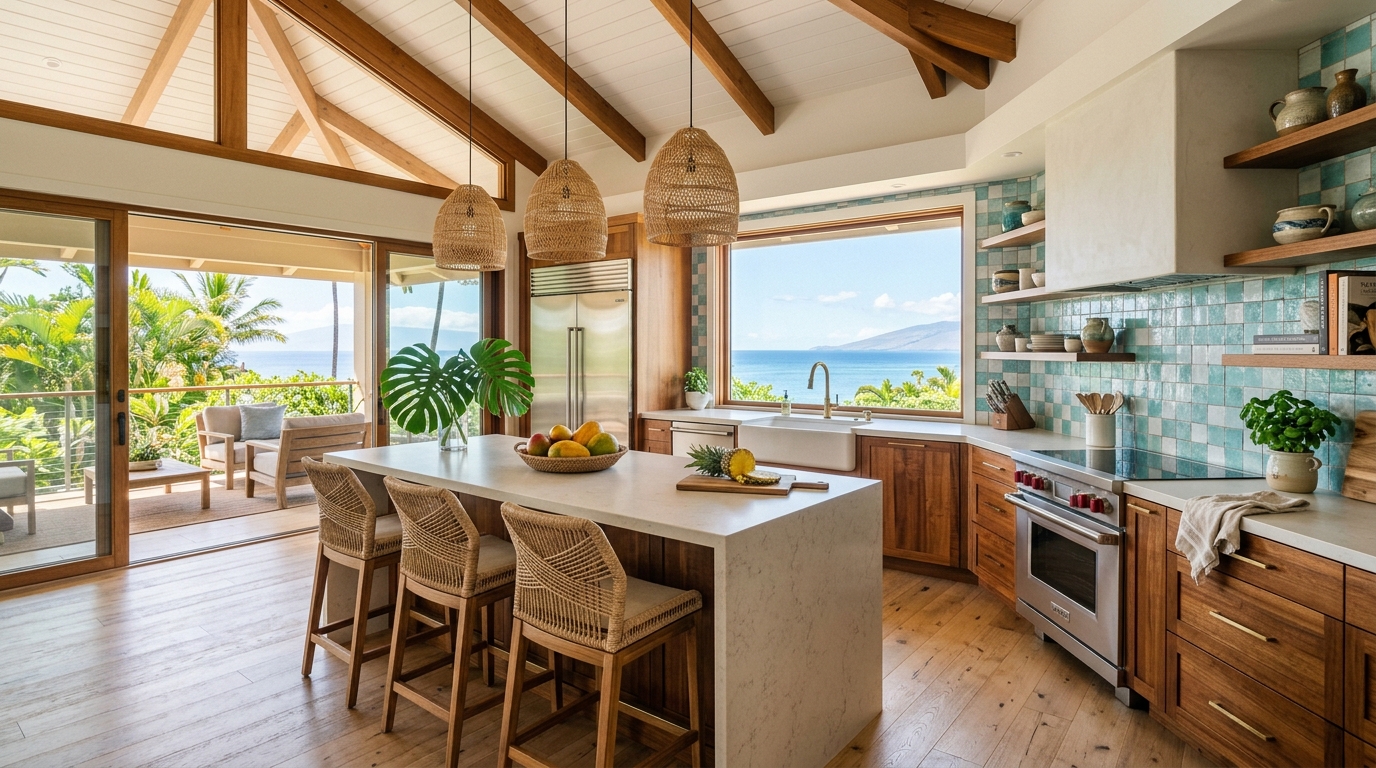
A kitchen remodel Lahaina project in 2026 is one of the most impactful upgrades you can make to your home on Maui. The biggest mistakes we see homeowners make are underestimating the real-world timelines for materials to arrive on island, choosing finishes that look beautiful on the mainland but fail quickly in our salt air, and hiring a contractor who doesn’t have deep roots and relationships here in Maui County. A successful renovation isn’t just about picking nice cabinets; it’s about strategic planning for our unique island logistics, climate, and permitting process. At Warrior Construction, we’ve spent over two decades navigating these exact challenges for homeowners across the islands, ensuring every kitchen we build is not only stunning but also engineered to last in the Lahaina environment.
\n\n
This guide is built from our direct, on-the-ground experience. We’re not going to give you vague advice. We’ll share the real costs we’re seeing on projects right now, the actual timelines you should expect from the Maui County permitting office, and the specific material choices that will save you from a costly do-over in five years. You’ll learn how to properly budget for a high-quality renovation, what questions to ask any potential kitchen contractor in Lahaina, and why patience during the planning phase is the single most important factor for a smooth project. Getting this right means creating a space that becomes the true heart of your home, perfectly suited for island living, for decades to come.
\n\n
Why Lahaina Homeowners Trust Warrior Construction for Kitchen Remodel
\n
Choosing a general contractor for a kitchen renovation in Lahaina goes beyond just looking at a portfolio. It’s about trust, local knowledge, and a proven track record right here on Maui. After the events of 2023, the landscape of construction in West Maui has become more complex, with heightened code requirements and a community that needs reliable, compassionate partners. Our team at Warrior Construction (License BC-34373) brings decades of Hawaii-specific experience to the table, and we understand the nuances of building here in a way an off-island firm simply cannot.
\n\n
One of the biggest hurdles in any neighbor island project is logistics. We have established, long-term relationships with local suppliers and shipping companies. This is a massive advantage. For instance, on a recent project in Napili, our client wanted specific custom cabinetry from a workshop in Oregon. Another contractor had quoted them a 24-week lead time. Because we have dedicated freight consolidators we work with weekly, our team was able to coordinate the shipment more efficiently, getting those same cabinets to the job site in 16 weeks. That eight-week difference meant the family could be back in their kitchen two months sooner. That’s the kind of tangible benefit our local expertise provides.
\n\n
Furthermore, we live here. We understand the ‘aina and the community. Our reputation is built on the quality of our work and the relationships we build with our clients. We know the Maui County plan reviewers, we understand what they’re looking for in submissions, and we respect the building process. This familiarity helps us navigate the permitting process more smoothly, avoiding unnecessary delays that can stall a project and drive up costs. When you work with us, you’re not just hiring a construction company; you’re partnering with a team that is deeply invested in the successful and respectful rebuilding of the Lahaina community.
\n\n
What Does Kitchen Remodel Cost in Lahaina?
\n
Let’s get straight to the numbers. The cost of a kitchen remodel in Lahaina is one of the first questions every homeowner asks, and for good reason. For 2026, you need to budget realistically, accounting for Maui’s higher labor rates and the inescapable cost of shipping every single nail, screw, and cabinet to the island. Vague online cost calculators are useless here. Based on our current projects, here’s a real-world breakdown.
\n\n
For a mid-range kitchen renovation Lahaina homeowners are typically looking for, in a space around 150-200 square feet, you should budget between $80,000 and $115,000. This isn’t a simple cosmetic facelift. This price point includes:
\n
- \n
- Semi-custom cabinetry: High-quality plywood boxes with durable finishes, but not fully custom dimensions.
- Quartz countertops: A reliable, non-porous option that holds up well in our climate.
- New appliances: A quality suite from brands like Bosch or KitchenAid.
- Durable flooring: Luxury Vinyl Tile (LVT) or porcelain tile are common choices.
- Labor and Permits: All demolition, installation, plumbing, electrical, and project management.
\n
\n
\n
\n
\n
\n\n
For a high-end or luxury remodel, often involving structural changes like removing a wall, in a larger kitchen of 250+ square feet, the investment starts around $150,000 and can easily exceed $250,000. The main drivers of this cost increase are:
\n
- \n
- Fully custom cabinetry: Made-to-order cabinets from premier brands, often with exotic wood veneers or specialized finishes.
- Premium countertops: High-grade natural stone like quartzite or marble, often with complex waterfall edges.
- Professional-grade appliances: Brands like Sub-Zero, Wolf, or Miele.
- Structural work: Engineering and labor to move walls, windows, or doors.
- High-end fixtures and lighting: Designer faucets, sinks, and complex layered lighting schemes.
\n
\n
\n
\n
\n
\n\n
Typical Cost Breakdown by Percentage
\n
To help you understand where the money goes, here’s a standard allocation for a mid-range Lahaina kitchen remodel:
\n
- \n
- Cabinetry & Hardware: 35%
- Labor & Installation: 20%
- Appliances: 15%
- Countertops: 10%
- Contractor Fee & Project Management: 10%
- Flooring, Lighting, Plumbing Fixtures: 10%
\n
\n
\n
\n
\n
\n
\n
Remember to always include a 15-20% contingency fund. Here in Hawaii, you never know what you might find when you open up a wall—termite damage, old cast iron plumbing that needs replacing, or unpermitted electrical work from a previous owner. That contingency isn’t an ‘if,’ it’s a ‘when.’ Answering the kitchen remodel cost lahaina question honestly is the first step to a successful project.
\n\n
How Long Does a Kitchen Remodel Take in Lahaina?
\n
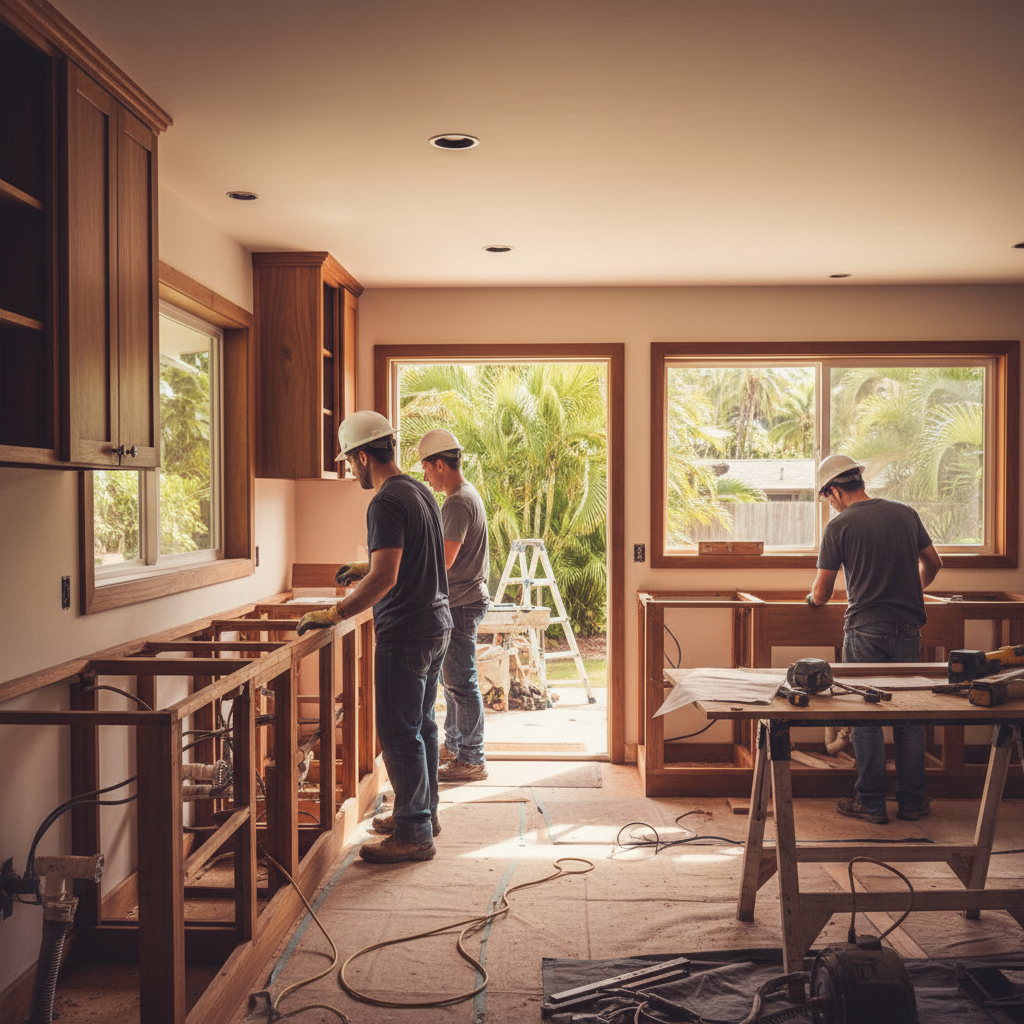
Patience is a virtue in any construction project, but it’s an absolute necessity in Hawaii. The timelines you see on mainland home improvement shows are pure fantasy here. A full kitchen remodel in Lahaina is a multi-phase process where the actual construction is often the shortest part. For 2026, with the high demand for skilled labor and ongoing supply chain challenges, here is the realistic timeline we advise our clients to plan for.
\n\n
Phase 1: Design, Planning & Selections (8 – 16 Weeks)
\n
This is the most critical phase, and rushing it is the biggest mistake you can make. This period involves working with our team to finalize the layout, select every single material, and create detailed construction drawings. The more decisions you make upfront, the smoother the project will run. This includes:
\n
- \n
- Initial consultation and budget review.
- Developing the floor plan and 3D renderings.
- Selecting cabinets, countertops, appliances, flooring, tile, lighting, and plumbing fixtures.
- Finalizing the construction documents for permitting.
\n
\n
\n
\n
\n
We order everything—down to the last cabinet pull—before we even think about starting demolition. This is non-negotiable for an island project.
\n\n
Phase 2: Permitting & Material Procurement (12 – 24 Weeks)
\n
This phase runs concurrently with the end of design. Once plans are submitted to the Maui County Department of Public Works, the waiting game begins. Permit review times can fluctuate, but planning for 3-4 months is a safe bet. Simultaneously, we place all the material orders. This is often the longest part of the entire process.
\n
- \n
- Cabinet Lead Times: This is the biggest variable. For semi-custom or custom cabinets from the mainland, expect 12 to 20 weeks from the time of order until they land on Maui.
- Appliance & Fixture Shipping: Even in-stock items can take 4-6 weeks to be shipped, consolidated, and delivered to the job site.
\n
\n
\n
We track every single item and will not start demolition until every box is accounted for and inspected in our local warehouse. Starting demo before materials are on-island is how you end up with a torn-apart house for six months.
\n\n
Phase 3: Active Construction (8 – 12 Weeks)
\n
Once permits are in hand and all materials are verified, the physical work can begin. This timeline is for a standard gut remodel without major structural changes.
\n
- \n
- Week 1: Demolition and site protection.
- Weeks 2-3: Rough-in for new plumbing, electrical, and HVAC. This is followed by inspections.
- Weeks 4-5: Drywall, taping, and priming.
- Week 6: Flooring installation.
- Weeks 7-8: Cabinet installation.
- Week 9: Countertop templating and installation (can take 2-3 weeks).
- Weeks 10-12: Appliance installation, plumbing and electrical finals, backsplash tile, painting, and final punch list.
\n
\n
\n
\n
\n
\n
\n
\n
All told, a well-planned kitchen remodel in Lahaina can take anywhere from 7 to 12 months from the day you sign a contract to the day you’re cooking your first meal. Anyone who tells you they can do it in 3 months is either inexperienced or not being honest about the realities of building on Maui.
\n\n
What Permits Do You Need for Kitchen Remodel in Lahaina?
\n
Navigating the permitting process is one of the most important jobs for your general contractor. In Maui County, the rules are clear: if you are moving or adding walls, altering any plumbing or electrical lines, or changing out windows, you need a building permit. The days of casual, unpermitted renovations are long gone, especially with the increased scrutiny following recent events. Attempting to bypass the Maui County Department of Public Works can result in stop-work orders, fines, and major problems when you eventually try to sell your home.
\n\n
As your licensed kitchen contractor Lahaina, we handle the entire process. Here’s what’s typically required for a full kitchen remodel:
\n\n
- \n
- Building Permit: This is the main permit covering the overall construction. It requires a full set of architectural plans showing the existing and proposed layouts, including floor plans, elevations, and structural details if any walls are being moved.
- Electrical Permit: This is pulled by a licensed electrician. It’s required for any work beyond simply replacing a light fixture, such as adding outlets, installing under-cabinet lighting, or moving the location of an appliance.
- Plumbing Permit: This is pulled by a licensed plumber. If you’re moving the sink, dishwasher, or refrigerator ice-maker line, a plumbing permit is mandatory.
\n
\n
\n
\n\n
The Honolulu Department of Planning and Permitting (DPP)[1] has a robust online system that serves as a model, and Maui County is continually improving its own processes. However, you should still anticipate a review period of several months. The plans are reviewed by multiple departments for compliance with building codes, zoning, fire safety, and energy codes. Any small error or omission on the plans can result in rejection, sending you to the back of the line and causing significant delays. This is why working with a contractor who has a deep understanding of the local 2018 International Building Code (as adopted and amended by Maui County) is so critical. We know what plan reviewers are looking for and can prepare a comprehensive submission package that minimizes the chances of rejection.
\n\n
Finally, it’s crucial to only work with a contractor whose license is active and in good standing with the Hawaii Department of Commerce and Consumer Affairs (DCCA) Professional and Vocational Licensing (PVL) division[2]. You can and should verify any contractor’s license online. Our license, BC-34373, is always current, and we carry full liability and workers’ compensation insurance. Hiring an unlicensed contractor to save money is a recipe for disaster; they cannot legally pull permits, leaving you, the homeowner, fully exposed to all liability.
\n\n
Lahaina-Specific Considerations: Climate, Materials, Regulations
\n
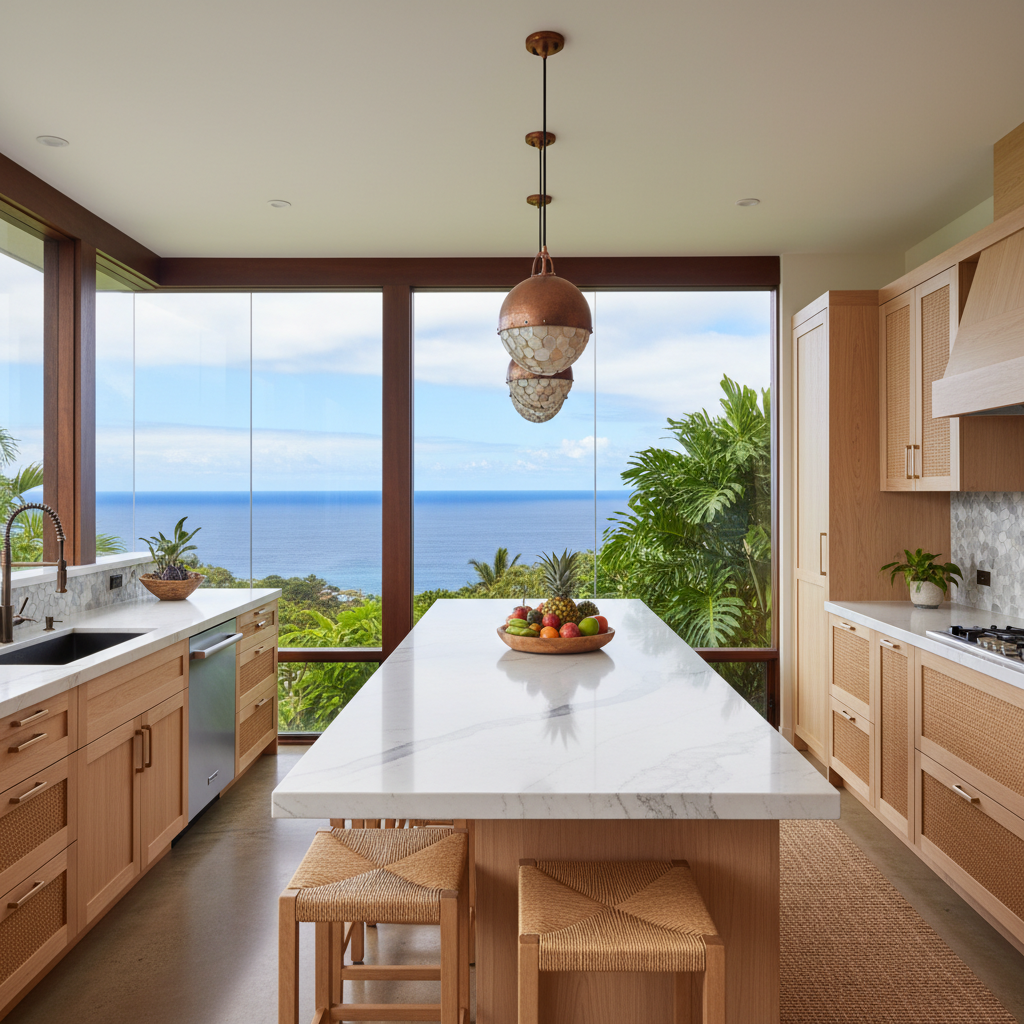
Building in Lahaina isn’t like building anywhere else, not even Honolulu. The intense sun, humid air, and corrosive salt spray create a uniquely challenging environment for building materials. A beautiful kitchen designed for a dry, mainland climate can literally fall apart here in just a few years. At Warrior Construction, we design and build every project with these Lahaina-specific realities in mind.
\n\n
Climate: Fighting Salt-Air Corrosion and Humidity
\n
The number one enemy of any home on the West side is salt-air corrosion. It attacks metal relentlessly. We see it all the time on inspections: cabinet hinges rusted shut, appliance faces pitted and failing, and light fixtures corroded beyond repair. Here’s how we build to combat this:
\n
- \n
- Hardware and Fixtures: We specify 316-grade stainless steel for all exterior-facing hardware, including window cranks, door handles, and screws. For kitchen cabinet pulls and hinges, we recommend high-quality solid brass or stainless steel with a PVD (Physical Vapor Deposition) finish, which is far more durable than standard plating.
- Appliances: When selecting appliances, look for models with better corrosion resistance. Some brands offer appliance packages specifically designed for coastal environments.
- Ventilation: Humidity is another major concern, leading to mold and material degradation. A high-powered, properly vented range hood (vented to the exterior, never recirculating) is non-negotiable. We also ensure proper overall home ventilation to manage indoor air quality.
\n
\n
\n
\n\n
Materials: Durability Over Fleeting Trends
\n
Material selection is about long-term performance. What’s popular on social media might be a terrible choice for Maui.
\n
- \n
- Cabinetry: We strongly advise against MDF or particle board cabinet boxes, even if they have nice-looking fronts. They will swell and delaminate in our humidity. Plywood boxes are the minimum standard. For high-end projects, solid wood or marine-grade plywood offer the best longevity.
- Countertops: While natural stones like marble are beautiful, they are porous and can stain easily. Engineered quartz or natural quartzite are fantastic, durable, and non-porous options that resist moisture and are easy to maintain.
- Flooring: Solid hardwood flooring can warp and cup with our humidity swings. High-quality Luxury Vinyl Tile (LVT) that is 100% waterproof or classic porcelain tile are far more practical and durable choices for a kitchen environment in Lahaina.
\n
\n
\n
\n\n
Regulations: Hurricane Code and Energy Efficiency
\n
Hawaii’s building codes are some of the strictest in the nation for good reason. Any kitchen remodel that involves exterior walls, windows, or roofing must adhere to the latest hurricane code requirements. This means using impact-rated windows and doors, and ensuring proper connections with hurricane straps and ties. Furthermore, the 2018 International Energy Conservation Code (IECC) is now strictly enforced. For your kitchen, this means all installed lighting must be high-efficacy (e.g., LED), and appliances must meet specific energy efficiency standards. These aren’t just suggestions; they are requirements to pass final inspection. Our team is fluent in these codes and ensures your project is fully compliant from the start.
\n\n
How to Choose the Right Kitchen Remodel Contractor in Lahaina
\n
Choosing your contractor is the single most important decision you’ll make in your renovation journey. A great contractor will guide you through the process, while a bad one can turn your dream project into a nightmare. In the busy Lahaina construction market of 2026, it’s more important than ever to do your due diligence. Here’s our insider advice on what to look for.
\n\n
Step 1: Verify License and Insurance
\n
This is the absolute first step. Do not even have a conversation with a contractor who cannot immediately provide you with their Hawaii General Contractor license number. You can verify any license number on the DCCA PVL website[2]. Our license is BC-34373. A valid license means the contractor has met the state’s minimum requirements for experience and testing. Next, ask for proof of two types of insurance:
\n
- \n
- General Liability Insurance: This protects your property from damage caused by the contractor or their team. Ask for a Certificate of Insurance (COI) and make sure the policy is current. We recommend a minimum coverage of $1 million per occurrence.
- Workers’ Compensation Insurance: This covers the contractor’s employees if they are injured on your property. Without it, you could be held liable.
\n
\n
\n
An unlicensed or uninsured contractor is cutting corners to give you a lower price, and they are putting all the risk directly on you, the homeowner.
\n\n
Step 2: Insist on Maui-Specific Experience
\n
Experience on Oahu or the mainland does not fully translate to Maui. The logistics, suppliers, subcontractors, and building inspectors are all different. You need a contractor who works here day-in and day-out. When interviewing a potential kitchen contractor in Lahaina, ask specific questions:
\n
- \n
- \”Can you provide me with references for three kitchen remodels you completed *on Maui* in the last 18 months?\”
- \”Who are your primary suppliers for cabinets and countertops on the island?\”
- \”Which freight forwarder do you use for materials from the mainland?\”
- \”Describe your relationship with the Maui County building department.\”
\n
\n
\n
\n
\n
Their answers will quickly tell you if they have a real, established presence here or if they are just trying to pick up work. Our team at Warrior Construction is based here and has built a network of the best local tradespeople and suppliers over many years.
\n\n
Step 3: Demand a Detailed, Itemized Contract
\n
A one-page estimate with a single number is a major red flag. A professional contract should be many pages long and detail the entire scope of work. It should explicitly list:
\n
- \n
- Scope of Work: A narrative describing everything that will be done, from demolition to final cleaning.
- Material Specifications: It should include model numbers for appliances, brand and color for paint, specific type of tile, etc. Avoid vague “allowances,” which are often set artificially low to make the bid look cheaper.
- Payment Schedule: This should be tied to project milestones (e.g., foundation complete, framing complete), not arbitrary dates. In Hawaii, a down payment cannot exceed 10% of the contract price or $1,000, whichever is less.
- Change Order Process: How will changes to the scope of work be handled and priced?
- Project Timeline: A realistic schedule with key milestones.
\n
\n
\n
\n
\n
\n
A detailed contract protects both you and the contractor. It ensures everyone is on the same page and minimizes disputes later on. We spend a significant amount of time in the pre-construction phase to make our contracts as thorough and transparent as possible.
\n\n
Real Lahaina Kitchen Remodel Project Example
\n
To put all this theory into practice, let’s walk through a recent project our team completed. It provides a clear picture of the process, challenges, and outcomes you can expect for a kitchen remodel in Lahaina.
\n\n
The Client: A couple with a 2-bedroom condo in Honokowai, built in the late 1980s. Their kitchen was original: cramped, dark, with failing laminate cabinets and corroded fixtures.
\n\n
The Vision: They wanted an open, bright, and modern space that was highly functional and built to withstand the coastal environment. Their goal was to open the kitchen up to the living area to better enjoy the ocean view and create a more social cooking space.
\n\n
The Scope & Challenges:\n
- \n
- Gut demolition of the existing 180 sq. ft. kitchen.
- Removal of a non-load-bearing wall separating the kitchen and dining room.
- Complete rerouting of plumbing and electrical to accommodate a new island layout.
- The biggest challenge was logistics. The condo association had strict rules about working hours (9 am to 4 pm, Monday-Friday) and debris removal, which required careful daily planning.
\n
\n
\n
\n
\n\n
The Warrior Construction Solution:\n
- \n
- Design & Materials: We designed a layout with a large central island that housed the sink and dishwasher, freeing up perimeter counter space. For materials, we specified custom-built cabinets using a high-pressure laminate over plywood boxes for maximum durability and moisture resistance. We used Viatera quartz countertops for their non-porous and stain-resistant qualities. All hardware, from cabinet pulls to the faucet, was 316 stainless steel.
- Process & Timeline: The design and permitting phase took 14 weeks. We ordered all materials immediately upon permit submission. The custom cabinets took 18 weeks to be fabricated and shipped to Maui. Once everything was on-site, the active construction phase took 9 weeks, working within the AOAO’s restrictions.
- Budget & Outcome: The total project cost was $128,000. This was right on budget. The project was completed in a total of 8 months from our initial meeting. The clients were thrilled with the transformation. By removing the wall and using light-colored, durable materials, we created a space that felt twice as large and was perfectly suited for their lifestyle and the Lahaina environment. This kind of successful outcome is the direct result of meticulous planning and deep local knowledge. You can see similar transformations in our portfolio.
\n\n
\n What this means for Hawaii homeowners
\n
Embarking on a kitchen remodel in Lahaina in 2026 requires a shift in mindset from what you might see on the mainland. The process is longer, the costs are higher, and the material choices are far more critical. Understanding and embracing these realities is the key to a successful project that you’ll love for years to come, rather than a frustrating experience that falls short of your vision.
\n\n
Here are your key takeaways and actionable steps:
\n
- \n
- Plan for Time: Your number one asset is time. Start the planning process at least 9-12 months before you hope to have the project completed. This allows for proper design, material selection, and navigating the long lead times for shipping and permitting without stress. Rushing leads to expensive mistakes.
- Budget for Reality: Use the cost figures in this guide as a starting point. Get multiple detailed bids from licensed, insured, and Maui-based contractors. Most importantly, secure a 15-20% contingency fund in your budget before you start. This is not optional in Hawaii; it’s essential for dealing with unforeseen issues like hidden termite damage or rusted plumbing.
- Hire a Local Expert: Do not underestimate the value of a contractor with deep roots on Maui. Their knowledge of local suppliers, building inspectors, and the unique challenges of our climate is invaluable. Thoroughly vet every candidate, check their license on the DCCA PVL website[2], and call their local references.
- Choose Materials for Longevity: Prioritize performance over aesthetics alone. Select cabinetry, hardware, countertops, and flooring that are specifically designed to resist humidity, UV rays, and salt-air corrosion. Ask potential contractors what specific brands and materials they recommend for the Lahaina climate and why. This focus on durability will save you thousands in premature replacement costs down the road.
\n
\n
\n
\n
\n
By focusing on these core principles, you can confidently navigate the complexities of a kitchen renovation in Lahaina and make a lasting, valuable investment in your home.
\n
\n\n
\n Frequently Asked Questions About Kitchen Remodel in Lahaina
\n
\nCan I save money on my Lahaina kitchen remodel by buying materials myself?
\n
While it might seem like a way to save, it often creates more problems and costs. As your general contractor, we receive trade pricing that is often unavailable to the public. More importantly, when we procure materials, we take full responsibility for ordering the correct quantities, inspecting for damages upon arrival, handling returns, and ensuring everything is on-site when the trade partners need it. Managing this complex supply chain yourself can lead to costly project delays and mistakes.
\n
\n
\nWhat is the best countertop material for a Lahaina kitchen in 2026?
\n
For the vast majority of projects in Lahaina, our top recommendation is a high-quality engineered quartz. Brands like Silestone, Caesarstone, and Cambria offer incredible durability, are non-porous (so they won’t stain or harbor bacteria), and come in a huge range of styles. Natural quartzite is another excellent, though more expensive, option that offers the beauty of marble with the hardness of granite. Both are far superior to porous stones like marble or concrete in our humid, salt-air climate.
\n
\n
\nDo I need an architect for a kitchen remodel in Maui?
\n
It depends on the scope. If your remodel is contained within the existing kitchen footprint and you are not moving any load-bearing walls, a skilled design-build contractor like Warrior Construction can typically handle the design and drawings needed for permitting. However, if you plan to move load-bearing walls, add a window, or make significant structural changes, you will need a licensed Hawaii architect or structural engineer to create the stamped plans required by Maui County.
\n
\n
\nHow much does a building permit for a kitchen remodel cost in Maui County?
\n
Permit fees are calculated based on the total valuation of the project. For a typical mid-range kitchen remodel in Lahaina with a valuation of around $90,000, you can expect the plan review and permit fees from Maui County to be in the range of $2,000 to $4,500 in 2026. This does not include the cost of drafting the plans themselves, which is a separate design fee.
\n
\n
\nHow long do custom cabinets really take to arrive on Maui?
\n
As of 2026, you must plan for a significant lead time. From the date you sign off on the final shop drawings, expect a minimum of 12-20 weeks for quality semi-custom or custom cabinets to be fabricated on the mainland, packaged, shipped to the port, consolidated, barged to Kahului, and delivered to your home in Lahaina. We advise clients to make their cabinet decision very early in the design process because it is always the item with the longest lead time.
\n
\n
\nAre IKEA kitchens a good idea for a rental property in Lahaina?
\n
IKEA can be a tempting budget option, but we generally advise against it for the humid Lahaina climate. The cabinet boxes are made from particle board, which can swell and degrade when exposed to consistent high humidity, even if you don’t have a direct water leak. For a long-term rental, investing in cabinets with plywood boxes will provide much better durability and a longer lifespan, saving you from having to replace the kitchen again in 5-7 years.
\n
\n
\nWhat is the number one mistake you see homeowners make in a Lahaina kitchen renovation?
\n
The most common and costly mistake is prioritizing a mainland aesthetic over local durability. Homeowners fall in love with a look they saw in a magazine from Arizona or California and insist on materials unsuited for our environment—like unsealed marble counters, cheap plated fixtures that will rust in six months, or solid wood floors that will warp. A successful Lahaina kitchen blends beauty with a robust, climate-appropriate material palette. That’s the secret to a long-lasting investment.
\n
\n
\n\n
Planning a kitchen remodel in Lahaina is a significant undertaking, but with the right partner, it can be a rewarding process that transforms your home. Our team at Warrior Construction has the local experience and dedication to guide you through every step, from initial design to final walkthrough. We are committed to building beautiful, durable spaces that honor the unique environment of Maui.
\n
If you’re ready to discuss your project, we invite you to learn more about our expert kitchen remodeling services and see how we can bring your vision to life. Contact us today to schedule your free, no-obligation estimate.
\n\n
References
\n
\n
\n