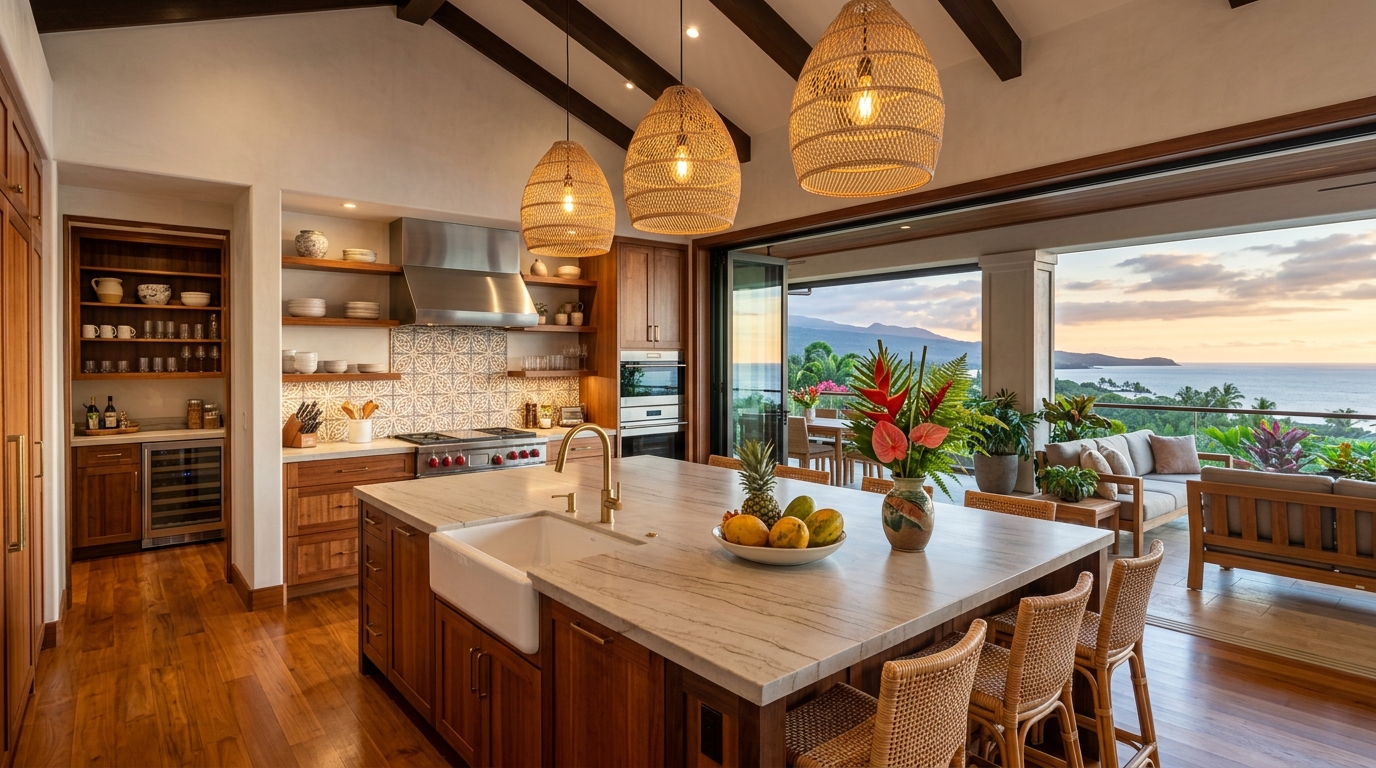
For a complete kitchen remodel in Kailua-Kona, homeowners in 2026 should realistically budget between $85,000 and $150,000 for a quality, mid-range renovation. The total project timeline, from our initial design meeting to your final walk-through, typically lands between 18 and 30 weeks, factoring in design, permitting with Hawai’i County, and the inevitable Big Island shipping logistics. These aren’t mainland numbers; they reflect the real cost and effort of building with quality here in Hawaii.
At Warrior Construction, we’ve spent more than two decades managing projects on the Big Island and across the state. We’ve seen it all, from simple cabinet swaps in Waikoloa condos to full-scale gut renovations in Keauhou Estates. A kitchen isn’t just a room here; it’s the heart of the home, the place where ohana gathers. But getting it right in Kailua-Kona means navigating a unique set of challenges: relentless salt air, a limited local supply chain, and specific building codes designed for our volcanic and hurricane-prone environment.
This guide cuts through the noise. We’re going to walk you through the real costs you can expect in 2026, the actual timelines for getting things done on island time, the permitting process you can’t ignore, and the material choices that will stand up to the Kona coast climate. This is the conversation we have with our clients before we even start drafting plans—the honest, practical advice you need to make smart decisions for your home and investment.
Why Kailua-Kona Homeowners Trust Warrior Construction for Kitchen Remodel
Choosing a general contractor for your kitchen remodel is the single most important decision you’ll make. Here on the Big Island, that choice is even more critical. You need a team that doesn’t just know construction, but knows Hawaii construction. That’s where our team at Warrior Construction (License BC-34373) comes in. We’re not a mainland company with a satellite office; we live here, we build here, and we understand the specific nuances of a Kailua-Kona project.
Experience on this island isn’t just a number of years—it’s a deep understanding of the local landscape. For example, on a recent project up in the Holualoa hills, we were excavating for a small kitchen extension and hit a massive blue rock formation just a few feet down. An off-island contractor might see that as a month-long delay and a huge change order. But our team knows the local equipment operators and the specific machinery needed to deal with that kind of volcanic rock efficiently. We had it hammered and cleared in three days, keeping the project on schedule. That’s the kind of practical, on-the-ground knowledge that makes a difference.
Furthermore, our design-build approach streamlines the entire process. Instead of you hiring an architect, then a designer, then bidding the project out to contractors, you have one point of contact with us. Our team handles everything from initial concept sketches to final appliance installation. This integration saves time, reduces miscommunication, and ultimately controls costs. When the designer, architect, and builder are all on the same team from day one, we can value-engineer solutions in real time, like suggesting an alternative cabinet supplier with a shorter lead time to meet a client’s move-in date. This is how we deliver a seamless kitchen renovation in Kailua-Kona.
We build to a higher standard because we have to. A kitchen on the Kona coast has to fight constant salt air, high humidity, and intense UV exposure. We guide our clients toward materials and finishes that last, like 316 marine-grade stainless steel for any exterior-facing hardware, quartz countertops that won’t stain or harbor bacteria in the humidity, and cabinet boxes made from materials resistant to warping. Our reputation is built on projects that not only look beautiful on day one, but are still performing flawlessly ten years later.
What Does a Kitchen Remodel Cost in Kailua-Kona?
Let’s get straight to the point: the kitchen remodel cost in Kailua-Kona is higher than what you’ll see on mainland home improvement shows. In 2026, we tell our clients to prepare for a significant investment, driven by island logistics, labor costs, and the price of durable materials. Pretending otherwise just leads to frustration later. Here’s a realistic breakdown of what you can expect.
We generally categorize kitchen projects into three tiers:
- The Basic Update (approx. $65,000 – $85,000): This is more of a refresh than a full remodel. We’re keeping the existing layout, plumbing, and electrical exactly where they are. This tier includes builder-grade stock cabinets from a local supplier, laminate countertops, a new sink and faucet, a standard appliance package (think GE or Frigidaire), and durable LVP flooring. It’s a solid, functional upgrade for a rental property or a first-time homeowner.
- The Mid-Range Remodel (approx. $85,000 – $150,000): This is the most common project we undertake for a kitchen remodel in Kailua-Kona. Here, we have more flexibility. We might remove a non-load-bearing wall to open the kitchen to the dining area. This budget allows for semi-custom cabinets, quartz countertops, a tile backsplash, under-cabinet lighting, and a mid-range appliance package (like Bosch or KitchenAid). This is where you get the most value and transform the feel of your home.
- The High-End/Luxury Gut Renovation (approx. $150,000+): For this level of investment, the sky’s the limit. We are likely reconfiguring the entire space, moving load-bearing walls, and rerouting all plumbing and electrical. This includes fully custom cabinetry (perhaps from a local woodworker using koa), natural stone countertops like quartzite or marble, professional-grade appliances (Sub-Zero, Wolf, Thermador), custom lighting design, and high-end flooring. These projects often involve an architect and result in a truly one-of-a-kind space.
What drives these costs? Here’s the breakdown:
- Cabinets (30-35% of budget): The biggest single expense. Custom koa is beautiful but can cost over $2,000 per linear foot. Semi-custom gives you great options for around $800-$1,200 per linear foot.
- Labor & Installation (20-25%): This covers demolition, framing, plumbing, electrical, drywall, painting, and installation. Skilled labor is in high demand on the Big Island.
- Appliances (10-15%): A standard package is $5,000-$8,000. A high-end package can easily exceed $30,000.
- Countertops (10%): Quartz is the most popular choice, running about $100-$150 per square foot installed.
- The “Hawaii Factor” (15-20%): This is the premium for getting everything here. It includes barge shipping from the mainland or Oahu via Young Brothers, general excise tax (GET), and the higher cost of simply doing business on an island. We had a client who fell in love with a specific tile from Italy; the cost to crate and ship that small pallet to Kona added almost $4,000 to the project cost. That’s the reality of building in paradise.
When you request an estimate, we provide a detailed, itemized budget so you can see exactly where every dollar is going. No surprises, just honest numbers from a local kitchen contractor in Kailua-Kona.
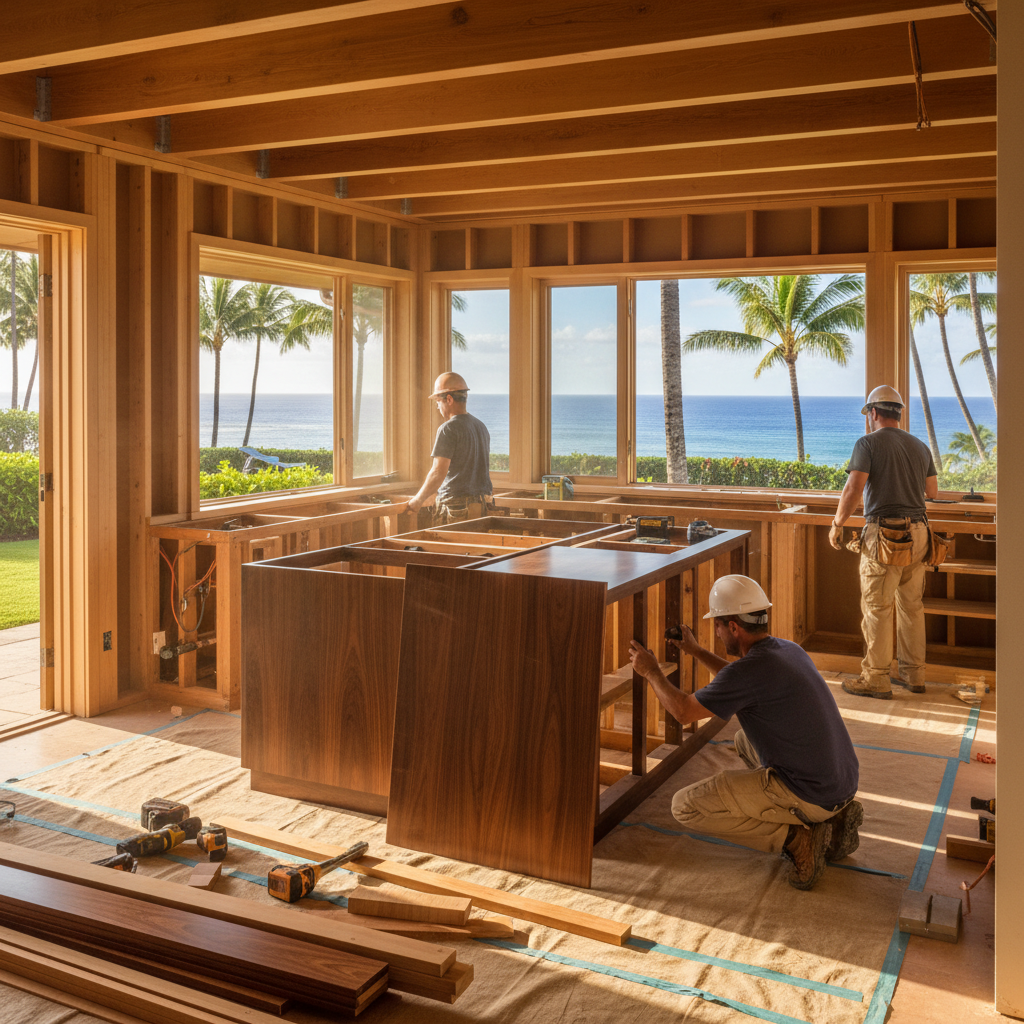
How Long Does a Kitchen Remodel Take in Kailua-Kona?
Patience is a virtue in any construction project, but it’s a necessity in Hawaii. The timeline for a kitchen remodel here is longer than on the mainland, primarily due to two factors: permitting and shipping. A smooth project requires meticulous planning, and our process is designed to manage these island-specific variables proactively.
Here’s a typical project timeline for a mid-range kitchen renovation in Kailua-Kona, broken down into phases:
- Phase 1: Design & Planning (4-8 weeks)
This is where we lay the foundation for success. It involves initial consultations, measuring your existing space, developing 3D renderings of the new layout, and selecting every single material—from cabinet pulls to grout color. Making all decisions upfront is crucial because once we order materials, changes can cause major delays. We won’t swing a hammer until every finish is finalized and approved by you. - Phase 2: Permitting (6-12 weeks)
If your remodel involves moving walls, changing the electrical layout, or altering plumbing, we’ll need to submit plans to the Hawai’i County Department of Public Works. While sometimes faster than Honolulu’s DPP, the review process on the Big Island can still take a couple of months. We handle the entire submission and follow-up process, but this is often a waiting game that runs in the background. - Phase 3: Material Procurement & Shipping (6-10 weeks)
This phase happens concurrently with permitting. Nearly everything for your kitchen—cabinets, appliances, special-order tile, light fixtures—will arrive on a container ship. We have to factor in manufacturing lead times on the mainland (which can be 4-8 weeks for semi-custom cabinets) plus 2-3 weeks for shipping to Kona. We had a project in Captain Cook delayed by an extra month because the specific dishwasher the client wanted was backordered, and then the container got held up by a port strike in California. We plan for these things and track every item, but it’s the biggest variable in any Hawaii project. We never start demolition until we have confirmation that all materials are on-island. - Phase 4: Construction (8-14 weeks)
Once permits are in hand and materials are staged in your garage, our crew gets to work. This is the most visible phase of the project:- Week 1-2: Demolition, setting up dust barriers, and rough-in for new plumbing and electrical.
- Week 3-4: Drywall installation, taping, and mudding.
- Week 5: Priming and painting.
- Week 6-7: Flooring installation and cabinet delivery and installation.
- Week 8: Countertop templating (after cabinets are in) and fabrication (this can take 1-2 weeks).
- Week 9-10: Countertop installation, backsplash tiling.
- Week 11-12: Appliance installation, final plumbing (sink, faucet, dishwasher), and final electrical (outlets, switches, lighting).
- Week 13-14: Final touch-ups, hardware installation, and a thorough professional cleaning.
From start to finish, a well-planned Kailua-Kona kitchen remodel is a 5 to 7-month process. Anyone promising a 6-week turnaround is either cutting corners or isn’t familiar with how things really work on the Big Island.
What Permits Do You Need for a Kitchen Remodel in Kailua-Kona?
Navigating the permitting process with the Hawai’i County Department of Public Works is a critical step that protects your investment, ensures safety, and keeps your property compliant with local building codes. Many homeowners wonder if they really need a permit for a kitchen project. The answer is almost always yes, unless you’re doing purely cosmetic work.
You absolutely need a building permit in Kailua-Kona if your project includes any of the following:
- Moving or removing walls: Any structural change, no matter how small, requires a permit. This ensures the load-bearing capacity of your home isn’t compromised.
- Altering the electrical system: Adding new outlets, moving existing ones, or installing new dedicated circuits for appliances requires an electrical permit and inspection.
- Changing the plumbing layout: Moving the sink or dishwasher, or adding a pot filler or island sink, requires a plumbing permit.
- Changing the size or location of windows or doors: This impacts your home’s exterior envelope and must comply with current hurricane code standards.
On the other hand, you generally do not need a permit for simple, direct replacement work, such as:
- Replacing countertops in the same location.
- Refacing or replacing cabinet boxes in the same layout.
- Painting.
- Installing new flooring over the existing subfloor.
- Swapping out a faucet or light fixture in the same spot.
However, it’s always best to have your licensed contractor confirm with the county. At Warrior Construction, we manage the entire permitting process for our clients. It starts with having professional plans drafted that meet all Hawai’i County building codes. These plans are then submitted to the county building division for review. This process is not as infamous as Honolulu’s DPP[1], but it still requires diligence and patience. The reviewers will check for compliance with everything from electrical load calculations to structural engineering for wall removals.
Once the permit is issued, we must call for inspections at specific stages of the project. Typically, this includes a “rough-in” inspection after the new wiring and plumbing are installed but before the drywall goes up, and a “final” inspection once everything is complete. An inspector from the county will visit the job site to verify the work was done to code. Passing these inspections is non-negotiable and is required to “close out” the permit.
Working without a permit might seem like a way to save time and money, but it’s a huge risk. It can lead to fines, orders to tear out completed work, and major problems when you try to sell your home. A properly permitted project ensures the work is safe, and it provides an official record that the renovation was done correctly, protecting your home’s value.
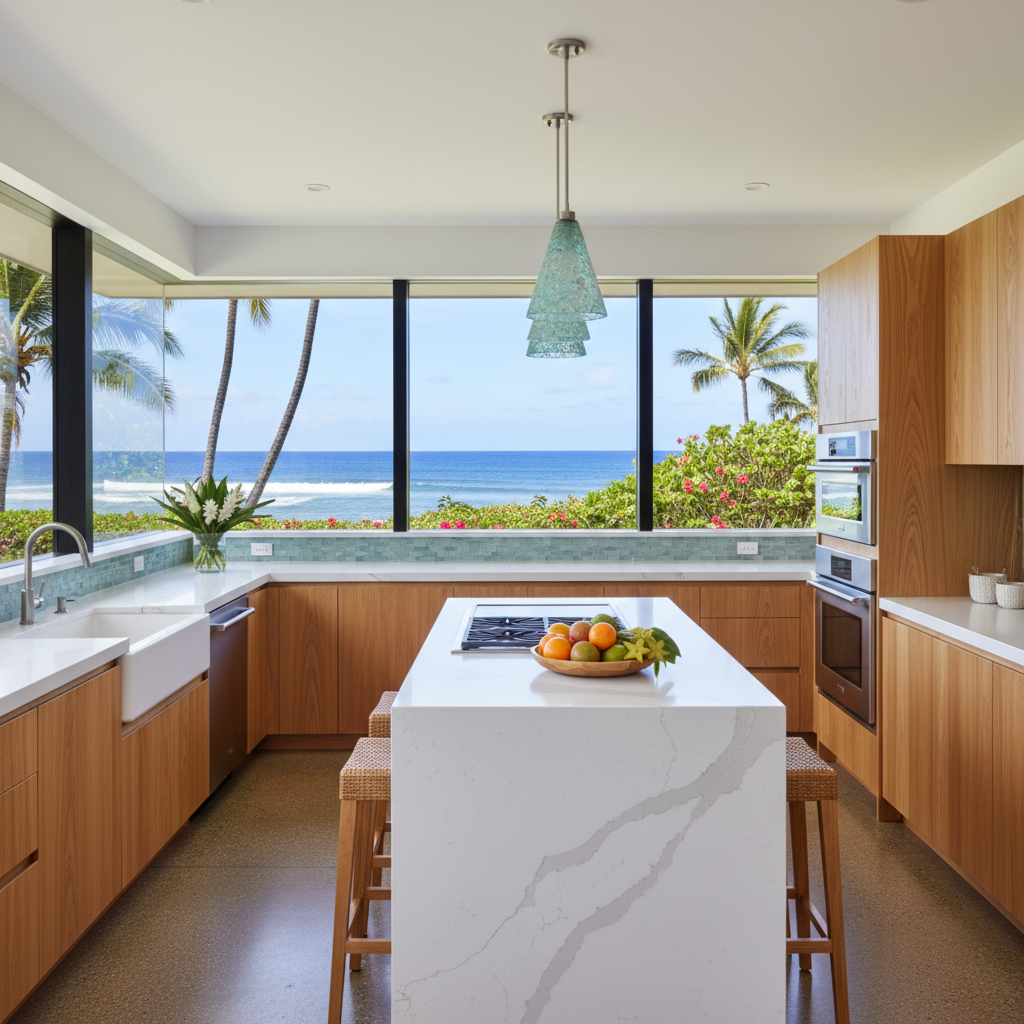
Kailua-Kona-Specific Considerations: Climate, Materials, and Regulations
A kitchen in Kailua-Kona isn’t like a kitchen in Arizona or Ohio. It lives and breathes in a unique environment defined by salt, sun, humidity, and the occasional vog. Designing and building a kitchen that lasts here requires a specific set of knowledge that we’ve honed over decades of work on the Big Island.
Fighting Salt-Air Corrosion
The number one enemy of any home on the Kona coast is salt-air corrosion. The salty, humid air is relentless and will destroy cheap metals in a matter of months. For kitchens, especially those with lanais or large windows, this is a major consideration.
- Hardware: All cabinet pulls, hinges, and drawer slides should be high-quality stainless steel (ideally 316 marine grade for anything near an open window) or have a durable PVD finish. Cheap, plated metals will pit and corrode quickly.
- Appliances: Look for appliances with robust stainless steel finishes. We once had a client who insisted on a specific range with a trendy black-painted metal finish; within two years, rust spots were blooming around the handle and control knobs.
- Window Frames: If your remodel involves new windows, powder-coated aluminum or vinyl are far superior to wood, which requires constant maintenance to prevent rot and deterioration from the salty air.
Material Selection for Humidity and Pests
The warm, humid climate is a perfect breeding ground for mold, mildew, and pests like termites. Material choices are your first line of defense.
- Cabinetry: While solid wood doors are beautiful, the cabinet boxes themselves are better made from high-density furniture-grade plywood with a durable finish. Avoid MDF (medium-density fiberboard), which can swell like a sponge if it gets wet from a small plumbing leak. For a truly termite-resistant option, some clients opt for metal-framed or polymer cabinets.
- Ventilation: A powerful, properly vented range hood is not a luxury—it’s a necessity. It exhausts grease, moisture, and cooking odors (and vog) outside, preventing them from settling on surfaces and promoting mold growth. Recirculating vents just don’t cut it here.
- Flooring: Luxury vinyl plank (LVP) and porcelain tile are the champions in Hawaii kitchens. They are 100% waterproof, easy to clean, and unaffected by humidity. Hardwood floors look beautiful but can warp and cup in our climate unless the home has constant climate control.
Understanding Local Regulations and Conditions
Building on the Big Island has its own set of rules and challenges beyond the standard building code.
- Hurricane Code: Since Hurricane Iniki, Hawaii has robust building codes for wind resistance. If your kitchen remodel touches any exterior walls, we must ensure windows, doors, and their connections to the structure are rated for our hurricane-prone region. This involves using specific hurricane straps and fasteners.
- Volcanic Soil: While less of a concern for an interior remodel, if your kitchen project involves an addition or foundation work, we have to account for the unique properties of volcanic soil and rock, which can affect drainage and foundation design.
- Logistics: Everything comes by boat. This isn’t just a fun fact; it’s the central organizing principle of a Big Island construction project. We build schedules with buffer time for shipping, and we cultivate strong relationships with on-island suppliers to know what’s in stock locally versus what needs a 6-week lead time from the mainland. A good kitchen contractor in Kailua-Kona is, above all, an expert in logistics.
How to Choose the Right Kitchen Remodel Contractor in Kailua-Kona
Finding the right contractor is the difference between a successful kitchen remodel and a months-long nightmare. In a specialized market like Kailua-Kona, your vetting process needs to be thorough. It’s not just about finding someone who can build; it’s about finding a partner who can manage a complex project in a challenging environment.
Here are the key steps we recommend every homeowner take:
- Verify Their License and Insurance. This is non-negotiable. The first thing you should do is verify their contractor’s license is active and in good standing. You can do this online through the Hawaii Department of Commerce and Consumer Affairs (DCCA) Professional & Vocational Licensing (PVL) search.[2] Our license, for example, is BC-34373. Also, ask for proof of general liability insurance and workers’ compensation insurance. If an uninsured worker gets hurt on your property, you could be held liable.
- Look for Proven Big Island Experience. A contractor based on Oahu might be excellent, but they may not have the relationships or logistical know-how for a Kona project. Ask them: “How many kitchen projects have you completed in Kailua-Kona in the last year?” A local kitchen contractor will have established accounts with suppliers in town, a trusted crew of local subcontractors (plumbers, electricians, painters), and an intimate understanding of the Hawai’i County permitting process.
- Review Their Portfolio and Talk to References. Don’t just look at glossy photos on their website. Ask to see a portfolio of projects similar in scope and style to what you want. A good contractor will be proud to show you their work. Then, ask for a list of 3-4 recent clients you can call. Ask those references about their experience: Was the project on time and on budget? How was communication? How did the contractor handle problems when they came up? This is where you’ll get the real story.
- Insist on a Detailed, Itemized Proposal. A one-page estimate with a single number at the bottom is a red flag. A professional proposal should be multiple pages long and break down the costs for every aspect of the job: demolition, materials (with allowances for finishes), labor for each trade, permits, and overhead. This level of detail shows they’ve thought through your project and helps prevent surprise costs later. It also allows you to compare bids on an apples-to-apples basis.
- Assess Their Communication and Professionalism. From the very first phone call, pay attention to how they communicate. Do they answer their phone? Do they respond to emails promptly? Do they listen to your ideas and answer your questions clearly? A kitchen remodel means this person and their team will be in your home for months. You need a professional, respectful partner you can trust.
Choosing a contractor is a business decision. Do your homework, trust your gut, and select a team that demonstrates the experience, professionalism, and local knowledge to bring your Kailua-Kona kitchen vision to life.
Real Kailua-Kona Kitchen Remodel Project Example
To make all of this more concrete, let’s walk through a project we recently completed. It’s a perfect example of a typical mid-range kitchen renovation in Kailua-Kona and highlights the challenges and successes common to Big Island remodels.
The Clients: A couple who had recently purchased a 1990s home in the Kealakekua area. They loved the location and the ocean views but found the kitchen to be dark, dated, and completely cut off from the main living space.
The Problem: The original kitchen was a classic U-shape, enclosed by two non-load-bearing walls. This created a cramped, inefficient workspace. The oak cabinets were showing their age, the laminate countertops were peeling, and the old appliances were energy hogs. The vinyl flooring was worn, and the fluorescent lighting cast a harsh, unflattering light over the whole room.
Our Solution – The Warrior Design-Build Process:
- Design: Our primary goal was to create an open-concept space. We proposed removing the two interior walls to merge the kitchen with the living and dining areas, creating one large great room. This immediately opened up the sightlines to the ocean view from the kitchen. We designed a large central island with seating for four, which would serve as the new hub for cooking and entertaining.
- Materials: For a bright, coastal feel that would hold up to the Kona climate, we selected white shaker-style semi-custom cabinets, a light-colored quartz countertop with subtle veining, and a durable luxury vinyl plank flooring that ran continuously through the new great room. A simple blue glass subway tile backsplash added a pop of local color.
- Execution: The project involved a full gut. Our crews removed the walls, rerouted plumbing for the new island sink and dishwasher, and updated all the electrical, adding recessed LED lighting, under-cabinet lights, and three pendant lights over the island.
The Numbers:
- Initial Budget: $120,000
- Final Project Cost: $126,500
- Reason for Overage: During demolition, we discovered that some of the original wiring was not up to code and had to be replaced to pass inspection. This is a common discovery in older homes and something we advise clients to keep a contingency fund for.
- Project Timeline: 22 weeks total. 8 weeks for design and permitting, followed by a 14-week construction phase. We experienced a two-week delay waiting for the specific refrigerator model the clients wanted, but we were able to work on other parts of the project to minimize the impact.
The Outcome: The transformation was dramatic. The new kitchen is now the bright, airy heart of the home. It’s a functional, modern workspace that flows seamlessly into the living areas, making the entire home feel larger and more connected to its beautiful surroundings. The clients were thrilled, and the project significantly increased the home’s market value.
What this means for Hawaii homeowners
Tackling a kitchen remodel in Kailua-Kona is a major undertaking, but with the right planning and the right team, it’s one of the most rewarding investments you can make in your home. Here’s how to translate all this information into actionable steps for your own project:
- Plan for the Hawaii Premium: Start by accepting that costs and timelines here are different. Add a 20-25% buffer to any budget estimate you see from a mainland source. This accounts for shipping, GET, and the higher cost of labor. A realistic budget from the start prevents disappointment.
- Prioritize Durability Over Trends: The Kona environment is harsh. When selecting materials, think long-term performance. Invest in quality stainless steel, waterproof flooring like LVP or tile, and well-made cabinets. That trendy, unsealed brass faucet might look great online, but it will be a corroded mess in a year.
- Embrace “Island Time” for Planning: The biggest mistake is trying to rush the process. Start planning at least 6-9 months before you want construction to begin. This gives you ample time for thoughtful design, material selection, permitting, and getting all your materials on-island before demolition starts.
- Hire a Licensed, Local Pro: Do not try to save money by hiring an unlicensed handyman or a contractor without proven Big Island experience. A true local professional knows the permitting office staff, has relationships with the best subcontractors, and understands the supply chain. This expertise is worth every penny and will save you headaches and money in the long run. Verify their license on the PVL website.[2]
Ultimately, a successful Kailua-Kona kitchen remodel is about balancing your aesthetic vision with the practical realities of building in paradise. By focusing on smart planning and durable materials, you can create a beautiful, functional space that serves your ohana and stands the test of time.
Frequently Asked Questions About Kitchen Remodel in Kailua-Kona
What’s the biggest mistake people make in a Kona kitchen remodel?
The most common mistake we see is underestimating shipping times and starting demolition before all materials have arrived on the Big Island. A mainland lead time of 6 weeks can easily become 10 weeks here. Starting demo too early can leave you without a kitchen for months while you wait for a single delayed item, like a custom cabinet or specific appliance, to arrive on the barge. A good contractor will not start work until every component is physically on island.
Can I save money by buying my own materials from Home Depot?
While it seems tempting, it often complicates the project more than it helps. General contractors have established relationships and accounts with suppliers, often receiving better pricing than the general public. More importantly, when we procure materials, we take responsibility for ordering the correct quantities, managing the logistics of delivery, and handling any returns or damages. This coordination is a huge part of a project’s success in Hawaii.
How much value does a kitchen remodel add to a home in Kailua-Kona?
In the 2026 Kailua-Kona market, a mid-range kitchen remodel typically sees a return on investment (ROI) of about 60-75%. While you may not recoup every dollar spent, a modern, functional kitchen is a massive selling point and can significantly decrease the time your home sits on the market. The primary value, however, is in the improved quality of life you get from a space that truly works for your family.
Do I need an architect for my kitchen renovation in Kailua-Kona?
It depends on the scope. For remodels within the existing kitchen footprint, even with moving non-load-bearing walls, a skilled design-build contractor like Warrior Construction is usually sufficient. However, if you plan to move load-bearing walls, change the roofline, or alter the home’s exterior footprint, you will need a licensed architect or structural engineer to produce the necessary stamped drawings for the permit application.
What are the best countertop materials for the Kona climate?
Engineered quartz is our top recommendation for most Kona kitchens. It’s non-porous, so it resists staining and won’t harbor bacteria in our humid environment. It’s also extremely durable and requires no sealing. Granite is another good choice but needs to be sealed periodically. We generally advise against porous stones like marble, which can easily stain and are more high-maintenance than most homeowners prefer for a primary kitchen.
How do you design a kitchen to handle vog and humidity?
Proper ventilation is key. We insist on installing a high-powered range hood that is vented directly to the exterior, not a recirculating model. This actively removes vog, moisture, and cooking fumes from your home. We also design for good cross-ventilation with strategically placed windows or jalousies where possible. Using materials that are easy to wipe down and don’t absorb moisture, like quartz counters and high-quality cabinet finishes, also helps manage the effects of our unique climate.
Is it more expensive to remodel a kitchen on the west side (Kona) versus the east side (Hilo) of the Big Island?
Generally, yes, a project in Kailua-Kona can be slightly more expensive than an identical one in Hilo. This is mainly driven by higher labor rates on the west side and a greater concentration of luxury properties and resorts which can influence subcontractor pricing. However, the largest cost drivers—shipping materials to the island and the materials themselves—are very similar for both sides of the island.
Start Your Kailua-Kona Kitchen Transformation
A new kitchen is more than just a construction project—it’s an investment in your home and your ohana. If you’re ready to create a space that’s as beautiful as its Kona surroundings, you need a partner with the local experience and commitment to quality to get it done right. At Warrior Construction, we’ve built our reputation on transparency, craftsmanship, and a deep understanding of what it takes to build successfully on the Big Island.
Let’s talk about your vision. Reach out to our team today to schedule a consultation and receive a clear, comprehensive estimate for your project. Visit our Kitchen Remodeling services page to learn more or request your free estimate.