“
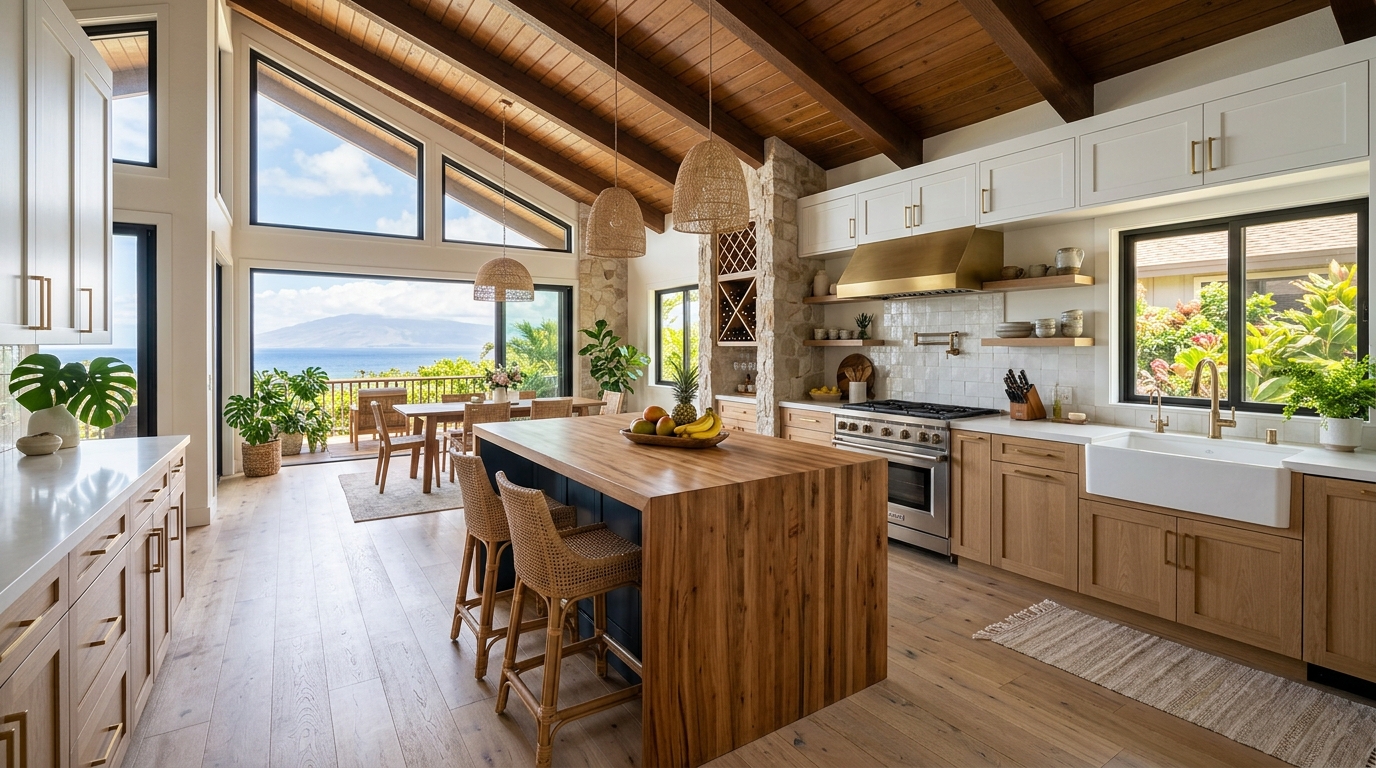
In 2026, a full kitchen remodel in Kihei typically costs between $75,000 and $125,000 for a standard 200-square-foot kitchen, and it can take anywhere from 6 to 10 months from our first conversation to your final walkthrough. That timeline often surprises homeowners who are used to mainland construction speeds. Here in Hawaii, and especially on Maui, everything from getting materials to the island to navigating the county permitting process adds time and complexity. It’s a different world out here, and you need a team that lives and breathes it every single day.
\n\n
For over two decades, our team at Warrior Construction has been managing these island-specific challenges. We’ve seen it all, from coordinating barge shipments for custom cabinets to engineering solutions for homes built on shifting volcanic soil. A successful kitchen renovation in Kihei isn’t just about pretty finishes; it’s about building a space that can withstand the intense sun, the salt-heavy air, and the realities of island life. Throughout this guide, we’ll break down the real costs, timelines, and critical choices you’ll face, sharing some hard-won, cost-saving insights that can make a huge difference for your project. This is the practical advice you need before you even think about picking out a backsplash.
\n\n
Why Kihei Homeowners Trust Warrior Construction for Kitchen Remodel
\n
Choosing a general contractor for a kitchen remodel in Kihei is about more than just finding someone who can hang cabinets. You’re bringing a team into your home for months, and you need to trust their expertise, their process, and their understanding of Maui. At Warrior Construction, we’ve built our reputation on being transparent, reliable, and deeply knowledgeable about the unique demands of building in South Maui. Our license, BC-34373, isn’t just a number; it represents years of proven experience and adherence to Hawaii’s strict building codes.[1]
\n\n
One of the biggest hurdles for any Maui project is logistics. We’ve spent years developing relationships with both on-island suppliers in Kahului and trusted mainland vendors. This means we know who has quality materials in stock, how to consolidate shipments to save on freight costs from the Port of Honolulu, and how to accurately forecast lead times. For example, on a recent project in a Wailea condo, the homeowner wanted a specific Italian appliance package. Instead of having them shipped piecemeal, we coordinated with our Oahu-based freight forwarder to have them all arrive on the same container, saving the client nearly $2,500 in shipping and reducing the risk of damage. It’s that kind of ground-level experience that prevents costly delays and headaches.
\n\n
Furthermore, we understand the nuances of working within Kihei’s many condominium associations (AOAOs). Each one has its own set of rules regarding work hours, noise, debris disposal, and elevator use. We handle all the AOAO submittals and communications, ensuring your project runs smoothly without any issues from the building manager or your neighbors. We recently completed a kitchen renovation kihei project in a popular complex where all materials had to be brought up a single, shared elevator. Our team meticulously planned every delivery and removal to occur during low-traffic hours, keeping the peace and staying on schedule. This proactive management is a core part of our service and something that sets a professional kitchen contractor kihei apart.
\n\n
What Does Kitchen Remodel Cost in Kihei?
\n
Let’s get straight to the point: the average mid-range kitchen remodel cost in Kihei for a 150-250 square foot space in 2026 lands between $75,000 and $125,000. A high-end, luxury remodel with custom everything and top-tier appliances can easily exceed $200,000. It’s crucial to understand where that money goes, because the “island tax” is very real. Shipping, specialized labor, and the higher cost of durable materials all contribute.
\n\n
Here’s a realistic cost breakdown for a hypothetical 200 sq. ft. mid-range Kihei kitchen remodel:
\n
- \n
- Design, Engineering & Permitting: $6,000 – $11,000. This includes architectural drawings if we’re moving walls, and the fees for Maui County plan review and permits.
- Demolition & Site Prep: $4,000 – $8,000. This covers removing old cabinets, flooring, and appliances, plus any necessary structural or subfloor repairs we might uncover.
- Cabinetry & Installation: $22,000 – $38,000. This is the biggest chunk of the budget. This range gets you quality semi-custom cabinets with plywood boxes and durable finishes—essential for fighting humidity.
- Countertops (Quartz or Granite): $9,000 – $16,000. Includes material, fabrication on-island, and installation. Quartz is extremely popular in Kihei for its durability and resistance to staining.
- Appliances: $10,000 – $20,000. A solid suite of stainless-steel appliances (refrigerator, range, dishwasher, microwave hood). We always recommend looking for models with good warranties and available local service techs.
- Plumbing & Electrical: $8,000 – $15,000. This assumes we are relocating some fixtures, adding outlets for code compliance (like on an island), and installing new lighting. If your condo has old cast iron pipes or aluminum wiring, this cost can go up.
- Flooring (Luxury Vinyl Plank or Tile): $4,000 – $7,000. LVP is a great choice for Maui as it’s waterproof and handles temperature swings well.
- Backsplash & Finishes: $3,000 – $6,000. This includes tile for the backsplash, paint, trim, and new hardware.
- General Contractor Fee & Management: 18-22% of the total project cost. This covers our project management, insurance, scheduling, subcontractor coordination, and ensuring the job is done right.
\n
\n
\n
\n
\n
\n
\n
\n
\n
\n\n
The key cost-saving tip here is planning. Every change you make after construction begins creates a ripple effect of costs. Finalizing your material selections before we even start demolition is the single best way to control your budget. For instance, deciding to switch from quartz to a quartzite countertop mid-project might not just change the material cost; it could require different support in the cabinets and a new fabrication schedule, adding weeks of delay and thousands in labor costs.
\n\n
How Long Does a Kitchen Remodel Take in Kihei?
\n
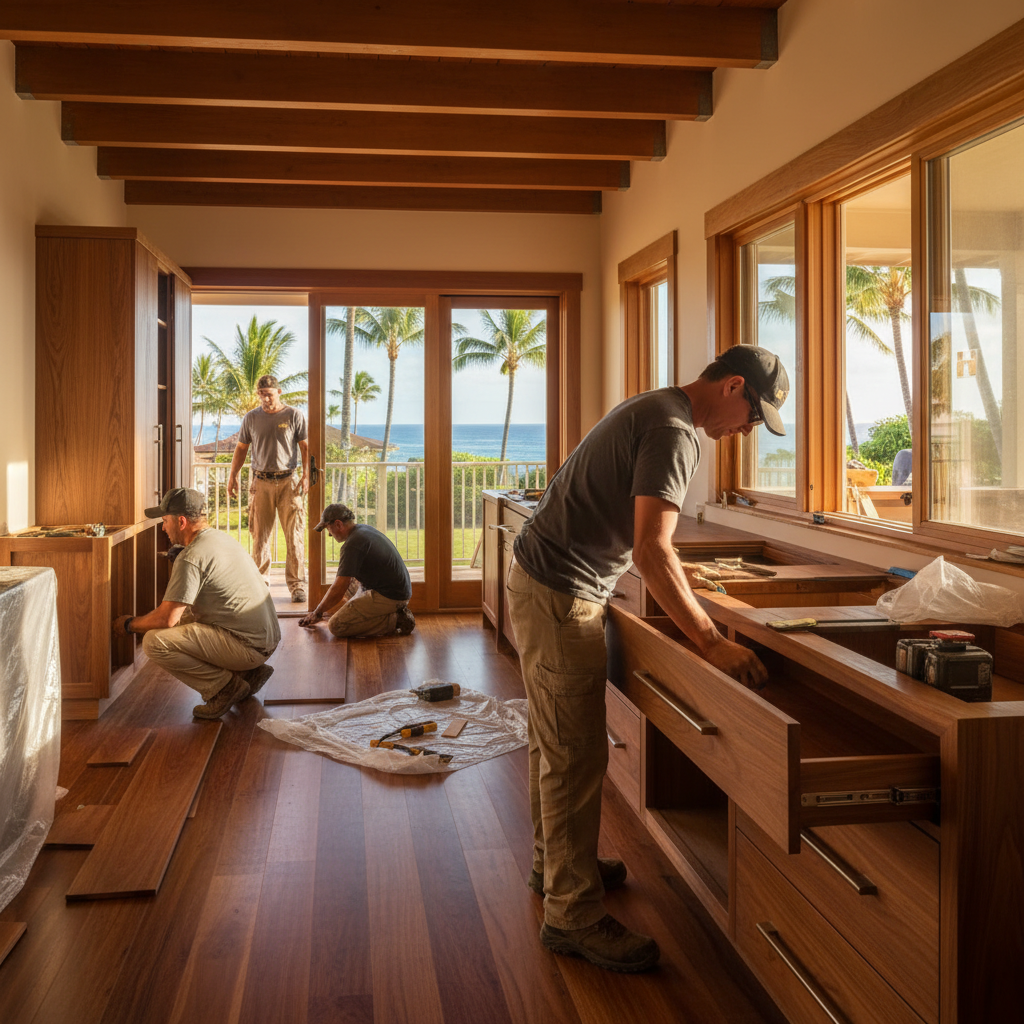
Patience is a virtue in Hawaii construction, and a Kihei kitchen remodel is no exception. From our first meeting to you cooking your first meal, a realistic timeline is 6 to 10 months. Mainland TV shows that promise a 6-week renovation are pure fantasy here. The process is front-loaded with planning and logistics, which is essential for a smooth construction phase.
\n\n
Here’s a typical project timeline, broken down into phases:
\n
- \n
- Phase 1: Design & Planning (4-8 weeks)
This is where we work with you to define the layout, function, and style of your new kitchen. We create detailed drawings, you select your cabinets, countertops, appliances, and finishes. This is the most critical phase for saving money and time later. Rushing these decisions is the number one cause of budget overruns. - Phase 2: Permitting with Maui County (8-16 weeks)
If your remodel involves moving walls, changing the electrical layout, or altering plumbing, we’ll need to submit plans to the Maui County Department of Public Works. The review process can be lengthy. We’ve seen straightforward plans get approved in 8 weeks, but if the reviewer has questions or requires revisions, it can easily stretch to 4 months or more. We manage this entire process, responding to county comments and keeping things moving. - Phase 3: Material Procurement & Shipping (6-12 weeks)
This phase happens concurrently with permitting. Once you’ve made your selections, we place the orders. Cabinets, especially semi-custom or custom lines, have the longest lead times. They are built on the mainland, packed into a container, shipped to Honolulu, then barged over to Kahului Harbor. We have to account for potential shipping delays, which have become more common since 2020. This is why we never start demolition until every single item, down to the last cabinet pull, is physically on Maui. - Phase 4: Active Construction (8-12 weeks)
This is the part you see on TV, but it can only happen once the first three phases are complete. It includes demolition, rough-ins for electrical and plumbing, inspections, drywall, cabinet installation, countertop templating and installation, flooring, painting, and final connections. Our team provides you with a detailed schedule and weekly updates so you always know what’s happening on-site.
\n
\n
\n
\n
\n\n
A key tip: Be decisive during Phase 1. If you can finalize all your choices and avoid changes, we can order everything at once and build a predictable, efficient construction schedule. The projects that drag on are always the ones where decisions are made on the fly during the construction phase.
\n\n
What Permits Do You Need for Kitchen Remodel in Kihei?
\n
Navigating the permitting process with Maui County can be one of the most confusing parts of a kitchen remodel for a homeowner. The simple answer is: if you’re doing anything more than just painting cabinets or replacing a faucet, you probably need a permit. The goal of the permitting process is to ensure all work is done to code, which is for your safety.
\n\n
You will definitely need a building permit for your kitchen remodel if the project includes:
\n
- \n
- Moving or removing any walls, even if you think they aren’t load-bearing. An engineer or architect must make that determination.
- Altering the electrical system. This includes adding new outlets, installing new circuits for appliances, or moving existing wiring. A licensed electrician must pull a separate electrical permit.
- Changing the plumbing layout. If you’re moving the sink or dishwasher, or adding a pot filler or an island sink, a licensed plumber will need to pull a plumbing permit.
- Installing new windows or exterior doors, as this affects the building’s envelope and must meet current hurricane code requirements.
\n
\n
\n
\n
\n\n
For a straightforward, cosmetic kitchen renovation kihei where you are only replacing cabinets, countertops, and appliances in their exact same locations (a “pull and replace”), you might not need a full building permit. However, licensed plumbers and electricians are still required for the hookups, and it’s always best to confirm with a qualified general contractor or the county directly. Trying to save a few dollars by skipping a required permit is a costly mistake. If you’re caught, the county can issue a stop-work order, levy fines, and even make you tear out the completed work. Worse, unpermitted work can void your homeowner’s insurance and create major problems when you try to sell your home.
\n\n
As your general contractor, Warrior Construction handles the entire permitting process. We work with our network of architects and engineers to create permit-ready plans and submit the application package to Maui County. We track the review status, respond to all inquiries from the plan reviewers, and schedule all the required inspections (framing, rough-in electrical/plumbing, and final). While the Honolulu DPP[2] has its own set of procedures, the underlying state building codes are similar, and our experience across the islands helps us anticipate what reviewers are looking for, which can help streamline the process.
\n\n
Kihei-Specific Considerations: Climate, Materials, Regulations
\n
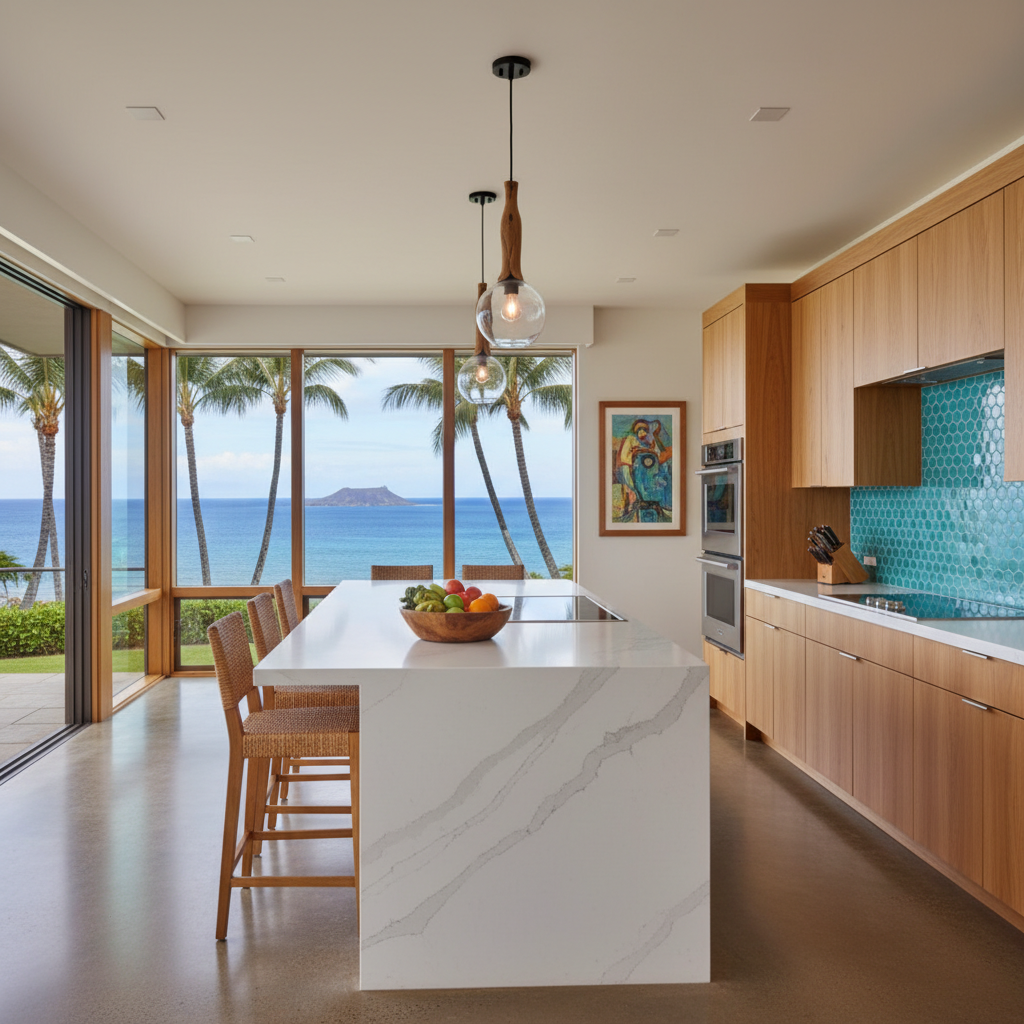
A kitchen in Kihei isn’t like a kitchen in Kansas. The environment here is relentless, and you have to build for it. The sun is intense, the air is full of salt and moisture, and everything is shipped in. Ignoring these realities leads to kitchens that look worn out in just a few years.
\n\n
Climate & Material Choices
\n
The number one enemy of a Kihei kitchen is salt-air corrosion. That beautiful brushed nickel faucet that looks great on the mainland will be pitted and corroded in a year here. Here’s what we recommend:
\n
- \n
- Hardware & Fixtures: Always choose 316 marine-grade stainless steel, PVD-finished brass, or high-quality powder-coated materials for cabinet pulls, faucets, and light fixtures. Standard 304 stainless steel will rust.
- Cabinets: Avoid MDF (medium-density fiberboard) boxes. The humidity will cause them to swell and delaminate over time. We insist on all-plywood construction for cabinet boxes. For doors, solid wood or high-quality polymer finishes hold up best to the humidity and sun.
- Windows: If your kitchen has an exterior window, vinyl or fiberglass frames are a must. They won’t corrode like aluminum can. And any new window needs to be hurricane-rated to meet current building codes.
- Ventilation: A powerful, properly vented range hood isn’t a luxury; it’s a necessity. It pulls cooking grease, heat, and moisture out of your home, which helps prevent mold and keeps your home cooler. Ductless, recirculating hoods just don’t cut it in our climate.
\n
\n
\n
\n
\n\n
Logistics & Supply Chain
\n
Everything you put in your kitchen arrived on a boat. This simple fact impacts cost and schedule. We try to source materials from Maui or Oahu distributors whenever possible to reduce shipping time and cost. For items that must come from the mainland, like specific appliances or cabinets, careful planning is everything. We track shipments from the factory to the port, across the ocean, and to our warehouse in Kahului. This level of logistical management prevents the classic Hawaii construction scenario where a whole project is stalled for weeks waiting for one missing part.
\n\n
Local Regulations & AOAO Rules
\n
Beyond the Maui County building codes, most homeowners in Kihei live in a condo or a community with an AOAO (Association of Apartment Owners). These associations have their own book of rules for renovations. We start every condo project by getting a copy of the house rules. Typical restrictions include:
\n
- \n
- Limited Work Hours: Often 8 AM to 4 PM, Monday through Friday only.
- Debris Removal: Rules on where dumpsters can be placed and how debris is removed from the property.
- Material Deliveries: Specific times and locations for deliveries.
- Insurance Requirements: We must provide the AOAO with a certificate of insurance listing them as additionally insured.
\n
\n
\n
\n
\n
We build these rules into our project schedule from day one. Breaking AOAO rules can result in fines and work stoppages, so professional management is key to keeping the project and your neighbors happy.
\n\n
How to Choose the Right Kitchen Remodel Contractor in Kihei
\n
Hiring the right team is the single most important decision you’ll make for your kitchen remodel. A great contractor will guide you through the process, protect your investment, and deliver a beautiful, functional space. A bad one can turn your dream project into a nightmare of delays, cost overruns, and shoddy work. Here’s how to tell the difference.
\n\n
- \n
- Verify Their License and Insurance. This is non-negotiable. Any legitimate contractor in Hawaii must have a license from the Department of Commerce and Consumer Affairs (DCCA). You can and should verify their license status online using the Professional & Vocational Licensing (PVL) search.[1] Warrior Construction’s license is BC-34373. Also, ask for proof of general liability insurance and worker’s compensation insurance. Without these, you could be held liable for accidents on your property.
- Look for Deep Maui Experience. The construction business on Maui is all about relationships and local knowledge. Ask potential contractors about their recent projects in Kihei or South Maui. Can they provide references from homeowners in your area? A contractor based on Oahu or another island might not have the same understanding of Maui County’s inspectors, the local supply chain, or the best subcontractors for the job.
- Demand a Detailed, Itemized Proposal. A one-page estimate with a single number at the bottom is a huge red flag. A professional proposal should be several pages long and break down the costs for every phase of the project: demolition, framing, electrical, plumbing, cabinets, countertops, etc. It should clearly state what is included and, just as importantly, what is not (these are called allowances or exclusions). This level of detail protects you and ensures everyone is on the same page about the scope of work.
- Understand Their Communication Process. How will the contractor keep you updated? Do they use a project management app? Will you have a dedicated project manager? How often can you expect to hear from them? At Warrior Construction, we provide our clients with a detailed schedule and hold weekly progress meetings or calls. Clear, consistent communication is the key to a low-stress renovation experience.
- Trust Your Gut. You’ll be working closely with this team for months. Do you feel comfortable with the project manager? Do they listen to your concerns and answer your questions patiently and thoroughly? Make sure you’re hiring not just a skilled builder, but a true partner in the process. Find the right kitchen contractor kihei for your specific needs by doing this homework up front.
\n
\n
\n
\n
\n
\n\n
Real Kihei Kitchen Remodel Project Example
\n
To make all this information concrete, let’s walk through a typical project we recently completed in Kihei. The client had a 2-bedroom condo in a complex built in the late 1980s. The kitchen was original: dark, cramped, with peeling laminate countertops and old, inefficient appliances.
\n\n
The Homeowner’s Goals:
\n
- \n
- Create a brighter, more open feel.
- Update all finishes and appliances for a modern, coastal look.
- Improve storage and functionality.
- Use durable materials that would hold up to use as a part-time vacation rental.
\n
\n
\n
\n
\n\n
The Plan We Developed:
\n
- \n
- Layout Change: We identified a non-load-bearing wall between the kitchen and living area. The plan was to remove about 8 feet of it to create a peninsula with counter seating, instantly opening up the space.
- Material Selection: We guided the client toward materials perfect for the Kihei environment. This included white shaker-style cabinets with all-plywood boxes, a light-colored quartz countertop that mimics the look of sand, a blue glass tile backsplash for a pop of ocean color, and marine-grade stainless steel hardware. For flooring, we used luxury vinyl plank that flowed seamlessly from the kitchen into the living room.
- Upgrades: We replaced the old fluorescent light box with recessed LED can lights on a dimmer. We added under-cabinet lighting for task areas and installed a new, properly vented microwave hood to handle cooking moisture. All outlets were updated to GFCI for safety code compliance.
\n
\n
\n
\n\n
The Numbers & Timeline:
\n
- \n
- Initial Budget: $95,000
- Final Project Cost: $93,200 (The project came in slightly under budget).
- Total Timeline: 7.5 months. This broke down into 6 weeks for design and selections, 12 weeks for permitting and AOAO approval, 8 weeks for cabinet shipping, and 9 weeks for the on-site construction.
\n
\n
\n
\n\n
The Outcome: The transformation was dramatic. The new, open kitchen completely changed the feel of the entire condo, making it feel larger and more welcoming. The durable, low-maintenance materials were ideal for a rental property, and the improved lighting and functionality made it a joy to use. This project is a perfect example of how a well-planned kitchen remodel in Kihei can dramatically increase both the enjoyment and the value of a property.
\n\n
What this means for Hawaii homeowners
\n
Tackling a kitchen remodel in Kihei is a significant investment, but it’s one of the best ways to improve your home’s value and your quality of life. The key is to go into it with a clear understanding of the local realities. Mainland rules and expectations simply don’t apply here. Success depends on embracing the island way of doing things, which means planning ahead, being patient, and working with professionals who have mastered the unique challenges of building in paradise.
\n\n
Here are your actionable next steps:
\n
- \n
- Set a Realistic Budget: Start with the understanding that labor and materials cost more on Maui. Use the cost breakdowns in this guide as a starting point and add a 10-15% contingency fund for unexpected issues.
- Plan for the Timeline: Don’t expect a 6-week turnaround. Embrace the 6-10 month process. The more you plan and finalize upfront, the smoother the construction phase will be. Order materials far in advance.
- Prioritize Durability Over Trends: Choose materials that are proven to withstand Kihei’s salt air and humidity. Marine-grade hardware, plywood cabinets, and proper ventilation aren’t upgrades; they are essentials for a long-lasting kitchen.
- Hire a Licensed, Local Pro: Do your homework. Verify licenses, check references, and hire a general contractor with a strong track record on Maui. A good contractor is your single greatest asset in navigating the complexities of your project.
\n
\n
\n
\n
\n\n
By keeping these principles in mind, you can navigate your kitchen remodel with confidence and create a space that you and your family will love for years to come. Explore our portfolio to see more examples of our work across the islands.
\n\n
Frequently Asked Questions About Kitchen Remodel in Kihei
\n
How much value does a kitchen remodel add to a home in Kihei?
\n
A well-executed, mid-range kitchen remodel in Kihei can often recoup 60-80% of its cost at resale. More importantly, in a competitive market like Maui’s, an updated kitchen is often the deciding factor for buyers and can significantly shorten the time your property is on the market. It’s one of the most impactful upgrades you can make.
\n
\n
Can I do a kitchen remodel myself (DIY) in Hawaii?
\n
You can perform some cosmetic updates yourself, like painting or changing cabinet hardware. However, any electrical or plumbing work legally requires a licensed professional in Hawaii. Given the complexities of permitting, logistics, and building codes, a full kitchen remodel is best left to a licensed general contractor to avoid safety issues and problems with future home sales.
\n
\n
What’s the biggest mistake homeowners make in a Kihei kitchen renovation?
\n
The biggest mistake is not ordering all materials before starting demolition. Homeowners get excited and want to see progress, so they start tearing things out while cabinets or appliances are still weeks away. This inevitably leads to long, frustrating delays where your home is a construction zone but no work is happening. We have a firm policy of not starting on-site work until all materials are confirmed to be on-island.
\n
\n
Are IKEA cabinets a good option for a Maui kitchen?
\n
IKEA cabinets can be a budget-friendly option, but there are trade-offs. The boxes are typically particleboard, which doesn’t hold up as well to Hawaii’s humidity as all-plywood construction. Additionally, shipping them to Maui can be complex and expensive, and any missing or damaged parts can cause significant delays. We generally recommend semi-custom, all-plywood cabinets from established brands for better long-term durability in our climate.
\n
\n
How long does it really take for custom cabinets to arrive on Maui?
\n
For semi-custom or custom cabinets ordered from the mainland, you should plan for a lead time of 10 to 16 weeks in 2026. This includes the manufacturing time (6-10 weeks), packing and shipping to the West Coast, ocean freight to Honolulu, barge transport to Kahului, and finally, delivery to your site. This is often the single longest lead time item in a kitchen project.
\n
\n
Do I need an architect for my kitchen remodel in Kihei?
\n
If you are not moving any walls and keeping the existing layout, a good design-build contractor like us can often handle the design and drawings. However, if you are removing any walls (especially load-bearing ones) or significantly reconfiguring the space, you will need plans from a licensed Hawaii architect or structural engineer to submit for a building permit.
\n
\n
What is the average kitchen remodel cost Kihei for a condo?
\n
For a typical 100-150 sq. ft. condo kitchen in Kihei, a mid-range remodel in 2026 will generally fall in the $60,000 to $90,000 range. The costs are slightly lower than a single-family home due to the smaller footprint, but can be offset by logistical challenges like using elevators and adhering to strict AOAO work rules, which can increase labor time.
\n
\n
\n\n
Thinking about transforming your Kihei kitchen? The first step is a conversation. Our team at Warrior Construction has the local knowledge and hands-on experience to guide you through every step of the process, from initial design to final, stunning reveal. We build beautiful, durable kitchens that are made for Maui life.
\n
Ready to discuss your vision for a kitchen remodel in Kihei? Contact us today for a consultation and start planning the kitchen you’ve always wanted.
\n\n
References
\n