“
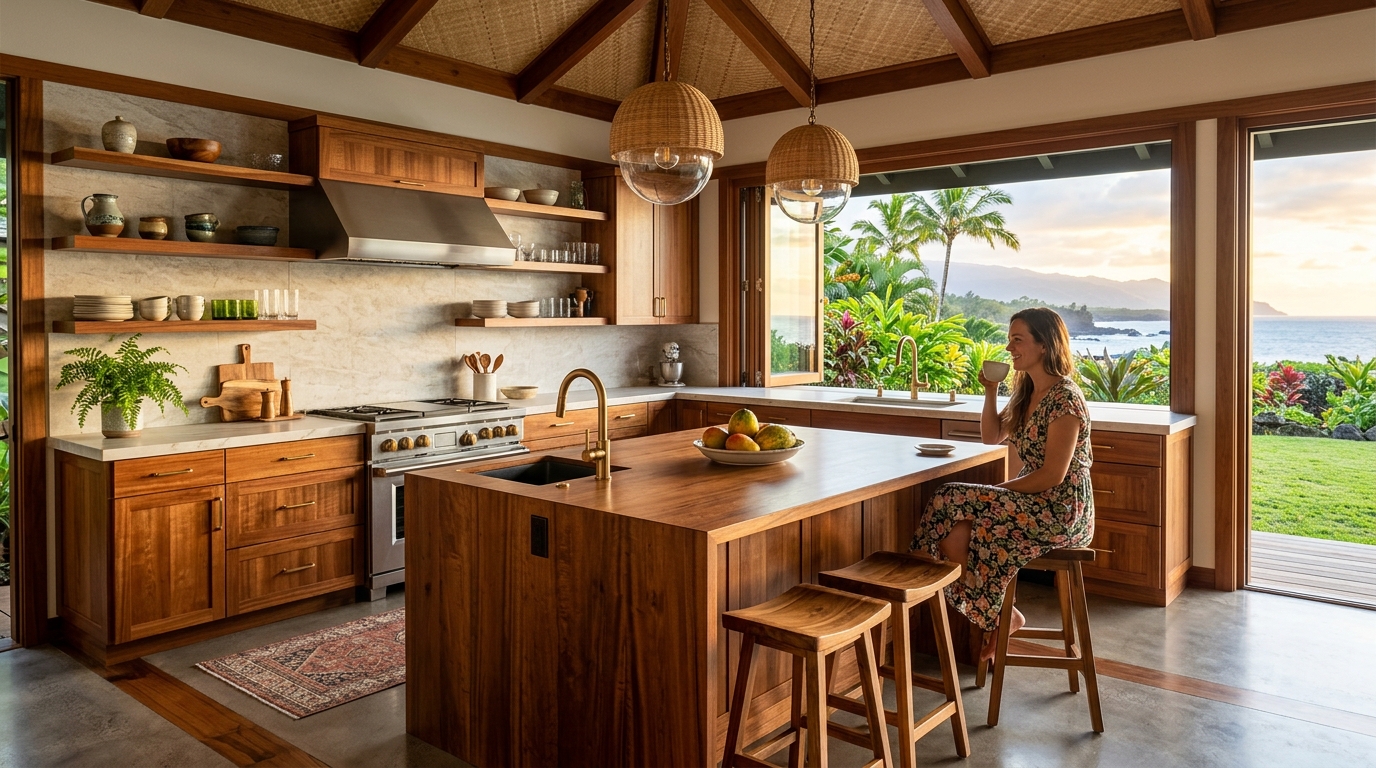
A full kitchen remodel in Hilo, as of 2026, typically costs between $75,000 and $150,000 for a mid-to-high-end renovation of a 200-250 square foot space. This project generally takes 12 to 20 weeks from the start of construction to final walkthrough, not including the initial design and permitting phases. For over two decades, our team at Warrior Construction has managed projects across the islands, and we’ve seen firsthand how a Hilo kitchen remodel presents unique challenges and opportunities compared to one in Honolulu or on Maui. The constant humidity, the specific county permitting process, and island logistics all play a huge role.
\n\n
Too often, we get calls to fix projects that went sideways. The homeowners started with high hopes but fell into a few common, costly traps. These aren’t rookie errors; they’re mistakes smart people make when they don’t account for the realities of building on the Big Island. This isn’t just about picking nice cabinets; it’s about building a space that stands up to Hilo’s climate and adds real value to your home. We’re going to walk through the five biggest mistakes we see homeowners make so you can avoid them entirely. From underestimating costs and timelines to choosing materials that can’t handle the East Hawai’i humidity, we’ll cover what you actually need to know before you start your kitchen remodel Hilo project.
\n\n
Why Hilo Homeowners Trust Warrior Construction for Kitchen Remodel
\n
Choosing a contractor is the single most important decision you’ll make for your kitchen renovation. Here in Hawai’i, a contractor’s license and insurance are just the starting point. What really matters is their track record on your specific island, their understanding of local conditions, and their network of reliable suppliers and subcontractors. At Warrior Construction (License BC-34373), we’ve been building and remodeling homes across Hawaiʻi for more than 20 years. That’s two decades of navigating inter-island shipping, building relationships with county inspectors, and figuring out which materials *actually* last in our salt-air and high-humidity environments.
\n\n
Our experience isn’t just general; it’s specific. We know that a project in Volcano has different considerations for moisture and venting than a home in Keaukaha dealing with salt spray. We understand the unique challenges of the Big Island, from the aʻā lava rock that can complicate foundation work to the vog that can affect certain exterior finishes. Our team doesn’t just work here; we live here. This local knowledge is built into every project we undertake. We know which lumber yards have the best-acclimated hardwoods and which window suppliers have the shortest lead times from the mainland. This network is something you can’t build overnight.
\n\n
Furthermore, we operate on a foundation of complete transparency. A kitchen remodel is a significant investment, and you deserve to know exactly where your money is going. Our detailed proposals break down every line item, from demolition and framing to plumbing fixtures and cabinet hardware. There are no vague allowances or hidden fees. We believe an informed client is a happy client, and we take the time to walk you through the budget, schedule, and material selections before a single hammer swings. This commitment to clear communication and our deep roots in the local construction community are why Hilo homeowners choose us for their kitchen remodel projects.
\n\n
What Does a Kitchen Remodel Cost in Hilo?
\n
Let’s get straight to the point: for a full-gut kitchen remodel cost in Hilo in 2026, you should budget between $350 and $600 per square foot. For a standard 200-square-foot kitchen, this puts the all-in price tag between $70,000 and $120,000. A more extensive, high-end project with custom cabinets, stone countertops, and relocated plumbing could easily push past $150,000. It’s crucial to understand why these numbers are higher than what you might see on mainland HGTV shows. This is the first major mistake homeowners make: applying mainland cost expectations to an island project.
\n\n
Here’s a realistic cost breakdown for a mid-range, $95,000 Hilo kitchen remodel (approx. 220 sq. ft.):
\n
- \n
- Design & Permitting: $6,000 – $10,000. This includes architectural drawings and structural engineering if we’re moving walls, plus county permit fees.
- Cabinetry & Installation: $25,000 – $35,000. This is the biggest ticket item. Semi-custom, solid-plywood-box cabinets are essential for Hilo’s humidity. Cheap particle board will swell and delaminate in a couple of years.
- Countertops (Quartz/Granite): $8,000 – $12,000. Includes material, fabrication, and installation. Shipping these heavy slabs to Hilo adds a significant cost.
- Appliances: $10,000 – $18,000. This can vary widely, but for a good quality suite (refrigerator, range, dishwasher, microwave hood), this is a solid budget.
- Labor (All Trades): $20,000 – $28,000. This covers demolition, framing, plumbing, electrical, drywall, painting, and flooring installation. Labor rates on the Big Island reflect the high cost of living.
- Plumbing & Electrical: $7,000 – $11,000. This assumes moving some fixtures, adding outlets for an island, and installing new lighting. If your whole house needs a rewire, this cost goes up.
- Flooring (LVP/Tile): $4,000 – $7,000. Luxury Vinyl Plank (LVP) is a great choice for Hilo due to its waterproof properties.
- Contingency (15%): $12,000. This is non-negotiable in our book. On a recent project in Waiākea, we opened a wall and found extensive termite and water damage from a leaky old window. The contingency fund covered the structural repairs without derailing the entire project. This is mistake number one: failing to budget for the unexpected.
\n
\n
\n
\n
\n
\n
\n
\n
\n\n
The numbers don’t lie. Everything costs more to get to Hawai’i. A cabinet that costs $400 in California can cost $600 by the time it’s shipped to Honolulu and then barged to Hilo. This affects every single material, from screws to sinks. When you get a quote that seems too good to be true, it almost always is. It likely means the contractor is using inferior materials, isn’t licensed or insured, or plans to hit you with change orders later. Our approach is to put all the real costs on the table upfront, so you can make informed decisions from day one.
\n\n
How Long Does a Kitchen Remodel Take in Hilo?
\n
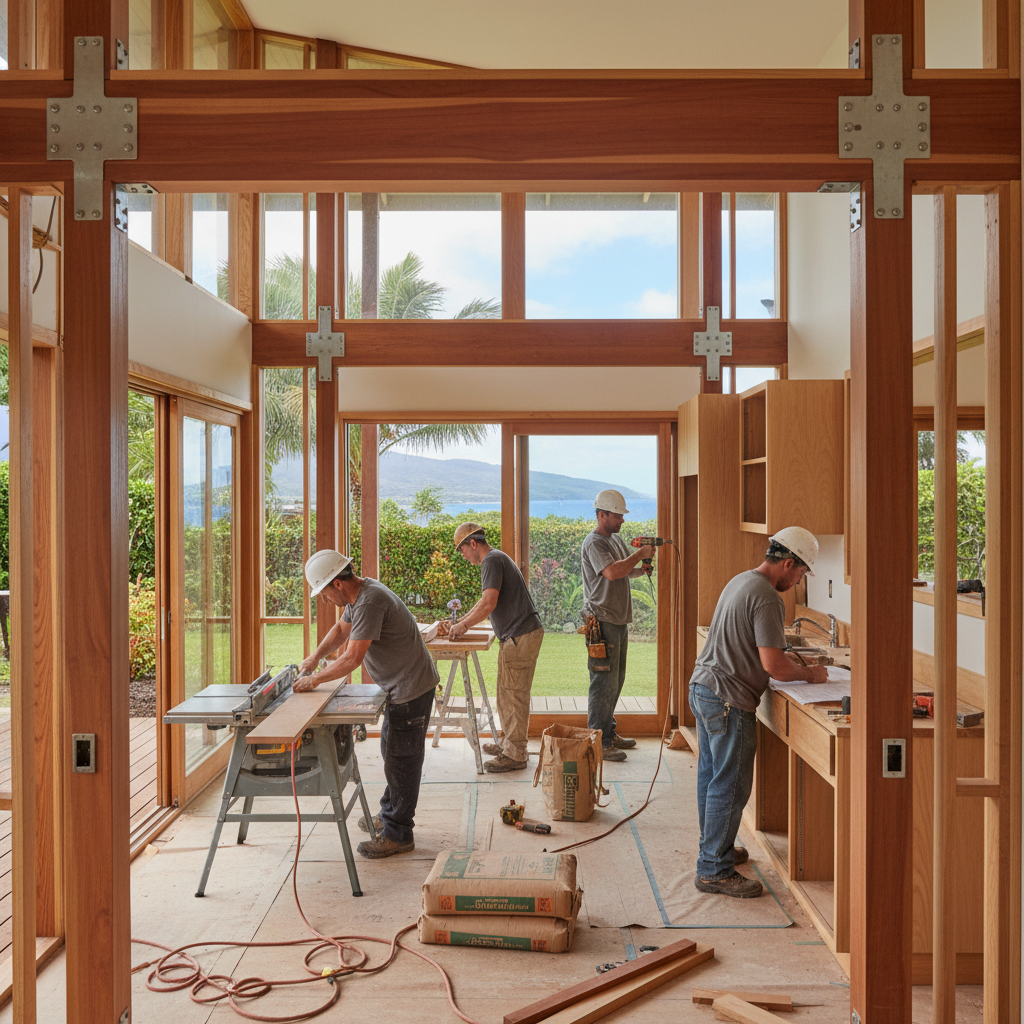
The second major mistake homeowners make is underestimating the timeline. A common question we get is, “Can you be done in a month?” For a cosmetic update, maybe. But for a proper kitchen remodel in Hilo, the answer is a firm no. A realistic timeline from the day construction starts to the final cleaning is 12 to 20 weeks. This does not include the pre-construction phase, which can take an additional 2 to 4 months.
\n\n
Here’s a phase-by-phase look at a typical 16-week Hilo kitchen renovation schedule:
\n\n
- \n
- Phase 1: Design & Planning (Pre-Construction: 8-16 weeks)\n
- \n
- Initial Consultation & Design (2-4 weeks): We work with you to finalize the layout, function, and style.
- Material Selection & Ordering (4-6 weeks): This happens concurrently. Custom cabinets can have a 10-14 week lead time from the mainland. We order them the moment the design is locked to get them in the shipping queue. Everything from appliances to special-order tile has to be planned for well in advance.
- Permit Application & Approval (6-12 weeks): The County of Hawaiʻi Department of Public Works (DPW) Building Division handles permits. Depending on their backlog and the complexity of your project, this is often the longest waiting period. We cannot start any work until we have the approved permit in hand.
\n
\n
\n
\n
- Phase 2: Construction (On-Site: 12-20 weeks)\n
- \n
- Week 1-2: Demolition & Site Prep. We gut the old kitchen, protect the rest of your home, and handle any necessary abatement.
- Week 3-5: Rough-ins & Framing. This is where we move walls and run new plumbing, electrical wiring, and HVAC. This phase requires multiple inspections from the county.
- Week 6-7: Drywall & Painting. We close up the walls, tape, mud, and apply the first coats of paint.
- Week 8: Flooring Installation. The new floor goes in before cabinets.
- Week 9-11: Cabinet & Countertop Installation. The cabinets arrive from the barge and are installed. We then template for countertops, which takes another 7-10 days for fabrication and installation.
- Week 12-14: Finishes & Fixtures. This is when the kitchen starts to look like a kitchen. We install the backsplash, sink, faucet, appliances, lighting fixtures, and cabinet hardware.
- Week 15-16: Final Touches & Inspections. We complete the final painting, adjustments, and a thorough cleaning. Then we schedule the final building, electrical, and plumbing inspections with the county inspector. Once we pass all finals, the project is officially complete.
\n
\n
\n
\n
\n
\n
\n
\n
\n
\n
\n\n
The biggest wildcard is shipping. We once had a set of custom windows for a Pāhoa project get stuck in the port of Long Beach for three extra weeks. There was nothing we could do but adjust the schedule. A good general contractor in Hilo builds these potential delays into the schedule and communicates proactively. Rushing the process only leads to mistakes and poor-quality work.
\n\n
What Permits Do You Need for a Kitchen Remodel in Hilo?
\n
Mistake number three, and it’s a big one, is trying to avoid the permitting process. We get asked about it all the time: “Do I really need a permit just to change my cabinets?” The answer is, it depends on the scope, but for most full remodels, yes. In Hilo, building permits are issued by the County of Hawaiʻi Department of Public Works, not the Honolulu DPP you might read about online[1]. The rules are clear: if you are moving or altering any load-bearing walls, changing the electrical layout, or reconfiguring plumbing lines, you absolutely need a permit.
\n\n
Here’s what typically requires a permit for a Hilo kitchen:
\n
- \n
- Structural Changes: Removing a wall between the kitchen and living room, enlarging a window opening, or adding a new door.
- Electrical Work: Adding new circuits for an island, installing new outlets, or converting to LED recessed lighting. Any new wiring requires a permit and an inspection.
- Plumbing Work: Moving the sink or dishwasher to a new location, adding a pot filler, or installing a new gas line for a range.
\n
\n
\n
\n\n
Attempting this work without a permit is a huge risk. First, it’s illegal and can result in stop-work orders and hefty fines from the county. Second, your homeowner’s insurance may not cover any damage (like a fire from faulty wiring) caused by unpermitted work. Third, and most importantly for your home’s value, you will have serious problems when you try to sell. Unpermitted work is a major red flag for buyers and can kill a deal or force you to tear out the work and have it redone correctly.
\n\n
The permitting process, while sometimes slow, is there to protect you. It ensures that the work is done to current building codes, which are especially important in Hawaiʻi with our hurricane-code requirements. A licensed kitchen contractor in Hilo will handle the entire process for you. This includes preparing the architectural drawings, submitting the application package to the DPW, responding to any comments from the plan reviewers, and scheduling all the required inspections. It’s a critical part of our job as your general contractor, ensuring your investment is safe, legal, and built to last.
\n\n
Hilo-Specific Considerations: Climate, Materials, and Regulations
\n
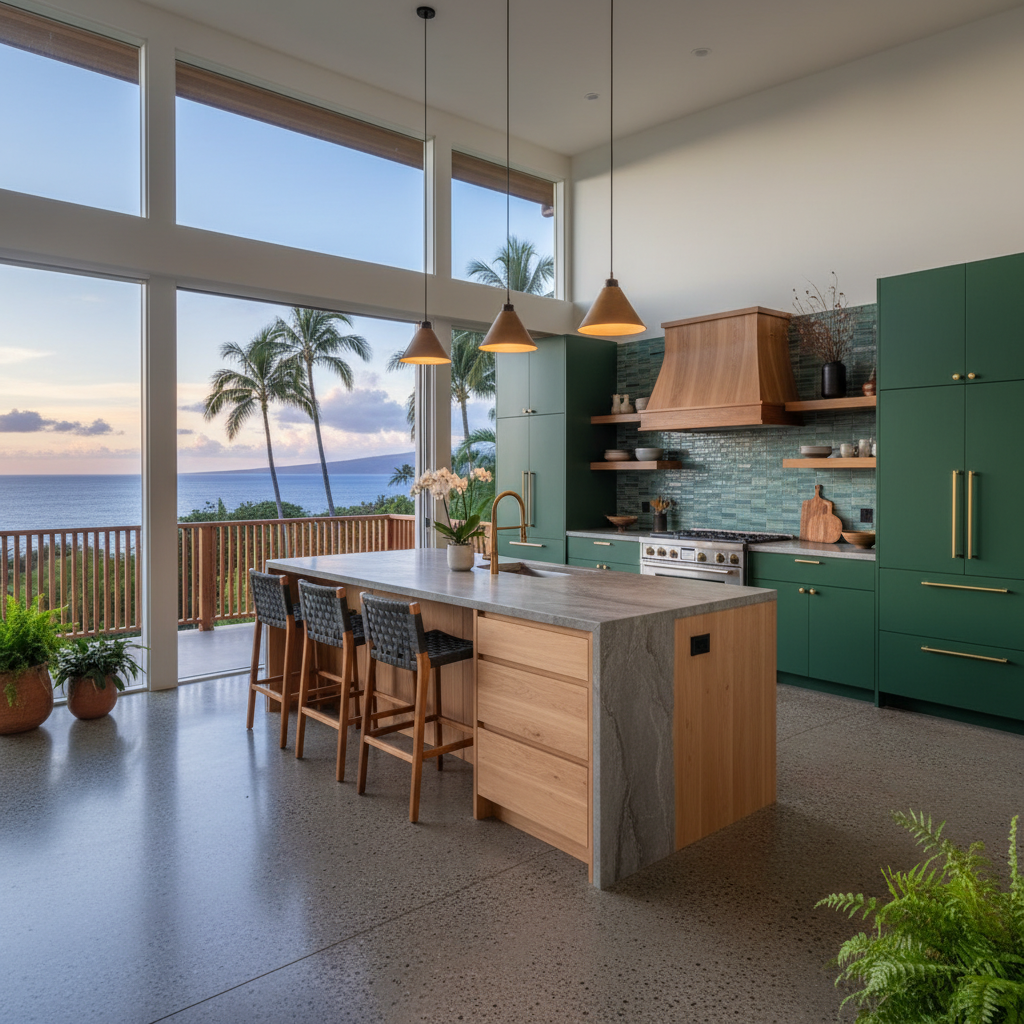
This brings us to the fourth and fifth mistakes: ignoring Hilo’s unique climate and choosing the wrong materials. Hilo isn’t like anywhere else. The consistent rain and high humidity are not just a fact of life; they are a force that actively works against your home. Materials that work perfectly fine in dry climates like Kona or even on Oʻahu can fail spectacularly here.
\n\n
Here are the key Hilo-specific factors our team plans for on every kitchen remodel:
\n
- \n
- Humidity and Moisture Management: This is priority number one. We specify cabinet boxes made from solid plywood, never MDF or particle board, which act like sponges in Hilo’s air. We ensure proper ventilation is installed, including a high-CFM range hood that is ducted to the exterior, not just recirculating. This protects your air quality and prevents moisture buildup that leads to mold and mildew. Dehumidifiers integrated into the HVAC system can also be a wise investment.
- Material Selection for the Tropics:\n
- \n
- Flooring: We strongly recommend Luxury Vinyl Plank (LVP) or porcelain tile. They are 100% waterproof and won’t warp or cup like some solid hardwoods can in high humidity.
- Countertops: Engineered quartz is an excellent choice. It’s non-porous, so it resists staining and doesn’t require sealing like some natural stones. Certain types of granite also hold up very well.
- Hardware: Salt air corrosion is a real issue, even if you aren’t right on the water. We recommend using stainless steel (316 grade if possible) or high-quality brass hardware for hinges, pulls, and fasteners to prevent rust and pitting.
\n
\n
\n
\n
- Pest Resistance: Termites are a constant threat. We use pressure-treated lumber for all framing that comes into contact with a concrete slab. During demolition, we always perform a thorough inspection for any signs of termite damage so it can be addressed before new cabinets go in. Building with metal studs can be another great option for certain applications.
- Island Logistics and Supply Chain: Every single item for your kitchen, from the appliances to the backsplash tile, arrives on a barge. This reality dictates our project management style. We order everything months in advance and have it stored securely in our warehouse before the project even begins. Relying on “just-in-time” delivery is a recipe for disaster in Hawaiʻi. A single delayed shipment can stall a project for weeks.
\n
\n
\n
\n
\n\n
Understanding these Hilo-specific nuances is what separates an experienced local contractor from an off-island firm or a handyman who doesn’t grasp the long-term implications of building in this environment. The goal isn’t just a kitchen that looks beautiful on day one, but one that functions perfectly and holds its value for decades to come.
\n\n
How to Choose the Right Kitchen Remodel Contractor in Hilo
\n
The final mistake homeowners often make is hiring the wrong person for the job. Choosing your kitchen renovation Hilo contractor is not the time to shop for the lowest price. You are entrusting someone with one of your home’s most valuable assets. The right contractor can make the process smooth and deliver a high-quality result, while the wrong one can turn your life into a nightmare of delays, cost overruns, and shoddy work.
\n\n
Here is a checklist for vetting any contractor you consider for your Hilo kitchen remodel:
\n
- \n
- Verify Their License: This is the absolute first step. A legitimate contractor will have a license number (ours is BC-34373). You can and should verify this on the Hawaiʻi Department of Commerce and Consumer Affairs (DCCA) Professional & Vocational Licensing (PVL) website[2]. An active license means they have met the state’s requirements for experience, testing, and financial stability.
- Confirm Their Insurance: Ask for proof of both general liability insurance and workers’ compensation insurance. If a worker gets hurt on your property and the contractor isn’t insured, you could be held liable. We recommend asking for a certificate of insurance that names you as an additional insured.
- Check Their Big Island Experience: Ask to see a portfolio of their completed work specifically on the Big Island, preferably in or around Hilo. A Honolulu contractor might not have the same network of Hilo-based plumbers, electricians, and suppliers. Ask for references from recent Hilo clients and actually call them.
- Review Their Contract: Never sign a contract that is vague. A professional contract will include a detailed scope of work, a clear payment schedule, a project timeline, a clause for handling change orders, and warranty information. If the contract is just a one-page estimate, that is a major red flag.
- Communication is Key: How does the contractor communicate? Are they responsive to your calls and emails? A remodel is a long process, and you will be in constant contact with your project manager. You need someone who is professional, clear, and proactive. You should feel like you are part of a team, not just another job number.
\n
\n
\n
\n
\n
\n\n
At Warrior Construction, we welcome these questions. We’re proud of our license, our insurance, our portfolio of local projects, and the relationships we’ve built with homeowners in Hilo. We believe that a thorough vetting process helps you make the best decision for your home and family.
\n\n
Real Hilo Kitchen Remodel Project Example
\n
To make this all more concrete, let’s look at a recent project we completed for a family in the Kaumana area of Hilo. Their home, built in the late 1980s, had a classic closed-off kitchen with dark wood cabinets and laminate countertops. The goal was to create a bright, open-concept space that connected to the living room and could handle the wear and tear of a growing family, all while respecting a firm budget of $110,000.
\n\n
The Challenge: The primary obstacle was a load-bearing wall separating the kitchen from the living area. Removing it required a significant structural change, including the installation of a large laminated veneer lumber (LVL) beam to carry the roof load. The electrical panel was also outdated and needed a full replacement to handle modern appliances like an induction cooktop and a double oven.
\n\n
Our Solution & Process:
\n
- \n
- Pre-construction (10 weeks): We started with a structural engineer to design the beam and support posts. While the engineer prepared the drawings for the permit application, our design team worked with the homeowners to select materials. They chose white shaker-style plywood cabinets, a durable quartz countertop that mimics the look of marble, and a waterproof LVP floor. We ordered all materials immediately. The permit from the County of Hawaiʻi DPW took about 8 weeks to be approved.
- Construction (14 weeks): Once we had the permit, demolition began. We carefully supported the ceiling, removed the load-bearing wall, and installed the new LVL beam. This was inspected and approved by the county inspector. We then upgraded the electrical service and re-ran all new wiring and plumbing. After drywall, painting, and flooring, the new cabinets and countertops were installed. The final touch was a beautiful backsplash of handmade tile, which had been ordered 3 months prior to ensure it arrived on time.
\n
\n
\n\n
The Result: The final cost came in at $107,500, just under budget. The project was completed in 14 weeks from the start of construction. The family now has a stunning, functional kitchen that flows seamlessly into their living space. By using the right materials and addressing the structural and electrical needs properly through the permitting process, we created a space that not only looks great but is also safe, compliant, and will add significant value to their home for years to come. This project is a perfect example of how proper planning and local expertise can navigate the complexities of a major Hilo renovation.
\n\n
What this means for Hawaii homeowners
\n
If you’re a homeowner in Hilo contemplating a kitchen remodel, the key takeaway is this: success hinges on acknowledging and planning for our unique island realities from the very beginning. You can’t simply use mainland blogs or TV shows as a guide for your budget, timeline, or material choices. Doing so will inevitably lead to frustration, delays, and costly mistakes.
\n\n
Here’s your action plan to start the process correctly:
\n
- \n
- Accept the True Costs: Embrace the fact that everything from labor to materials costs more here. Set a realistic budget based on local figures ($350-$600/sq. ft.) and, most importantly, include a 15-20% contingency fund. This isn’t a slush fund; it’s a necessary buffer for the unknowns that are common in older Hilo homes.
- Plan for the Island Timeline: Internalize that your project will take months, not weeks. The clock starts with design and permitting, long before construction. Be patient with the permitting office and understand that shipping is the boss. A contractor who promises an impossibly fast timeline is a contractor you should not hire.
- Design for the Hilo Climate, Not Just for Looks: Prioritize function over fleeting trends. Your number one enemy is moisture. Invest in plywood cabinets, waterproof flooring, and excellent ventilation. Choose hardware and fixtures that can resist corrosion. These choices will pay for themselves many times over.
- Hire a Licensed, Local, and Experienced Contractor: Do not skip your due diligence. Verify their license on the DCCA PVL website, check their insurance, and call their local references. A true kitchen contractor Hilo expert will have a deep understanding of the local codes, suppliers, and climate challenges. Their expertise is the best investment you can make in your project’s success.
\n
\n
\n
\n
\n
By shifting your mindset to align with these local realities, you transform a potentially stressful process into a well-managed project. You’ll be prepared for the journey and positioned to make smart decisions that result in a beautiful, durable kitchen that truly enhances your life in Hawaiʻi.
\n
\n\n
Frequently Asked Questions About Kitchen Remodel in Hilo
\n
Can I save money by buying my own materials?
\n
While it seems like a good idea, it often creates more problems and costs. As general contractors, we have established accounts and relationships with suppliers, sometimes getting better pricing. More importantly, we manage the complex logistics of ordering, shipping, and ensuring all materials arrive correct and undamaged. If a sink you ordered arrives cracked, you are responsible for the replacement and the project delays it causes. When we supply it, it’s our problem to solve.
\n
\n
What is the best type of countertop for Hilo’s climate?
\n
Engineered quartz is our top recommendation for Hilo kitchens. It’s non-porous, meaning it won’t absorb moisture from the humid air and is highly resistant to staining and bacteria. Unlike some natural stones, it doesn’t require regular sealing. Granite is another durable option, but it’s crucial to select a dense variety and ensure it’s sealed properly upon installation to prevent moisture issues.
\n
\n
How much value does a kitchen remodel add to a Hilo home?
\n
A well-executed, mid-range kitchen remodel in Hawai’i can typically recoup 60-75% of its cost upon resale. However, the real value in a place like Hilo is also in its livability and durability. A kitchen designed with high-quality, moisture-resistant materials will prevent costly repairs down the road and be a major selling point for buyers who understand the challenges of the local climate.
\n
\n
Do I need to move out during my kitchen renovation?
\n
We highly recommend it if possible. A full kitchen remodel is disruptive, noisy, and dusty. You will be without a functioning kitchen for several months. We set up containment barriers to protect the rest of your house, but living in a construction zone can be very stressful. Many clients choose to stay with family or find a short-term rental, which should be factored into the overall project budget.
\n
\n
What’s the difference between a kitchen remodel and a kitchen renovation?
\n
We use the terms somewhat interchangeably, but technically, a ‘renovation’ typically means updating the existing space (e.g., new countertops, paint, appliances). A ‘remodel,’ which is what we’ve been discussing, involves changing the layout or structure of the space itself, like moving walls, reconfiguring plumbing, and changing the entire footprint. A kitchen remodel in Hilo almost always requires permits, while a simple renovation might not.
\n
\n
Are there specific building codes in Hilo I should be aware of?
\n
Yes, Hawaiʻi County follows building codes that include specific provisions for our environment. This includes requirements for hurricane straps and ties to ensure the structure is wind-resistant, specific electrical grounding requirements, and ventilation standards to manage indoor air quality and moisture. A qualified kitchen contractor in Hilo will be intimately familiar with the latest codes and ensure your project is fully compliant.
\n
\n
Why is a 15% contingency fund so important for a Hilo project?
\n
In Hilo, many homes are older and have been exposed to humidity and pests for decades. It is very common for us to open a wall and find hidden water damage, dry rot, or extensive termite damage that was not visible during the initial inspection. The contingency fund allows us to address these critical structural or safety issues properly without compromising the quality of the planned remodel or forcing a difficult conversation about increasing the budget mid-project.
\n
\n
\n\n
Embarking on a kitchen remodel is a major decision, but you don’t have to navigate it alone. With careful planning and the right team, you can create a space that is both beautiful and built to withstand the unique demands of life on the Big Island. The team at Warrior Construction has the local experience and commitment to quality to bring your vision to life, the right way.
\n
If you’re ready to discuss your kitchen project, our team is here to help. See examples of our work in our portfolio. Let’s start the conversation and build a kitchen that your ʻohana will love for years to come. Request your free estimate today.
\n\n
Ready to Transform Your Hilo Kitchen?
\n
A successful kitchen remodel in Hilo starts with a solid plan and an experienced local team. At Warrior Construction, we combine decades of Hawaiʻi building experience with a commitment to transparent communication and quality craftsmanship. We understand the unique challenges of building on the Big Island, from managing logistics to choosing materials that last. If you’re ready to avoid the common pitfalls and invest in a kitchen built for life in paradise, we’re ready to help.
\n
Let our expertise guide your project from concept to completion. Learn more about our kitchen remodeling services or contact us today to schedule your initial consultation.
\n\n
References
\n