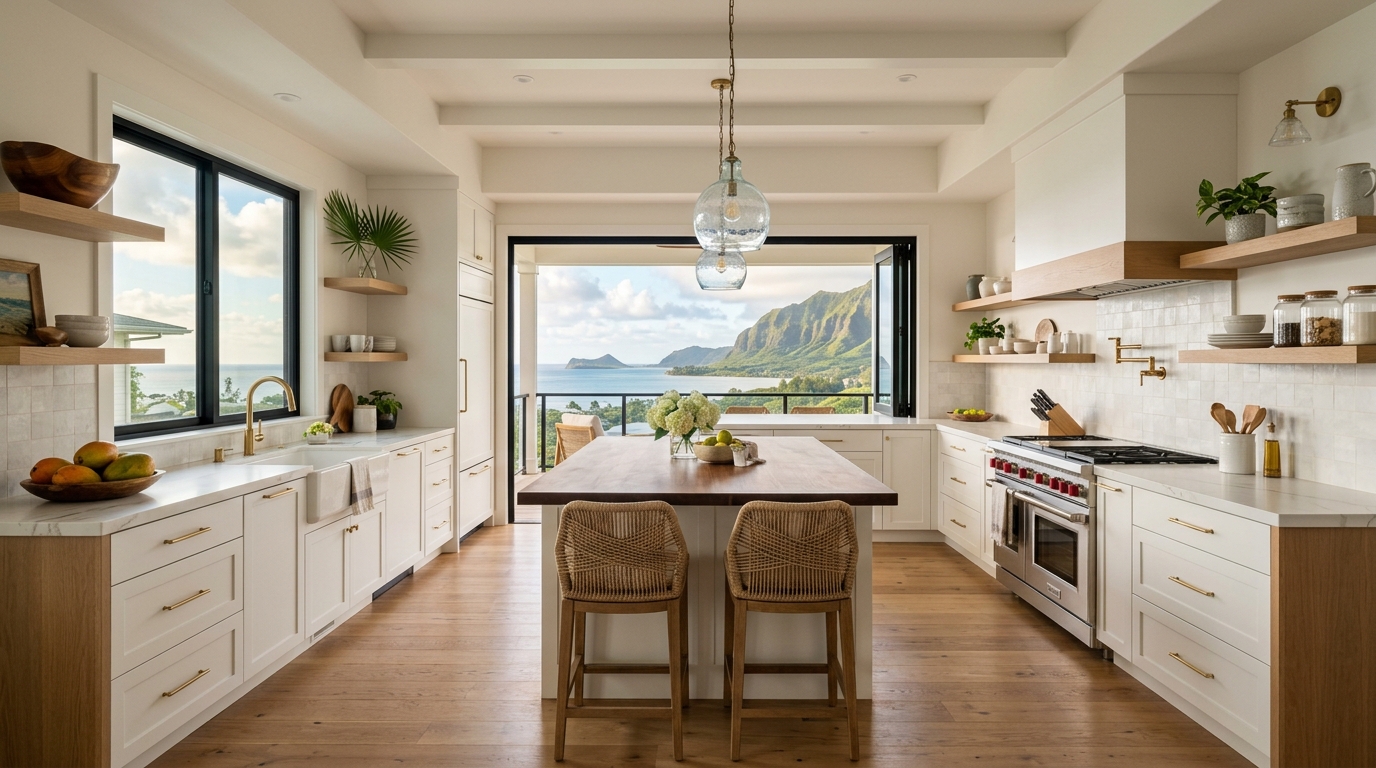
A full kitchen remodel in Kaneohe, done right in 2026, typically costs between $75,000 for a mid-range renovation and can go upwards of $150,000 for a high-end, custom project. The construction phase alone will likely take 10 to 16 weeks, but the entire process from initial design to your final walkthrough often spans 6 to 9 months, largely due to Honolulu’s permitting process and island-specific material lead times. Here’s the thing: remodeling on the Windward side isn’t like doing a project on the mainland, or even in drier parts of O’ahu like Kapolei. The salt air, constant humidity, and frequent rain mean you have to build smarter. At Warrior Construction, we’ve spent over two decades figuring out what works and what doesn’t in our unique environment. This isn’t just about pretty cabinets and countertops; it’s about creating a durable, functional space that will stand up to the elements for years to come. We’re talking about choosing the right materials to prevent rust, designing for airflow to combat moisture, and navigating the specific building codes that keep your home safe during a hurricane. In this guide, our team will walk you through the real costs, timelines, and crucial upgrades we recommend for any homeowner considering a kitchen renovation in Kaneohe.
Why Kaneohe Homeowners Trust Warrior Construction for Kitchen Remodel
When you’re investing a significant amount into your home, you need a partner who understands the ground truth of building on the Windward side. That’s where our team at Warrior Construction comes in. For over 20 years, we’ve been helping Kaneohe families transform their homes, and our approach is built on a deep understanding of local conditions. We’re not a mainland company with a satellite office; we live here, we build here, and our license, BC-34373, represents a long-standing commitment to quality and integrity in Hawaii.
One of the biggest differences is our familiarity with the local housing stock. Many Kaneohe homes, especially in neighborhoods like Ahuimanu or Haiku Village, feature older, single-wall construction. Remodeling these requires a specific expertise. You can’t just tear down a wall without understanding how the entire structure is supported. On a recent project in the Pikoiloa area, we uncovered extensive termite damage hidden behind the original kitchen cabinets—a common issue in older Hawaii homes. Instead of just covering it up, we performed the necessary structural repairs, treated the area, and rebuilt with termite-resistant materials. This is the kind of on-the-ground experience that prevents major headaches down the road. Our knowledge ensures that your kitchen renovation Kaneohe project is not just beautiful, but also structurally sound.
Furthermore, we have a realistic and battle-tested process for dealing with the City and County of Honolulu’s Department of Planning and Permitting (DPP). Navigating the permitting system can be the most frustrating part of a remodel for homeowners. Our team handles the entire process, from submitting the architectural plans to scheduling inspections. We know the specific requirements for electrical, plumbing, and structural changes, and we know how to prepare submissions to minimize back-and-forth with plan reviewers. This experience helps keep projects on track and avoids unnecessary delays that can add weeks, or even months, to a timeline. We build relationships on trust and transparency, ensuring you know what to expect every step of the way.
What Does Kitchen Remodel Cost in Kaneohe?
The most common question we get is, understandably, about the bottom line. For a comprehensive kitchen remodel cost in Kaneohe in 2026, you should budget between $75,000 and $150,000. This range covers a full gut-and-replace project in a standard-sized kitchen (around 200-250 sq. ft.), including design, permits, materials, and labor. If you’re looking for a more cosmetic refresh—refacing cabinets, new countertops, new appliances in the same location—you might be closer to the $40,000 to $60,000 range. For a high-end luxury remodel with custom everything and significant structural changes, costs can easily exceed $200,000.
It’s crucial to understand where that money goes. Building in Hawaii is fundamentally more expensive than on the mainland. Here’s a typical cost breakdown for a mid-range, $110,000 Kaneohe kitchen remodel:
- Design & Permitting: $7,000 – $12,000. This includes architectural drawings and navigating the DPP.
- Cabinetry & Installation: $25,000 – $40,000. This is the biggest variable. Semi-custom cabinets are the most popular choice, offering a balance of quality and cost.
- Appliances: $12,000 – $25,000. The brand and features you choose can swing this number dramatically.
- Countertops (Quartz/Granite): $9,000 – $16,000. Quartz is a favorite for its durability and low maintenance.
- Labor & General Contractor Fee: $25,000 – $35,000. This covers demolition, framing, plumbing, electrical, drywall, painting, and project management. This is the expertise that makes sure everything comes together correctly.
- Plumbing & Electrical: $10,000 – $18,000. If you’re moving the sink, adding an island, or upgrading old wiring, this is a critical investment.
- Flooring (LVP/Tile): $5,000 – $9,000. Luxury Vinyl Plank (LVP) is extremely popular for its durability and water resistance.
- Backsplash, Lighting & Fixtures: $6,000 – $10,000. These are the finishing touches that complete the look.
Why the ‘Hawaii premium’? First, nearly every component—from cabinets to appliances to the specific screws we use—has to be shipped across the Pacific. That adds significant freight cost. Second, our labor pool is skilled but limited, meaning labor rates are higher. Finally, the General Excise Tax (GET) is applied at every stage, from the supplier to the subcontractor to the final bill. We always advise clients to set aside a contingency fund of 10-15% of the total budget. On a recent Kailua project, we opened a wall and found the plumbing vents weren’t up to current code. The contingency fund covered the cost of the plumber to fix it without derailing the entire budget. Planning for the unexpected is just part of building smart in Hawaii.
How Long Does a Kitchen Remodel Take in Kaneohe?
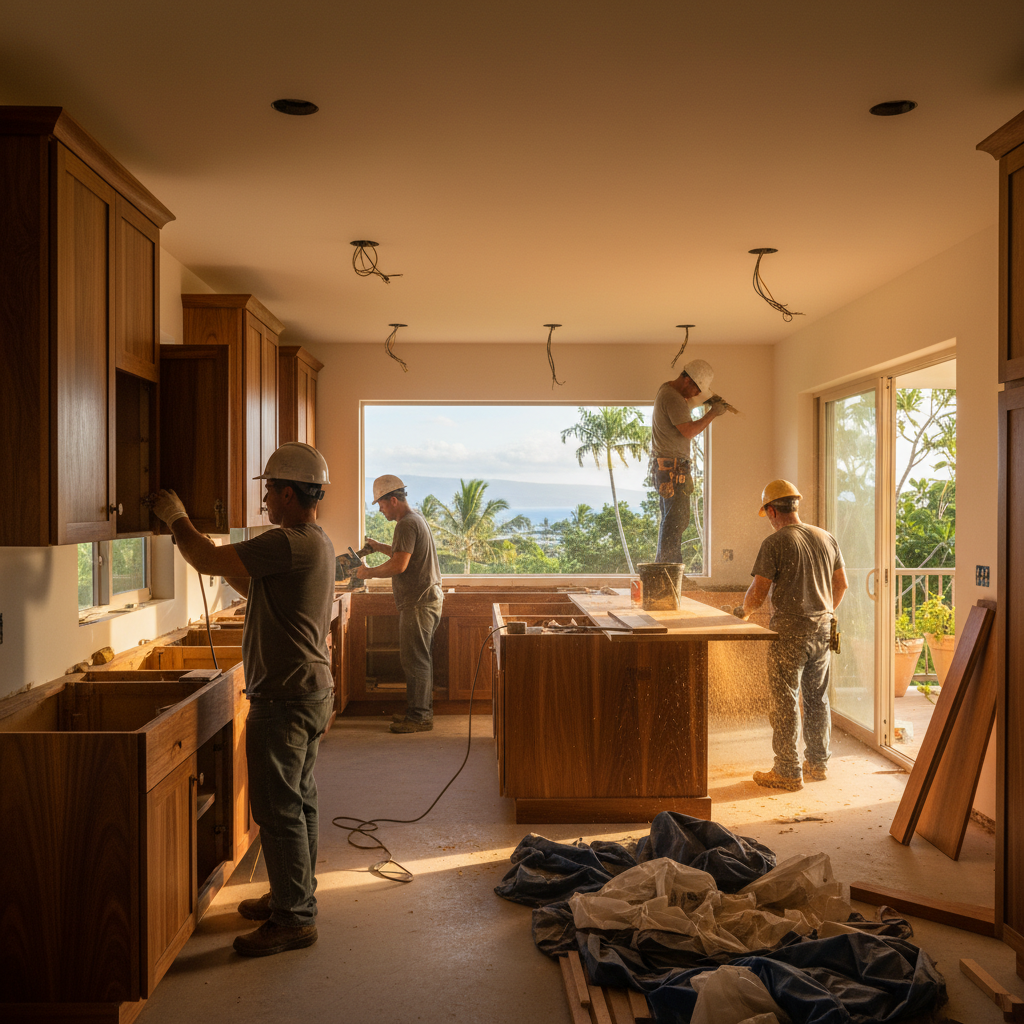
While the actual construction might seem like the longest part, it’s often the pre-construction phase that dictates the total timeline. From our first meeting to you cooking your first meal, a full kitchen remodel in Kaneohe typically takes 6 to 9 months in 2026. The hands-on construction work usually accounts for about 10 to 16 weeks of that period. The rest is planning, ordering, and permitting.
Here’s a realistic step-by-step timeline of what to expect:
- Phase 1: Design and Planning (4-8 weeks): This is where we work with you to define the layout, function, and style of your new kitchen. We create detailed drawings and help you select every material, from the cabinet pulls to the flooring.
- Phase 2: Material Ordering (4-12 weeks): This phase overlaps with permitting. Once selections are made, we order everything. Cabinets can have a 10-12 week lead time. Special-order tile from the mainland or Europe can take just as long. We learned long ago never to start demolition until every single item is on-island and sitting in our warehouse.
- Phase 3: Permitting (12-20 weeks): This is the biggest wild card. Submitting plans to the Honolulu DPP and getting an approved building permit is a lengthy process. Even for a seemingly simple kitchen remodel, the backlog can mean waiting three to five months for that stamp of approval.
- Phase 4: Construction (10-16 weeks):
- Demolition & Site Prep: 1 week
- Structural, Electrical & Plumbing Rough-in: 1-2 weeks
- Rough-in Inspections: 1 week (contingent on inspector availability)
- Insulation, Drywall & Painting: 2 weeks
- Flooring & Cabinet Installation: 1-2 weeks
- Countertop Templating & Fabrication: 2-3 weeks (this happens after cabinets are in)
- Backsplash, Appliance & Fixture Installation: 1-2 weeks
- Final Touches & Punch List: 1 week
- Final Inspections & Project Closeout: 1 week
The biggest mistake we see homeowners make is underestimating these upfront timelines. They see a 30-minute TV show and expect a 4-week turnaround. The reality of island logistics is very different. On a North Shore project, the specific high-end range the client wanted was backordered for five months. Because we had planned for this and ordered it early in the design phase, it arrived just as we were ready for installation, preventing a massive delay. Patience and proper planning are key.
What Permits Do You Need for Kitchen Remodel in Kaneohe?
For almost any substantive kitchen remodel in Kaneohe, you will need a building permit from the City and County of Honolulu Department of Planning and Permitting (DPP)[1]. The rule of thumb is simple: if you are moving or changing anything structural, electrical, or plumbing, you need a permit. This isn’t just bureaucracy; it’s about ensuring the work is done to code and is safe for your family.
You absolutely need a permit if your project involves:
- Moving or removing walls: Even if a wall seems non-load-bearing, a permit is required to ensure it’s done correctly.
- Altering electrical systems: This includes adding new outlets (like for an island), installing new dedicated circuits for appliances, or relocating light switches.
- Changing plumbing lines: Moving a sink, adding a pot filler, or relocating a dishwasher’s supply and drain lines all require a plumbing permit.
- Installing new windows or exterior doors: Any change to the building’s envelope needs to be permitted to verify it meets hurricane code standards.
Conversely, you generally do not need a permit for purely cosmetic updates. These include:
- Painting cabinets or walls.
- Refacing existing cabinets.
- Replacing countertops, as long as the sink and faucet remain in the exact same location.
- Swapping out an old appliance for a new one in the same spot with the same utility connections.
- Replacing flooring.
However, we always recommend caution. It’s better to verify with your contractor or the DPP than to get a stop-work order. As your general contractor, Warrior Construction manages the entire permitting process. We work with our architects and engineers to create permit-ready plans and submit them to the DPP on your behalf. We handle the communication, respond to any questions from the plan reviewers, and schedule all the required on-site inspections. Trying to navigate this process yourself can be incredibly time-consuming and frustrating. Let a professional handle it so you can focus on the exciting parts of your kitchen renovation.
Kaneohe-Specific Considerations: Climate, Materials, Regulations
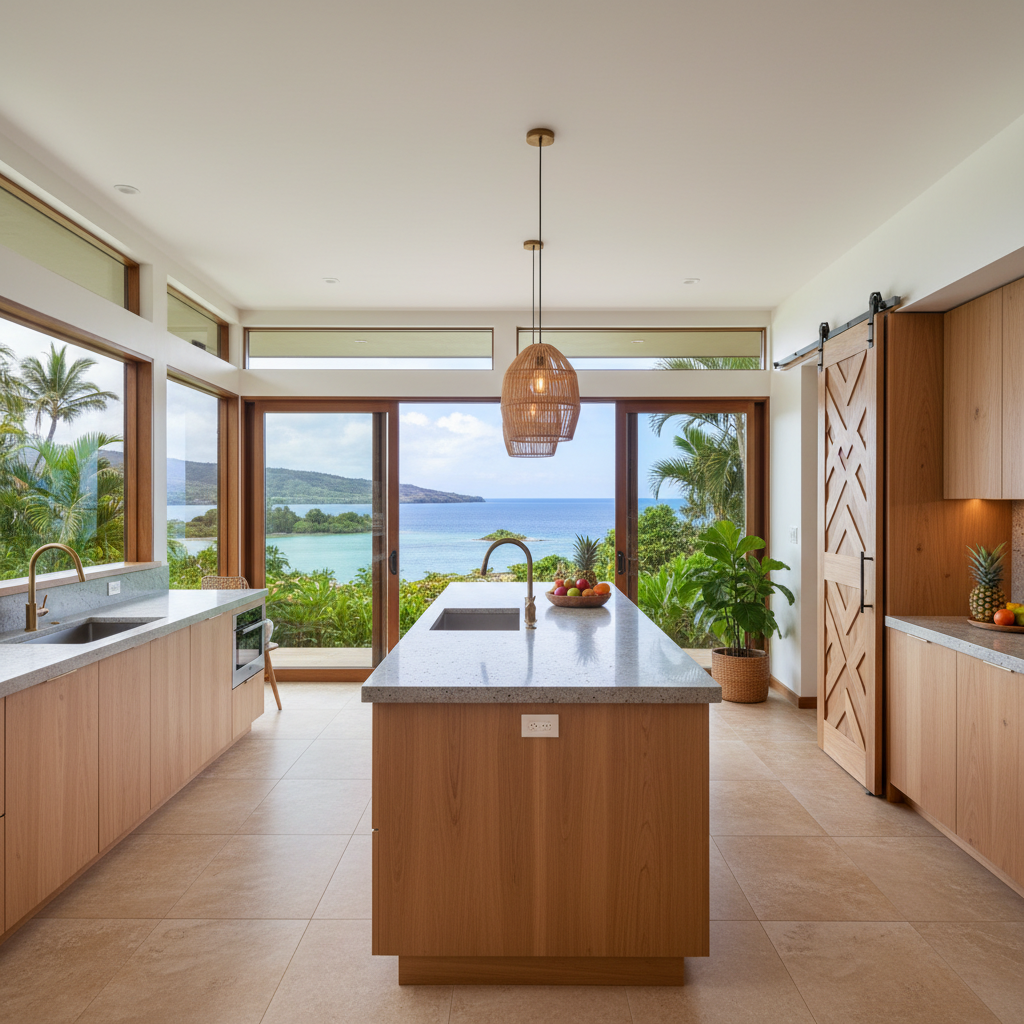
Remodeling a kitchen in Kaneohe requires a different playbook than anywhere else. The unique Windward O’ahu climate—a beautiful mix of sunshine, frequent rain, and salt-laden air—is tough on building materials. If your contractor doesn’t account for this, your beautiful new kitchen could show signs of premature aging in just a few years.
1. Combatting Salt-Air Corrosion
The air in Kaneohe is corrosive. It attacks metal relentlessly. We see it all the time: cheap cabinet hinges and drawer slides covered in rust after three years, window frames pitting, and stainless steel appliances showing rust spots. To prevent this, we insist on using materials designed for coastal environments. This means:
- Hardware: Opt for high-quality stainless steel (316 grade is ideal), solid brass, or hardware with a PVD (Physical Vapor Deposition) finish. It costs more upfront but saves you from replacing it later.
- Windows & Doors: Vinyl or fiberglass frames are far superior to aluminum in coastal areas, as they don’t corrode. If using aluminum, it must have a high-performance, salt-resistant finish.
- Appliances: Even stainless steel can rust. Look for appliances with a protective coating and wipe them down regularly with fresh water to remove salt deposits.
2. Managing Humidity and Moisture
Humidity is a constant battle. It can lead to mold, mildew, and warped materials. A Kaneohe kitchen must be designed to breathe.
- Ventilation: A powerful range hood that vents directly *outside* is non-negotiable. Recirculating hoods do very little to remove moisture. We also design for good cross-ventilation with operable windows.
- Cabinet Materials: We strongly advise against MDF (medium-density fiberboard) for cabinet boxes. It acts like a sponge in humid environments and will swell and delaminate over time. Marine-grade plywood or solid wood are far more durable choices.
- Drywall: Using mold- and moisture-resistant drywall (often called ‘green board’ or ‘purple board’) in the kitchen is a smart, low-cost upgrade.
3. Building for Hurricanes and Heavy Rain
As we all know, hurricane season is a real threat, and Kaneohe gets more than its fair share of rain year-round.
- Hurricane Code: Any new construction, including window replacements or additions, must comply with the latest hurricane-resistant building codes. This involves specific connectors, like hurricane straps, to tie the roof structure to the walls, and ensuring windows are impact-rated or have approved shutters.
- Waterproofing: Proper flashing around windows and doors is absolutely critical. We often see water damage in older homes where this was done poorly. A properly waterproofed building envelope is the first line of defense against water intrusion and the costly repairs that follow.
How to Choose the Right Kitchen Remodel Contractor in Kaneohe
Choosing your kitchen contractor in Kaneohe is the single most important decision you’ll make in this process. The right contractor can make the experience smooth and deliver a high-quality result, while the wrong one can turn your dream project into a nightmare. The best way to vet a potential partner is to verify their credentials, look closely at their work, and ensure they communicate clearly.
Here is our recommended checklist for hiring a contractor on O’ahu:
- Verify Their License and Insurance. This is non-negotiable. Use the Hawaii Department of Commerce and Consumer Affairs (DCCA) Professional & Vocational Licensing (PVL) search tool[2] to confirm their license is active and in good standing. Our license is Warrior Construction, BC-34373. Ask for proof of general liability insurance and worker’s compensation insurance. Without these, you could be held liable for accidents on your property.
- Review Their Portfolio of Local Work. Don’t just look at pretty pictures. Ask to see examples of projects they’ve completed *in Kaneohe or nearby Windward communities like Kailua*. A contractor based in Ewa Beach might do great work, but they may not have the same firsthand experience with the corrosion and moisture challenges we face here. Look for projects similar in scope and style to what you envision. You can see some of our completed projects in our portfolio.
- Speak with Recent References. A good contractor will be happy to provide you with a list of past clients. Call them. Ask about their experience. Were they happy with the communication? Did the project stay on budget and on schedule? How did the contractor handle problems when they arose? (Because problems *always* arise).
- Get a Detailed, Itemized Bid. A bid written on the back of a business card is a major red flag. A professional proposal should be several pages long and break down the costs for labor, materials, permits, and subcontractor work. It should specify allowances for items you’ll select, like appliances and tile, so you can see how your choices affect the budget.
- Assess Their Communication and Professionalism. From the very first phone call, pay attention to how they interact with you. Do they listen to your ideas? Do they explain things clearly and patiently? Do they show up on time for appointments? Remember, you’ll be working closely with this person and their team for months. You need a partner you can trust and communicate with effectively.
A good general contractor does more than just swing a hammer. They are your project manager, your advocate with the city, and your guide through a complex process. Taking the time to find the right one is an investment that will pay for itself many times over.
Real Kaneohe Kitchen Remodel Project Example
To make this all more concrete, let’s walk through a project we recently completed in the Haiku Plantation neighborhood of Kaneohe. It’s a great example of a typical transformation for a 1980s-era home.
The Homeowner’s Problem: The clients, a family with two teenagers, had a kitchen that was original to the house. It was dark, with heavy wood cabinets, laminate countertops, and a peninsula that chopped the room in half, isolating the cook from the rest of the family in the living room. The layout was inefficient, storage was lacking, and the fluorescent box lighting made the space feel dated and unwelcoming.
Our Design-Build Solution: Our team at Warrior Construction approached this as a design-build project. This means we handled everything from the initial architectural design to the final coat of paint, creating a seamless process for the homeowner.
- Opening the Space: The first and most impactful change was removing the non-load-bearing wall between the kitchen and the dining area. This instantly created an open-concept great room and brought in much-needed natural light from the dining room windows.
- Creating a Functional Hub: We replaced the awkward peninsula with a large 10-foot island. We equipped it with a deep sink, a dishwasher, and seating for four. This became the new heart of the home, a place for homework, casual meals, and conversation. The countertops were a durable, light-colored quartz to brighten the space and stand up to heavy use.
- Maximizing Storage and Durability: We installed floor-to-ceiling pantry cabinets along one wall, dramatically increasing their storage. The cabinets were semi-custom Shaker-style, made from solid wood frames and marine-grade plywood boxes to combat the Kaneohe humidity. All hinges and drawer slides were high-grade stainless steel.
- Upgrading the Infrastructure: We replaced the old, flickering fluorescent light with a modern lighting plan, including 12 recessed LED can lights, under-cabinet task lighting, and two beautiful pendant lights over the island. We also added several new electrical outlets, including a convenient pop-up outlet in the island.
The Results by the Numbers:
- Total Project Cost: Approximately $125,000 in 2026.
- Project Duration: 8 months from initial consultation to final inspection. This included 4 months for permitting with the DPP and 16 weeks of active construction.
- Key Materials: KraftMaid semi-custom cabinets, Caesarstone quartz countertops, Lifeproof luxury vinyl plank flooring, and a full suite of Bosch appliances.
- Outcome: The family now has a bright, open, and highly functional kitchen that seamlessly connects to their living space. It’s a room that fits their modern lifestyle and is built with materials designed to last in the challenging Windward climate.
Frequently Asked Questions About Kitchen Remodel in Kaneohe
How much value does a kitchen remodel add to a home in Kaneohe?
In the 2026 Kaneohe real estate market, you can typically expect to recoup 60-75% of your investment on a mid-range kitchen remodel in terms of increased home value. However, the real return is in your quality of life. A functional, beautiful kitchen transforms how you use and enjoy your home every single day, which is a value you can’t put a price on.
Can I live in my home during a full kitchen remodel?
While it’s technically possible, we strongly advise against it if you can make other arrangements. A full remodel is dusty, noisy, and disruptive. You’ll be without a sink, stove, or countertops for weeks. Most of our clients set up a temporary kitchen in the garage or on the lanai with a microwave, a hot plate, and a mini-fridge to get by during the construction phase.
What are the best countertop materials for Kaneohe’s climate?
Engineered quartz is our top recommendation for Kaneohe kitchens. It’s non-porous, so it resists staining and doesn’t harbor bacteria in our humid climate. It’s also incredibly durable and requires no sealing. Natural stones like granite are also a great choice, but they do require annual sealing to protect against stains and moisture.
Do I need to hire a separate architect for my kitchen remodel?
If your remodel involves moving load-bearing walls or significantly altering your home’s structure, you will need plans stamped by a licensed architect or engineer. At Warrior Construction, we offer full design-build services, which means we have architects and designers on our team. This streamlines the process, as your design and construction teams work together from day one, which saves time and money.
How can I save money on my Kaneohe kitchen remodel?
The best way to control costs is to keep your existing layout. Moving plumbing and electrical lines is a major expense. You can also save by choosing semi-custom cabinets instead of fully custom ones, selecting more affordable (but still durable) materials like luxury vinyl plank flooring over tile, and opting for a curated selection of mid-range appliances rather than top-of-the-line models.
What is the biggest unexpected cost you see in Kaneohe kitchen remodels?
The most common surprises we find are hidden termite damage, old and unsafe wiring that needs to be brought up to code, or plumbing that isn’t properly vented. This is especially true in older single-wall homes. That’s why we stress the importance of having a 10-15% contingency fund in your budget. It’s there to cover these unforeseen but necessary repairs.
Are all-white kitchens a good choice for Hawaii?
Absolutely. White kitchens are timeless, and they do a fantastic job of reflecting Hawaii’s beautiful natural light, making spaces feel larger and brighter. The key is to choose high-quality materials. Opt for a durable, easy-to-clean cabinet finish like a factory-baked enamel and a non-porous countertop like quartz to keep your white kitchen looking fresh and clean for years to come.
What this means for Hawaii homeowners
Embarking on a kitchen remodel in Kaneohe is a major undertaking, but it’s also one of the most rewarding investments you can make in your home. The key to success is approaching it with a realistic understanding of the unique challenges and opportunities of building on the Windward side of O’ahu. Don’t let mainland TV shows or big-box store advertisements set your expectations for cost or timeline.
Here are the crucial takeaways for your planning process:
- Budget Realistically: Acknowledge the higher costs of materials and labor in Hawaii. A quality kitchen remodel is a significant investment, and cutting corners on materials to save a few dollars now will cost you more in repairs and replacements down the road due to our corrosive climate. Always include a 15% contingency fund.
- Plan for the Wait: The longest part of your project will likely be the months you spend waiting for permits and materials. Embrace this as part of the process. A good contractor will order everything well in advance to minimize construction delays. Patience is not just a virtue; it’s a necessity.
- Prioritize Climate-Resistant Materials: Your number one priority should be selecting materials that can withstand salt air and humidity. This means marine-grade plywood cabinets, stainless steel hardware, vinyl windows, and powerful, externally vented range hoods. Your kitchen’s longevity depends on it.
- Hire a Licensed, Local Expert: Your contractor’s local experience is invaluable. Choose a licensed general contractor with a deep portfolio of work on the Windward side. They will know how to navigate the DPP, anticipate common issues in local homes, and have a network of reliable subcontractors.
By keeping these points in mind, you can navigate your kitchen renovation with confidence, ensuring the final result is not only beautiful but also a durable and wise investment for your family’s future in Hawaii.
Ready to Transform Your Kaneohe Kitchen?
A new kitchen is more than just a renovation; it’s a new center for your family’s life. If you’re ready to start the conversation about your kitchen remodel, our team at Warrior Construction is here to help. With decades of experience on O’ahu, we bring the expertise, craftsmanship, and local knowledge to bring your vision to life—the right way.
Let’s talk about your project. Reach out to us for a no-obligation consultation and start planning the kitchen your home deserves. Visit our Kitchen Remodeling services page to learn more or request your free estimate today.