“
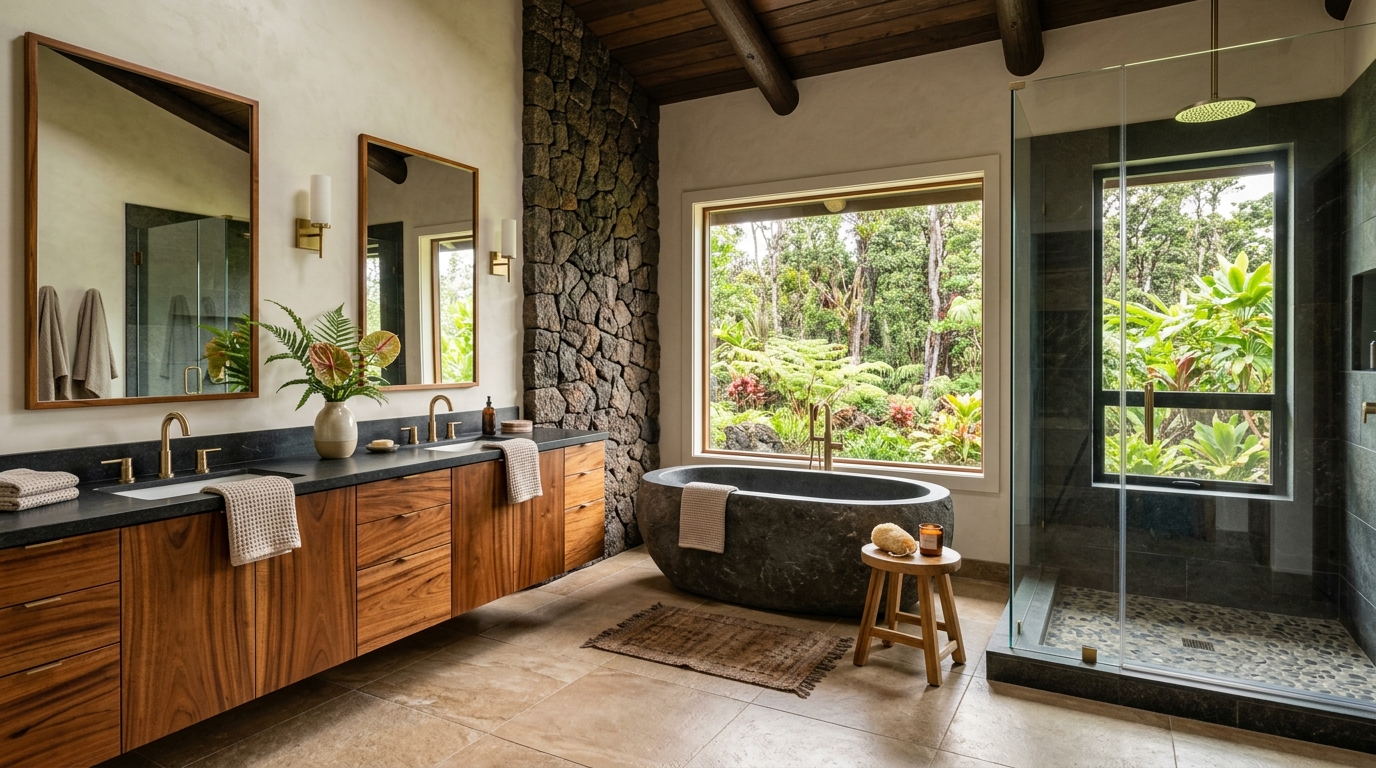
A full bathroom remodel in Volcano, Hawai’i, will cost between $25,000 for a simple pull-and-replace and upwards of $80,000 for a high-end, custom master suite in 2026. The key drivers of this cost are the island’s unique logistical challenges, the need for moisture-resistant materials suited for the cool, damp climate, and the high demand for skilled labor on the Big Island. Unlike a simple renovation in a dry climate like Kapolei, a Volcano project demands a deeper understanding of waterproofing, ventilation, and material science to prevent the mold and mildew issues that are so common at higher elevations.
\n\n
At Warrior Construction, we’ve spent more than two decades navigating these specific challenges across the islands. A successful Volcano bathroom renovation isn’t just about pretty tile and new fixtures; it’s about building a space that will stand up to the rainforest environment for decades to come. This means focusing on what’s behind the walls just as much as what you see. We’re talking about commercial-grade waterproofing membranes, high-CFM ventilation fans, and even heated floors to combat the persistent dampness. This guide will walk you through the real costs, timelines, and critical considerations for your project, based on our team’s hands-on experience building and remodeling homes on Hawai’i Island.
\n\n
Here are the nine key solutions we’ll cover for your Volcano bathroom project:
\n
- \n
- Understanding the true, all-in cost breakdown for 2026.
- Setting a realistic timeline that accounts for neighbor island shipping.
- Navigating the Hawai’i County permitting process without delays.
- Choosing materials that fight mold and moisture.
- Integrating heating solutions for Volcano’s cooler climate.
- Properly sizing ventilation to keep the space dry.
- Vetting and hiring a qualified, licensed general contractor.
- Learning from a real-world Volcano remodel case study.
- Planning for water catchment systems and other off-grid factors.
\n
\n
\n
\n
\n
\n
\n
\n
\n
\n\n\n
Why Volcano Homeowners Trust Warrior Construction for Bathroom Remodel
\n
Choosing a contractor for a bathroom remodel in Volcano is different from hiring someone in Honolulu. Here, experience with high-altitude, high-moisture environments isn’t a bonus—it’s a necessity. For over 20 years, Warrior Construction has been on the ground, working with the specific conditions the Big Island presents. Our license, BC-34373, is more than a number; it represents two decades of projects completed to code, on time, and built to last in Hawaii’s demanding climates, from the salt-laden air of Kailua to the cool, misty slopes of Kīlauea.
\n\n
What sets our team apart is our obsessive focus on the building envelope and moisture management. We’ve seen too many remodels, done by less experienced crews, fail within five years because they didn’t account for Volcano’s unique environment. For example, on a recent project near the Volcano Golf Course, the homeowner had a bathroom redone just a few years prior. The tile looked fine, but behind the wall, the green board was completely saturated and covered in mold. The previous contractor didn’t use a waterproof membrane behind the cement board, a shortcut that ultimately requires a full tear-out. Our approach is different. We build as if every wall is an exterior wall, using systems like the Schluter-KERDI waterproofing membrane on every shower and tub surround we build. It’s a non-negotiable part of our process.
\n\n
Furthermore, we understand the logistics of building on a neighbor island. We have established relationships with suppliers in both Hilo and Kona, and we have the systems in place to manage the complexities of shipping materials from the mainland or Oahu. This means we can give you a realistic schedule and budget that already accounts for potential shipping delays or inventory shortages. A mainland contractor might quote a 4-week timeline, not realizing that the specific vanity or tile you want has a 10-week lead time to get to Hilo, plus another week for delivery up the mountain. We build these realities into our preconstruction planning from day one, so there are no surprises. Our commitment is to transparent communication and meticulous planning, ensuring your bathroom renovation is a smooth, predictable process from start to finish.
\n\n
What Does Bathroom Remodel Cost in Volcano?
\n
In 2026, the average cost for a comprehensive bathroom remodel in the Volcano area ranges from $350 to over $600 per square foot, once all materials, labor, permits, and taxes are factored in. For a standard 5’x8′ (40 sq ft) guest bathroom, this puts the price between $25,000 and $40,000. A larger master bathroom (100-150 sq ft) involving layout changes, high-end fixtures, and custom tilework can easily exceed $75,000. These figures are often 15-25% higher than a similar project on Oahu due to inter-island freight costs and labor availability.
\n\n
Let’s break down where that money goes. It’s a mistake to just look at the cost of a new vanity or a pallet of tile. The majority of the budget is consumed by skilled labor and the materials you don’t see—the things that make a bathroom last in a damp climate. On a recent master bath project in Volcano Village, the plumbing and electrical work alone accounted for nearly 20% of the total budget. This involved rerouting drain lines through volcanic rock below the slab and adding dedicated circuits for a heated floor system and a high-power exhaust fan—all critical for comfort and longevity in that environment.
\n\n
Here’s a sample budget breakdown for a mid-range, $55,000 Volcano master bathroom remodel (approx. 120 sq ft):
\n\n
- \n
- Design & Permitting: $3,500 – $5,000
- Demolition & Disposal: $2,500
- Framing & Structural Changes: $4,000
- Plumbing (Labor & Rough-in Materials): $6,500
- Electrical (Labor & Rough-in Materials): $5,000
- Insulation & Mold-Resistant Drywall: $3,000
- Waterproofing (e.g., Schluter System): $2,500
- Tile (Material & Installation): $8,000
- Vanity & Countertops: $6,000 (includes shipping)
- Fixtures (Faucet, Shower Head, Toilet): $3,500
- Ventilation Fan & Radiant Floor Heating: $4,500
- Painting & Finishing: $2,000
- General Contractor Fee (Overhead & Profit): $8,250 (15%)
\n
\n
\n
\n
\n
\n
\n
\n
\n
\n
\n
\n
\n
\n\n
The biggest variables are your choice of finishes and whether you change the layout. Keeping the toilet, shower, and sink in their original locations will save you thousands in plumbing and electrical costs. Conversely, opting for a custom-built koa wood vanity, natural stone tile, and a curbless walk-in shower will push your costs toward the higher end of the spectrum. When our team at Warrior Construction provides an estimate, it’s a line-item proposal, so you can see exactly where every dollar is going and make informed decisions about where to invest and where to save.
\n\n
How Long Does a Bathroom Remodel Take in Volcano?
\n
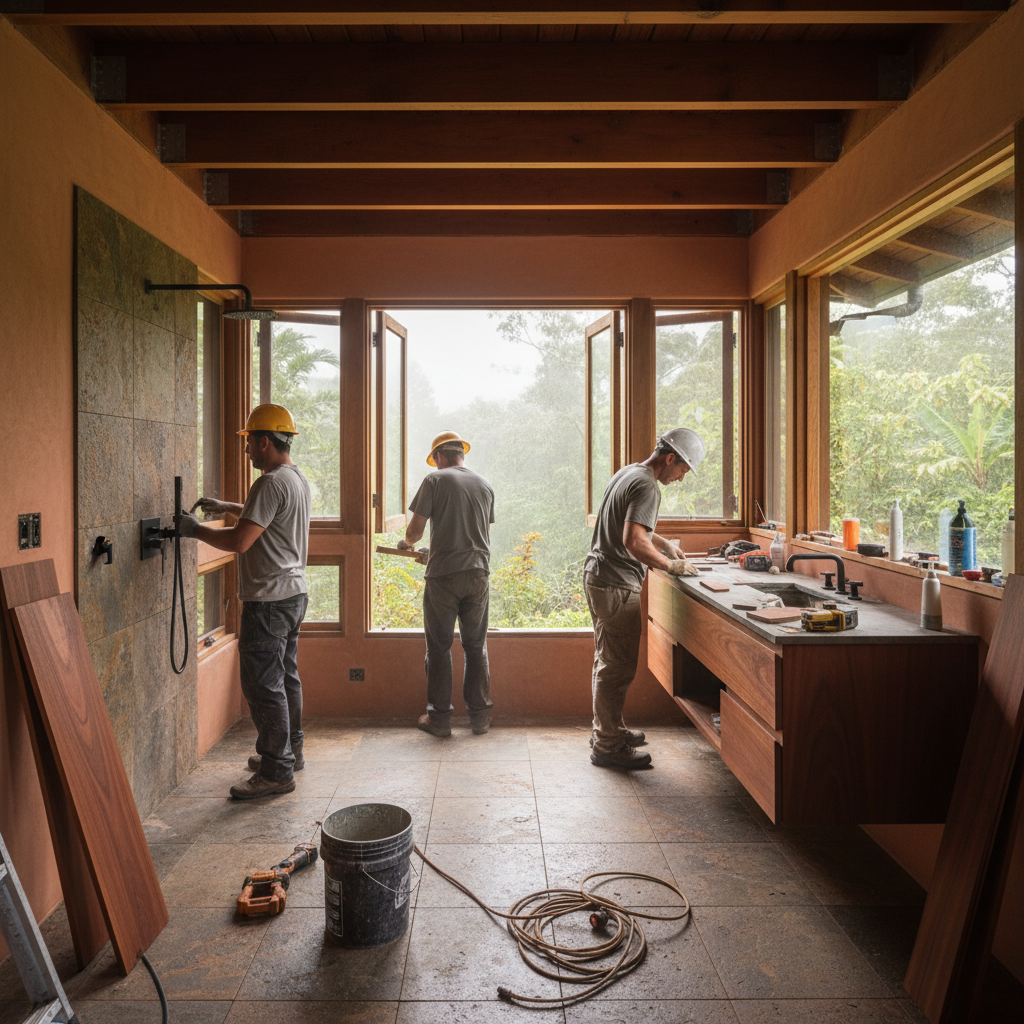
For a bathroom remodel in Volcano, a realistic timeline from the day you sign a contract to completion is typically between 14 and 26 weeks in 2026. Mainland home improvement shows that suggest a bathroom can be done in a week are completely misleading for Hawaii, and especially for a neighbor island location like Volcano. The biggest factor that extends the timeline here is not the construction itself, but the ‘pre-construction’ phase: design, selections, permitting, and material procurement.
\n\n
The construction phase for a standard bathroom gut and remodel might only take 4 to 6 weeks. However, you can’t start swinging hammers until every single material is on-site. We learned this lesson the hard way years ago on a project in Maui. We started demolition before the custom vanity arrived. The vanity was then delayed two months due to a shipping container backlog in Long Beach. The entire project stalled, frustrating the homeowner and tying up our crew. Now, it’s our firm policy: we don’t begin demolition until the tile, tub, vanity, fixtures, and all other finish materials are physically in our possession on the Big Island. This avoids costly and frustrating delays mid-project.
\n\n
Here is a typical project schedule for a Volcano bathroom renovation:
\n
- \n
- Phase 1: Pre-Construction (8-14 weeks)\n
- \n
- Week 1-2: Finalize design, scope of work, and sign construction agreement.
- Week 2-4: Finalize all material and fixture selections. This can take longer if you’re undecided.
- Week 4-12: Order all materials. Lead times for tile, custom vanities, and special-order fixtures can be 6-10 weeks to reach the Port of Hilo.
- Week 4-10: Submit plans to Hawai’i County for permit review. The review process itself can take 4-6 weeks or more.
- Week 12-14: Materials arrive in Hilo and are delivered to the job site. We inspect everything for damage upon arrival.
\n
\n
\n
\n
\n
\n
- Phase 2: Construction (4-8 weeks)\n
- \n
- Week 15: Site prep, dust protection, and demolition.
- Week 16: Rough-in plumbing, electrical, and any framing changes. This is followed by the rough-in inspections.
- Week 17: Insulation, drywall, and waterproofing installation.
- Week 18-19: Tile installation, grouting, and sealing.
- Week 20: Installation of vanity, countertops, and major fixtures (tub, toilet).
- Week 21: Finish plumbing and electrical (installing faucets, lights), painting.
- Week 22: Final details, cleanup, and final inspection.
\n
\n
\n
\n
\n
\n
\n
\n
\n
\n
\n
The key takeaway is to be patient and plan far in advance. If you want your new bathroom ready for the holidays, you should be signing a contract with a general contractor in May or June, not in October. Proper planning is what makes a Volcano remodeling project successful.
\n\n
What Permits Do You Need for Bathroom Remodel in Volcano?
\n
For any significant bathroom remodel in Volcano, you will almost certainly need a building permit from the Hawai’i County Department of Public Works. Homeowners sometimes think that because it’s an interior project, they can skip the permitting process. This is a risky mistake that can lead to fines, stop-work orders, and major problems when you eventually sell your home. As a licensed general contractor (BC-34373), we handle the entire permitting process for our clients to ensure everything is done correctly and to code.
\n\n
So, what triggers the need for a permit? Generally, you need a permit if you are:
\n
- \n
- Moving or removing any walls, even if they are not load-bearing.
- Changing the existing layout of plumbing fixtures (e.g., moving a toilet or shower).
- Altering electrical circuits (e.g., adding new outlets, lights, or a heated floor system).
- Modifying the ventilation system, such as installing a new exhaust fan where one didn’t exist.
\n
\n
\n
\n
\n\n
Cosmetic updates, often called ‘pull-and-replace’ remodels—where you replace a toilet, vanity, and faucet in their exact same locations without altering the plumbing or electrical in the walls—typically do not require a permit. However, most projects that homeowners invest significant money into go beyond simple cosmetic changes. For instance, a popular request is converting an old bathtub into a modern, curbless walk-in shower. This always requires a permit because it involves reconfiguring the drain line and waterproofing the entire shower area to new standards.
\n\n
The permitting process on the Big Island involves submitting architectural plans and sometimes structural or mechanical drawings for review. The county plan reviewers check the designs against the latest building codes, ensuring everything from the size of the drainpipes to the GFCI protection on the outlets is compliant. While the county’s official website provides forms and basic information, the process can be tricky to navigate. It’s not uncommon for plans to be returned with requests for more information, which can add weeks to the timeline. This is a key area where hiring an experienced local contractor provides significant value. We know what the plan reviewers are looking for and can prepare a complete and accurate submission package from the start, minimizing delays and getting your project approved faster.
\n\n
Volcano-Specific Considerations: Climate, Materials, Regulations
\n
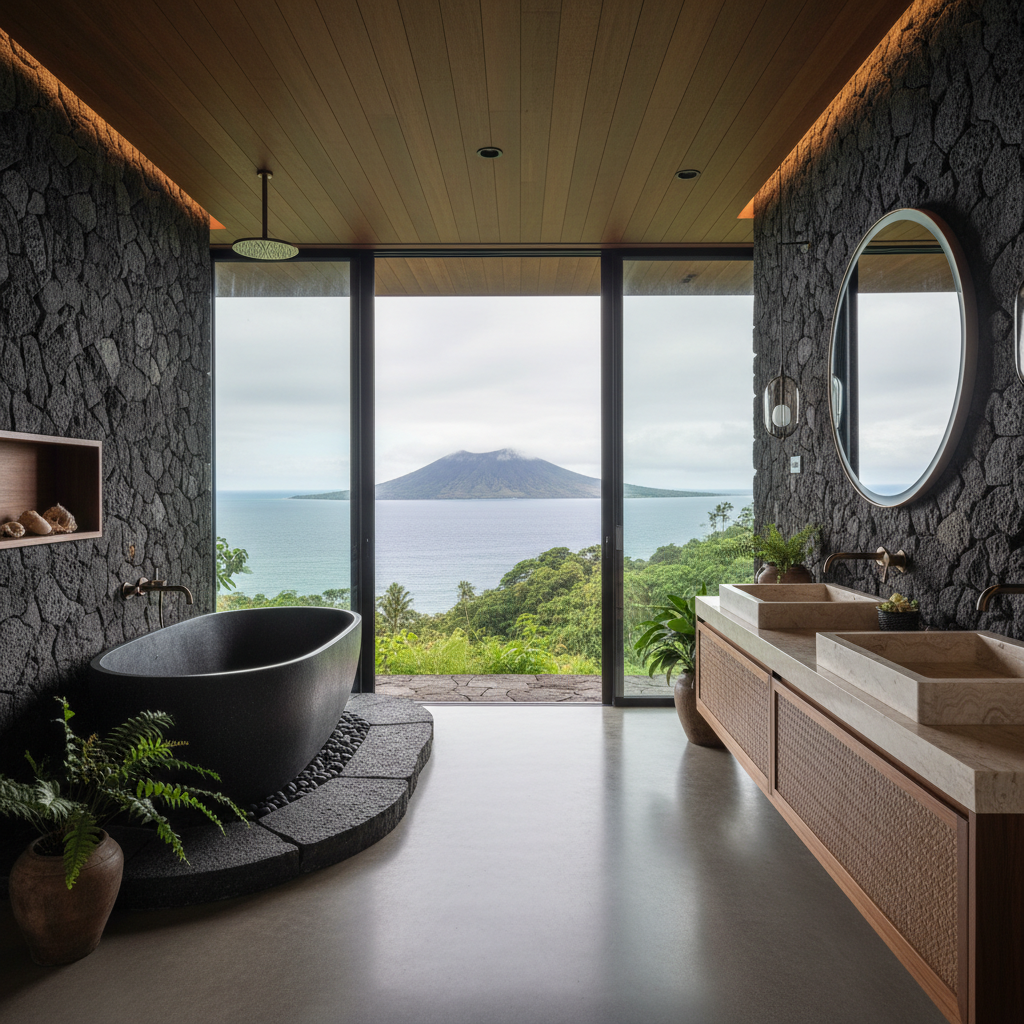
Remodeling a bathroom in Volcano is unlike anywhere else in Hawaii. You’re essentially building in a cool, temperate rainforest at 4,000 feet of elevation. The strategies and materials that work for a beachfront home in Kailua-Kona will fail miserably here. At Warrior Construction, we tailor every aspect of a Volcano bathroom remodel to these unique conditions.
\n\n
1. Aggressive Moisture and Mold Control
\n
This is the number one priority. The air in Volcano is persistently damp. To combat this, we implement a multi-layered approach:
\n
- \n
- High-Performance Waterproofing: We go beyond standard cement board. Our standard practice is to use a topical sheet membrane like Schluter-KERDI over the backer board in all wet areas. This creates a completely sealed, waterproof, and vapor-proof barrier directly behind the tile, preventing any moisture from reaching the wall cavity.
- Mold-Resistant Drywall: In the rest of the bathroom, we use purple or green board, which has been treated to resist mold and mildew growth. It’s a small upgrade in cost for a huge gain in long-term durability.
- Powerful Ventilation: A basic, noisy 50 CFM fan won’t cut it. We specify quiet, powerful fans rated at 110 CFM or higher, and always vent them directly to the exterior, never into the attic or crawlspace. We also recommend pairing them with a humidistat switch that automatically turns the fan on when moisture levels rise.
\n
\n
\n
\n\n
2. Material Selection for a Damp, Cool Climate
\n
Materials must be chosen for their resistance to moisture and their ability to add warmth.
\n
- \n
- Flooring: Porcelain tile is an excellent choice as it’s non-porous and easy to clean. We strongly recommend pairing it with an electric radiant floor heating system. This isn’t a luxury in Volcano; it’s a practical way to keep the room dry and comfortable on chilly mornings.
- Vanities and Cabinetry: We advise against solid wood vanities unless they are exceptionally well-sealed. A better option is often high-quality plywood construction with a durable factory finish or vanities made from composite materials that are impervious to moisture.
- Fixtures and Hardware: Look for fixtures with a PVD (Physical Vapor Deposition) finish. This is a modern, highly durable finish that resists tarnishing and water spots far better than standard chrome or brushed nickel.
\n
\n
\n
\n\n
3. Working with Water Catchment Systems
\n
Many homes in Volcano are on rainwater catchment systems. This has implications for a bathroom remodel:
\n
- \n
- Water Pressure: The water pressure from a catchment system is often lower than from a municipal supply. We need to select shower heads and faucets that are designed to perform well at lower pressures.
- Filtration: We always ensure that the plumbing design incorporates proper sediment and UV filtration systems post-pump to deliver clean, safe water to the new fixtures.
- Water Conservation: High-efficiency toilets and low-flow fixtures are not just environmentally friendly; they are a practical necessity to conserve your stored water supply.
\n
\n
\n
\n
Building in Volcano requires a contractor to think like a building scientist, not just a carpenter. Every decision, from the type of insulation in the walls to the sealant used around the windows, must be made with the constant presence of moisture in mind. This meticulous, climate-specific approach is fundamental to how we build and renovate homes on the Big Island.
\n\n
How to Choose the Right Bathroom Remodel Contractor in Volcano
\n
Finding the right bathroom contractor in Volcano is the single most important decision you’ll make for your project. A great contractor can make the process smooth and deliver a beautiful, lasting result, while a bad one can turn your dream remodel into a nightmare of delays, cost overruns, and shoddy workmanship. Here’s our insider guide to vetting contractors on the Big Island.
\n\n
Step 1: Verify They Are Licensed and Insured
\n
This is non-negotiable. Never hire a contractor who is not licensed by the State of Hawaii. You can and should verify any contractor’s license status on the Department of Commerce and Consumer Affairs (DCCA) Professional & Vocational Licensing (PVL) website.[1] Our license, Warrior Construction BC-34373, is always in good standing. A valid license means the contractor has met state requirements for experience and testing. Additionally, ask for proof of general liability insurance and workers’ compensation insurance. If an uninsured worker gets hurt on your property, you could be held liable.
\n\n
Step 2: Look for Specific Big Island Experience
\n
Don’t just ask if they’ve done bathrooms before. Ask if they’ve done bathrooms *in Volcano* or similar high-moisture, neighbor island environments. Ask them specific questions about their approach:
\n
- \n
- \”How do you waterproof your showers? What specific products do you use?\” (Look for answers that mention liquid-applied membranes or sheet membranes like Kerdi, not just ‘cement board’).
- \”How do you manage material procurement and shipping to the Big Island?\” (They should have a clear process for ordering, tracking, and inspecting materials).
- \”Can you show me photos of a completed project in a climate similar to Volcano?\” (A portfolio of Honolulu beachfront condos isn’t relevant). See our portfolio for examples of our diverse work.
\n
\n
\n
\n\n
Step 3: Get a Detailed, Itemized Proposal
\n
Beware of contractors who give you a single, lump-sum price on the back of a napkin. A professional contractor will provide a detailed proposal that breaks down the costs for labor, materials, permits, and subcontractors. This transparency is crucial for several reasons. First, it allows you to compare bids on an apples-to-apples basis. Second, it forms the basis of your contract and helps prevent misunderstandings about what is and isn’t included. Third, it allows you to make informed decisions. If the budget is tight, you can look at the line items and decide, for example, to choose a less expensive tile to afford the radiant floor heating you really want.
\n\n
Step 4: Check References and Communication Style
\n
Talk to their past clients. Ask about their experience. Were they happy with the final result? But more importantly, ask about the process. Was the contractor a good communicator? Did they keep the job site clean? Did they stick to the schedule and budget? A remodel is an invasive process, and you’ll be interacting with this team for months. Make sure their communication style is a good fit for you. At Warrior Construction, we assign a dedicated project manager to each job who provides regular updates and is your single point of contact, ensuring you’re always in the loop.
\n\n
Real Volcano Bathroom Remodel Project Example
\n
To make this all more concrete, let’s walk through a project our team recently completed in Volcano’s Mauna Loa Estates subdivision. The homeowners, a retired couple from the mainland, had a master bathroom that was original to their 1988 home. It was dark, cramped, and had a persistent musty smell they couldn’t get rid of. Their goal was to create a brighter, safer, and more spa-like retreat that would be easy to use as they aged.
\n\n
The Problems:
\n
- \n
- A large, unused jacuzzi tub was taking up a third of the room.
- The shower was a tiny, 32×32-inch fiberglass stall with a moldy curtain.
- Ventilation was a single, noisy, and ineffective ceiling fan.
- There was visible mildew along the baseboards and behind the toilet.
- The flooring was cold, cracked ceramic tile.
\n
\n
\n
\n
\n
\n\n
The Warrior Construction Solution: A 9-Point Plan
\n
- \n
- Layout Reconfiguration: We started by getting a permit to remove the massive tub. This opened up the entire space, allowing us to create a large, 6-foot by 4-foot curbless, walk-in shower.
- Aging-in-Place Features: The new shower design included a comfortable built-in bench, stylish grab bars that double as towel holders, and a handheld shower wand in addition to the main rain shower head. The curbless entry eliminates tripping hazards.
- Waterproofing Excellence: We gutted the room to the studs and installed the full Schluter-KERDI waterproofing system throughout the entire shower area and on the main bathroom floor, extending 24 inches up the walls.
- Radiant Floor Heating: We installed a Ditra-Heat electric radiant floor system under the new porcelain tile flooring, providing gentle, consistent warmth.
- Ventilation Upgrade: We installed a Panasonic WhisperQuiet 150 CFM fan on a humidistat timer, ensuring moist air is efficiently exhausted.
- Improved Lighting: We replaced the single vanity light with a modern layered lighting plan: recessed LED ceiling lights for general illumination, elegant sconces on either side of the new mirrors for task lighting, and a waterproof LED light inside the shower.
- Material Choices: We used large-format (24×48 inch) porcelain tiles to minimize grout lines, a quartz countertop for durability, and a custom vanity made from marine-grade plywood to resist moisture.
- A Proper Shower Remodel: This wasn’t just a tile job. This was a complete shower system overhaul, focusing on the unseen details.
- Professional Project Management: Our team handled everything from the initial design and permitting with Hawai’i County to the final cleaning, providing the homeowners with a single point of contact and a seamless experience.
\n
\n
\n
\n
\n
\n
\n
\n
\n
\n\n
The Result: The project took 19 weeks from contract signing to final inspection and the total investment was approximately $68,000. The homeowners now have a bright, warm, and safe master bathroom that actively fights the damp Volcano climate. The musty smell is gone, replaced by a clean, dry, and comfortable space they’ll be able to enjoy for many years to come.
\n\n
What this means for Hawaii homeowners
\n
For homeowners in Volcano contemplating a bathroom renovation, the unique climate and logistical realities of the Big Island demand a more thoughtful and deliberate approach than a typical mainland project. Simply put, you cannot afford to cut corners, especially on the things you don’t see. The persistent dampness and cool temperatures mean that moisture management is not just a feature; it is the entire foundation of a successful and long-lasting remodel.
\n
Here are the key takeaways you should focus on:
\n
- \n
- Budget for Durability: Allocate a significant portion of your budget—as much as 30-40%—to the systems behind the walls. This includes top-tier waterproofing membranes (like Schluter-KERDI), high-CFM ventilation, and mold-resistant materials. Spending an extra $3,000 here can prevent a $20,000 tear-out due to mold in five years.
- Plan for the Timeline: Embrace the reality of “island time” when it comes to material procurement. Start your planning process at least six to nine months before you want the project to begin. Finalize all of your selections—tile, fixtures, vanity—well in advance, and do not let any contractor begin demolition until every single item is on-site and inspected.
- Prioritize Climate Control: A Volcano bathroom needs more than just an exhaust fan. Seriously consider installing an electric radiant floor heating system. It is the single most effective way to combat the cold tile and drive out ambient moisture, making the room more comfortable and significantly more resistant to mildew.
- Hire a Specialist, Not a Generalist: Your contractor must have provable, recent experience working in Volcano or similar high-elevation, wet environments in Hawaii. Ask potential contractors detailed questions about their waterproofing techniques and how they manage neighbor island logistics. A contractor whose experience is limited to dry areas like Ewa Beach or Kapolei may not be equipped for the specific challenges of your project. Check their license and references without fail.[1]
\n
\n
\n
\n
\n
Ultimately, a successful bathroom remodel in Volcano is an investment in building science. By focusing on creating a warm, dry, and well-ventilated envelope first, you ensure that the beautiful finishes you choose will last for decades, providing you with a comfortable and healthy space in your mountain home.
\n
\n\n
Frequently Asked Questions About Bathroom Remodel in Volcano
\n
What is the biggest mistake homeowners make in a Volcano bathroom remodel?
\n
The biggest mistake is underestimating the moisture and focusing only on aesthetics. Homeowners fall in love with a certain tile or vanity but fail to budget for the critical infrastructure: high-grade waterproofing, a powerful and quiet ventilation fan, and radiant floor heat. In Volcano’s climate, what’s behind the walls is far more important than the finishes you see. A cheap-out on waterproofing can lead to a full tear-out due to mold in just a few years.
\n
\n
Can I save money by buying materials myself?
\n
While it seems like a good idea, it often creates more problems and costs. Contractors have established accounts with suppliers and can often get better pricing. More importantly, we manage the complex logistics of ordering, tracking, receiving, and inspecting shipments to Hilo. If a vanity arrives damaged, we handle the return and replacement. If you source it yourself, that headache and the project delays that follow are all on you.
\n
\n
How much value does a bathroom remodel add to a Volcano home?
\n
In the 2026 market, a well-done, mid-range bathroom remodel in Hawaii can recoup between 60% to 70% of its cost upon resale. For a $50,000 renovation, that’s a $30,000 to $35,000 increase in home value. However, in Volcano, a bathroom that is properly waterproofed and heated adds significant intangible value, as knowledgeable buyers are specifically looking for homes that won’t have moisture or mold issues.
\n
\n
Is a curbless, walk-in shower a good idea in Volcano?
\n
Yes, it’s an excellent idea, provided it’s built correctly. A curbless or ‘zero-entry’ shower is great for aging-in-place and offers a clean, modern look. However, it requires meticulous waterproofing that extends from the shower throughout the entire bathroom floor. We would not build one without a system like Schluter-KERDI. This is not a feature to trust to an inexperienced installer.
\n
\n
Do I really need heated floors in Hawaii?
\n
In most of Hawaii, no. In Volcano, at 4,000 feet elevation, we consider it an essential component for both comfort and moisture control. On a cool, rainy morning when it’s 55 degrees outside, a warm tile floor is a game-changer. More importantly, the gentle, consistent heat helps dry out the room after a shower, dramatically reducing the conditions that lead to mildew and musty odors.
\n
\n
How long does it take to get a building permit in Hawai’i County?
\n
As of 2026, the typical timeline for a residential building permit for a project like a bathroom remodel is 4 to 8 weeks after a complete plan submission. However, this can be longer if the plans are incomplete or require revisions. Working with an experienced local contractor who knows the county’s requirements can help streamline this process and avoid unnecessary delays. Don’t believe anyone who tells you they can get a permit in a week.
\n
\n
What’s the difference between a bathroom remodel and a renovation?
\n
We use the terms interchangeably, but technically, a ‘renovation’ usually refers to restoring something to a good state of repair, like re-glazing a tub or replacing a faucet. A ‘remodel’ implies changing the form or structure, like moving walls, changing the layout, or converting a tub to a shower. Most of our projects are true remodels because they involve reconfiguring the space to better suit the homeowner’s needs and to properly address Volcano’s climate challenges.
\n
\n
\n\n
A bathroom remodel is a significant investment, especially in a unique environment like Volcano. It requires careful planning, the right materials, and a contractor who understands the science behind building in a rainforest. Our team at Warrior Construction has the local knowledge and technical expertise to guide you through the process and deliver a beautiful, durable bathroom that will stand the test of time.
\n\n
If you’re ready to transform your Volcano bathroom, we’re here to help. Contact us today to discuss your project and schedule a free, no-obligation estimate. Let’s build something that lasts.
\n\n
Ready to start your Volcano bathroom transformation? Learn more about our detailed approach to bathroom remodeling services and get your free estimate from Warrior Construction (BC-34373).
\n\n
References
\n