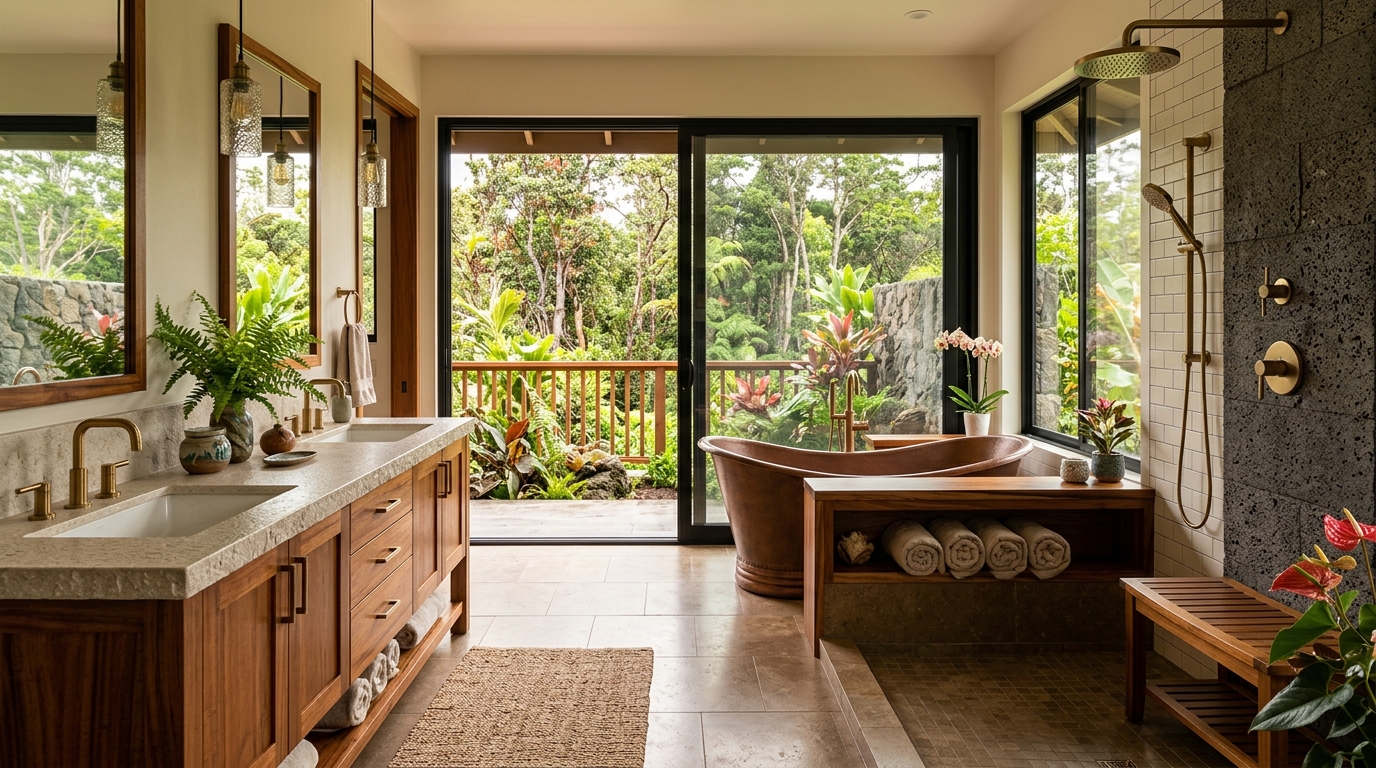
A proper bathroom remodel in Pahoa involves more than just picking out pretty tile. Here on the Big Island, especially in the Puna district, a successful project requires a deep understanding of our unique climate, logistics, and building codes. For a mid-range, full gut renovation of a standard 5×8 bathroom in Pahoa, you should budget between $35,000 and $55,000, with a timeline of 10 to 18 weeks from design to completion in 2026. This accounts for everything from Young Brothers shipping delays for your materials to the specific waterproofing techniques needed to combat Puna’s legendary humidity.
For over 20 years, our team at Warrior Construction has been navigating these challenges for homeowners across the islands. We’ve seen firsthand how the wrong materials can fail in a year under our tropical conditions and how a poorly planned project can stretch on for months. This isn’t like remodeling in California or Arizona. Here, every choice, from the grade of stainless steel in your fixtures to the type of grout between your tiles, matters immensely.
This guide isn’t just a collection of ideas; it’s a playbook built from decades of on-the-ground experience in Hawai’i. We’ll walk you through five critical solutions for a successful bathroom renovation in Pahoa, covering the real costs you’ll face, realistic timelines, Puna-proof material selection, the Hawaii County permitting process, and how to hire a reliable, licensed general contractor. By the end, you’ll have the knowledge to plan your project with confidence and avoid the common pitfalls that trap many Big Island homeowners.
Why Pahoa Homeowners Trust Warrior Construction for Bathroom Remodel
When you’re investing in your home, especially in a place as unique as Pahoa, trust is everything. Homeowners here trust Warrior Construction (License BC-34373) because we’re not just builders; we’re problem-solvers who live and work in these same island conditions. We understand the specific challenges of building in the Puna district, from managing projects on catchment water systems to specifying materials that can withstand the constant moisture and volcanic gases (vog) that can accelerate corrosion.
Our experience isn’t theoretical. On a recent project in Hawaiian Paradise Park, the homeowner was struggling with persistent mold in their master bathroom. Another contractor had simply replaced the drywall, but the problem returned within months. When our team opened up the walls, we found the issue wasn’t just the lack of a proper fan; the original builder hadn’t installed a vapor barrier behind the shower tile. It’s a small detail, but one that makes all the difference in our climate. We re-framed, installed a complete Schluter-KERDI waterproofing system, and put in a high-capacity Panasonic ventilation fan ducted correctly to the exterior. That’s the level of detail that solves problems for good.
Here’s what sets our approach apart for a Pahoa bathroom remodel:
- Local Expertise: We know the difference between building in dry Kailua-Kona and wet Pahoa. We guide you to materials like porcelain tile over porous travertine, and marine-grade (316) stainless steel fixtures that won’t pit and rust in six months.
- Transparent Process: We provide detailed, line-item estimates. You’ll see the exact costs for labor, materials, shipping, and permits. There are no vague allowances or hidden fees. We believe an informed client is a happy client.
- Logistical Mastery: Getting materials to the Big Island is half the battle. Our team has long-standing relationships with suppliers on Oahu and the mainland. We manage the entire supply chain, from ordering your vanity months in advance to coordinating freight with Young Brothers, ensuring everything arrives on time and minimizes costly delays to your project.
- Licensed and Insured: Peace of mind is crucial. As a fully licensed and insured general contractor in Hawaii, we handle all the permits, inspections, and compliance, protecting you from liability. You can verify our license (BC-34373) anytime on the state’s DCCA PVL website.[2]
Choosing a contractor is about more than just getting the lowest bid. It’s about finding a partner who understands the local environment and has a proven track record of building things that last. Our portfolio of successful projects is a testament to our commitment to quality and durability, tailored specifically for Hawai’i living.
Solution #1: Understanding the Real Costs of a Pahoa Bathroom Remodel
Let’s talk numbers. The biggest surprise for many homeowners planning a bathroom remodel in Pahoa is the cost. Prices here are significantly higher than on the mainland, and even a bit more than in Honolulu due to inter-island shipping. A vague online calculator won’t cut it. Based on our 2026 project data, here’s a realistic breakdown of what you can expect to invest in a Pahoa bathroom renovation.
We generally categorize projects into three tiers:
Basic Remodel (Pull-and-Replace): $18,000 – $25,000
This is a cosmetic refresh, not a full renovation. We keep the existing layout, plumbing, and electrical exactly where they are. This avoids the cost and time of pulling permits.
- Scope: Replace the toilet, vanity, and sink. Install new LVP (Luxury Vinyl Plank) flooring over the old floor. Replace fixtures (faucet, showerhead). A fresh coat of mold-resistant paint. Maybe a new pre-fab shower insert.
- Cost Driver: Labor and the cost of basic, in-stock materials from local suppliers like HPM or Home Depot in Hilo.
- Best For: A quick update for a rental property or getting a home ready for sale without a major investment.
Mid-Range Remodel (Full Gut Renovation): $35,000 – $55,000
This is the most common project we undertake. It involves tearing everything out down to the studs and starting fresh. This allows us to address any hidden issues like mold or termite damage and upgrade the core systems.
- Scope: Full demolition. We might move a drain slightly or add a new circuit for a lighted mirror. This includes a new tiled walk-in shower with a proper waterproofing system, a mid-range vanity with a quartz top, quality porcelain floor tile, a new high-efficiency toilet, and a powerful, quiet ventilation fan.
- Cost Driver: Skilled labor (especially good tile setters), higher-quality materials that need to be shipped in, and the cost of permits and inspections. The waterproofing system alone can add $2,000 – $3,000, but it’s non-negotiable for longevity in Puna.
- Best For: Homeowners who plan to stay in their house and want a durable, beautiful, and functional bathroom that solves old problems. This is the sweet spot for return on investment.
High-End/Luxury Remodel: $75,000+
This involves significant structural changes and premium, often custom, materials. The sky is the limit here.
- Scope: Expanding the bathroom by moving walls. Relocating toilets and showers. Installing a freestanding tub, custom-built koa wood vanity, natural stone slabs, high-end plumbing fixtures (like Brizo or Kallista), heated floors, and smart-home integration.
- Cost Driver: Custom fabrication, architectural plans, structural engineering, and the sheer cost of luxury materials and fixtures, which are all special order and have high shipping costs.
- Best For: Creating a true master suite or spa-like retreat in your forever home.
The key takeaway is to budget for the realities of building on the Big Island. That beautiful vanity you saw online for $1,500 might cost another $800 in shipping and handling to get it to your driveway in Pahoa. A pallet of tile from Oahu can cost $500 in freight alone. We build these real-world costs into our estimates from day one so there are no surprises.
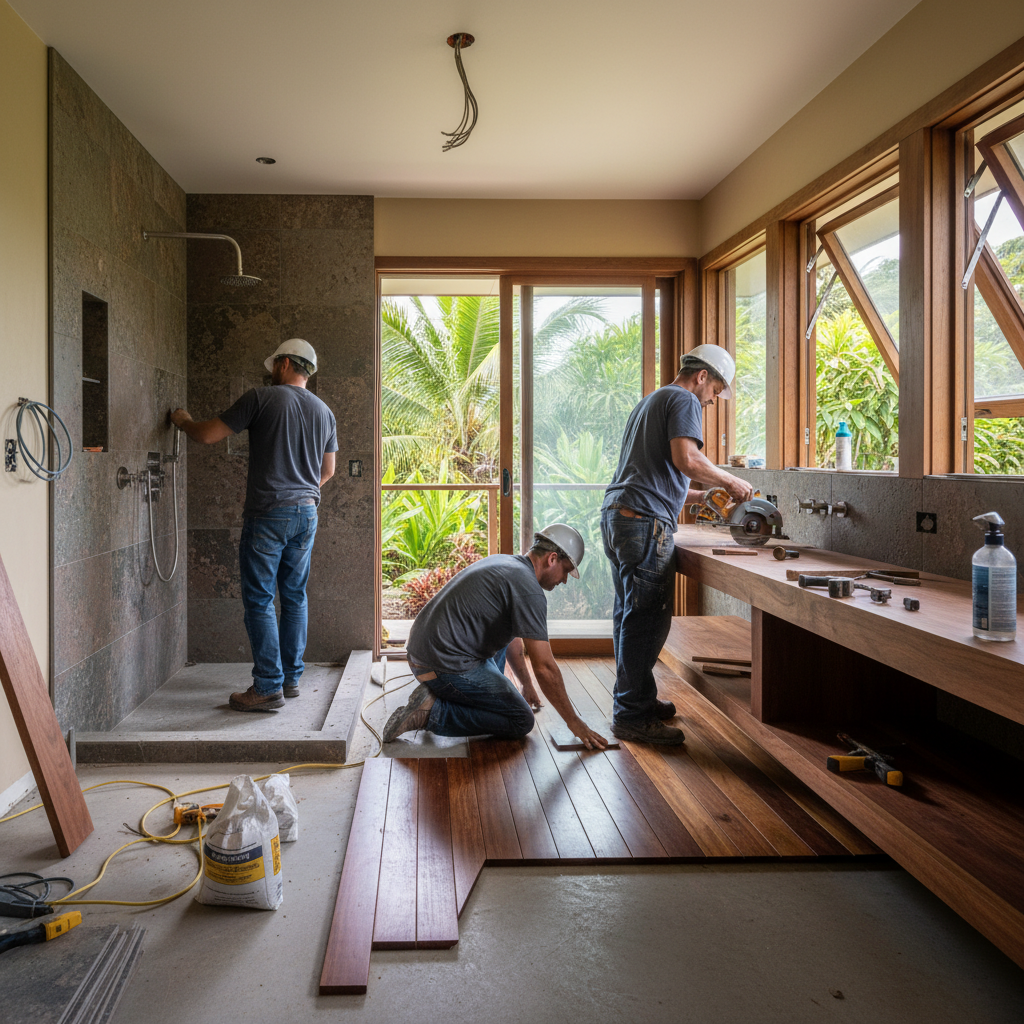
Solution #2: Creating a Realistic Timeline That Accounts for Island Logistics
Patience is a virtue in any construction project, but it’s a necessity in Hawaii. A bathroom remodel timeline in Pahoa is dictated less by how fast we can work and more by how long it takes to get everything here. Mainland TV shows where a bathroom is transformed in a week are pure fantasy. Here’s a breakdown of a typical mid-range project schedule for 2026.
A realistic timeline is broken into four distinct phases:
- Phase 1: Design & Planning (3-6 Weeks)
This is where we work with you to finalize the layout, select every single material, and create a detailed scope of work. We measure everything twice. You’ll choose your tile, vanity, countertop, fixtures, lighting, and paint. This phase is complete only when every item is specified and approved by you. Rushing this step is the #1 cause of delays and budget overruns later.
- Phase 2: Permitting & Procurement (6-12 Weeks)
This phase happens concurrently. Once the design is set, we order everything. Custom vanities can take 8-10 weeks to be built and shipped. Special order tile can take just as long. While we wait, if the project requires moving plumbing or walls, we submit the plans to the Hawaii County Planning Department. While permitting on the Big Island is generally faster than on Oahu, where the Honolulu DPP[1] can take months, you should still plan for a 4-8 week review period. We do not start demolition until every single item, down to the last box of screws, is physically on-island and inspected at our warehouse.
- Phase 3: Construction (4-8 Weeks)
Once all materials are here and the permit is in hand, our crew gets to work. This is the part you see on TV, but it can only happen efficiently because of the planning in the first two phases.
- Week 1: Demolition, rough-in plumbing and electrical.
- Week 2-3: Insulation, drywall, and the critical waterproofing stage for the shower and floor.
- Week 4-5: Tiling begins. This is a meticulous process and cannot be rushed.
- Week 6: Grouting, vanity and countertop installation, painting.
- Week 7: Final plumbing connections, fixture and lighting installation.
- Week 8: Final touches, cleanup, and project walkthrough with you.
- Phase 4: Final Inspections & Punch List (1 Week)
After our work is done, we schedule final inspections with the county inspector. Once those are passed, we walk through the project with you one last time to identify any tiny details that need adjustment (the “punch list”).
Adding it all up, a typical Pahoa bathroom remodel can take anywhere from 13 to 27 weeks from the day you sign the contract to the day you can use your new shower. The biggest variable is material lead time. This is why planning far in advance and working with a bathroom contractor in Pahoa who has a handle on logistics is absolutely critical.
Solution #3: Choosing Puna-Proof Materials for Humidity and Rain
Material selection is where a Pahoa bathroom remodel either succeeds for decades or fails in a few short years. The Puna environment is relentless: high humidity, heavy rainfall, and a constant battle against mold and mildew. Choosing materials based on mainland trends or pretty pictures online is a recipe for disaster. We guide our clients to select products proven to withstand these specific conditions.
Here’s our checklist for Puna-proof bathroom materials:
Flooring: Porcelain and Luxury Vinyl Plank (LVP)
- Top Choice: Porcelain Tile. It’s virtually waterproof (water absorption rate of less than 0.5%), incredibly durable, and comes in endless styles, including convincing wood-look planks. We recommend using larger format tiles (like 12×24 or 24×48) to minimize grout lines, which are the primary spot for mildew to grow.
- Great Alternative: LVP. High-quality Luxury Vinyl Plank is 100% waterproof, comfortable underfoot, and often more affordable than tile. It’s an excellent choice, especially for remodels on a tighter budget. Just ensure it’s a quality brand with a thick wear layer.
- Avoid: Natural stone like travertine or marble (too porous, stains easily, and requires constant sealing), laminate flooring (the core is MDF and will swell with any moisture), and sheet vinyl (can trap moisture underneath).
Walls and Showers: Waterproofing is Key
- Behind the Tile: This is the most critical part. We don’t use simple “green board” drywall. We insist on a complete system like the Schluter-KERDI membrane or RedGard waterproofing. This creates a fully sealed, waterproof shell behind your tile, so even if a grout line fails, your wall framing stays dry and mold-free.
- Wall Board: For walls outside the wet areas, we use paperless, mold-resistant drywall. It has a fiberglass mat instead of paper, which gives mold nothing to feed on.
- Grout and Caulk: We use high-performance, stain-resistant epoxy or urethane grout instead of standard cement-based grout. It’s more expensive and harder to work with, but it doesn’t need sealing and is far more resistant to mildew. All corners and changes of plane are caulked with 100% silicone, not grout, to allow for movement.
Fixtures and Finishes: Fight the Corrosion
- Metals: The humid, sometimes vog-tinged air is corrosive. For faucets, shower heads, and drains, we recommend PVD (Physical Vapor Deposition) finishes over simple chrome plating. For things like towel bars and screws, look for 304 or, even better, 316 marine-grade stainless steel. Anything less will show rust spots within a year.
- Vanities: Solid wood is a risky choice unless it’s a naturally water-resistant species like teak. We often recommend vanities made from marine-grade plywood or high-quality MDF with a durable thermofoil or factory-painted finish. Avoid cheap particle board at all costs; it will swell and crumble.
- Ventilation: This isn’t a material, but it’s the most important component. A tiny, noisy fan won’t do. We install high-CFM (Cubic Feet per Minute) Panasonic WhisperQuiet fans, properly sized for the bathroom’s square footage and ducted directly to the outside—never into the attic. A humidistat control that automatically turns the fan on when moisture is high is a smart upgrade.
Investing in the right materials upfront will save you thousands in repairs and headaches down the road. This is the core philosophy our Warrior Construction team brings to every single Pahoa bathroom renovation.
Solution #4: Navigating Hawaii County Permitting Without Headaches
The word “permit” can cause anxiety for many homeowners, but it doesn’t have to be a painful process. Permits exist to ensure your project is built safely and to code, protecting your family and your investment. For a bathroom remodel in Pahoa, knowing when you need a permit is the first step.
The Hawaii County Planning Department has clear rules. You generally need a permit if you are:
- Altering the structure: Moving, adding, or removing any walls, even non-load-bearing ones.
- Changing the layout: Relocating a toilet, shower, or sink, as this involves moving plumbing supply and drain lines.
- Modifying electrical systems: Adding new outlets, circuits, or moving existing wiring. For example, adding a new circuit for a jetted tub or in-floor heating definitely requires a permit.
You typically do not need a permit for cosmetic, or “pull-and-replace,” projects where everything stays in the same location. This includes:
- Replacing a toilet or vanity in the exact same spot.
- Retiling a floor or shower.
- Replacing a faucet or showerhead.
- Painting.
The process of getting a permit on the Big Island involves submitting architectural plans and completing the necessary application forms. While it’s a more straightforward system than dealing with the Honolulu DPP, it still requires detailed drawings that show exactly what you plan to do. This is where working with an experienced team pays off. We handle the entire permitting process for our clients. Our draftsmen create code-compliant plans, and our project managers submit the package and work with the county plan reviewers to address any questions. This avoids months of back-and-forth that can happen when homeowners try to navigate the system themselves.
One common scenario we see in Pahoa is homeowners wanting to convert a carport or lanai into a new master bathroom. This type of project absolutely requires a permit and often involves more than just plumbing and electrical. It may require new foundations, structural headers, and ensuring the new space meets hurricane code requirements for windows and tie-downs. Trying to do this work without a permit can lead to major fines, having to tear out the work, and significant problems when you eventually try to sell your home.
The key is to be upfront about your plans. As your licensed bathroom contractor, it’s our job to determine the permit requirements, build them into the timeline and budget, and manage the process from submission to final inspection. It’s a critical service that ensures your bathroom renovation is safe, legal, and built to last.
Solution #5: Hiring the Right Licensed Bathroom Contractor in Pahoa
Choosing the right team is the single most important decision you’ll make for your bathroom remodel. A great contractor can make the process smooth and deliver a fantastic result, while the wrong one can turn your dream project into a nightmare of delays, shoddy work, and budget overruns. In a rural area like Pahoa, it’s even more crucial to vet your options carefully.
Here is a step-by-step guide to finding a reliable bathroom contractor in Pahoa:
- Verify Their License and Insurance. This is non-negotiable. Any contractor performing work over $1,000 in Hawaii must have a state-issued contractor’s license. You can and should verify any contractor’s license status using the Hawaii DCCA Professional & Vocational Licensing (PVL) search tool.[2] Our license is Warrior Construction, BC-34373. Also, ask for a certificate of insurance showing they have both general liability and workers’ compensation coverage. This protects you if someone gets hurt on your property.
- Look for Local, Relevant Experience. A contractor based in Kona might not have the same familiarity with Puna’s unique challenges. Ask to see a portfolio of their work and ask for references from recent bathroom projects specifically in East Hawaii. Ask them questions about dealing with catchment systems or high humidity. Their answers will tell you if they have real local knowledge.
- Get a Detailed, Itemized Bid. A one-page estimate with a single number is a red flag. A professional bid should be several pages long and break down the costs for each phase of the project: demolition, plumbing, electrical, tile work, materials, etc. This level of detail shows they’ve thought through your specific project and protects you from unexpected cost increases later. Compare the details of the bids, not just the bottom-line number.
- Understand Their Communication and Project Management Style. How will they keep you updated? Do they use a project management app? Who is your main point of contact? A good contractor will have a clear communication plan. At Warrior Construction, we assign a dedicated project manager to each job so you always have a single person to call with questions.
- Read the Contract Carefully. The contract should clearly state the total price, the payment schedule, the detailed scope of work, and the estimated start and completion dates. Make sure you understand the terms for handling change orders—unexpected issues or additions to the scope. A clear contract protects both you and the contractor.
Hiring the cheapest contractor is almost always the most expensive mistake a homeowner can make. They often cut corners on things you can’t see, like waterproofing, leading to costly failures down the road. Taking the time to properly vet your contractor is the best investment you can make in the success of your shower remodel Pahoa project.
Real Pahoa Bathroom Remodel Project Example
To bring all these concepts together, let’s walk through a recent project we completed in Hawaiian Paradise Park, a common scenario for a bathroom renovation in Pahoa.
- The Homeowner: A family who bought a 1990s-era home.
- The Problem: The master bathroom was original and showing its age. It featured a cramped fiberglass shower-tub combo, a single vanity with no storage, poor lighting, and a small window that offered little ventilation. There was a persistent musty smell, and visible mildew was creeping along the baseboards.
- The Goal: Create a more open, modern, and functional master bath that would be easy to clean and resistant to Puna’s humidity. They wanted to replace the tub with a large, comfortable walk-in shower.
Our Solution and Process:
1. Design and Planning: We worked with the homeowners to design a new layout. We planned to remove the tub entirely and install a spacious 4-foot by 6-foot walk-in shower in its place. This required moving the shower drain, which automatically triggered the need for a plumbing permit. We designed a custom niche for shampoo bottles, a built-in bench, and a frameless glass panel to make the room feel larger. We selected large-format porcelain tile for the floor and shower walls to minimize grout lines.
2. The Numbers:
- Total Project Cost: $48,500
- Timeline: 15 weeks from contract signing to final walkthrough. (4 weeks design/selections, 6 weeks for materials and permits, 5 weeks for construction).
3. Construction Highlights:
- Waterproofing: After demolition, we found minor rot in the subfloor near the old tub drain—a common issue. We replaced the damaged section and installed a complete Schluter-KERDI waterproofing system throughout the entire shower enclosure, from the pan up to the ceiling.
- Ventilation: We replaced the old, noisy fan with a new Panasonic WhisperCeiling fan with a built-in condensation sensor. It’s powerful enough to clear the steam in minutes and runs automatically when needed.
- Plumbing: All plumbing was upgraded within the walls. Since the house was on a catchment system, we recommended fixtures with a PVD finish known for resisting the slight acidity of rainwater.
- Finishes: We installed a new, longer vanity with dual sinks and a quartz countertop, providing much-needed storage. New LED lighting was installed over the vanity and a dedicated waterproof LED light inside the shower.
The Outcome:
The result was a complete transformation. The bathroom is now bright, airy, and feels twice as large. The musty smell is gone, replaced by a clean, dry space. The homeowners love the functionality of the large shower and the peace of mind that comes from knowing that what’s behind the walls is built correctly to last for decades in the Pahoa climate. This project is a perfect example of how a well-planned, professionally executed bathroom remodel can dramatically improve your home’s value and your daily life.
What this means for Hawaii homeowners
Planning a bathroom remodel in Pahoa is a significant undertaking, but it’s entirely manageable when you approach it with the right knowledge and expectations. The unique environment of the Puna district requires a more thoughtful approach than a remodel on the mainland or even in a drier part of Hawaii.
Here are the key takeaways you should focus on:
- Budget for Reality: Your biggest costs are not just the materials themselves, but the labor and logistics to get them installed in your home. Factor in inter-island shipping and the higher cost of skilled labor on the Big Island. A realistic budget for a quality, full gut remodel in 2026 starts around $35,000.
- Plan for Delays: The timeline will be longer than you think. Embrace the concept of “island time” when it comes to material procurement. A contractor who promises a 2-week turnaround is not being realistic. A 4-6 month process from initial call to completion is standard.
- Prioritize a Puna-Proof Build: Focus your investment on what’s behind the walls. Proper waterproofing, ventilation, and mold-resistant materials are not optional upgrades; they are essential for a bathroom that will last. This is far more important than a fancy, brand-name faucet.
- Hire a Licensed Local Professional: Don’t risk your home on an unlicensed handyman to save a few dollars. A licensed general contractor like Warrior Construction (BC-34373) understands the codes, manages the permits, has established supply chains, and carries the proper insurance to protect your investment.
By focusing on these core principles, you can navigate your bathroom renovation project successfully. The goal is to create a space that is not only beautiful and functional on day one, but that also stands up to the challenges of our unique Puna environment for years to come.
Frequently Asked Questions About Bathroom Remodel in Pahoa
How much value does a bathroom remodel add to a Pahoa home?
In the Pahoa market, a mid-range bathroom remodel consistently offers one of the best returns on investment. While it varies, homeowners can typically expect to recoup 60-70% of their investment upon resale. More importantly, an updated, mold-free bathroom is a major selling point that can make your home sell faster than comparable homes with dated facilities.
Can I just do a shower remodel in Pahoa and what does it cost?
Absolutely. A dedicated shower remodel is a very popular project. The cost to tear out an old tub or shower and install a new, fully waterproofed and tiled walk-in shower in Pahoa typically ranges from $12,000 to $20,000 in 2026. This depends on the size, tile choice, and fixtures, but it’s a great way to make a big impact without renovating the entire room.
What’s the biggest mistake Pahoa homeowners make in a bathroom remodel?
The single biggest mistake we see is inadequate ventilation. Homeowners underestimate the sheer amount of moisture in Puna’s air and install a cheap, low-power fan or none at all. This inevitably leads to mold and mildew, peeling paint, and warped cabinets. Investing in a properly sized, high-CFM fan that is ducted to the exterior is the most crucial step for a long-lasting bathroom.
How long do materials really take to arrive on the Big Island?
You should plan on 6-12 weeks for most major components like vanities, special order tile, and plumbing fixtures. Even items listed as “in stock” on a website often have to ship from a mainland warehouse to a Honolulu distributor, then get barged to Hilo, and finally trucked to your home. We advise all our clients to finalize selections and place orders at least 3 months before the desired construction start date.
Do I need an architect for a bathroom remodel in Pahoa?
For most bathroom remodels, an architect is not necessary. A qualified design-build contractor like our team at Warrior Construction can handle the design, layout, and creation of permit-ready plans. You would only need to hire a separate architect and structural engineer if you are planning major structural changes, like removing a load-bearing wall or adding a large new addition to the house.
How does being in a high-risk lava zone affect my remodel?
For an interior project like a bathroom remodel, your lava zone status generally doesn’t affect the construction process or permit requirements. However, it can significantly impact your ability to get financing or insurance for the project. It’s critical to speak with your homeowner’s insurance provider before beginning any major renovation to understand your coverage and any potential limitations.
A bathroom remodel is a complex project, but it doesn’t have to be overwhelming. With the right planning and the right professional partner, you can create a beautiful, durable space that enhances your Pahoa home for years. Our team at Warrior Construction has the local expertise and proven process to guide you every step of the way.
If you’re ready to transform your bathroom, the next step is to get a clear, detailed estimate based on your specific goals. Contact our team today to schedule a free, no-obligation consultation for your Pahoa bathroom remodel. Let’s build something that lasts.
Ready to start your Pahoa bathroom transformation? Explore our bathroom remodeling services and see how we can bring your vision to life.