“
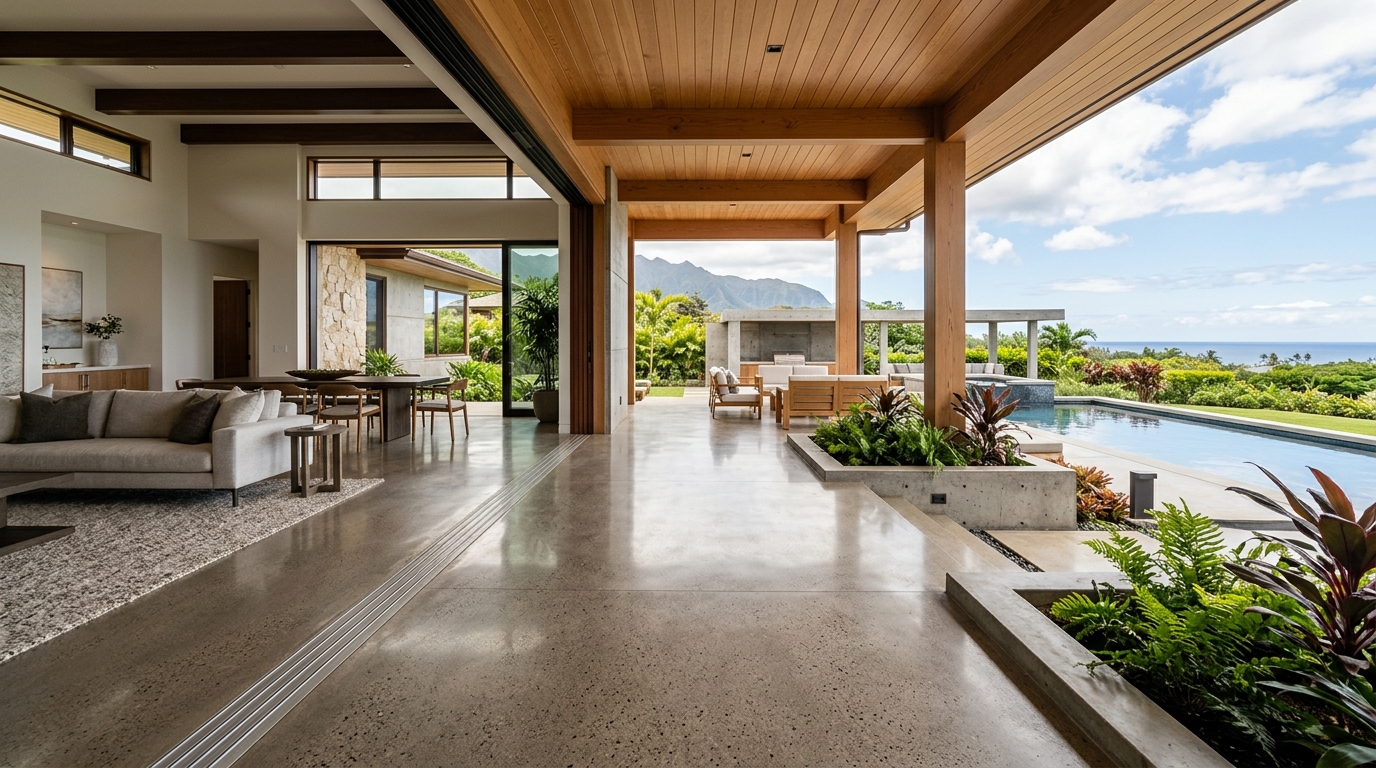
As a leading concrete contractor in Kapolei, the most common solutions homeowners need in 2026 range from robust foundations for new homes and ADUs to durable driveways and engineered retaining walls designed for O’ahu’s unique conditions. Getting the concrete right from the start is the single most important part of any construction project on the island. A faulty foundation or a cracking driveway isn’t just an eyesore; it’s a structural liability that can cost a fortune to fix later. These projects demand a deep, hands-on understanding of local volcanic soils, strict hurricane building codes, and the specific challenges of sourcing materials in Hawaii.
Over our 20+ years on O’ahu, our team at Warrior Construction has seen it all, from dealing with expansive clay soils on the Ewa plain to ensuring proper concrete curing under the intense Leeward sun. The difference between a concrete job that lasts 5 years and one that lasts 50 years is almost always in the prep work, the specific mix design, and the local knowledge of the crew doing the pour. This isn’t mainland construction; our environment, from the salt in the air to the ground beneath our feet, demands a higher standard of work.
This guide breaks down everything a Kapolei homeowner needs to know. We’ll cover real-world costs for foundations, driveways, and retaining walls. We’ll walk you through the Honolulu DPP permitting maze, discuss the unique climate and soil challenges in West O’ahu, and give you a checklist for choosing a contractor you can actually trust. This is the advice we give our own family and friends when they’re starting a project.
\n\n
Why Kapolei Homeowners Trust Warrior Construction for Concrete Contractor
\n
When you’re pouring the literal foundation of your home, trust is everything. For homeowners in Kapolei and across West O’ahu, that trust is built on a few non-negotiable principles: proven local experience, an impeccable license record, and a transparent process. At Warrior Construction, we’ve built our reputation (License BC-34373) by treating every concrete pour as if it were for our own home. We understand that a solid foundation is more than just concrete and rebar; it’s peace of mind for decades to come.
Our deep experience in Kapolei gives us a unique advantage. The geology here is different from the Windward side or even central O’ahu. For instance, on a recent custom home project in Makakilo, the geotechnical report showed highly expansive soil. A standard slab-on-grade foundation that might work in Hawaii Kai would have been a recipe for disaster. Instead, our team worked with a structural engineer to design a post-tensioned slab, a specific solution that counteracts soil movement and prevents cracking. This is the kind of localized expertise that a generalist contractor might miss, leading to major structural repairs down the road. It’s this forethought that defines our approach as a premier concrete contractor in Kapolei.
Furthermore, our process is built on clear communication. From the initial estimate to the final walkthrough, you’re not just a project number. We provide detailed, line-item bids so you know exactly what you’re paying for—the concrete PSI (pounds per square inch) rating, the rebar schedule, the cost for the pump truck, and the site prep involved. We manage the entire process, including the often-frustrating permitting with the Honolulu Department of Planning and Permitting (DPP), so you don’t have to. Our clients appreciate knowing that a single, accountable team is handling every aspect of their project, from excavation to the final cure.
\n\n
What Does Concrete Contractor Cost in Kapolei?
\n
Let’s get straight to the numbers. In 2026, the cost for professional concrete work in Kapolei depends entirely on the type of project, its complexity, and site access. A simple patio slab is worlds apart from an engineered foundation. Here’s a realistic breakdown of what our team at Warrior Construction is seeing for the most common residential projects in the area. These are not mainland prices; they reflect Hawaii’s higher costs for labor, materials, and stringent building codes.
\n\n
Concrete Foundation Kapolei Costs
\n
A new home or ADU foundation is the most critical and cost-intensive concrete job. For a standard slab-on-grade foundation, the total installed cost in 2026 typically falls between $85 to $115 per square foot. This all-in price includes:\n
- \n
- Excavation and site grading
- Gravel base and compaction
- Termite treatment (a must in Hawaii)
- Vapor barrier installation
- Steel rebar grid tied to engineering specs
- The concrete itself (typically 3000-4000 PSI)
- Finishing and curing
\n
\n
\n
\n
\n
\n
\n
\nFor a typical 600-square-foot ADU, you should budget around $51,000 to $69,000 for the foundation. For a 2,000-square-foot single-family home, the foundation cost will likely be in the $170,000 to $230,000 range. Factors like hillside locations requiring stepped footings or poor soil needing engineered fill can increase these costs.
\n\n
Driveway Concrete Kapolei Costs
\n
Replacing an old, cracked driveway or pouring a new one is a common project. For a standard 4-inch thick driveway with a broom finish, expect to pay $28 to $42 per square foot in Kapolei. This includes demolition of the old driveway, hauling away debris, proper base preparation, wire mesh or rebar reinforcement, and the pour and finish.\n
- \n
- A standard two-car driveway (roughly 20′ x 40′ or 800 sq ft) would cost between $22,400 and $33,600.
\n
\nWant a decorative finish? Here’s how that impacts the price:\n
- \n
- Stamped Concrete: Adds $10-$18 per square foot. It’s a great look but requires specialized labor.
- Exposed Aggregate or Salt Finish: Adds $5-$9 per square foot for a more textured, non-slip surface ideal for our climate.
\n
\n
\n\n
Retaining Wall Kapolei Costs
\n
Retaining walls are often necessary on O’ahu’s sloped properties for creating usable space and managing drainage. Costs are usually calculated per linear foot and depend heavily on the wall’s height and the materials used.\n
- \n
- For a CMU (Concrete Masonry Unit) block wall up to 4 feet high, which is typical for garden terracing, the cost is around $375 to $550 per linear foot. This includes the concrete footing, rebar reinforcement, block laying, and filling the cores with concrete.
- A 50-foot long, 4-foot high wall would therefore cost between $18,750 and $27,500.
\n
\n
\nAny retaining wall over 4 feet tall requires a building permit and an engineer’s design, which significantly increases complexity and cost. These taller, engineered walls can easily exceed $700 per linear foot. Proper drainage systems behind the wall are critical and should be included in any legitimate contractor’s bid.
\n\n
How Long Does a Concrete Contractor Take in Kapolei?
\n
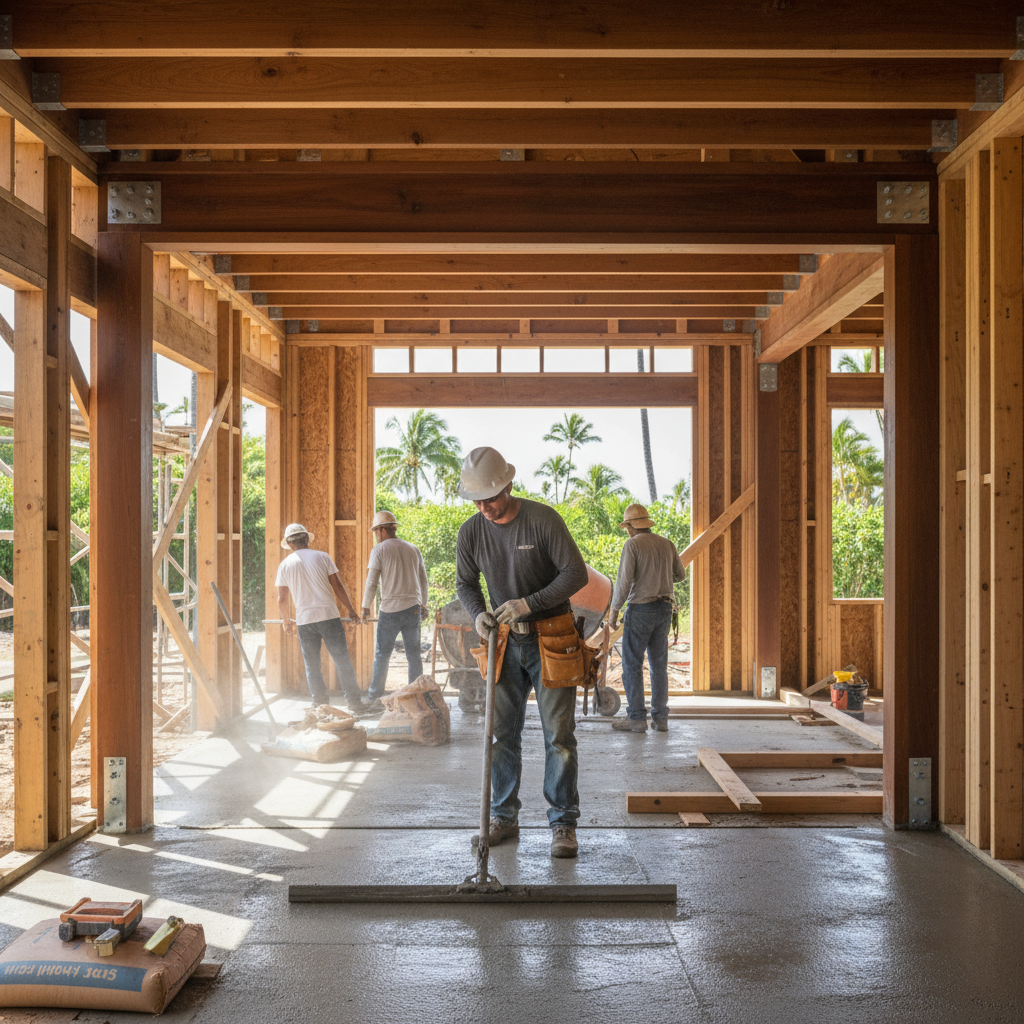
Project timelines in Hawaii are a different beast than on the mainland. While the physical work of pouring concrete is relatively quick, the overall schedule is dictated by two major factors: permitting and material logistics. Here at Warrior Construction, we build realistic timelines that account for the realities of building on O’ahu. It’s crucial for homeowners to understand that the clock doesn’t start when the concrete truck shows up; it starts months earlier.
\n\n
The Pre-Construction Phase: The Real Timeline Driver
\n
This is where the biggest delays happen, and it’s almost entirely due to the permitting process with the Honolulu Department of Planning and Permitting (DPP). For any structural concrete work like a foundation or a tall retaining wall, you can’t break ground without an approved permit.\n
- \n
- Plan Development (4-8 weeks): This involves working with an architect and/or structural engineer to create the necessary drawings.
- DPP Review (4-12 months): This is not an exaggeration. As of 2026, simple projects might get through in a few months, but anything with zoning questions, drainage implications, or engineering complexity can sit in review for the better part of a year. Our team has extensive experience navigating the DPP system, which helps streamline the process, but delays are still a reality of construction in Honolulu county.
\n
\n
\nFor example, we recently completed a project for a new concrete foundation in Kapolei for a large home addition. The plans were submitted to DPP in January, but a question from a plan reviewer about the foundation’s setback from a drainage easement held up the permit until July. That’s a six-month delay before we could even start digging.
\n\n
The Construction Phase: From Dirt to Cured Slab
\n
Once we have the stamped, approved permit in hand, the on-site work moves much more predictably. Here are typical timelines for the construction itself:\n
- \n
- Concrete Foundation (3-5 weeks):\n
- \n
- Week 1: Site clearing, excavation, and grading.
- Week 2: Forming, laying the gravel base, installing plumbing rough-ins, and termite treatment.
- Week 3: Placing the vapor barrier and tying the entire rebar grid. This is followed by the footing and slab inspections from a DPP inspector.
- Week 4: The concrete pour itself usually takes one day. Curing begins immediately.
- Week 5+: The concrete needs to cure. While it’s hard enough to walk on in 24-48 hours, it takes a full 28 days to reach its designed compressive strength. We typically won’t start framing on a new slab for at least 7-10 days.
\n
\n
\n
\n
\n
\n
- Driveway Replacement (1-2 weeks): This is much faster as it usually doesn’t require the same level of permitting. Week 1 is for demolition, prep, and forming. The pour happens early in Week 2, and it’s typically ready for foot traffic the next day and vehicle traffic in about 7 days.
- Retaining Wall (2-4 weeks): For a standard residential wall, this includes digging the footing, setting rebar, pouring the footing, laying the block, and filling the cells. The timeline depends on the length and height of the wall.
\n
\n
\n
\nMaterial availability can also throw a wrench in the schedule. If a specific rebar size or concrete admixture is on backorder from the mainland, that can add a week or two. We mitigate this by ordering materials far in advance, but island logistics are an ever-present factor.
\n\n
What Permits Do You Need for Concrete Contractor in Kapolei?
\n
Navigating the permitting process with the Honolulu Department of Planning and Permitting (DPP) is one of the most challenging parts of any construction project on O’ahu. As your general contractor, a huge part of our job is managing this complex bureaucracy for you. Understanding when a permit is required is the first step to a smooth and legal project. Attempting to do work without a required permit can result in stop-work orders, hefty fines, and having to tear out the completed work.
You must obtain a building permit for almost all structural concrete work. The DPP’s rules are in place to ensure safety, structural integrity, and compliance with zoning and building codes.[1] Here’s a rundown of common concrete projects and their permit requirements:\n\n
- \n
- New Foundations (Permit Always Required): Whether it’s for a new custom home, an ADU, or a major home addition, the concrete foundation is the literal base of the structure. It requires a full building permit, complete with architectural and structural engineering plans. The DPP will not issue a permit without an engineer’s stamp on the foundation design.
- Retaining Walls (Permit Required Over 4 Feet): This is a common point of confusion. You can build a small, decorative retaining wall up to 4 feet in height (measured from the bottom of the footing to the top of the wall) without a permit. However, any wall exceeding that 4-foot limit is considered a structural element and requires an engineered design and a building permit. Given the sloped lots in many parts of Kapolei, especially areas like Makakilo, engineered walls are very common.
- Driveways (Permit Sometimes Required): Generally, replacing an existing driveway of the same size and location does not require a permit. However, if you are creating a new, large driveway (over 800 sq ft of new impervious surface), or if the new driveway alters the property’s drainage or crosses into a public right-of-way (the sidewalk area), a permit is absolutely necessary. DPP is very strict about anything affecting water runoff.
- Patios and Flatwork (Permit Generally Not Required): For a simple on-grade concrete patio slab, a permit is typically not needed. But, if the patio is covered by a permanent roof structure, that structure will require a permit, and the foundation for it will be part of that permit application.
\n
\n
\n
\n
\n\nThe permitting process itself involves several stages: submitting the application and plans, waiting for initial review, responding to comments from plan reviewers (there are always comments), and finally, getting the approved, stamped plans. Once work begins, a DPP inspector must be called to approve critical stages before you can proceed, such as the foundation footing and rebar layout before any concrete is poured. Missing one of these inspections can force you to halt the entire project. This is why working with an experienced team that has a long-standing professional relationship with the DPP is so valuable. We know the process, the people, and how to prepare a permit package that gets reviewed as efficiently as possible.
\n\n
Kapolei-Specific Considerations: Climate, Materials, Regulations
\n
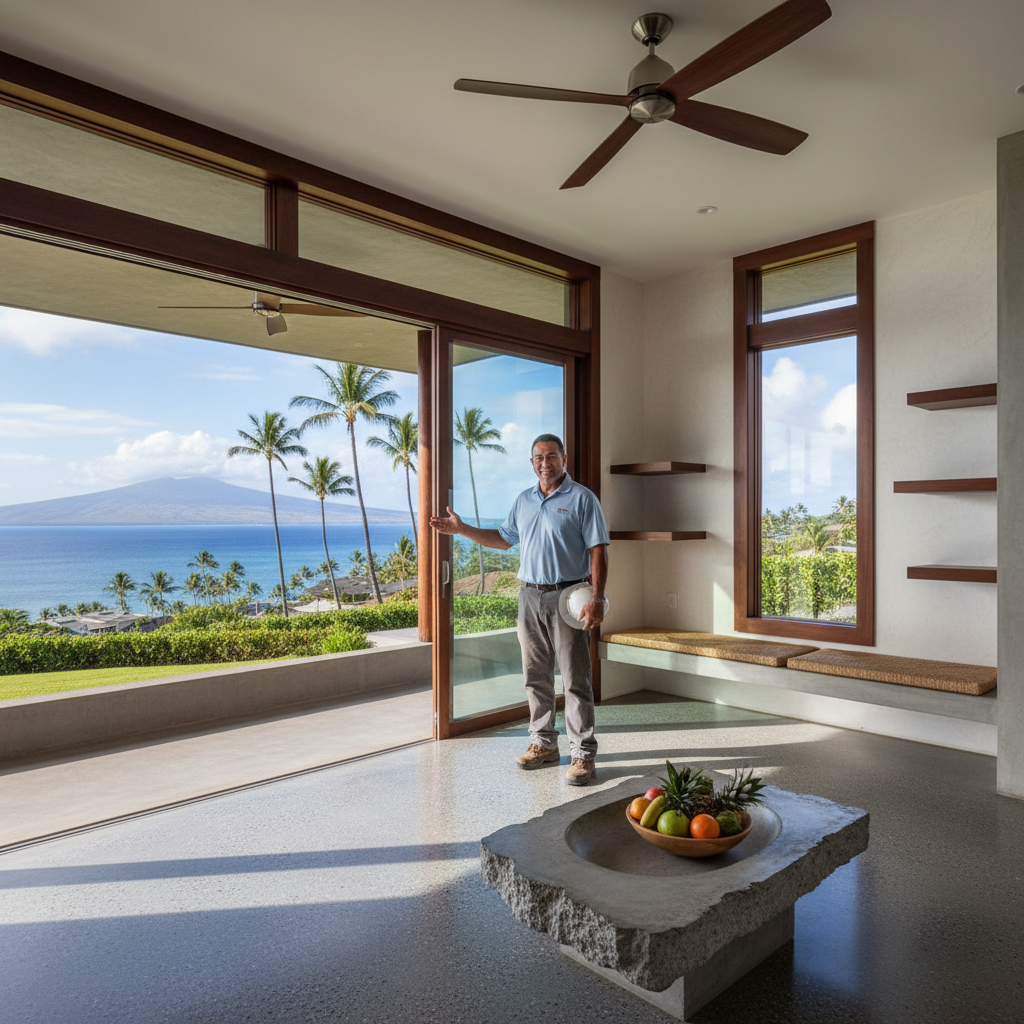
Building in Kapolei isn’t like building anywhere else, not even like other parts of O’ahu. The western side of the island has its own unique set of environmental and logistical challenges that a professional concrete contractor must master. Overlooking these local factors is how you end up with premature cracks, spalling, and foundation failure. Our team at Warrior Construction plans every pour with these Kapolei-specific realities in mind.
\n\n
Soil Composition on the Ewa Plain
\n
Much of Kapolei is built on the Ewa Plain, which is characterized by a mix of coral limestone, volcanic rock, and in some areas, expansive clay soils. These clay soils are particularly tricky because they swell when wet and shrink when dry, putting immense pressure on any structure built on top of them. A standard foundation might crack under this constant movement. Before any major pour, a geotechnical (soils) report is often a wise investment, and sometimes required by engineers. This report tells us exactly what we’re building on and allows the structural engineer to design the appropriate foundation, whether it’s a reinforced slab-on-grade, a post-tensioned system, or even a raised foundation on piers and footings.
\n\n
The Hot, Dry Leeward Climate
\n
Kapolei is on the leeward side of the Ko’olau Range, meaning it’s significantly hotter and drier than the windward side. This has a direct impact on how concrete behaves. Concrete cures through a chemical reaction called hydration, which requires water. If the water in the mix evaporates too quickly under the hot Kapolei sun, the concrete can cure improperly, lose strength, and develop shrinkage cracks. To combat this, our crews take several precautions:\n
- \n
- Timing the Pour: We often schedule pours for the very early morning to avoid the intense heat of midday.
- Using Admixtures: We can add retardants to the concrete mix to slow down the curing time, giving us more time to work with it and allowing for a stronger final product.
- Proper Curing Methods: After finishing, the slab can’t just be left to bake. We use curing compounds or cover the slab with wet burlap to ensure it retains moisture for a slow, steady cure over several days.
\n
\n
\n
\n\n
Salt-Air Corrosion
\n
While Kapolei is not directly on the windward coast, the prevailing trade winds still carry salt inland. Salt is the arch-enemy of steel rebar. If moisture and salt penetrate the concrete and reach the rebar, it will rust. Rusting steel expands, causing the surrounding concrete to crack and break away—a process called spalling. To prevent this, Hawaii’s building code mandates a greater “concrete cover,” which is the minimum distance between the rebar and the outer surface of the concrete. For foundations, we ensure a minimum of 3 inches of cover to protect the structural steel for the long term.
\n\n
Hurricane Code and Structural Integrity
\n
Ever since Hurricane Iniki in 1992, Hawaii has had some of the most stringent hurricane-related building codes in the nation. For concrete work, this means foundations are not just designed to hold a house up; they’re designed to hold it down against massive uplift forces from high winds. This involves:\n
- \n
- Engineered Tie-Downs: We embed heavy-duty anchor bolts and hurricane straps (like Simpson Strong-Tie hardware) directly into the foundation concrete. These are strategically placed to connect the foundation directly to the wall framing and roof structure, creating a continuous load path that resists wind forces.
- Robust Rebar Schedules: The structural plans will specify a precise pattern and size of rebar designed to handle the tensile stresses that a hurricane would place on the foundation. Following these plans to the letter is not optional; it’s a matter of safety.
\n
\n
\nWorking with a contractor who understands these local nuances is not a luxury; it’s a necessity for any concrete project in Kapolei that’s built to last.
\n\n
How to Choose the Right Concrete Contractor Contractor in Kapolei
\n
Choosing the right contractor can feel overwhelming, but a few key steps can separate the true professionals from the rest. The quality of your concrete work depends entirely on the skill and integrity of the team you hire. Here’s a straightforward checklist our team at Warrior Construction recommends to every Kapolei homeowner to ensure you’re hiring a qualified, reliable, and trustworthy professional.
\n\n
- \n
- Verify Their License and Insurance. This is the absolute first step and it’s non-negotiable. Any legitimate contractor in Hawaii must have a valid license issued by the Department of Commerce and Consumer Affairs (DCCA). You can and should verify any contractor’s license online using the DCCA’s Professional & Vocational Licensing (PVL) search tool.[2] For example, our license is Warrior Construction, BC-34373. Also, ask for proof of general liability insurance and worker’s compensation insurance. Without these, you could be held liable for any accidents that happen on your property.
- Demand Local, Relevant Experience. O’ahu is a small island, but the building conditions vary greatly. A contractor who primarily works in town may not have experience with the specific soil and climate challenges of Kapolei. Ask for references and addresses of recent projects they’ve completed in Kapolei, Ewa Beach, or Makakilo. Go take a look at their work. Does the finish look clean? Are there cracks in their recent driveway pours? A good contractor will be proud to show you their portfolio of local work.
- Get a Detailed, Itemized Bid. A verbal quote or a single number on a piece of paper is a major red flag. A professional bid should be a detailed document that breaks down the costs. It should clearly state:\n
- \n
- The scope of work, including demolition and site prep.
- The specified compressive strength of the concrete (e.g., 3000 PSI, 4000 PSI).
- The reinforcement details (e.g., #4 rebar at 18\” on center).
- The type of finish (e.g., broom finish, stamped).
- A clear payment schedule.
- Any exclusions or allowances.
\n
\n
\n
\n
\n
\n
\n Comparing detailed bids allows you to see if you’re truly comparing apples to apples. The cheapest bid is often cheap for a reason—they may be cutting corners on materials or prep work.
- Assess Their Communication and Professionalism. From the first phone call, how does the contractor interact with you? Do they return your calls promptly? Do they listen to your questions and provide clear, understandable answers? Construction is a partnership, and you’ll be communicating with this person for weeks or months. You want someone who is professional, respectful, and transparent. A contractor who is hard to get a hold of during the bidding process will be impossible to reach when there’s an issue on the job site.
\n
\n
\n
\n
\n
Taking the time to vet your contractor thoroughly using these steps is the best way to protect your investment and ensure a high-quality result that will stand the test of time.
\n\n
Real Kapolei Concrete Contractor Project Example
\n
To put all this information into context, let’s walk through a typical project we recently completed in Kapolei. This helps illustrate how the costs, timelines, and local challenges come together in a real-world scenario.
\n\n
The Client: The Akana family, long-time residents of a single-story home in a Kapolei neighborhood built in the 1990s.
\n\n
The Goal: The Akanas wanted to build a 500-square-foot ADU (Accessory Dwelling Unit) in their backyard for their aging parents, a project that has become very popular across O’ahu since the passage of Bill 7. The project required a new concrete foundation for the ADU and a small, connecting concrete walkway from the main house.
\n\n
The Challenges:\n
- \n
- Site Access: The backyard had limited access, making it difficult for a large concrete truck to get close to the pour site. This meant we would need to use a concrete pump truck, which adds to the cost.
- Soil Conditions: A soil analysis revealed moderately expansive clay, a common issue in their part of Kapolei. The structural engineer determined a standard slab would be insufficient.
- Permitting: As an ADU, this project required a full building permit from the Honolulu DPP, including architectural, structural, and plumbing plans.
\n
\n
\n
\n\n
Warrior Construction’s Solution & Process:\n
- \n
- Engineering & Permitting (5 months): Our team coordinated with the architect and structural engineer to design a reinforced, monolithic slab foundation thickened at the edges to handle the soil movement. We submitted the full permit package to DPP. After two rounds of comments and revisions, we received the approved permit.
- Site Prep (1 week): We began by clearing the site and performing the initial excavation. We then trenched for the thickened footings and all the underground plumbing for the ADU’s kitchen and bathroom.
- Forming & Rebar (1 week): Our crew formed the perimeter of the 500 sq ft slab, laid down a compacted gravel base, installed a vapor barrier, and meticulously tied the grid of #4 rebar specified by the engineer. A DPP inspector came out to sign off on the pre-pour inspection.
- The Pour (1 day): We scheduled a 4000 PSI concrete mix and a pump truck for an early morning pour. The pump allowed us to efficiently place the concrete exactly where it was needed without damaging the existing landscaping. Our finishers expertly screeded, floated, and troweled the surface to a smooth finish, ready for flooring.
- The Outcome: The foundation was completed on schedule and on budget. The total cost for the 500 sq ft engineered foundation was approximately $57,500 ($115/sq ft), which included the engineering coordination, pump truck fees, and all labor and materials. The connecting walkway cost an additional $2,500. The Akana family now has a solid, compliant, and durable foundation, ready for framing to begin on their new ohana unit.
\n
\n
\n
\n
\n
\n\n
What this means for Hawaii homeowners
\n
Understanding the intricacies of concrete work in Kapolei empowers you to make smarter decisions for your property. The key takeaway is that concrete is far more than just “gray mud.\” It’s an engineered product that must be tailored to our unique island environment. Cutting corners on the foundation or driveway will inevitably lead to costly repairs that far exceed any initial savings.
\n
Here are the actionable steps you should take:
\n
- \n
- Budget for Reality: Use the cost breakdowns in this guide ($85-$115/sq ft for foundations, $28-$42/sq ft for driveways) to create a realistic budget. Don’t be swayed by a lowball offer that seems too good to be true—it always is.
- Plan for the Permit Timeline: For any major project, factor in a 6 to 12-month pre-construction phase for DPP permitting. Start the design and permitting process long before you hope to break ground.
- Hire a Licensed, Local Pro: Do not skip the step of verifying your contractor’s license on the DCCA PVL website. Prioritize contractors who can show you a portfolio of successful projects specifically in Kapolei or West O’ahu. Their experience with the local soil and climate is invaluable.
- Insist on a Detailed Contract: Your contract should specify everything: concrete strength (PSI), rebar schedule, site prep, and cleanup. This document protects both you and the contractor and ensures everyone is on the same page.
\n
\n
\n
\n
\n
By approaching your project with this knowledge, you can ensure the concrete work on your Kapolei home is done right the first time, providing a safe, stable, and long-lasting investment.
\n
\n\n
Frequently Asked Questions About Concrete Contractor in Kapolei
\n
How much does a simple concrete patio cost in Kapolei in 2026?
\n
For a standard, on-grade concrete patio with a broom finish, you can expect to pay between $25 and $38 per square foot. A typical 10’x20′ (200 sq ft) patio would likely cost between $5,000 and $7,600. This price includes site preparation, forming, a 4-inch slab with wire mesh reinforcement, and the concrete pour and finish.
\n
\n
Do I need a permit for a retaining wall in Kapolei?
\n
You need a building permit from the Honolulu DPP for any retaining wall that is over 4 feet in height, measured from the bottom of the footing to the top of the wall. Any wall this tall requires an engineered design. Walls under 4 feet generally do not require a permit, but it’s always best to confirm with a licensed contractor or the DPP.
\n
\n
What is the best concrete finish for a Kapolei driveway?
\n
A standard broom finish is the most common and cost-effective option, providing good traction. However, a salt finish or an exposed aggregate finish are also excellent choices for Kapolei. They offer superior non-slip surfaces, which is great for our wet weather, and their textured appearance can be more aesthetically pleasing and better at hiding minor imperfections.
\n
\n
How long until I can walk or drive on my new concrete driveway?
\n
You can typically walk on new concrete within 24 to 48 hours, depending on the weather. However, you should wait at least 7 to 10 days before driving a standard passenger car on it. For heavier vehicles like an SUV or truck, we recommend waiting a full 14 days to allow the concrete to gain more of its compressive strength.
\n
\n
Why is concrete work more expensive in Hawaii than on the mainland?
\n
Several factors contribute to the higher cost. All cement must be shipped to the islands, which incurs significant freight costs. Our labor rates are higher, and we operate under some of the strictest building codes in the country (especially for hurricane resistance), which requires more steel reinforcement and engineering oversight. These factors combine to make construction, including concrete, more expensive here.
\n
\n
What does PSI mean for concrete and what do I need?
\n
PSI stands for Pounds per Square Inch and it measures the compressive strength of cured concrete. For sidewalks and patios, 2500-3000 PSI is usually sufficient. For driveways and especially for structural foundations in Kapolei, we almost always specify a minimum of 3000 PSI and often use 4000 PSI mix to ensure maximum durability and strength.
\n
\n
What is spalling and how can I prevent it on my concrete?
\n
Spalling is when the surface of the concrete flakes or breaks away. In Hawaii, this is most often caused by corrosion of the steel rebar inside the concrete. When salt and moisture penetrate the slab and rust the rebar, the rebar expands and blows the concrete off. The best prevention is to hire a contractor who ensures proper concrete cover (at least 3 inches for foundations) over the steel, uses a quality concrete mix, and applies proper curing techniques.
\n
\n
\n\n
Your home’s foundation is the most important part of its structure. Whether you’re planning a new driveway, a critical retaining wall, or the foundation for your dream home or ADU in Kapolei, getting it right from the start is non-negotiable. It requires a contractor with proven local expertise, an understanding of our unique island conditions, and an unwavering commitment to quality.
At Warrior Construction (BC-34373), we’ve spent over two decades pouring concrete foundations, slabs, and driveways that are built to withstand Hawaii’s environment. If you’re ready to discuss your project, our team is here to provide a clear, detailed plan to get the job done right.
Ready to build on a solid foundation? Explore our Concrete & Foundations services and let’s start planning your Kapolei project today.
\n\n
References
\n