“
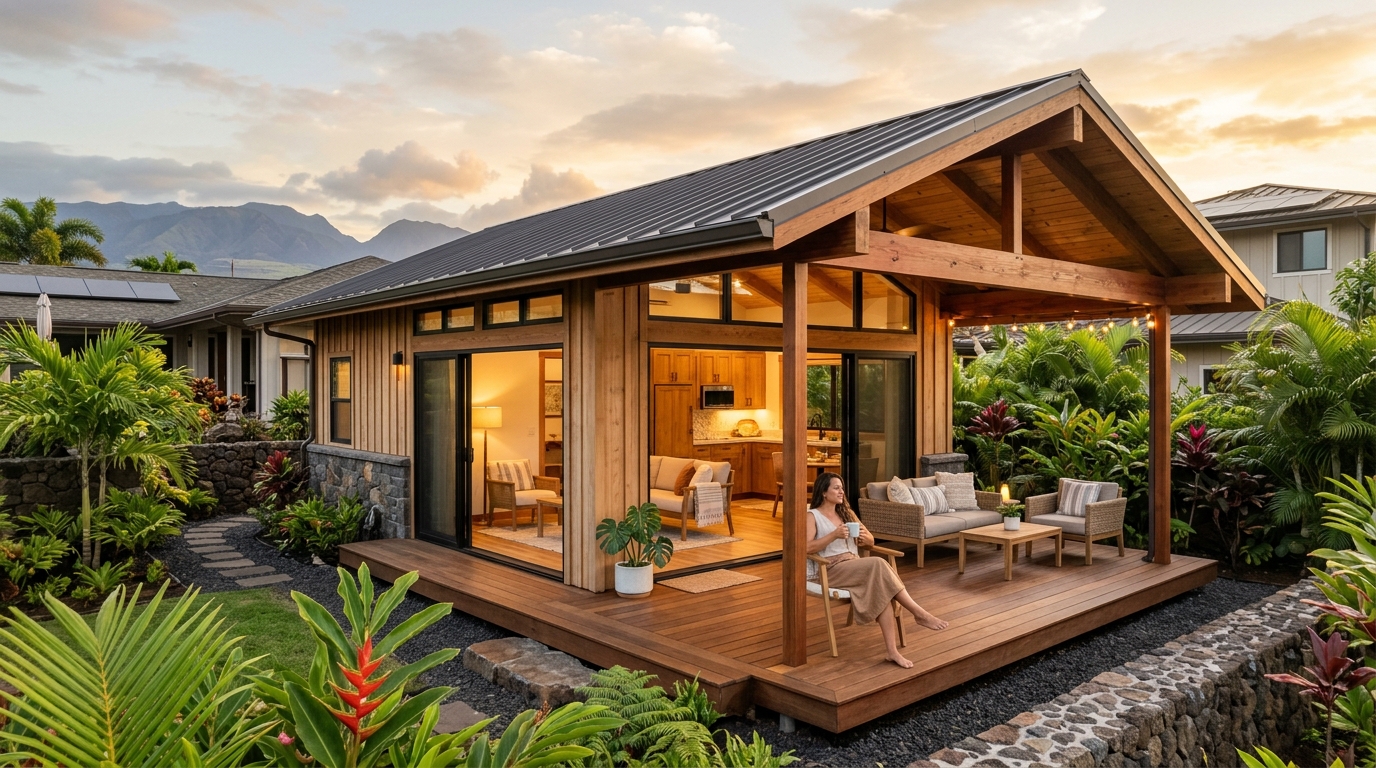
Building an Accessory Dwelling Unit (ADU) in Wailuku is one of the smartest investments a Maui homeowner can make in 2026. As an experienced adu builder wailuku, we’ve seen these projects transform properties, create multi-generational living options, and generate significant rental income. The most common question we get is straightforward: what’s the real cost and timeline? In 2026, a well-built ADU in Wailuku will cost between $450 and $650 per square foot, and the entire process, from design to handing you the keys, typically takes 12 to 18 months. The biggest variable isn’t construction; it’s the 6-to-10 month wait for permits from the Maui County Department of Planning.
\n\n
This might sound daunting, but with the right strategy and the right team, it’s entirely manageable. At Warrior Construction, we’ve spent over two decades navigating the unique challenges of building on Maui, from Wailuku’s tricky sloped lots to the logistical hurdles of getting materials to a neighbor island. We’re not just builders; we’re partners in the process, guiding you through every decision to maximize your return and minimize headaches. This article isn’t a generic sales pitch. It’s a transparent breakdown of the costs, timelines, and critical considerations for building an ADU in Wailuku, based on our direct, on-the-ground experience.
\n\n
We’ll walk you through five specific money-saving tactics that can shave tens of thousands off your budget without compromising on quality. We will cover everything from smart design choices and value engineering materials to the nitty-gritty of Wailuku-specific regulations like the local interpretation of Bill 7. Our goal is to give you the insider knowledge you need to make informed decisions, whether you decide to work with our team or another qualified contractor. Let’s get into the details of what it really takes to bring your ohana unit to life.
\n\n
Why Wailuku Homeowners Trust Warrior Construction for ADU Builder Services
\n\n
When you decide to build an ADU, you’re not just hiring a crew with hammers and a truck. You’re entrusting a significant investment to a team that needs to be an expert in local regulations, supply chain management, and the unique environmental demands of Maui. This is where our decades of experience as a licensed general contractor (BC-34373) become your biggest asset. We aren’t a mainland company with a satellite office; we are a Hawaii-based team that lives and breathes island construction. We understand what it takes to get a project done right in Wailuku, and that’s a different game than building in Honolulu or Kapolei.
\n\n
For example, navigating the Maui County permitting process is a specialized skill. While the overall state building code provides a framework, the specifics of zoning, setbacks, and wastewater requirements in Wailuku are unique. We have long-standing professional relationships with the plan reviewers at the Maui County DPP. This doesn’t mean we get special treatment, but it means we know exactly what they’re looking for. We submit complete, compliant plan sets the first time, which prevents the kind of back-and-forth that can add months to a project timeline. We had a client in Wailuku Heights whose previous architect submitted plans that didn’t account for new fire department access rules. The plans were rejected, and the project sat idle for five months. When we took over, we corrected the site plan within a week and got the permit process moving again.
\n\n
Furthermore, managing logistics on Maui is half the battle. Everything from specialty lumber to appliances has to be shipped in. Our established relationships with suppliers on both Oahu and the mainland, combined with our understanding of shipping schedules and costs, allow us to procure materials efficiently. We can anticipate delays and order critical components well in advance, preventing your project from stalling while waiting for a container to arrive. An inexperienced ADU contractor wailuku might not realize that getting a specific type of window can have a 16-week lead time, grinding construction to a halt. Our preconstruction planning process identifies these long-lead items from day one.
\n\n
At Warrior Construction, we operate on a principle of total transparency. You get access to a detailed project schedule, weekly progress reports, and a clear, itemized budget. When challenges arise—and in construction, they always do—we present you with solutions, not just problems. Building an ADU is a major undertaking, but it shouldn’t be a source of constant stress. Our job is to manage the complexity so you can focus on the exciting outcome: a beautiful, functional new space on your property.
\n\n
What Does ADU Builder Cost in Wailuku?
\n\n
Let’s get straight to the numbers. In 2026, the all-in, turnkey cost to build an ADU in Wailuku is between $450 and $650 per square foot. For a standard 600-square-foot, 1-bedroom ohana unit, this means you should budget for a total project cost of $270,000 to $390,000. Anyone quoting significantly less is likely omitting key expenses like design, permitting, site work, or utility connections. Our estimates are comprehensive, covering every aspect from the initial soil report to the final coat of paint.
\n\n
The price range depends heavily on site conditions, access, and the level of finishes you choose. A flat, easily accessible lot in a Wailuku subdivision will be on the lower end, while a sloped lot in Iao Valley requiring extensive excavation and a complex foundation will be on the higher end.
\n\n
Here’s a realistic cost breakdown for a typical 600 sq. ft. ADU in Wailuku:
\n
- \n
- Design, Engineering & Permitting: $20,000 – $35,000. This includes architectural plans, structural engineering, and all the fees for Maui County.
- Site Prep, Excavation & Foundation: $30,000 – $60,000. This is a major variable. Wailuku’s volcanic soil can be rocky, and sloped lots require more extensive concrete work.
- Framing & Structure: $48,000 – $72,000. This covers the bones of the building, including lumber, shear walls, and hurricane-rated connections.
- Exterior (Roofing, Siding, Windows, Doors): $45,000 – $65,000. We always recommend materials built for our coastal climate, like standing-seam metal roofing and fiber cement siding, which adds to the cost but saves you on maintenance down the road.
- Utility Connections (Water, Sewer, Electric): $25,000 – $50,000+. This is the biggest hidden cost. If your ADU is far from your main house’s connections, the cost of trenching can be substantial.
- Plumbing & Electrical Systems: $40,000 – $60,000. This includes all wiring, panels, fixtures, pipes, and the water heater.
- Insulation & Drywall: $15,000 – $22,000.
- Interior Finishes (Flooring, Cabinets, Countertops, Paint): $50,000 – $80,000. This is where you have the most control over the budget. Opting for vinyl flooring over engineered wood or laminate countertops over quartz can create significant savings.
- Neighbor Island Logistics Premium: We typically add a 10-15% factor to account for shipping materials and equipment to Maui.
\n
\n
\n
\n
\n
\n
\n
\n
\n
\n\n
Here are 5 smart money-saving tactics we implement with our clients:
\n
- \n
- Stick to a Rectangular Footprint: Complex designs with bump-outs and numerous corners drastically increase framing and foundation costs. A simple rectangular shape is the most efficient and cost-effective to build.
- Value-Engineer Your Materials: Don’t sacrifice quality, but be smart. For instance, high-quality fiber cement siding gives you the look of wood but costs less and withstands our salt air and sun far better. Use standard-sized windows and doors to avoid custom order upcharges.
- Site Your ADU for Utility Efficiency: The shorter the trench for your water, sewer, and electrical lines, the better. On one project in Kehalani, we saved the client nearly $15,000 just by rotating the ADU 90 degrees to shorten the sewer line run by 40 feet.
- Design with Pre-Fab Components in Mind: Using pre-fabricated roof trusses or wall panels can reduce on-site labor costs and speed up the framing process significantly.
- Plan for Simple Landscaping: Fancy retaining walls and extensive landscape design can add tens of thousands to a project. Plan for a simple, clean landscape that you can even install yourself after we’re done to save on labor.
\n
\n
\n
\n
\n
\n\n
How Long Does a ADU Builder Take in Wailuku?
\n\n
Building an ADU is a marathon, not a sprint, especially on Maui. From our first conversation to the day you can move in, a realistic timeframe for an ADU project in Wailuku is 12 to 18 months in 2026. Homeowners are often surprised to learn that the actual construction is the shorter part of the process. The bulk of the time is spent in the pre-construction phase, particularly waiting for permit approval.
\n\n
Here is a detailed timeline of what to expect when you work with our team:
\n\n
Phase 1: Design & Planning (2-4 months)
\n
- \n
- Initial Consultation & Feasibility (Weeks 1-2): We meet with you on-site to discuss your goals, assess the property, and confirm that an ADU is viable under current Maui County zoning regulations.
- Conceptual Design & Budgeting (Weeks 3-6): Our design partners develop initial floor plans and elevations. We work with you to refine the design while simultaneously creating a detailed, line-item budget to ensure the plan is financially feasible.
- Construction Documents (Weeks 7-16): Once the design is finalized, the architect and engineers create the detailed blueprints and structural calculations required for the permit application. This is a meticulous process that can’t be rushed.
\n
\n
\n
\n\n
Phase 2: Permitting (6-10 months)
\n
- \n
- Permit Submission & Initial Review: We submit the complete package to the Maui County Department of Public Works and Department of Planning. This is the longest and most unpredictable phase. The county is thorough, and plan reviewers are often backlogged.
- Revisions & Resubmission: It’s common for the county to request clarifications or minor changes. A responsive team like ours can turn these around quickly, but each resubmission puts you back in the queue. This is why getting the initial submission right is so critical. We recently had a project in Wailuku where a small drainage plan revision took three months to get re-approved.
\n
\n
\n\n
Phase 3: Construction (4-6 months)
\n
- \n
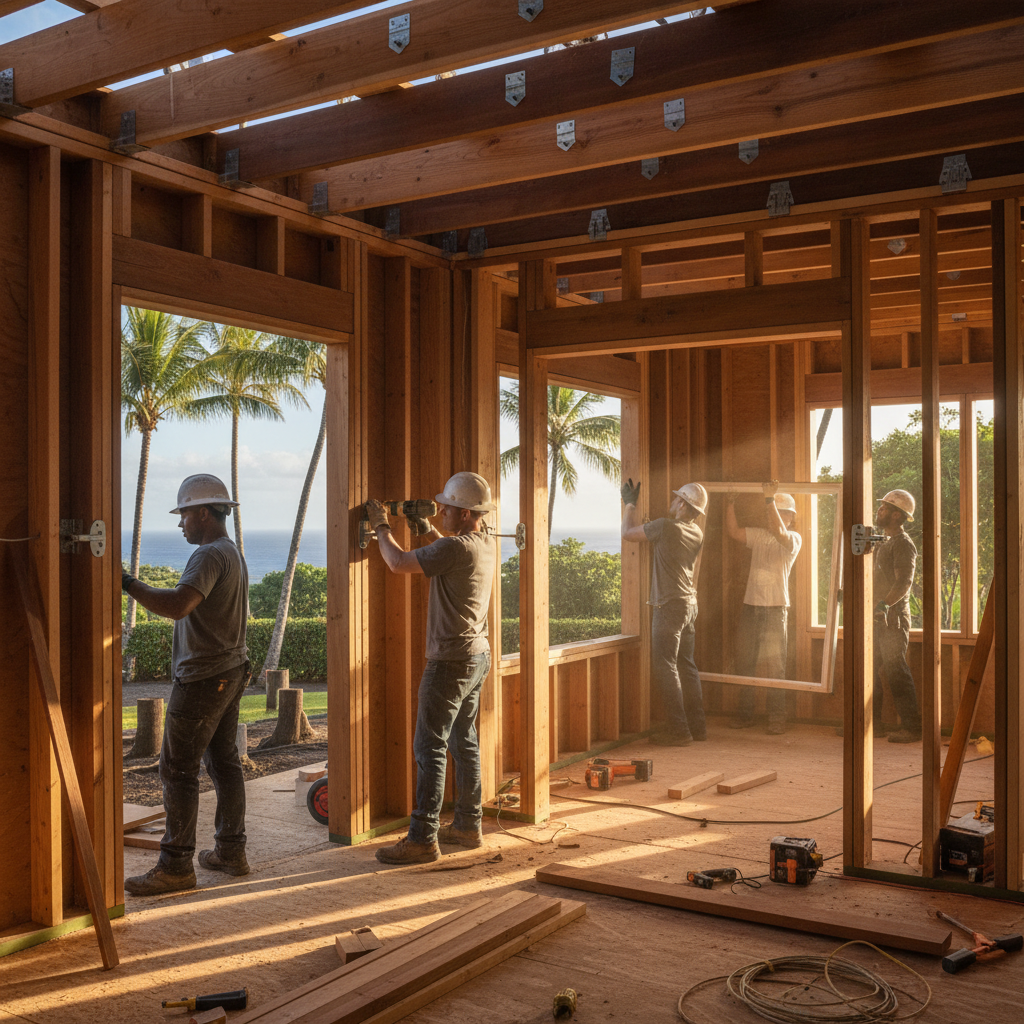
- Site Prep & Foundation (3-5 weeks): Once we have the permit in hand, work can begin. This includes excavation, grading, utility trenching, and pouring the concrete foundation.
- Framing & Rough-Ins (4-6 weeks): The structure of the ADU goes up quickly. This phase includes framing the walls and roof, followed by the installation of plumbing, electrical wiring, and HVAC ducting within the walls.
- Exterior & Interior Finishes (8-12 weeks): This is when the house starts to look like a home. We install roofing, siding, windows, and doors. Inside, we hang drywall, lay flooring, install cabinets and countertops, and complete the painting.
- Final Inspections & Punch List (2-3 weeks): We coordinate all final inspections with the county. Once we pass, we walk through the project with you to create a “punch list” of any final touch-ups needed before we hand over the keys.
\n
\n
\n
\n
\n\n
The key takeaway is to start the process long before you actually need the ADU. If you want your ohana unit ready for family in summer 2027, you need to be talking to an adu builder wailuku in early 2026.
\n\n
What Permits Do You Need for ADU Builder in Wailuku?
\n\n
Navigating the permitting process for an ADU in Wailuku is one of the most critical steps, and it’s where an experienced local contractor provides immense value. You can’t simply start building. A new ADU is considered a new single-family dwelling and requires a comprehensive set of approvals from Maui County. Attempting to bypass this process can result in massive fines, stop-work orders, and even a mandate to tear down the unpermitted structure.
\n\n
Here are the primary permits and reviews your ADU project will need to clear:
\n
- \n
- Building Permit: This is the main permit that covers the structure itself. The application package must include detailed architectural plans, structural engineering calculations (to ensure it meets hurricane code), an electrical plan, a plumbing plan, and energy code compliance forms.
- Zoning Review: Before a building permit is issued, the Maui County Department of Planning will review your plans to ensure they comply with all zoning regulations. They check for property line setbacks, building height, lot coverage, and parking requirements.
- Electrical Permit: A separate permit is required for all electrical work, which must be filed by a licensed electrician. The work will be inspected at both the rough-in and final stages.
- Plumbing Permit: Similar to electrical, a licensed plumber must file for this permit to cover all water supply and drainage systems.
- Grading and Grubbing Permit (if applicable): If your project involves significant earthmoving—more than 50 cubic yards of soil or clearing a large area—you may need a separate grading permit. This is common for sloped lots in Wailuku.
- Wastewater System Approval: You must have a plan for wastewater. If you’re connecting to the county sewer system, you’ll need approval and will pay a connection fee. If you’re on a septic system, the system must be evaluated by the Department of Health to ensure it has the capacity for the additional dwelling. In some cases, a new or expanded septic system is required, which is a major project in itself.
\n
\n
\n
\n
\n
\n
\n\n
The rules around the Bill 7 ADU wailuku legislation are also a key factor. While state-level laws like Bill 7 were designed to encourage ADU construction, each county has its own implementation. On Maui, this has affected things like parking requirements (often requiring one additional dedicated stall) and owner-occupancy rules. We stay current on every ordinance change to ensure the plans we submit are compliant from day one. While the Honolulu DPP[1] is a separate entity, the types of reviews and the meticulous level of detail they require are very similar to what we face with the Maui County DPP. It’s about showing a complete, code-compliant plan that leaves no room for questions.
\n\n
As your general contractor, Warrior Construction manages this entire permitting maze for you. We coordinate with the architect, engineers, and our licensed trade partners to assemble and submit the full permit package. We handle all communication with the county reviewers, respond to their requests, and track the application through the system until the permit is issued.
\n\n
Wailuku-Specific Considerations: Climate, Materials, Regulations
\n\n
Building on Maui isn’t like building anywhere else, and even within the island, Wailuku has its own unique set of challenges and considerations. A successful ADU project here requires a deep understanding of the local environment. An ohana unit builder wailuku who applies a generic, mainland-style approach will inevitably run into problems.
\n\n
Climate & Environment
\n
Wailuku sits at the mouth of the Iao Valley, which means it gets a significant amount of rain and wind, especially compared to Kihei or Lahaina. This has major implications for construction.
\n
- \n
- Water Management: Proper water management is non-negotiable. This means designing effective roof drainage with properly sized gutters and downspouts that direct water away from the foundation. It also means meticulous waterproofing around all window and door openings. We use high-quality flashing tape and sealant techniques that go above and beyond the basic code requirements because we’ve seen the damage that wind-driven rain can cause.
- Hurricane Resistance: Since Hurricane Iniki in 1992, Hawaii building codes have become incredibly robust. We build every structure to withstand hurricane-force winds. This involves using specific metal connectors (hurricane straps and ties) to create a continuous load path from the roof to the foundation, ensuring the building holds together under extreme stress. Impact-rated windows are also a smart investment for both safety and durability.
- Ventilation: We design ADUs to take advantage of Maui’s trade winds. Careful placement of windows can create natural cross-ventilation, dramatically reducing the need for air conditioning and lowering your electric bill. This is a simple, no-cost design feature that has a huge impact on comfort.
\n
\n
\n
\n\n
Materials & Durability
\n
The combination of intense sun, salt in the air (even inland in Wailuku), and humidity is brutal on building materials. Choosing the right products is critical for the longevity of your investment.
\n
- \n
- Corrosion Resistance: We use stainless steel or hot-dip galvanized fasteners for all exterior work. Using standard nails or screws is a recipe for rust streaks and structural failure within a few years. All metal flashing and roofing must be of a grade suitable for a marine environment.
- Siding and Roofing: We often recommend fiber cement siding (like HardiePlank) over wood. It’s impervious to termites, doesn’t rot, and holds paint exceptionally well under the harsh UV rays. For roofing, a standing-seam metal roof is a fantastic long-term investment. It reflects solar heat, withstands high winds, and can last 50 years or more.
- Termite Protection: Ground termites are a constant threat in Hawaii. We build with preventative measures from the ground up, including using treated lumber for the sill plate, installing physical barriers, and ensuring proper grading to keep soil away from the framing.
\n
\n
\n
\n\n
Regulations and Site Conditions
\n
- \n
- Soil Conditions: The soil in and around Wailuku can vary from expansive clay to hard volcanic rock. On a recent project near the Maui Tropical Plantation, we hit a massive blue rock boulder that required specialized equipment to break up, a contingency we had thankfully planned for. In some areas, a geotechnical report from an engineer is necessary to design the correct type of foundation.
- Wastewater: As mentioned, understanding your property’s wastewater situation is key. Many properties in older parts of Wailuku rely on septic systems or cesspools (which are being phased out). The feasibility and cost of connecting your ADU can be a major budget item that must be investigated early in the planning process.
\n
\n
\n\n
An experienced local builder anticipates these challenges and incorporates the solutions into the design and budget from the very beginning.
\n\n
How to Choose the Right ADU Builder Contractor in Wailuku
\n\n
Choosing your builder is the single most important decision you’ll make in the entire ADU process. The right contractor will make the experience smooth and deliver a high-quality product, while the wrong one can lead to budget overruns, endless delays, and defects. As you evaluate potential builders, here’s a checklist of what to look for, based on what we know sets a professional team apart.
\n\n
1. Verify Their License and Insurance—No Exceptions
\n
This is the absolute baseline. Any contractor you consider must have a valid Hawaii General Contractor’s license. You can and should verify this yourself. The state’s Professional & Vocational Licensing (PVL) division has a public search tool. You can look up our license, BC-34373, right on their website[2]. A licensed contractor has met the state’s requirements for experience, competency, and financial stability. Additionally, ask for proof of both General Liability insurance and Worker’s Compensation insurance. If a worker gets injured on your property and the contractor isn’t insured, you could be held liable. Do not take their word for it; ask to see the actual certificates.
\n\n
2. Demand Maui-Specific Experience
\n
A contractor who has built 100 homes in Ewa Beach doesn’t automatically know how to build in Wailuku. The logistics, the subcontractor relationships, and the nuances of the Maui County permitting office are all different. Ask potential builders these specific questions:
\n
- \n
- \”Can you show me three ADU or custom home projects you’ve completed on Maui in the last five years?\”
- \”Who is your primary contact at the Maui County Department of Planning?\”
- \”How do you manage material deliveries from Oahu or the mainland to a Maui job site?\”
\n
\n
\n
\n
Their answers will quickly reveal their level of local experience. We are proud to show potential clients our portfolio of work across the islands, including projects right here on Maui.
\n\n
3. Evaluate Their Communication and Professionalism
\n
The construction process is long, and you will be in constant contact with your builder. Look for a team that is organized, transparent, and responsive. When you first call them, how long does it take for them to get back to you? When they provide an estimate, is it a one-page document with a single number, or is it a detailed, multi-page proposal that breaks down the costs? At Warrior Construction, we provide our clients with access to a project management portal where they can see the schedule, view daily progress photos, and approve selections. Clear, consistent communication prevents misunderstandings and keeps the project on track.
\n\n
4. Compare Detailed Bids, Not Just Bottom-Line Numbers
\n
When you get multiple bids, resist the temptation to simply pick the lowest one. A suspiciously low bid often means something has been left out, whether it’s the cost of permits, a low-quality allowance for finishes, or an unrealistic labor estimate. A professional bid will be detailed, with line items for each phase of construction. This allows you to compare apples to apples and understand exactly what is—and is not—included in the price. It also serves as the foundation for a clear and fair contract.
\n\n
Ultimately, you’re looking for a partner, not just a vendor. Find a builder who listens to your goals, respects your budget, and has the proven local experience to guide you through this complex but rewarding journey.
\n\n
Real Wailuku ADU Builder Project Example
\n\n
To make all this information more concrete, let’s walk through a typical project we recently completed. This provides a real-world look at the process, challenges, and outcomes you can expect when building an ohana unit in Wailuku.
\n\n
Client: The Endo Family in Wailuku
\n\n
The Goal: The Endos wanted to build a 500-square-foot, 1-bedroom, 1-bathroom ADU in their backyard for their aging parents. The primary goals were accessibility (aging-in-place design), durability, and keeping the project under a firm budget of $280,000.
\n\n
The Property & Challenges: Their property was a standard lot in an established neighborhood. The main challenge was the site for the ADU, which was at the back of the lot with a slight 5-foot slope. This meant we needed a plan for a stepped foundation to avoid massive excavation costs. Furthermore, the main sewer line connection was located at the front of the main house, requiring over 100 feet of trenching through their existing yard.
\n\n
Warrior Construction’s Approach & Solutions:
\n
- \n
- Design-Build Efficiency: We served as the single point of contact for both design and construction. This streamlined the process immensely. Our designer worked directly with the Endos to create a floor plan featuring wider doorways, a zero-threshold walk-in shower, and reinforced walls for future grab bar installation.
- Foundation Solution: Instead of a costly monolithic slab on a heavily graded pad, we designed a post-and-pier foundation. This minimized the amount of earthwork required, saving both time and money, and had a lighter impact on the property.
- Value Engineering: To keep costs down without sacrificing the critical accessibility features, we worked with the family on material selections. We used high-quality luxury vinyl tile (LVT) flooring which gives the look of wood but is more durable and less expensive. We also used a standard, in-stock cabinet line and upgraded it with higher-end hardware for a custom look at a fraction of the price.
- Utility Planning: We carefully planned the utility trenching route to minimize disruption to their existing landscaping, saving a mature mango tree they cherished.
\n
\n
\n
\n
\n\n
The Final Numbers:
\n
- \n
- Initial Budget: $280,000
- Final Project Cost: $274,500
- Project Timeline:\n
- \n
- Design & Planning: 3 months
- Permitting with Maui County: 8 months
- Construction: 4.5 months
- Total Duration: 15.5 months
\n
\n
\n
\n
\n
\n
\n
\n
\n\n
The Outcome: The Endo family now has a beautiful, safe, and functional home for their parents, allowing them to live independently while still being close by for support. The project came in under budget and on schedule, and the value added to their property far exceeded the construction cost, not to mention the priceless value of keeping their family together.
\n\n
What this means for Hawaii homeowners
\n
Understanding the costs, timelines, and local nuances of building an ADU in Wailuku is the first step toward a successful project. The demand for housing on Maui remains incredibly high, and adding an ohana unit is a powerful way to increase your property’s value, generate rental income, or provide housing for family. However, it’s not a simple or quick undertaking. The information we’ve shared is meant to give you a realistic framework for planning your 2026 or 2027 project.
\n\n
Here are the most important takeaways for you as a homeowner:
\n
- \n
- Start Early: The 12-to-18-month timeline is real, and the majority of that is permitting. If you need your ADU completed by a certain date, you must begin the design and planning process at least a year and a half in advance.
- Budget Realistically: Use the $450-$650 per square foot range as a starting point. Be wary of any contractor who gives you a significantly lower number without a detailed explanation of what’s excluded. Always have a contingency fund of 10-15% set aside for unforeseen issues, like hitting unexpected rock during excavation.
- Hire a Local Expert: Your choice of an ADU contractor wailuku is paramount. You need a licensed, insured builder with a proven track record on Maui. They will be your guide through the entire process, from navigating the county offices to managing the island’s unique logistical challenges.
- Focus on Durable, Climate-Appropriate Materials: Don’t cut corners on the building envelope. Investing in quality roofing, siding, windows, and corrosion-resistant fasteners will save you thousands of dollars in repairs and maintenance over the life of the building. It’s the smart long-term play.
\n
\n
\n
\n
\n
Building an ADU is a significant investment, but it’s one that pays dividends for years to come. Your next step should be to schedule a consultation with a qualified builder to discuss the specifics of your property and vision. Get started today by requesting a free estimate.
\n
\n\n
Frequently Asked Questions About ADU Builder in Wailuku
\n
Can I build a two-story ADU in Wailuku?
\n
Generally, yes, you can build a two-story ADU in Wailuku, provided it meets the height limits for your specific zoning district (typically 25-30 feet) and complies with lot coverage and setback requirements. The feasibility really depends on your lot size and the existing structures. A two-story design can be a great way to maximize living space on a smaller footprint, but it will also increase construction costs, particularly for the foundation and structural engineering.
\n
\n
How does Bill 7 affect my ADU plans in Wailuku?
\n
While the state’s Bill 7 (now Act 39) was intended to streamline ADU development, Maui County has its own specific ordinances that you must follow. For Wailuku homeowners, the key changes involve relaxed owner-occupancy requirements on some lots and modifications to setback rules. However, Maui County still has specific parking requirements—often one additional off-street stall per ADU—which can be a major factor. As your builder, we ensure your plans fully comply with the current Maui County interpretation of these rules.
\n
\n
What’s the biggest hidden cost when using an ohana unit builder wailuku?
\n
The biggest and most common hidden cost is utility connections. The estimate for the building itself might be clear, but the cost to trench and run water, sewer, and electrical lines from the main house or the street to the new ADU site can be substantial. If the distance is long or requires cutting through significant concrete or landscaping, these costs can easily escalate to $25,000-$50,000 or more. We investigate this upfront to provide a more accurate all-in budget.
\n
\n
Can I act as my own general contractor for an ADU to save money?
\n
While Hawaii law allows for an owner-builder exemption, we strongly advise against it for a project as complex as an ADU. Managing the dozens of subcontractors, scheduling inspections with Maui County, handling material procurement and logistics, and assuming all the liability is a full-time job that requires extensive experience. Any money you might save on a GC fee is often lost through costly mistakes, delays, and the inability to get wholesale pricing from suppliers.
\n
\n
Are prefab or modular ADUs a cheaper option on Maui?
\n
Not necessarily. While the base price of a prefab unit from a mainland factory may seem attractive, the final installed cost on Maui is often comparable to, or even more than, a traditional site-built ADU. You have to factor in the immense cost of shipping the modules to Maui, crane rental fees for placement (which can be $10,000+ per day), and the costs for the site-specific foundation, utility hookups, and any necessary finish work. Site-built construction gives you more design flexibility and control over the quality.
\n
\n
How much value does an ADU add to a Wailuku property in 2026?
\n
An ADU almost always adds more value to your property than its cost to build, especially in Maui’s tight housing market. A well-built, permitted $300,000 ADU could realistically add $350,000 to $450,000 to your home’s resale value. Beyond the equity gain, it creates an immediate income stream if you rent it out. With rental rates for 1-bedroom units in Central Maui, an ADU can generate significant positive cash flow from day one.
\n
\n
What’s the difference between a design-build contractor and just hiring a separate architect and builder?
\n
With the traditional method, you hire an architect to draw plans and then bid those plans out to builders. This can create a disconnect where plans are designed over budget, leading to redesign costs and delays. As a design-build firm, Warrior Construction acts as your single point of responsibility for the entire project. Our design, estimating, and construction teams work together from the start, ensuring the design is buildable, beautiful, and, most importantly, stays within your budget from the very first sketch.
\n
\n
\n\n
Building an ADU in Wailuku is a complex process with many moving parts, but you don’t have to navigate it alone. With over 20 years of experience as a trusted Hawaii general contractor, our team at Warrior Construction (License BC-34373) has the local knowledge and expertise to bring your vision to life, on time and on budget.
\n
If you’re ready to explore the potential of an ADU on your property, let’s talk. We can provide a clear, comprehensive plan tailored to your specific goals and site conditions. Learn more about our ADU & Ohana Unit construction services and contact us today for a no-obligation consultation.
\n\n
References
\n