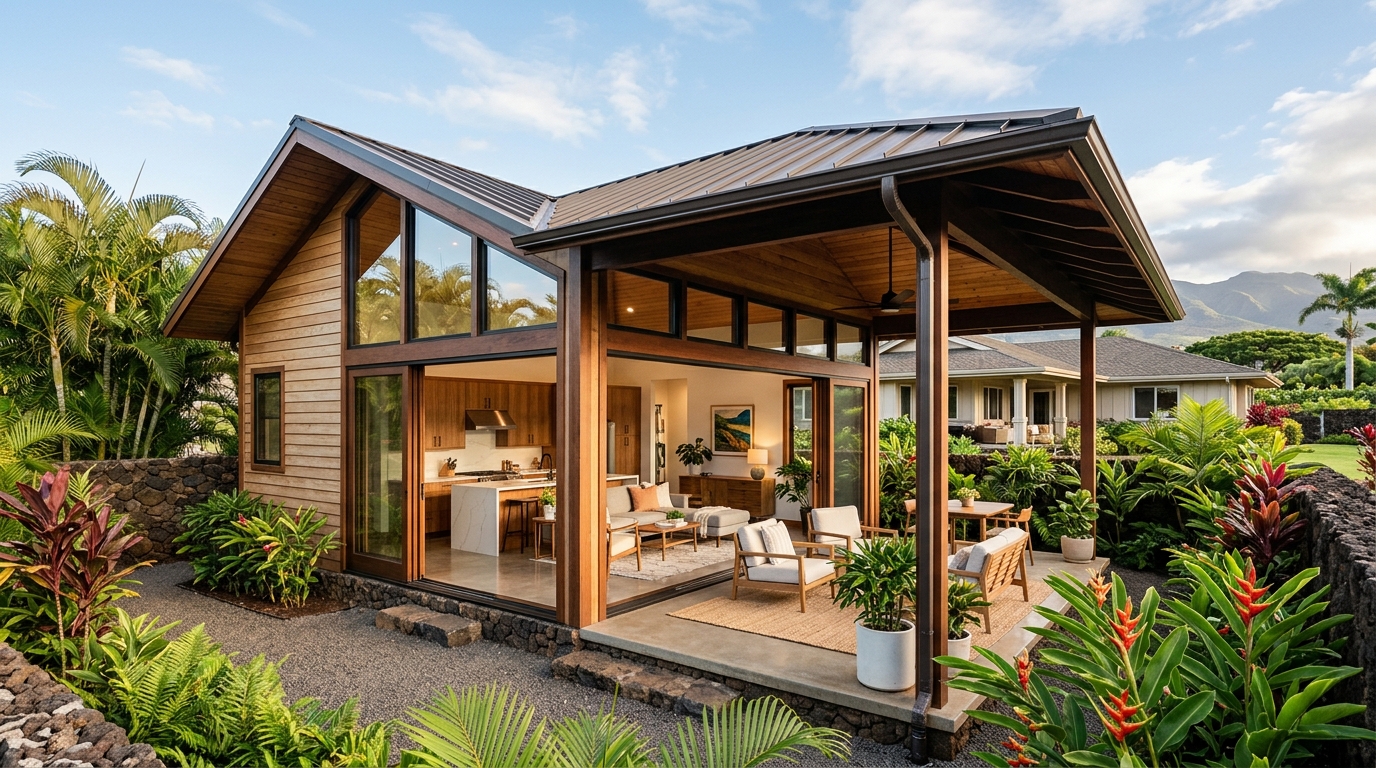
As a leading adu builder in Kahului, the first thing we tell Maui homeowners is to ground their expectations in reality. Building an Accessory Dwelling Unit (ADU), or ohana unit, is one of the smartest investments you can make in Hawaii right now, but it’s not a weekend project. Based on our 2026 projects, a well-built ADU in Kahului will typically range from $250,000 for a simple studio to over $450,000 for a larger two-bedroom unit with higher-end finishes. The entire process, from initial design sketches to you handing over the keys to a family member or tenant, generally takes between 9 and 14 months here on Maui. The biggest variable isn’t construction; it’s waiting for the county permits to clear.
For over two decades, our team at Warrior Construction has been navigating the unique challenges of building in the islands. It’s a different world from the mainland. Here, we deal with everything from securing materials via Young Brothers shipping, which can add weeks to a timeline, to engineering foundations for volcanic soil and specifying hardware that won’t rust out in two years from the salt-laced air. An ADU is more than just a small house; it’s a complex project that requires a deep understanding of Maui County’s specific codes, climate, and supply chain. Getting it right means adding significant value to your property and creating a safe, durable home. Getting it wrong can lead to costly repairs, code violations, and endless headaches. This article breaks down the nine most critical things every Kahului homeowner needs to know before breaking ground.
Why Kahului Homeowners Trust Warrior Construction for ADU Builder
Choosing an ADU contractor in Kahului isn’t just about finding someone who can swing a hammer. It’s about finding a partner who understands the local landscape—from the permitting office at the Maui County building to the supply houses in the industrial park. At Warrior Construction (License BC-34373), we’ve built our reputation on transparency and deep local expertise. We’re not a mainland company with a satellite office; we live here, we build here, and we understand the specific nuances of constructing quality homes on Maui that are built to last.
First and foremost, our experience is hyper-local. We know that the red dirt in Central Maui requires specific grading and compaction strategies that you wouldn’t use in the sandy soil of Kihei. We understand the wind patterns that sweep across the valley and engineer our structures accordingly, using hurricane ties and straps that exceed the already-strict Hawaii building code. On a recent project in Wailuku Heights, the client was concerned about wind-driven rain. We specified a robust waterproofing system behind the fiber cement siding and installed pan flashing on all windows—details that a less experienced builder might overlook but are standard practice for our team. It’s this kind of proactive, climate-aware building that prevents problems down the road.
Furthermore, we manage the entire process in-house. A lot of homeowners get overwhelmed thinking about hiring an architect, then a structural engineer, then trying to get those plans through the county. Our design-build approach streamlines this. We coordinate the entire team, ensuring the plans are not only beautiful but also buildable within your budget and compliant with all Maui County ordinances. This saves a tremendous amount of time and prevents the finger-pointing that can happen when the architect’s vision doesn’t align with the realities of the budget or the building code. Our job is to be your single point of responsibility, from the first sketch to the final inspection. Verifying a contractor’s legitimacy is simple and crucial; you can always check our license and any other contractor’s status on the state’s professional licensing website.[1] We encourage every potential client to do their due diligence.
What Does ADU Builder Cost in Kahului?
Let’s get straight to the point: in 2026, the average cost to build a quality ADU in Kahului is between $450 and $650 per square foot. So, a 600-square-foot one-bedroom ohana unit will land somewhere between $270,000 and $390,000. This number often surprises people who see mainland cost guides online. But here on Maui, we have what we call the ‘paradise tax’—higher costs for labor, materials that have to be shipped in, and extensive regulatory requirements.
The total cost is broken down into two main categories: hard costs and soft costs.
Hard Costs (About 75-85% of Budget)
These are the tangible expenses for construction itself. Think of it as everything that physically becomes part of the house.
- Site Work: Clearing, grading, and excavation. On a flat Kahului lot, this might only be $8,000. On a sloped lot with a lot of rock, it could easily be $25,000 or more.
- Foundation: A standard concrete slab-on-grade foundation for an 800 sq ft ADU will run about $20,000 – $30,000.
- Framing: Using termite-resistant treated lumber or light-gauge steel, the framing package (labor and materials) for a 600 sq ft unit is roughly $35,000 – $50,000.
- Exterior Finishes: This includes the roof (standing seam metal is our recommendation, around $18,000), siding (fiber cement, $15,000), windows (hurricane-rated, $12,000), and doors.
- MEP (Mechanical, Electrical, Plumbing): Rough-in and finish for all three systems will be in the $40,000 – $60,000 range. A big variable here is the distance to connect to existing utilities. A long trench can add thousands.
- Interior Finishes: Drywall, paint, flooring, cabinets, countertops, tile, fixtures. This is where your choices have the biggest impact. You can spend $15,000 on basic cabinets and laminate counters or $45,000 on custom koa wood and quartz.
Soft Costs (About 15-25% of Budget)
These are the indirect costs required to get the project planned, approved, and managed.
- Design & Engineering Fees: Expect to pay 8-15% of the construction cost. For a $300,000 ADU, that’s $24,000 – $45,000 for architectural plans, structural engineering, and possibly a survey.
- Permit Fees: Maui County permit fees are complex. For an ADU, you’re likely looking at $3,500 – $7,000 depending on the size and valuation. This includes the building permit, plan review fees, and separate permits for electrical and plumbing.
- Utility Connection Fees: This is a big one people forget. If the county requires a new water meter, the fee can be over $10,000. Sewer connection fees can also be substantial.
- Contingency: We always advise clients to hold a 10-15% contingency fund. On an island, you never know when a shipment will be delayed or you’ll hit unexpected hard rock during excavation. For a $300,000 build, that’s an extra $30,000 – $45,000 set aside for peace of mind.
Thinking you can build for $200 per square foot is a recipe for disaster. A reputable ADU contractor Kahului will give you a detailed, transparent budget upfront that accounts for all these factors, ensuring there are no major financial surprises mid-project.
How Long Does a ADU Builder Take in Kahului?
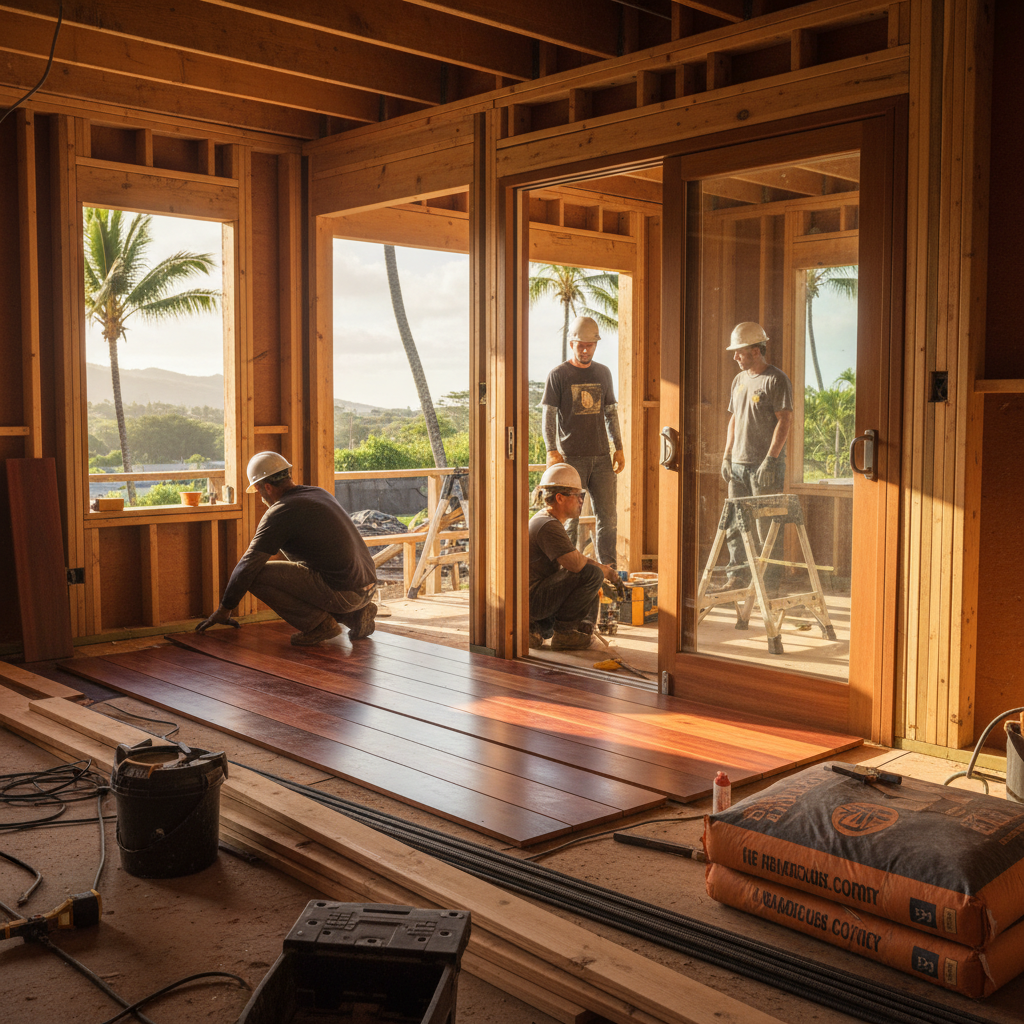
Building an ohana unit on Maui is a marathon, not a sprint. While the actual hands-on construction might only take 4-6 months, the total project timeline from our first conversation to move-in day is typically 9 to 14 months in 2026. The biggest factor, by far, is the time spent in the permitting phase with the Maui County planning and public works departments.
Here’s a realistic breakdown of the timeline you should expect:
-
Phase 1: Design and Feasibility (4-8 Weeks)
This is where we start. Our team meets with you to understand your goals, budget, and the specifics of your property. We’ll conduct a feasibility study to confirm your lot is eligible for an ADU under current zoning. Then, our designers get to work on preliminary floor plans and elevations. There’s usually some back-and-forth here to get everything just right before we move on to creating the detailed construction documents.
-
Phase 2: Permitting (4-7 Months)
This is the big wait. Once the detailed architectural and structural plans are complete, we submit the entire package to the Maui County Department of Planning and Department of Public Works. The plans go through multiple reviews: zoning, building, electrical, plumbing, and sometimes wastewater. Each department has its own queue, and it’s not uncommon for the initial review to take 2-3 months. If they have comments or require revisions (which is common), it adds more time. We are proactive in communicating with the plan reviewers, but the timeline is largely out of our hands. Patience is key during this phase.
-
Phase 3: Site Preparation and Foundation (2-3 Weeks)
Once we have the approved permit in hand, things start moving fast. Our crews will mobilize to your site to clear and grade the building area. We’ll then excavate for the footings and underground utilities (plumbing and electrical conduit). After the footing and slab inspections are passed, we pour the concrete foundation.
-
Phase 4: Framing and Dry-In (3-5 Weeks)
This is the most exciting phase for homeowners, as the structure takes shape almost overnight. We frame the walls, set the roof trusses, and install the sheathing for the roof and walls. After that, we install the windows, exterior doors, and roofing material. This process, known as the “dry-in,” makes the structure weather-tight so interior work can begin.
-
Phase 5: Interior and Exterior Finishes (6-9 Weeks)
This is the longest construction phase. Inside, our plumbing, electrical, and HVAC subcontractors run all the rough-in lines through the walls. After those inspections, we insulate, hang drywall, and begin the finish work: painting, installing flooring, setting cabinets and countertops, and tiling the kitchen and bathrooms. Simultaneously, on the outside, we install the siding, trim, and paint.
-
Phase 6: Final Touches and Inspections (2-3 Weeks)
In the final stretch, we install light fixtures, plumbing fixtures, appliances, and hardware. We’ll complete the final grading outside, and if landscaping is part of the scope, that happens now. The project concludes with a series of final inspections from the county. Once we have the green light on all of them, we do a final walkthrough with you, hand over the keys, and your new Kahului ADU is officially complete.
What Permits Do You Need for ADU Builder in Kahului?
Navigating the permitting process for an ADU in Kahului is one of the most critical and often underestimated parts of the project. It’s not as simple as just submitting a drawing. The Maui County system has its own set of rules, and a deep understanding is essential to avoid months of delays. Unlike Oahu, where Honolulu’s Department of Planning and Permitting (DPP)[2] has specific procedures like Bill 7, Maui has its own distinct ordinances and review processes.
To build a legal, permitted ADU in Kahului, you will need a comprehensive permit package, which typically includes:
- Building Permit Application: This is the main application that covers the overall structure. It requires detailed information about the project, including the valuation, square footage, and identification of all licensed contractors involved (general, electrical, plumbing).
- Stamped Architectural Plans: These are the detailed blueprints for your ADU, created by a Hawaii-licensed architect or draftsperson. They must include floor plans, elevations, sections, and details that show full compliance with the Maui County building code.
- Structural Engineering Plans & Calculations: A Hawaii-licensed structural engineer must design the foundation and framing to withstand local conditions, including seismic activity and hurricane-force winds. These calculations are a required part of the submission.
- Site Plan: This drawing shows the entire property, including the existing main house, the proposed ADU, property lines, setbacks, utility connections, and parking spaces. This is reviewed by the Zoning division to ensure your project complies with all local ordinances regarding ADU placement and size.
- Electrical Permit: A separate permit, filed by a licensed electrician, is required for all electrical work.
- Plumbing Permit: Similarly, a licensed plumber must file for a permit covering all water supply and drainage work.
- Wastewater System Clearance: You must show how the ADU will handle wastewater. If you’re connecting to the county sewer, you need clearance. If you have a septic system, you’ll need a licensed engineer to certify that the existing system can handle the additional load, or you’ll have to upgrade it—a potentially huge cost. We had a project in Haiku where a required septic upgrade added nearly $40,000 to the budget, something the homeowner hadn’t anticipated.
The term Bill 7 ADU kahului sometimes comes up, but it’s important to clarify that Bill 7 (now Ordinance 19-17) is a City and County of Honolulu (Oahu) rule. While it was groundbreaking for Oahu by easing restrictions, Maui County has its own set of rules under Title 19 of the Maui County Code. These rules dictate the maximum size (often around 800 square feet), height, setbacks, and parking requirements. An experienced local builder will know these rules inside and out and will design your project to meet them from day one, which is the fastest way to get through the review process.
Kahului-Specific Considerations: Climate, Materials, Regulations
Building in Kahului isn’t like building anywhere else, not even on other parts of Maui. The unique combination of its central valley location, wind patterns, and soil conditions requires a thoughtful approach to design and material selection. As a veteran ohana unit builder kahului, we plan for these local factors from the very beginning.
Climate and Environment
Kahului sits in a valley between Haleakalā and the West Maui Mountains, which creates a natural wind tunnel. The trade winds can be persistent and strong. This has several implications for construction:
- Wind Resistance: We build beyond the minimum hurricane code requirements. This means using specific nailing patterns, robust hurricane straps connecting the roof to the walls and the walls to the foundation, and specifying windows and doors with high wind-pressure ratings.
- Moisture Management: While not as rainy as the North Shore, Kahului gets its share of wind-driven rain. A high-quality weather-resistive barrier (WRB), proper window flashing, and a well-ventilated attic or roof assembly are non-negotiable to prevent moisture intrusion and mold growth down the line.
- Salt Air: While not directly on the coast like Paia or Kihei, the air in Kahului still carries a significant amount of salt. We strongly recommend against using materials prone to corrosion. This means using stainless steel fasteners, vinyl or fiberglass window frames instead of aluminum (unless it’s properly anodized), and protecting all metal hardware with appropriate coatings.
Materials Suited for Central Maui
Material choices are critical for longevity and low maintenance in our island environment.
- Roofing: Standing seam metal roofing is the best choice for Kahului. It’s incredibly durable, reflects solar heat to keep the home cooler, and holds up extremely well to high winds. Asphalt shingles, common on the mainland, just don’t last as long here.
- Siding: We almost exclusively use fiber cement siding (like James Hardie). It’s impervious to termites, doesn’t rot, and holds paint exceptionally well in the intense UV light. Wood siding looks beautiful but requires constant maintenance to prevent rot and pest damage.
- Framing: Termites are a relentless force in Hawaii. We recommend either light-gauge steel framing or borate-treated lumber (brand names like Hi-bor®). Standard untreated lumber is simply not an option for any reputable builder here.
Local Regulations and Zoning
Maui County has its own specific rules for ADUs. A good contractor must be an expert in these.
- Size and Lot Requirements: Maui County generally limits ADUs to a maximum of 800 square feet of living area, but the exact allowance can depend on your lot size and zoning designation. There are also minimum lot sizes required to even be eligible for an ADU.
- Parking: The county requires at least one dedicated off-street parking space for the ADU, in addition to the required parking for the main house. This must be shown clearly on the site plan submitted for permits.
- Setbacks: ADUs must respect the same property line setbacks as the main house, which can influence where on your property the unit can be placed.
Understanding these Kahului-specific factors is what separates a smooth, successful project from one plagued by delays and future problems. It’s the kind of on-the-ground knowledge that you only get from years of building right here in the community.
How to Choose the Right ADU Builder Contractor in Kahului
Finding the right contractor is the single most important decision you’ll make for your ADU project. A great contractor can make the process smooth and deliver a high-quality home, while a bad one can turn your dream into a financial and legal nightmare. Here’s a checklist we recommend every Maui homeowner use when vetting a potential ADU contractor kahului.
- Verify Their License and Insurance.
This is non-negotiable. The first step is to ask for their Hawaii contractor license number. For example, our license is BC-34373. You can and should verify this number on the Hawaii Department of Commerce and Consumer Affairs (DCCA) Professional & Vocational Licensing (PVL) website[1]. Ensure the license is active, in good standing, and is the correct classification (a Type B General Building Contractor license is required). Also, ask for a certificate of insurance showing they carry both general liability and workers’ compensation. Without this, you could be liable for accidents on your property. - Look for Specific ADU Experience on Maui.
Building an ADU is different from a large custom home or a kitchen remodel. Ask to see a portfolio of their completed ohana units, specifically on Maui. A contractor based in Honolulu might not understand the nuances of the Maui County permitting system or the local subcontractor network. Ask them: “How many ADUs have you built in Kahului or nearby towns in the last two years?” Their answer will tell you a lot. - Check Local References.
Don’t just rely on online reviews. Ask the contractor for the names and numbers of 2-3 recent ADU clients on Maui. Call them and ask direct questions: Did the project stay on budget? How did the contractor handle unexpected issues? Was communication clear and consistent? How was the quality of the final product? A confident builder with a good track record will be happy to provide references. - Review Their Contract Carefully.
Never sign a contract that is vague or incomplete. A professional contract should include a detailed scope of work, a clear payment schedule tied to project milestones, a projected timeline, a list of materials and finishes (the ‘specifications’), and procedures for handling change orders. Be wary of any contractor who asks for a huge upfront deposit. A typical payment schedule might be 10% at signing, with subsequent payments made as major phases (like foundation, framing, etc.) are completed. - Assess Their Communication and Professionalism.
From the very first phone call, pay attention to how they communicate. Do they return your calls promptly? Do they answer your questions clearly and patiently? Building an ADU is a long-term relationship. You need a partner you can trust and communicate with effectively. If you feel pressured, rushed, or dismissed during the bidding process, that’s a major red flag for how they’ll behave once the project starts.
Real Kahului ADU Builder Project Example
To make all of this more concrete, let’s walk through a typical ADU project our team completed in Kahului in early 2026. This example illustrates the real-world process, challenges, and outcomes you can expect.
The Client & The Goal:
Our clients were a couple in their early 60s living in a single-family home in the Traditions at Maui Lani community. Their goal was to build a detached ohana unit for their daughter and her young child, allowing them to live affordably on Maui while maintaining privacy for both families.
The Project Scope:
A new, 750-square-foot, 2-bedroom, 1-bathroom ADU. The design featured an open-concept living and kitchen area, a covered lanai, and finishes that were durable and low-maintenance to handle life with a toddler. The exterior was designed to complement the main house, as required by the neighborhood’s design guidelines.
The Challenges:
The primary challenge was navigating the Maui Lani design review committee in addition to the standard county permitting process. The committee had strict rules on roofing materials, paint colors, and window styles. The second challenge was a utility issue: the best location for the ADU was over 150 feet from the existing sewer lateral, requiring significant trenching and a lift station pump to be installed, which added about $12,000 to the budget that wasn’t initially obvious.
Warrior Construction’s Approach:
Our team handled the entire process. We started by creating a design package that met both the family’s needs and the strict design committee rules, getting pre-approval before we even submitted to the county. This saved months of potential back-and-forth. When the sewer connection issue arose during our site analysis, we brought in our plumbing engineer to design an efficient and cost-effective lift station solution. We presented the clients with a clear change order explaining the necessity and the cost before any work was done. Throughout the build, our project manager provided weekly updates with photos, so the family always knew what was happening on site.
The Outcome:
From initial design to final move-in, the project took 12 months. The final construction cost, including the sewer pump addition, was approximately $385,000. The result was a beautiful, functional, and fully permitted ADU that increased the property value significantly and, more importantly, brought three generations of a local family together on one property.
What this means for Hawaii homeowners
Building an ADU in Kahului is a powerful way to enhance your property, generate rental income, or keep your family close. But it’s a serious construction project that requires careful planning, a realistic budget, and the right professional team. Rushing into it with an unqualified contractor or an incomplete understanding of the process is the fastest way to lose money and create a mess.
Here are the key takeaways you should focus on:
- Budget Realistically: In 2026, you should plan for a budget of at least $250,000 for even a small, basic ADU on Maui. Use a figure of $450-$650 per square foot for your initial planning and always include a 10-15% contingency fund for unexpected issues.
- Embrace the Timeline: The process will take longer than you think, primarily due to permitting. Plan for a 9 to 14-month journey from start to finish. If anyone promises you a 4-month timeline, they are not being honest about the permitting phase.
- Hire a Local Pro: Your success hinges on hiring a licensed, insured, and experienced local ADU builder. They will know the specific Maui County codes, the best materials for our climate, and how to navigate the permitting system efficiently.
- Design for Durability: Don’t cut corners on materials. Investing in a standing seam metal roof, fiber cement siding, and termite-resistant framing will save you tens of thousands of dollars in maintenance and repairs over the life of the home.
- Start Planning Now: Because of the long lead times for design and permitting, the best time to start planning is 6-12 months before you hope to break ground. This gives you ample time for due diligence, design development, and getting your project into the county’s review queue.
An ADU is a fantastic asset in Hawaii. By approaching it with the right information and the right team, you can ensure your project is a successful and rewarding investment.
Frequently Asked Questions About ADU Builder in Kahului
Can I build an ADU on my property in Kahului?
It depends on your lot’s zoning and size. In general, most residential lots in Kahului that are 7,500 square feet or larger are eligible. Your property must have adequate space for the unit itself, required setbacks from property lines, and an additional dedicated parking space. The best first step is to consult with an experienced ADU builder who can perform a quick feasibility check based on your address and Maui County’s zoning maps.
What’s the difference between an ‘ohana unit’ and an ‘ADU’?
Functionally, there is no difference; the terms are used interchangeably in Hawaii. ‘Ohana unit’ is the traditional, local term for a secondary dwelling on a property, typically for family members. ‘Accessory Dwelling Unit’ (ADU) is the official planning and zoning term used in the building code. When you’re talking to a contractor or the county, you’re building an ADU, but everyone in the neighborhood will call it an ohana unit.
How much rental income can a new ADU in Kahului generate in 2026?
Rental income varies, but in the current 2026 Kahului market, you can expect significant returns. A new 1-bedroom ADU can often rent for $2,400 to $2,800 per month, while a 2-bedroom unit can command $3,000 to $3,500 or more, especially if it includes modern amenities and its own laundry. This income can often cover the mortgage on the construction loan and provide positive cash flow.
Do I need a separate water meter for my ADU in Maui County?
This is a critical question. Maui County’s Department of Water Supply policies can change, but as of 2026, a separate water meter is often required for a new detached ADU. The cost for a new meter installation can be substantial, often exceeding $10,000. This is a major budget item that must be confirmed with the county early in the planning process.
Can I act as my own general contractor to save money?
While Hawaii law allows for an owner-builder exemption, we strongly advise against it for a project as complex as an ADU. You would be legally and financially responsible for the entire project, including meeting all code requirements, managing subcontractors, scheduling inspections, and any injuries on site. The potential for costly mistakes, delays, and liability issues far outweighs any potential savings for someone without extensive construction experience.
Are there pre-fab or modular ADU options available on Maui?
Yes, there are pre-fab and modular options, but they are not always the cost-saving solution people expect. While the unit itself might be built faster in a factory, you still have to pay for shipping it to Maui, crane costs for placement, extensive site work, foundation, and all utility hookups. You also still have to go through the exact same Maui County permitting process. Often, by the time all costs are factored in, a high-quality, site-built ADU is comparable in price and can be customized to your specific lot.
What are the biggest ‘hidden costs’ to watch for in a Kahului ADU project?
The three biggest unexpected costs we see are utility-related. First is a major septic system upgrade if your existing system is deemed inadequate. Second is the cost of a new water meter if required by the county. Third is the cost of long utility trenches if the ADU is located far from the main house’s connections. These three items alone can add $20,000 to $50,000+ to a project if not identified and budgeted for upfront.
Building an ohana unit is a major investment, but one that pays dividends for years to come—whether through rental income or keeping family close. The key is working with a partner who knows the local terrain, from the soil under your feet to the desks at the permitting office. If you’re ready to explore what’s possible on your Kahului property, our team is here to help.
Ready to start planning your Kahului ADU? Learn more about our ADU & Ohana Unit construction services and contact us for a no-obligation consultation.