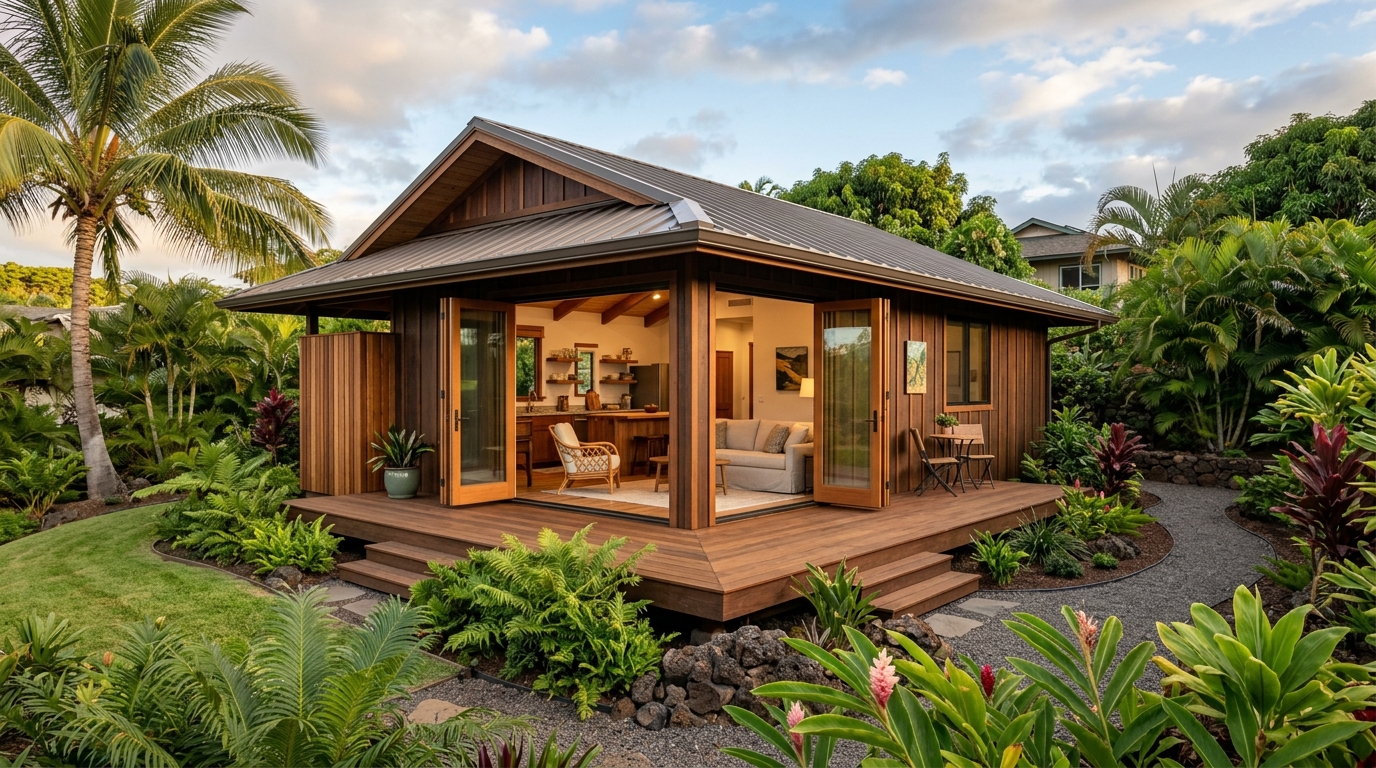
Building an Accessory Dwelling Unit (ADU) in Kihei is one of the smartest investments a Maui homeowner can make in 2026. As a trusted adu builder kihei, we can tell you that a well-built 800-square-foot ohana unit will typically cost between $380,000 and $520,000, which works out to about $475 to $650 per square foot. The entire process, from initial design sketches to handing you the keys, usually takes between 11 and 18 months, with a significant portion of that time dedicated to navigating the Maui County permitting process. For years, our team at Warrior Construction has been helping Kihei families expand their properties, generate rental income, and create multi-generational living spaces. It’s not just about adding a structure; it’s about understanding the unique demands of building on Maui—from the relentless sun and salt air to the specific requirements of the local planning department.
This isn’t like building on the mainland. Here, everything from material logistics to hurricane code compliance requires deep local knowledge. For example, we know which window suppliers on Maui have the best lead times for hurricane-rated models and which specific stainless steel grade (316L) to use for fasteners to prevent corrosion from the Kihei salt spray. Furthermore, we’ve built strong relationships with local inspectors and plan reviewers, which helps streamline what can otherwise be a frustratingly slow process. In this guide, we’ll break down everything you need to know, from real-world costs and timelines to choosing the right materials and finding a reliable contractor. We’ll give you the straight talk you need to make an informed decision for your Kihei property.
Why Kihei Homeowners Trust Warrior Construction for ADU Builder
Choosing an ADU builder in Kihei is a decision that will impact your property and finances for decades. Homeowners here trust Warrior Construction (License BC-34373) because we’re not just builders; we are Hawaii-based construction experts who live and breathe the unique challenges of building on Maui. Our reputation is built on transparency, quality craftsmanship, and a deep understanding of the local landscape, both physical and regulatory. We treat every ohana unit project as if it were for our own family, ensuring it’s not only beautiful but also resilient enough to withstand everything the Kihei climate throws at it.
One of the biggest hurdles for any construction project on Maui is navigating the county’s permitting and inspection process. It can be slow and opaque for those unfamiliar with it. Our team has spent years building relationships and understanding the specific nuances of the Maui County Department of Public Works and Department of Planning. For instance, on a recent project near Kamaole Beach Park III, we were able to work proactively with the plan reviewer to address a tricky setback issue related to an existing retaining wall, saving the homeowner two months of potential delays. That kind of local knowledge is invaluable. We manage the entire process, from submitting the architectural plans to scheduling every single inspection, so you don’t have to.
Here’s what sets our approach apart:
- Hyper-Local Material Sourcing: We have established accounts and relationships with every major supplier on Maui. This means we know who has the best stock of termite-treated lumber, who can get hurricane ties delivered the fastest, and where to source the most durable, salt-resistant exterior finishes. This helps control costs and, more importantly, keeps the project on schedule.
- Climate-Specific Building Science: Building in Kihei is a battle against the sun, heat, and salt. We don’t use mainland building standards. Instead, our standard practice includes specifying standing seam metal roofs with Kynar 500 coating, using stainless steel 316 fasteners on all exterior applications, and designing for passive ventilation to reduce reliance on air conditioning.
- Transparent, Detailed Bidding: You will never get a one-line estimate from us. Our proposals are exhaustive, breaking down every line item from foundation concrete to the final coat of paint. This means no surprises. We recently had a client come to us after receiving a suspiciously low bid from another contractor; we pointed out that the bid had completely omitted the costs for a required water meter upgrade, a $15,000 item.
- Licensed and Insured Peace of Mind: We are a fully licensed general contractor in the State of Hawaii (BC-34373) and carry comprehensive general liability and worker’s compensation insurance. You can verify our license status anytime with the Department of Commerce and Consumer Affairs’ Professional & Vocational Licensing Division[1]. This protects you completely throughout the build.
Ultimately, homeowners choose us because we provide a seamless, professional experience from start to finish. We are your advocate, your project manager, and your expert guide, ensuring your Kihei ADU is a lasting and valuable addition to your home.
What Does ADU Builder Cost in Kihei?
In 2026, the all-in cost for a turnkey ADU in Kihei typically ranges from $475 to $650 per square foot. For a standard 800-square-foot, two-bedroom ohana unit, this means a total project budget between $380,000 and $520,000. This figure includes everything from architectural design and permits to foundation, construction, and mid-range finishes. It’s a significant investment, but it’s crucial to understand where that money goes, especially on an neighbor island like Maui where logistics add to the cost. The price of an experienced adu builder kihei reflects not just labor and materials, but the significant overhead of managing a complex project in a high-cost environment.
Let’s break down the budget for a hypothetical 800 sq. ft. ADU in North Kihei. These numbers are realistic for 2026 and assume standard, good-quality finishes (not luxury custom) and a relatively flat, accessible lot:
| Cost Category | Estimated Cost Range | Notes & Kihei-Specific Factors |
|---|---|---|
| Design, Engineering & Permitting | $30,000 – $45,000 | Includes architectural drawings, structural engineering, and Maui County permit fees. This can be higher if your lot has unique grading or zoning challenges. |
| Site Prep, Excavation & Foundation | $40,000 – $60,000 | Kihei soil is often sandy but can hide volcanic rock. This cost includes a standard slab-on-grade foundation, trenching for utilities, and basic landscaping prep. |
| Framing & Structural Components | $85,000 – $115,000 | Lumber costs remain high in Hawaii due to shipping. This includes all termite-treated lumber, shear walls, and hurricane tie-downs required by code. |
| Exterior (Roofing, Siding, Windows, Doors) | $75,000 – $100,000 | We strongly recommend standing seam metal roofing (~$25k) and HardiePlank siding (~$30k) for Kihei. Hurricane-rated vinyl windows will run about $20k. |
| Plumbing & Electrical | $50,000 – $70,000 | Includes running new sewer/water lines, a new electrical subpanel, and all interior rough-in and fixture installation. A separate water meter, if required by the county, can add $10k-$15k. |
| HVAC (Air Conditioning) | $15,000 – $25,000 | A multi-zone ductless split-AC system is essential for comfort in Kihei’s heat. This price covers a quality brand like Mitsubishi or Fujitsu. |
| Interior Finishes | $90,000 – $140,000 | This is the most variable category. It includes insulation, drywall, paint, flooring (LVP is popular), kitchen cabinets/countertops, bathroom tile, and all fixtures. |
| General Contractor Overhead & Profit (20%) | $77,000 – $109,000 | Covers project management, insurance, scheduling, and the contractor’s margin for running the business. |
| TOTAL ESTIMATED COST | $462,000 – $664,000 | Equals approx. $577 – $830 / sq. ft. |
Several factors can push your project to the higher end of this range:
- Lot Complexity: A sloped lot requiring retaining walls or a tight-access property that needs smaller equipment will increase site prep costs significantly.
- High-End Finishes: Opting for custom cabinetry, stone countertops, or premium tile can easily add $50,000 or more to the interior finish budget.
- Utility Upgrades: If your main home’s electrical panel or sewer line can’t handle the extra load, you’ll face expensive upgrades. We always investigate this during the preconstruction phase.
- Design Complexity: A simple rectangular design is always more cost-effective than a complex one with multiple corners, rooflines, or large cantilevered lanais.
As a seasoned `ohana unit builder kihei`, we believe in being upfront about these costs. Be wary of any contractor who gives you a price per square foot that sounds too good to be true. It likely omits crucial items like permits, utility connections, or the realities of building to Hawaii’s stringent hurricane codes. A detailed, transparent budget is the foundation of a successful project.
How Long Does a ADU Builder Take in Kihei?
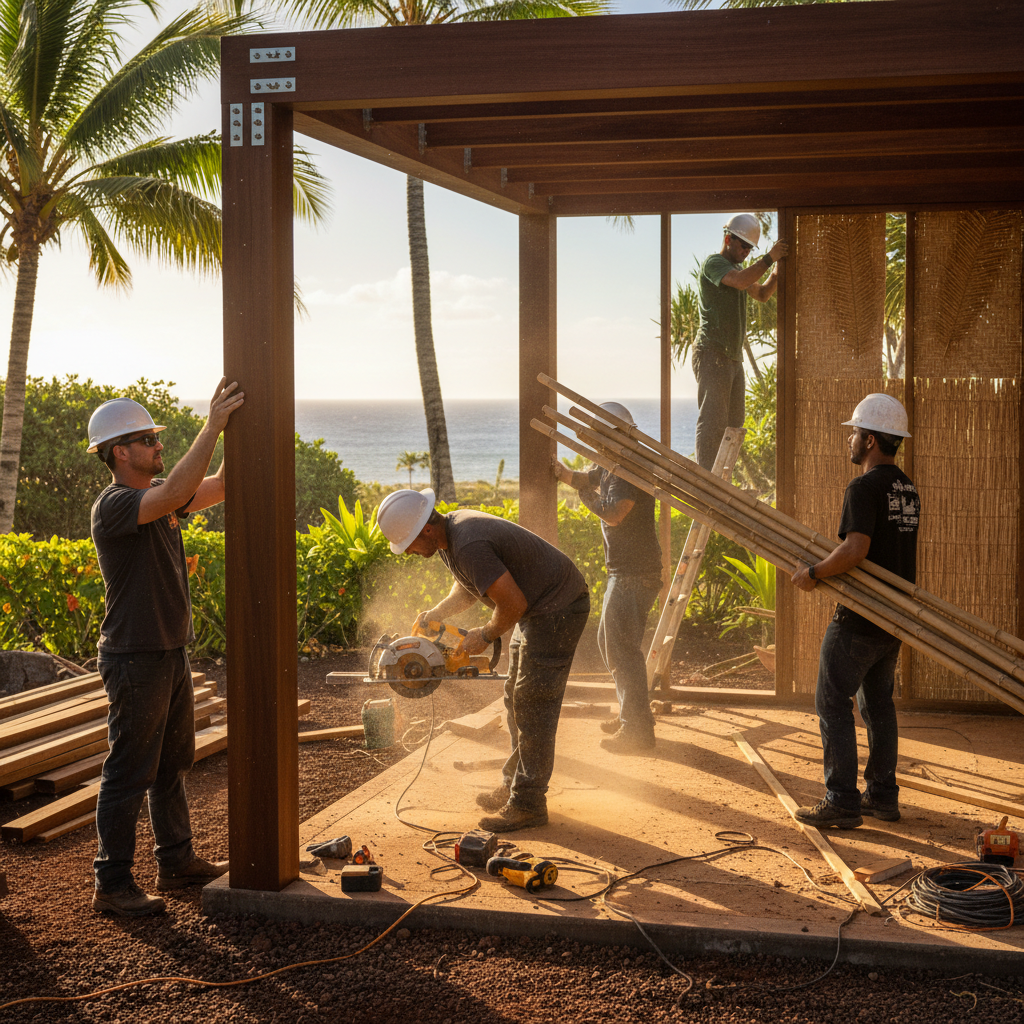
From the day you decide to move forward to the day your ADU is ready for occupancy, you should realistically plan for a timeline of 11 to 18 months in Kihei. While the actual on-site construction might only take 5 to 8 months, the pre-construction phase—design, engineering, and especially permitting with Maui County—consumes a substantial amount of time. This is often a surprise to homeowners, who picture hammers swinging within weeks of signing a contract. Understanding this front-loaded timeline is critical for managing expectations and planning your finances.
Here’s a phase-by-phase breakdown of a typical ADU project timeline in Kihei for 2026:
Phase 1: Design and Pre-Construction (2-4 Months)
- Week 1-2: Initial consultation, signing a design-build agreement with us, and site analysis.
- Week 3-6: Development of schematic designs. We work with you and our architect to create a floor plan and exterior look that meets your needs and budget.
- Week 7-10: Design development and construction drawings. This is where the initial concepts are turned into detailed blueprints that include structural engineering, electrical plans, and plumbing layouts.
- Week 11-16: Finalizing all material selections, getting firm quotes from our subcontractors, and preparing the complete permit application package.
Phase 2: Permitting with Maui County (4-6 Months)
This is the biggest variable and the part of the process where having an experienced `ADU contractor kihei` really pays off. The Maui County permitting department is thorough, and a complete, professionally prepared application is key to a smooth review.
- Month 1: Submit the permit application package to the county. It enters the queue for initial review.
- Month 2-4: The plans are reviewed by various departments: Planning (for zoning and setbacks), Public Works (for building code, structural, and grading), and sometimes the Department of Water Supply. Each department may have comments or require revisions.
- Month 5-6: We address any comments, make necessary revisions to the plans, and resubmit. Once all departments sign off, the building permit is issued. This timeline is optimistic; a complex project or a backed-up department can easily add another 2-3 months.
Phase 3: Construction (5-8 Months)
Once we have the permit in hand, our crew can finally break ground. The on-site work moves relatively quickly, guided by a precise schedule.
- Month 1: Site clearing, excavation, and foundation pour.
- Month 2: Framing, sheathing, and roof installation. The structure takes shape.
- Month 3: Window and door installation, exterior siding, and rough-in for plumbing, electrical, and HVAC.
- Month 4: Insulation, drywall installation, and taping/finishing.
- Month 5-6: Interior and exterior painting, flooring installation, cabinet and countertop setting.
- Month 7: Final plumbing and electrical fixture installation, appliance setup, and finishing touches.
- Month 8: Final inspections with the county, site cleanup, and the final walkthrough with you before we hand over the keys.
Factors like the rainy season (less of a factor in sunny Kihei but still possible), material shipping delays from the mainland, or subcontractor availability can extend the construction phase. Our role as your general contractor is to manage these variables, anticipate bottlenecks, and keep the project moving forward as efficiently as possible.
What Permits Do You Need for ADU Builder in Kihei?
Navigating the permitting process for an ADU in Kihei requires a clear understanding of Maui County’s specific rules and regulations. It’s not a simple over-the-counter affair; it’s a formal review process involving multiple county departments. As your general contractor, we manage this entire labyrinth for you, but it’s important for homeowners to know what’s involved. The primary document you need is a Building Permit from the Maui County Department of Public Works, Development Services Administration. This single permit, however, is only issued after your plans have been approved by several other agencies.
The journey of your ADU plans through the county system looks like this:
- Initial Plan Submission: We submit a comprehensive set of documents. This isn’t just a floor plan; it includes fully engineered structural drawings, site plans showing setbacks and utility connections, electrical and plumbing plans, and energy code compliance forms. An incomplete package is the number one cause of initial rejection and delays.
- Department of Planning Review: First, the Planning Department reviews the project for compliance with zoning regulations. They verify that your lot is zoned appropriately (e.g., Residential or Agricultural), that the ADU meets the maximum size limitations (typically 800 sq. ft. in residential zones), and that it adheres to all property line setback requirements.
- Public Works Review: This is the most intensive review. A plan reviewer from the Building and Safety Division scrutinizes every detail of the construction plans to ensure they comply with the International Building Code (IBC) as amended by Maui County. They check structural calculations, hurricane-resistant design features (like straps and tie-downs), foundation details, and disabled access requirements.
- Other Department Reviews: Depending on your property, other departments may also need to sign off. This can include the Department of Water Supply (to confirm water availability and potentially require a new meter), the Department of Environmental Management (for wastewater/sewer connections), and sometimes even the State Department of Health.
A note on Honolulu’s Bill 7: Many clients ask us about `Bill 7 ADU kihei` rules. It’s important to clarify that Bill 7 (now Ordinance 19-17 and subsequent updates) is a City and County of Honolulu ordinance. While its goal of encouraging ADU construction is similar to Maui’s, the specific rules are different. Maui County has its own set of ordinances that govern ADUs. For example, Maui has specific requirements for lot size (minimum 7,500 sq. ft. in many cases), owner-occupancy (the property owner must live in either the main house or the ADU), and parking (typically one additional space is required). Confusing the two can lead to costly design mistakes. We build according to Maui County’s rules, period.
Obtaining these permits is a meticulous, paper-intensive process. A single error on a site plan or an overlooked code update can send the application back to the end of the line. This is why attempting to permit an ADU as a homeowner or with an inexperienced draftsman can be so frustrating. Our team’s familiarity with the process, from using the county’s electronic submission portal (MAPPS) to knowing the specific plan checkers and what they look for, is a core part of the value an experienced ADU builder brings to your project.
Kihei-Specific Considerations: Climate, Materials, Regulations
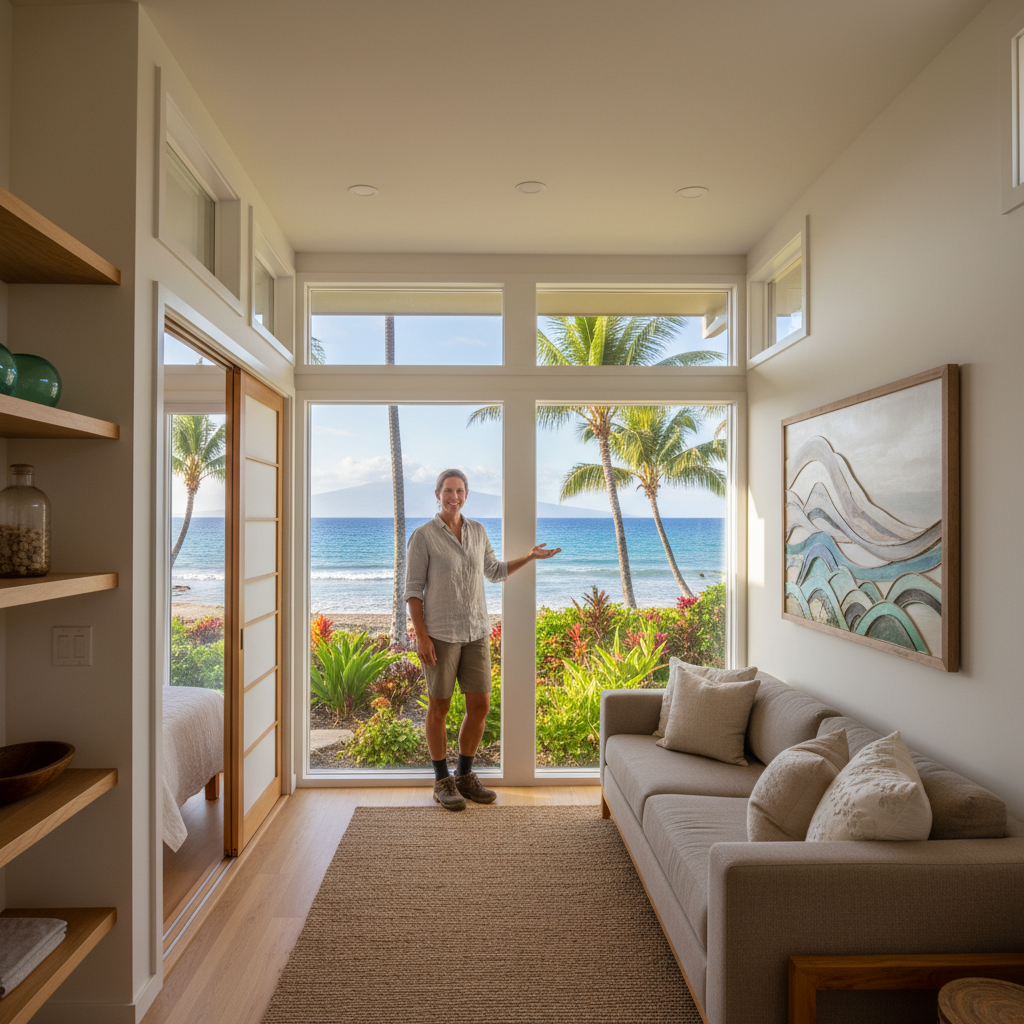
Building in Kihei is fundamentally different than building anywhere on the mainland, or even in other parts of Hawaii like cool, rainy Manoa. The unique combination of intense, year-round sun, corrosive salt-laden air, and specific county regulations demands a tailored approach. A successful ADU project here isn’t just about good design; it’s about building science and material selection that directly counteracts the harsh coastal environment. Our team at Warrior Construction has refined our building practices over two decades to address these Kihei-specific challenges head-on.
Climate: Sun, Heat, and Salt
Kihei’s climate is the defining factor in construction. The relentless UV exposure and high temperatures dictate our material choices from the roof down.
- Roofing: We almost exclusively recommend a 24-gauge standing seam metal roof with a Kynar 500 or Hylar 5000 factory finish. Asphalt shingles bake, crack, and fail within 10-15 years in the Kihei sun. A properly installed metal roof will last 50+ years and its reflective properties can significantly lower cooling costs.
- Siding: Wood siding is a non-starter. It requires constant maintenance and is susceptible to termites. Vinyl siding can warp and become brittle in the intense sun. Our go-to is James Hardie fiber cement siding. It’s fire-resistant, termite-resistant, and holds paint exceptionally well, but it must be installed with stainless steel nails to prevent rust streaks.
- Windows: We specify dual-pane vinyl windows with a low-emissivity (Low-E) coating designed for hot climates. This coating reflects infrared light, keeping the heat out while letting visible light in. We also ensure all window hardware—cranks, locks, and hinges—is stainless steel or has a robust coastal finish. On a project near Cove Park, we once had to replace all the window hardware on a 3-year-old home because the original builder used standard galvanized steel, which had completely seized up from salt corrosion.
- Cooling: Natural ventilation is great, but a high-efficiency multi-zone ductless split AC system is a must-have for comfort. We design layouts that optimize airflow but plan for AC from day one.
Materials and Logistics
Everything you build with has to be shipped to Maui, which adds cost and requires careful planning.
- Fasteners are Critical: This is a detail many overlook. Every single nail, screw, and structural connector used on the exterior must be hot-dip galvanized at a minimum, with 304 or 316 stainless steel being the gold standard for anything near the ocean. Using the wrong fasteners is a recipe for structural failure down the road.
- Lumber Treatment: All our framing lumber is pressure-treated with borate (a non-corrosive treatment) to protect against Formosan subterranean termites, which are a major issue on Maui.
- Supply Chain Management: We don’t wait until we need something to order it. Windows can have a 12-16 week lead time. Appliances, flooring, and cabinets also need to be ordered months in advance. Our project managers build these lead times into the schedule from the very beginning to avoid long, costly delays waiting for a container to arrive from the mainland.
Regulations and County Quirks
Maui County has its own way of doing things, and knowing the unwritten rules is as important as knowing the written ones.
- Water Meters: The Department of Water Supply may require a new, separate water meter for the ADU, or an upgraded meter for the entire property. This can cost upwards of $15,000 and involves significant groundwork. We investigate this requirement early in the design process.
- Setbacks and Height: Kihei has standard setbacks (e.g., 15 feet front, 5-8 feet sides/rear), but these can be affected by easements or specific subdivision rules. Height is generally limited to two stories or 30 feet, but we always verify this with the Planning Department for each specific lot.
- Owner-Occupancy: Maui’s ADU ordinance requires the property owner to reside in either the main dwelling or the ADU. This is a deed-restricted requirement that buyers of the property must also adhere to. It’s designed to prevent properties from becoming mini-apartment complexes and to encourage long-term housing solutions.
Building an ADU in Kihei that will last and provide value requires this level of detailed, localized knowledge. It’s the difference between a project that looks good on day one and a home that stands strong for generations.
How to Choose the Right ADU Builder Contractor in Kihei
Finding the right `ADU contractor kihei` is the single most important decision you’ll make for your project. The right contractor will not only deliver a high-quality product but will also make the entire process smoother, more transparent, and less stressful. The wrong one can turn your dream project into a nightmare of delays, budget overruns, and shoddy workmanship. In Hawaii’s construction market, it’s essential to do your homework. Here are the steps we recommend every homeowner take.
1. Verify Their License and Insurance Rigorously
This is non-negotiable. Any contractor you consider must have a valid Hawaii General Contractor’s License (a B-License). You can and absolutely should verify this yourself using the State of Hawaii’s Professional and Vocational Licensing (PVL) search tool[2]. Our license, for example, is Warrior Construction, BC-34373. The search will show if the license is active and if there are any complaints against it. Additionally, ask for proof of:
- General Liability Insurance: A minimum of $1,000,000 per occurrence and $2,000,000 aggregate is standard. This protects your property from damage.
- Worker’s Compensation Insurance: This is required by law and protects you from liability if a worker is injured on your job site.
Never accept a verbal confirmation. Ask for the actual insurance certificates and call the insurance agent to verify the policies are current.
2. Insist on Maui-Specific ADU Experience
A contractor from Honolulu or the mainland won’t understand the nuances of building in Kihei. You need a team that has successfully built and permitted ADUs specifically on Maui. Ask them pointed questions:
- “Can you show me three ADUs you’ve completed in South Maui in the last two years?”
- “Who is your primary point of contact at the Maui County permitting office?”
- “Which local lumber yard and window supplier do you prefer for Kihei projects and why?”
- “How do you account for neighbor island shipping delays in your project schedules?”
Their answers will quickly reveal their level of local experience. A true Maui builder will have immediate, confident answers based on years of working here.
3. Review Their Portfolio and Talk to Past Clients
A reputable builder will be proud to show you their work. Look through their portfolio of completed projects. Do the designs and finishes align with what you’re looking for? More importantly, ask for contact information for 2-3 recent ADU clients. When you call them, don’t just ask if they were happy. Ask specific questions:
- “How was the communication throughout the project?”
- “How did the contractor handle unexpected issues or changes?”
- “Was the final project cost close to the initial budget? Were all change orders explained clearly?”
- “Has the contractor been responsive to any issues that came up after the project was completed?”
4. Demand a Detailed, Itemized Proposal
Never accept a one-page estimate with a single bottom-line number. A professional bid should be a multi-page document that breaks down the cost by construction phase (e.g., foundation, framing, electrical) and includes specific allowances for finishes (e.g., a dollar amount per square foot for flooring or a budget for kitchen cabinets). This level of detail protects you. It shows the contractor has thoroughly thought through your project and it creates a clear baseline for tracking costs and evaluating any potential change orders. At Warrior Construction, our proposals are typically 10-15 pages long because we believe in total transparency from the start.
By following these steps, you can confidently select a qualified, professional ADU builder who will be a true partner in bringing your vision to life in Kihei.
Real Kihei ADU Builder Project Example
To make the numbers and processes we’ve discussed more concrete, let’s walk through a typical ADU project we completed recently in the Kihei Villages area. This case study illustrates the real-world application of our building philosophy and highlights the challenges and successes of a Kihei ADU build.
The Client and Their Goal: A couple in their early 60s owned a 10,000 sq. ft. property with a 3-bedroom main home. Their goal was to build a single-level, 2-bedroom, 2-bathroom ohana unit of about 750 sq. ft. for their elderly parents. Key requirements were accessibility (no stairs, wider doorways, a walk-in shower) and durability, with a focus on low-maintenance materials that could handle the coastal environment.
The Challenge: The ideal location for the ADU at the back of the property had limited access for large equipment. A large, beautiful monkeypod tree was located near the proposed foundation, requiring careful site planning and an arborist’s consultation to protect the root system. Furthermore, the main home’s electrical panel was at capacity and would need a significant upgrade to service the new dwelling.
Warrior Construction’s Solution & Process:
Our design-build approach was perfect for this scenario. We started by working with our architect and a certified arborist to site the ADU precisely, maximizing privacy while ensuring the tree’s health. We designed a simple, cost-effective rectangular footprint with a large, covered lanai facing away from the afternoon sun.
- Materials: We specified a standing seam metal roof, HardiePanel siding for a modern look, and Milgard Tuscany vinyl windows. Inside, we used luxury vinyl plank flooring throughout for durability and ease of cleaning. In the master bathroom, we built a zero-threshold, ADA-compliant shower.
- Logistics: We coordinated with our electrician to perform a full service upgrade to the main panel before our construction began, avoiding delays. For the foundation and framing, we used smaller, more nimble equipment to navigate the tight access path, which added slightly to the labor cost but was necessary for the site.
The Final Numbers:
- ADU Size: 750 square feet, 2 bed, 2 bath
- Total Project Cost: $446,250 (which came out to $595 per square foot)
- Design & Permitting Timeline: 6.5 months (Slightly longer than average due to the arborist report and back-and-forth with the planning department on tree protection measures)
- Construction Timeline: 6 months
- Total Project Duration: 12.5 months from signing the contract to move-in.
The Outcome: The family was thrilled with the result. Their parents have a safe, comfortable, and beautiful home just steps away, allowing them to age in place with dignity. The ADU seamlessly blends with the main property, and the material choices ensure that maintenance will be minimal for years to come. This project is a perfect example of how a thoughtful, site-specific approach from an experienced ADU builder can overcome challenges and deliver a fantastic outcome for Kihei homeowners.
What this means for Hawaii homeowners
Building an ADU in Kihei is more accessible and strategically beneficial than ever, but it requires a clear-eyed approach. The high cost of living and persistent housing shortage on Maui make ADUs a powerful tool for homeowners to generate income, house family members, and increase their property value. However, the path from idea to reality is paved with unique local challenges. Success depends on understanding and preparing for the realities of construction on a neighbor island.
Here are the key actionable takeaways for any Kihei homeowner considering an ADU in 2026:
- Budget for Reality, Not Hope. Plan for your project to cost between $475 and $650 per square foot, all-in. Get a detailed, line-item budget from your contractor and include a 10-15% contingency fund for unforeseen issues like hidden lava rock during excavation or unexpected utility upgrade requirements.
- Internalize the Timeline. The majority of your project’s duration will be spent in the pre-construction and permitting phases. Accept that it will likely be over a year from when you start the design process until the ADU is finished. Patience is not just a virtue; it’s a requirement. Don’t make any firm plans for renters or family move-in dates until you have an issued building permit in hand.
- Prioritize Durability Over Aesthetics. In Kihei’s harsh climate, your material choices are paramount. Investing more upfront in a standing seam metal roof, fiber cement siding, and stainless steel fasteners will save you tens of thousands of dollars in repairs and maintenance down the road. Fight the temptation to cut corners on the building envelope to afford fancier countertops.
- Hire a True Local Professional. Do not underestimate the value of a general contractor who lives on Maui and has deep experience specifically with the Kihei area and the county permitting office. Their local knowledge, supplier relationships, and familiarity with inspectors are worth their weight in gold and can be the difference between a smooth project and a stalled one. Check their license, call their references, and ensure they are a legitimate, established `adu builder kihei`.
Ultimately, building an ADU is a major construction project. By approaching it with a realistic budget, a patient mindset, and the right professional team, you can add incredible value and utility to your Kihei property for generations to come.
Frequently Asked Questions About ADU Builder in Kihei
Can I build a two-story ADU in Kihei?
Yes, you can build a two-story ADU in Kihei, provided it meets Maui County’s height restrictions, which are typically 30 feet. A two-story design can be an excellent way to maximize living space on a smaller lot or to capture ocean views. However, it will increase construction costs due to the need for stairs, more complex engineering, and additional safety equipment like scaffolding during the build.
How much does an ADU building permit cost in Maui County?
The building permit fee itself is calculated based on the valuation of the project, but for a typical 800 sq. ft. ADU in Kihei, homeowners should budget between $8,000 and $15,000 for all county-related fees. This includes the building permit, plan review fees, and potentially other assessments like wastewater or water meter fees. The total cost for design, engineering, and all permits usually lands in the $30,000-$45,000 range before any construction begins.
What’s the biggest ADU I can build on my Kihei property?
For most residentially zoned lots in Kihei, the maximum size for an ADU is 800 square feet of living area. This does not include garages, carports, or covered lanais. The lot itself must also meet a minimum size requirement, which is typically 7,500 square feet. It’s crucial to have your property’s zoning and specific limitations verified by a professional before starting the design process.
Do I need a separate water meter for my Ohana unit in Kihei?
It depends. The Maui County Department of Water Supply evaluates this on a case-by-case basis, depending on the size of the existing meter and the calculated fixture count of the new ADU. In many cases, especially with older homes that have smaller 5/8″ meters, an upgrade or a completely new, separate meter is required. This can be a significant surprise cost, often running $10,000 to $15,000, so it’s an important item for your contractor to investigate early.
Are prefab or modular ADUs a good option for Maui?
While prefab ADUs seem appealing, they present significant logistical challenges and cost issues for Maui. The cost of shipping modules from the mainland or even Oahu is extremely high, and they still require a locally permitted foundation, utility connections, and assembly by a licensed contractor. In our experience, by the time you factor in shipping and site work, a custom-built ADU is often comparable in price and allows for much greater design flexibility to suit your specific lot.
How does an ADU contractor kihei handle material procurement?
An experienced local contractor manages this through careful planning and strong relationships with on-island suppliers. We order long-lead-time items like windows, trusses, and cabinets months in advance to account for shipping delays. For standard materials like lumber and concrete, we have accounts with all major Maui suppliers (HPM, Honsador, etc.) and know who to call for what, ensuring a steady flow of materials to the job site without costly downtime.
Can the new Bill 7 ADU kihei rules help me?
This is a common point of confusion. Bill 7 was a City and County of Honolulu ordinance that eased restrictions on ADUs on Oahu. While it reflects a statewide trend toward encouraging ADUs, the specific rules of Bill 7 do not apply in Kihei. Maui has its own set of ordinances that govern ADU size, setbacks, and lot requirements. A knowledgeable `ADU builder kihei` will design and permit your project according to Maui County’s code, not Honolulu’s.
Building an ADU is a significant undertaking, but it’s also one of the most rewarding home improvement projects you can do in Hawaii. It adds tangible value, creates space for family, and provides a source of income. If you’re ready to explore the possibilities for your Kihei property, our team at Warrior Construction is here to provide the expert guidance and quality craftsmanship you need. We’ll handle the complexities so you can enjoy the results.
Ready to start the conversation about your Kihei ADU project? Learn more about our ADU & Ohana Unit construction services or contact us today for a free, no-obligation estimate.