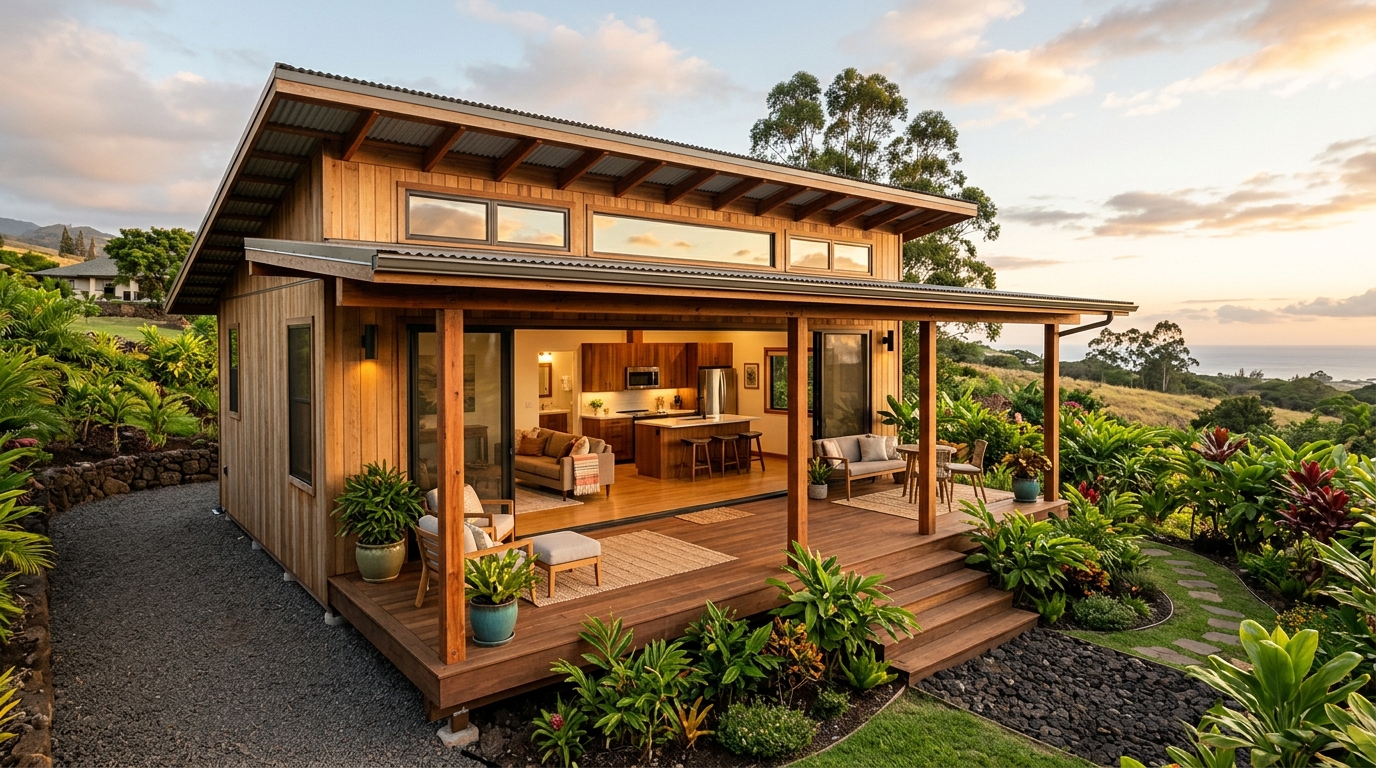
The single most effective strategy when looking for an adu builder makawao is to partner with a licensed, experienced general contractor who lives and breathes Maui’s unique construction landscape. Building an Accessory Dwelling Unit (ADU), or ohana unit, in Upcountry isn’t like building down in Kihei or over on Oahu. You need a team that understands the red volcanic soil, the higher rainfall, the specific Maui County permitting process, and the local network of suppliers and subcontractors. At Warrior Construction (License BC-34373), we’ve spent over two decades navigating these exact challenges for homeowners across the islands, and especially here on Maui.
Building an ADU is one of the smartest investments a Makawao homeowner can make in 2026. Whether you’re creating a home for aging parents, generating rental income, or simply adding flexible space to your property, the benefits are undeniable. But the path from idea to handing over the keys is filled with potential pitfalls, from budget overruns caused by unforeseen site conditions to projects getting stuck for months in the permitting office. The right `ADU contractor makawao` doesn’t just build a structure; they manage a complex process. This guide will walk you through the key strategies for success, based on our firsthand experience building right here in your neighborhood.
Why Makawao Homeowners Trust Warrior Construction for ADU Builder
Makawao homeowners choose our team because we bring deep, island-specific expertise that a mainland or even an Oahu-based firm simply cannot match. It’s one thing to know the general building code; it’s another thing entirely to know how that code applies to a sloped lot with expansive clay soil off of Olinda Road. We are a fully licensed and insured general contractor in Hawaii (BC-34373), and our reputation is built on transparency and on-the-ground problem-solving. We’re not just managing your project from an office in Honolulu; our boots are on the ground in Maui, ensuring every detail is handled correctly.
Our experience extends beyond just the construction itself. A huge part of being a successful `ohana unit builder makawao` is navigating the local culture and logistics. We have spent years building strong relationships with Maui-based architects, engineers, surveyors, and subcontractors. This means we can assemble a team that is not only highly skilled but also deeply familiar with Upcountry conditions. Furthermore, this local network helps control costs. We’re not paying extra to fly in specialists or ship common materials from Oahu, a cost that other builders might pass on to you. We source from local suppliers in Kahului whenever possible, which supports the local economy and minimizes delays waiting for the Young Brothers barge.
Here’s a practical example: on a recent project in nearby Pukalani, the initial soil report came back showing a high shrink-swell potential, common in some Upcountry areas. An inexperienced contractor might have just followed a standard foundation plan, leading to cracks and structural issues down the road. Because we’ve seen this exact situation dozens of times, our team immediately worked with our Maui-based structural engineer to redesign the foundation with deeper footings and proper drainage, preventing a costly long-term problem before the first bag of concrete was even poured. This proactive, localized knowledge is what sets us apart and gives our clients peace of mind.
What Does ADU Builder Cost in Makawao?
In 2026, the all-in cost for a turnkey 800-square-foot, 2-bedroom ADU in Makawao typically ranges from $440,000 to $600,000. This works out to a per-square-foot cost of $550 to $750. While that number can cause some sticker shock, it’s crucial to understand what goes into it. This isn’t just lumber and nails; it’s a comprehensive figure that includes everything from architectural plans and permit fees to foundation work, high-quality finishes, and utility connections. Anyone quoting significantly less is likely leaving something important out.
Let’s break down the costs into two main categories:
Soft Costs (Approximately 15-25% of Total Budget)
These are the expenses for planning and approvals before any dirt is moved. They are absolutely critical to a smooth project.
- Architectural & Engineering Plans: $25,000 – $45,000. This includes the main building plans, structural engineering for hurricane-code compliance, and potentially a septic system design.
- Permit Fees (Maui County): $12,000 – $20,000. This covers the building permit, plumbing, electrical, and potentially a wastewater system review fee.
- Surveys & Reports: $5,000 – $10,000. This can include a property survey to establish setbacks, a geotechnical report for soil conditions, and a percolation test if you need a septic system.
- Utility Connection Fees: $8,000 – $15,000. This is for water meter installation and electrical service hookup. Costs can be higher if the connection point is far from the ADU site.
Hard Costs (Approximately 75-85% of Total Budget)
These are the tangible costs of labor and materials to build your ADU.
- Site Work & Foundation: $50,000 – $80,000. Makawao’s sloped lots and rocky soil can make this more expensive than a flat lot in Central Maui. This includes grading, excavation, and a concrete slab or post-and-pier foundation.
- Framing & Structure: $75,000 – $100,000. This includes all lumber (which must be termite-treated), sheathing, and hurricane straps required by code.
- Exterior Finishes: $65,000 – $90,000. This covers a durable standing-seam metal roof (essential for Upcountry rain), fiber cement siding, double-pane windows, and doors.
- Major Systems (Plumbing, Electrical, HVAC): $55,000 – $80,000. This includes running all lines, installing fixtures, the electrical panel, and potentially a split AC system for climate control. If a new septic system is required, that can add another $25,000-$40,000 to this category.
- Interior Finishes: $90,000 – $150,000. This is the largest variable and depends entirely on your choices for flooring, cabinets, countertops, tile, paint, and appliances.
Remember, the “Maui premium” is real. Materials shipped to Kahului cost more than in Honolulu, and the demand for skilled labor on-island affects pricing. A detailed, transparent budget from your contractor is your best tool for managing these costs effectively.
How Long Does a ADU Builder Take in Makawao?
From the first design meeting to final inspection, a typical ADU project in Makawao takes between 15 and 22 months to complete in 2026. Many homeowners are surprised by this timeline, assuming the construction itself is the longest part. In reality, the pre-construction phase, particularly permitting, is often the most time-consuming element. It’s essential to have realistic expectations from the start.
Our process at Warrior Construction breaks the timeline down into three distinct phases:
-
Phase 1: Design and Planning (3-5 months)
This is where your vision takes shape. We work with you and our architectural partners to develop a design that fits your needs, your property, and your budget. This phase involves initial sketches, design revisions based on your feedback, material selections, and the creation of detailed construction documents. Once the design is finalized, our structural engineer gets to work on the calculations needed to meet Hawaii’s strict hurricane code. This is a collaborative process, and taking the time to get it right here prevents costly changes later.
-
Phase 2: Permitting with Maui County (8-12 months)
This is the most significant hurdle and the biggest variable in any Maui construction project. Once we submit the complete plan set to the Maui County Department of Planning and Department of Public Works, it enters a multi-stage review process. Different departments will review the plans for compliance with zoning, building codes, plumbing codes, electrical codes, and wastewater regulations. Each department has its own queue, and it’s common for them to request clarifications or minor revisions, which can reset the clock on that department’s review period. An experienced `ADU contractor makawao` knows how to prepare a thorough and accurate submission to minimize these back-and-forths, but patience is still required. We manage this entire process, providing regular updates so you’re not left in the dark.
-
Phase 3: Construction (5-7 months)
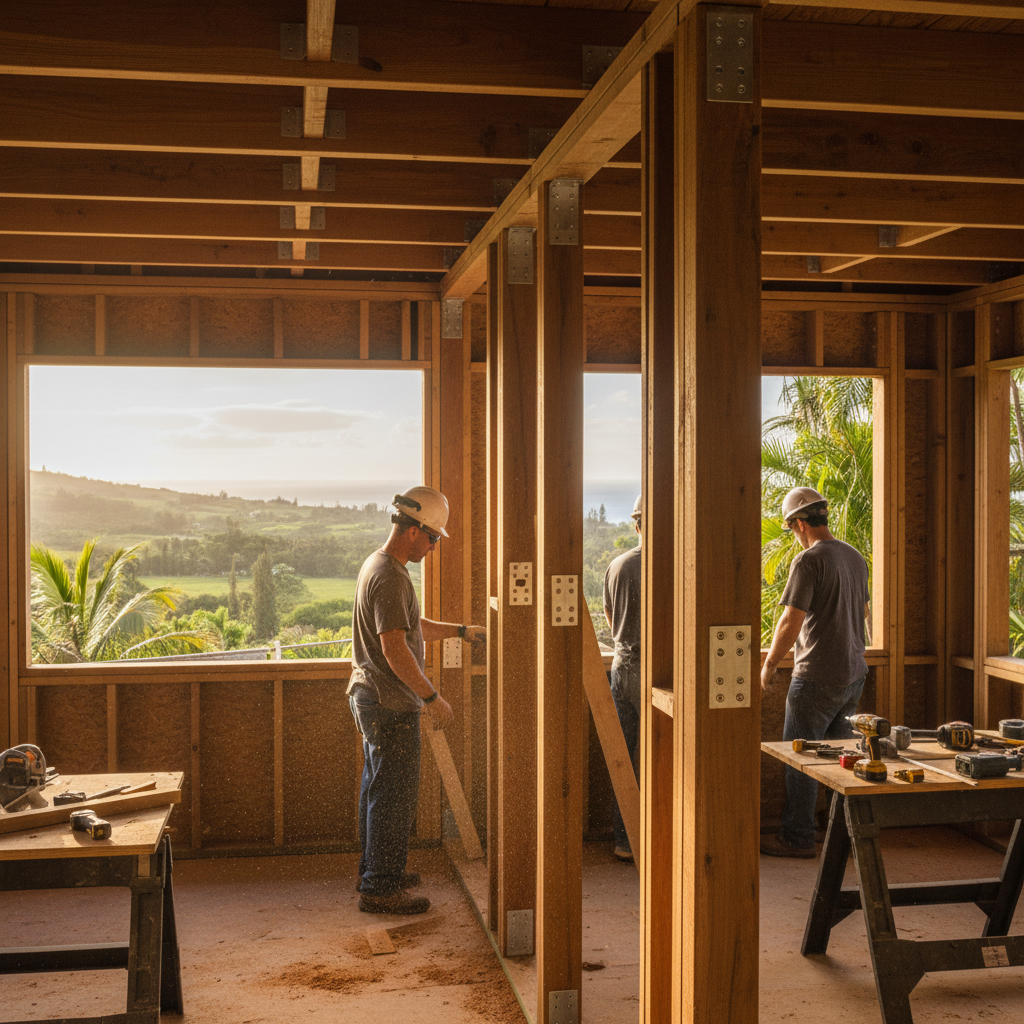
Once we have the approved permit in hand, the physical work can begin. This is the most exciting phase for homeowners as they see their ohana unit come to life. The timeline looks something like this:
- Month 1: Site preparation, excavation, and foundation.
- Month 2: Framing, sheathing, and roof installation.
- Month 3: Window and door installation, exterior siding, and rough-in of plumbing and electrical.
- Month 4: Insulation, drywall, and initial painting.
- Month 5: Flooring, cabinet installation, and tile work.
- Month 6-7: Final fixtures, appliance installation, finishing touches, landscaping, and final inspections.
Potential delays in this phase can come from weather, especially during Makawao’s rainy season, or material availability if a specific item is backordered on the mainland.
What Permits Do You Need for ADU Builder in Makawao?
Navigating the permitting process is one of the most critical services a qualified ADU builder provides. It’s not just a single permit; it’s a package of approvals from various Maui County agencies, and each one is a prerequisite for the next. Attempting this as a homeowner is incredibly difficult and almost always leads to costly delays. Our team handles the entire submittal and follow-up process, but it’s important for you to understand what’s involved.
For a standard ADU project in Makawao, you will need the following permits:
- Zoning and Building Permit: This is the main approval from the Maui County Department of Public Works. The application package is substantial and includes the full architectural and structural plans. The county reviews for compliance with setbacks, height limits, lot coverage, energy codes, and life safety requirements. This is where the specifics of Maui’s `Bill 7 ADU makawao` regulations are checked, such as unit size limits and parking requirements.[1] (While this link is for Honolulu’s DPP, the process is conceptually similar to Maui’s, involving multiple departmental reviews.)
- Plumbing and Electrical Permits: These are separate permits that are reviewed by specialized inspectors. They detail the layout of all pipes, drains, vents, wiring, outlets, and the main electrical panel. These cannot be issued until the main building permit is approved.
- Wastewater System Approval: This is a big one for much of Makawao, which is not on the county sewer system. If you need a new septic system, you must first get a design from a licensed civil engineer. This design, along with results from a soil percolation test, is submitted to the Hawaii Department of Health for approval. This process alone can take several months and must be completed before the county will issue the building permit.
- Grading and Grubbing Permit: If your project requires moving a significant amount of earth (typically more than 100 cubic yards), you may need a separate grading permit. This is common on the sloped lots found throughout Upcountry.
- Driveway Permit: If you are adding a new driveway access point from the road to serve the ADU, this requires a separate permit to ensure it meets county standards for safety and drainage.
Our role is to ensure all these applications are prepared correctly and submitted in the proper sequence. We track their progress through the county system, respond promptly to any requests for information, and schedule the dozens of required inspections throughout the construction process. This meticulous management is what keeps a project moving forward.
Makawao-Specific Considerations: Climate, Materials, Regulations
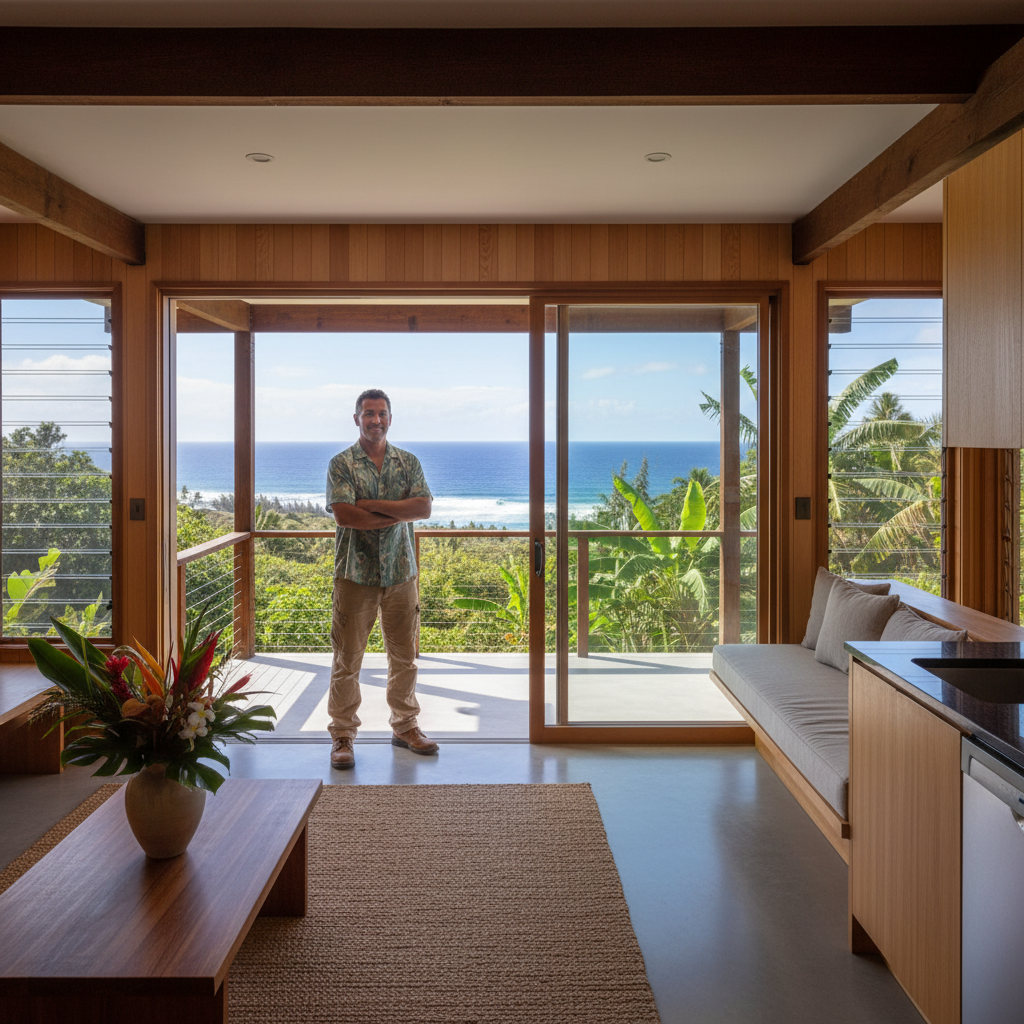
Building in Makawao presents a unique set of challenges and opportunities that are very different from building on the coast. An experienced local builder tailors their approach to the specific environment, ensuring the final home is durable, comfortable, and compliant.
Upcountry Climate and Materials
Makawao’s elevation means more rain, cooler temperatures, and higher humidity than places like Wailea or Lahaina. This climate has a major impact on material selection and design.
- Moisture Management: This is priority number one. We use a multi-layered approach to keep water out. This starts with a standing-seam metal roof, which is far superior to shingles in heavy rain. We then use high-quality house wrap, properly flashed windows and doors, and robust waterproofing at the foundation. Inside, we emphasize good ventilation, often recommending energy-recovery ventilators (ERVs) and properly sized bathroom fans to prevent mold and mildew growth.
- Durable Siding: Wood siding looks beautiful but can be a maintenance headache with Makawao’s moisture. We almost always recommend fiber cement siding (like James Hardie products). It holds paint exceptionally well, is impervious to termites, and resists rot and swelling.
- Foundation Design: The red volcanic soil can be tricky. Some areas have expansive clay, while others are very rocky. A geotechnical report is often a wise investment. For sloped lots, a post-and-pier foundation is often more cost-effective and better for drainage than a massive slab-on-grade that requires extensive excavation and retaining walls. We also incorporate French drains and other site drainage solutions to keep water away from the foundation.
Maui-Specific Regulations
While state laws provide a framework, each county has its own ADU ordinances. Maui’s rules, sometimes referred to as the `Bill 7 ADU makawao` rules (though Bill 7 was a Honolulu-specific bill, its spirit of encouraging ADUs has influenced neighbor island policy), have their own nuances.
- Size and Occupancy: Maui County has specific limits on the size of ADUs based on your lot size. There are also owner-occupancy requirements, meaning the property owner must live in either the main house or the ADU. We verify your property’s specific zoning (e.g., residential, agricultural) to determine exactly what you can build.
- Agricultural Land: Building an ADU on ag-zoned land in Makawao has its own set of rules, which can be more complex than on a residential lot. We have experience navigating these specific requirements to ensure your project is compliant.
Our team at Warrior Construction designs and builds specifically for these Upcountry conditions. We won’t apply a one-size-fits-all coastal building approach to your Makawao project. That commitment to local context ensures a better, longer-lasting home.
How to Choose the Right ADU Builder Contractor in Makawao
Choosing your builder is the most important decision you’ll make in the entire process. The right contractor will be your partner, advocate, and guide from start to finish. The wrong one can turn your dream project into a nightmare of delays and unexpected costs. Here’s a checklist to use when vetting potential builders.
- Verify License and Insurance. This is non-negotiable. Any legitimate contractor will have a Hawaii General Contractor’s license. You can and should verify their status on the state’s Professional & Vocational Licensing (PVL) website.[2] Ask for certificates of General Liability and Worker’s Compensation insurance. If they can’t provide these immediately, walk away. Our license, for example, is BC-34373.
- Demand Local, Upcountry Experience. Don’t just ask if they’ve built on Maui; ask specifically for examples of projects they’ve completed in Makawao, Pukalani, or Kula. Ask them about the soil conditions they encountered and how they handled permitting with the county. A contractor whose portfolio is entirely condos in Kihei may not be the right fit for your custom ohana unit.
- Check Recent References. Don’t rely on website testimonials alone. Ask for the names and numbers of their last three clients. Call them and ask direct questions: Did the project stay on budget? How were change orders handled? How was the communication throughout the process? Was the job site kept clean and safe? What would you do differently?
- Insist on a Detailed, Transparent Bid. A one-page estimate with a single number is a major red flag. A professional bid should be several pages long, breaking down the costs by category (e.g., foundation, framing, electrical). It should clearly state what is included and, just as importantly, what the allowances are for items like appliances, flooring, and countertops. This level of detail protects you from a lowball bid that balloons with change orders later.
- Assess Their Communication Style. During the interview process, pay attention to how they communicate. Are they responsive to your calls and emails? Do they listen to your concerns and answer your questions clearly, without a lot of jargon? You’ll be working closely with this person for over a year, so a good rapport and clear communication are essential.
At Warrior Construction, we pride ourselves on transparency and communication. We encourage you to ask the tough questions because we’re confident in our process and our history of successful projects here on Maui.
Real Makawao ADU Builder Project Example
To make this tangible, let’s walk through a project we recently completed that’s typical for the Makawao area. The Tanaka family owned a 20,000-square-foot property with a 3-bedroom main house built in the 1980s. Their goal was to build an `ohana unit builder makawao` for Mrs. Tanaka’s elderly mother, allowing her to live independently while still being close to family.
The Vision: A single-level, 750-square-foot, 1-bedroom, 1-bathroom cottage with aging-in-place features like a zero-threshold shower, wider doorways, and grab bars. They wanted it to have a classic Upcountry aesthetic with a standing-seam metal roof and a covered lanai.
The Challenges:
- The only suitable location on the property was on a significant slope, requiring a creative foundation solution.
- The property was on an older, undersized septic system that couldn’t support another dwelling. A completely new, engineered system was required.
- The family wanted to minimize disruption to the beautiful, mature landscaping surrounding the main house.
The Warrior Construction Solution & Process:
- Design & Engineering: We designed a post-and-pier foundation that stepped down the slope. This drastically reduced the need for expensive excavation and retaining walls and better protected the existing landscape. We also managed the civil engineer who designed a new septic system that would serve both the main house and the ADU, bringing the entire property up to current code.
- Permitting: We submitted the full package to Maui County. The septic system design was the first to go to the Department of Health. This took about four months for approval. Once we had that, the county’s review of the building permit took another eight months. Total time in permitting was about 12 months.
- Construction: The build itself took six months. We carefully planned site access to protect the landscaping. The post-and-pier foundation went in quickly. We used fiber cement siding for durability and a dark bronze metal roof to complement the main house. The interior featured non-slip LVP flooring and custom cabinetry.
The Result: The Tanaka family’s project was completed in a total of 19 months. The final all-in cost was $525,000, which included the brand-new septic system for the entire property. Grandma now has a safe, comfortable, and beautiful home, and the family has the peace of mind of having her close by. The property value has also increased by an estimated $700,000.
What this means for Hawaii homeowners
Building an ADU in Makawao is a complex but incredibly rewarding endeavor. For Hawaii homeowners, success hinges on understanding a few key realities right from the start. This isn’t a quick or simple project; it’s a major construction undertaking that requires professional guidance, a realistic budget, and a healthy dose of patience.
Here are the most critical takeaways for your planning in 2026:
- Budget for Reality: The true, all-in cost for a quality ADU in Makawao will be between $550 and $750 per square foot. This includes everything from design and permits to final finishes. Be wary of any estimate that seems too good to be true.
- Plan for the Long Haul: The timeline will likely be 15 to 22 months, with more than half of that time spent in the design and permitting phases before construction even begins. Start the process long before you need the unit to be ready.
- Hire a True Maui Expert: Your choice of an `adu builder makawao` is paramount. You need a licensed general contractor with a proven track record of completing projects *in Upcountry Maui*. They will know how to navigate the permitting office, anticipate soil and weather challenges, and manage a local network of subcontractors.
- Design for the Climate, Not the Beach: Makawao’s cool, wet climate demands a different approach. Prioritize moisture management, durable materials like metal roofing and fiber cement siding, and proper ventilation to ensure your investment lasts a lifetime.
- Understand Your Lot’s Constraints: Before you even start designing, you need to know about your property’s utilities (sewer vs. septic), topography (slope), and soil type. These factors will have a major impact on your design and your budget.
By internalizing these points, you can move forward with confidence, transforming a portion of your property into a valuable, functional, and beautiful new home for your ‘ohana.
Frequently Asked Questions
Can I build an ADU on my agricultural land in Makawao?
Yes, in most cases you can, but the rules are different than for residential-zoned lots. Maui County has specific regulations for farm dwellings and accessory units on ag land, which often relate to having a legitimate farming operation. It’s critical to work with a contractor who has experience with ag land projects to ensure your plans are compliant with county zoning and land use ordinances.
What’s the biggest mistake people make when building an ADU on Maui?
The most common and costly mistake is underestimating the time and cost of the pre-construction phase. Homeowners often focus only on the construction budget and timeline, but design, engineering, and especially permitting can cost tens of thousands of dollars and take up to a year or more. A realistic project plan accounts for these upfront requirements from day one.
How much value does an ADU add to a Makawao property in 2026?
While it varies, an ADU almost always adds significantly more value than its cost to build. A well-built, permitted 800 sq. ft. ADU that costs $550,000 to build could easily add $700,000 to $850,000 or more to your property’s market value. This is in addition to any potential rental income, which for a 2-bedroom unit in Makawao could be $3,000-$4,000 per month.
Do I have to live on the property to have an ADU in Makawao?
Yes, Maui County currently has an owner-occupancy requirement for properties with an ADU. This means the registered property owner must reside in either the main dwelling or the accessory dwelling as their primary residence. This is an important regulation to be aware of if you plan to rent out both units.
Are prefab or modular ADUs a good option for Makawao?
They can be, but they aren’t always the cost or time saver people expect in Hawaii. The cost of shipping modules to Maui is substantial. Furthermore, you still have to go through the same lengthy Maui County permitting process, and you still need to pay for the foundation, site work, and utility connections, which are a huge part of the total cost. A site-built ADU is often more customizable and can be better adapted to sloped lots.
How much are permit fees for an 800 sq ft ADU in Maui County?
For an 800 sq. ft. ADU in 2026, you should budget between $12,000 and $20,000 for all associated county permit fees. This includes the building permit, which is based on project valuation, as well as separate electrical, plumbing, and potentially wastewater system review fees. This figure does not include the cost of preparing the architectural and engineering plans required for the submittal.
What is the difference between an Ohana Unit and an ADU in Makawao?
Functionally, the terms are often used interchangeably in casual conversation. Officially, “Ohana Dwelling” was the older term used in zoning codes. “Accessory Dwelling Unit” (ADU) is the more modern, formal term used in current county ordinances. The specific regulations regarding size, setbacks, and requirements are defined under the ADU ordinance, so that is the technically correct term to use when dealing with the county.
Start Your Makawao ADU Project with Confidence
Building an ADU is a major investment in your property and your family’s future. Doing it right requires a partner with proven local experience and a commitment to quality. At Warrior Construction (BC-34373), our team has been building homes and ADUs across Hawaii for over 20 years. We understand the unique challenges of building in Upcountry Maui, from permitting to site work, and we manage every step of the process with transparency and professionalism.
If you’re ready to explore the possibilities for an ADU on your Makawao property, let’s start the conversation. Learn more about our ADU & Ohana Unit construction services or request a complimentary estimate today.