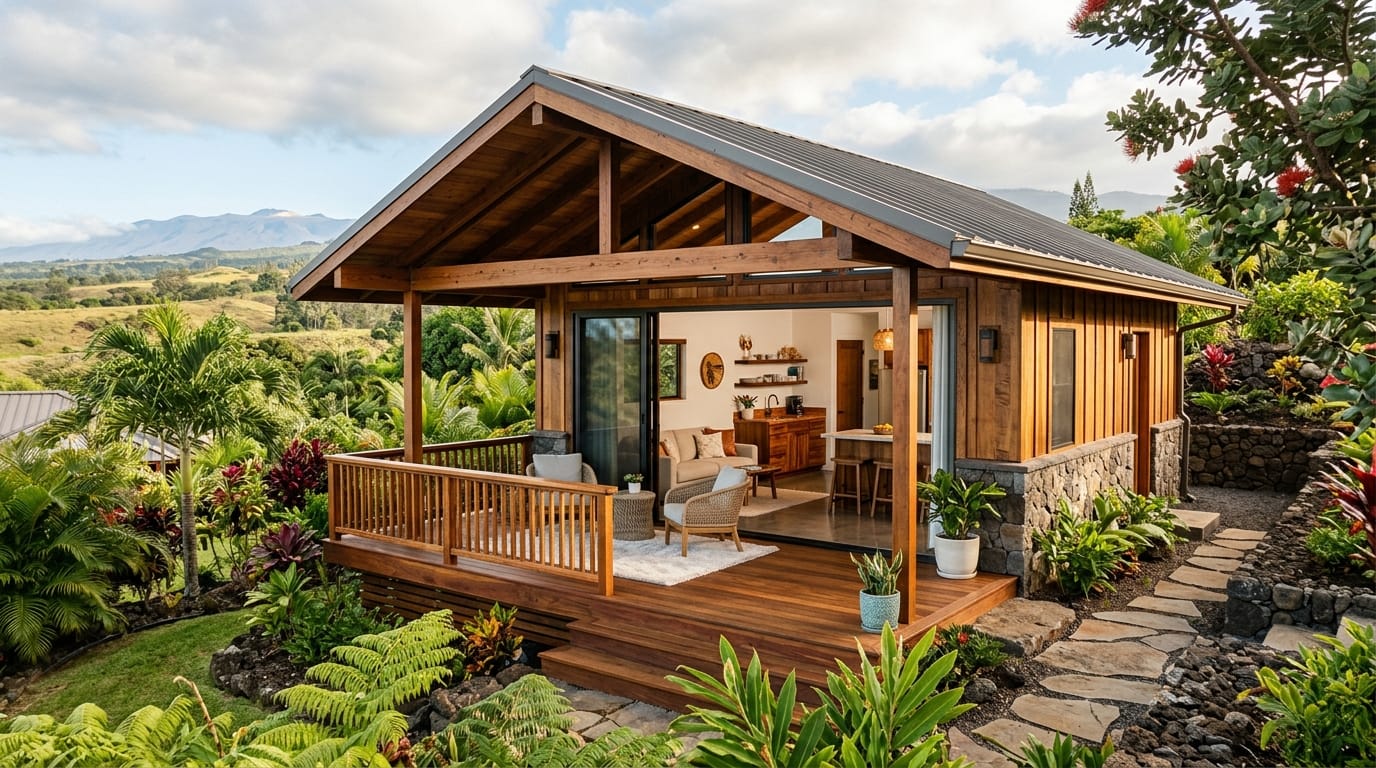
“Building an Accessory Dwelling Unit (ADU), or ohana unit, in Waimea is one of the smartest investments a Big Island homeowner can make in 2026. As a licensed adu builder waimea with over two decades of experience here in Hawaii, we at Warrior Construction have seen firsthand how these units provide flexible housing for family, generate significant rental income, and boost property values. The key is building it right for Waimea’s unique environment—from its cooler, wetter climate to its paniolo heritage. This isn’t like building in Kona or Hilo; Waimea demands specific knowledge of materials, site prep, and design.\n\nIn this guide, we’ll walk you through the entire process from a contractor’s perspective. We’ll break down the real costs you can expect in 2026, the actual timeline from design to final inspection, and the permitting process with Hawai’i County. We’ll also cover five key upgrades perfect for a Waimea ADU and share a real project example to show you what’s possible. Our goal is to give you the practical, no-nonsense information you need to make informed decisions for your property.\n\n
Why Waimea Homeowners Trust Warrior Construction for ADU Builder
\n\nChoosing the right partner is the most critical decision you’ll make. As an experienced adu builder waimea, we understand that building on the Big Island isn’t the same as on Oahu. There’s a different rhythm, unique supply chain challenges, and a distinct regulatory environment. Our team at Warrior Construction has spent years navigating these specific Big Island hurdles, from coordinating barge shipments into Kawaihae Harbor to engineering foundations for Waimea’s diverse volcanic soils.\n\nOne of the biggest differences is our deep understanding of the local climate. A Waimea ADU needs to be built for cooler nights and more rainfall than a coastal unit in Kailua-Kona. For example, on a recent project near the Waimea-Kohala Airport, we recommended upgrading to a robust water catchment and filtration system. The homeowner now saves hundreds on their water bill and has a resilient water source, which is a huge asset. We also prioritize proper insulation and double-pane windows—details that might be overlooked by a contractor accustomed to only building in warmer, sea-level climates. These aren’t just add-ons; they are essential for comfort and long-term energy savings in this part of the island.\n\nFurthermore, our experience extends to navigating the specifics of Hawai’i County’s building department. While Honolulu’s DPP has its own set of challenges, the process in Hilo requires a different approach and local relationships. We know the plan reviewers, the inspectors, and the specific codes they focus on for this region. This experience prevents unnecessary delays. A few years back, we took over a stalled project where the previous contractor failed to account for Waimea’s specific wind load requirements. We were able to correct the plans, get them approved, and get the project moving in weeks, saving the homeowner from months of more frustration and cost overruns. It’s this kind of ground-level, island-specific expertise that defines our approach. We’re not just builders; we’re problem-solvers who know how to get things done right in Waimea.\n\nHere are a few reasons why homeowners choose us:\n
- \n
- Big Island Specific Expertise: We don’t apply Oahu solutions to Big Island problems. We understand the logistics, materials, and regulations unique to building in Waimea.
- Transparent Costing: Our estimates account for real-world Big Island costs, including neighbor island shipping, local labor rates, and potential site challenges like lava rock. No surprises.
- Proven Process: From initial design and permitting to construction and final walkthrough, we have a streamlined process that minimizes delays and ensures quality control at every stage.
- Licensed and Insured: Warrior Construction is a fully licensed (BC-34373) and insured general contractor, giving you complete peace of mind. You can verify our status anytime.[1]
\n
\n
\n
\n
\n\n
What Does ADU Builder Cost in Waimea?
\n\nA common question we get is about cost, and it’s the most important one to get right. For a standard-quality, turnkey ADU in Waimea in 2026, you should budget between **$450 and $600 per square foot**. So, for a typical 800-square-foot, two-bedroom ohana unit, the total construction cost will likely land between $360,000 and $480,000. This figure covers everything from foundation to fixtures, but does not include design fees, permit fees, or major utility connection costs.\n\nLet’s break down where that money goes. It’s not just lumber and drywall. Building on the Big Island involves costs that mainland homeowners might not expect.\n\n**Key Cost Components for a Waimea ADU (800 sq. ft. example):**\n
- \n
- Design & Engineering (~$20,000 – $35,000): This includes architectural plans, structural engineering (critical for seismic and hurricane codes), and potentially a survey if your property lines are unclear.
- Permits & Fees (~$15,000 – $25,000): Hawai’i County building permit fees, plan review fees, and potential water meter installation fees from the Department of Water Supply can add up quickly. A new water meter alone can be over $10,000.
- Site Prep & Foundation (~$40,000 – $65,000): This is a major variable in Waimea. The ground can be anything from soft soil to solid lava rock. Excavating lava rock is significantly more expensive. This cost includes grading, excavation, and a concrete slab or post-and-pier foundation.
- Materials & Shipping (~$120,000 – $160,000): Almost everything—from lumber and roofing to windows and cabinets—is shipped from the mainland to Honolulu, then barged to the Big Island. We factor in these Young Brothers shipping costs directly into our material estimates so there are no surprises. For an 800 sq. ft. unit, expect shipping to account for at least $25,000 of the material budget.
- Labor (~$130,000 – $175,000): This covers all the skilled trades: carpenters, plumbers, electricians, roofers, painters, and finishers. Labor rates on the Big Island are competitive and reflect the high cost of living.
- Finishes & Fixtures (~$35,000 – $50,000): This includes flooring, cabinets, countertops, plumbing fixtures, lighting, and appliances. This is an area where your choices can swing the budget significantly. Opting for quartz countertops over laminate or engineered hardwood over vinyl plank will increase this line item.
\n
\n
\n
\n
\n
\n
\n\nOne of the five key upgrades we recommend for 2026 is investing in an **off-grid-ready utility package**. For an additional $30,000-$50,000, we can integrate a full solar PV system with battery backup (like a Tesla Powerwall) and a high-capacity water catchment system. With HELCO rates continuing to be the highest in the nation, this investment often pays for itself in 7-10 years and provides incredible resilience. For a rental unit, it can be a major selling point that justifies higher rent. This is an increasingly popular choice for homeowners who want to maximize their ADU’s long-term value and sustainability.\n\n
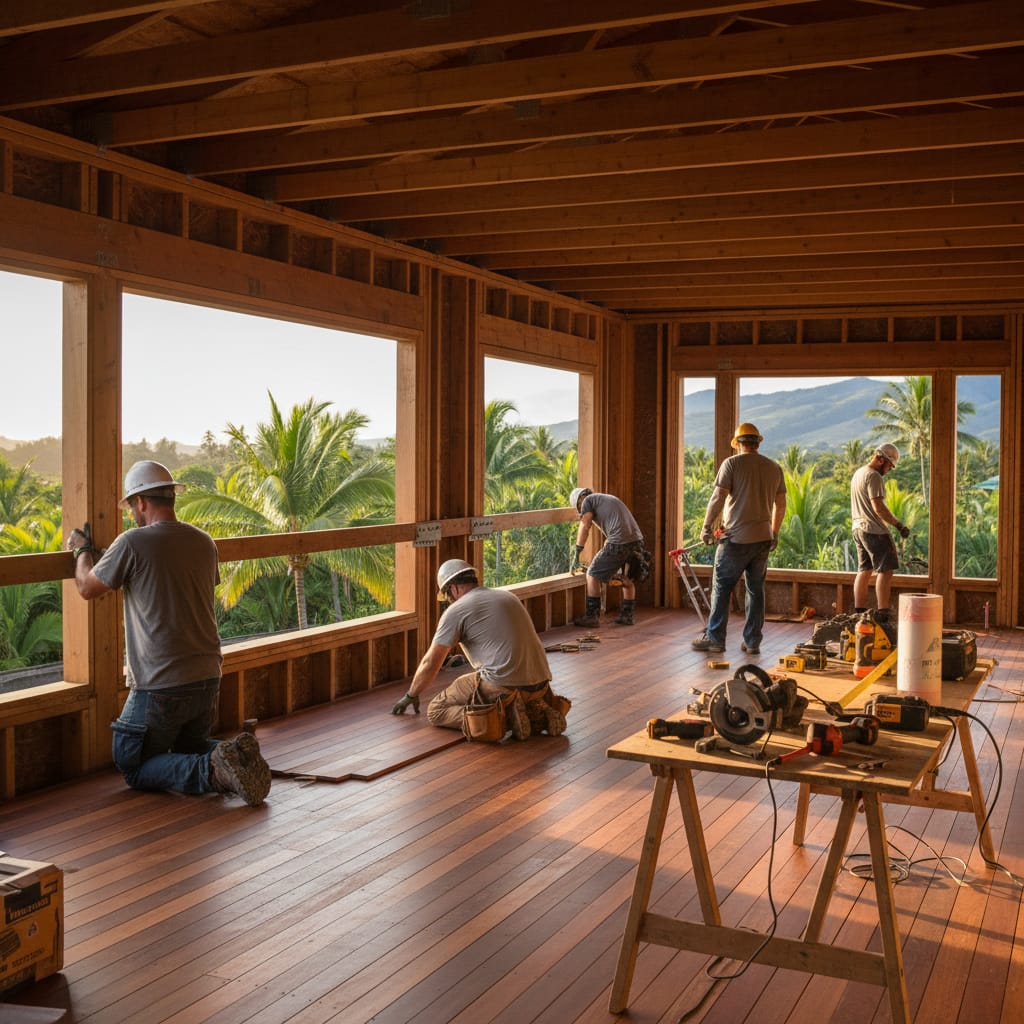
How Long Does a ADU Builder Take in Waimea?
\n\nPatience is a virtue in Hawaii construction, especially on the neighbor islands. A realistic timeline for building an ADU in Waimea, from the day you hire a contractor to the day you get the keys, is **12 to 18 months in 2026**. Anyone promising a 6-month turnaround is either inexperienced or not telling you the whole story. The physical construction is only one part of the equation; the pre-construction phase is often the longest.\n\nHere’s a detailed breakdown of a typical Waimea ADU project timeline:\n\n* **Phase 1: Design & Planning (2-4 Months)**\n * **Initial Consultation & Feasibility (1-2 weeks):** We meet with you, assess your property, discuss your goals, and establish a preliminary budget.\n * **Architectural Design (6-10 weeks):** We work with an architect or our in-house design team to develop full construction drawings. This involves back-and-forth revisions to get every detail right, from the floor plan to the window placements.\n * **Engineering & Final Plans (3-4 weeks):** Once the design is set, a structural engineer reviews the plans to ensure they meet all current hurricane and seismic codes. This is a non-negotiable step.\n\n* **Phase 2: Permitting (6-9 Months)**\n * **Permit Application Submission:** We compile the full set of plans, engineering calculations, and required county forms and submit them to the Hawai’i County Planning Department and Department of Public Works.\n * **Plan Review:** This is the longest and most unpredictable part of the process. Your plans go through multiple departments: planning, building, electrical, plumbing, and sometimes wastewater. Each department has its own queue. As of 2026, the backlog in the Hilo and Kona offices means a 6-month wait is optimistic. We plan for 9 months to be safe. We recently had a project in Waikoloa where the plans were stuck in one department for three months just waiting to be assigned to a reviewer. We manage this by checking in regularly and responding to any comments or requests for information the very same day.\n\n* **Phase 3: Construction (4-6 Months)**\n * **Site Prep & Foundation (3-4 weeks):** Once the permit is in hand, we can break ground. This includes clearing, grading, and pouring the foundation.\n * **Framing & Roofing (4-6 weeks):** The structure starts to take shape. We frame the walls, set the roof trusses, and get the building dried in with sheathing and roofing material.\n * **Rough-Ins (3-4 weeks):** This is when plumbing, electrical, and mechanical systems are installed within the walls and ceiling before any drywall goes up.\n * **Exterior & Interior Finishes (6-10 weeks):** This is the longest part of the build. It includes windows, doors, siding, insulation, drywall, painting, flooring, cabinets, countertops, and tile work.\n * **Finals (2-3 weeks):** We install the final fixtures (lights, faucets, appliances), complete landscaping, and schedule final inspections with the county. Once we pass all inspections, we get the Certificate of Occupancy.\n\nThis detailed timeline helps set realistic expectations. Supply chain issues can still cause delays. For instance, if you choose a specific tile that is backordered for 6 weeks, we have to adjust the schedule. A good ADU contractor waimea will anticipate these potential bottlenecks and order long-lead-time items well in advance.\n\n
What Permits Do You Need for ADU Builder in Waimea?
\n\nNavigating the permitting process for an ADU on the Big Island is a job in itself. It’s not just one permit; it’s a series of approvals from different Hawai’i County agencies. This is where having an experienced local contractor is invaluable. We handle this entire process for our clients because we know the paperwork, the people, and the potential pitfalls.\n\nThe primary permit you’ll need is a **Building Permit** from the Hawai’i County Department of Public Works, Building Division. However, to get that permit, you first need clearance from several other departments. While Honolulu’s system is complex, the Big Island process has its own unique steps.[2]\n\nHere is the typical permit path for a Waimea ADU:\n\n1. **Planning Department Review:** Before you can even apply for a building permit, the Planning Department must review your project to ensure it complies with zoning regulations. They will check your setbacks, lot coverage, and confirm that your property is eligible for an ADU. This includes verifying that your lot is large enough (typically 10,000 sq. ft. or more, though rules vary) and that you don’t have other unpermitted structures.\n\n2. **Submittal of Construction Plans:** Once Planning gives the green light, we submit the full set of architectural and engineering drawings to the Building Division. The package must be complete. A single missing sheet or calculation can send your application to the back of the line.\n\n3. **Departmental Reviews (The “Chops”):** Your plans are then circulated to various agencies for their approval, or “chops.” This includes:\n * **Building Division:** Reviews for compliance with the building code (structural integrity, fire safety, hurricane-resistant construction).\n * **Electrical Division:** Reviews the electrical plans.\n * **Plumbing Division:** Reviews the plumbing and drainage plans.\n * **Department of Water Supply (DWS):** Confirms you have adequate water supply. This may require installing a new, separate water meter for the ADU, which can be a significant cost and time factor.\n * **Wastewater Division:** This is a big one. They need to approve your plan for sewage. If you are connected to county sewer, it’s simpler. If you have a septic system, you will likely need to prove your existing system can handle the additional load or install a new, larger system.\n * **State Department of Health (DOH):** Often involved in approving new septic systems.\n\n4. **Addressing Comments:** It is very common for departments to return plans with comments or requests for clarification. A responsive contractor will address these immediately. A slow response can add months to your timeline. For example, on a recent project, the plumbing reviewer wanted a different layout for the drain-waste-vent system. We had our plumber revise the drawing and resubmitted it within 48 hours, keeping the project on track.\n\n5. **Permit Issuance:** Once all departments have signed off, the county calculates the permit fees and issues the building permit. Only then can construction begin.\n\nIt’s also important to understand recent legislation. While Oahu has its own specific ADU ordinances, Hawaii County’s rules govern projects in Waimea. We stay current on all county-level changes to ensure our clients’ projects are compliant from day one. Hiring an **ohana unit builder waimea** who is deeply familiar with this process is the best way to avoid costly mistakes and delays.\n\n
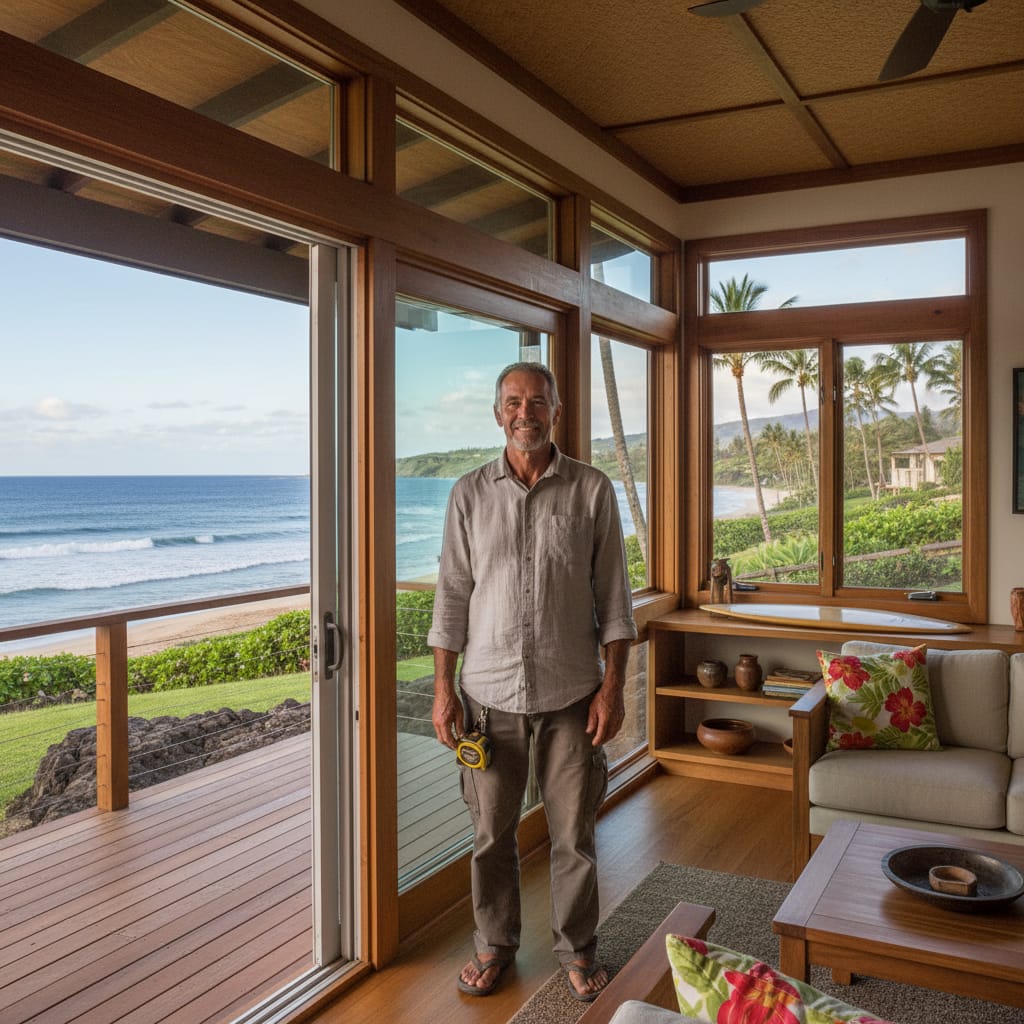
Waimea-Specific Considerations: Climate, Materials, Regulations
\n\nWaimea is a special place, and building here requires a specialized approach. Its location between the wet windward side and the dry leeward side, combined with its elevation, creates a microclimate unlike anywhere else in Hawaii. A builder who uses the same methods here as they would in Kapolei or Kailua is setting you up for problems.\n\nHere are the top considerations our team focuses on for every Waimea project:\n\n* **Climate & Elevation:** Waimea sits at around 2,700 feet. This means cool, often damp nights and significant rainfall, especially in the winter months. This is not a place for single-wall construction or uninsulated ceilings.\n * **Insulation is Key:** We always recommend closed-cell spray foam insulation. It provides a superior thermal barrier and acts as a vapor barrier, which is crucial in a damp environment to prevent mold and mildew. This is a critical upgrade for comfort and energy efficiency.\n * **Managing Moisture:** Proper ventilation, including high-quality bath fans and potentially a whole-house dehumidifier, is essential. We design roof systems with proper overhangs and install robust gutter systems to manage the heavy rain and direct water away from the foundation.\n * **Material Selection:** We avoid materials that are prone to rot or mildew. This brings us to another of our recommended 2026 upgrades: using **fire-resistant and moisture-resistant siding** like James Hardie fiber cement siding instead of wood.\n\n* **Paniolo Aesthetics & Design:** Waimea has a rich paniolo (Hawaiian cowboy) history, and many homeowners want their ADU to reflect this heritage. This can mean incorporating design elements like board-and-batten siding, corrugated metal roofing (zincalume or color-coated), and large covered lanais. A covered lanai isn’t just an add-on; it’s essential living space. For Waimea, we often suggest including an outdoor fireplace or built-in heaters to make the lanai usable on cool evenings—another smart upgrade.\n\n* **Volcanic Soil & Site Work:** The soil in the Waimea area can vary dramatically. You might have deep, rich soil perfect for farming, or you might hit solid blue rock just a few feet down. Before finalizing a foundation design, we often conduct soil testing or dig test pits. This informs whether a standard slab-on-grade is feasible or if a more complex post-and-pier foundation is required to accommodate uneven terrain or rock. Unexpected rock excavation is one of the most common budget overruns, so proactive investigation is key.\n\n* **Supply Chain & Logistics:** Building on the Big Island means everything comes by boat. Our project managers are logistics experts. We build schedules around barge arrivals at Kawaihae Harbor. We order materials like windows, trusses, and cabinets months in advance. A delay on a single shipment from the mainland can throw off the entire construction sequence. We manage this by using local suppliers whenever possible and by having contingency plans in place. This logistical planning is a core part of our service as an experienced **ADU contractor waimea**.\n\n
How to Choose the Right ADU Builder Contractor in Waimea
\n\nSelecting the right contractor is the single most important factor for a successful ADU project. A good contractor will save you money, time, and stress. A bad one can turn your dream into a nightmare of delays, budget overages, and shoddy workmanship. Here’s a contractor’s inside guide to vetting your builder.\n\n1. **Verify Their License and Insurance:** This is non-negotiable. The first step is to check their contractor’s license number (ours is BC-34373) on the Hawaii Department of Commerce and Consumer Affairs (DCCA) Professional & Vocational Licensing website.[1] Ensure the license is active, in good standing, and that it’s the correct type (a \”B\” General Building Contractor license is required for building an ADU). Ask for certificates of general liability insurance and workers’ compensation insurance. If they can’t provide these instantly, walk away.\n\n2. **Look for Specific Big Island Experience:** Don’t just ask if they’ve built ADUs; ask if they’ve built them *in Waimea* or other parts of the Big Island. Ask them about their experience with:\n * The Hawai’i County permitting process.\n * Sourcing materials and managing neighbor island logistics.\n * Building for Waimea’s specific climate conditions.\n * Local subcontractors they trust.\n A contractor based primarily on Oahu may not have the local relationships and knowledge to execute your project efficiently here.\n\n3. **Check References and Visit Past Projects:** A reputable builder will be proud to share a list of recent clients. Call them. Ask about their experience with communication, budgeting, scheduling, and quality. Most importantly, ask: \”Would you hire them again?\” If possible, ask to see a completed project. Look at the details—the alignment of tile, the quality of the paint job, the fit and finish of the trim. This tells you everything about their standards.\n\n4. **Review Their Contract and Process:** A professional contractor will provide a detailed, comprehensive contract. It should clearly outline the scope of work, a payment schedule, a process for handling change orders, and warranty information. Avoid contractors who ask for large upfront payments. A typical payment schedule is a small deposit, with subsequent payments tied to the completion of specific project milestones (e.g., foundation complete, framing complete). This protects you and ensures the contractor is motivated to keep the project moving.\n\n5. **Communication is Key:** How does the contractor communicate? During the vetting process, are they responsive to your calls and emails? A builder who is hard to reach before you’ve signed a contract will be impossible to reach once they have your money. We assign a dedicated project manager to every job who provides weekly updates with photos and progress reports. You should always know what’s happening on your property.\n\nChoosing a builder is a long-term relationship. You’ll be working with them closely for over a year. Make sure it’s a team you trust, respect, and can communicate with effectively. You can learn more about our comprehensive construction services here.\n\n
Real Waimea ADU Builder Project Example
\n\nTo make this all concrete, let’s walk through a recent project we completed for a family in Waimea, which illustrates many of the points we’ve discussed. The client’s goal was to build an ohana unit for their aging parents, allowing them to live close by while maintaining their independence. They also wanted the design to complement their existing plantation-style main home.\n\n**Project Specs:**\n* **Size:** 750 sq. ft.\n* **Layout:** 2 bedrooms, 1 bathroom, open-concept kitchen/living area.\n* **Key Features:** Large 200 sq. ft. covered lanai, universal design elements (no-step shower, wider doorways), and a design that echoed the main house.\n\n**The Process and Timeline:**\n* **Design & Permitting (11 Months):** This was longer than average. We started design in early 2025. The initial design took about 8 weeks. Permitting with Hawai’i County took a full 9 months. There was a delay during the wastewater review, as we had to perform calculations to prove the existing septic system had adequate capacity for the new unit. Our quick response with the engineering data prevented a much longer delay.\n* **Construction (5 Months):** We broke ground in late 2025. The site had some moderate slope, so we opted for a post-and-pier foundation, which minimized site disturbance and cost compared to extensive grading. Construction proceeded smoothly through early 2026. The only significant delay was waiting an extra three weeks for the custom windows to arrive at Kawaihae Harbor. Because we had anticipated this possibility, we were able to adjust the schedule and work on exterior siding and other tasks while we waited, minimizing downtime.\n\n**Budget Breakdown:**\n* **Total Project Cost:** ~$395,000\n* **Cost Per Square Foot:** ~$527/sq. ft.\n* **Breakdown:**\n * Design & Permitting Fees: $32,000\n * Site Work & Foundation: $55,000\n * Construction (Labor & Materials): $280,000\n * Finishes & Appliances: $28,000\n\n**Waimea-Specific Upgrades:**\nWe incorporated several key upgrades perfect for the location. First, we used **closed-cell spray foam insulation** throughout, making the home exceptionally comfortable during cool Waimea nights. Second, we installed a high-quality **metal roof and a full gutter system** tied into a small water catchment tank for garden irrigation. Finally, the covered lanai was designed to be a true outdoor living room, oriented to block the prevailing trade winds and capture the Mauna Kea views. We even pre-wired it for infrared heaters, one of our top 2026 recommendations, which the homeowners plan to add next year.\n\nThe result was a beautiful, functional, and climate-appropriate ohana unit that perfectly met the family’s needs. You can see examples of our craftsmanship in our project portfolio.\n\n
What this means for Hawaii homeowners
\n\nBuilding an ADU in Waimea is a significant undertaking, but it’s also one of the most rewarding home projects you can pursue. It offers a powerful solution to Hawaii’s housing challenges, whether you’re creating a home for family, generating rental income, or simply increasing the flexibility and value of your property. However, success depends on understanding the local realities and planning accordingly.\n\nHere are the key takeaways for any Waimea homeowner considering an ADU in 2026:\n\n* **Budget Realistically:** Understand that all-in costs will likely be in the $450-$600 per square foot range. This includes Big Island-specific costs like inter-island shipping and potentially challenging site work. Don’t be swayed by unrealistically low estimates that ignore these factors.\n\n* **Plan for the Timeline:** The 12 to 18-month timeline is real, with permitting being the biggest hurdle. Start the process long before you need the unit to be ready. Patience and a long-term view are essential.\n\n* **Design for Waimea, Not Waikiki:** Your ADU must be designed for Waimea’s unique climate. Prioritize insulation, moisture management, and durable, low-maintenance materials. Think about how you’ll live in the space during cool, rainy winters, not just on perfect sunny days.\n\n* **Hire a True Local Expert:** Your choice of contractor is paramount. You need an **adu builder waimea** who has specific, verifiable experience navigating the Hawai’i County system, managing Big Island logistics, and building for the local climate. Their expertise is your best defense against budget overruns and delays.\n\nAn ADU is more than just a small house; it’s a long-term asset. By investing in quality design, smart materials, and the right building partner, you can create a valuable addition to your property that will serve your family for generations.\n\n
Frequently Asked Questions About ADU Builder in Waimea
\n
How much does it cost to build an ADU in Waimea in 2026?
\n
In 2026, a realistic budget for a turnkey ADU in Waimea is between $450 and $600 per square foot. For a standard 800-square-foot unit, this translates to a total construction cost of roughly $360,000 to $480,000. This price includes labor, materials, shipping to the Big Island, and standard finishes but does not include design, permitting, or major utility connection fees.
\n
\n
How long does it take to get an ADU permit in Waimea?
\n
The permitting phase alone is the longest part of the project. As of 2026, you should expect the permit process with Hawai’i County to take between 6 and 9 months. This includes the initial review by the Planning Department followed by circulation through the Building, Electrical, Plumbing, and Wastewater divisions. Delays are common, so it’s critical to have a contractor who can manage the process proactively.
\n
\n
Can I build an ADU on my property in Waimea?
\n
Generally, properties zoned for residential or agricultural use with a lot size of at least 10,000 square feet are eligible for an ADU. However, there are other requirements related to setbacks, lot coverage, and wastewater management. We always start with a feasibility study to confirm your property’s eligibility with the Hawai’i County Planning Department before beginning any design work.
\n
\n
What are the biggest challenges of building an ohana unit in Waimea?
\n
The top three challenges are the lengthy permitting process, managing the logistics of shipping materials to the Big Island, and dealing with unpredictable site conditions like volcanic rock. A fourth challenge is designing for Waimea’s unique cool and damp climate, which requires better insulation and moisture control than coastal areas. An experienced local contractor will have systems in place to manage all these challenges effectively.
\n
\n
What is the difference between an ADU and an ohana unit?
\n
In Hawaii, the terms are often used interchangeably. \”Ohana dwelling\” was the older legal term for a second home on a property, often intended for family. \”Accessory Dwelling Unit\” or ADU is the more modern, official planning term used in county codes. Functionally, they refer to the same thing: a secondary, smaller living unit on the same lot as a primary single-family home.
\n
\n
Do I need a separate water meter for my Waimea ADU?
\n
This is determined by the Hawai’i County Department of Water Supply (DWS). In many cases, yes, the DWS will require a second, separate water meter for the ADU. The installation of a new meter can cost over $10,000 and is a major budget item that needs to be planned for from the beginning. We clarify this requirement with DWS early in the design process.
\n
\n
What is the advantage of a design-build ADU contractor?
\n
A design-build contractor like Warrior Construction handles both the architectural design and the construction under a single contract. This streamlines the process immensely, creating better communication between the design and construction teams. It helps control costs because the builders provide input during the design phase, ensuring the plans are practical and on-budget. This integrated approach can often shorten the overall project timeline and prevent the finger-pointing that can happen when the architect and builder are separate entities.
\n
\n
\n\n
Build Your Waimea Ohana Unit With Confidence
\n
Building an ADU is a complex journey, but you don’t have to navigate it alone. With decades of experience as a trusted Hawaii general contractor, Warrior Construction (BC-34373) has the local knowledge and proven expertise to bring your Waimea project to life, on time and on budget. We treat your property like our own and are committed to quality craftsmanship that stands the test of time.
\n
If you’re ready to explore the possibilities for an ADU on your Waimea property, our team is here to help. Contact us today to discuss your project and receive a free, no-obligation estimate.
\n\n
References
\n