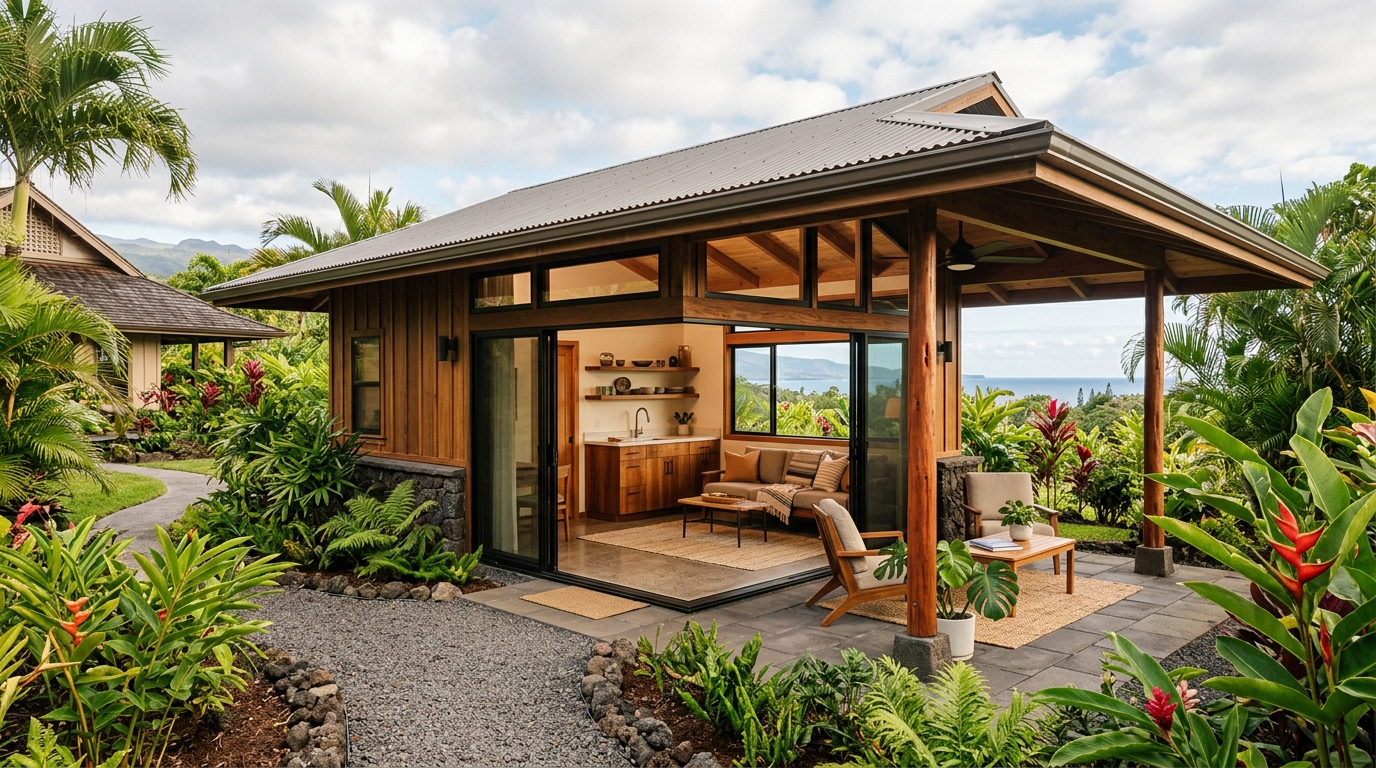
“Building an Accessory Dwelling Unit (ADU) in Pahoa is one of the smartest investments a Hawaii homeowner can make in 2026, but choosing the right adu builder pahoa is the most critical decision in the entire process. Hiring a local, experienced general contractor who understands Puna’s unique building environment—from its volcanic soil and heavy rainfall to the specifics of Hawai’i County permitting—is the difference between a smooth project and a costly nightmare. An off-island builder simply won’t know the nuances of building on lava rock, engineering a proper water catchment system, or navigating the supply chain in East Hawai’i.\n\nAt Warrior Construction, we’ve spent over two decades building across the islands, and our team on the Big Island has seen it all. We understand that building in Pahoa isn’t like building in Honolulu or even Kona. It requires a different set of skills, materials, and local knowledge. This guide walks you through the essential reasons to partner with a local expert for your ohana unit. We’ll break down the real 2026 costs, timelines, and permitting hurdles specific to Pahoa, giving you the information you need to move forward with confidence. From understanding the ground you’re building on to selecting materials that will last in the humid, VOG-prone climate, we’ll cover the six key areas where local expertise pays off big time.\n\n## Why Pahoa Homeowners Trust Warrior Construction for ADU Builder\n\nWhen you’re looking for an ADU builder, you’re not just hiring someone to pour concrete and frame walls; you’re trusting them with a significant investment in your property and your family’s future. Homeowners in Pahoa and across the Big Island trust Warrior Construction (License BC-34373) because we bring a combination of island-wide experience and deep local knowledge. We’re not a mainland company with a satellite office; we live and work here, and we understand the specific challenges that come with building in Puna.\n\nFirst, our team has hands-on experience with Puna’s unique geology. Building on a pāhoehoe or ʻaʻā lava field is completely different from building on soil. A contractor from Oahu might propose a standard slab foundation that’s completely wrong for the site, leading to cracks and structural failure. We know how to properly prepare the site, whether it requires extensive rock hammering or designing an elevated post-and-pier foundation that respects the land and provides better airflow. Just last year on a project in Hawaiian Paradise Park, our initial site assessment revealed the ground was mostly unripped ʻaʻā. An inexperienced builder might have tried to pour a slab on compacted fill, but we knew to design a steel post-and-pier system anchored directly to the rock, saving the client thousands in excavation costs and preventing future foundation issues.\n\nSecond, we have established relationships with local suppliers and subcontractors. In East Hawai’i, the supply chain is everything. Waiting for a container of windows to arrive in Hilo can delay a project for weeks. Because we’re constantly building on the island, we have strong partnerships with HPM, Honsador, and other local suppliers. This means we get more reliable material delivery schedules and access to the best local plumbers, electricians, and roofers—the ones who actually show up on time and know the local codes. An `ADU contractor pahoa` without these connections will spend half their time (and your money) just trying to track down materials and reliable labor.\n\nFinally, we understand the climate. Pahoa’s rain and humidity are no joke. We build with this in mind from day one. This includes:\n* **Moisture Management:** Using pressure-treated lumber for framing, incorporating robust waterproofing membranes, and designing for maximum cross-ventilation.\n* **Material Selection:** Recommending standing-seam metal roofs that can handle torrential downpours, stainless steel fasteners that resist corrosion from VOG and salt air, and mold-resistant drywall in all interior spaces.\n* **System Design:** Expertly designing and installing water catchment systems, which are a necessity for most properties in the area. We know how to properly size the tank, select the right filtration system for potable water, and install a reliable pump system.\n\nChoosing Warrior Construction means choosing a partner who has already solved the problems you haven’t even thought of yet. Check our license and history anytime on the Hawaii DCCA PVL search.[1]\n\n## What Does ADU Builder Cost in Pahoa?\n\nLet’s get straight to the point, because this is the first question every homeowner asks. As of 2026, the all-in cost to build a quality ADU in Pahoa ranges from **$375 to $500 per square foot.** For a typical 600-square-foot, 2-bedroom ADU, you should budget for a total project cost between **$225,000 and $300,000**. Anyone quoting you significantly less is likely cutting corners, uninsured, or hasn’t built in Puna before and doesn’t understand the true costs.\n\nThis price can feel high, but it’s important to understand what’s included. The total cost isn’t just lumber and nails; it’s a combination of hard costs, soft costs, and site-specific costs.\n\n**1. Hard Costs (Approx. 65-70% of Budget):**\nThese are the direct costs of construction—labor and materials. This is the figure most people think of as the “build cost.”\n* **Foundation:** A post-and-pier foundation on lava rock can cost $20,000 – $35,000, often more than a simple slab on soil.\n* **Framing & Structure:** Includes lumber, hurricane ties, and shear walls required by Big Island code. Expect $40,000 – $60,000.\n* **Exterior:** Siding (Hardie is a great choice for durability), a high-quality metal roof, windows, and doors designed for wet climates. This can run $35,000 – $50,000.\n* **Interior Finishes:** Drywall, paint, flooring, cabinets, countertops. This is where your choices make a big impact. A basic finish package might be $40,000, while a semi-custom one can easily be $70,000+.\n* **Plumbing & Electrical:** Labor and materials for full wiring and plumbing. This includes fixtures and is typically $25,000 – $40,000.\n\n**2. Soft Costs (Approx. 10-15% of Budget):**\nThese are the necessary expenses that aren’t part of the physical structure itself.\n* **Design & Engineering:** Architectural plans, structural engineering, and septic design can cost between $15,000 and $25,000.\n* **Permitting Fees:** Hawai’i County building permit fees for an ADU are usually in the $3,000 to $6,000 range. This doesn’t include the time and effort to manage the submission process.\n* **General Excise Tax (GET):** Remember to add 4.5% (Hawai’i County rate) to every single invoice, including your contractor’s.\n\n**3. Site & Utility Costs (Approx. 15-20% of Budget):**\nThis is where Pahoa projects often differ most from urban Honolulu builds.\n* **Site Prep:** Clearing trees and ripping/leveling lava rock can be a major expense, costing anywhere from $10,000 to $30,000 or more depending on the lot.\n* **Water Catchment System:** A complete system with a 10,000-15,000 gallon tank, gutters, pump, and UV filtration system will cost between $15,000 and $25,000.\n* **Wastewater System:** Installing a new septic system, which is required for most Puna properties, typically costs $18,000 to $30,000.\n* **Utility Connections:** Bringing HELCO power to the ADU site can also have significant costs depending on the distance from the main service.\n\nBuilding an ohana unit is a complex financial undertaking. Our approach at Warrior Construction is to provide a detailed, line-item budget during the preconstruction phase so you see exactly where every dollar is going. This transparency prevents surprises and allows us to work together to value-engineer the project to meet your budget without sacrificing quality.\n\n## How Long Does a ADU Builder Take in Pahoa?\n\nBuilding an ADU in Pahoa is a marathon, not a sprint. A realistic timeline from the day you hire an architect to the day you get your keys is **12 to 20 months** in 2026. Be very wary of any `adu builder pahoa` who promises it can be done in six months; they are either being dishonest or have never dealt with the realities of the Hawai’i County Planning Department and the Big Island supply chain.\n\nHere’s a typical timeline broken down into phases:\n\n**Phase 1: Design and Planning (2-4 Months)**\nThis is where we work with you and an architect or designer to create the plans for your ohana unit. It involves site analysis, floor plan development, material selection, and structural engineering. This phase is collaborative and requires decisions from you, so its length can vary. Rushing this stage is a huge mistake. A well-thought-out plan saves time and money during construction. For example, finalizing window and door selections early allows us to pre-order them, as they often have a 12-16 week lead time for delivery to Hilo.\n\n**Phase 2: Permitting (4-8 Months)**\nThis is often the longest and most frustrating part of the process. Once the plans are complete, we submit them to the Hawai’i County Planning Department for review. The timeline here is largely out of our hands. A simple, well-drawn set of plans for a standard ADU might move through in 4 months. However, if the plans are complex, require zoning variances, or if the department is backlogged (which is common), it can easily take 8 months or longer. We’ve seen it happen. Unlike Honolulu’s Department of Planning and Permitting (DPP), which has a more digitized system, the Big Island process can be more opaque.[2] Having a contractor who knows the local reviewers and understands exactly what they look for can help avoid unnecessary delays and resubmission requests.\n\n**Phase 3: Construction (6-9 Months)**\nThe actual build phase is what most people picture. Once we have the approved permit in hand, our crew gets to work.\n* **Months 1-2:** Site work, excavation, foundation (post-and-pier or slab).\n* **Months 2-3:** Framing, sheathing, and roofing. This is where the structure takes shape.\n* **Months 4-5:** Windows, doors, siding, and rough-in for electrical, plumbing, and mechanical systems.\n* **Months 6-7:** Insulation, drywall, and interior/exterior painting.\n* **Months 7-8:** Flooring, cabinet installation, tile work, and finishing touches.\n* **Month 9:** Final inspections, utility connections, and final walkthrough.\n\nThis construction timeline can be impacted by Puna’s weather. A week of solid rain can halt all exterior work. Material availability is another wild card. If a specific type of roofing or flooring is backordered, we have to be nimble and work on other parts of the project to keep things moving. An experienced local builder anticipates these delays and builds buffers into the schedule.\n\n## What Permits Do You Need for ADU Builder in Pahoa?\n\nNavigating the permitting process for an ADU on the Big Island is a critical step that requires precision and local knowledge. You can’t just start building. Attempting to do so results in massive fines, stop-work orders, and the potential for having to tear down what you’ve built. As your general contractor, we manage this entire process for you, but it’s important for homeowners to understand what’s involved.\n\nThe primary permit you need is a **Building Permit** from the Hawai’i County Planning Department. To get this, you must submit a comprehensive package of documents, including:\n\n1. **Completed Building Permit Application:** This official form details the scope of work, property information, and estimated project cost.\n2. **Stamped Architectural Plans:** These are the detailed blueprints for your ADU, drawn by a licensed Hawaii architect or draftsman. They must include floor plans, elevations, sections, and details that comply with the Hawai’i County Code.\n3. **Stamped Structural Plans:** A licensed structural engineer in Hawaii must review the architectural plans and create drawings that specify the foundation design, framing details, hurricane tie-down schedule, and any other structural elements. This is especially critical in Pahoa due to seismic and wind load requirements.\n4. **Site Plan:** This drawing shows the location of the new ADU on your property in relation to existing structures, property lines, cesspools or septic systems, and any easements.\n5. **Wastewater System Approval:** Since most of Puna is not on a public sewer system, you will need approval from the Department of Health for a new septic system or a certification that your existing system can handle the additional load. This often requires a separate design and permit.\n6. **Other Documents:** Depending on your location, you may also need a grading permit, drainage plans, or proof of water source (like a permitted water catchment system).\n\n**Understanding Local ADU Rules (Not Oahu’s Bill 7)**\n\nIt’s crucial to distinguish Big Island’s rules from Oahu’s. Many homeowners hear about `Bill 7 ADU pahoa` and assume those rules apply statewide. They do not. Bill 7 was a Honolulu-specific ordinance designed to ease ADU restrictions there. Hawai’i County has its own set of rules, primarily found in Chapter 25 of the County Code.\n\nKey Hawai’i County ADU regulations (as of 2026) include:\n* **Definition:** An ADU (or ‘Ohana Dwelling Unit’) is a second dwelling unit on a lot with an existing single-family home.\n* **Lot Size:** The minimum lot size required to build an ADU is typically 10,000 square feet, but this can vary by zoning.\n* **Size Limits:** The ADU cannot exceed 800 square feet of living area.\n* **Ownership:** The property owner must reside in either the main house or the ADU.\n* **No CPR:** You cannot subdivide the property and sell the ADU separately through a Condominium Property Regime (CPR).\n\nAn experienced `ADU contractor pahoa` like Warrior Construction is fluent in these local regulations. We ensure the plans we submit are fully compliant from the start, which is the best way to avoid months of back-and-forth with the planning department.\n\n## Pahoa-Specific Considerations: Climate, Materials, Regulations\n\nBuilding successfully in Pahoa means engineering a home that works *with* the unique environment, not against it. A design that works perfectly in dry, sunny Kapolei would fail miserably in the rainforests of Leilani Estates. A local builder’s knowledge is indispensable here. Here are the top Pahoa-specific factors we plan for on every ADU project.\n\n**1. Extreme Rainfall and Humidity**\nPahoa is one of the wettest places in the United States, receiving 120-200 inches of rain annually. This reality dictates many of our building choices.\n* **Roofing:** A standing-seam metal roof is our standard recommendation. It has no exposed fasteners and the panels run in single lengths from ridge to eave, dramatically reducing the chance of leaks compared to shingle or tile roofs.\n* **Waterproofing:** We use high-quality, self-adhering waterproofing membranes under all roofing and around all window and door openings. It’s an extra layer of protection that’s non-negotiable.\n* **Ventilation:** To combat mold and mildew, we design for constant airflow. This includes strategically placed jalousie windows, vented ridges on the roof, and powerful bathroom exhaust fans. Elevated post-and-pier foundations also promote airflow under the house, keeping the subfloor dry.\n* **Interior Materials:** We specify mold-resistant drywall (green board or purple board) and use paints with mildewcide additives. Flooring choices like luxury vinyl plank (LVP) are far superior to carpet or even some types of wood in this humid climate.\n\n**2. Volcanic Geology and Soil**\nThe ground beneath your feet in Pahoa is young lava rock. This has massive implications for construction.\n* **Foundation:** As mentioned, a concrete slab is often not the best or most cost-effective solution. Post-and-pier foundations are typically superior as they require minimal site disturbance, adapt to uneven terrain, and provide that crucial under-house ventilation.\n* **Excavation:** Digging trenches for utilities or a septic system is not simple digging; it’s rock-breaking. This requires heavy machinery and specialized operators, a cost that must be factored into the budget.\n* **Seismic Considerations:** The Big Island is seismically active. All our structures are engineered to exceed the building code requirements for earthquakes, with reinforced connections and shear walls providing a robust building envelope.\n\n**3. Materials and Corrosion**\nWhile direct salt spray is less of a concern than in coastal Kailua, Puna has its own corrosive agent: VOG (volcanic smog). The sulfur dioxide in VOG creates acidic conditions that can accelerate the rusting of metal components.\n* **Fasteners:** We use exclusively stainless steel or hot-dip galvanized nails, screws, and structural connectors. Using cheaper electroplated hardware is asking for trouble; we’ve seen them rust out in just a few years.\n* **Hardware:** All exterior hardware, from gate hinges to light fixtures, should be marine-grade stainless steel or high-quality powder-coated aluminum.\n* **Windows:** We recommend fiberglass or vinyl window frames over aluminum, as they are impervious to corrosion and offer better insulation.\n\nUnderstanding these Pahoa-specific challenges is what sets a true local `ohana unit builder pahoa` apart. We build homes designed to last for generations in this beautiful but demanding environment.\n\n## How to Choose the Right ADU Builder Contractor in Pahoa\n\nSelecting your contractor is the single most important decision you will make. A great contractor will guide you through the process, while a bad one can turn your dream project into a financial and legal disaster. Here is a simple, 6-step checklist for vetting any potential ADU builder in Pahoa.\n\n1. **Verify Their License and Insurance:** This is non-negotiable. Any contractor you consider must have a valid Hawaii General Contractor license (like our BC-34373). You can verify this online in minutes using the Hawaii DCCA Professional & Vocational Licensing (PVL) search.[1] Also, ask for proof of general liability insurance and workers’ compensation insurance. Do not hire anyone who cannot provide these documents immediately.\n\n2. **Confirm Big Island, Puna-Specific Experience:** Don’t just ask if they’ve built ADUs; ask if they’ve built them *in Pahoa*. Ask to see their portfolio of completed projects in Hawaiian Paradise Park, Leilani Estates, or Hawaiian Beaches. Ask for addresses you can drive by. A contractor based in Honolulu or even Kona may not have the specific experience needed for your project.\n\n3. **Interview Past Clients:** A reputable builder will be happy to provide you with a list of 3-5 recent clients. Call them. Ask about their experience. Was the project on time and on budget? How did the contractor handle problems when they arose? Was communication clear and consistent? Was the job site kept clean and safe?\n\n4. **Check Their Supplier and Subcontractor Relationships:** Ask them who their primary lumber supplier is in Hilo. Ask which electricians and plumbers they typically use. An established local builder will have a dedicated team of subcontractors they trust. If they can’t answer these questions easily, it’s a red flag that they don’t have the deep local ties needed to run a project smoothly in East Hawai’i.\n\n5. **Review Their Contract and Payment Schedule:** Never sign a vague, one-page contract. A professional contract will be detailed, outlining the full scope of work, a clear payment schedule tied to construction milestones, a change order process, and warranty information. Be wary of any contractor who asks for a large upfront deposit. A typical deposit is 10% or less, with subsequent payments made as work is completed.\n\n6. **Trust Your Gut:** You will be working closely with this person for over a year. Make sure you have good rapport and feel that they are honest, transparent, and a good communicator. If you feel pressured or get a bad vibe, walk away. There are other good builders out there.\n\nDoing your homework upfront will save you an incredible amount of stress and money down the road. Our team at Warrior Construction welcomes this level of scrutiny because we’re confident in our process and our track record.\n\n## Real Pahoa ADU Builder Project Example\n\nTo make this all more concrete, let’s walk through a typical project we completed recently. It’s a great example of how a knowledgeable **adu builder pahoa** navigates local challenges to deliver a successful project.\n\n* **The Client:** A couple in their 60s living in Hawaiian Shores. They wanted to build an 800 sq ft ohana unit for their daughter and her young family to live in, allowing them to be close while maintaining their independence.\n\n* **The Property:** A one-acre lot, mostly covered in ʻaʻā lava rock with some mature ʻōhiʻa trees they wanted to preserve. The property was not on county water or sewer, a standard situation for the area.\n\n* **The Initial Challenge:** Their initial idea, based on designs they saw online, was for a slab-on-grade foundation. An off-island architect had even drawn up preliminary plans. We immediately identified this as a problem. Preparing the jagged ʻaʻā field for a slab would have required tens of thousands of dollars in rock hammering and fill, and it would have damaged the roots of the nearby ʻōhiʻa trees. It also would have created a flat, poorly-draining pad in a high-rain area.\n\n* **Our Solution & The Process:** We recommended a redesign using a post-and-pier foundation. This allowed us to place concrete footings in strategic locations with minimal disturbance to the lot, preserving the natural landscape and the trees. The elevated structure provided excellent airflow and space to run plumbing and electrical lines without trenching through rock.\n\n We handled the entire process:\n 1. Brought in our trusted architect to revise the plans for the new foundation.\n 2. Hired a local civil engineer to design a new septic system for the larger household.\n 3. Submitted the complete permit package to Hawai’i County and managed the review process.\n 4. Once the permit was issued, our crew began construction. We sourced materials through our Hilo suppliers to keep the project on schedule.\n 5. We installed a 15,000-gallon water catchment system with a dual-filter and UV purification setup, ensuring the family had clean, reliable water.\n\n* **The Outcome:** The project was completed within 16 months from our initial consultation (7 months of that was permitting). The final construction cost was approximately $380,000. The clients were thrilled with the result, especially that we were able to save the beautiful ʻōhiʻa trees and create a home that felt perfectly integrated with the Puna landscape.\n\nThis project highlights why local expertise is so critical. The initial plan would have led to budget overruns and a less functional home. By understanding the land, we were able to provide a better, more cost-effective solution.\n\n
\n
What this means for Hawaii homeowners
\n\nFor any homeowner in Pahoa or the surrounding Puna district considering an ADU in 2026, the path to a successful build is paved with local knowledge. The unique combination of volcanic geology, extreme weather, and specific county regulations makes this one of the most challenging places to build in Hawaii. Trying to save a few dollars by hiring an off-island contractor or an unlicensed handyman is a recipe for disaster that will ultimately cost you far more in repairs, delays, and headaches.\n\nYour key takeaways should be:\n\n* **Budget Realistically:** Understand that the true all-in cost for a quality ADU in Pahoa is likely between $225,000 and $300,000 or more. This includes essentials like a water catchment system and septic tank, which are not optional expenses for most properties.\n* **Plan for a Long Timeline:** The process, from initial design to final inspection, will realistically take 12 to 20 months. A significant portion of this time will be spent waiting for permits, so patience is essential.\n* **Hire a True Local Expert:** Your single most important decision is choosing a licensed, insured general contractor with a proven track record of building in Puna. They will know how to design a home that can withstand the rain, how to build a foundation on lava rock, and how to navigate the Hawai’i County permitting process efficiently.\n* **Prioritize Quality Over Speed:** In Pahoa’s climate, cutting corners on materials or construction techniques will lead to rapid decay. Invest in quality roofing, proper waterproofing, corrosion-resistant fasteners, and excellent ventilation. It will pay for itself many times over.\n\nThe demand for housing on the Big Island is only growing. Building an ohana unit is a fantastic way to create space for family or generate rental income. By partnering with the right `ohana unit builder pahoa`, you can ensure your investment is a lasting and valuable one.\n\n
Frequently Asked Questions About ADU Builder in Pahoa
\n
How much does it really cost to build an ADU in Pahoa in 2026?
\n
A realistic all-in budget for an ADU in Pahoa is between $375 and $500 per square foot. For a standard 600 sq ft unit, this means a total project cost of $225,000 to $300,000. This figure includes design, permits, site work, a water catchment system, a septic system, and construction.
\n
\n
Can I build an ADU in a Lava Zone 1 or 2 area?
\n
Yes, you can build in Lava Zones 1 and 2, but it comes with stricter requirements and higher costs. You will need a specialized foundation engineered for the specific risks, and obtaining homeowner’s insurance can be more difficult and expensive. It is critical to work with a builder and structural engineer who have experience with these high-risk zones.
\n
\n
Do I have to install a water catchment system for my Pahoa ADU?
\n
For most properties in Pahoa and the greater Puna area, yes. Access to the county water supply is very limited. A water catchment system is the standard solution and a necessary utility. A properly designed system with adequate filtration provides clean, safe water for your household year-round.
\n
\n
Is it faster to get a building permit on the Big Island than on Oahu?
\n
It can be, but not always. While Oahu’s DPP is known for very long delays, the Hawai’i County Planning Department has its own backlogs. A realistic timeline for an ADU permit in Pahoa is 4 to 8 months. The completeness and accuracy of your submitted plans are the biggest factors in speeding up the review.
\n
\n
What’s the difference between Big Island’s ADU rules and Oahu’s Bill 7?
\n
They are completely different sets of regulations. The term `Bill 7 ADU pahoa` is a misnomer; Bill 7 applies only to the City and County of Honolulu. Hawai’i County has its own ordinances, which generally limit ADUs to 800 square feet and require the property owner to live on-site, among other rules. Always refer to the current Hawai’i County Code, not Oahu’s rules.
\n
\n
Can I act as my own general contractor to save money?
\n
While Hawaii law allows for an owner-builder exemption, it is strongly discouraged for a project as complex as an ADU, especially in Pahoa. You would be legally and financially responsible for the entire project, including managing subcontractors, ordering materials, scheduling inspections, and any construction defects. The small amount you might save is rarely worth the immense risk, stress, and potential for costly mistakes.
\n
\n
How can I find reliable subcontractors in the Puna area?
\n
This is one of the biggest challenges for new builders. The best way is to hire an established general contractor like Warrior Construction. We have a vetted team of electricians, plumbers, roofers, and other tradespeople we have worked with for years. These relationships are key to keeping a project on schedule and ensuring high-quality work.
\n
\n
\n\n
Your Pahoa ADU Starts with a Solid Plan
\n
Building an ADU in Pahoa is a significant undertaking, but the rewards—whether it’s keeping family close or generating new income—are tremendous. The key is partnering with a builder who knows the lay of the land, literally and figuratively. At Warrior Construction, we combine decades of statewide construction expertise with the on-the-ground knowledge needed to succeed in Puna. We’re ready to help you navigate the entire process, from initial design to final walkthrough.
\n
If you’re ready to explore the possibilities for your property, our team is here to help. Learn more about our ADU and Ohana Unit construction services or reach out today to schedule a free, no-obligation estimate.
\n\n
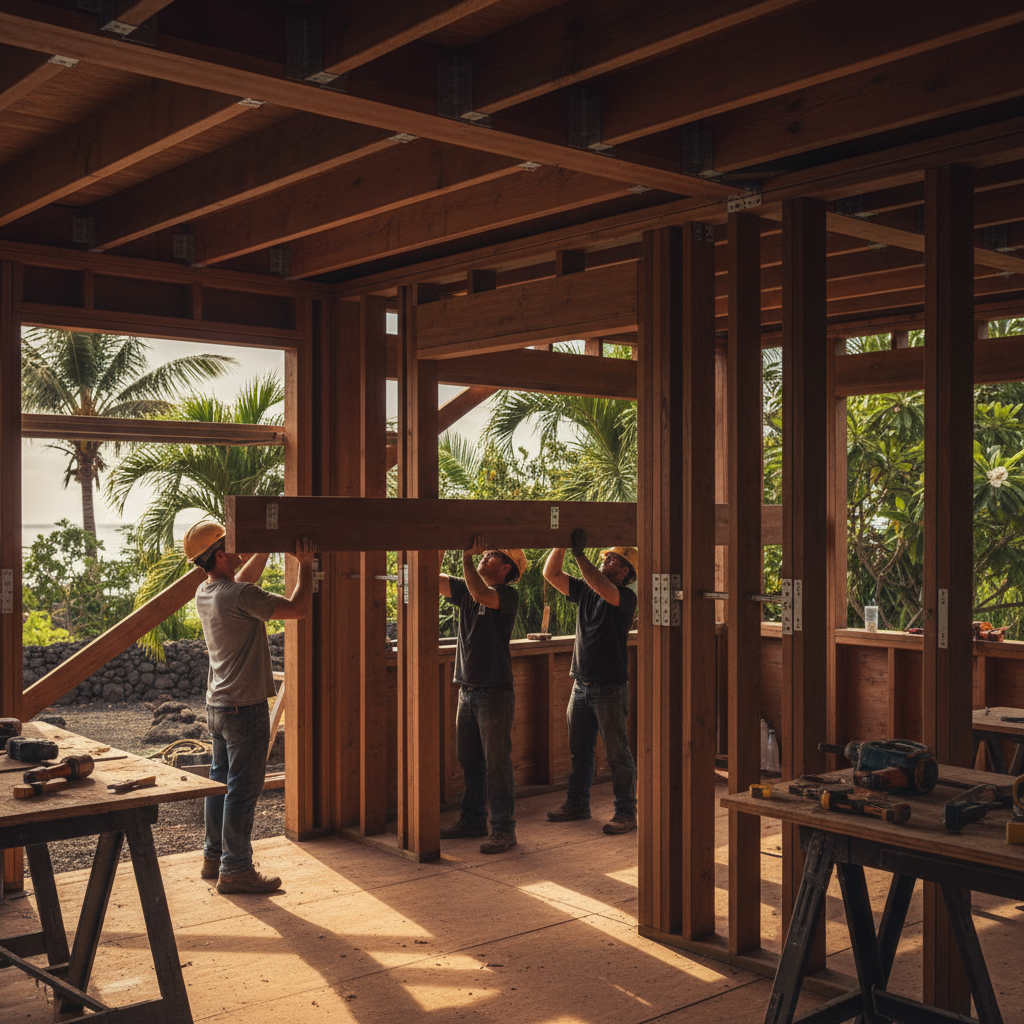
References
\n