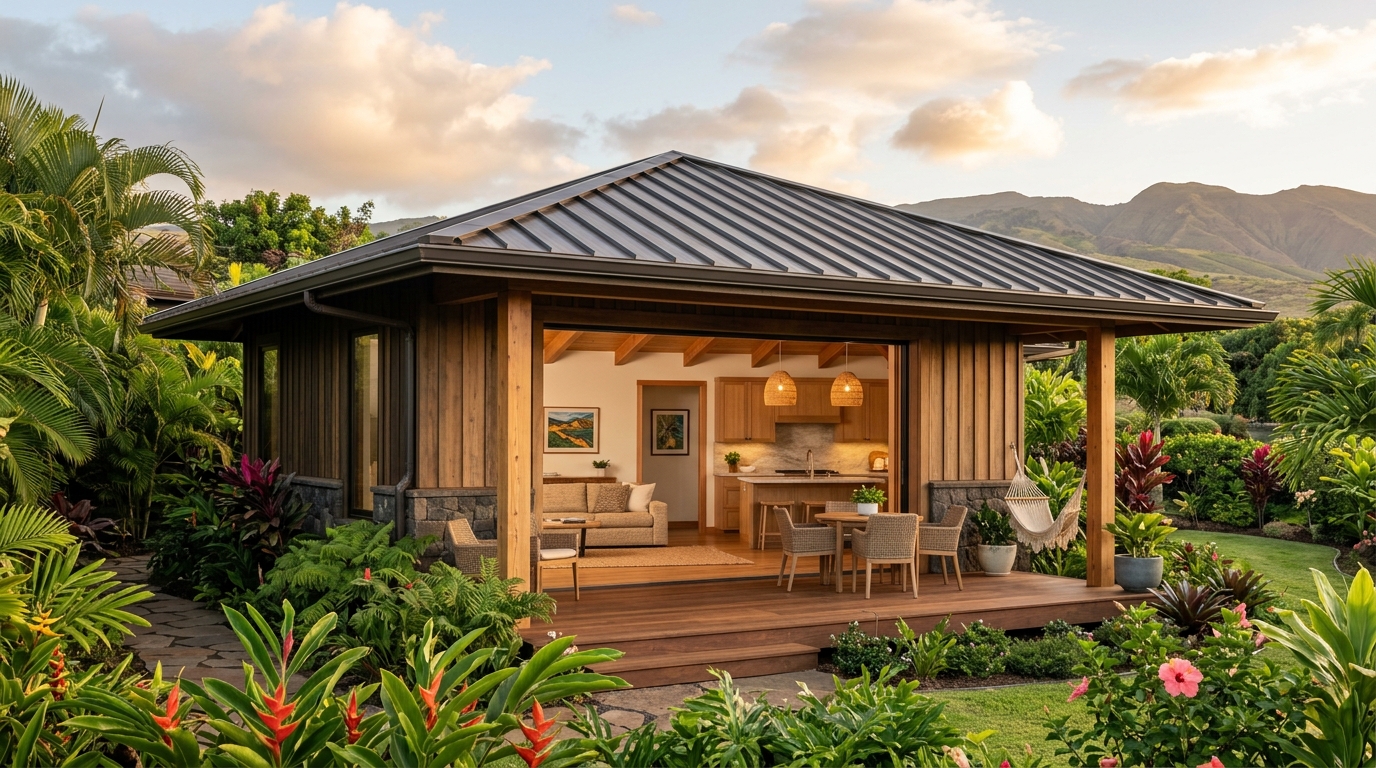
“Building an Accessory Dwelling Unit (ADU) in Lanai City in 2026 typically costs between $450 to $650 per square foot and takes 10 to 14 months from the initial design concept to final completion, a timeline that heavily factors in permitting and the unique inter-island logistics. For a standard 800-square-foot ohana unit, this translates to a total project cost of approximately $360,000 to $520,000. These figures might seem high compared to mainland or even Oahu projects, but they realistically account for the added expenses of barge shipping, material procurement, and labor mobilization inherent to building on the Pineapple Isle. The key to a successful and cost-effective project isn’t just finding any contractor; it’s partnering with a skilled adu builder lanai city who has mastered these logistical challenges.\n\nAt Warrior Construction, our team has spent over two decades navigating the complexities of neighbor island construction. We understand that a Lanai project is a different animal entirely. It requires meticulous pre-planning, a deep network of suppliers, and a project management style that anticipates delays before they happen. This article isn’t a generic guide; it’s a collection of hard-won lessons from the job site. We’ll break down the real costs, explain the timelines, demystify the Maui County permitting process, and share five practical, money-saving tips that can make a significant difference to your bottom line. From material selection that withstands Lanai’s unique climate to strategies for streamlining logistics, this is the information you need before breaking ground.\n\n
Why Lanai City Homeowners Trust Warrior Construction for ADU Builder
\n\nWhen you decide to build an ohana unit on Lanai, you’re not just hiring a crew to pour concrete and frame walls. You’re hiring a logistics company, a procurement specialist, and a community liaison all in one. This is where our team at Warrior Construction (License BC-34373) truly sets itself apart. We’ve built our reputation on successfully executing complex projects on the neighbor islands, and Lanai is a place where that experience is non-negotiable.\n\nFirst and foremost, we are masters of logistics. Everything, from lumber and drywall to windows and doorknobs, has to arrive on a barge from Honolulu. A less experienced ADU contractor lanai city might order materials piecemeal, resulting in multiple, expensive barge shipments and costly delays when one key component is missing. Our process is different. We perform a complete project buyout upfront. We order 95% of the materials at once and consolidate them in our Honolulu warehouse. This allows us to pack everything into one or two dedicated containers, schedule a single Young Brothers shipment, and ensure our crew has everything they need on-site before the first hammer swings. This batching process alone can save a client $10,000-$15,000 in shipping fees and weeks of potential downtime.\n\nFurthermore, our extensive experience means we have a trusted network of both Oahu-based specialists and Lanai-based tradespeople. On a recent project, we knew a highly skilled local Lanai electrician who could handle the rough-in, but we also knew the best waterproofing specialist for the job was on Oahu. We coordinated the project schedule so the specialist could fly in for two days, complete their critical work, and fly out, all while the local crew continued with other tasks. This hybrid approach is far more efficient than trying to fly in an entire team for months, which drives up costs for lodging and per diems.\n\nOur license is always in good standing, which you can verify with the Department of Commerce and Consumer Affairs’ Professional and Vocational Licensing division[1]. But more than just being licensed, we understand the local culture. Building in a tight-knit community like Lanai City requires respect. We know the informal rules: keeping the job site impeccably clean, managing noise, and maintaining positive relationships with neighbors. We’re not just visitors; we’re partners in the community for the duration of the project. It’s this combination of logistical precision, a robust professional network, and a deep respect for the place that makes us a trusted partner for Lanai homeowners.\n\n
What Does ADU Builder Cost in Lanai City?
\n\nLet’s get straight to the point: in 2026, a turnkey 800-square-foot ADU in Lanai City will cost between $360,000 and $520,000, which breaks down to roughly $450 to $650 per square foot. Anyone quoting you significantly less is likely missing a major cost component, probably the Lanai Logistics Premium. We believe in transparent pricing, so let’s break down exactly where that money goes.\n\n**1. Soft Costs (15-20% of Total Budget):**\nThis is all the work that happens before construction starts.\n
- \n
- Architectural & Engineering Plans: Expect to pay $18,000 to $30,000. You need a Hawaii-licensed architect and a structural engineer to draw up plans that meet Maui County’s building codes, including hurricane-tie requirements.
- Permitting Fees: Maui County fees for a project this size will typically run from $7,000 to $12,000. This includes plan review, building, electrical, and plumbing permits.
- Surveys: A property survey and topographic survey might be needed, costing around $3,000 to $5,000.
\n
\n
\n
\n\n**2. Hard Costs (80-85% of Total Budget):**\nThis is the physical construction of your unit.\n
- \n
- Site Prep & Foundation: Clearing the land, grading, and pouring a concrete slab foundation on Lanai’s red volcanic soil costs about $30,000 to $50,000. This includes utility trenching and hookups.
- Framing & Structure: The skeleton of the house, including termite-treated lumber and mandatory hurricane strapping, will be in the range of $55 to $75 per square foot.
- Exterior Finishes: This includes a standing seam metal roof, fiber cement siding, and dual-pane vinyl windows—all chosen for durability. This portion costs $70 to $100 per square foot.
- Interior Systems & Finishes: Plumbing, electrical, insulation, drywall, paint, flooring, cabinets, and countertops make up the largest chunk of the hard costs, typically $120 to $180 per square foot depending on the quality of finishes you select.
\n
\n
\n
\n
\n\n**3. The Lanai Logistics Premium (Add 25-35% to Hard Costs):**\nThis is the critical number that many homeowners and inexperienced contractors fail to budget for. This premium covers:\n
- \n
- Barge & Freight: A 40-foot container from Honolulu to Lanai costs thousands. We budget around $15,000 to $25,000 for total shipping on an ADU project.
- Labor Mobilization: If specialized trades need to be brought from Oahu or Maui, you’re covering flights, lodging, and a rental vehicle. This can add $5,000 to $10,000 per trade.
- Material Waste & Contingency: You can’t just run to Home Depot if you’re short a box of tile. We order a 10-15% overage on key materials to prevent a two-week delay for a small item.
\n
\n
\n
\n\n**Money-Saving Tip #1: Design with Standard Dimensions.**\nCustom-sized windows and doors are a budget killer on any island, but especially on Lanai. The lead time can be 16-20 weeks, and the shipping is exorbitant. By designing your ADU around standard, in-stock window and door sizes available from our Honolulu suppliers, you can save thousands and shave a month or more off your timeline. We guide our clients through this process during the design phase to maximize value without sacrificing aesthetics.\n\n
How Long Does a ADU Builder Take in Lanai City?
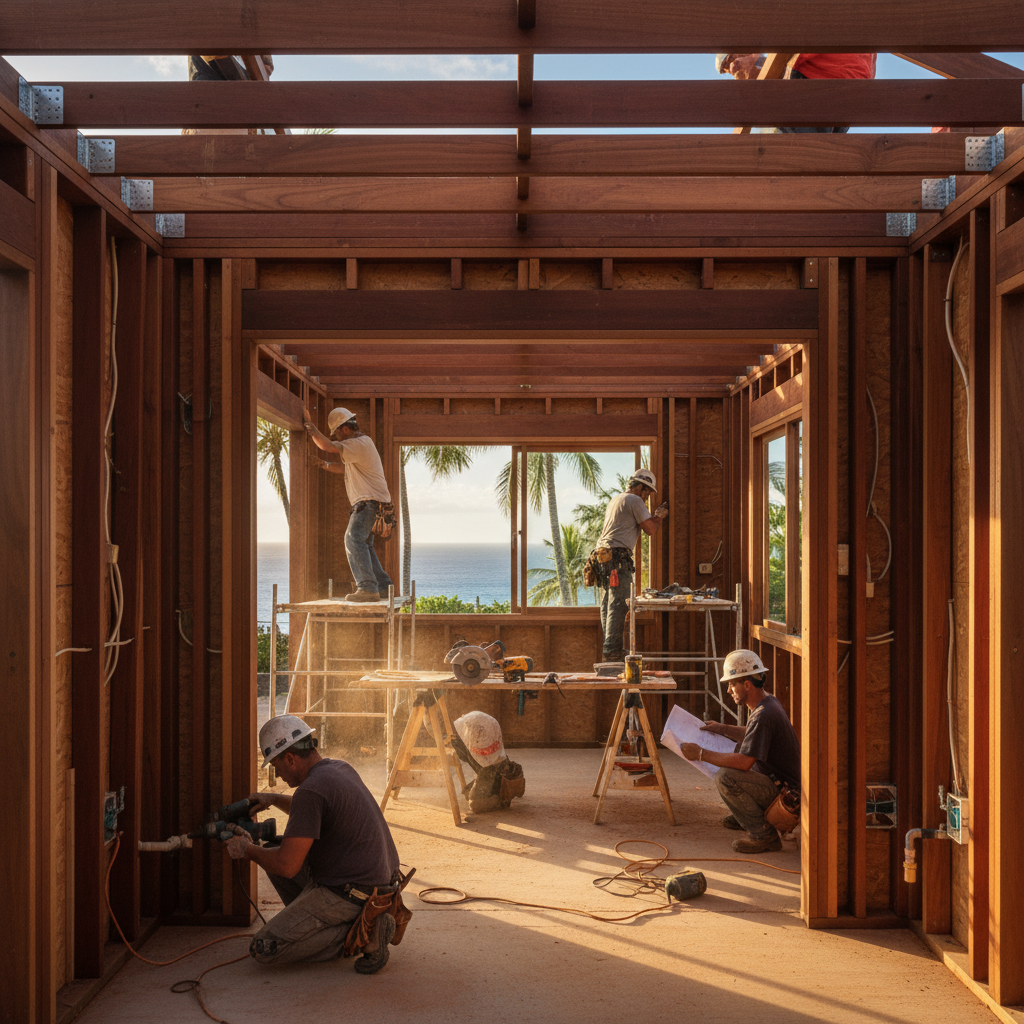
\n\nFor a standard ADU project on Lanai, a realistic timeline from our first meeting to you receiving the keys is 10 to 14 months in 2026. This is often a surprise for homeowners who are used to mainland construction schedules. The extra time is almost entirely due to two factors: Maui County permitting and inter-island logistics. An experienced ohana unit builder lanai city knows how to manage this timeline, but it cannot be rushed.\n\nHere’s a typical phase-by-phase breakdown:\n\n* **Phase 1: Design and Engineering (2-4 Months)**\n This phase involves working with an architect to translate your vision into a full set of construction drawings. We collaborate closely with the architect during this stage to provide feedback on constructibility and material availability, a practice known as preconstruction planning. This helps avoid costly redesigns later. The structural engineer will then complete their calculations to ensure the home meets all Hawaii hurricane code requirements.\n\n* **Phase 2: Permitting with Maui County (3-5 Months)**\n This is often the most unpredictable phase. Once the plans are submitted to the Maui County Department of Public Works, they go through multiple rounds of review (planning, building, electrical, plumbing, etc.). The initial review can take 6-8 weeks, and if they require revisions, it can add another 4-6 weeks for each round. A knowledgeable contractor and architect who know the Maui code and reviewers can help minimize these back-and-forths, but delays are common.\n\n* **Phase 3: Procurement and Logistics (1-2 Months)**\n This phase runs concurrently with the end of the permitting phase. The moment we have permit approval, we execute the material buyout. We order everything—from the foundation rebar and hurricane ties to the final light fixtures and cabinet pulls. We then consolidate it all in Honolulu for a single, coordinated barge shipment. On a recent project, we were able to get our container on a barge within three weeks of permit issuance because we had already pre-ordered all the long-lead-time items like windows and trusses.\n\n* **Phase 4: On-Site Construction (4-6 Months)**\n This is the fastest and most visible part of the project. Once materials and crew are on Lanai, the physical build happens relatively quickly:\n * Site Prep & Foundation: 2-3 weeks\n * Framing & Roofing: 3-4 weeks\n * Rough-in (Plumbing, Electrical, HVAC): 2-3 weeks\n * Exterior & Windows: 2-3 weeks\n * Insulation & Drywall: 2-3 weeks\n * Interior Finishes (Paint, Flooring, Cabinets): 4-6 weeks\n * Final Inspections & Punch List: 1-2 weeks\n\n**Money-Saving Tip #2: Finalize All Selections Before Permitting.**\nIndecision is a schedule killer. Every change you make after the plans are submitted creates a ripple effect of delays and costs. Changing the kitchen layout might require an updated electrical plan. Swapping a window size could require new engineering. Our process requires all material and finish selections—tile, flooring, countertops, fixtures, paint colors—to be finalized *before* we submit for permits. This locks in the design, allows us to order materials immediately upon permit approval, and keeps the project moving smoothly.\n\n
What Permits Do You Need for ADU Builder in Lanai City?
\n\nNavigating the permitting process for an ADU on Lanai requires submitting a complete and accurate application package to the Maui County Department of Public Works. Unlike on Oahu, where projects fall under the Honolulu Department of Planning and Permitting (DPP)[2], all construction on Lanai is governed by Maui County. As your general contractor, we manage this entire process, but it’s crucial for you as the homeowner to understand what’s involved.\n\nThe primary permit you’ll need is a Building Permit. However, obtaining this one permit is a multi-step process that requires a comprehensive set of documents. A submission package that is incomplete will be rejected immediately, sending you to the back of the line and costing you weeks or months. Our typical submission package includes:\n\n* **Completed Building Permit Application:** The official form from Maui County.\n* **Stamped Architectural Plans:** Multiple sets of full-size drawings, signed and stamped by a Hawaii-licensed architect.\n* **Stamped Structural Engineering Plans:** Detailed calculations and drawings from a Hawaii-licensed structural engineer, showing how the structure will withstand lateral (hurricane) and gravity loads.\n* **Site Plan:** A detailed drawing showing the property lines, the location of the existing home, the proposed ADU, setbacks, and utility connections.\n* **Drainage Plan:** A plan showing how stormwater will be managed on the property to prevent runoff onto neighboring lots.\n* **State of Hawaii Energy Code Compliance Forms (Form EC-1):** Documentation showing the home meets Hawaii’s strict energy efficiency standards.\n* **Wastewater System Approval:** Confirmation from the county that the property’s existing septic or sewer system can handle the additional load from the ADU.\n\nOnce submitted, the plans are routed to various departments for review. This can include the Planning Department (to verify zoning and setback compliance), the Building Division (for structural and code compliance), and sometimes the Fire Department. Any department can place a hold on the permit and request revisions. An experienced **ADU contractor lanai city** will anticipate these common revision requests and address them in the initial design, saving valuable time.\n\nIt’s also important to touch on **Bill 7 ADU lanai city** rules. While Bill 7 was a specific piece of legislation passed for the City and County of Honolulu to ease ADU restrictions, its principles have influenced neighbor island policies. Maui County has its own specific ordinances regarding ADU size, height, setbacks, and parking requirements. These rules are different from Oahu’s and can be complex. For example, Maui County has specific definitions for “Ohana Dwellings” that dictate their allowable size based on your lot size and zoning. We are well-versed in these specific Maui County regulations and ensure your project is compliant from day one.\n\n**Money-Saving Tip #3: Engage a Draftsman or Architect with Maui County Experience.**\nWhile any licensed architect can draw plans, one who frequently works with the Maui County permitting office is invaluable. They know the plan reviewers, understand their specific interpretations of the code, and format their drawings in a way that facilitates a faster review. This local knowledge can easily shave a month or more off the permitting timeline, and the time saved is money saved in holding costs and inflation.\n\n
Lanai City-Specific Considerations: Climate, Materials, Regulations
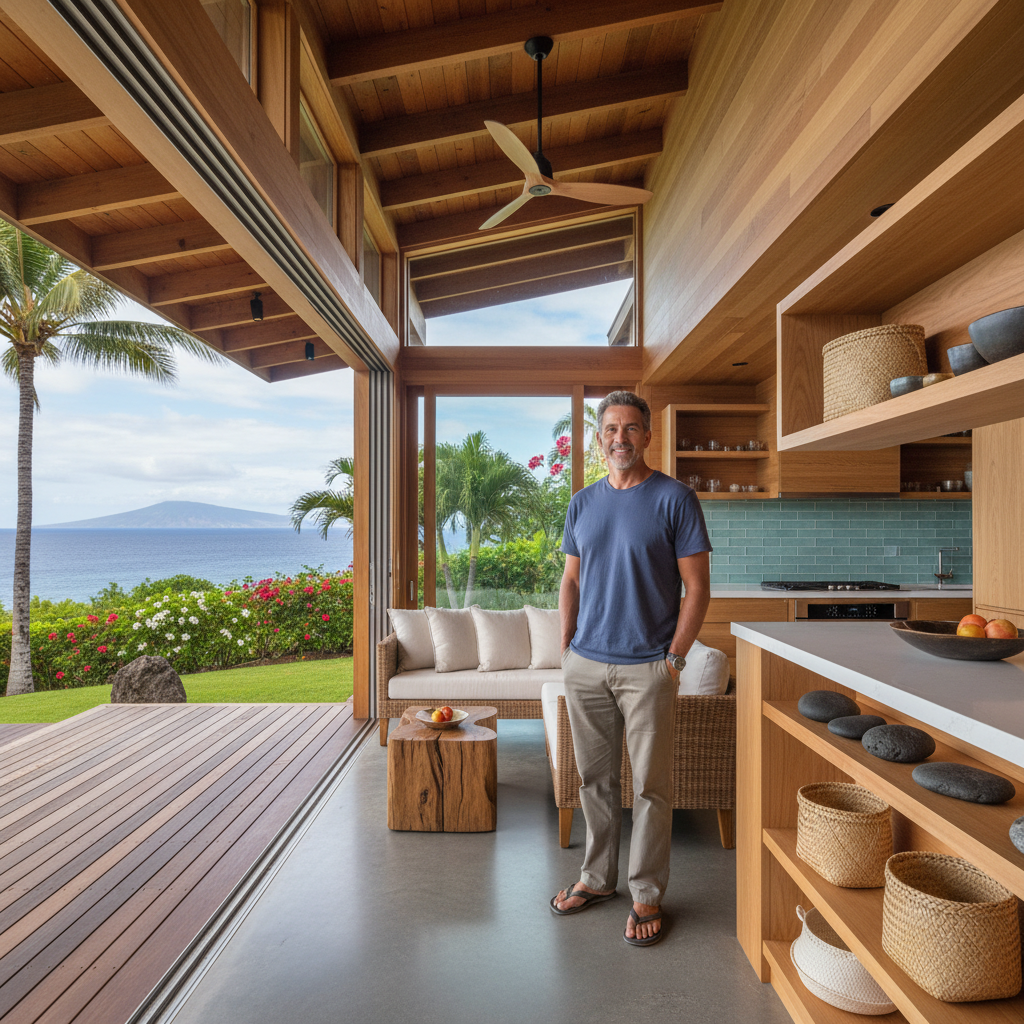
\n\nBuilding on Lanai isn’t like building anywhere else in Hawaii. The island has its own microclimate, unique logistical hurdles, and a community fabric that must be respected. A successful project hinges on understanding these nuances.\n\n**Climate and Environment:**\nLanai City sits at an elevation of about 1,700 feet, which gives it a cooler, less humid climate than coastal areas. However, the UV exposure is intense. This affects material choices significantly. We advise against dark-colored roofing and siding, which absorb heat and fade quickly. The iconic red dirt of Lanai is another factor; it stains everything. We recommend designing landscaping and hardscaping (like walkways and driveways) to minimize exposed dirt near the home. While salt-air corrosion is less severe than in beachfront locations like Kailua, it’s still a consideration. We always specify stainless steel fasteners, vinyl or fiberglass window frames, and hot-dip galvanized structural connectors as a baseline.\n\n**Material Selection for Durability:**\nOur material recommendations are based on decades of seeing what lasts in Hawaii’s climate.\n
- \n
- Roofing: Standing seam metal roofing (24-gauge with a Kynar finish) is the only option we recommend for Lanai. It has a 40-50 year lifespan, reflects solar heat, and offers superior resistance to wind uplift during a hurricane. Asphalt shingles just don’t hold up.
- Siding: Fiber cement siding (like James Hardie products) is ideal. It’s termite-proof, fire-resistant, and holds paint far better than wood. It won’t rot, warp, or delaminate in the island humidity.
- Windows & Doors: We exclusively use high-quality vinyl or fiberglass-framed windows with double-pane, low-E glass. They offer excellent insulation and are impervious to moisture and corrosion, unlike aluminum frames which pit and fail over time.
- Framing: All framing lumber must be either pressure-treated (for ground contact) or borate-treated to resist termites. This is a code requirement and a practical necessity.
\n
\n
\n
\n
\n\n**Regulations and Community:**\nLanai operates on its own rhythm. Construction noise and working hours are taken very seriously. We strictly adhere to a Monday-Friday, 8 AM to 4:30 PM work schedule to minimize disruption to neighbors. Staging and deliveries must be meticulously planned. You can’t just have a truck block a narrow residential street. We coordinate every delivery and ensure materials are moved onto the property immediately. Being a good steward of the community is part of the job. It means keeping the site spotless, communicating with neighbors about upcoming work, and showing respect for the local way of life.\n\n**Money-Saving Tip #4: Invest in the Building Envelope.**\nThis might sound counterintuitive, but spending more money upfront on a high-quality building envelope—your roof, siding, windows, and waterproofing—is one of the best long-term financial decisions you can make. A cheaper roof might save you $5,000 today but will cost you $25,000 in repairs and replacement in 15 years. We focus on building a resilient, low-maintenance structure. A properly installed metal roof and fiber cement siding might not need to be touched for decades, saving you a fortune in ongoing maintenance, repairs, and insurance claims.\n\n
How to Choose the Right ADU Builder Contractor in Lanai City
\n\nChoosing the right general contractor is the single most important decision you will make for your Lanai ADU project. The right partner will save you money, time, and stress; the wrong one can turn your dream into a costly nightmare. Here’s a practical checklist for vetting any potential **ADU builder lanai city**.\n\n1. **Verify Their License and Insurance.** This is the absolute minimum. Any legitimate contractor must have a Hawaii General Contractor license (ours is BC-34373). You can and should verify this on the Hawaii DCCA PVL website[1]. Ask for a copy of their Certificate of Insurance, which should show both General Liability (at least $1 million per occurrence) and Worker’s Compensation coverage. Don’t just take their word for it; get the paper.\n\n2. **Demand Proof of Neighbor Island Experience.** This is the key differentiator for a Lanai project. Ask them directly: \”Show me three projects you have completed on Maui, Kauai, or the Big Island in the last five years.\” Don’t accept Oahu projects as equivalent. They are not. A contractor who has successfully built on a neighbor island can speak fluently about:\n * Their process for scheduling and managing barge shipments.\n * How they house and manage their traveling crews.\n * Their network of suppliers and subcontractors on that specific island.\n * A time a logistical problem occurred (e.g., a missed shipment) and how they solved it.\n If they can’t answer these questions with specific examples, they are not prepared for your project.\n\n3. **Request and Call References.** Talk to their past clients, especially those from neighbor island projects. Ask pointed questions: Did they communicate effectively? Was the project completed on time and on budget? Were there any surprises with change orders? How did they handle problems when they arose? A reputable contractor will be happy to provide these references.\n\n4. **Analyze the Bid for Detail.** A one-page bid with a single number is a massive red flag. A professional bid from an experienced contractor will be a multi-page document. It should include a detailed scope of work that clearly outlines what is and is not included. It should also provide specific allowances for finishes like flooring, cabinets, and countertops (e.g., \”Flooring allowance of $8.00 per square foot, installed\”). This transparency protects you and ensures you are comparing apples to apples between different bids.\n\n5. **Assess Their Communication Style.** From your very first interaction, pay attention to how they communicate. Do they return your calls promptly? Do they answer your questions clearly and directly? Building an ADU is a long-term relationship. You need a partner you can trust and communicate with openly. Our team uses a dedicated project management portal where clients can see daily logs, photos, and the project schedule in real-time, which is especially critical for homeowners who may not be on-island during construction.\n\n
Real Lanai City ADU Builder Project Example
\n\nTo make this all concrete, let’s walk through a recent project that showcases our approach. \n\n**The Client:** A local Lanai family who wanted to build an 800 sq. ft., 2-bedroom, 1-bathroom ohana unit on their property for their aging parents to live in. Their primary goals were durability, low maintenance, and staying within a firm budget.\n\n**The Challenge:** The property was on a sloped lot with limited access. The budget was tight, and the family was concerned about the horror stories they’d heard about shipping delays and surprise costs associated with building on Lanai.\n\n**Warrior Construction’s Solution & Process:**\n1. **Preconstruction Planning:** We worked with their architect from the earliest stages. We value-engineered the design, suggesting a slab-on-grade foundation that stepped with the slope of the land to minimize costly excavation and retaining walls. We also ensured all window and door specifications were for standard sizes readily available through our Oahu suppliers.\n2. **Logistical Execution:** Once the Maui County permit was issued, we executed a full project buyout. All materials—from the termite-treated lumber and hurricane straps to the kitchen cabinets and bathroom tile—were ordered and consolidated at our Honolulu warehouse. We packed everything into two 40-foot containers. This single, coordinated barge shipment saved the client an estimated $12,000 compared to multiple smaller shipments.\n3. **Hybrid Crew Management:** We utilized a core team from Oahu for the critical structural and waterproofing phases. For framing, drywall, and painting, we partnered with a trusted Lanai-based subcontractor. This reduced our on-island footprint and kept more of the project budget within the local community, while still ensuring our high standards were met by our specialized crews where needed.\n\n**The Results:**\n* **Project:** 800 sq. ft. ADU\n* **Initial Budget:** $420,000\n* **Final Project Cost:** $408,500\n* **Timeline:** 11 months total (3 months design, 4 months permitting, 4 months construction)\n* **Outcome:** The family received a high-quality, hurricane-ready, and low-maintenance home for their parents, completed ahead of the 12-month schedule and nearly 3% under budget. They were especially pleased with our transparent communication, receiving weekly photo updates and budget tracking reports throughout the build.\n\n
What this means for Hawaii homeowners
\n\nBuilding an ADU in Lanai City is a fantastic way to create multi-generational housing or generate rental income, but it’s a project that demands a higher level of diligence. The stakes are higher here than on Oahu, where resources are just a short drive away.\n\nHere are the key takeaways for any Lanai homeowner considering this journey:\n\n* **Your Budget Must Be Realistic:** Understand that the \”Lanai Premium\” is real. Trying to build an ADU based on Honolulu cost-per-square-foot numbers will lead to budget shortfalls and compromises on quality. A realistic budget accounts for shipping, labor mobility, and material overages from the very beginning.\n* **Your Contractor is Your Logistical Partner:** The most critical decision you’ll make is choosing an ADU builder with demonstrable neighbor island experience. Their ability to plan, procure, and ship materials efficiently is just as important as their ability to build. Don’t be afraid to grill them on their logistics process.\n* **Patience and Planning Are Paramount:** The timeline will be longer than you think, largely due to permitting. The best way to shorten the overall project duration is to be decisive during the design phase. Finalize every single selection before plans are submitted to avoid the costly delays that come with change orders.\n* **Invest in a Durable Building Envelope:** The unique climate on Lanai—with its intense sun and red dirt—means that investing in quality materials like standing seam metal roofing, fiber cement siding, and vinyl windows isn’t a luxury, it’s a necessity for long-term value and reduced maintenance.\n\nUltimately, a successful Lanai ADU project is the result of a strong partnership between an informed homeowner and an experienced, logistically savvy contractor. With the right team and a solid plan, you can navigate the challenges and create a valuable addition to your property that will last for generations.\n\n
Frequently Asked Questions About ADU Builder in Lanai City
\n
How much does it cost to ship a container of building materials to Lanai in 2026?
\n
As of 2026, shipping a 40-foot container from Honolulu to Lanai via a carrier like Young Brothers costs approximately $6,000 to $9,000 one-way, including trucking and port fees. A typical 800 sq. ft. ADU requires two to three of these shipments. This is a major cost factor that an experienced ADU builder lanai city will budget for upfront.
\n
\n
Can I use a pre-approved ADU plan or a modular home to save money on Lanai?
\n
While modular or prefab homes can sometimes save money, the logistics of getting large modules to Lanai can be prohibitive and expensive. Using a pre-approved plan from Maui County can save on architectural fees and potentially speed up permitting. However, you still face the same on-site construction and material shipping costs, so the overall savings may not be as significant as you’d think.
\n
\n
What’s the biggest mistake homeowners make when building an ohana unit on Lanai?
\n
The most common and costly mistake is underestimating the logistical complexity and hiring a contractor without specific neighbor island experience. They fail to budget for the \”Lanai Premium\” (shipping, labor travel) and end up cutting corners on materials or facing massive delays when the project runs out of money or a critical part is stuck in Honolulu.
\n
\n
Do I have to provide housing for the construction crew?
\n
This depends on your contractor’s business model. Our approach at Warrior Construction is to build labor mobilization costs, including lodging and per diems for our specialized crews, directly into our project bid. This is part of our transparent pricing, so you won’t see a surprise bill for crew housing later on. We handle all these logistics ourselves.
\n
\n
How does Oahu’s Bill 7 for ADUs compare to the rules on Lanai?
\n
Bill 7 is specific to the City and County of Honolulu and does not apply to Lanai. Lanai falls under Maui County’s jurisdiction, which has its own distinct set of ordinances for \”Ohana Dwellings.\” The rules for setbacks, maximum size (often tied to lot size), and parking are different. A qualified ADU contractor in Lanai City must be an expert in the Maui County code, not the Honolulu code.
\n
\n
Can I act as my own general contractor to save money?
\n
While technically possible with an owner-builder permit, it is strongly discouraged for a Lanai project unless you have extensive construction and logistics experience. Managing barge schedules, coordinating subcontractors from off-island, and navigating Maui County inspections is a full-time job. The potential for costly mistakes and delays far outweighs the potential savings for most homeowners.
\n
\n
\n\nBuilding an ADU or ohana unit on Lanai is a significant investment, and the unique logistical challenges require a level of expertise that goes far beyond typical construction. Having a seasoned general contractor who has mastered the art of neighbor island building is not just an advantage—it’s a necessity for a successful outcome.\n\nAt Warrior Construction, we’ve built our process around the realities of building in places like Lanai City. From meticulous pre-construction planning and material consolidation to our hybrid approach of using both local and specialized traveling crews, every step is designed to mitigate risk, control costs, and deliver a superior final product. If you’re ready to discuss your project, our team is here to provide the logistical expertise and construction excellence your investment deserves.\n\n**Ready to build your Lanai City ohana unit with a team that understands the island? Learn more about our ADU & Ohana Unit services and get a detailed estimate today.**\n\n
References
\n
- \n
- State of Hawaii Department of Commerce and Consumer Affairs, Professional & Vocational Licensing
- Honolulu Department of Planning and Permitting
\n
\n
\n