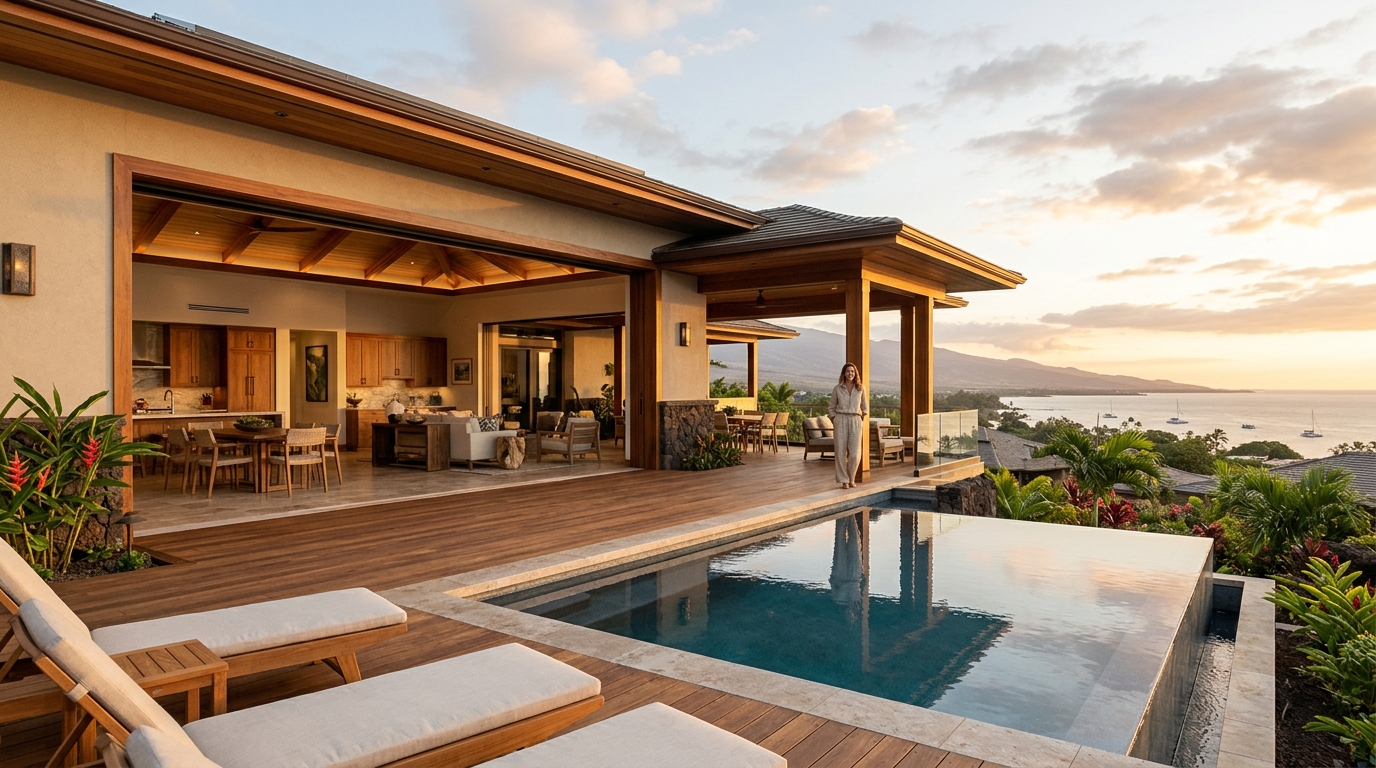
“Building a custom home in Kihei is a unique undertaking, different from building anywhere else in Hawaii, let alone the mainland. As a custom home builder in Kihei, we know that success hinges on deep local knowledge of Maui’s specific climate, its county permitting process, and the intricate logistics of shipping materials to a neighbor island. The dream of a South Maui home—with its sun-drenched days and stunning ocean views—is absolutely achievable, but it requires a contractor who understands everything from the corrosive effects of salt air on building materials to the specific requirements of Maui County’s building codes.\n\nAt Warrior Construction, our team has spent over two decades navigating these exact challenges across the islands. We’ve managed complex projects from the ground up, and we bring that hands-on experience to every new home construction in Kihei. This guide offers our expert recommendations, honed on real job sites, to help you understand the real costs, timelines, and critical decisions involved in building your dream home on Maui in 2026. We’ll cover everything from budgeting and permitting to selecting materials that will stand up to the beautiful but demanding Kihei environment. Ultimately, our goal is to give you the confidence that comes from working with a seasoned, licensed (BC-34373) general contractor who treats your project with the care it deserves.\n\n
Why Kihei Homeowners Trust Warrior Construction for Custom Home Builder
\n\nTrust isn’t built overnight; it’s earned over decades, one project at a time. For our team at Warrior Construction, building on Maui isn’t just another job—it’s about understanding the specific mana of the place and building homes that honor it. Homeowners planning a project in Kihei choose us because they need more than a builder; they need a partner with a proven track record on a neighbor island, where logistics and local relationships are everything.\n\nUnlike a contractor who primarily works on Oahu and occasionally flies over, our presence on Maui is established. We have a dedicated network of subcontractors, suppliers, and expeditors on the island who we’ve worked with for years. This is critical. On a recent luxury home build in Wailea, just south of Kihei, our supplier caught a discrepancy in the window order *before* it left the mainland. Because of that long-standing relationship, they called us directly, we corrected it, and avoided a three-month delay. That’s the kind of proactive problem-solving that only comes from deep local roots.\n\nFurthermore, our experience as a leading custom home builder in Kihei means we anticipate challenges unique to South Maui. We know the soil conditions, we understand the specific wind patterns that affect structural engineering, and we’ve mastered the art of building for the intense sun and heat. We design with passive cooling in mind, specifying details like deep lanai overhangs, strategically placed louvered windows for cross-ventilation, and high-performance glazing that blocks UV rays without sacrificing those spectacular Haleakalā views. This isn’t just about following the code; it’s about building a home that is truly comfortable and sustainable in its environment.\n\nFinally, transparency is the foundation of our process. From the initial budget estimate to the final walkthrough, we maintain open lines of communication. Our clients receive detailed project updates, clear financial reporting, and direct access to their project manager. Building a home is one of the most significant investments you’ll ever make, and we believe you deserve a clear view of the process every step of the way.\n\n
What Does Custom Home Builder Cost in Kihei?
\n\nA custom home in Kihei in 2026 will cost between $650 and $950 per square foot for hard construction costs. This figure includes labor, materials, and the general contractor’s management fee. For a high-end luxury home builder in Kihei, especially in areas closer to Wailea, costs can easily exceed $1,200 per square foot, driven by premium finishes, complex architectural designs, and extensive site work. These numbers do not include soft costs like architectural design, engineering, permits, or the price of the land itself.\n\nIt’s crucial to understand what drives these costs on Maui. Everything is more expensive here. Here’s a realistic breakdown of where your money goes:\n\n* **Hard Costs (75-85% of total budget):** This is the physical construction.\n * **Materials & Logistics:** Virtually every screw, fixture, and window has to be shipped from the mainland to Honolulu, then barged over to Maui. This adds 15-25% to material costs right off the top compared to a mainland project. We build these logistics into our initial budget to avoid surprises.\n * **Labor:** Skilled labor is in high demand on Maui, and wages reflect that. Our team consists of seasoned professionals who command a fair wage for their high-quality work.\n * **Site Work:** Kihei lots can present challenges, from rocky soil requiring extra excavation to slopes needing engineered retaining walls. Site prep can range from $50,000 for a flat, simple lot to over $250,000 for a complex hillside property.\n\n* **Soft Costs (15-25% of total budget):** These are the necessary expenses before we break ground.\n * **Architectural & Engineering Fees:** Typically 8-15% of the construction cost.\n * **Permits & Government Fees:** Maui County permit fees can run from $20,000 to $50,000+ for a new custom home.\n * **Surveys & Reports:** This includes geotechnical reports, boundary surveys, and potentially archeological monitoring, depending on the location.\n\nHere’s a sample budget for a 2,800 sq. ft. custom home in Kihei at a mid-range quality level of $750/sq. ft.:\n\n| Item | Estimated Cost | Notes |\n| :— | :— | :— |\n| **Hard Costs** | | |\n| Construction (2,800 sq. ft. @ $750/sq. ft.) | $2,100,000 | Includes foundation, framing, roofing, plumbing, electrical, finishes, etc. |\n| Site Work & Utilities | $120,000 | Assumes a moderately sloped lot. |\n| Landscaping & Hardscaping | $100,000 | Includes driveway, walkways, and basic planting. |\n| **Subtotal Hard Costs** | **$2,320,000** | |\n| **Soft Costs** | | |\n| Architectural & Engineering (12%) | $278,400 | |\n| Permits & Fees | $35,000 | |\n| Surveys & Reports | $15,000 | |\n| **Subtotal Soft Costs** | **$328,400** | |\n| **Construction Subtotal** | **$2,648,400** | |\n| **Contingency (10%)** | **$264,840** | **CRITICAL** for unforeseen issues. |\n| **Total Estimated Project Cost** | **$2,913,240** | *Excludes land purchase.* |\n\nFor any new home construction in Kihei, we always insist on a minimum 10% contingency fund. On a recent project, we discovered an uncharted lava tube during excavation. The contingency covered the cost of the geotechnical engineer’s reassessment and the additional concrete needed to fill it without derailing the project timeline or budget.\n\n
How Long Does a Custom Home Builder Take in Kihei?
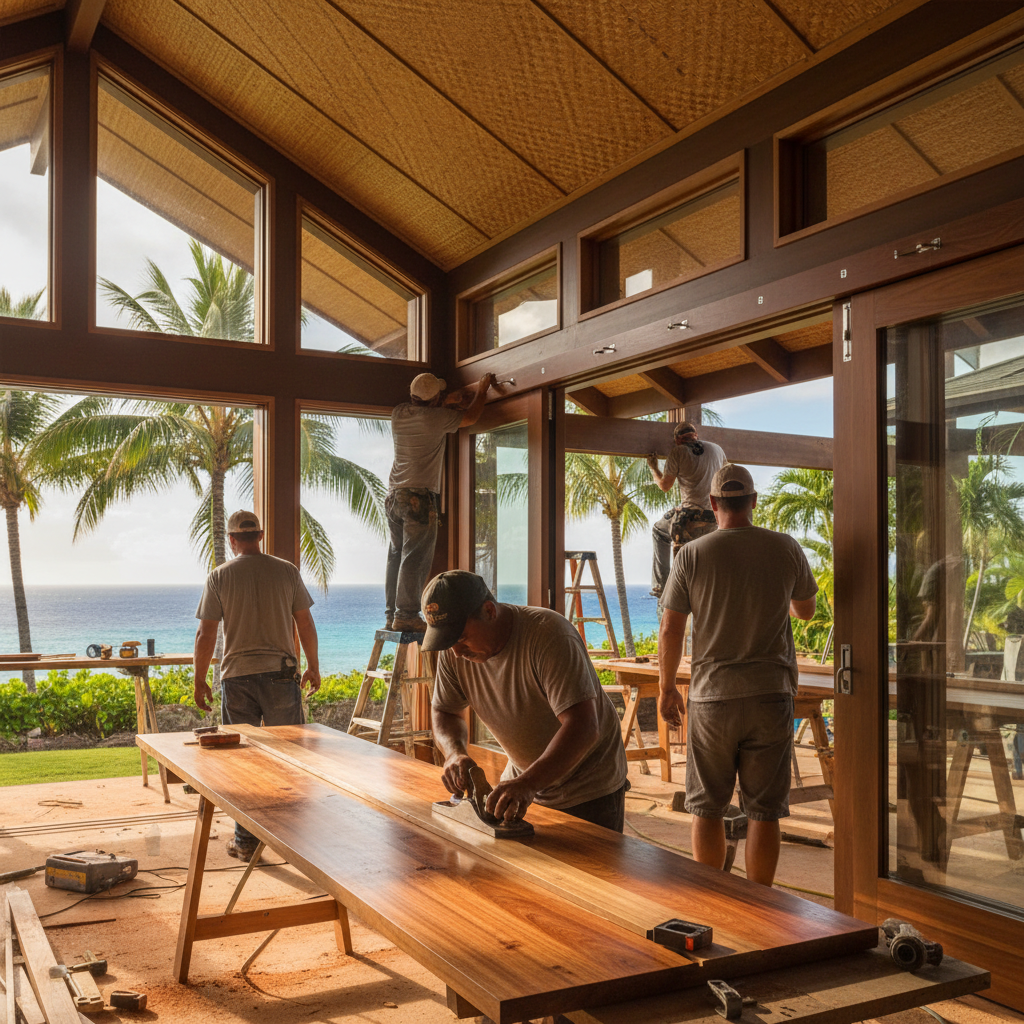
\n\nFrom the first architectural sketch to receiving the keys, building a custom home in Kihei typically takes between 20 and 30 months in 2026. This timeline can be broken down into two main phases: pre-construction (design and permitting), which takes 8-14 months, and the actual construction, which takes 12-18 months for a standard 2,500-3,500 square foot home.\n\nAnyone who tells you they can do it faster is either inexperienced or not being honest about the realities of building on Maui. The process is methodical, and rushing it only leads to mistakes and costly change orders. Our team focuses on a well-managed schedule that prioritizes quality and accounts for the island’s unique pace.\n\nHere is a detailed breakdown of the timeline for a custom home project:\n\n* **Phase 1: Pre-Construction (8-14 Months)**\n * **Architectural Design & Engineering (4-6 months):** This is where your vision takes shape. It involves initial concepts, schematic designs, detailed construction drawings, and structural engineering. We collaborate closely with your architect during this phase to provide constructability feedback, ensuring the design is both beautiful and efficient to build.\n * **Material & Finish Selection (Concurrent with Design):** Choosing windows, doors, flooring, cabinets, and fixtures early is critical. Many high-end items have lead times of 6 months or more, and we need to order them long before they’re needed on site.\n * **Permit Application & Review (4-8 months):** Once the plans are complete, we submit them to the Maui County Department of Planning and Public Works. This is often the biggest variable. The county’s review process is thorough and can involve multiple departments. An experienced home builder in Kihei knows how to prepare a complete and accurate submission package to minimize back-and-forth and keep the process moving.\n\n* **Phase 2: Construction (12-18 Months)**\n * **Site Preparation & Foundation (1-2 months):** This includes clearing the lot, excavation, grading, and pouring the concrete foundation and slab.\n * **Framing & Roofing (2-3 months):** The structure of the home goes up. We often use pre-fabricated trusses to speed up this stage and ensure precision.\n * **Rough-ins & Exterior Finishes (3-4 months):** Plumbers, electricians, and HVAC technicians run all the lines inside the walls. Concurrently, we install windows, doors, siding, and complete the roof.\n * **Interior Finishes (4-6 months):** This is the longest stage and where the house starts to feel like a home. It includes insulation, drywall, painting, flooring, tile work, cabinet installation, and setting fixtures.\n * **Final Touches & Landscaping (1-2 months):** Driveway, walkways, irrigation, planting, and final site cleanup.\n * **Final Inspections & Occupancy (1 month):** The county building inspector conducts a final review to ensure everything is built to code. Once approved, you receive your Certificate of Occupancy.\n\nWeather delays, shipping issues, or subcontractor scheduling can add time, but a proactive project manager anticipates these and builds buffer days into the schedule. Our approach is to plan meticulously so that the construction phase is a smooth, predictable execution of the design.\n\n
What Permits Do You Need for Custom Home Builder in Kihei?
\n\nNavigating the permitting process with Maui County is one of the most complex parts of any new home construction in Kihei. It’s a bureaucratic journey that requires precision, patience, and an expert understanding of local regulations. As your general contractor, we manage this entire process. While it’s not as large as Honolulu’s Department of Planning and Permitting (DPP)[1], Maui’s system has its own unique set of requirements and potential bottlenecks.\n\nThe primary permit is the Building Permit, but it’s actually a package of approvals that must be obtained before any work can begin. A complete application package for a custom home will include:\n\n1. **Building Permit Application:** This is the master application that covers the structural work, including foundation, framing, and roofing. The plans must be stamped by a Hawaii-licensed architect and structural engineer.\n\n2. **Sub-trade Permits:** These are submitted along with the building permit application and are reviewed by specialized inspectors.\n * **Electrical Permit:** For all wiring, panels, and fixtures.\n * **Plumbing Permit:** For all supply lines, drains, and wastewater connections.\n * **Mechanical Permit:** For HVAC systems (air conditioning).\n\n3. **Grading and Grubbing Permit:** If you are moving more than 100 cubic yards of soil or clearing a significant area, a separate grading permit is required. This often requires a detailed erosion control plan.\n\n4. **Wastewater System Approval:** You must show how the home will handle wastewater. In Kihei, this means either connecting to the county sewer system (requiring a sewer connection permit) or installing an approved septic system (requiring Department of Health approval).\n\n5. **Special Management Area (SMA) Permit:** This is a huge one for Kihei. If your property is located within the SMA, which covers most land near the shoreline, you will need an SMA assessment or permit. This is a rigorous environmental and community review designed to protect coastal resources. The process can add 6-12 months and significant cost to the pre-construction phase.\n\n6. **Driveway Permit:** A permit from the Public Works department is needed to create a new curb cut and driveway connection to the public road.\n\nOur role is to ensure the architectural and engineering plans are 100% compliant with the latest Maui County codes before submission. We meticulously check every detail, from hurricane tie-down requirements to shoreline setback rules. An incomplete or incorrect application can get stuck in review for months. By submitting a perfect package, we give your project the best possible chance of moving through the system efficiently.\n\n
Kihei-Specific Considerations: Climate, Materials, Regulations
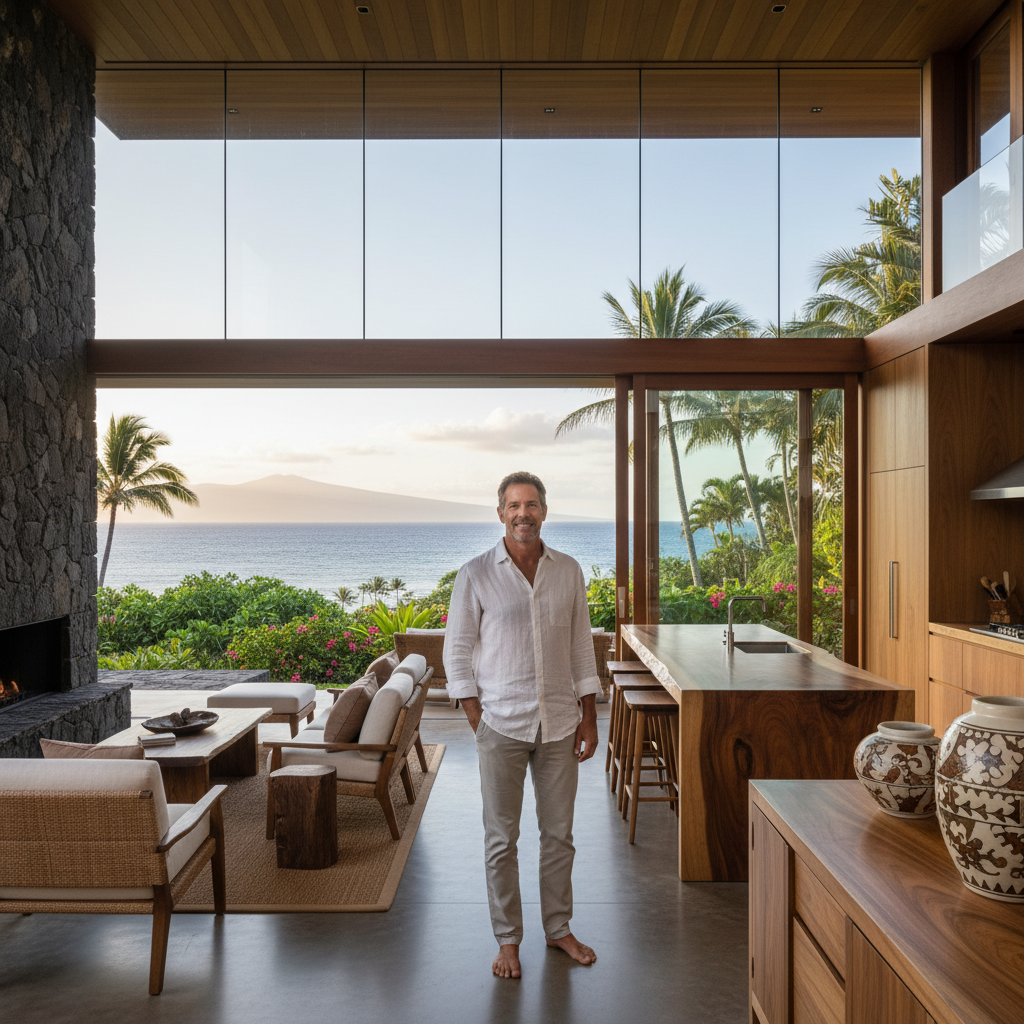
\n\nBuilding a home that will last in Kihei requires more than just following a set of blueprints. It demands a deep understanding of the local environment, from the relentless sun to the corrosive salt in the air. Over our 20+ years, we’ve developed a set of best practices specifically for coastal Hawaii construction, and they are especially critical in South Maui.\n\n### Designing for the Kihei Climate\nKihei is on Maui’s leeward side, meaning it’s hot, dry, and sunny year-round. While fantastic for beach days, this climate is tough on a house. Our designs always incorporate:\n\n* **Passive Cooling:** The goal is to minimize reliance on air conditioning. We achieve this with large roof overhangs (3-4 feet is ideal) to shade windows from the high afternoon sun, orienting the home to capture prevailing tradewinds, and using louvered (jalousie) windows to encourage natural airflow.\n* **High-Performance Windows:** We specify double-pane, low-emissivity (Low-E) coated glass. This technology reflects infrared heat while allowing visible light to pass through, keeping the interior cool without making it dark. It’s a significant upfront investment that pays for itself in energy savings.\n* **Ventilated Roof Systems:** A ‘cool roof’ isn’t just about color. We design roof assemblies with ventilation channels that allow hot air to escape, preventing heat from radiating down into your living space. Standing seam metal roofs with a reflective coating are an excellent choice for durability and energy efficiency.\n\n### Selecting Materials for Salt-Air and Termites\nEven though Kihei is dry, the air is still laden with salt from the ocean. This salt is incredibly corrosive to metal. Furthermore, ground termites are a constant threat anywhere in Hawaii.\n\n* **Corrosion-Resistant Hardware:** We specify 316-grade stainless steel for all exterior fasteners, screws, and connectors. For railings and gates, powder-coated aluminum is a far better choice than standard steel, which will rust within a few years.\n* **Exterior Finishes:** Stucco with a high-quality elastomeric paint is a durable and popular choice for Kihei. For wood siding elements, we use materials like thermally modified wood or composites that resist rot and pests. Never use untreated pine or fir on the exterior.\n* **Termite Protection:** We use a multi-pronged approach. The foundation is treated with a termiticide barrier like Sentricon. All framing lumber that touches the concrete slab is borate-treated, and we use steel framing for interior, non-load-bearing walls whenever possible. It’s about creating a structure that is unappealing to termites from the ground up.\n\n### Navigating Maui County Regulations\nBuilding codes on Maui are stringent, especially regarding hurricane resistance and coastal protection. Since Hurricane Iniki in 1992, Hawaii has adopted some of the toughest building codes in the nation.\n\n* **Hurricane Code Compliance:** This involves more than just hurricane straps. It dictates the type of windows (impact-rated), the strength of the roof-to-wall connections, and the specific nailing patterns for sheathing. We build every home to meet or exceed these codes, ensuring it’s a safe haven in a storm.\n* **Shoreline Setbacks:** Maui County has specific rules about how close you can build to the shoreline, typically calculated from the “certified shoreline” which can change over time. These rules are complex and strictly enforced. We work with licensed surveyors to ensure the house is sited correctly, avoiding costly fines or stop-work orders.\n\nBuilding in Kihei means building smarter. It’s about choosing the right materials and design strategies from day one to create a beautiful, durable, and comfortable home that works with the environment, not against it.\n\n
How to Choose the Right Custom Home Builder Contractor in Kihei
\n\nSelecting your general contractor is the single most important decision you’ll make for your new home construction in Kihei. The right partner will protect your investment, deliver quality craftsmanship, and make the process manageable. The wrong one can turn your dream project into a nightmare of delays, budget overruns, and legal issues. Here’s our insider advice on how to vet and choose the best contractor for your job.\n\n1. **Verify Their License and Insurance—No Exceptions.**\n This is non-negotiable. Any legitimate contractor in Hawaii will have a General Building Contractor license, designated as a \”BC\” license. You can and should verify this yourself on the Hawaii Department of Commerce and Consumer Affairs (DCCA) Professional & Vocational Licensing (PVL) website[2]. Our license, for example, is Warrior Construction, BC-34373. Also, ask for proof of general liability insurance and workers’ compensation insurance. If a worker gets injured on your property and the contractor isn’t insured, you could be held liable.\n\n2. **Demand Specific Maui Experience.**\n A contractor based in Honolulu who says they can build on Maui is not the same as a contractor *with experience* building on Maui. Ask them: \”Show me three custom homes you have completed in Kihei or Wailea in the last five years.\” Ask for the addresses and for homeowner references you can call. Building on a neighbor island involves a completely different set of logistical challenges and subcontractor relationships. We have a dedicated project management team and a trusted network of Maui-based plumbers, electricians, and masons we’ve worked with for over a decade. This local network is invaluable for keeping a project on schedule.\n\n3. **Evaluate Their Communication and Professionalism.**\n During the interview process, pay close attention to how they communicate. Do they answer your questions directly? Do they explain complex construction concepts in a way you can understand? Do they respond to your calls and emails promptly? A builder who communicates poorly during the sales process will be a black hole of information once construction starts. Our process includes a dedicated project manager and weekly progress meetings with photos and budget updates to ensure you’re always informed.\n\n4. **Analyze Their Bid—Don’t Just Pick the Cheapest.**\n Getting three bids is standard advice, but you need to know how to compare them. The lowest bid is often a red flag. It may mean they’ve missed something in the plans, are using cheaper materials, or are planning to make up the difference with a flood of change orders later. A professional bid will be detailed, breaking down costs by construction phase (e.g., foundation, framing, finishes). It should clearly state what is included and, just as importantly, what is excluded (allowances). Ask each bidder to walk you through their estimate line by line.\n\n5. **Insist on a Detailed Contract.**\n The contract is your primary protection. It should be a comprehensive document, not a one-page handshake agreement. Key elements to look for include:\n * A detailed scope of work that references the architectural plans.\n * A firm total price or a clear cost-plus fee structure.\n * A specific payment schedule tied to construction milestones, not arbitrary dates.\n * A clear process for handling change orders, which must be in writing and approved by you before any work is done.\n * A projected start and completion date.\n\nChoosing a builder is a long-term relationship. You’ll be working with them for two years or more. Find a professional, experienced, and trustworthy team you feel comfortable partnering with for the long haul.\n\n
Real Kihei Custom Home Builder Project Example
\n\nTo illustrate how these principles come together, let’s look at a recent project our team completed for a family relocating from the mainland to Kihei.\n\n* **The Vision:** The clients wanted a 3,500-square-foot, single-story modern plantation-style home in the Kilohana Ridge neighborhood. Their top priorities were creating a seamless indoor-outdoor living space, maximizing ocean views, and building a home that was energy-efficient and low-maintenance.\n\n* **The Challenge:** The lot they purchased had a moderate slope, which complicated the desire for a single-story layout. Additionally, they wanted a large, 12-foot-deep lanai, which required careful structural engineering to support the expansive roof without view-blocking posts. Finally, their desired completion date was aggressive, requiring meticulous scheduling from day one.\n\n* **The Warrior Construction Solution:** Our design-build team got involved early, working with the architect and a geotechnical engineer. Instead of a massive, costly retaining wall, we designed a split-level foundation. This created a graceful transition down the slope, allowed for the single-story feel from the front, and opened up dramatic, high ceilings in the great room at the back. To create the unobstructed lanai, our structural engineer designed a custom steel beam system, concealed within the roof structure, to carry the load. This was a more expensive solution upfront, but it delivered the exact aesthetic the client dreamed of. For efficiency, we pre-ordered the windows, roofing, and custom cabinetry the moment the permit was submitted, ensuring they were on-island and ready the day our crews needed them.\n\n* **Project Details & Outcome:**\n * **Location:** Kilohana Ridge, Kihei, Maui\n * **Size:** 3,500 sq. ft. living, 800 sq. ft. lanai\n * **Key Features:** 20-foot pocketing glass doors, standing seam metal roof, photovoltaic system with battery backup, salt-water pool, and drought-tolerant landscaping.\n * **Timeline:** Design and permitting took 11 months. Construction was completed in 15 months.\n * **Result:** The project was completed on schedule and within 4% of the original budget (the overage was due to client-requested finish upgrades). The family now has their dream home, which is not only beautiful but also perfectly adapted to the Kihei lifestyle.\n\nThis project showcases our approach: leveraging smart engineering to solve site challenges, proactive material procurement to manage supply chain issues, and a collaborative process that keeps the client’s vision at the forefront.\n\n
What this means for Hawaii homeowners
\n\nBuilding a custom home in Kihei is a major commitment of time and resources, but with the right planning and the right team, it’s one of the most rewarding experiences you can have. The process requires a shift in mindset from the speed and convenience you might expect on the mainland. Here in Hawaii, and especially on a neighbor island like Maui, patience, preparation, and local expertise are the keys to success.\n\nFor anyone considering this journey in 2026, here is our most direct advice:\n\n* **Start Earlier Than You Think:** The 8-14 month pre-construction phase is not an exaggeration. If you want to break ground in late 2026, you should be interviewing architects and builders right now. The design and permitting process cannot be rushed.\n\n* **Budget for Reality, Not Hope:** The per-square-foot costs are real. Be prepared for a total project cost (excluding land) of over $2 million for a modest custom home and significantly more for a luxury property. Most importantly, protect your project by having a 10-15% contingency fund set aside in cash. This isn’t \”extra\” money; it’s a necessary part of the budget for dealing with the inevitable surprises of construction.\n\n* **Hire a Team with Proven Maui Experience:** Do not hire an Oahu-based contractor without a full-time, established presence on Maui. Ask for their portfolio of completed Maui homes. Ask to speak with their Maui-based subcontractors. Local relationships and logistical know-how are more valuable than a slightly lower bid from an off-island firm.\n\n* **Focus on a Durable, Climate-Appropriate Design:** Resist the temptation to use materials and designs that look great in a mainland magazine but will fail in Kihei’s environment. Invest in quality windows, corrosion-resistant hardware, and passive cooling strategies. A home designed for the local climate will be more comfortable, cost less to operate, and hold its value far better over time.\n\nBuilding your home in Kihei means you are creating a legacy. By taking a thoughtful, informed approach and partnering with a seasoned local builder, you can ensure that legacy is one of quality, durability, and beauty.\n\n
Frequently Asked Questions About Custom Home Builder in Kihei
\n
Is it cheaper to build a custom home or buy an existing one in Kihei?
\n
In the 2026 Kihei market, building a custom home is often more expensive upfront than buying an existing property. However, a new build gives you exactly what you want, built to modern hurricane and energy codes, with all-new systems under warranty. An older home may require significant renovations, potentially costing hundreds of thousands to update the kitchen, bathrooms, roof, and windows, which can close the price gap quickly.
\n
\n
What are the biggest unforeseen costs when building on Maui?
\n
The most common surprises come from the ground and the supply chain. Unexpected site work, such as hitting hard blue rock during excavation or needing extensive soil remediation, can add tens of thousands to the budget. The second biggest risk is shipping damage or delays. A container of custom windows arriving damaged can cause a months-long delay and significant replacement costs, which is why a healthy contingency fund is critical.
\n
\n
How much should I budget for soft costs in Kihei?
\n
For a custom home in Kihei, you should plan for soft costs to be between 15% and 25% of your total construction budget. This includes architect fees (8-15%), structural engineering (2-4%), and Maui County permit and impact fees, which can easily total $30,000 to $50,000 or more for a new home. These costs are all incurred before any physical construction begins.
\n
\n
Do I need an architect, or can a builder design my home?
\n
You will need plans stamped by a Hawaii-licensed architect to get a building permit. We operate on a design-build model, where we partner with trusted local architects from the very beginning. This integrated approach ensures the design is creative, beautiful, and also practical and budget-conscious to build, which saves time and avoids costly redesigns down the line.
\n
\n
What makes building near the coast in Kihei more difficult?
\n
Building near the coast brings in two major complexities. First is the Special Management Area (SMA) permit, which is an extensive environmental review that can add a year to your timeline. Second is the need for highly durable, corrosion-resistant materials. Every metal component, from structural connectors to window frames and fasteners, must be upgraded to withstand the constant salt air, which adds to the material cost.
\n
\n
How does the permitting process on Maui compare to Oahu?
\n
While both can be slow, they have different challenges. Oahu’s DPP is a much larger and more complex bureaucracy, but it’s also better staffed. Maui County’s departments are smaller, and a single reviewer’s vacation or workload can create a bottleneck. Maui also has its own unique set of zoning and environmental regulations, especially related to coastal and agricultural lands, that a contractor must be an expert in.
\n
\n
Are there any advantages to using steel framing in Kihei?
\n
Yes, there are significant advantages. Light-gauge steel framing is 100% resistant to termites, which are a major issue in Kihei. It also doesn’t warp or rot in the humid coastal environment. While the material cost can be slightly higher than wood, it often results in a straighter, stronger structure and provides long-term peace of mind against pests and moisture damage, making it an excellent investment for a coastal home.
\n
\n
\n\n
Your Vision, Our Expertise: Building Your Kihei Home
\n\nBuilding a custom home in Kihei is a journey, and having the right guide makes all the difference. At Warrior Construction, we combine decades of statewide experience with the focused, on-the-ground knowledge required to succeed on Maui. Our team is committed to a transparent, professional process that honors your vision and your investment. We build homes designed to last, embracing the unique beauty and challenges of the South Maui coast.\n\nIf you’re ready to take the next step and discuss your vision for a new home, our team is here to help. Explore our Custom Home Building services to learn more about our process, or contact us today for a straightforward conversation about your project.\n\n
References
\n