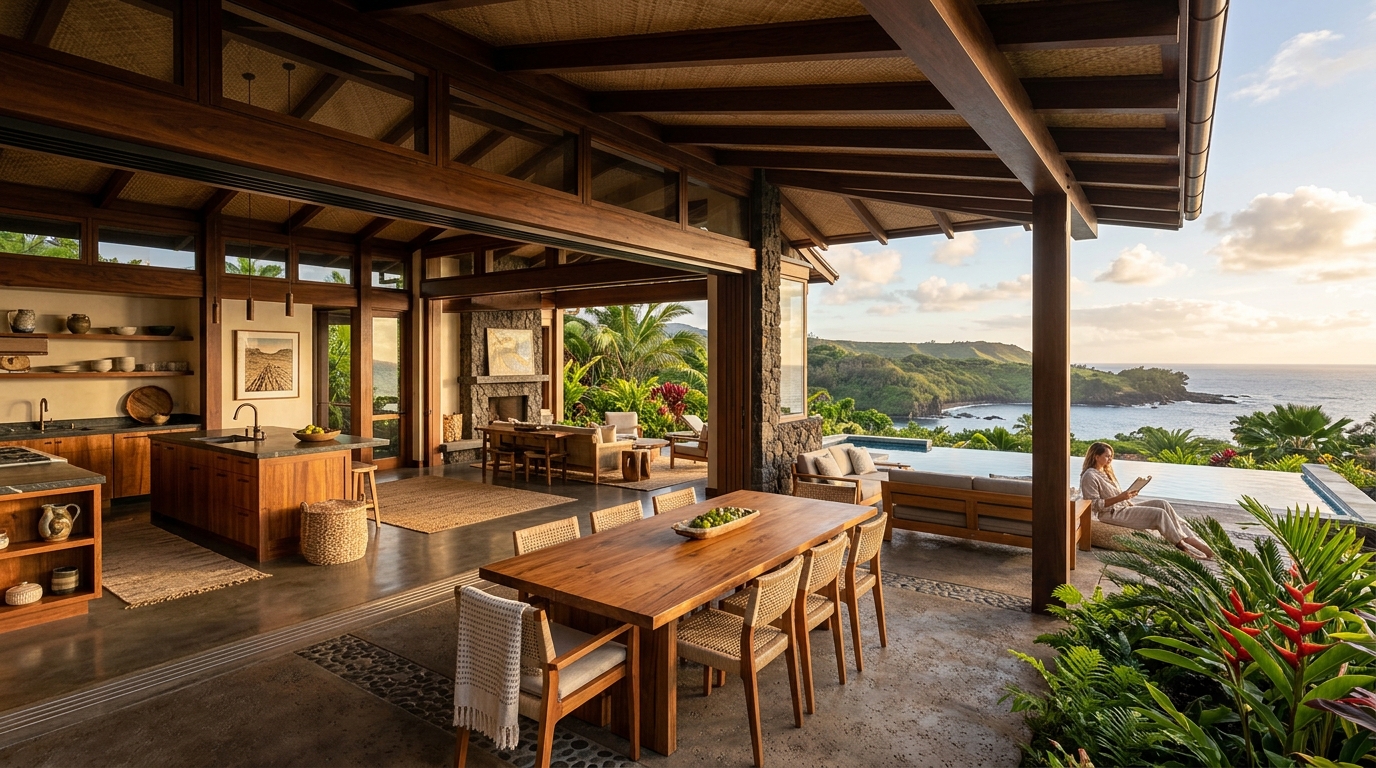
“Building a custom home in Hana, Maui in 2026 is unlike building anywhere else in the world, even compared to other parts of Hawaii. As a custom home builder in Hana, the first thing we tell clients is to plan for a project that requires military-grade logistics, a deep respect for the `āina`, and a budget that accounts for the inescapable realities of its remote location. The unique beauty of Hana comes with a unique set of challenges—from near-daily rainfall to a two-hour drive on a winding road for every single delivery. Successfully navigating a new home construction in Hana means partnering with a team that has been there, done that, and already knows how to solve the problems that will inevitably arise.\n\nOver our 20+ years in Hawaii construction, our team at Warrior Construction has managed complex projects on every island. We understand that a build in Hana isn’t just a residential project; it’s a logistical operation. This article breaks down the critical things every homeowner must understand before breaking ground. We’ll cover the true costs, realistic timelines, Hana-specific building science, and how to select a general contractor who won’t be learning on your dime. This isn’t about scaring you off, it’s about preparing you for success, so your dream home in one of Earth’s most beautiful places becomes a reality, not a nightmare.\n\n
Why Hana Homeowners Trust Warrior Construction for Custom Home Builder
\n\nWhen you’re building in a place as remote and environmentally sensitive as Hana, trust isn’t just a feeling—it’s a critical component of project management. Homeowners choose our team, Warrior Construction (License BC-34373), because we bring a specific skillset honed by decades of neighbor island and remote location work. A contractor based in Kihei or even Paia might build beautiful homes, but they may not have the logistical framework to handle the daily challenges of a Hana project. We do.\n\nOur approach is built on obsessive pre-construction planning. Before a single shovel hits the ground, we’ve mapped out the entire material supply chain. For a recent project near Hamoa Beach, this meant creating a six-month rolling forecast for every component, from foundation rebar to the specific 316 stainless steel fasteners for the lanai. We ordered materials from Oahu and the mainland, coordinated the barge shipments to Kahului harbor, and scheduled dedicated flatbed trucks for the long haul to the job site. There’s no running to Home Depot if you’re short a box of screws in Hana. That simple mistake can cause a week of delay and cost thousands in stalled labor. Our process anticipates this; we order with a buffer and have secure, dry on-site storage to protect materials from the humid, rainy climate.\n\nFurthermore, our experience extends to building for Hana’s specific microclimate. We’re not just a home builder in Hana; we are specialists in coastal and high-rainfall environments. We know that standard building practices won’t cut it. We push for designs that incorporate wide overhangs, robust waterproofing membranes that go far beyond code minimums, and advanced ventilation systems to combat the constant humidity and prevent mold. Our deep network of Maui-based subcontractors—plumbers, electricians, and excavators who actually live on-island and understand the local conditions—is another key advantage. They show up, they know the terrain, and they know how to work with the challenges, not against them. This integrated team approach, combining meticulous logistics with localized building science, is why clients trust us to deliver exceptional results in one of Hawaii’s most demanding locations.\n\n
What Does Custom Home Builder Cost in Hana?
\n\nLet’s get straight to the point: building a custom home in Hana costs more than building in Central Maui, and significantly more than on Oahu. For 2026, a homeowner should budget for a 15% to 25% “Hana Premium” on top of standard Maui construction costs due to logistics, labor, and materials transport. It’s a number that can surprise people, but it’s a reality our team plans for from day one.\n\nIn Central Maui (like Kahului or Wailuku), a good quality custom home might cost between $475 and $600 per square foot. In Hana, that same home will realistically cost between $570 and $750 per square foot for mid-range finishes. For a luxury home builder Hana project with high-end materials, oceanfront engineering, and premium finishes, costs can easily climb to $900 to $1,300 per square foot or more.\n\nSo, what does that look like for a typical 2,500-square-foot home?\n
- \n
- Mid-Range Custom Home in Hana: 2,500 sq. ft. x $660/sq. ft. = $1,650,000
- Luxury Custom Home in Hana: 2,500 sq. ft. x $1,100/sq. ft. = $2,750,000
\n
\n
\n\nThese figures typically cover the structure itself (foundation to roof) and interior finishes. They do not include the cost of the land, architectural/engineering fees (often 8-12% of construction cost), major landscaping, a pool, or furnishing. Here’s a rough breakdown of where that money goes, highlighting the Hana-specific cost drivers:\n\n
| Cost Component | Typical Percentage of Budget | Notes for a Hana Build |
|---|---|---|
| Pre-Construction (Permits, Fees, Design) | 10-15% | Maui County fees plus potential for costly surveys (geotechnical, drainage) due to terrain. |
| Site Work & Foundation | 10-15% | Extensive excavation and drainage systems are often needed for the volcanic, water-logged soil. Concrete delivery costs are higher. |
| Framing & Structure | 15-20% | Includes lumber package, which has to be barged and trucked in. Requires hurricane-rated engineering. |
| Exterior (Roofing, Siding, Windows) | 15-20% | Major Cost Driver. Requires premium, corrosion-resistant materials like standing seam metal roofing, fiberglass windows, and stainless steel hardware. |
| Interior Finishes (Drywall, Flooring, Cabinets) | 20-25% | Every single piece must be shipped. Damage during transit is a real risk that must be factored into the budget. |
| MEP (Mechanical, Electrical, Plumbing) | 10-15% | Requires specialized septic/wastewater systems. Higher labor costs for Maui-based subcontractors traveling to the site. |
| Logistics & Labor Premium | 5-10% | This is the explicit line item for barging, trucking, crew travel time, and on-site storage that separates a Hana budget from a typical one. |
\n\nOur process at Warrior Construction involves creating a detailed, line-item budget during the pre-construction phase. We get real quotes from our suppliers and shipping partners, so you’re not dealing with vague allowances. We believe in transparency—you need to see exactly where the Hana premium applies so you can make informed decisions about your `new home construction hana` project.\n\n
How Long Does a Custom Home Builder Take in Hana?
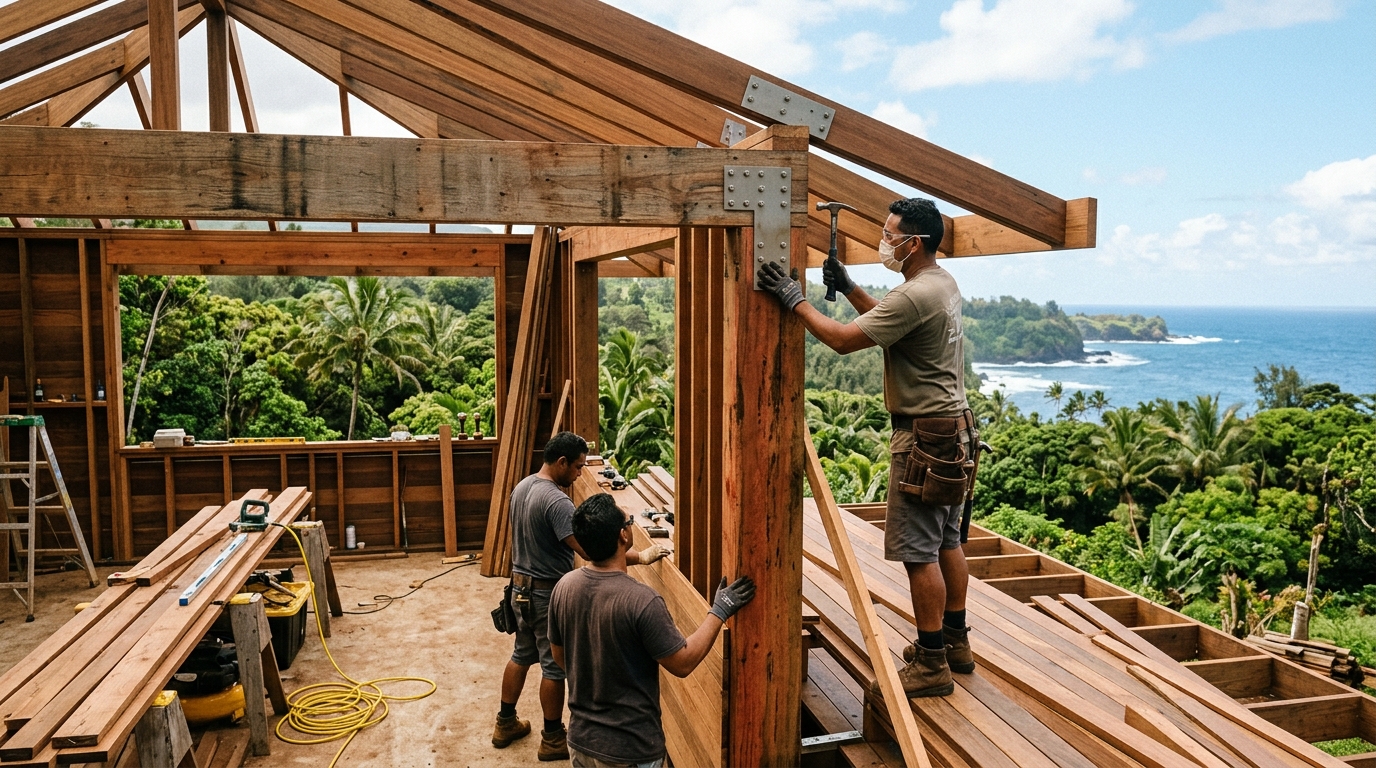
\n\nIf cost is the first reality check for building in Hana, the timeline is the second. Patience is not just a virtue; it’s a project requirement. A custom home that might take 18-24 months from start to finish in a more accessible area can easily take 30 to 42 months in Hana. The process is longer at every single stage.\n\nHere’s a realistic 2026 timeline for a custom home project in Hana:\n\n1. Phase 1: Design and Engineering (5-8 Months)\n This phase involves working with an architect and engineers to create your plans. In Hana, this takes longer because the design must specifically address the high rainfall, humidity, and coastal conditions. Engineering for wind loads (hurricane code), soil stability, and wastewater management is more complex and requires more back-and-forth.\n\n2. Phase 2: Permitting with Maui County (10-14 Months)\n This is often the biggest bottleneck. The Maui County permitting department is diligent but can be slow, and applications for remote areas like Hana often require extra scrutiny. If your property is near the shoreline, you may need a Special Management Area (SMA) permit, which adds another layer of review and several more months. We’ve seen straightforward permits take a year. A complex one can take much longer. Having an experienced local expeditor who knows the Maui County system is essential, and it’s a service we manage for our clients.\n\n3. Phase 3: Site Work and Construction (15-20 Months)\n Once you have permits in hand, the physical build begins. This phase is longer in Hana for several reasons:\n
- \n
- Weather Delays: Hana can get over 300 inches of rain a year. Heavy rain can shut down exterior work, excavation, and concrete pours for days or weeks at a time. A good contractor schedules work around the weather, but you can’t avoid it entirely.
- Logistics: As mentioned, materials don’t just show up. They are on a multi-stage journey. A storm in the Kaiwi Channel can delay a barge for a week. A closure on the Hana Highway can delay a truck for a day. These small delays accumulate over the course of a project.
- Labor Travel: Most skilled trade partners (electricians, plumbers, HVAC technicians) are based in Central or South Maui. They spend a significant part of their day just traveling to and from the job site, which means fewer productive hours on-site compared to a project in town.
- Inspections: Scheduling inspections with Maui County can take longer for remote sites, potentially creating gaps in the workflow while waiting for a sign-off to proceed to the next step.
\n
\n
\n
\n
\n\nWe build these extended timelines into our project schedules from the beginning. A common mistake is to take a timeline from a Honolulu or mainland project and try to apply it to Hana. That’s a recipe for frustration. At Warrior Construction, we provide a detailed critical path schedule that accounts for these realities, giving you a clear and honest picture of the journey ahead.\n\n
What Permits Do You Need for Custom Home Builder in Hana?
\n\nNavigating the permitting process for a `new home construction hana` project is a full-time job, and it’s one of the most critical services a general contractor provides. You aren’t dealing with the Honolulu Department of Planning and Permitting (DPP)[1], but with the Maui County Department of Public Works and other county and state agencies. Each has its own set of rules, and for Hana, there’s an extra layer of environmental and cultural sensitivity.\n\nHere is a list of the core permits and approvals you will almost certainly need:\n
- \n
- Building Permit: This is the main permit from the Maui County Department of Public Works, Development Services Administration. It covers the structure itself, from foundation to roof, and requires a full set of architectural and structural engineering plans that are compliant with the 2018 International Building Code and all local amendments.
- Grading and Grubbing Permits: Before you can even start your foundation, you need separate permits to clear the land (grubbing) and move earth (grading). These require a detailed site plan showing how you’ll manage drainage and prevent erosion, which is a huge concern in rainy Hana.
- Electrical and Plumbing Permits: These are filed by your licensed electrical and plumbing subcontractors but are tracked under the master building permit. They require detailed schematics for all wiring, fixtures, and piping.
- Wastewater System Approval: Most of Hana is not on a municipal sewer system. This means you’ll need an individual wastewater system (IWS), which is typically an advanced septic system. This requires a separate design and approval process from the Hawaii Department of Health, which is notoriously slow and meticulous. They will dictate the size and type of system based on soil tests and the number of bedrooms.
- Special Management Area (SMA) Permit: If your property is within the SMA, which covers the shoreline and adjacent areas, you’ll need this special permit. This is a major undertaking that involves a much higher level of environmental review and can add 6-12 months to your permitting timeline.
- Driveway and Access Permits: You may need a permit for the point where your driveway connects to the county road, ensuring proper sight lines and drainage.
\n
\n
\n
\n
\n
\n
\n\nThe key to a smooth process is a perfect application package. Any missing information or plan discrepancy can send you to the back of the line. Our pre-construction team works hand-in-hand with your architect and our permit expeditors to ensure every ‘i’ is dotted and ‘t’ is crossed before we ever submit to the county. We attend plan review meetings and maintain constant communication with the county reviewers. This hands-on management can shave months off the permitting timeline by resolving issues quickly instead of waiting for formal rejection letters.\n\n

Hana-Specific Considerations: Climate, Materials, Regulations
\n\nBuilding a home that will last for generations in Hana requires a completely different mindset and material palette than a home in a dry climate like Ewa Beach or even a less rainy part of Maui like Kihei. The environment is the driving force behind every decision. At Warrior Construction, we call it “building for the 100-year storm, every day.”\n\nHere are the top three considerations we engineer into every Hana project:\n\n### 1. Water, Water Everywhere: Managing Rain and Humidity\n\nHana’s annual rainfall is measured in feet, not inches. This relentless moisture is your primary adversary. Our designs focus on shedding water and breathing properly.\n
- \n
- Roofing: A standing seam metal roof (aluminum or Galvalume with a Kynar finish) is the gold standard. It has minimal seams, sheds water quickly, and holds up to the salt air. Wide roof overhangs (3-4 feet) are critical to keep rain off the walls and windows.
- Waterproofing: We use a “belt and suspenders” approach. This means fluid-applied membranes on foundation walls, peel-and-stick membranes behind all siding and around every window and door opening, and high-quality sealants everywhere. It’s a level of detail that goes far beyond what code requires.
- Ventilation: A house in Hana must breathe. We design for excellent cross-ventilation to take advantage of the trade winds. More importantly, we often specify Energy Recovery Ventilators (ERVs). These mechanical systems constantly exchange stale, humid indoor air with fresh outdoor air while managing humidity levels, which is the single best defense against mold and mildew. Using mold-resistant drywall (like PURPLE XP) is a smart upgrade.
\n
\n
\n
\n\n### 2. The Battle Against Corrosion: Materials Matter\n\nThe combination of salt spray from the ocean and constant moisture creates one of the most corrosive environments on Earth. Anything made of standard steel will rust in a matter of months.\n
- \n
- Fasteners and Hardware: Every nail, screw, bolt, and joist hanger must be T316 stainless steel or hot-dip galvanized at a minimum. T316 stainless is the superior choice for anything exposed. It’s more expensive, but replacing rusted structural connectors in ten years is a far greater cost.
- Windows and Doors: We strongly recommend fiberglass or high-quality vinyl window frames. They are inert and will not corrode, rot, or warp. Anodized or powder-coated aluminum is an option, but it must be a marine-grade finish and inspected carefully, as any scratch can become a point of failure.
- Railing and Fixtures: All exterior railings, gates, and light fixtures should be aluminum, stainless steel, or bronze. Avoid standard steel at all costs.
\n
\n
\n
\n\n### 3. Logistics and Regulations: The Human Element\n\nBeyond the physical environment, you have to master the man-made challenges. \n
- \n
- Material Staging: Everything for your home will arrive on a truck via the Hana Highway. We plan for a dedicated, covered, and secure staging area on-site. Materials are ordered months in advance and stored properly to protect them from the rain until they are ready for installation.
- Hurricane Code: Hawaii has robust hurricane codes, and they are strictly enforced. This means using hurricane straps to tie the roof to the walls and the walls to the foundation, installing impact-rated windows and doors, and often requiring engineered shear walls to resist lateral wind loads.
- Cultural and Community Respect: Hana is a special community with a deep sense of place. We operate our job sites with respect. This means controlling noise, managing dust and runoff, and communicating with neighbors. Being a good steward during construction is part of a successful project. Hiring a `home builder hana` who understands this is non-negotiable.
\n
\n
\n
\n\n
How to Choose the Right Custom Home Builder Contractor in Hana
\n\nSelecting your general contractor is the single most important decision you will make for your Hana home build. The right contractor acts as your partner, advocate, and problem-solver. The wrong one can turn your dream into a costly, delayed disaster. Here’s what to look for:\n\n1. Verify Their License and Insurance. Period.\n This is non-negotiable. Any legitimate contractor will have a Hawaii General Contractor license. Ours is BC-34373. You can and should verify any contractor’s license status on the Hawaii Department of Commerce and Consumer Affairs (DCCA) Professional & Vocational Licensing (PVL) website[2]. Also, ask for proof of general liability and worker’s compensation insurance. Don’t just take their word for it; get the certificates.\n\n2. Demand Specific Hana or Remote Build Experience.\n Ask this question directly: \”How many custom homes have you built *in Hana* or in a similarly remote, high-rainfall area like Haiku or the North Shore?\” A builder who has only worked in the resort areas of Wailea or Ka’anapali does not have the relevant experience. Ask them to walk you through their logistics plan for a hypothetical Hana project. How do they handle material ordering, barge scheduling, and on-site storage? Their answer will tell you everything you need to know.\n\n3. Interview Their Past Clients (Especially the Remote Ones).\n A good contractor will gladly provide you with a list of recent clients. Don’t just ask if they were happy with the final product. Ask about the process. How was the communication? Were the budget updates clear and timely? How did the contractor handle unexpected problems, like a material delay or a subcontractor issue? Specifically, try to talk to a client who built in a location with challenges similar to Hana.\n\n4. Evaluate Their Team and Subcontractor Relationships.\n A general contractor is only as good as the team they put in the field. Who is their on-site superintendent? How much experience do they have? Crucially, what is their relationship with Maui-based subcontractors? A contractor with long-standing, loyal relationships with the best plumbers, electricians, and concrete crews on Maui will be able to get them to commit to a Hana project. A contractor without those relationships will struggle to find quality trades willing to make the daily trek.\n\n5. Review Their Contract and Process Thoroughly.\n A professional builder will use a clear, comprehensive contract, such as one from the American Institute of Architects (AIA). It should spell out the scope of work, payment schedule, change order process, and warranty. Be wary of a simple, one-page bid. Our process includes detailed pre-construction services where we develop the final budget and schedule together with you and the architect, so there are no surprises once construction begins.\n\nChoosing your builder is about finding a partner in problem-solving. In Hana, there will be problems. You want a team that sees them coming and already has a solution ready.\n\n
Real Hana Custom Home Builder Project Example
\n\nTo make these concepts tangible, let’s walk through a recent project our team completed. It perfectly illustrates the challenges and solutions inherent in a `luxury home builder hana` project.\n\n**The Client & Vision:** A multi-generational family from Oahu wanted to build a legacy home on a 3-acre agricultural lot they owned for years. Their vision was a 3,200-square-foot main house and a separate 800-square-foot ohana unit, designed with a modern-Hawaiian aesthetic that embraced the indoor-outdoor lifestyle while providing a refuge from the elements.\n\n**The Primary Challenge:** The property was stunning but sloped significantly and was covered in dense, invasive vegetation. Initial soil tests revealed poor drainage and a high water table, a common issue in Hana’s volcanic soil. The client’s desire for large pocketing glass doors presented a significant engineering challenge for both structural integrity (hurricane code) and waterproofing.\n\n**The Warrior Construction Solution:**\nOur involvement started early in the design phase. \n1. **Site Engineering:** We worked with a geotechnical engineer to design a comprehensive site drainage plan *before* the home’s foundation was even designed. This included a series of French drains, curtain drains upslope from the home, and two large dry wells to manage the massive volume of rainwater. We also terraced the property, creating a stable, level building pad that worked with the land’s natural contours.\n2. **Logistical Mastery:** We created a master materials schedule that was tied to the 34-month project timeline. All off-island materials—from the engineered lumber package and the standing seam metal roofing to the specific German-made window systems—were ordered 9-12 months before they were needed on-site. We leased a container in Kahului for short-term staging and built a large, covered storage structure on the property to protect everything from the weather.\n3. **Advanced Building Envelope:** To handle the large glass doors, we designed a custom recessed sill flashing system integrated with a fluid-applied waterproofing membrane that wrapped the entire concrete slab edge and up the walls. This created a seamless, bathtub-like barrier. For the structure, we used steel moment frames around the large openings to provide the necessary shear value, meeting hurricane-code requirements without compromising the open design.\n\n**The Numbers & Outcome:**\n* **Total Project Duration:** 34 months (6 months design, 12 months permitting, 16 months construction)\n* **Final Construction Cost:** ~$3.1M (approx. $775/sq. ft. for both structures)\n* **The Result:** A stunning, durable family compound that is both beautiful and resilient. The home stays dry and comfortable year-round, and the engineered drainage system has performed flawlessly through several major storm events. The client was particularly pleased with our transparent budget tracking and consistent communication, which gave them peace of mind despite being on another island for most of the build. This project is a testament to the fact that with meticulous planning and deep expertise, you can build an architectural masterpiece even in the most challenging of environments.\n\n
What this means for Hawaii homeowners
\n
Building a custom home in Hana is a significant undertaking, but it is absolutely achievable with the right expectations and the right team. It’s a marathon, not a sprint, that rewards careful planning and patience. Here’s what you, as a homeowner, should focus on:
\n
- \n
- Embrace the Budget Reality: Understand and plan for the 15-25% Hana Premium. Trying to build on a Central Maui budget will only lead to cutting corners on materials or facing financial stress mid-project. Build a healthy contingency (10-15%) into your total budget for unforeseen issues.
- Adjust Your Timeline Mindset: Accept that your project will likely take 2.5 to 3.5 years from your first architect meeting to moving in. The permitting and construction phases simply take longer. Rushing the process is the fastest way to make expensive mistakes.
- Prioritize Durability Over Aesthetics: When making material selections, think long-term. Choose the 316 stainless steel hardware, the fiberglass windows, and the best waterproofing system you can afford. The beauty of Hana is timeless, and your home should be too. Investing in the building envelope now will save you from catastrophic repair bills down the road.
- Hire an Expert in Remote Logistics: Your general contractor’s ability to manage a complex supply chain is just as important as their ability to build. Choose a builder who can prove they have a system for getting the right materials and people to a remote site, on time and intact. This is the core competency that separates successful Hana builds from failures.
\n
\n
\n
\n
\n
\n\n
Frequently Asked Questions About Custom Home Builder in Hana
\n
Is it really 15-25% more expensive to build a custom home in Hana?
\n
Yes, this is a realistic figure for 2026. This premium covers several key areas: barging every piece of material to Kahului, trucking it over the Hana Highway, higher labor costs for travel time, the need for more expensive and durable corrosion-resistant materials, and the costs associated with inevitable weather and logistical delays. A transparent builder will show you these costs in your line-item budget.
\n
\n
What is the single biggest mistake people make when building in Hana?
\n
Underestimating the timeline, especially for permitting. Homeowners often get excited and expect to be breaking ground in a few months, but the reality for Maui County, especially for a complex Hana project, is a permitting process that can easily take a year or more. The second biggest mistake is not budgeting for the right materials and choosing cheaper options that will corrode and fail within a few years in Hana’s harsh climate.
\n
\n
Do I need an architect based on Maui?
\n
Not necessarily, but it’s highly recommended. You can hire an architect from the mainland or Oahu, but they must have a Hawaii architectural stamp or partner with a local licensed architect. A Maui-based architect will have a better understanding of the local climate, materials, and, most importantly, the nuances of navigating the Maui County permitting department. This local knowledge can be invaluable.
\n
\n
How do you handle construction during Hana’s rainy season?
\n
Careful planning is key. We schedule the project to get the site work, foundation, and framing done and the building ‘dried in’ (roof and windows installed) during the drier summer months if possible. For work during rainy periods, we use tents for sensitive tasks, build extra time into the schedule for weather days, and prioritize interior work once the building envelope is secure.
\n
\n
What type of foundation is best for Hana’s soil?
\n
This depends entirely on a site-specific geotechnical report. However, most homes in Hana are built on a concrete slab-on-grade foundation. Due to the high rainfall and potential for soil saturation, these foundations often require significant engineering, including thickened edges, robust moisture barriers, and integration with extensive site drainage systems like French drains to keep water away from the structure.
\n
\n
Can I save money by buying materials myself?
\n
While it might seem like a way to save, it often costs more in the long run. As your general contractor, we have established relationships and volume pricing with suppliers. More importantly, we manage the incredibly complex logistics of ordering, tracking, shipping, and receiving. An error in quantity or a damaged shipment becomes our problem to solve, not yours. Managing this yourself for a Hana build is an extremely difficult undertaking.
\n
\n
Is a new home construction in Hana a good financial investment?
\n
Building in Hana is typically driven by lifestyle goals rather than purely financial speculation. While property in Hana is valuable and holds its value well, the high construction costs mean you may not see a large return on investment immediately upon completion compared to building in other areas. However, a well-built, durable home in one of the most desirable and unique locations on earth is an incredible long-term asset for your family’s enjoyment and legacy.
\n
\n
\n\nBuilding your home in Hana is a journey that demands expertise, foresight, and a deep commitment to quality. The challenges are significant, but the reward is a home in a truly magical place. At Warrior Construction, we have the experience and the processes to guide you through every step of that journey.\n\nIf you’re ready to discuss your vision for a custom home in Hana, our team is here to provide the realistic advice and expert guidance you need. Learn more about our Custom Home Building services and let’s start the conversation about making your dream a reality.\n\n
References
\n