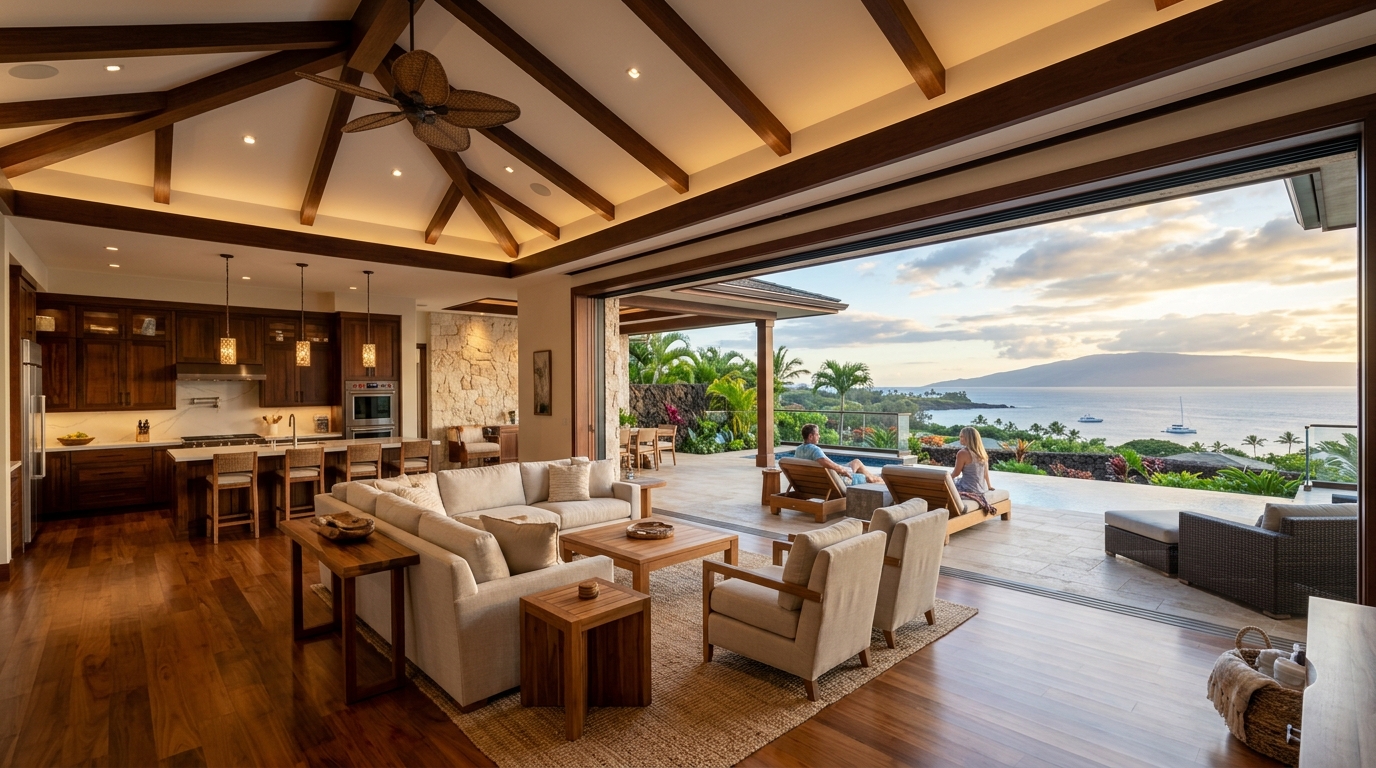
Building a custom home in Kapalua is a significant undertaking, and the first question we always get is about cost and timeline. In 2026, a high-end custom home builder in Kapalua will typically start construction costs around $950 to $1,300 per square foot, with a total project duration of 24 to 36 months from initial design to handing you the keys. This process requires a partner who understands not just construction, but the unique challenges and opportunities of building on West Maui—from navigating the Kapalua Resort’s design review board to sourcing materials that withstand the potent salt air. At Warrior Construction, we’ve spent over two decades managing these complexities for homeowners across the islands.
This isn’t like building on the mainland. Everything from the volcanic soil under your foundation to the logistics of getting hurricane-rated windows barged to Kahului requires specialized local knowledge. We’ve seen homeowners get bogged down by unforeseen permitting delays with Maui County or face budget overruns because their initial estimates didn’t account for neighbor island labor and material markups. This guide is designed to give you the insider perspective from our team (License BC-34373) on what it truly takes to succeed with new home construction in Kapalua. We’ll walk you through realistic costs, timelines, permitting hurdles, and how to select a builder who is truly equipped for the job.
Why Kapalua Homeowners Trust Warrior Construction for Custom Home Builder
Choosing a builder is the single most important decision you’ll make. In a place as unique as Kapalua, you can’t afford to work with an off-island firm or a general contractor who primarily builds tract homes in Central Maui. You need a team that lives and breathes high-end residential construction in this specific climate and regulatory environment. At Warrior Construction, our reputation is built on transparency and deep local expertise, which is why discerning homeowners trust us with their vision.
First, we understand the hyper-local nuances. Building within the Kapalua Resort means adhering to two sets of rules: the County of Maui’s building codes and the Kapalua Resort Association’s (KRA) stringent design guidelines. The KRA has specific requirements for everything from exterior color palettes and roofing materials to landscaping and lighting to maintain the area’s aesthetic integrity. Our team has experience preparing and submitting architectural plans to this review board, a crucial step that can easily derail a project’s timeline if not handled by a team familiar with their expectations. We know what they look for and can guide the design process to ensure a smooth approval, preventing months of costly back-and-forth.
Furthermore, our approach is built on a foundation of proactive logistics management. A common nightmare scenario for new home construction in Kapalua is a project stalling for weeks because a specific container of flooring or a set of custom lanai doors is stuck in transit. We don’t just order materials; we manage a complex supply chain that involves mainland suppliers, shipping consolidators in California, and barge schedules to Kahului. Our project managers build realistic timelines that buffer for these potential delays, and we leverage our long-standing relationships with local suppliers on Maui to source materials whenever possible. This isn’t just about avoiding delays; it’s about providing you with cost certainty and peace of mind.
Finally, it comes down to craftsmanship and material science. The Kapalua environment is unforgiving. The combination of intense sun, wind-driven rain, and corrosive salt air will relentlessly attack a home’s exterior. We build for longevity. This means specifying and properly installing materials like 316-grade stainless steel fasteners, using high-performance exterior coatings, and engineering overhangs and ventilation for passive cooling and moisture management. We don’t just build beautiful homes; we build resilient coastal homes designed to stand the test of time. It’s this commitment to quality and place-specific knowledge that makes us a trusted luxury home builder in Kapalua.
What Does Custom Home Builder Cost in Kapalua?
Let’s get straight to the numbers for 2026. For a luxury custom home in Kapalua, you should budget for construction costs (hard costs) in the range of $950 to $1,300 per square foot. For a 4,000-square-foot home, this means the construction budget alone will be between $3.8 million and $5.2 million. This figure does not include land acquisition, design fees, permitting fees, landscaping, or high-end amenities like pools and spas, which are considered soft costs.
Here’s a realistic breakdown of where that money goes:
- Soft Costs (15-25% of total project cost): This is everything that happens before we break ground.
- Architectural & Engineering Fees: Expect 8-15% of the construction cost. For a $4M build, that’s $320,000 – $600,000. This includes your architect, structural engineer, civil engineer, and potentially a landscape architect.
- Permitting & Government Fees: For Maui County, these fees can easily run $50,000 – $100,000+ for a new home, depending on the complexity, size, and specific requirements like water meters and wastewater system reviews.
- Surveys & Reports: Geotechnical reports for the soil, topographical surveys, and potentially archaeological monitoring can add another $15,000 – $30,000.
- Hard Costs (75-85% of total project cost): This is the physical construction of the home.
- Foundation & Site Work: West Maui often has challenging terrain with volcanic rock and steep slopes. Excavation and a complex engineered foundation can represent 10-15% of your hard costs. For a $4M build, that’s $400,000 – $600,000 right at the start.
- Framing & Structure: Using steel framing for termite resistance and engineering for hurricane wind loads adds cost over standard wood framing. This can be 15-20% of the budget.
- Exterior Finishes: This is a critical area for Kapalua. Impact-rated windows and doors, high-quality roofing (like slate or copper), and premium siding materials are non-negotiable and can be 15-20% of the cost. A typical window package for a luxury ocean-view home can easily exceed $250,000.
- Interior Finishes & Systems: This has the widest variance. Cabinetry, countertops, flooring, lighting, and appliances for a luxury home can run from $200 to $400+ per square foot on their own. High-end plumbing, multi-zone HVAC, and smart home automation systems also add significant cost.
- Labor: Skilled labor on Maui is more expensive than on Oahu and significantly more than on the mainland. The cost of living and high demand for top-tier carpenters, electricians, and plumbers is a major factor in the overall price per square foot. We factor this in from day one so there are no surprises.
- Months 1-4: Site work, excavation, and foundation. This can be extended if we encounter significant volcanic rock.
- Months 5-8: Framing, sheathing, and roofing. Getting the structure up and making it watertight is a major milestone.
- Months 9-12: Rough-in for plumbing, electrical, and HVAC. Installation of windows and exterior doors.
- Months 13-18: Insulation, drywall, interior and exterior finishes (siding, stone work, painting).
- Months 19-22: Installation of cabinetry, flooring, countertops, tile, and fixtures. This is where the interior really comes to life.
- Months 23-24: Final mechanical, electrical, and plumbing (MEP) trim, appliance installation, punch list, and final inspections.
- Building Permit: This is the main permit covering the structure itself. The application requires a full set of architectural and structural engineering plans. The county reviews these for compliance with the International Building Code (IBC) and all state and local amendments, including Hawaii’s stringent hurricane code requirements for wind loads and connections.
- Grading and Grubbing Permit: Before any work can begin, you need a permit to clear the lot and perform the necessary excavation and grading for the foundation and site drainage. This often requires a civil engineer’s plans and a soil report.
- Electrical Permit: A licensed electrical contractor must pull this permit, which covers all wiring, panels, and fixtures. The plans are reviewed to ensure they meet the National Electrical Code (NEC).
- Plumbing Permit: Similar to the electrical permit, this is pulled by a licensed plumber and covers all supply lines, drains, vents, and fixtures.
- Wastewater System Approval: You must have an approved plan for wastewater, which in Kapalua could be a connection to the public sewer system or an individual wastewater system (IWS) like a septic tank, which requires additional design and health department approvals.
- Special Management Area (SMA) Permit: If your property is near the shoreline, you may fall within the SMA. This triggers an additional layer of environmental and coastal review by the Maui Planning Commission. The SMA permit process is lengthy and requires specialized environmental assessments, adding significant time and cost to the pre-construction phase. Our team can identify this requirement early on to set realistic timeline expectations.
- Fasteners and Hardware: All exterior screws, nails, connectors, and hardware must be, at a minimum, hot-dip galvanized, but we strongly recommend 316-grade stainless steel. It’s a significant upfront cost, but it prevents rust streaks and structural degradation down the line.
- Windows and Doors: We specify windows with fiberglass or aluminum frames that have a high-performance Kynar finish. Standard vinyl windows will degrade and become brittle under the intense UV exposure. All glazing must be impact-rated to meet hurricane code.
- Exterior Materials: Materials like smooth stucco, dense hardwoods like ipe or teak, and natural stone hold up well. We design for minimal maintenance, but also educate homeowners that even the best materials will require regular rinsing with fresh water to wash off salt deposits.
- Lead Times: A custom window package that might take 8 weeks on the mainland can take 16-20 weeks to arrive in Kapalua. We order these items the moment the plans are finalized, long before the permit is issued, to ensure they arrive when needed.
- Cost: Expect a 15-25% markup on most materials compared to mainland prices due to shipping, freight forwarding, and local warehousing costs. This must be factored into the budget from the start.
- Damage and Availability: Sometimes materials arrive damaged. A specialty tile that gets broken in transit can mean another 8-week wait for a replacement. Our team meticulously inspects every delivery upon arrival at the Port of Kahului to catch these issues early. We also prioritize local Maui suppliers for common materials to create a buffer against shipping delays.
- Building Height and Setbacks: To protect view planes, the KRA has strict rules on how tall your home can be and where it can be sited on the lot.
- Material and Color Palettes: There is a pre-approved list of exterior colors, roofing materials (e.g., no bright white roofs), and wall finishes. Deviations require special approval.
- Landscaping: Landscape plans are heavily scrutinized to ensure the use of appropriate native and tropical plants and to screen things like A/C units from view.
- “Can you show me a portfolio of 3-4 homes you’ve built in Kapalua or Ka’anapali in the last five years?”
- “How many projects have you successfully taken through the Kapalua Resort Association design review?”
- “Describe your process for managing material logistics to Maui. Can you give an example of a supply chain issue you solved?”
- “How accurate was their initial budget estimate? How did they handle change orders?”
- “How was their communication throughout the project? Were you kept informed of progress and problems?”
- “How did the builder handle inevitable challenges or mistakes on the job site?”
- “How has the home held up since you moved in? Have they been responsive to any warranty items?”
- Geotechnical Issues: The initial soil report revealed a top layer of soft soil over a deep layer of extremely dense blue rock. This meant a standard foundation was not an option.
- Design Review: The clients’ initial desire for a very light-colored exterior and a specific type of metal roofing was not on the Kapalua Resort Association’s pre-approved list.
- Supply Chain: The design called for a specialty brand of thermally-modified wood siding from Europe with a 24-week lead time, and a massive, single-pane picture window for the great room that had to be custom fabricated and shipped.
- Foundation: Instead of costly and time-consuming blasting of the blue rock, our structural engineer designed a pier and grade beam foundation. This involved drilling deep concrete piers down to the rock layer to anchor the home, with elevated grade beams spanning between them. This minimized site disturbance and was more cost-effective than mass excavation.
- Permitting & Approvals: We worked with the architect to create a compelling presentation for the KRA design review board. We prepared physical samples of a slightly darker, approved roof color that still achieved the clients’ aesthetic and worked with the paint supplier to find a custom-tinted color that met the resort’s light-reflective value (LRV) requirements. This collaborative approach resulted in approval in a single meeting.
- Project Management: We ordered the European siding and the custom picture window the same week the architectural plans were finalized, months before the building permit was issued. The items were stored in a climate-controlled facility on the mainland and then consolidated onto a container for shipping. This ensured they arrived on Maui exactly when the framing was ready, preventing a three-month gap in the schedule.
- Budget: The final construction cost was $5.6 million (approx. $1,167/sq ft), which was within 3% of our initial detailed estimate, with changes being client-approved upgrades.
- Timeline: Total project time was 32 months: 8 months for design and KRA approval, 10 months for county permitting, and 14 months for construction.
- Result: A stunning home that met the clients’ vision, complied with all regulations, and was built with materials and methods designed to endure the Kapalua climate for generations.
- Budget for the True Cost: Start with a baseline construction cost of $950-$1,300 per square foot for 2026, and then add 20-25% on top for soft costs like design, engineering, and permits. Be prepared for the Maui premium on materials and labor.
- Embrace the Timeline: A 30-to-36-month timeline from design to completion is standard. The Maui County permitting process is long and cannot be rushed. Plan accordingly and resist the temptation of unrealistic promises.
- Hire a Local Expert: Your builder must have recent, specific experience not just on Maui, but within the Kapalua Resort. Their knowledge of the KRA design review, the coastal climate, and the neighbor island supply chain is invaluable.
- Design for Resilience, Not Just Beauty: Material selection is paramount. Invest in high-grade stainless steel, impact-rated glass, and finishes designed to withstand salt, sun, and humidity. It will pay dividends in reduced maintenance and longevity.
- Trust the Process: Choose a team you trust and then let them lead. A collaborative design-build approach where your builder and architect work together from day one is the most efficient path to a successful outcome that aligns your vision with your budget.
On a recent project proposal for a 5,000-square-foot home in a similar coastal area, the neighbor island shipping logistics alone added nearly 8% to the total material cost compared to an identical build on Oahu. That’s a real, tangible cost of building on Maui that must be accounted for in every estimate from a reputable home builder in Kapalua.
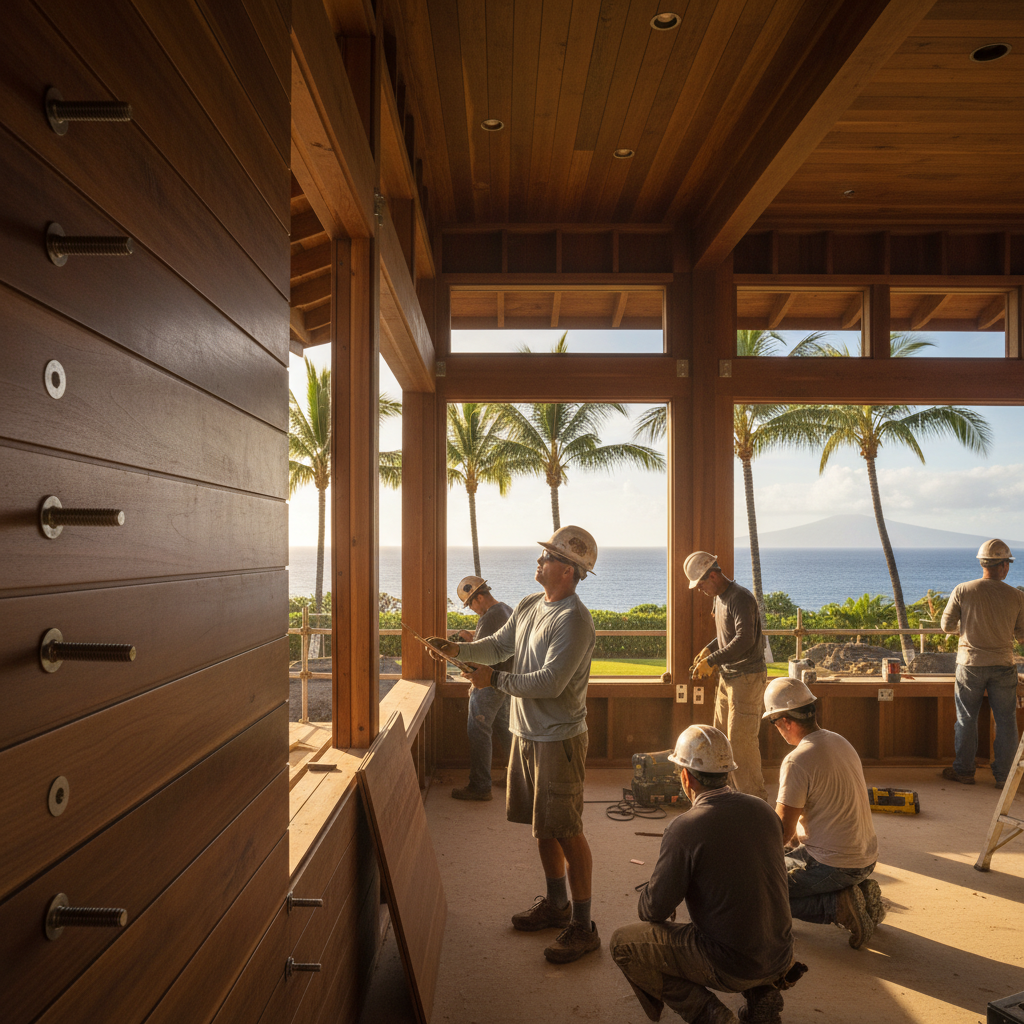
How Long Does a Custom Home Builder Take in Kapalua?
Patience is essential when building a custom home in Hawaii, and especially on a neighbor island like Maui. A realistic total timeline from the day you hire an architect to the day you move in is typically 24 to 36 months. Anyone who tells you they can do it in 18 months is either inexperienced or not being transparent about the realities of the process in 2026. Our team breaks the timeline down into three distinct phases, each with its own potential for delays.
Phase 1: Design & Pre-Construction (6-9 Months)
This is where your vision takes shape. It involves selecting your architect and builder (ideally through a design-build process), developing schematic designs, refining floor plans, and creating the detailed construction documents. This phase also includes engaging engineers, selecting materials and finishes, and getting preliminary bids. A significant part of this phase in Kapalua is the back-and-forth with the Kapalua Resort Association’s design review board. A well-prepared submission might get approved in 60-90 days, but if revisions are required, this can easily add another 2-3 months to the pre-construction timeline.
Phase 2: Permitting (8-14 Months)
This is often the most frustrating and unpredictable phase for homeowners. Once the design is finalized, we submit the full set of plans to the Maui County Department of Public Works. In 2026, the county is dealing with a significant backlog and staffing shortages. The initial plan review for a complex custom home can take 6-10 months. And that’s just the first review. If the county plan reviewer has comments or requires changes (which they almost always do), each resubmission can add another 2-4 months to the clock. We manage this process proactively, communicating with the plan reviewers and addressing comments swiftly, but the county’s timeline is largely out of our control. It’s critical to have this waiting period built into your expectations from the very beginning.
Phase 3: Construction (18-24 Months)
Once the permit is in hand, we can finally break ground. The construction timeline for a luxury home is substantial due to the level of detail and complexity. Here’s a rough sequence:
This timeline assumes no major supply chain disruptions for specialty items or prolonged periods of bad weather during hurricane season. As your custom home builder in Kapalua, our job is to manage this schedule relentlessly, overlapping trades where possible and ordering long-lead-time items months in advance to keep the project moving forward efficiently.
What Permits Do You Need for Custom Home Builder in Kapalua?
Navigating the permitting process with the County of Maui is a critical function of your general contractor. It’s a complex, multi-layered system that requires meticulous documentation and follow-up. Attempting to manage this yourself is not advisable. At Warrior Construction, we handle the entire process, from application to issuance, ensuring every detail is correct to minimize delays.
For a new custom home, you’re not just getting one permit; you’re getting a package of them. Here’s what’s typically required:
The entire permit application package is submitted to the Maui County Department of Public Works. While the source for general government process information often points to Honolulu’s Department of Planning and Permitting[1], the process on Maui is similar in its rigor but distinct in its timeline and specific departmental requirements. Our role is to ensure the plans are complete and compliant on the first submission, as each round of corrections from the county plan checkers can add months to the wait. We’ve seen simple clerical errors on an application push a project back eight weeks. Meticulous preparation is key.
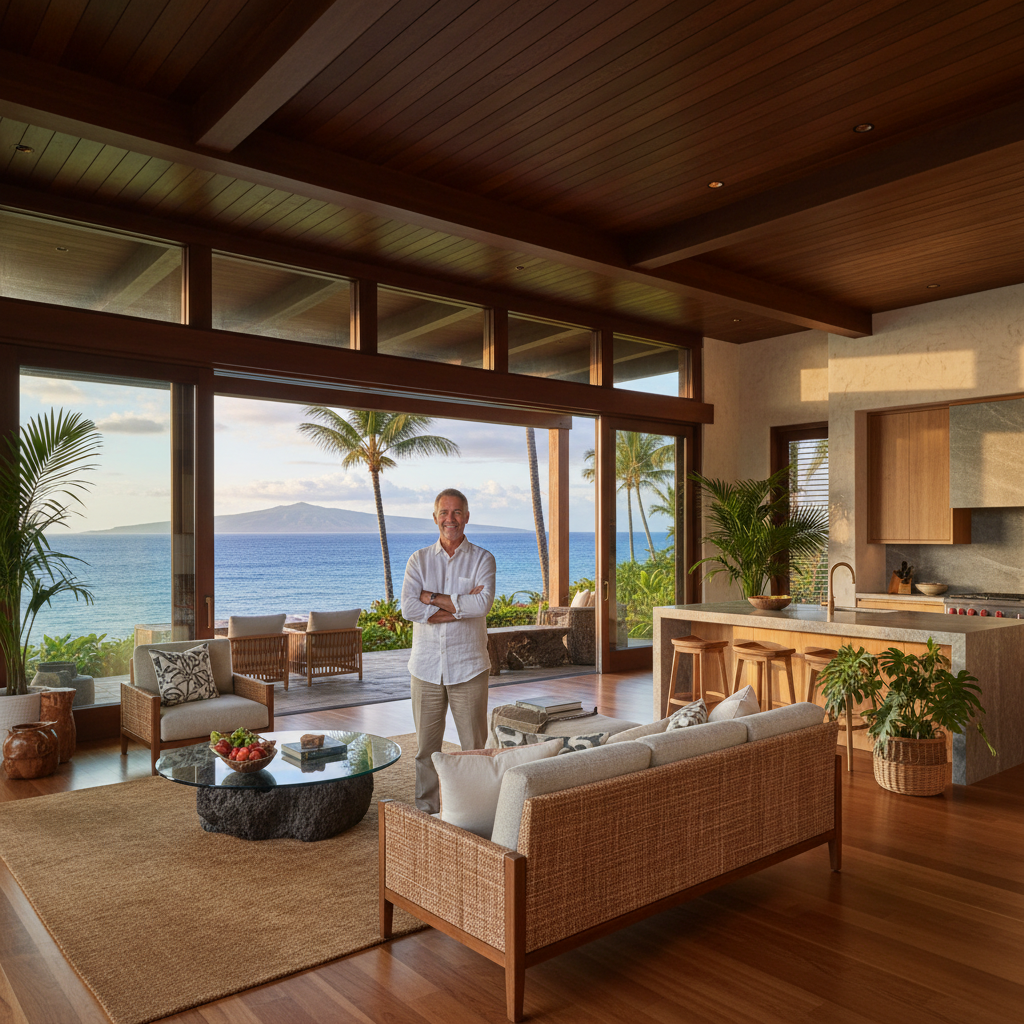
Kapalua-Specific Considerations: Climate, Materials, Regulations
Building in Kapalua is unlike anywhere else. The stunning beauty comes with a unique set of environmental and regulatory challenges that a seasoned home builder in Kapalua must master. Overlooking these factors leads to homes that age poorly, fail inspections, or run afoul of community standards.
Climate: The Salt Air and Sun Equation
The most relentless force in Kapalua is the marine environment. The trade winds carry a fine mist of corrosive salt that settles on every surface. This salt-air corrosion will destroy inferior metals and finishes in a matter of years. We build with this reality at the forefront of every material selection:
Materials: The Neighbor Island Supply Chain
Everything used to build your home, from the concrete aggregate to the kitchen faucet, has to be shipped to Maui. This has major implications for both cost and schedule.
Regulations: The Kapalua Resort Association
Beyond the Maui County building code, any new home construction in Kapalua must pass the Kapalua Resort Association (KRA) design review. This is an architectural review board with a very specific vision for the community. Their guidelines govern:
An experienced luxury home builder in Kapalua will treat the KRA review as a critical project milestone, not an afterthought. We integrate their guidelines into the earliest design phases to ensure the process is a smooth collaboration rather than a contentious negotiation.
How to Choose the Right Custom Home Builder Contractor in Kapalua
Selecting the right contractor is the most critical decision for your project’s success. A great builder acts as your partner, advocate, and expert guide. A poor choice can lead to budget overruns, endless delays, and a finished product that doesn’t meet expectations. Here are the key steps our most successful clients follow when vetting a potential builder.
1. Verify Their License and Insurance Rigorously
This is non-negotiable. Any contractor you consider must have a valid Hawaii General Contractor license (a B-License). You can and absolutely should verify their license status, any complaints, and their insurance standing on the Hawaii Department of Commerce and Consumer Affairs (DCCA) Professional & Vocational Licensing (PVL) website[2]. Our license, for example, is BC-34373. Ask for proof of general liability insurance and workers’ compensation insurance. An uninsured contractor puts all the risk directly on you.
2. Insist on Relevant, Local Experience
Don’t just look for a builder who has constructed custom homes; look for one who has built them specifically in West Maui, and ideally, within Kapalua itself. Ask potential builders:
Their answers will quickly reveal their depth of local knowledge. A builder based primarily on Oahu may not have the relationships with Maui-based subcontractors and suppliers that are crucial for a smooth project.
3. Conduct In-Depth Reference Checks
A builder’s past clients are your best source of information. A reputable builder will gladly provide you with a list of recent clients and architects they’ve worked with. When you call them, don’t just ask if they were happy. Ask specific questions:
4. Understand Their Process and Communication Style
Building a custom home is a long-term relationship. You need to be comfortable with the builder’s communication style and project management process. Do they use project management software to keep you updated? How often will you have site meetings? Who is your primary point of contact? At Warrior Construction, we assign a dedicated project manager to each home, providing clients with regular updates, photos, and financial reports. A transparent process builds trust and eliminates surprises.
By following these steps, you can confidently choose a qualified and professional partner who will turn your vision for a Kapalua home into a reality.
Real Kapalua Custom Home Builder Project Example
To make these concepts concrete, let’s walk through a representative project our team might undertake, which we’ll call the “Plantation Estates Lot 15 Project.” This fictional example is based on the real-world challenges and solutions we manage every day as a luxury home builder in Kapalua.
The Vision: A 4,800-square-foot, single-level contemporary home on a sloped lot in Plantation Estates with panoramic views of Molokai. The clients wanted seamless indoor-outdoor living, with large pocketing glass doors, a negative-edge pool, and materials that felt both modern and organic to Maui.
The Challenges:
The Warrior Construction Solution:
The Outcome:
Frequently Asked Questions About Custom Home Builder in Kapalua
Is it more expensive to build a custom home in Kapalua than on Oahu?
Yes, generally it is. While land costs can vary, construction costs on Maui are typically 10-20% higher than on Oahu. This is due to a combination of factors: the higher cost of shipping all materials to a neighbor island, a smaller pool of skilled labor and subcontractors which increases labor rates, and the additional logistical complexities of managing a project from afar. For a luxury build, this premium is a significant factor to budget for.
What is the biggest mistake homeowners make when starting a new home construction in Kapalua?
The most common mistake is underestimating the timeline, particularly the permitting phase. Homeowners often focus on the 18-24 month construction schedule but don’t fully grasp that there’s a 12-18 month design and permitting phase *before* any work can start. Starting with a realistic timeline of 2.5 to 3 years from day one prevents a tremendous amount of frustration and allows for proper planning.
How does the Kapalua Resort design review process work?
The Kapalua Resort Association (KRA) has a formal Design Review Committee. Your architect submits a comprehensive package including site plans, floor plans, elevations, material samples, and a landscaping plan. The committee reviews it for compliance with their published guidelines on aesthetics, height, setbacks, and materials. They either approve it, approve it with conditions, or return it for revisions. A builder experienced in Kapalua can help navigate this to achieve a first-pass approval.
Do I need to hire an architect before I hire a builder?
You can, but we highly recommend a design-build approach where you hire the architect and builder as a team from the beginning. This allows the builder to provide real-time cost feedback during the design process, ensuring the plans stay within your budget. It prevents the common scenario where a homeowner pays for beautiful plans only to find out they are 30% over what they can afford to build.
What are some essential hurricane-resistant features for a Kapalua home?
Beyond meeting the basic building code, essential features include impact-rated windows and doors, a robust roof-to-foundation connection system using steel straps and anchors, and a hip roof design which is more aerodynamic. We also recommend a backup generator and ensuring your garage doors are rated for high-wind pressures, as they are often a major failure point during a hurricane.
How much should I budget for landscaping in Kapalua?
For a luxury home in Kapalua, a realistic landscaping budget is typically 10-15% of the home’s construction cost. For a $4 million home, that’s $400,000 to $600,000. This covers design, irrigation, grading, soil, lighting, mature trees and plants, and potentially features like rock walls or water features. The KRA has high standards for landscaping, so it’s a significant and important part of the overall project.
Can I live off-island during the construction of my Kapalua home?
Absolutely. The vast majority of our custom home clients live on the mainland or abroad during construction. This is why choosing a builder with excellent communication and project management systems is critical. We use online portals with daily logs, progress photos, and transparent financial reporting to ensure you feel connected and informed every step of the way, no matter where you are in the world.
What this means for Hawaii homeowners
Building your dream home in Kapalua is one of the most rewarding experiences you can have, but it demands careful planning and a realistic understanding of the local landscape. The process is a marathon, not a sprint, and success hinges on embracing the unique financial, logistical, and regulatory realities of building on Maui.
Here are the key takeaways for anyone considering a new home construction in Kapalua:
Building a home here is a partnership. Your role is to bring the vision; our role as your custom home builder in Kapalua is to bring the experience, transparency, and craftsmanship to make it a reality.
Building a custom home in Kapalua requires a partner with proven experience in Hawaii’s luxury market. Our team at Warrior Construction (BC-34373) combines decades of local knowledge with a transparent, client-focused process to deliver exceptional homes on time and on budget. If you’re ready to discuss your vision, we’re here to provide the expertise and guidance you need.
Explore our Custom Home Building services to learn more about our process or contact us today for a complimentary consultation.