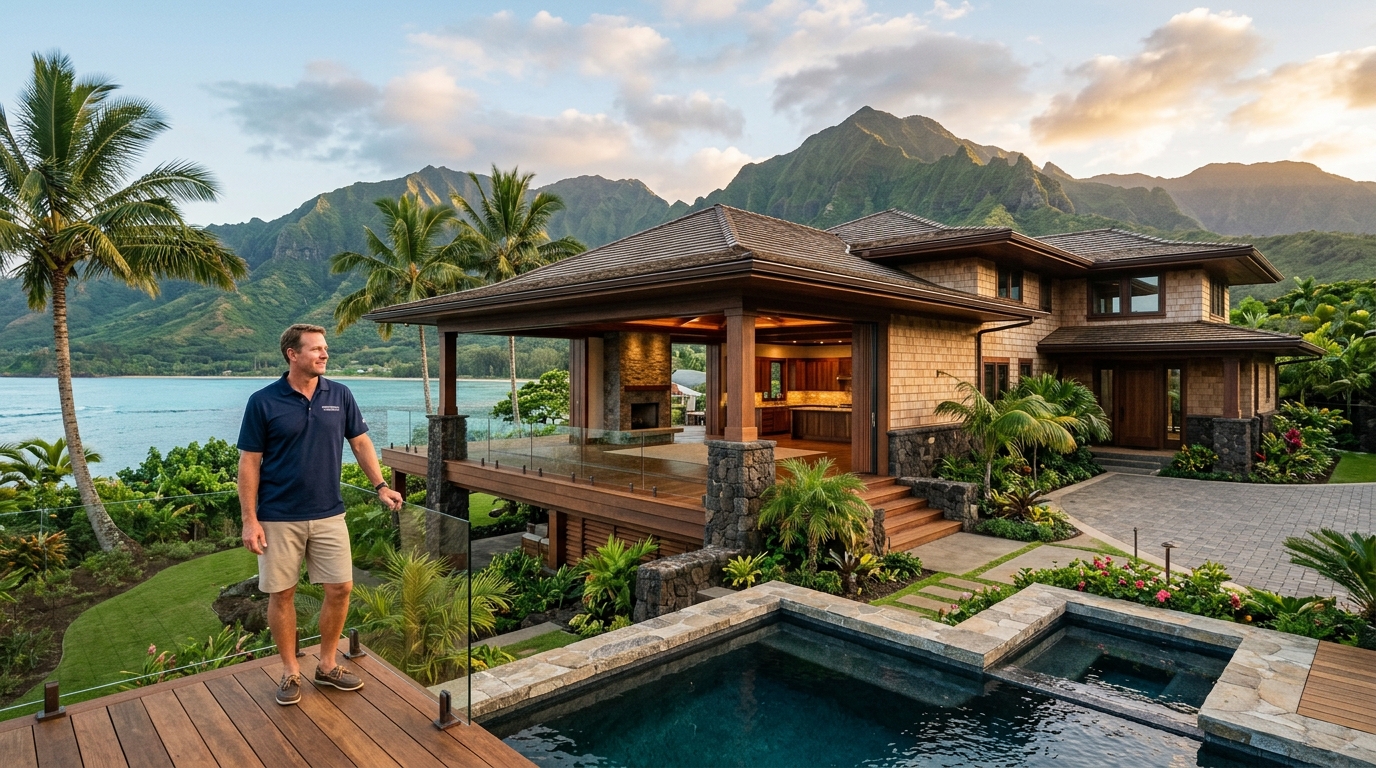
Building a custom home on Kaua’i, especially in a world-class location like Princeville, is a unique undertaking. In 2026, a successful project requires much more than just a good set of plans; it demands a deep understanding of the island’s specific logistics, challenging climate, and complex regulatory environment. As a custom home builder in Princeville, our team at Warrior Construction finds that the most critical factors are navigating the two-tiered approval process (community association and county), engineering for extreme weather, and managing the intricate supply chain to a neighbor island. The cost for this level of quality and durability typically starts around $700 per square foot and can easily exceed $1,200 for a true luxury home build.
This isn’t like building on the mainland, or even on Oahu. Here, the red volcanic soil, the persistent salt-laden trade winds, and the ever-present threat of hurricanes shape every decision we make, from the type of concrete we pour to the grade of stainless steel we use for fasteners. Overlooking these details is the fastest way to see a beautiful new home start to degrade in just a few years. In this guide, we’ll walk you through the essential strategies for a successful new home construction in Princeville, covering realistic costs, timelines, permitting hurdles, and how to select a contractor who truly understands the Garden Isle. We’re pulling back the curtain based on decades of on-the-ground experience right here in Hawaii.
Why Princeville Homeowners Trust Warrior Construction for Custom Home Builder
When you decide to build in Princeville, you’re not just hiring a contractor; you’re entrusting a partner with a significant investment and a personal vision. Homeowners choose our team at Warrior Construction (License BC-34373) because we bring over 20 years of Hawaii-specific experience to the table, with a deep portfolio of projects on Kaua’i. We’re not an Oahu-based company that occasionally flies over for a job. We have established relationships with Kaua’i suppliers, subcontractors, and, most importantly, the county permitting officials and the Princeville Community Association (PCA) design review board.
This local knowledge is indispensable. The PCA has its own set of detailed Covenants, Conditions, and Restrictions (CC&Rs) that are often stricter than the county’s building code. They govern everything from roof materials and paint colors to landscaping palettes and how a home’s massing impacts a neighbor’s view corridor. We’ve successfully navigated this review process dozens of times. We know what the committee looks for and how to present a project to ensure a smooth approval, which has to happen *before* you can even submit to the county. This avoids months of costly delays and redesigns that can plague builders who aren’t familiar with the local system.
Furthermore, our approach is built on transparency and communication. We understand the anxieties of building, especially when you might be managing the project from off-island. Our clients get regular updates, detailed financial reports, and access to our project management system. On a recent luxury home project in Princeville, the client was in California. We arranged weekly video call walkthroughs from the job site and used drone photography to show progress on the roof and site work. This level of engagement ensures there are no surprises. It’s about building trust as much as it is about building houses.
What Does Custom Home Builder Cost in Princeville?
For a high-quality custom home in Princeville in 2026, the all-in cost generally ranges from $700 to over $1,200 per square foot. A 3,000-square-foot home, for example, will typically land between $2.1 million and $3.6 million for the structure and site work alone, not including the cost of the land. This price reflects the realities of building a durable, luxury home on Kaua’i’s North Shore.
Several factors contribute to these costs, which are often 15-25% higher than a similar build on Oahu. The primary drivers are material logistics—as everything has to be barged to Nawiliwili Harbor and then trucked to the site—and a smaller pool of skilled labor. Here’s a typical breakdown of where the money goes:
- Soft Costs (15-25% of Total): These are the expenses before we even break ground. This includes architect and engineer fees (typically 8-15% of construction cost), surveyor costs, geotechnical reports (essential for Kaua’i’s soil), permitting fees with Kaua’i County, and the crucial Princeville Community Association design review fees, which can run over $5,000.
- Hard Costs (75-85% of Total): This is the physical construction of the home. We can break it down further:
- Site Work & Foundation ($50 – $80/sq. ft.): Includes excavation, grading, termite treatment, and a robust foundation engineered for the specific soil conditions.
- Structure & Framing ($100 – $150/sq. ft.): This covers the home’s skeleton, including hurricane-rated strapping and shear walls required by code since Hurricane Iniki. Steel framing is becoming more common for its termite and rot resistance.
- Exterior Envelope ($120 – $200/sq. ft.): This is a critical investment. It includes high-performance, impact-rated windows and doors, standing-seam metal or aluminum roofing, sophisticated waterproofing systems, and durable siding like fiber cement or ipe wood.
- Interior Finishes ($200 – $450+/sq. ft.): This has the widest range and is where personal taste dictates the budget. It includes everything from custom cabinetry and quartzite countertops to high-end appliances, hardwood flooring, and intricate tile work.
- MEP Systems ($80 – $120/sq. ft.): Mechanical, Electrical, and Plumbing. In Princeville, this often includes multi-zone air conditioning, solar PV systems with battery backup (like Tesla Powerwalls), and advanced wastewater systems.
For perspective, on a $2.5 million, 3,200 sq. ft. build, you can expect to spend around $450,000 on the exterior envelope alone. It sounds like a lot, but cheaping out on windows or roofing on the North Shore is the most expensive mistake you can make. We’ve been called in to fix homes less than ten years old that required a full window replacement—a $150,000+ job—because the original builder used vinyl windows not suited for the intense UV and salt spray.
How Long Does a Custom Home Builder Take in Princeville?
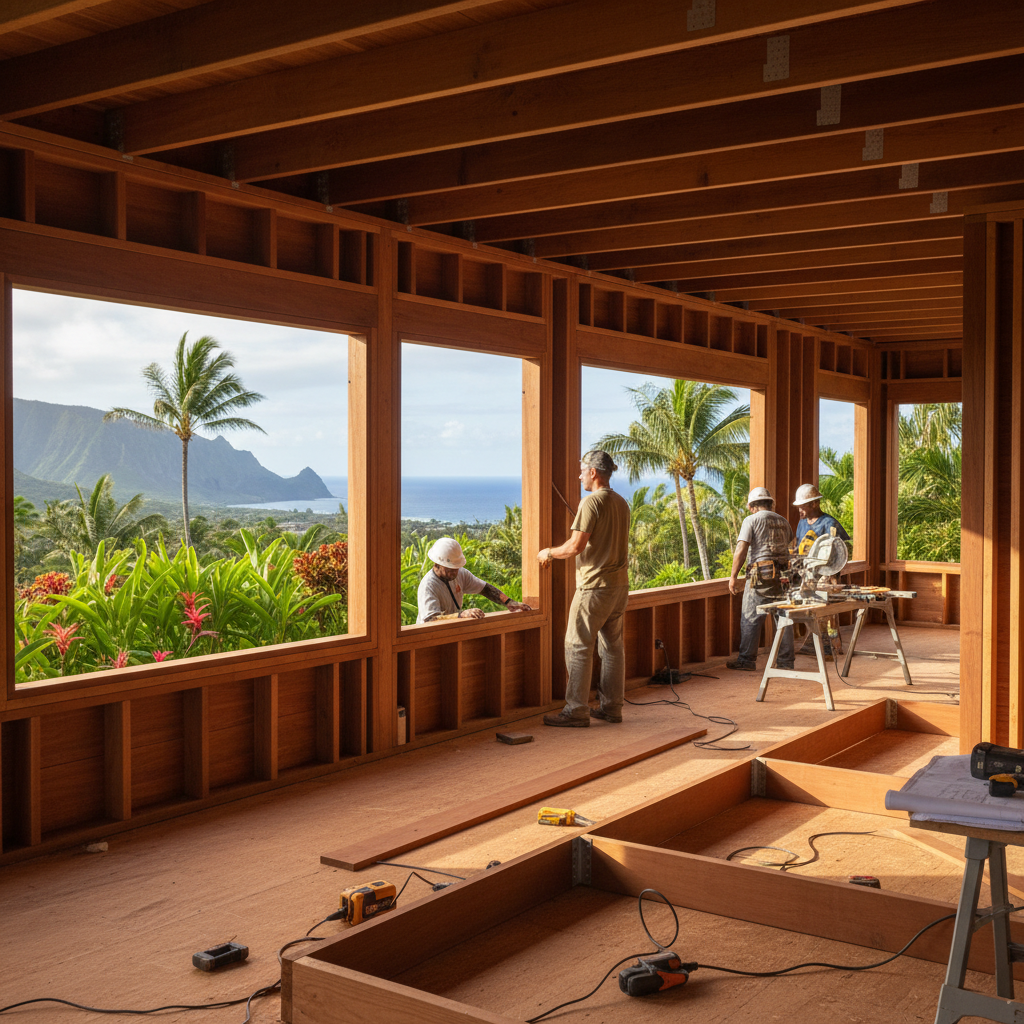
From the moment you start designing to the day you move in, a custom home project in Princeville realistically takes 24 to 36 months in 2026. Anyone who tells you it can be done in 18 months is either inexperienced with Kaua’i or not being fully transparent. The timeline is dictated less by the physical construction and more by the extensive pre-construction and permitting phases.
Here’s a detailed look at a typical project timeline for new home construction in Princeville:
- Phase 1: Design & Planning (6 to 12 months): This is where your vision takes shape. It involves selecting an architect (if you’re not using our design-build services), developing schematic designs, refining them, and creating detailed construction documents. For Princeville, this phase also includes multiple preliminary meetings and a final presentation to the Princeville Community Association design committee. Their feedback often requires design revisions, which adds time.
- Phase 2: Permitting (8 to 14 months): This is the most significant bottleneck and requires the most patience. After securing PCA approval, we submit the full plan set to the Kaua’i County Department of Public Works. The plans go through multiple reviews: planning, building, electrical, plumbing, and sometimes public works for drainage. The department is thorough, and a backlog is common. We’ve seen permits take over a year to be issued, a stark contrast to the sometimes faster timelines at Honolulu’s DPP[1].
- Phase 3: Bidding & Mobilization (1 to 2 months): Once the permit is in hand, we finalize subcontractor bids, order long-lead materials like custom windows or trusses, and prepare the site for construction.
- Phase 4: Construction (12 to 18 months): The physical build is often the most straightforward part. A typical sequence looks like this:
- Foundation and Site Work: 2-3 months
- Framing and Roof Dry-In: 3-4 months
- Windows, Doors, Siding (The Envelope): 2-3 months
- Rough-in of MEP Systems: 1-2 months
- Insulation, Drywall, and Interior Finishes: 4-6 months
- Final Landscaping, Punchlist, and Inspections: 1-2 months
A real-world example: we recently completed a home where the custom Fleetwood sliding door package had a 24-week lead time from the factory. Then, it took another 4 weeks to ship to Hawaii and clear the port. That’s a 7-month wait for one component. A good home builder in Princeville anticipates these delays and orders critical items the day the permit is issued, not when they’re needed on site.
What Permits Do You Need for Custom Home Builder in Princeville?
Securing the right permits for a custom home in Princeville is a two-pronged process that requires careful sequencing and local expertise. You must successfully navigate both a private design review and a public government approval, and the order is non-negotiable.
Step 1: Princeville Community Association (PCA) Design Review
Before you can even think about the county, you must get approval from the PCA’s Design Committee. This is a formal architectural review process governed by the community’s founding documents. Their focus is purely on aesthetics and ensuring that new construction adheres to the established character of Princeville. They will scrutinize:
- Architectural Style: Does the design fit the modern or classic Hawaiian aesthetic they promote?
- Materials and Colors: They have pre-approved lists for roofing, siding, and exterior paint colors. Deviations require special justification.
- Massing and Scale: How the size and shape of the home sit on the lot and relate to its neighbors.
- View Planes: Protecting the mauka (mountain) and makai (ocean) views of adjacent properties is a huge priority.
- Landscaping: The plan must include approved plant species and a certain level of maturity.
Submitting to the PCA requires a detailed package, often including material samples and 3D renderings. Only after receiving their stamped approval can you move to the next step.
Step 2: Kaua’i County Building Permits
With PCA approval in hand, our team prepares and submits the full construction drawings to the Kaua’i County Department of Public Works. The primary permit is the Building Permit, but a full new home construction package typically includes:
- Building Permit: Covers the structural and architectural components of the home.
- Electrical Permit: For all wiring, panels, and fixtures.
- Plumbing Permit: For all supply lines, drains, and wastewater systems.
- Grading/Grubbing Permit: Often required if you are moving a significant amount of earth or clearing the lot.
- Wastewater System Approval: Most Princeville lots require an individual wastewater system (IWS), or septic system, which needs separate approval from the Department of Health.
The submittal package is extensive, requiring plans and calculations stamped by a Hawaii-licensed architect and engineer. This is where having a licensed, experienced team is critical. You can verify any contractor’s license, like ours (Warrior Construction, BC-34373), through the Hawaii DCCA Professional & Vocational Licensing search portal[2]. An incomplete or incorrect submission can set a project back by months.
Princeville-Specific Considerations: Climate, Materials, Regulations
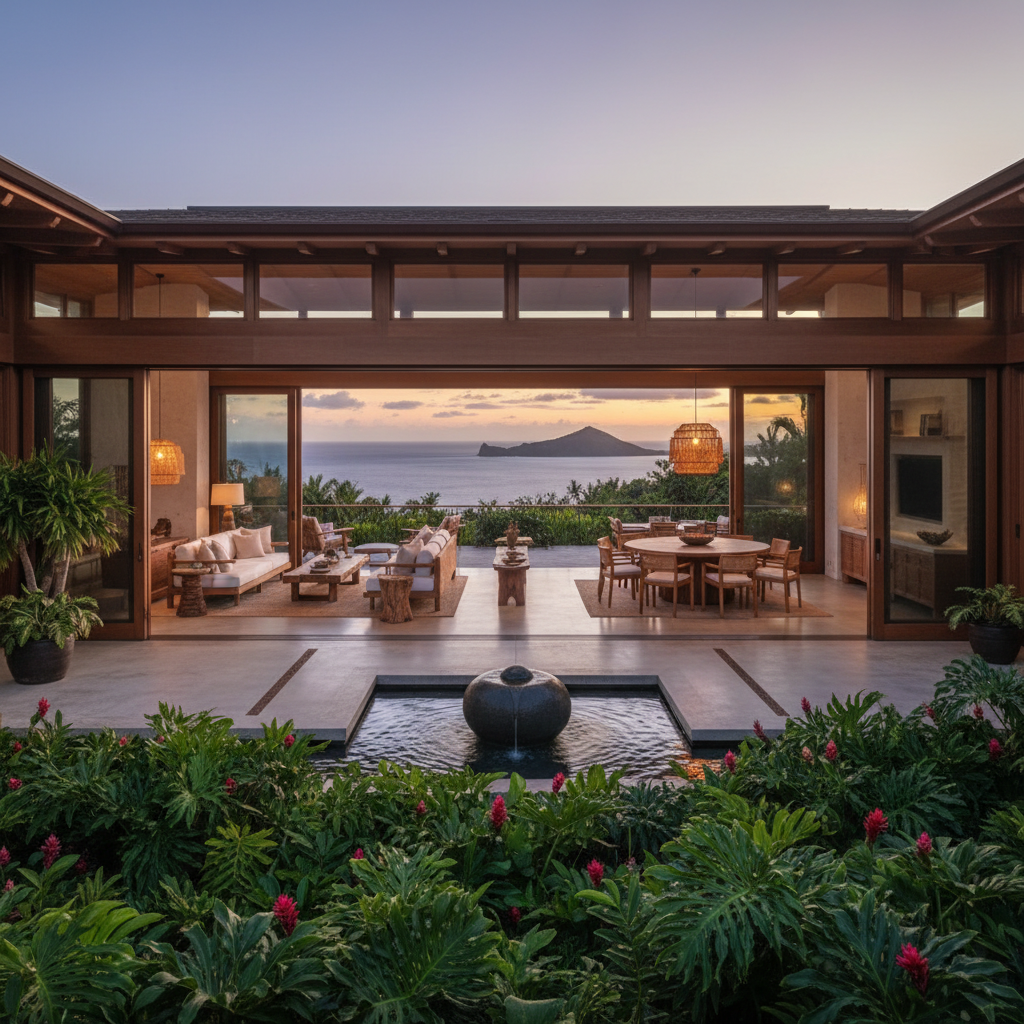
Building in Princeville isn’t just about following a blueprint; it’s about building a defense system against one of the most beautiful but demanding environments on Earth. The combination of intense rain, corrosive salt air, and powerful sun requires a level of construction that goes far beyond standard practices.
Climate: Engineering for the North Shore Weather
The North Shore of Kaua’i has a microclimate all its own. We have to account for three major factors:
- Rainfall and Humidity: Princeville can receive over 80 inches of rain a year. This means our primary focus is on creating a bulletproof building envelope. We use advanced waterproofing membranes, redundant flashing systems around every window and door, and design for airflow to prevent mold growth. During construction, keeping the structure dry before it’s sealed is a daily challenge.
- Salt-Air Corrosion: The trade winds carry a fine mist of salt that is incredibly corrosive. Every piece of metal on the exterior must be chosen with this in mind. We specify 316-grade stainless steel for all fasteners, connectors, and railings. We recommend aluminum-clad or fiberglass windows over vinyl, and high-performance paint coatings on any metal surface. We saw a project where a mainland builder used standard galvanized light fixtures, and they were bleeding rust stains down the walls within a year.
- Hurricane Code: Ever since Hurricane Iniki devastated Kaua’i in 1992, the island has had one of the most stringent hurricane building codes in the nation. We build every home to withstand 130+ mph winds. This involves a continuous load path from the roof to the foundation, using engineered hurricane straps, reinforced roof sheathing, and impact-rated windows and doors that can resist wind-borne debris.
Materials: Logistics and Durability
Choosing the right materials is a balance of aesthetics, performance, and availability. We guide our clients to make smart choices:
- Logistics: Almost every screw, board, and window for a Princeville home arrives on a barge. This adds cost and, more importantly, time. A 16-week lead time from a manufacturer can easily become 22 weeks by the time it lands on site. We build these logistical buffers into our project schedules from day one.
- Termite Resistance: Formosan subterranean termites are a major threat. The entire foundation requires specialized ground treatment. For framing, we use either steel studs or borate-treated lumber (like Hi-bor) and ensure proper clearances between wood and soil to prevent infestation.
- Sustainable Choices: Many clients want to build sustainably. We often incorporate locally sourced hardwoods for accents, specify high-efficiency appliances, and design for passive cooling to reduce A/C load. A well-designed roof overhang, for example, is the simplest and most effective way to keep the interior cool.
How to Choose the Right Custom Home Builder Contractor in Princeville
Selecting the right general contractor is the single most important decision you will make for your Princeville project. The right partner will save you time, money, and immense stress. The wrong one can turn your dream into a nightmare. Here’s a checklist to use when vetting potential builders.
- Verify Their License and Insurance. This is non-negotiable. Ask for their Hawaii contractor license number and verify it’s active and in good standing on the DCCA PVL website[2]. Our license is BC-34373. Also, ask for a certificate of insurance showing they carry both General Liability and Worker’s Compensation. Don’t just take their word for it.
- Demand Kaua’i-Specific Experience. A builder from Honolulu or the mainland will face a steep learning curve. Ask them directly: “How many custom homes have you built on Kaua’i’s North Shore in the last five years?” Ask about their relationships with the PCA and the county inspectors. Their answers will tell you everything you need to know.
- Review Their Portfolio in Detail. Go beyond the pretty pictures on their website. Ask to see projects that are similar in size, style, and complexity to what you want to build. Look at the quality of the finish work. We’re always happy to show potential clients our completed projects and let the craftsmanship speak for itself. You can see a range of our work in our online portfolio.
- Speak with At Least Three Recent References. And make sure they are for projects built in Princeville or Hanalei. Ask the former clients about the builder’s communication, their budget management, their problem-solving skills, and whether they would hire them again. This is the best insight you will get.
- Understand Their Communication and Project Management Process. How will they keep you updated? Do they use project management software like Procore or BuilderTrend? Who is your single point of contact? For our clients, especially those off-island, we establish a clear communication rhythm with weekly reports and calls to ensure they are always informed.
- Analyze Their Bid, Don’t Just Look at the Price. A cheap bid is a massive red flag. It often means they’ve specified inferior materials or left out key scope items that will show up later as expensive change orders. A professional bid from a quality builder will be detailed, transparent, and list specific material allowances and exclusions. It should be an open book.
Real Princeville Custom Home Builder Project Example
To illustrate how these strategies come together, let’s look at a recent project our team completed—a 3,500 sq. ft. modern Hawaiian home for a family from San Diego who wanted a legacy property on the North Shore.
The Client’s Vision: They wanted an indoor-outdoor living experience with large pocketing doors, a spacious lanai, and an infinity pool overlooking the ocean. The aesthetic was clean and modern but used natural materials like ipe wood and basalt stone to feel connected to Kaua’i.
The Challenge: The lot they purchased was stunning but had a significant slope and was located in a part of Princeville with very strict design covenants regarding view corridors. The initial architectural concept, while beautiful, was a large, two-story structure that would have completely blocked the ocean view for the neighbor behind them—a non-starter for the PCA Design Committee.
Warrior Construction’s Solution:
Working in a design-build capacity with the architect, we proposed a new approach. Instead of building up, we would terrace the home down the slope. This involved creating a split-level design with a lower level built into the hillside. This accomplished several key goals:
- It significantly reduced the home’s perceived height from the street and for the neighbors, preserving the critical view plane.
- It minimized the need for expensive retaining walls and reduced the amount of soil we needed to export from the site.
- It created a more dynamic living space, with the main living area opening directly to the pool deck and the bedrooms on a more private lower level.
We created a detailed 3D model and site plan that we personally presented to the PCA committee. By proactively addressing their primary concern—the view—we secured their approval in just two review sessions, which is exceptionally fast.
The Numbers & Outcome:
- Final Construction Cost: $3.15 Million (approx. $900/sq. ft.)
- Project Duration: 31 months total (15 months for design & permitting, 16 months for construction).
- Key Materials: Impact-rated Fleetwood pocketing doors, standing-seam aluminum roofing, custom Sapele cabinetry, and a full Tesla solar and Powerwall system.
The result was a spectacular home that met the client’s vision, respected its surroundings, and was built to last for generations in the demanding North Shore climate. It’s a perfect example of how early builder involvement and local knowledge can solve complex challenges.
What this means for Hawaii homeowners
Building a custom home in Princeville is an achievable dream, but it requires a strategic mindset from the very beginning. The process in 2026 is more complex and lengthy than ever before. Success hinges on embracing the realities of building in this unique location rather than fighting against them.
Here is our most direct advice for anyone considering this journey:
- Prioritize Durability Over Finishes. Your budget should first be allocated to the things that protect the home from the elements. Invest heavily in the best roofing, windows, waterproofing, and structural connections you can afford. You can always upgrade countertops later; you can’t easily replace a failing roof or rotted window frames.
- Engage a Builder During the Design Phase. The traditional model of finishing architectural plans and then putting them out to bid is inefficient for Kaua’i. By bringing a builder like Warrior Construction onto the team early, we can provide real-time cost feedback, material availability insights, and constructability advice that saves you from costly redesigns down the road.
- Plan for a Marathon, Not a Sprint. The 24-to-36-month timeline is real. You must have the financial and emotional patience to see it through. Rushing the planning or permitting stages will inevitably lead to mistakes and greater delays. Start the process well in advance of when you hope to be living in the home.
- Build a Contingency Fund of 15%. This is not optional. On a $2.5 million build, that’s $375,000. It may seem high, but it’s realistic for a complex project on a remote island. This fund covers unforeseen site conditions (like hitting hard rock during excavation), material price escalations, or shipping delays that require air freighting a critical part. It’s the buffer that keeps the project moving forward smoothly without financial stress.
Ultimately, your choice of a general contractor will define your building experience. Choose a licensed, local, and communicative partner whose portfolio demonstrates a clear understanding of what it takes to build successfully on the North Shore.
Frequently Asked Questions About Custom Home Builder in Princeville
What is the very first step to building a custom home in Princeville?
The first practical step is to assemble your core team: a Kaua’i-based architect and a licensed general contractor. Even before you finalize land acquisition, having these professionals vet a potential lot for buildability, zoning issues, and potential site work costs can save you from a catastrophic mistake. This pre-construction planning is one of the most valuable services we offer.
How much should I budget for architectural and engineering fees?
In Hawaii, you should budget between 8% and 15% of your total construction cost for all design and engineering fees. For a $3 million luxury home builder Princeville project, this means your soft costs for design professionals will likely be in the $240,000 to $450,000 range. This includes the architect, structural engineer, civil engineer, and potentially a geotechnical engineer.
Can I use a mainland architect for my Princeville home?
Yes, you can, but with a major caveat. They must partner with a Hawaii-licensed architect who will serve as the architect of record and stamp the plans for submission to Kaua’i County. Your mainland architect will also need to work closely with a local builder like us to ensure their designs account for our unique building codes, material limitations, and the PCA’s specific requirements.
Are solar panels and battery systems standard for new construction in Princeville?
They are rapidly becoming standard practice in 2026. With some of the highest electricity rates in the nation from KIUC, a solar PV system offers a clear return on investment. Furthermore, adding a battery backup system like a Tesla Powerwall provides energy security during power outages, which can be common during storms on the North Shore.
What is the single biggest mistake homeowners make when building on Kaua’i?
The biggest and most costly mistake is underestimating the timeline and the budget. Homeowners often have mainland expectations, hoping to build in 18 months for a price they saw in a magazine. The reality of inter-island logistics, a lengthy permitting process, and the high cost of durable materials means you must plan for at least 24-36 months and a cost of $700/sq. ft. on the low end.
Is it more expensive to build a custom home in Princeville than on Oahu?
Yes, it is generally 15-25% more expensive to execute a new home construction in Princeville compared to a similar project in Honolulu or Kapolei. This premium is driven entirely by logistics. Every single material, from lumber to light fixtures, has to be shipped to Oahu and then barged over to Kaua’i, adding significant cost. The smaller, more competitive labor market on Kaua’i also contributes to higher labor rates.
Do I absolutely need a geotechnical report for my lot?
For new home construction, yes, it’s almost always required by the structural engineer and the county. Kaua’i’s volcanic soils can vary dramatically from one lot to the next. A geotechnical report analyzes the soil’s composition and load-bearing capacity, which is essential information for designing a safe and stable foundation that will last for decades without issues.
Ready to Build Your Dream Home in Princeville?
Building a custom home on Kaua’i’s North Shore is a significant endeavor, but it doesn’t have to be an overwhelming one. With the right team, a realistic plan, and a deep respect for the local environment, it can be one of the most rewarding experiences of your life. At Warrior Construction, we bring the local expertise, transparent processes, and commitment to quality craftsmanship that your project deserves.
If you’re ready to take the next step and discuss your vision, we’re here to help. Our team can provide the guidance you need to navigate the complexities of building in this unique paradise. Get a detailed estimate for your Princeville new home construction project today.