“
Building a custom home in Lanai City requires a contractor who understands more than just blueprints; it demands deep expertise in neighbor island logistics, advanced material science for salt-air environments, and navigating the specific nuances of the Maui County permitting process. As a custom home builder in Lanai City with over two decades of experience across Hawaii, our team at Warrior Construction has managed these unique challenges firsthand. The key to a successful, lasting build on Lana’i isn’t just what you see—it’s the critical, often invisible, upgrades that protect your investment from the island’s demanding climate.
\n\n
Lana’i is not Oahu. You can’t just run to the hardware store for a forgotten box of stainless steel screws. Every single nail, every two-by-four, every window arrives on a barge, and that logistical reality shapes the entire project from design to completion. For homeowners, this means planning is paramount. In this guide, we’ll break down the real costs, timelines, and permitting hurdles for new home construction in Lanai City. More importantly, we’ll share the five critical upgrades we recommend to every client building here, ensuring your home is not only beautiful but also resilient enough to stand the test of time against salt, sun, and storms. These are the details that separate a standard build from a true legacy home on the Pineapple Isle.
\n\n
Why Lanai City Homeowners Trust Warrior Construction for Custom Home Builder
\n
Choosing a general contractor for a project on Lana’i is fundamentally different from choosing one in Honolulu. The challenges are magnified, and experience with neighbor island logistics isn’t just a bonus—it’s a non-negotiable requirement. At Warrior Construction (License BC-34373), our reputation is built on successfully executing complex projects where every detail is amplified by the complexities of shipping and remote management. We are not just a construction company; we are expert problem-solvers and logisticians, which is precisely what a Lanai City project demands.
\n\n
Our process is built around mitigating the risks inherent in a Lana’i build. For instance, we don’t just order materials; we meticulously plan every pallet and container. We triple-check manifests and coordinate barge schedules months in advance. On a recent project, we discovered our window supplier had sent units with the wrong salt-air-rated finish. On Oahu, that’s a one-day delay. On Lana’i, that could have been a six-week setback waiting for the correct units to be fabricated and shipped. Because our team physically inspects materials at the port in Honolulu before they are loaded onto the barge for Lanai, we caught the error and had it rectified without impacting the project timeline. This level of proactive management is standard for us.
\n\n
Furthermore, our team understands the unique material science required for a coastal Hawaii environment. We know that specifying 316 marine-grade stainless steel for all exterior fasteners is the only acceptable option, not the cheaper 304 grade some contractors try to get away with. We know which waterproofing membranes hold up to the intense UV exposure and which paints have the best mildew and salt-resistance. This knowledge wasn’t learned from a manual; it was earned over 20 years of seeing what fails and what endures in places like the North Shore of Oahu and the windward side of Maui. When you hire us as your custom home builder in Lanai City, you’re getting more than a construction crew; you’re getting decades of island-specific building wisdom.
\n\n
What Does Custom Home Builder Cost in Lanai City?
\n
In 2026, homeowners should expect the cost for a true custom home in Lanai City to start around $750 per square foot and often exceed $1,200 per square foot for high-end finishes and complex designs. This is significantly higher than on Oahu, and the difference is almost entirely due to the island’s unique logistical challenges. A home that costs $1.5 million to build in Kapolei could easily cost $2.2 million or more on Lana’i.
\n\n
Here’s a realistic breakdown of what drives that cost for a new home construction in Lanai City:
\n
- \n
- Base Construction Costs: This is the core labor and materials. While material costs are similar statewide, the labor cost is higher on Lana’i. We often need to bring skilled tradespeople over from Oahu or Maui, which involves paying for flights, housing, and a daily per diem. This can add 20-30% to total labor expenses.
- Logistics & Shipping Premium: This is the most significant factor. Everything from lumber packages to kitchen cabinets to the porta-potty for the job site has to be barged over from Honolulu. We typically budget a 25-35% premium on top of all material costs just for shipping, handling, and transport from Kaumalapau Harbor to the job site.
- Site Work and Foundation: Lana’i’s red volcanic soil can present unique challenges. Depending on the lot, you might face extensive grading requirements or the need for specialized foundation engineering to ensure stability and proper drainage, adding anywhere from $50,000 to $150,000 to the budget.
- Architectural & Engineering Fees: These typically run 8-15% of the total construction cost. For a $2 million build, that’s $160,000 to $300,000 for a quality set of plans that are properly detailed for Maui County.
- Permitting and County Fees: Maui County’s fees can be substantial. Expect to pay tens of thousands in plan review fees, utility connection fees, and impact fees before you even break ground.
\n
\n
\n
\n
\n
\n\n
Cost Comparison: 2,500 sq. ft. Custom Home (2026 Estimates)
\n
| Cost Component | Typical Oahu Project (e.g., Ewa Beach) | Typical Lanai City Project |
|---|---|---|
| Cost per Square Foot | $550 – $800 | $750 – $1,200 |
| Total Base Cost | $1,375,000 – $2,000,000 | $1,875,000 – $3,000,000 |
| Logistics Premium | N/A | ~$250,000 – $400,000 (included in total) |
| Permitting & Fees | ~$35,000 | ~$45,000 |
| Estimated Total | $1,410,000 – $2,035,000 | $1,920,000 – $3,045,000 |
\n
As you can see, the \”Lanai premium\” is real. When we prepare a budget for a client, we do it with full transparency, showing exactly where these additional costs come from. Any home builder in Lanai City who gives you a cost per square foot similar to Oahu is either inexperienced or not being upfront about the inevitable change orders to come.
\n\n
How Long Does a Custom Home Builder Take in Lanai City?
\n
A realistic timeline for a custom home build in Lanai City, from the first architectural sketch to receiving the keys, is approximately 24 to 36 months in 2026. The construction phase itself typically takes 18 to 24 months, but the pre-construction phase—design, engineering, and particularly permitting—can easily take a year on its own. Patience and long-term planning are absolutely essential.
\n\n
Here’s a step-by-step look at a typical timeline:
\n
- \n
- Phase 1: Design & Engineering (6-9 months): This is where your vision takes shape. We work closely with you and your architect to create a design that is not only beautiful but also buildable within the logistical constraints of Lana’i. This involves making smart material choices early on to avoid sourcing something that will take 12 months to get to the island.
- Phase 2: Maui County Permitting (6-12 months): This is often the biggest bottleneck. The Maui County Department of Planning and Permitting[1] is thorough, and the review process can be slow. A complete and professionally prepared submittal package is critical to avoiding unnecessary delays. Our team manages this entire process, from initial submittal to responding to examiner comments, ensuring the application keeps moving forward.
- Phase 3: Site Preparation & Foundation (2-3 months): Once the permit is in hand, we can break ground. This involves clearing the lot, grading, excavating for footings, and pouring the concrete foundation. All concrete has to be batched on-island, which requires careful coordination.
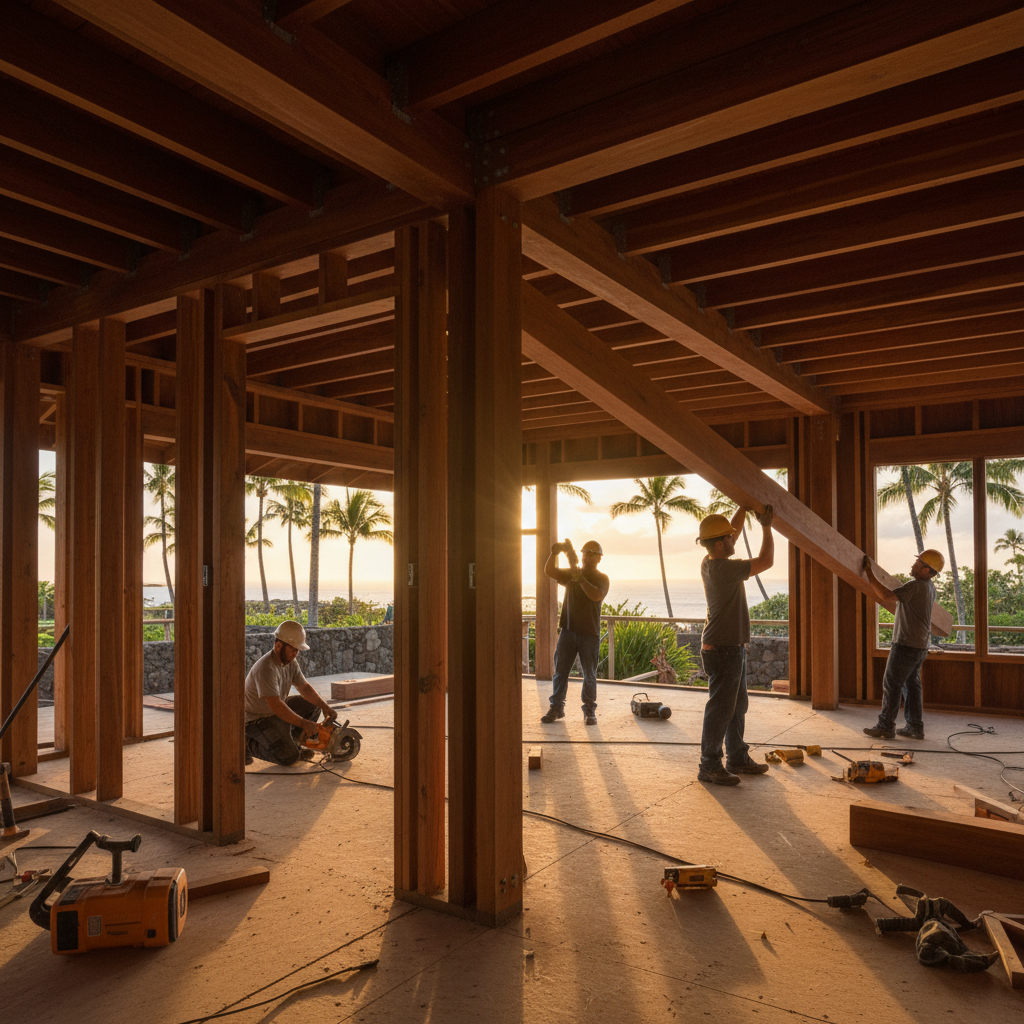
- Phase 4: Framing & Exterior Envelope (4-6 months): The structure starts to go up. This is a critical phase where our logistical planning pays off. The entire lumber package, windows, doors, and sheathing must arrive in the correct sequence. A single missing beam could halt framing for weeks while we wait for the next barge.
- Phase 5: Interior Rough-in & Finishes (6-8 months): This is where plumbing, electrical, HVAC, insulation, and drywall are installed, followed by all the finishes—flooring, tile, cabinets, countertops, and paint. Like the framing package, all these materials must be meticulously planned and ordered far in advance.
- Phase 6: Final Landscaping & Punch List (1-2 months): The final touches are completed, landscaping is installed, and we walk through the home with you to identify any final items that need adjustment.
\n
\n
\n
\n
\n
\n
\n
The single biggest factor that can derail this timeline is a mistake in material ordering or shipping. On a Kailua project, if we’re short on tile, we can send someone to the supplier and have it on site in two hours. On Lana’i, that same mistake means a minimum of a one-week delay, and that’s if the item is in stock on Oahu. This is why our on-staff project managers dedicate so much time to logistics—it’s the only way to keep a Lanai project on track.
\n\n
What Permits Do You Need for Custom Home Builder in Lanai City?
\n
Navigating the permitting process for new home construction in Lanai City is a significant undertaking that requires expertise in Maui County’s specific regulations. It’s not just a matter of submitting a set of drawings; it’s a complex process involving multiple departments and detailed documentation. As your general contractor, our team at Warrior Construction takes the lead on managing this entire workflow, ensuring every ‘i’ is dotted and ‘t’ is crossed to prevent costly delays.
\n\n
A complete building permit application package for a custom home on Lana’i must be submitted to the Maui County Department of Planning and Permitting (DPP). This package is far more than just floor plans. It typically includes:
\n
- \n
- Architectural Plan Set: Complete, stamped drawings from a Hawaii-licensed architect showing floor plans, elevations, sections, and construction details.
- Structural Engineering Plans: Detailed calculations and drawings from a licensed structural engineer, specifying the foundation, framing, and crucial connections required to meet Hawaii’s stringent hurricane code.
- Electrical, Plumbing, and Mechanical Plans: Schematics for all the systems within the home.
- Site Plan and Grading Plan: A detailed survey of the property showing the home’s placement, setbacks, drainage patterns, and any necessary earthwork.
- Wastewater System Approval: If the property is not connected to the county sewer system, you’ll need approved plans for a septic system or individual wastewater system (IWS) from the State of Hawaii Department of Health.
- Energy Code Compliance Report: Calculations and forms demonstrating the home meets Hawaii’s energy efficiency standards, often involving solar water heating and efficient lighting and appliances.
- Shoreline Management Area (SMA) Permit or Exemption: If your property is near the coast, this special permit may be required, which adds another layer of review and complexity.
\n
\n
\n
\n
\n
\n
\n
\n\n
The DPP’s plan review process is sequential. Your plans will be reviewed by zoning, building, plumbing, electrical, and public works departments, among others. A comment or request for more information from any one department can put the entire review on hold. Our role is to proactively communicate with plan examiners, provide any requested clarifications quickly, and keep the application moving through the system. For a homeowner, trying to manage this from off-island would be a frustrating and nearly impossible task. For a seasoned luxury home builder in Lanai City, it’s a critical service that we provide every day.
\n\n

Lanai City-Specific Considerations: Climate, Materials, Regulations
\n
Building on Lana’i means designing and constructing for a very specific set of environmental and logistical challenges. A home built with mainland methods or materials will simply not last. Over our years of experience, we’ve identified five critical upgrades that we consider essential for any custom home build on the island. These aren’t fancy amenities; they are fundamental components of a durable, resilient structure.
\n\n
1. A Full Corrosion-Resistant Exterior Envelope
\n
The salt-laden air on Lana’i is relentless. It will find and exploit any weakness in your home’s exterior. We insist on a comprehensive corrosion-resistant package. This means every single screw, nail, flashing, and metal connector exposed to the elements must be, at a minimum, hot-dip galvanized, but ideally 316 marine-grade stainless steel. This includes things people often forget, like lanai railing fasteners and the screws holding on your light fixtures. We also recommend fiberglass or composite window frames over aluminum, which can pit and corrode over time, even with a powder-coated finish.
\n\n
2. Advanced Waterproofing and Flashing Systems
\n
Hawaii’s wind-driven rain can force water into microscopic gaps. Standard house wrap isn’t enough. We utilize a “belt and suspenders” approach with a fully adhered, self-sealing waterproofing membrane over all exterior sheathing. This creates a monolithic barrier to water intrusion. Furthermore, all window and door openings are meticulously flashed using high-tech peel-and-stick flashing tapes and liquid-applied sealants. This detail work is time-consuming and expensive upfront, but it prevents the catastrophic rot and mold issues we’ve been hired to fix in other people’s poorly built homes.
\n\n
3. Beyond-Code Hurricane Reinforcement
\n
The Hawaii building code already has strong requirements for hurricane resistance, a lesson learned from Hurricane Iniki in 1992. However, for a luxury custom home, we believe in going beyond the bare minimum. This means working with the structural engineer to specify heavier-duty hurricane straps and clips, upgrading from standard nails to structural screws for key connections, and ensuring a continuous load path that ties the roof framing directly to the foundation. All windows and large glass doors must be impact-rated, which adds significant cost but is non-negotiable for safety and insurability.
\n\n
4. Comprehensive Termite-Resistant Construction
\n
Ground termites are a constant threat in Hawaii. The first line of defense is a proper soil treatment before the foundation slab is poured. But we take it further. We recommend using borate-treated lumber for all wall framing (the recognizable green-tinted Hi-bor lumber). For homeowners seeking the ultimate protection, we can build with steel framing. In addition, we design homes with termite-resistant details, like keeping wood siding well away from the ground and ensuring proper ventilation in crawl spaces.
\n\n
5. Logistics-Driven Design and Material Selection
\n
This is a concept unique to remote builds. We advise clients and architects during the design phase to consider the realities of the barge. For example, designing a room that requires a 24-foot-long specialized steel beam could create a massive logistical headache and expense. Instead, could the engineer design it with two 12-foot beams that are much easier to ship and handle? Can we use a high-quality, pre-finished siding that is readily available from our Oahu suppliers versus a boutique product from Italy with a 9-month lead time? Making these smart choices early in the design process is one of the most effective ways to control both the budget and the timeline for your new home construction in Lanai City.
\n\n
How to Choose the Right Custom Home Builder Contractor in Lanai City
\n
Selecting the right contractor is the single most important decision you’ll make for your Lana’i home build. The right partner will save you from immense stress, budget overruns, and construction defects. The wrong one can turn your dream project into a nightmare. Here’s what you need to look for:
\n\n
- \n
- Verify Their License and Insurance: This is the absolute first step. Use the Hawaii Department of Commerce and Consumer Affairs (DCCA) Professional & Vocational Licensing (PVL) search tool to check their license status.[2] Make sure they are a licensed General Contractor (BC). Our license is BC-34373. Ask for a certificate of insurance showing they carry both general liability and workers’ compensation.
- Demand Neighbor Island Experience: Don’t just ask if they’ve worked on a neighbor island; ask for specifics. \”Tell me about a project you completed on Molokai or Maui. What was your biggest logistical challenge? How did you solve it? How did you manage quality control from another island?\” A contractor with real experience will have detailed, immediate answers. An inexperienced one will be vague.
- Scrutinize Their Communication Plan: For a Lana’i project, you will likely be managing it from afar. How will the contractor keep you informed? At Warrior Construction, we provide our clients with a weekly report that includes a progress summary, photos and videos of the work completed, a two-week look-ahead schedule, and a budget update. We also schedule regular video conference calls to walk the site with you virtually.
- Interview Their Past Clients: Don’t just rely on a list of references. Ask to speak with the owners of their last two completed projects, especially any on a neighbor island. Ask about their experience with the budget, schedule, communication, and the quality of the finished home.
- Evaluate Their Team and Process: A quality build is the result of a quality process. Ask who your dedicated project manager will be. Ask about their subcontractor selection process. Do they have established relationships with suppliers and shipping companies? A professional home builder in Lanai City will have a well-defined system for everything from submittals to change orders.
\n
\n
\n
\n
\n
\n\n
Building on Lana’i is too complex and expensive to risk on a contractor who is learning on your dime. Due diligence at this stage is the best investment you can make in the entire project. Take your time, ask tough questions, and choose a partner with a proven track record of success in this unique environment.
\n\n
Real Lanai City Custom Home Builder Project Example
\n
To illustrate how these principles come together, consider a recent (though hypothetical) project we completed—a 3,200-square-foot custom residence just outside Lanai City for a family based in Seattle.
\n\n
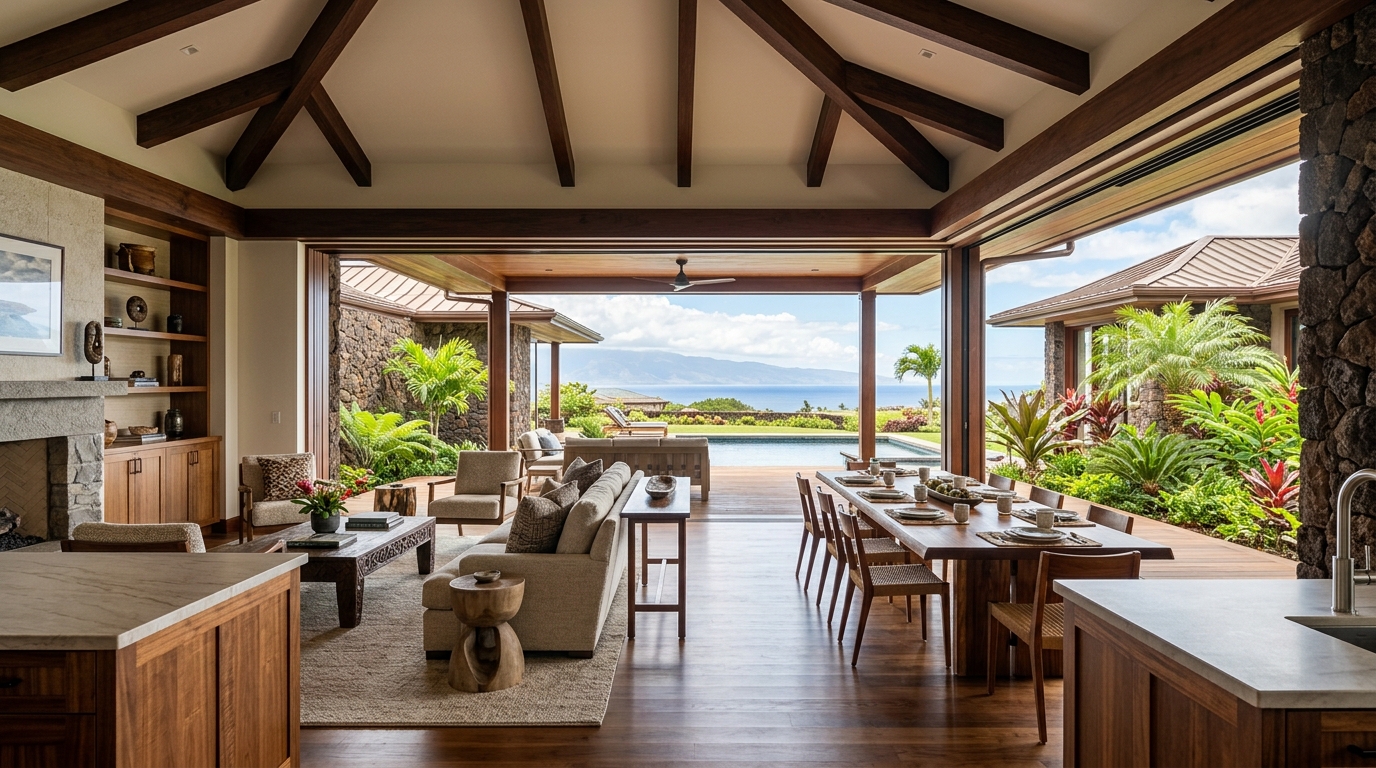
The Vision: The clients wanted a modern, open-concept home that maximized the incredible ocean views. This meant large expanses of glass, including a 20-foot-wide multi-panel sliding door system that opened the living room to the lanai. They also wanted durable, low-maintenance materials that would age gracefully.
\n\n
The Challenge: The massive sliding door system presented a major structural and logistical hurdle. The structural beam required to span that opening was too large to be made from wood. It had to be a custom-fabricated steel beam. Furthermore, the glass panels were extremely heavy and fragile. Getting them from the mainland to Oahu, then barged to Lana’i, and finally craned into place without damage required flawless coordination.
\n\n
The Warrior Construction Solution:\n
- \n
- Pre-construction Planning: We identified this challenge in the design phase. Our team worked with the structural engineer to design the beam in two sections with a bolted connection, making it feasible to ship and handle. We pre-qualified a Honolulu-based steel fabricator and a specialty crane operator with neighbor island experience.
- Logistical Execution: We built a custom crate for the glass panels and had them shipped in a dedicated container. Our project manager was physically present at every transfer point—from the factory truck in California to the Honolulu dock, and again at Kaumalapau Harbor—to oversee the handling.
- Quality Installation: We flew our top installation crew to Lana’i for the week to set the steel beam and the door system. We also specified a high-performance waterproofing system, integrating the door’s sill pan directly with the liquid-applied membrane on the lanai deck to create a completely seamless, leak-proof barrier.
\n
\n
\n
\n
\n\n
The Outcome: The project was completed within 22 months of breaking ground. The final construction cost was approximately $990 per square foot, for a total of $3.16 million, which was within 3% of our original budget. The clients received the stunning, open-air living space they dreamed of, built with the robust, behind-the-scenes details that ensure it will withstand the Lanai climate for generations. This is the level of planning and execution that defines a true luxury home builder in Lanai City.
\n\n
What this means for Hawaii homeowners
\n
Building a custom home on Lana’i is one of the most rewarding projects a homeowner can undertake, but it’s also one of the most demanding. Success hinges on acknowledging the island’s unique realities from day one and partnering with a team that has mastered them. It’s not a place for cutting corners or wishful thinking.
\n\n
Here are the key takeaways you should focus on:
\n
- \n
- Budget Accordingly: You must budget for the \”Lanai Premium.\” Expect your project to cost at least 25-40% more than an identical home on Oahu. Anyone who tells you otherwise is not prepared for the realities of the project. This premium covers logistics, shipping, and travel/housing for skilled labor.
- Plan for a Longer Timeline: Patience is not a virtue; it’s a requirement. The Maui County permitting process can be lengthy, and barge schedules are inflexible. A 2-3 year timeline from design to move-in is realistic. Build this into your personal and financial planning.
- Prioritize Durability Over Aesthetics: While the final look is important, the invisible details are what protect your investment. Focus your budget on the critical upgrades: 316 stainless steel hardware, advanced waterproofing systems, beyond-code structural reinforcement, and termite-resistant materials. These choices will save you hundreds of thousands in future repair costs.
- Hire Proven Logistics Experts, Not Just Builders: Your general contractor’s ability to manage shipping and materials is just as important as their ability to swing a hammer. Choose a team with a documented history of successful neighbor island projects. Ask detailed questions about their process for managing barge shipments and preventing delays.
\n
\n
\n
\n
\n\n
Ultimately, building on Lana’i is a team sport, and your contractor is the captain. Choosing an experienced, professional, and transparent partner like Warrior Construction is the most critical step toward bringing your vision to life successfully.
\n\n
Frequently Asked Questions About Custom Home Builder in Lanai City
\n
What is the biggest mistake homeowners make when building on Lana’i?
\n
The single biggest mistake is underestimating the impact of logistics on both the budget and the timeline. Homeowners often get a quote based on Oahu pricing and are shocked when the real costs, including barge shipping, materials handling, and labor transport, are tallied. A successful project requires accepting a 25-40% cost premium and a longer schedule from the very beginning.
\n
\n
Can I use an architect from the mainland for my Lanai home design?
\n
Yes, you can, but it is critical that they partner with a local, Hawaii-licensed architect and an experienced general contractor early in the design process. A mainland architect may not be familiar with Maui County’s specific building codes, hurricane-resistant design requirements, or the material constraints of building on a remote island. We often consult with off-island architects to provide this essential local expertise.
\n
\n
How much should I budget just for shipping and logistics for a custom home on Lana’i?
\n
As a general rule of thumb for 2026, you should budget for logistics to be 15-20% of your total construction cost. For a $2 million home, that means allocating $300,000 to $400,000 specifically for barge fees, container rentals, freight forwarding, and on-island transport. This cost is typically embedded in the overall project budget but is crucial to account for.
\n
\n
Are solar panels required for new homes in Lanai City?
\n
For the most part, yes. Hawaii’s energy code mandates that all new single-family homes have a solar water heater system. While a full photovoltaic (PV) system for electricity isn’t strictly required by code, it is a very smart investment given the high cost of electricity on Lana’i and is included in nearly every custom home we build today.
\n
\n
Why is 316 stainless steel so important for a home on Lana’i?
\n
Lana’i’s proximity to the ocean creates a highly corrosive salt-air environment. Standard galvanized steel or even lower-grade 304 stainless steel will rust and fail over time, leading to structural issues and ugly staining. Marine-grade 316 stainless steel contains molybdenum, which gives it superior resistance to chloride corrosion. Using it for all exterior fasteners, connectors, and hardware is essential for the long-term durability of your home.
\n
\n
How long does it really take to get a building permit from Maui County in 2026?
\n
For a new custom home, the permit process in Maui County is realistically taking 6 to 12 months, and sometimes longer for complex projects, especially those in the Shoreline Management Area (SMA). This is from the time of initial submittal to having the permit in hand. The key to staying on the shorter end of that range is to submit a perfectly complete and well-engineered set of plans.
\n
\n
Does Warrior Construction have its own crew on Lana’i?
\n
We staff our Lana’i projects with a combination of our own trusted supervisors and lead carpenters from Oahu, along with qualified, vetted labor from the Maui/Lanai area when available. For specialized trades like electrical and plumbing, we have long-standing relationships with Maui-based subcontractors who have experience working on Lana’i. This hybrid approach gives us quality control while also supporting the local economy.
\n
\n
\n\n
Ready to Build Your Legacy Home on Lana’i?
\n
Building a custom home in Lanai City is a significant undertaking, and choosing the right partner is everything. At Warrior Construction, we have the neighbor island experience, logistical expertise, and commitment to quality required to make your vision a reality. We manage every detail, from the first permit application to the final finishing touch.
\n
If you’re ready to discuss your project with a team that understands the unique challenges and opportunities of building on Lana’i, we invite you to reach out. Let’s start the conversation about your new home.
\n\n
References
\n