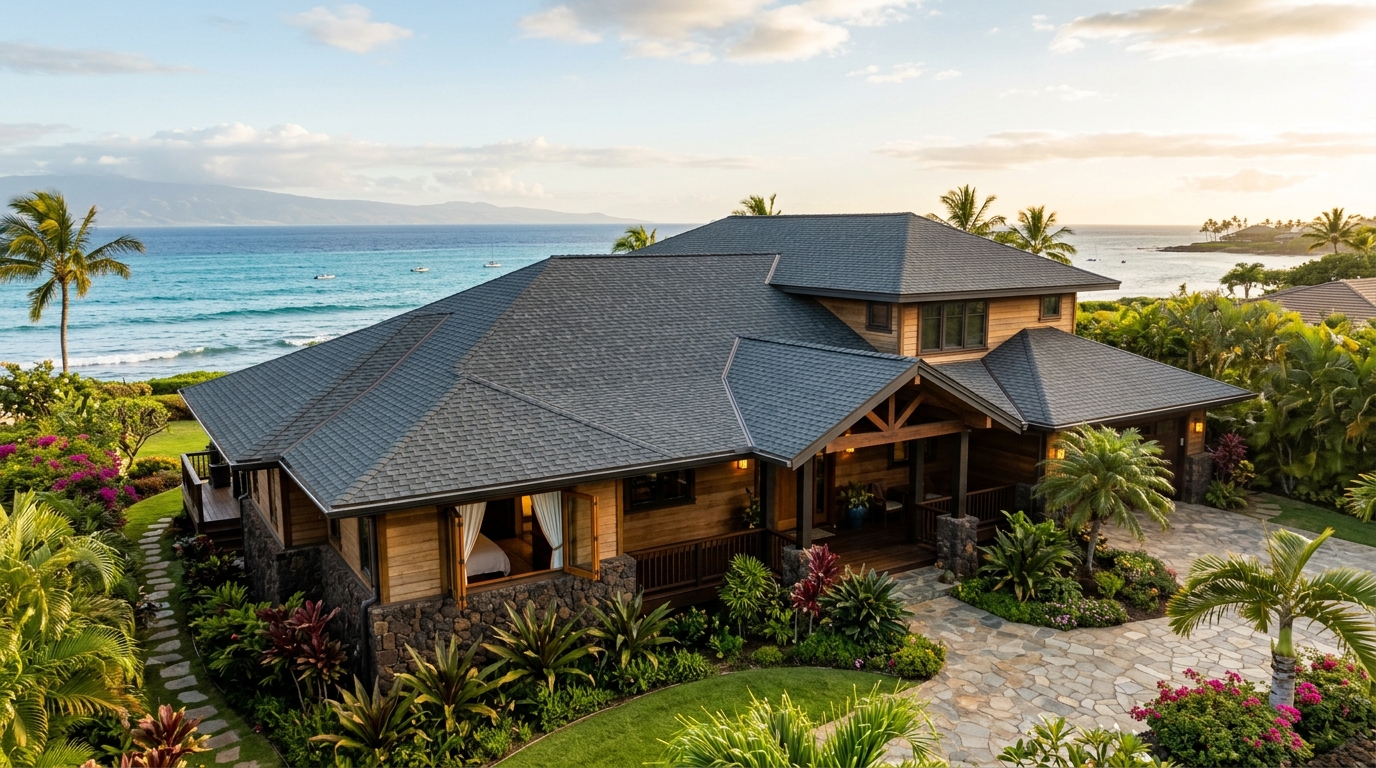
Finding a reliable roofing contractor in Kihei involves more than just getting a few quotes; it requires understanding the unique challenges of building on Maui. The combination of intense sun, corrosive salt air, and specific hurricane codes means a roof that works in California might fail here in just a few years. At Warrior Construction, we’ve spent over two decades installing roofs that are built for our island environment, not just for a mainland climate. This isn’t just about shingles and nails; it’s about a complete system designed to protect your home from the specific threats we face in South Maui, from seasonal downpours to the constant assault of UV radiation. A properly installed Kihei roof should last for decades, lower your energy bills, and give you peace of mind when the trade winds really start to pick up. Unfortunately, we see too many homeowners have to re-do a roof after only 10 years because the previous contractor cut corners on materials or didn’t understand how salt spray eats away at cheap fasteners and flashing. This guide will walk you through the critical factors every Kihei homeowner needs to consider, from accurate 2026 cost breakdowns and permitting timelines to selecting materials that will stand the test of time in our tropical paradise. We’ll cover the specific questions you should ask any potential contractor to ensure you’re getting a team that truly understands Maui construction. A new roof is a significant investment in your property, and our goal is to give you the insider knowledge to make that investment a smart one.
Why Kihei Homeowners Trust Warrior Construction for Roofing
When you’re looking for a roofing contractor on Maui, you’re not just hiring someone to nail down shingles. You’re entrusting them with the primary shield that protects your family and your biggest asset from the elements. At Warrior Construction, we take that responsibility seriously, which is why we approach every roofing project with the comprehensive oversight of a licensed general contractor (BC-34373), not just a specialty roofer. This distinction is crucial. For example, on a recent project in Wailea, just south of Kihei, our crew began the tear-off of an old asphalt shingle roof and discovered significant termite damage and rot in three of the main roof trusses. A simple C-42 specialty roofing contractor would have had to stop work, forcing the homeowner to find and hire a separate framing contractor to make the structural repairs. This could add weeks of delays and thousands in unexpected costs. Because we are a full-service general contractor, our own experienced framing crew was on-site the next day. We handled the structural repairs seamlessly, coordinating the engineering inspection and keeping the project on schedule and within a single, unified contract. That’s the advantage our clients have. We don’t just see the roof; we see the entire building envelope. Our team understands how the roof integrates with the walls, the ventilation, and the home’s overall structure. We’ve been building and remodeling homes across Hawaii for over 20 years, so we’ve seen firsthand how Kihei’s specific climate—the relentless sun, the salty air, the occasional Kona storm—can destroy a poorly planned roofing system. We build roofs designed for this environment, specifying materials like 316 stainless steel fasteners that won’t rust away in five years and high-performance underlayment that acts as a second line of defense against wind-driven rain. Our approach is holistic, ensuring that your new roof is not just a replacement but an upgrade to the entire home’s resilience and energy efficiency.
What Does a New Roof Cost in Kihei?
Let’s get straight to the numbers for 2026. A full roof replacement in Kihei costs significantly more than mainland estimates you might find online, primarily due to inter-island shipping, the higher cost of labor, and the necessity of using premium, salt-air-resistant materials. A simple `roof repair kihei` for a few blown-off shingles or leaking flashing might run between $900 and $2,800, but for a full replacement, you need to budget on a per-square-foot basis. Here’s a realistic breakdown for a standard 1,800 sq. ft. single-story home in Kihei:
* **Architectural Asphalt Shingles:** This is the most common entry-level option. Expect to pay between **$14 and $20 per square foot** installed. For an 1,800 sq. ft. roof, this translates to a total cost of **$25,200 to $36,000**. While affordable, we often advise clients in Kihei that the intense UV exposure can shorten the lifespan of even high-end asphalt shingles compared to other materials.
* **Standing Seam Metal Roofing (24-Gauge):** This is our most recommended option for `tropical roofing kihei`. It’s durable, reflective, and exceptionally resistant to high winds. The cost is higher, ranging from **$25 to $38 per square foot** installed. For that same 1,800 sq. ft. home, the project cost would be **$45,000 to $68,400**. The Kynar 500 finish is critical here; it’s a premium paint system that resists fading and chalking under the Hawaiian sun and provides superior protection against salt corrosion.
* **Concrete or Clay Tile:** Tile roofs offer a classic look and excellent durability. However, they are heavy and may require structural reinforcement. The cost is typically between **$22 and $35 per square foot**, putting an 1,800 sq. ft. roof in the **$39,600 to $63,000** range. Shipping the weight of tile to Maui is a significant cost factor.
What do these costs include? It’s more than just the material itself. A professional quote from Warrior Construction will always break down these key components:
1. **Materials:** The shingles, metal panels, or tiles. This also includes crucial but often overlooked items like high-temperature synthetic underlayment, new flashing, ridge caps, and 316-grade stainless steel fasteners.
2. **Labor:** The cost for our skilled, insured, and licensed crew to perform the tear-off, any necessary sheathing repairs, and the new installation.
3. **Shipping & Logistics:** All materials must be barged from Oahu to Kahului Harbor via Young Brothers, which adds 10-15% to the material cost compared to an Oahu project.
4. **Disposal:** The cost to haul away and properly dispose of the old roofing materials at the Maui County landfill.
5. **Permits:** The fees associated with filing for and obtaining the necessary building permit from the County of Maui.
When comparing bids, make sure you’re looking at an apples-to-apples comparison. A cheaper bid often means they’re using inferior underlayment or galvanized fasteners that will be streaks of rust down your walls in a few years.
How Long Does a Roof Replacement Take in Kihei?
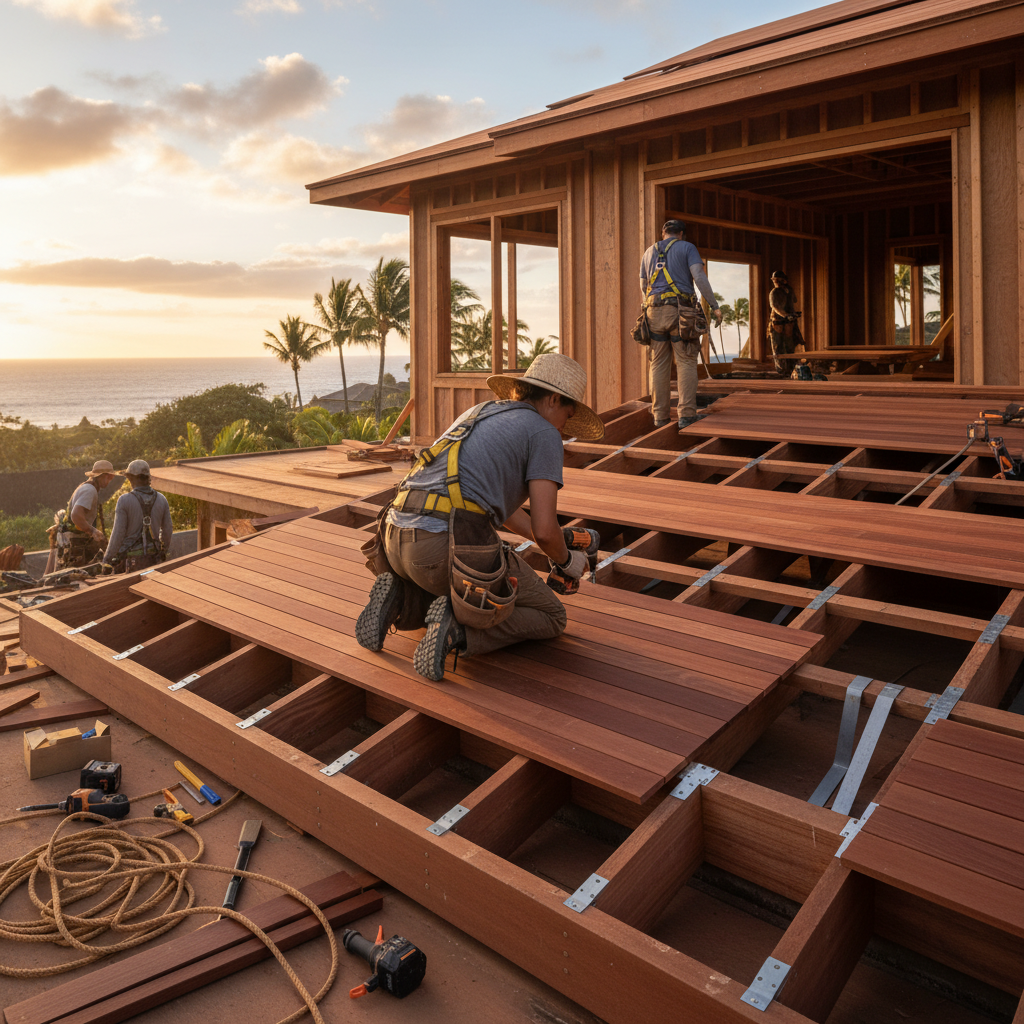
One of the biggest misconceptions homeowners have is the timeline for a `roof replacement kihei`. The actual on-site work is only a fraction of the total project duration. From the day you sign a contract to the final inspection, a typical Kihei roofing project in 2026 takes between **9 and 16 weeks**. It’s crucial to understand this upfront to set realistic expectations.
Here’s a phase-by-phase breakdown of a standard project timeline:
* **Phase 1: Planning & Permitting (4-8 weeks):** This is often the longest phase and happens entirely before we set foot on your property. After you sign the contract, our team drafts the necessary plans, specifies all materials to meet hurricane codes, and submits the full permit package to the Maui County Department of Public Works. The county’s review time can vary, but planning for at least a month is a safe bet. Rushing this step is a recipe for problems later.
* **Phase 2: Material Ordering & Shipping (3-6 weeks):** This phase often runs concurrently with permitting. As soon as the contract is signed, we order your specific roofing materials. For standing seam metal, custom colors or profiles need to be fabricated on Oahu and then scheduled for the barge to Kahului. This supply chain has built-in delays that mainland contractors don’t face. We have to be meticulous about ordering everything—down to the last box of screws—because a run to Home Depot for a forgotten item isn’t an option for specialty materials.
* **Phase 3: On-Site Work (2-4 weeks):** This is the part you’ll actually see. For a 2,000-square-foot home, the physical work breaks down like this:
* **Day 1-2:** Material delivery and site preparation. We protect your landscaping and set up safety lines.
* **Day 2-4:** Tear-off of the old roof. This is when we uncover any hidden issues like rotted sheathing or compromised trusses.
* **Day 4-7:** Deck repair. We replace any damaged plywood or planks. In Kihei, it’s common to find at least 10-15% of the sheathing needs replacement due to past leaks or heat degradation.
* **Day 7-10:** Installation of underlayment and new flashing. This is a critical step for waterproofing.
* **Day 10-15:** Installation of the primary roofing material (shingles, metal, tile).
* **Day 15-17:** Final details, ridge caps, cleanup, and site demobilization.
* **Phase 4: Inspections & Closeout (1 week):** Once our work is complete, we schedule the final inspection with the Maui County building inspector to officially close out the permit.
As you can see, the on-site portion is just a small piece of the puzzle. A contractor who promises to start next week is a major red flag—it likely means they aren’t pulling the required permits, leaving you liable.
What Permits Do You Need for Roofing in Kihei?
Anytime you are replacing the roofing material on your home in Kihei, you are legally required to obtain a building permit from the County of Maui. This is not optional. A permit ensures that the work is done to the current building code, which is especially important for wind and hurricane resistance. Some contractors might suggest skipping the permit to save time and money, but this is a dangerous path for a homeowner. Without a closed-out permit, you can run into major issues when you try to sell your home, get insurance, or if an uninspected roof fails during a storm. The Maui County Department of Public Works is the governing body here, and their process is distinct from Honolulu’s DPP[1]. As your licensed general contractor, our team at Warrior Construction handles the entire permitting process from start to finish. You won’t have to stand in line at the county building or try to figure out complex paperwork. Here’s what the process entails:
1. **Application Submission:** We complete and submit the official building permit application on your behalf.
2. **Plan Submittal:** We provide detailed drawings and plans. These aren’t just sketches; they are professional documents that show:
* The existing roof framing structure.
* The type of new roofing material and its specifications.
* The type and spacing of fasteners (e.g., #10 x 1.5” 316 stainless steel screws).
* Details on how the sheathing is nailed to the trusses (a critical detail for wind uplift resistance).
* Flashing details for valleys, ridges, and penetrations (vents, skylights).
* Verification of hurricane tie-downs and straps.
3. **Plan Review:** A plans examiner from Maui County reviews our submission to ensure it complies with the International Building Code and all local amendments. They check for structural integrity, waterproofing details, and wind-load calculations.
4. **Permit Issuance:** Once the plans are approved, the county issues the official permit, which must be posted at the job site.
5. **Inspections:** During the project, a county inspector may visit at key stages (like after the sheathing is repaired but before it’s covered) to verify the work matches the approved plans. A final inspection is required upon completion.
This process protects you, the homeowner. It provides third-party verification that your new roof is safe, durable, and built to code. When you hire us, the cost of this service and the county fees are clearly itemized in your contract, providing full transparency.
Kihei-Specific Considerations: Climate, Materials, Regulations
Roofing in Kihei isn’t like roofing anywhere else. The unique combination of environmental factors on Maui’s south shore dictates every choice we make, from the type of screw we use to the color of the metal panels. Ignoring these local realities is the most common reason for premature roof failure.
### The Impact of Salt-Air Corrosion
Kihei is a coastal community. A steady onshore breeze carries a fine mist of salt that settles on every surface, including your roof. This salt is incredibly corrosive. We’ve torn off 10-year-old roofs where the metal panels were still in decent shape, but the fasteners had completely rusted through, creating dozens of tiny leaks. That’s why we consider **316 marine-grade stainless steel fasteners** to be non-negotiable. They cost more than galvanized steel, but they are essential for longevity. The same goes for flashing and clips. Using anything less is simply asking for trouble and rust stains down your siding in a few years.
### Intense Sun and UV Degradation
Kihei gets some of the most intense, direct sun in all of Hawaii. This UV radiation is brutal on roofing materials. It bakes the oils out of asphalt shingles, making them brittle and prone to cracking. It can also cause lower-quality paint finishes on metal roofs to fade, chalk, and delaminate. This is why we recommend:
* **Lighter Colors:** A white, light gray, or beige standing seam metal roof can reflect a significant amount of solar radiation, keeping your attic and home cooler and reducing your air conditioning bills.
* **Kynar 500 / Hylar 5000 Finishes:** This is a premium PVDF (polyvinylidene fluoride) paint system applied to steel or aluminum panels. It contains a high percentage of resin, which provides exceptional resistance to UV degradation and color fading. It’s the gold standard for `tropical roofing kihei`.
### Hurricane Code and Wind Uplift
Since Hurricane Iniki in 1992, Hawaii has adopted some of the most stringent hurricane codes in the country. A Kihei roof must be designed as a complete system to resist wind uplift. This isn’t just about the roofing material itself but how the entire assembly is tied together and anchored to the house frame. Key requirements include:
* **Sheathing Nailing Pattern:** Plywood or OSB roof sheathing must be attached to the trusses with a specific nail size and spacing pattern (e.g., 8d ring-shank nails every 6 inches on the edges). This prevents the sheathing from being peeled off in high winds.
* **Hurricane Straps:** The roof trusses must be physically connected to the top plates of the walls with galvanized steel hurricane straps. We often find older homes that are inadequately strapped, and we make these crucial upgrades during a re-roofing project.
* **System Testing:** The specific roofing system we install (e.g., a Boral tile system or a specific brand of standing seam metal) must have passed rigorous ASTM testing for wind uplift resistance.
Choosing a contractor who understands these specific Kihei challenges is the single most important decision you’ll make for the longevity and safety of your roof.
How to Choose the Right Roofing Contractor in Kihei
Selecting the right team for your roofing project is critical. On Maui, a contractor’s reputation and local experience are everything. Here’s a checklist of what our team at Warrior Construction recommends you verify before signing any contract.
1. **Verify Their License is Active and Appropriate.** Don’t just take their word for it. Go to the Hawaii Department of Commerce and Consumer Affairs (DCCA) Professional & Vocational Licensing (PVL) website[2]. You can search by company name or license number. Our license, for instance, is **BC-34373**. Look for a ‘B’ General Contractor license, which means they can handle any structural repairs that might be uncovered. A ‘C-42’ is a specialty roofing license, which is good, but they may need to subcontract other work, causing delays.
2. **Confirm They Have a Physical Maui Address.** This is a big one. Some Oahu-based companies try to take on Maui jobs without having a real local presence. This can lead to major problems with project management, material logistics, and warranty service. Ask for their physical office or yard address in Maui. Our team has a dedicated presence on-island to manage our projects effectively.
3. **Ask for Proof of Insurance.** The contractor must provide you with a current Certificate of Insurance showing two things: General Liability and Worker’s Compensation. General Liability protects your property from damage, and Worker’s Comp protects you from being sued if one of their employees gets injured on your property. If they can’t produce this instantly, walk away.
4. **Request Maui-Specific References.** Ask for the names and numbers of their last three roofing clients *in Kihei or the surrounding area*. An Oahu project reference is not relevant. Call those references and ask about their experience. Were they on time? Was the communication clear? Was the cleanup thorough? How did they handle unexpected issues?
5. **Get a Detailed, Itemized Proposal.** A one-page quote with a single price is a red flag. A professional proposal should be several pages long and meticulously detail:
* The exact brand, model, and color of roofing material.
* The type of underlayment being used (e.g., GAF Tiger Paw™).
* The material for flashing and fasteners (e.g., 24-gauge Kynar-finished steel, 316 stainless steel screws).
* The scope of work, including tear-off, sheathing inspection/replacement allowance, and disposal.
* A clear payment schedule.
* Warranty information, both for materials and for the contractor’s workmanship.
Taking the time to vet your contractor this way will save you from immense headaches down the road. It ensures you’re working with a professional, stable, and qualified company.
Real Kihei Roofing Project Example
To put all this information into context, let’s walk through a recent project our team completed for a homeowner in Central Kihei. The client had a 2,200-square-foot, single-story home built in the late 1990s with its original asphalt shingle roof.
* **The Problem:** The existing roof was well past its lifespan. The shingles were brittle, shedding granules that clogged the gutters, and there were two active leaks—one around a plumbing vent and another in a valley. The homeowner was also concerned about their high electricity bills during the summer and wanted a more energy-efficient solution.
* **Our Assessment:** During our initial inspection, we confirmed the shingle failure and identified several areas of soft, spongy plywood sheathing underneath, indicating long-term moisture damage. We also noted that the existing ventilation was inadequate, trapping hot air in the attic space. The home was located just a few blocks from the ocean, making salt corrosion a primary concern.
* **The Warrior Construction Solution:** We proposed a comprehensive `roof replacement kihei` designed for long-term performance in the coastal environment. The scope included:
1. A full tear-off of the two existing layers of asphalt shingles.
2. Removal and replacement of approximately 30% of the half-inch plywood sheathing.
3. Installation of a high-temperature, self-adhering water and ice shield on the entire roof deck for superior secondary water resistance.
4. Installation of a new 24-gauge standing seam metal roof in a light tan color with a Kynar 500 finish to maximize solar reflectivity.
5. All new flashing, trim, and fasteners specified as 316 marine-grade stainless steel to prevent rust.
6. The addition of a new solar-powered attic fan and continuous ridge vent to dramatically improve ventilation.
* **The Numbers:**
* **Total Project Cost:** $79,200 (approx. $36 per square foot).
* **Timeline:** 14 weeks from contract signing to final inspection. This included 6 weeks for permit approval from Maui County, 5 weeks for the custom-colored metal panels to be fabricated and shipped, and 3 weeks of on-site work.
* **The Outcome:** The homeowner now has a beautiful, durable roof that is watertight and engineered to withstand hurricane-force winds. They reported an immediate 20% reduction in their summer cooling costs due to the reflective metal and improved ventilation. Most importantly, they have a lifetime roofing system backed by our workmanship warranty, providing them with invaluable peace of mind.
What this means for Hawaii homeowners
A new roof in Kihei is a major undertaking, but it’s also one of the most important investments you can make in your home. The key is to approach it with a clear understanding of our unique island challenges. Don’t rely on mainland advice or cost estimates; the rules are different here.
Here are the most critical takeaways for any Maui homeowner considering a roofing project:
* **Budget for Quality:** Your roof is not the place to cut corners. The upfront cost of standing seam metal and stainless steel fasteners is higher, but it will save you tens of thousands of dollars over the life of your home compared to replacing a cheaper roof twice.
* **Plan for the Timeline:** Understand that from the moment you sign a contract, it will likely be 2-4 months before your project is complete. This is normal for Maui due to permitting and shipping. Be wary of any contractor who promises a faster turnaround.
* **Hire a Licensed General Contractor:** A roofing project often uncovers other issues like rot, termite damage, or structural problems. Hiring a GC like Warrior Construction (BC-34373) ensures you have one team that can legally and professionally handle any problem that arises, preventing costly delays.
* **Focus on the System, Not Just the Shingles:** A great roof is more than just what you see on top. It’s a complete system of sheathing, underlayment, ventilation, flashing, and fasteners all working together. Make sure your contractor explains their approach to the entire system.
By arming yourself with this knowledge, you can confidently navigate the process and choose a partner who will build a roof that truly protects your Kihei home for decades to come.
Frequently Asked Questions About Roofing in Kihei
Can I just repair my roof instead of a full replacement?
Sometimes, a repair is a perfectly viable option. If your roof is less than 15 years old and the damage is isolated to a small area—like a few shingles blown off or a leak around a vent flashing—a targeted `roof repair kihei` can be effective. We typically see these repairs costing between $800 and $2,800. However, if the roof is nearing the end of its warrantied life, has widespread granule loss, or multiple leak points, a full replacement is almost always the more cost-effective long-term solution.
Is a metal roof too noisy in the rain?
This is a common myth based on old experiences with metal roofs on barns or sheds that were installed directly on open framing. Modern residential metal roofs are installed over a solid plywood deck and a layer of sound-dampening underlayment. The sound of rain on a properly installed standing seam metal roof is more of a gentle, muffled pitter-patter, often quieter than the sound on an old asphalt shingle roof. Our clients are consistently surprised at how quiet their new metal roofs are.
How much more does roofing cost on Maui compared to Oahu?
You can generally expect a roofing project on Maui to cost 10-20% more than the exact same project on Oahu. The primary driver of this difference is logistics. All materials—from the metal panels and plywood down to the screws and sealant—must be shipped from Honolulu to Kahului Harbor via barge. These shipping costs, along with the added expense of mobilizing and housing skilled labor on-island, contribute to the higher price tag.
What is the best type of roof for handling the Kihei sun and salt?
For the specific climate in Kihei, we strongly recommend a 24-gauge standing seam metal roof with a Kynar 500 (PVDF) paint finish. This system offers the best combination of durability, corrosion resistance, energy efficiency, and wind uplift performance. The Kynar finish is critical as it provides superior resistance to fading and chalking from UV exposure, while the inherent nature of metal is impervious to the salt air that can degrade other materials.
What happens if you find termite damage when you tear off the old roof?
This is a very common occurrence in Hawaii and a key reason to hire a licensed General Contractor (like Warrior Construction, BC-34373) instead of just a specialty roofer. If we uncover termite damage in the rafters, trusses, or beams, we are licensed and qualified to perform the structural repairs ourselves. We can replace the damaged wood, ensure everything is structurally sound, and keep the project moving without the delay and expense of you having to hire a separate framing contractor.
Does installing solar panels affect my roofing project?
Yes, absolutely. The best time to install solar panels is right after a new roof has been put on. If you have an existing solar system, it must be detached and reset by a licensed solar contractor. We coordinate this process, scheduling the solar company to remove the panels right before we begin the tear-off and to reinstall them after the new roof and final inspection are complete. Trying to re-roof around existing panels is not feasible and voids most roofing warranties.
Do I need to be home during the on-site roofing work?
No, you do not need to be home for the duration of the on-site work. Our project manager will be on-site daily to supervise the crew and will provide you with regular progress updates via phone, text, and email, including photos. We do ask for you to be available by phone in case any immediate decisions are needed, especially during the tear-off phase when unforeseen conditions might be discovered. We will need access to an exterior power outlet and water source.
Ready to Protect Your Kihei Home with a Lasting Roof?
A new roof is one of the most critical investments for protecting your property and enhancing its value. Choosing the right materials and, more importantly, the right contractor can mean the difference between a 15-year problem and a 50-year solution. At Warrior Construction, we bring our decades of experience as a licensed Hawaii general contractor to every roofing project, ensuring it’s done right, from the structural supports to the final ridge cap. If you’re ready to discuss a durable, energy-efficient roofing solution for your Kihei home, our team is here to provide a detailed, transparent, and pressure-free estimate. We understand the nuances of Maui construction and are committed to building roofs that last.
Explore our approach to comprehensive residential construction and see how a general contractor’s perspective makes all the difference. Or, if you’re ready to get started, contact us today for a free, detailed estimate.