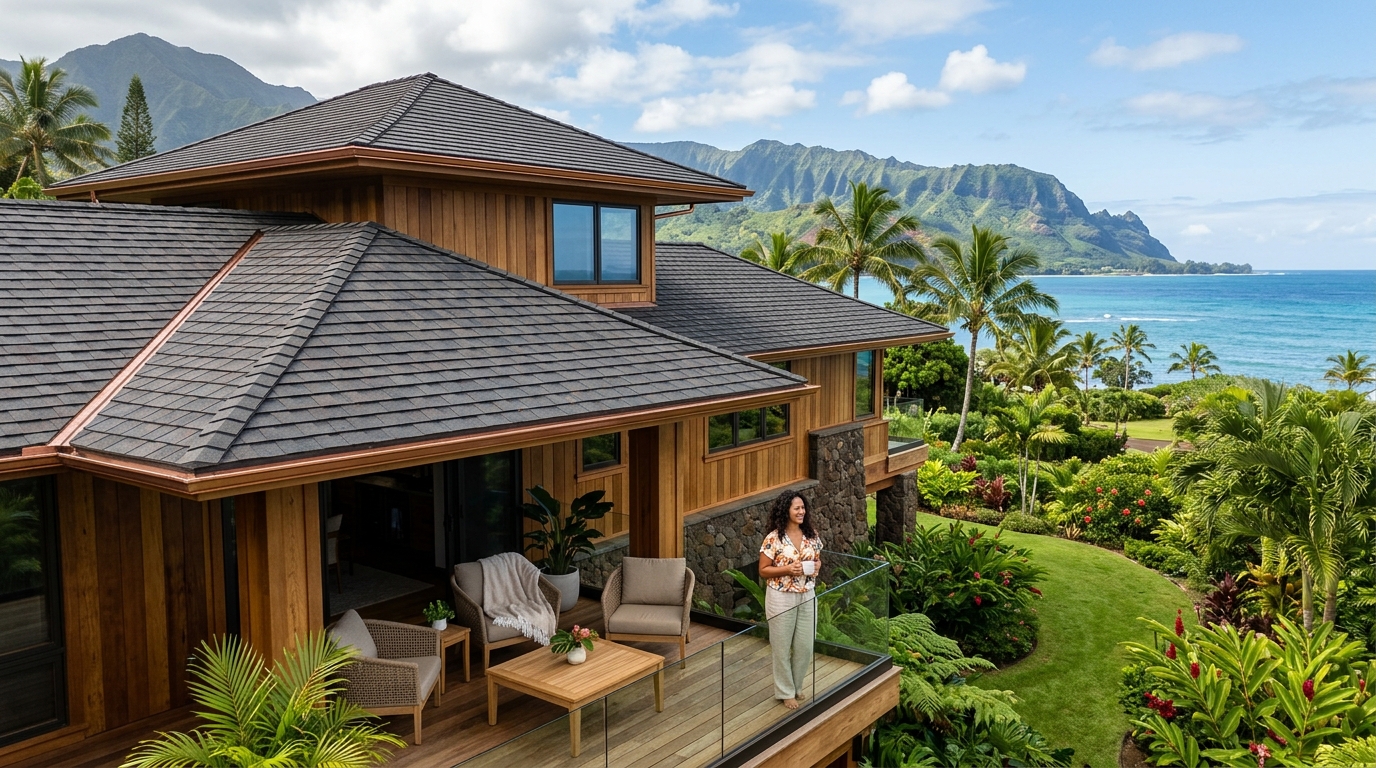
Finding the right roofing contractor in Lihue is about protecting your biggest investment from Kaua’i’s unique and demanding climate. It’s not just about stopping leaks; it’s about installing a system that can withstand torrential downpours, intense UV radiation, corrosive salt air, and hurricane-force winds. The right contractor understands that a roof in Poipu has different needs than one in Hanalei. At Warrior Construction, our team has spent over two decades navigating these specific challenges on the Garden Isle. We know the difference between a roof that simply looks good and one that’s engineered to last for decades against everything the Pacific can throw at it.
This isn’t just another guide. We’re going to pull back the curtain on the real costs, timelines, and permitting headaches involved in a Lihue roofing project in 2026. You’ll learn what materials truly stand up to our island environment, how to spot a contractor who cuts corners, and what the legacy of Hurricane Iniki means for your roof today. We’ll walk through the entire process, from getting a realistic quote to passing your final inspection with the county. Consider this the same advice we’d give a family member over coffee before they undertake a major roof replacement lihue project.
Why Lihue Homeowners Trust Warrior Construction for Roofing Contractor
When you hire a general contractor for a roofing project, you’re not just buying materials and labor. You’re buying expertise, peace of mind, and local knowledge. Our team at Warrior Construction (License BC-34373) has built a reputation on Kaua’i by understanding that a roof here is the home’s first line of defense. We’ve seen firsthand what happens when mainland techniques are applied without considering our island realities—fasteners rusting out in five years in Kapa’a, underlayment failing under the Hanalei sun, and shingles peeling off in high winds because the contractor didn’t follow hurricane code nailing patterns.
Our approach is different because we are a Hawaii-based company. We live here. We understand the logistics of getting high-quality materials to Lihue without massive delays or cost overruns. We have long-standing relationships with local suppliers, which means we can often source materials faster and more reliably than an off-island company. For example, we know which specific standing seam metal panels have the best Kynar coating to resist fading from the intense UV exposure and which stainless steel fasteners are non-negotiable for any home within a mile of the coast. This isn’t something you learn from a manual; it comes from years of experience on job sites from Waimea to Princeville.
Furthermore, as a licensed general contractor, we manage the entire process. This means we handle the tricky Kaua’i County permitting, coordinate with our structural engineers if we find any compromised trusses or sheathing, and ensure every phase of the project is meticulously documented and inspected. We recently worked on a home in the Wailua Homesteads where the initial project was a simple roof repair lihue. But during our inspection, we discovered significant rot in the roof framing that two other bidders had missed. By catching it early, we were able to perform the necessary structural repairs under the same permit, saving the homeowner a much bigger, more expensive problem down the line. That comprehensive oversight is the value we bring to every job.
What Does Roofing Contractor Cost in Lihue?
Let’s get straight to the point, because nobody likes vague answers. For a standard 2,000-square-foot home in Lihue in 2026, a complete roof replacement will typically cost between $38,000 and $90,000. That’s a big range, and the final price tag is determined by the material you choose, the complexity of your roof, and the condition of the underlying structure. The cost of shipping materials to Kaua’i, what we call the ‘barge tax,’ is a significant factor that mainland homeowners don’t face.
Here’s a breakdown of what you can expect to pay per square foot for different materials, fully installed:
* **Architectural Asphalt Shingles:** $19 – $26 per sq. ft. This is a popular and cost-effective option, but it’s critical to choose a shingle with a high wind rating (130 mph minimum) and algae-resistant properties.
* **Standing Seam Metal (24-Gauge):** $35 – $48 per sq. ft. This is our top recommendation for most Kaua’i homes. It offers superior longevity, hurricane resistance, and energy efficiency by reflecting solar heat. The cost is higher upfront, but the lifespan is often double that of shingles.
* **Concrete or Clay Tile:** $30 – $55 per sq. ft. Tile offers a classic look and great durability but is extremely heavy. We often need to bring in a structural engineer to confirm the existing roof framing can support the additional weight, which adds to the overall project cost.
* **Wood Shake/Shingle:** $28 – $40 per sq. ft. While beautiful, wood requires significant maintenance in our humid climate and is often not the most practical choice due to concerns about rot, insects, and fire resistance.
Beyond the material itself, several other factors will influence your final quote:
* **Tear-Off and Disposal:** The cost to remove and dispose of one or more layers of old roofing material.
* **Roof Complexity:** A simple gable roof is far less expensive than a roof with multiple valleys, dormers, and steep pitches.
* **Underlying Damage:** If we pull off the old roof and find rotten sheathing or termite-damaged trusses, those repairs are an additional cost. We always budget a small contingency for this, especially on older homes.
* **Underlayment and Flashing:** We use high-temperature, self-adhering ice-and-water shield in all valleys and penetrations, which costs more than standard felt paper but is essential for a watertight tropical roofing lihue system.
* **Shipping and Logistics:** All materials must be barged to Nawiliwili Harbor, and that cost is built into the final price.
When you get a bid, make sure it’s itemized so you can see exactly where your money is going. A single lump-sum price is a red flag.
How Long Does a Roofing Contractor Take in Lihue?
For a full roof replacement on a typical single-family home in Lihue, the entire process from signing the contract to the final inspection usually takes between **5 and 9 weeks in 2026**. The biggest variable isn’t the on-site work; it’s the upfront administrative process. The actual hands-on construction, the part where you see our crew on your roof, is often the fastest part of the project.
Here’s a realistic timeline for a 2,200 sq. ft. standing seam metal roof project:
1. **Planning and Material Selection (1 week):** This is where we finalize the contract, choose your exact material and color, and our team prepares the detailed plans required for the permit application.
2. **Permit Application and Approval (3-6 weeks):** This is the biggest wildcard. The Kaua’i County Department of Public Works, Building Division, processes permits in the order they’re received. While we do everything to ensure our application is perfect to avoid delays, the review period is out of our hands. This is often the longest waiting period for the homeowner.
3. **Material Ordering and Delivery (1-2 weeks):** Once the permit is approved, we place the order. Materials are shipped from the mainland or Honolulu. We try to time this so they arrive right as we’re ready to start work, minimizing on-site storage.
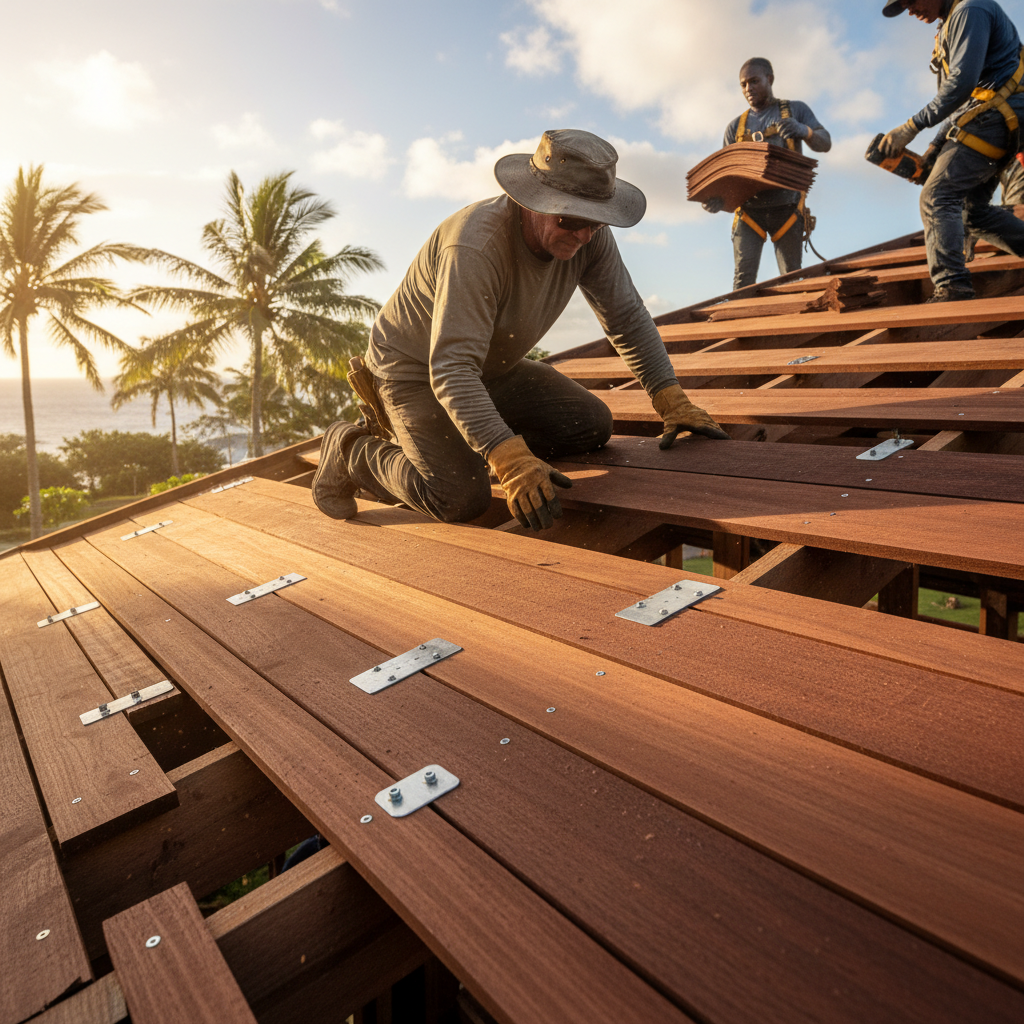
4. **On-Site Work (7-12 days):** This phase moves quickly.
* **Day 1:** Material delivery and site preparation.
* **Days 2-3:** Tear-off of the old roof and inspection of the underlying sheathing.
* **Days 4-5:** Any necessary repairs to sheathing or framing.
* **Days 6-9:** Installation of underlayment, flashing, and the new roofing material.
* **Day 10-12:** Final detailing, cleanup, and our internal quality control inspection.
5. **County Inspections and Finalization (1-3 days):** We schedule the required inspections with the county. Once we pass the final, the project is officially complete.
I always tell clients on Kaua’i, patience is key. On a recent project in Koloa, the permit took almost seven weeks, but once we had it in hand, the entire roof was installed and finished in nine working days. The upfront wait can be frustrating, but rushing the permitting or material ordering process is how mistakes happen.
What Permits Do You Need for Roofing Contractor in Lihue?
In Lihue and throughout Kaua’i County, you absolutely need a building permit for almost any significant roofing work. The rule of thumb is that if you are replacing more than one square of roofing (a 10-foot by 10-foot area, or 100 sq. ft.) or replacing any of the underlying wood sheathing, a permit is mandatory. A simple roof repair lihue on a few shingles might not require one, but a full roof replacement always does.
As your licensed general contractor, Warrior Construction handles the entire permitting process. This is a critical service. The application requires detailed plans showing the existing structure, the proposed new roofing assembly, and specifics on how it will be attached to meet current hurricane code standards. It’s a complex package, and any errors can send you to the back of the line, adding weeks or even months to your project timeline.
Here’s what the process involves:
1. **Plan Preparation:** Our team drafts the necessary architectural drawings and structural details for the new roof system.
2. **Application Submission:** We submit the full package to the Kaua’i County Department of Public Works, Building Division. This is the county equivalent to the Honolulu DPP[1].
3. **Plan Review:** A county plan reviewer examines the submission to ensure it complies with all building codes, including wind-load and fire-rating requirements.
4. **Permit Issuance:** Once approved, the permit is issued, and we can legally begin work.
One of the most important things for a homeowner to know is that the person who pulls the permit is legally responsible for the work. If a homeowner pulls the permit themselves to save money, they become the de facto general contractor in the eyes of the law, assuming all liability. This is why you should always insist that your licensed contractor pulls the permit under their own license. You can and should verify any contractor’s license status on the Hawaii Department of Commerce and Consumer Affairs Professional & Vocational Licensing (PVL) website[2]. Our license, for example, is BC-34373.
Lihue-Specific Considerations: Climate, Materials, Regulations
Roofing in Lihue isn’t like roofing anywhere else. You’re dealing with a unique microclimate on an island in the middle of the Pacific. A successful project requires a deep understanding of these local factors.
### Climate and Material Selection
Kaua’i’s weather dictates every choice we make. The combination of intense, year-round sun, high humidity, and frequent, heavy rainfall creates a brutal environment for building materials.
* **UV Radiation:** The sun here will chalk, fade, and degrade cheap materials in a few years. That’s why we recommend metal roofing with a high-quality Kynar 500 paint finish or light-colored architectural shingles that are rated for high UV environments.
* **Heavy Rain:** It’s not a matter of if it will rain, but when and how much. A robust, high-temperature ice-and-water shield underlayment is non-negotiable. It’s a secondary layer of protection that is your last defense if water ever gets past the primary roofing material.
* **Salt-Air Corrosion:** If your home is anywhere near the coast—from Nawiliwili to Kapa’a—salt spray is a constant enemy. We use only stainless steel or hot-dipped galvanized fasteners (G-185 minimum). Standard electro-galvanized nails, which a less experienced contractor might use, can rust completely through in under a decade, causing the entire roof to fail in a high-wind event.
### Hurricane Code and Regulations
The ghost of Hurricane Iniki looms large over all construction on Kaua’i, and for good reason. The building codes here are some of the strictest in the nation. For roofing, this means:
* **Enhanced Nailing Patterns:** Shingles and sheathing require a specific number of nails or staples, spaced much closer together than in other parts of the country, especially in the corners and edges of the roof which experience the highest uplift forces.
* **Hurricane Straps and Clips:** The roof structure must be physically tied to the wall framing with steel connectors. While not always part of a re-roofing job, we inspect these connections and recommend upgrades if the existing ones are corroded or insufficient.
* **Wind-Rated Materials:** Every component, from the shingles to the ridge vents, must have a rating that proves it can withstand a minimum of 130 mph winds.
Navigating local regulations is also key. Rules can change, much like we saw with Bill 7 on Oahu impacting ADU construction. It’s vital to have a contractor who is up-to-date on Kaua’i-specific requirements, not just general Hawaii building codes. We pride ourselves on maintaining a strong working relationship with the local building department to ensure our projects are always compliant.
How to Choose the Right Roofing Contractor Contractor in Lihue
Selecting the right team for your roofing project is the single most important decision you’ll make. A great contractor with good materials will give you a roof that lasts 30 years; a bad contractor with the best materials might leave you with leaks in 3 years. Here’s our five-step process for vetting a roofing contractor in Lihue.
1. **Verify Their License and Insurance.** This is the absolute first step. Don’t just take their word for it. Go to the state’s PVL website and look up their license number. Check that it’s active and that they have the right classification (a C-42 specialty license for roofing, or a B license for general contracting, like ours). Ask for a copy of their general liability and worker’s compensation insurance certificates. If a worker gets hurt on your property and the contractor isn’t insured, you could be held liable.
2. **Confirm They Have a Physical Kaua’i Presence.** This is huge. A contractor with a P.O. box and a cell phone might be here today and gone tomorrow. Look for a company with a local office or workshop and local employees. This shows they are invested in the community and will be around to stand by their work. Ask them, “Where is your office on Kaua’i?”
3. **Ask for Local References and Project Addresses.** Don’t just accept a list of names. Ask for the addresses of 3-4 recent projects they completed in or near Lihue. Take a drive by and look at their work. Does it look clean and professional? If possible, ask the homeowners if they were happy with the process and the result. A reputable contractor will be proud to share their past work.
4. **Demand a Detailed, Itemized Proposal.** A quote that just says “New Roof – $55,000” is a major red flag. A professional proposal should be several pages long and break down every aspect of the job: the exact type and brand of materials, the scope of work (including tear-off and disposal), the cost of labor, permit fees, and warranty information. This protects you by clearly defining what is and isn’t included.
5. **Evaluate Their Communication.** During the bidding process, how do they communicate? Do they answer your calls? Do they respond to emails promptly? Do they take the time to explain technical details in a way you can understand? If they are poor communicators before they have your money, it will only get worse once the project starts.
Real Lihue Roofing Contractor Project Example
To make this all concrete, let’s walk through a project we recently completed in Lihue, which showcases many of the challenges and solutions we’ve discussed.
* **Client:** The Kimura family, in a 1980s home in the Puhi area.
* **The Problem:** Their 30-year-old asphalt shingle roof had reached the end of its life. It had several active leaks, visible granule loss, and the shingles were becoming brittle. They were also concerned about the upcoming 2026 hurricane season and wanted to upgrade to a more resilient system.
* **Our Initial Assessment:** During our inspection, we found what we expected on the surface. But using a moisture meter, we also identified several areas of saturated plywood sheathing beneath the shingles. More concerning, we found visible termite damage and rot along the fascia boards and rafter tails on the windward side of the house, a common issue due to wind-driven rain.
* **The Proposed Solution:** We recommended a full `roof replacement lihue`. Our proposal wasn’t the cheapest, but it was the most comprehensive. It included:
1. A complete tear-off of the old shingle roof.
2. Removal and replacement of all damaged plywood sheathing (we budgeted for 15 sheets).
3. Replacement of approximately 150 linear feet of termite-damaged fascia and rafter tails.
4. Installation of a full synthetic underlayment with a high-temperature peel-and-stick membrane in all valleys and around all penetrations.
5. Installation of a 24-gauge standing seam metal roof from a reputable manufacturer with a 30-year paint finish warranty, using stainless steel clips and fasteners.
6. New, properly vented ridge caps to improve attic ventilation and reduce heat buildup.
* **The Numbers:**
* **Roof Size:** 2,450 sq. ft.
* **Total Project Cost:** $95,550 (This included the structural wood replacement).
* **Timeline:** 7.5 weeks from contract signing to final inspection. The permit took 5 weeks to get, and our on-site work took 11 days.
* **The Outcome:** The Kimura family now has a safe, watertight, and energy-efficient roof that is fully compliant with modern hurricane codes. Their home is not only protected but also more comfortable, as the new vented metal roof significantly reduced attic temperatures. They have peace of mind knowing the hidden termite damage was properly addressed, not just covered up.
What this means for Hawaii homeowners
For homeowners in Lihue and across Kaua’i, this information boils down to a few key principles. Your roof is arguably the most critical component of your home, and approaching its replacement or repair requires a specific, island-focused mindset. Cutting corners or choosing a contractor based solely on the lowest price is a recipe for disaster in our demanding climate.
- Prioritize Hurricane Resistance: Every decision should be viewed through the lens of hurricane preparedness. This means insisting on high-wind-rated materials, verifying correct nailing patterns, and ensuring the roof system is properly tied to the structure. Don’t compromise on code compliance.
- Invest in Salt-Air Defense: If you live anywhere near the ocean, your roofing system is in a constant battle with corrosion. Investing in stainless steel fasteners and high-grade metal flashing isn’t an upgrade; it’s a necessity for ensuring the longevity of your roof.
- Vet Your Contractor Rigorously: Your choice of contractor is more important than your choice of material. Verify their license, check their local references, and demand a detailed, itemized contract. A professional contractor who understands Kaua’i’s specific challenges is your best insurance policy against future problems.
- Plan for the Permit Process: Understand that the permitting timeline is a significant part of your project schedule. Be patient and work with a contractor who has a good working relationship with the Kaua’i County Building Division. A well-prepared application is the fastest application.
By focusing on these areas, you shift from simply buying a new roof to making a long-term investment in the safety, security, and value of your home.
Frequently Asked Questions About Roofing Contractor in Lihue
How much does a simple roof repair in Lihue cost?
A minor roof repair in Lihue, like replacing a few blown-off shingles or sealing a leaking vent flashing, typically costs between $650 and $1,500 in 2026. The cost depends on the accessibility of the repair area and the type of roofing material. If the repair requires replacing a section of damaged plywood sheathing underneath, the cost can increase to $2,000 or more. It’s always best to address small leaks immediately to prevent more extensive and expensive water damage.
Is a metal roof too noisy during heavy Kaua’i rain?
This is a common myth. A modern standing seam metal roof, when installed correctly over solid sheathing with a quality underlayment and proper attic insulation, is not significantly louder than a shingle roof. The noise is dampened by the layers underneath. The sound is more of a gentle ‘pitter-patter’ than the loud ‘pinging’ many people imagine from an old tin roof on an open-frame shed.
Can I just install a new roof over my old shingles?
While some building codes allow for a second layer of shingles to be installed over an existing single layer, we strongly advise against it in Hawaii. Covering the old roof prevents us from inspecting the underlying wood sheathing for rot, water damage, or termite activity—problems that are very common here. A full tear-off is the only way to ensure the foundation of your new roof is solid and that you’re not just hiding a more serious issue.
What is the best color for a roof in Lihue for energy efficiency?
Lighter colors are generally better for energy efficiency as they reflect more solar radiation, keeping your attic and home cooler. Finishes like off-white, beige, light gray, or light bronze are excellent choices for ‘cool roofing.’ Many modern metal roofing panels, even in medium colors, have special reflective pigments that meet ENERGY STAR requirements for solar reflectance, providing cooling benefits without requiring a stark white roof.
How long should a new roof last on Kaua’i?
The lifespan depends entirely on the material and quality of installation. A properly installed architectural asphalt shingle roof can last 20-25 years. A 24-gauge standing seam metal roof, which we highly recommend for its durability and resistance to our climate, can easily last 40-50 years or more. These lifespans assume you’re using the correct, corrosion-resistant fasteners and underlayment for our environment.
Do I need a general contractor or can I just hire a roofing subcontractor?
While a dedicated roofing subcontractor (with a C-42 license) can do the job, hiring a general contractor (with a B license) like Warrior Construction offers comprehensive protection. If any issues are discovered beyond the roofing material itself—such as rotted framing, termite damage, or electrical conduits that need moving—a GC is licensed to manage and perform all those repairs. A roofer alone would have to stop work and have you hire other contractors, causing significant delays.
What does ‘tropical roofing lihue’ actually mean?
‘Tropical roofing’ refers to a complete roofing system designed specifically for a hot, humid, and often high-wind environment like Lihue. It’s not just one material. It’s a combination of features: high-UV resistant materials (like Kynar-coated metal), robust waterproofing underlayment, corrosion-resistant (stainless steel) fasteners, and proper attic ventilation to combat heat and moisture buildup. It’s a holistic approach to building a roof that can survive and thrive in our island climate.
Choosing a roofing contractor is a major decision, but it doesn’t have to be an overwhelming one. By focusing on local expertise, quality materials, and a transparent process, you can ensure your home is protected for decades to come.
If you’re considering a roof replacement or repair in Lihue or anywhere on Kaua’i, our team at Warrior Construction is ready to help. We provide detailed, no-obligation estimates and can walk you through the best options for your specific home and budget. We understand the unique demands of building on the Garden Isle and are committed to doing the job right.
Protect your home with a roof built for Kaua’i’s climate. Learn more about our approach to hurricane-resistant construction and schedule your free, detailed estimate today.