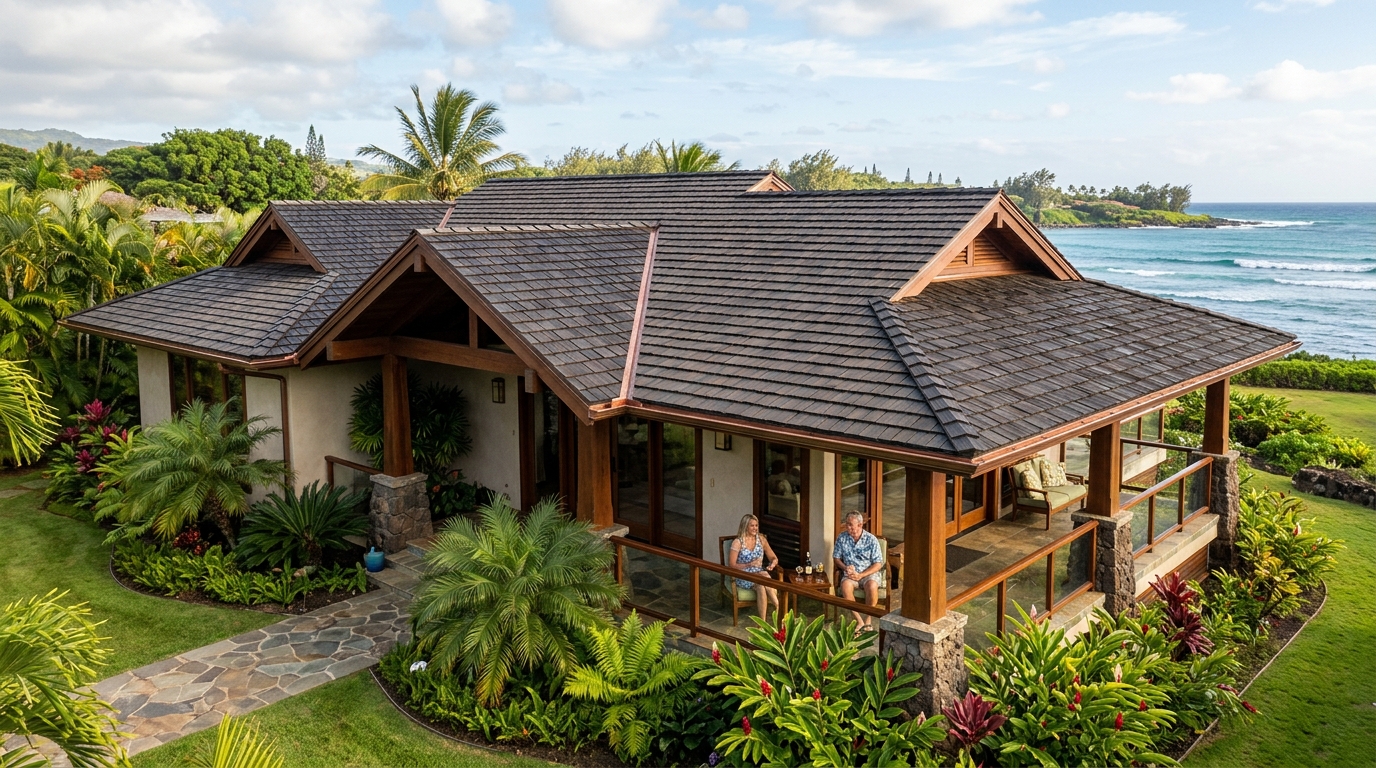
Choosing the right roofing contractor in Po’ipu is one of the most critical decisions you’ll make for your Kaua’i home. It’s not just about stopping leaks; it’s about protecting your entire investment from intense sun, corrosive salt air, and hurricane-force winds. The right roof, installed by an expert team like ours at Warrior Construction (License BC-34373), ensures your home is safe, compliant with current codes, and energy-efficient for decades. The wrong choice can lead to endless repairs, insurance headaches, and even structural damage down the line. Over our 20+ years in Hawaii construction, we’ve seen it all, from roofs installed with the wrong fasteners that rust in six months to projects that stall for months due to poor logistics planning for materials arriving on Kaua’i.
This isn’t like roofing on the mainland. Here on the Garden Isle, especially on the sunny south shore, your roof is your home’s first line of defense against a unique set of environmental challenges. We’re not just nailing shingles; we’re engineering a complete system designed for tropical performance. This guide cuts through the noise and gives you the insider perspective from a licensed general contractor who works here every day. You’ll learn the real costs for Po’ipu in 2026, how long a project actually takes (including permitting and shipping), what materials stand up to the salt and sun, and the critical questions to ask before you hire anyone. We’ll give you the knowledge to make an informed decision and secure your home’s future.
Why Po’ipu Homeowners Trust Warrior Construction for Roofing Contractor
When you’re looking for a roofing contractor, you’re really looking for a partner to protect your home. In Po’ipu, that means finding a team that understands the difference between a standard job and a Kaua’i-proof installation. At Warrior Construction, we bring a general contractor’s perspective to every roofing project. This is a crucial distinction. A typical roofer can replace shingles, but what happens when they tear off the old roof and discover the plywood decking is soft from years of slow leaks, or that termites have compromised the ends of your roof trusses? A roofer has to stop work and tell you to find another contractor. Our team doesn’t have that problem. As a full-service general contractor (BC-34373), we have the in-house expertise to handle structural repairs, framing, and any other issues that come up, keeping your project on track and under one contract.
Furthermore, our experience is rooted in Hawaii’s specific building challenges. We’ve managed complex projects from the North Shore of O’ahu to the resort communities of Kaua’i. We understand the logistics of getting materials to the island efficiently and the nuances of working with the Kaua’i County permitting office. For example, on a recent project near Po’ipu Beach, we coordinated the barge shipment of custom-colored standing seam metal panels weeks in advance to ensure they arrived exactly when our crew was ready, avoiding costly delays. This level of project management is something many smaller outfits simply can’t provide. We know that Po’ipu homes aren’t just structures; they are significant investments, often with specific community association rules regarding materials and aesthetics. Our team is adept at navigating these requirements, ensuring your new roof is not only durable and code-compliant but also a beautiful addition to your home and neighborhood. We believe in building relationships as strong as our roofs, which is why homeowners across the island trust us with their most important asset.
What Does Roofing Contractor Cost in Po’ipu?
Let’s get straight to the numbers for 2026. The cost of a full roof replacement in Po’ipu is higher than on the mainland, and it’s driven by three main factors: materials rated for our climate, inter-island shipping logistics, and skilled labor costs. A simple quote that seems too good to be true probably is—it’s likely missing key components like stainless steel fasteners or high-performance underlayment. We provide detailed, transparent estimates so you know exactly what you’re paying for.
Here’s a realistic breakdown of installed costs per square foot for a typical single-story home in the Po’ipu area:
- Architectural Asphalt Shingles: $12 – $18 per square foot. While being the most affordable option, we often advise clients to consider the long-term performance in Po’ipu’s intense sun, which can shorten their lifespan compared to other materials.
- Standing Seam Metal (24-gauge with Kynar 500 finish): $25 – $35 per square foot. This is our most recommended option for Po’ipu. It offers exceptional hurricane resistance, reflects solar heat, and the Kynar 500 finish is critical for resisting chalking and fading from UV exposure and salt spray.
- Concrete or Clay Tile: $30 – $45 per square foot. Tile offers a classic, upscale look popular in many Po’ipu resort communities. However, it’s heavy, requiring your home’s structure to be engineered to support the load. It’s also more brittle and can crack if walked on improperly.
- Presidential or Luxury Shingles: $20 – $28 per square foot. These are thicker, heavier asphalt-based shingles that mimic the look of wood shake. They offer a great aesthetic and better durability than standard architectural shingles.
To put that in perspective, let’s look at a hypothetical 2,500 square foot roof on a home in Koloa:
| Roofing Material | Estimated Cost Range (2026) | Key Considerations for Po’ipu |
|---|---|---|
| Architectural Shingles | $30,000 – $45,000 | Good budget option, shorter lifespan in high UV. |
| Standing Seam Metal | $62,500 – $87,500 | Best long-term value. Excellent hurricane and salt-air resistance. Lowers cooling costs. |
| Concrete Tile | $75,000 – $112,500 | Requires structural assessment for weight. Great aesthetic, very durable. |
These prices include everything: tear-off of the old roof, disposal, new underlayment (we use high-temp peel-and-stick), all flashing, fasteners, and labor. The final price can be affected by factors like roof pitch (steeper roofs cost more), the number of skylights or vents, and the extent of any necessary plywood or truss repairs. When you get an estimate from us, we’ll walk you through every line item.
How Long Does a Roofing Contractor Take in Po’ipu?
A common misconception is that a roof replacement takes only a week or two. While the on-site construction part might be relatively quick, the total timeline from signing a contract to final inspection is much longer here on Kaua’i. Proactive planning is everything. A reliable roofing contractor Po’ipu homeowners can count on will manage this entire schedule for you. Here’s a typical project timeline for a full roof replacement in 2026:
- Phase 1: Planning, Engineering, and Permitting (4-6 months): This is the longest and most critical phase. After you sign the contract, we get to work. We’ll finalize material choices and colors. If structural work is needed or if you have a tile roof, we may need an engineer to review the plans. Then, we submit the full package to the Kaua’i County Department of Public Works, Building Division. The review process can be lengthy, and we build this time into our schedule from day one. Rushing this step is a recipe for problems.
- Phase 2: Material Ordering and Logistics (6-10 weeks): Once the permit is close to being approved, we place the material order. Most high-quality roofing materials, especially custom-colored metal panels or specific tile profiles, are not stocked on Kaua’i. They have to be fabricated on O’ahu or the mainland and shipped over by barge. This lead time is non-negotiable and a major factor we manage. We track the shipment from the factory to Nawiliwili Harbor and coordinate trucking to your job site.
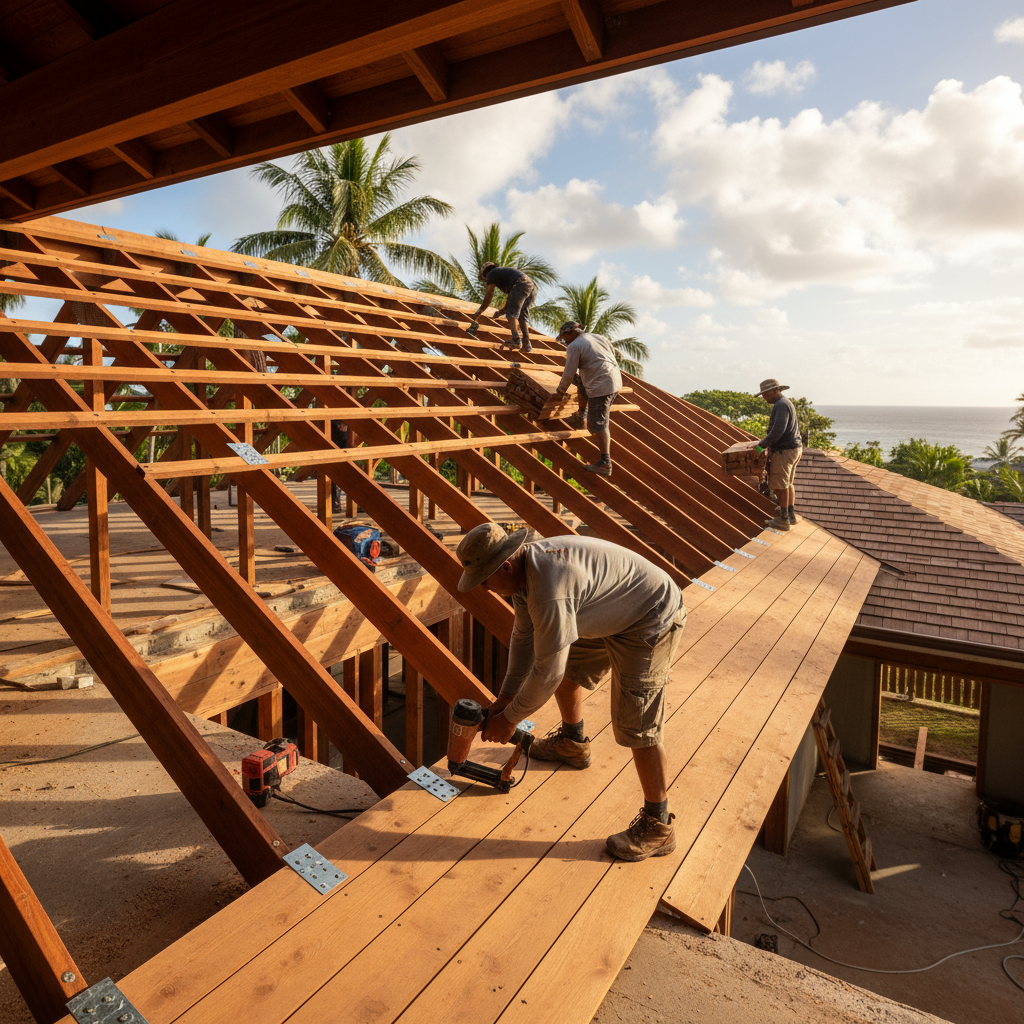
- Phase 3: On-Site Work (2-4 weeks): This is the part you’ll see. Once the permit is in hand and materials are on-site, our crew gets to work. This includes:
- Tear-Off and Inspection (2-3 days): We remove the old roofing and inspect the underlying wood deck for any rot or termite damage.
- Repairs (1-5 days): If we find damage, we address it now. This is where being a general contractor is a huge advantage.
- Underlayment and Flashing (2-4 days): We install a new, high-temperature, self-adhering waterproof membrane over the entire roof deck. This is a critical layer of protection.
- Roofing Installation (5-10 days): We install the new metal, shingles, or tile according to manufacturer specifications and hurricane code requirements.
- Site Cleanup and Final Inspection (2-3 days): We conduct a thorough cleanup and schedule the final inspection with the county inspector.
So, from start to finish, a well-managed roof replacement in Po’ipu can take anywhere from 7 to 9 months. An inexperienced contractor might promise a faster timeline by cutting corners on permitting or material ordering, but that almost always leads to delays and costly mistakes. We believe in setting realistic expectations from the beginning.
What Permits Do You Need for Roofing Contractor in Po’ipu?
Navigating the permitting process is one of the most important jobs for your roofing contractor. In Kaua’i County, you absolutely need a building permit for a full `roof replacement po’ipu` project. The days of skipping this step are long gone, especially after the building code updates following past hurricanes. Attempting a re-roof without a permit can result in a stop-work order, fines, and major problems when you try to sell your home.
Here’s what the process generally involves with the Kaua’i County Building Division:
- When is a permit required? If you are replacing more than 100 square feet of roofing material (which is a very small 10×10 patch), a permit is required. This effectively means any full replacement needs a permit. A simple `roof repair po’ipu` on a few shingles might not, but it’s always best to check.
- What documents are needed? We prepare and submit a complete permit packet on your behalf. This typically includes the building permit application, construction plans showing the roof layout and details, material specifications, and sometimes structural calculations if the new roof is significantly heavier (like switching from shingle to tile) or if framing is being altered.
- The Review Process: The plans are reviewed by the county for compliance with the current building code. They check for things like proper fastening schedules for high-wind zones, correct flashing details, and appropriate underlayment specifications. This is not a rubber stamp process; reviewers can and do come back with questions or required revisions. Our experience helps us anticipate these requests and prepare a thorough packet from the start. Although the process is handled locally on Kaua’i, the principles are similar to those overseen by agencies like Honolulu’s Department of Planning and Permitting.[1]
- Inspections: Once the permit is issued and work begins, a county inspector will need to visit the site at key milestones. This typically includes an inspection after the old roof is torn off and any structural repairs are made, and then a final inspection once the new roof is complete. A good contractor coordinates these inspections seamlessly.
As your general contractor, Warrior Construction handles 100% of the permitting process. We deal with the paperwork, communicate with the plan reviewers, and manage the on-site inspections. This service is built into our project management, saving you the headache and ensuring your project is fully compliant and documented correctly.
Po’ipu-Specific Considerations: Climate, Materials, Regulations
A roof in Po’ipu faces a relentless assault from the environment. It’s not just one thing; it’s a combination of factors that can cause a mainland-grade roof to fail in a fraction of its expected lifespan. As a dedicated Hawaii contractor, we engineer our roofing systems specifically for these conditions.
Climate: Sun, Salt, and Wind
The south shore of Kaua’i gets some of the most intense sun in the state. This UV radiation breaks down asphalt shingles, causing them to become brittle and lose their protective granules. It also causes lower-quality paint finishes on metal roofs to chalk, fade, and degrade. The constant onshore breeze carries a fine, corrosive salt mist that attacks any exposed metal—fasteners, flashing, and panels. This is why material selection is so critical.
For example, using standard galvanized nails is a classic mistake. Within a year, the heads will begin to rust, leaving ugly brown streaks down your brand-new roof. Worse, the corrosion weakens the fastener, compromising the roof’s ability to withstand high winds. We use only stainless steel or specially coated fasteners designed for coastal environments on all our Po’ipu projects. It’s a non-negotiable part of a quality installation.
Materials: Performance Over Price
For Po’ipu, we almost always recommend a 24-gauge standing seam metal roof with a full Kynar 500 (or Hylar 5000) PVDF paint finish. Here’s why this specific system works:
- Hurricane Resistance: The panels are interlocked and securely fastened to the deck, creating a monolithic shield that can withstand the uplift forces of hurricane-force winds far better than individual shingles.
- Corrosion Resistance: The substrate is typically Galvalume (a zinc-aluminum alloy), which offers superior corrosion protection. The Kynar 500 finish on top is a high-performance architectural coating that provides the best defense against salt spray and UV degradation.
- Energy Efficiency: Lighter-colored metal roofs can reflect a significant amount of solar radiation, keeping your attic and home cooler and reducing your air conditioning bills. This is a real, measurable benefit in sunny Po’ipu.
This is the core of what `tropical roofing po’ipu` is all about: selecting materials based on scientific performance in this exact environment, not just on looks or initial cost.
Regulations: Post-Iniki Building Codes
Hurricane Iniki in 1992 was a defining event for Kaua’i, and it completely reshaped the building code. The roofing codes here are some of the strictest in the nation. Your contractor MUST be fluent in these requirements. This includes:
- Enhanced Fastening: Roof sheathing must be nailed to the trusses with a specific size and spacing of nails (often ring-shank nails for better grip).
- Hurricane Straps/Clips: The connection between your roof trusses and the wall top plates must be reinforced with steel connectors (like Simpson Strong-Tie hardware). During a re-roof, we inspect these connections and upgrade them as needed to meet current code.
- Sealed Roof Deck: The code now mandates a secondary water barrier. This means applying a self-adhering (‘peel-and-stick’) membrane over the entire roof deck before the final roofing material goes on. If wind were to blow off some panels or shingles, this layer prevents water from pouring into your home.
A contractor who doesn’t understand these specific Kaua’i codes is a major liability. Our team is trained on these requirements, and we ensure every roof we build not only meets but exceeds them.
How to Choose the Right Roofing Contractor Contractor in Po’ipu
Hiring a contractor can feel overwhelming, but a few key checks can protect you from unqualified or unreliable operators. The goal is to find a stable, professional, and properly licensed company that will be around to stand by their work for years to come. Here’s our insider checklist for vetting any potential roofing contractor in Po’ipu.
- Verify Their License and Insurance. This is the absolute first step. Any contractor performing work over $1,000 in Hawaii must have a state-issued contractor’s license. You can and should verify their status online using the Hawaii Department of Commerce and Consumer Affairs (DCCA) Professional & Vocational Licensing (PVL) search.[2] Our license, for example, is Warrior Construction, BC-34373. Also, ask for certificates of general liability insurance and worker’s compensation insurance. Without these, you could be liable for any accidents on your property.
- Look for General Contractor (GC) Capabilities. As we’ve mentioned, a re-roofing project often uncovers hidden issues like water damage, dry rot, or termite damage in the underlying structure. A company that is only a roofing specialty contractor (a C-42 license) is not licensed to perform structural repairs. A General Contractor (a B license) is. Choosing a GC like Warrior Construction means you have one point of contact and one contract to handle the entire project, from roofing to structural fixes, without delays or hiring multiple companies.
- Ask for Local Kaua’i References. A reputable contractor will be proud to share a list of recent projects they’ve completed on-island. Don’t just look at photos; ask for addresses so you can drive by and see the quality of their work. Even better, ask for phone numbers of past clients so you can ask them about their experience with the contractor’s communication, professionalism, and site cleanliness.
- Insist on a Detailed, Itemized Proposal. A one-page quote with a single bottom-line number is a red flag. A professional proposal should be several pages long and break down the costs clearly. It should specify:
- The exact type and brand of roofing material, underlayment, and fasteners.
- The scope of work, including tear-off, disposal of debris, and any specific repairs included.
- Allowances or contingency clauses for unforeseen issues like plywood replacement, specified at a per-sheet cost.
- Payment schedule and warranty information (both for materials and workmanship).
- Evaluate Their Communication and Professionalism. From the very first phone call, are they responsive? Do they answer your questions thoroughly and patiently? A contractor who is hard to get a hold of during the sales process will likely be even harder to reach once they have your deposit. Trust your gut. You’ll be working with this team for months, so choose a company that communicates clearly and respects your time and property.
Real Po’ipu Roofing Contractor Project Example
To make this all concrete, let’s walk through a project we recently completed for a homeowner in a Po’ipu resort community. It highlights the challenges and solutions we’ve been discussing.
The Property: A 20-year-old, 2,800-square-foot single-family home with a complex roof design, including several hips and valleys. The existing roof was a heavy wood shake system that was well past its service life.
The Problem: The homeowner was experiencing multiple leaks, and their insurance company had warned them that their policy would be dropped if the flammable wood shake roof wasn’t replaced. They also wanted to improve the home’s hurricane resilience and lower their energy bills.
Our Assessment & Solution: During our initial inspection, we identified not only the failing shake material but also signs of water intrusion at the eaves and valleys. We proposed a full `roof replacement po’ipu` from wood shake to a 24-gauge standing seam metal roof in a dark bronze color, which was pre-approved by the community’s design review board. Our plan included:
- A complete tear-off of the old shake and underlayment.
- A structural inspection of the roof deck and trusses.
- A budget contingency of $5,000 for potential plywood or fascia board replacement.
- Installation of a high-temperature, self-adhering water and ice shield over the entire roof deck to meet modern hurricane code.
- The new standing seam system with all stainless-steel clips and fasteners.
The Process & Outcome: Permitting with Kaua’i County took five months, which was in line with our initial projection. Once the permit was issued, we ordered the custom-rolled metal panels from our supplier on O’ahu, with a shipping lead time of eight weeks. During the tear-off, we uncovered significant dry rot along 40 linear feet of the fascia boards, exactly as we had anticipated. Because we were a general contractor and had a contingency in place, our carpentry crew was able to replace the damaged wood immediately, preventing any delays. The on-site portion of the project took just under four weeks. The final result was a beautiful, watertight, and code-compliant roof that significantly enhanced the home’s safety and value. The homeowner was thrilled and even reported a noticeable drop in their cooling costs during the first summer. The total project cost came in at approximately $85,000, including the fascia repairs.
What this means for Hawaii homeowners
Investing in a new roof in a place like Po’ipu is about more than just aesthetics or stopping a leak; it’s a long-term investment in your home’s safety, value, and resilience. The upfront cost can seem high, but the cost of getting it wrong is far higher. A cheap roof might fail in just a few years under the Kaua’i sun and salt, leading to interior water damage, mold, and the need to do the entire project over again.
Here’s our direct advice for any Po’ipu homeowner considering a new roof:
- Prioritize Performance Materials: Don’t let initial price be your only guide. For this specific climate, a standing seam metal roof with a Kynar 500 finish and stainless steel fasteners provides the best long-term value and protection. It’s an investment that pays for itself in longevity and peace of mind.
- Hire a Licensed General Contractor: Choose a contractor with a B-license, not just a C-42 roofing license. Unexpected structural issues are common in re-roofing projects. A GC is legally able and equipped to handle these issues seamlessly, preventing costly delays and the need to hire a second company.
- Plan for the Full Timeline: Understand that in Hawaii, permitting and material logistics are a major part of the project timeline. Be wary of any contractor who promises to start next week. A professional firm will have a backlog and will guide you through the 7-9 month process transparently from the start.
- Focus on the System, Not Just the Shingles: A great roof is a complete system. Pay as much attention to the underlayment, flashing, ventilation, and fasteners as you do to the final roofing material. This is where quality contractors differentiate themselves.
Your roof is the single most important component protecting your family and your belongings. Making the right choice in a contractor and materials ensures that protection will last for decades.
Frequently Asked Questions About Roofing Contractor in Po’ipu
Can I just patch my roof instead of doing a full replacement?
A `roof repair po’ipu` can be a good option for isolated damage on a relatively new roof, like replacing a few shingles blown off in a storm. However, if your roof is over 15-20 years old, has widespread issues (like granule loss on shingles), or multiple leaks, patching is usually a temporary fix that costs more in the long run. We often find that chasing leaks on an old roof is a losing battle.
What is the best roofing material for the Po’ipu sun and salt?
For the intense UV exposure and corrosive salt air in Po’ipu, we strongly recommend a 24-gauge standing seam metal roof with a Kynar 500 PVDF paint finish. This system offers the best combination of hurricane resistance, longevity, corrosion protection, and energy efficiency. While more expensive upfront than asphalt shingles, its lifespan is two to three times longer in this harsh coastal environment.
How much does a new roof in Po’ipu increase my home’s value?
A new, code-compliant roof is a major selling point in the Kaua’i real estate market. While you may not recoup 100% of the cost, a 2026 Remodeling Magazine Cost vs. Value report would likely show a significant return, often in the 60-70% range. More importantly, an old or failing roof can be a major barrier to a sale and can significantly decrease your property’s value, making a replacement a necessary investment to maintain market price.
Do I need to move out of my house during the roof replacement?
In most cases, you do not need to move out. The work is all external to the home. However, you should expect significant noise during the day, particularly during the tear-off and nailing phases. We take great care to protect your property, including landscaping and lanais, and we clean the site thoroughly at the end of each day to minimize disruption.
How do I know if my contractor is properly licensed in Hawaii?
You should always verify a contractor’s license yourself using the free public search on the Hawaii DCCA PVL website.[2] You can search by business name or license number (ours is BC-34373). The site will show if the license is active, if there are any complaints against it, and what type of work they are licensed to perform.
Are solar panels a complication for a roof replacement project?
Yes, solar panels must be removed before the re-roofing begins and then reinstalled afterward. This requires a licensed solar contractor. As your general contractor, we coordinate this entire process. We work with a reputable solar partner to schedule the detach/re-attach service, ensuring it’s done safely and correctly, and we build this step into the overall project timeline and budget.
What happens if you find termite or rot damage during the project?
This is a common occurrence in Hawaii and a key reason to hire a general contractor. If we uncover damage, we stop work in that area, document it with photos, and immediately discuss the findings with you. Our proposals include unit pricing (e.g., cost per foot of fascia board, cost per sheet of plywood) for these potential repairs, so there are no surprises. Our in-house carpentry team then makes the necessary structural repairs before we proceed with the roofing.
Your Po’ipu home is one of your most significant investments. Protecting it with a durable, professionally installed roofing system is not an expense—it’s a critical measure to preserve its value and safety against Hawaii’s demanding climate. At Warrior Construction, we combine decades of local experience with a commitment to using only the highest-quality materials and building practices. We understand the unique challenges of coastal construction on Kaua’i, from navigating permits to managing island logistics.
If you’re ready to discuss a secure, long-lasting solution for your home, our team is here to provide an expert consultation. We’ll assess your property, listen to your needs, and develop a detailed, transparent plan to protect your investment for years to come. Explore our approach to coastal home construction and see how we build roofs made for island life.