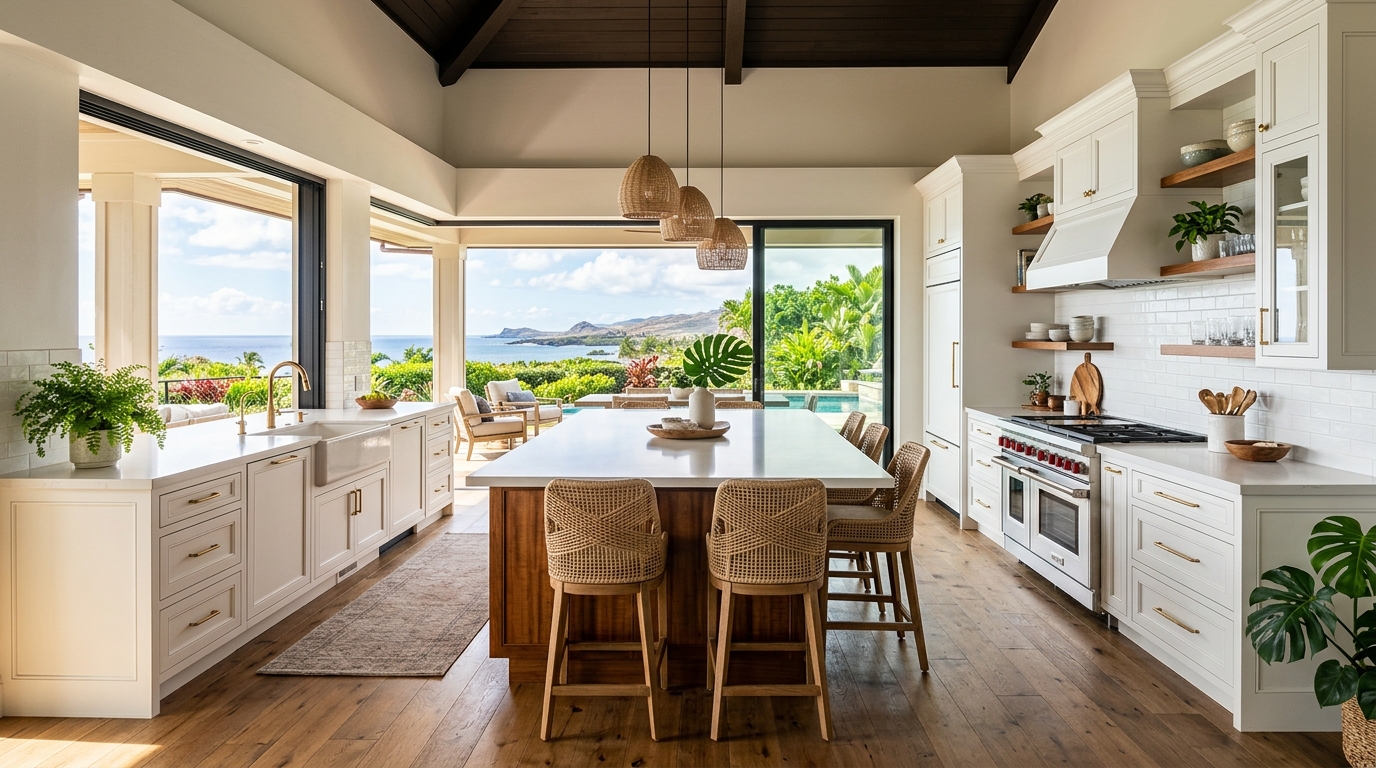
A full kitchen remodel in Kapolei during 2026 will typically cost between $75,000 for a solid, mid-range renovation in a standard single-family home, and can easily climb above $180,000 for a high-end, fully custom project with structural changes. This price range reflects the real-world costs of materials, shipping, and skilled labor here on O’ahu. Unlike the mainland, everything from your cabinets to your light fixtures has to cross an ocean, and that logistical reality is baked into every estimate. But cost isn’t just about spending more; it’s about spending smart.
For over twenty years, our team at Warrior Construction has been navigating these exact challenges for homeowners across West O’ahu. We’ve seen it all, from simple cabinet-and-countertop swaps in Makakilo to complex, wall-moving gut renovations in Ko Olina. The key to a successful project that doesn’t break the bank isn’t just finding the cheapest materials; it’s about making intelligent decisions upfront that prevent costly changes and long-term maintenance issues down the road. It’s about understanding which materials stand up to the Leeward side’s intense sun and what the Honolulu Department of Planning and Permitting (DPP) actually requires before you even swing a hammer.
This guide is built from our direct experience on job sites right here in Kapolei. We’re not going to give you vague advice. Instead, we’ll walk you through the real numbers, the non-negotiable timelines, and the specific local factors you need to consider. We’ll share six practical, cost-saving recommendations that can make a huge difference in your budget without compromising on quality. From planning your layout for efficiency to choosing materials that won’t degrade in our island climate, these are the insights we share with our clients every day.
Why Kapolei Homeowners Trust Warrior Construction for Kitchen Remodel
Kapolei homeowners trust us for their kitchen remodel because we bring decades of on-the-ground O’ahu construction experience to every project. We’re not just a company with a license; we are a team that understands the specific DNA of Kapolei homes. Many of the neighborhoods here, from Ewa by Gentry to the slopes of Makakilo, were built in specific waves of development. We know the original builders, the common layouts, the typical plumbing setups, and—most importantly—the common problems that hide behind the walls of a 1990s or early 2000s house.
For instance, on a recent project in Kapolei, a homeowner wanted to remove a wall between their kitchen and living room. It looked simple enough. But because we’ve worked in that specific development before, we knew that the builder often ran critical plumbing vents and electrical lines through that exact wall. We were able to warn the client ahead of time, budget for the rerouting work properly, and avoid a massive, multi-thousand-dollar change order halfway through the project. That’s the kind of local knowledge you can’t get from a mainland-based design blog or a contractor who primarily works town-side.
Our approach is built on a foundation of transparency and meticulous planning. Here’s what that looks like in practice for a Kapolei kitchen renovation:
- Local Supply Chain Mastery: We have long-standing relationships with local suppliers like Hardware Hawaii and HPM, as well as mainland vendors who understand the complexities of shipping to the islands. We know how to schedule orders around barge timetables to minimize delays and avoid having your half-finished kitchen sit idle for weeks waiting for a single missing faucet.
- Permitting Expertise: Navigating the Honolulu DPP is a job in itself. Our team manages this entire process, from drafting compliant plans to meeting with plan reviewers. We understand the specific codes that apply to Kapolei and can anticipate the questions and requirements that will come up, which helps shorten the often-lengthy approval process.
- Climate-Appropriate Solutions: The intense sun and dry heat of the Leeward side are tough on building materials. We guide our clients toward products designed for this environment, like high-quality cabinet finishes with UV inhibitors to prevent fading, engineered countertops that won’t crack under thermal stress, and proper ventilation systems to manage heat and humidity.
- Licensed and Insured: Warrior Construction holds Hawaii License BC-34373, and we are fully insured. This protects you, your property, and our crew. We encourage every potential client to verify our license and the license of any competitor. It’s the first and most important step in vetting a professional kitchen contractor in Kapolei.
Ultimately, homeowners choose us because we treat their project with the same care and attention to detail we’d give our own. A kitchen is the heart of a home, and remodeling it is a significant investment. Our job is to be your expert guide and advocate, ensuring that investment is a wise one that brings you joy and value for years to come.
What Does Kitchen Remodel Cost in Kapolei?
The direct answer for a 2026 kitchen remodel cost in Kapolei is roughly $450 to $900+ per square foot. For a typical 200-square-foot Kapolei kitchen, this translates to a range of $90,000 to $180,000. This all-in cost includes design, permits, materials, labor, and project management. The final number lands where it does based on three main factors: the scope of work, the quality of materials, and the complexity of any structural or utility changes.
Let’s break that down into more tangible numbers. Here at Warrior Construction, we think about projects in tiers. This isn’t about good or bad, but about matching finishes and scope to a homeowner’s budget and goals. On a recent kitchen renovation Kapolei project, we priced out three options for the client, and it looked something like this:
Kapolei Kitchen Remodel Cost Tiers (Based on a 200 sq. ft. Kitchen)
| Cost Category | Mid-Range Remodel (~$95,000) | High-End Remodel (~$145,000) | Luxury Remodel (~$200,000+) |
|---|---|---|---|
| Cabinets | Semi-custom, MDF/thermofoil, standard layout | Semi-custom, all-plywood construction, custom features (pull-outs, etc.) | Fully custom cabinetry (e.g., solid Koa or Mango), extensive millwork |
| Countertops | Builder-grade Quartz or Granite | Premium Quartz (e.g., Cambria, Silestone) or high-grade natural stone | Exotic stone slab (e.g., quartzite), waterfall edges, full-height backsplash |
| Appliances | Mid-tier suite (e.g., GE Profile, KitchenAid) – ~$12,000 | High-end suite (e.g., Bosch, Thermador) – ~$25,000 | Luxury/pro-grade suite (e.g., Sub-Zero, Wolf, Miele) – ~$45,000+ |
| Plumbing & Electrical | Fixtures in existing locations | Minor relocation of sink/dishwasher, new dedicated circuits, under-cabinet lighting | Major relocation of plumbing, adding a pot filler, extensive smart lighting system |
| Flooring | Luxury Vinyl Tile (LVT) or quality ceramic tile | Engineered hardwood or premium porcelain tile | Natural stone or custom tile work |
| Labor & Management | ~$30,000 – $35,000 | ~$45,000 – $55,000 | ~$70,000+ |
The “Hawaii Premium” is a real factor we have to budget for. That beautiful appliance package you see online for $10,000? By the time it’s shipped via ocean freight, handled at the port, and delivered to your Kapolei home, it’s closer to $13,500. The same goes for cabinets, countertops, and specialty tiles. We build these real-world logistics costs into our initial estimates so there are no surprises. A good rule of thumb is to add 25-35% to the mainland retail price for any major component to account for shipping and handling.
Finally, always plan for a contingency fund. We advise our clients to set aside an additional 15-20% of the total project cost. This isn’t for upgrades; it’s for the unknowns. During demolition, we might discover termite damage in the walls, corroded cast-iron pipes under the slab, or unpermitted electrical work from a previous owner. These issues must be fixed to meet code, and having a contingency fund turns a potential project-stopping crisis into a manageable problem that we can solve and keep moving forward.
How Long Does a Kitchen Remodel Take in Kapolei?
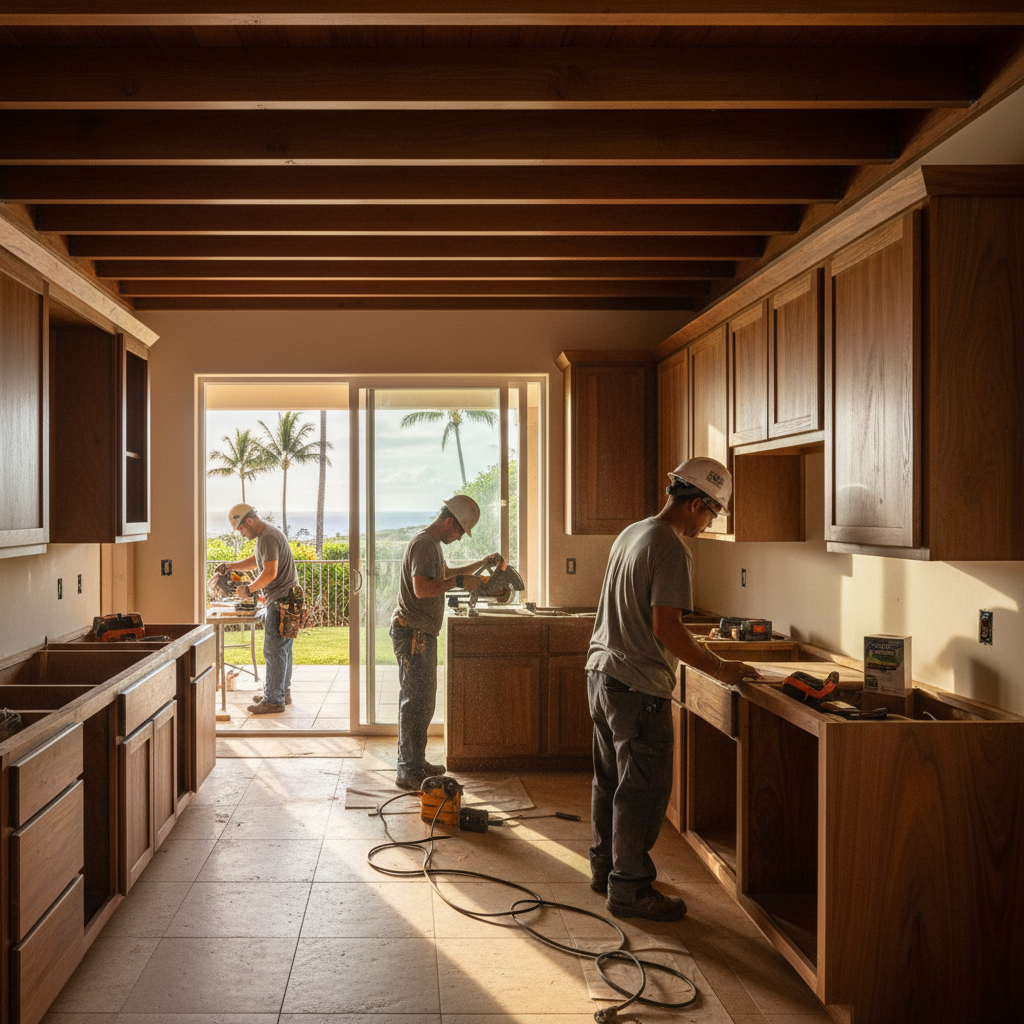
A full kitchen remodel in Kapolei, from the first design meeting to the final walkthrough, takes between 5 to 9 months in 2026. The actual construction or “dusty” part is only about 6 to 12 weeks of that total. The majority of the time is spent in pre-construction phases: detailed planning, material selection, and, most significantly, waiting for permit approval from the Honolulu DPP.
Many homeowners are surprised by this. They see home renovation shows on TV where a kitchen is transformed in a week. That’s not reality, especially not in Hawaii. Our timelines are dictated by island-specific logistics that mainland contractors never have to consider. A delay isn’t a trip to a local warehouse; it’s waiting for the next barge from Long Beach, which could be a week or more away.
To give you a clearer picture, here is the realistic, phase-by-phase timeline our team at Warrior Construction uses for a typical Kapolei kitchen project:
Phase 1: Design & Planning (4-8 weeks)
- Initial Consultation & Budgeting: We meet with you, discuss your vision, measure the space, and establish a realistic budget. (1-2 weeks)
- Layout & Design Development: Our team creates initial floor plans and 3D renderings. You’ll review and revise these until the design is perfect. (2-3 weeks)
- Material & Finish Selection: This is where you choose everything—cabinets, countertops, appliances, backsplash, flooring, lighting, and paint. This can be fun, but it’s also intensive. (1-3 weeks)
Phase 2: Permitting & Procurement (12-24 weeks)
- Plan Finalization & Engineering: We convert the approved design into detailed construction documents. If we’re moving a load-bearing wall, a structural engineer will need to produce calculations and drawings. (2-4 weeks)
- DPP Permit Submission & Review: This is the biggest variable. We submit the plans to the Honolulu Department of Planning and Permitting. As of 2026, the review process for a straightforward interior remodel permit can take anywhere from 8 to 20 weeks. If there are complexities, it can take longer.
- Material Ordering: Once the permit is close to approval, we place orders for long-lead-time items like custom cabinets and appliances. It can take 8-16 weeks for these items to be manufactured and shipped to O’ahu.
Phase 3: Construction (6-12 weeks)
- Demolition & Site Prep: We tear out the old kitchen and prepare the space. This is when we often discover any hidden issues like termite damage or faulty plumbing. (1 week)
- Rough-in & Framing: We do any structural work, move walls, and run new electrical wiring and plumbing lines. This is followed by a city inspection. (2-3 weeks)
- Drywall, Paint & Flooring: The walls are closed up, textured, primed, and painted. The new flooring is installed. (1-2 weeks)
- Cabinet & Countertop Installation: This is when the new kitchen really starts to take shape. (1-2 weeks)
- Finishing Touches: We install the backsplash, appliances, plumbing fixtures, lighting, and hardware. This phase requires meticulous attention to detail. (2-4 weeks)
- Final Inspections & Walkthrough: The city inspector performs the final checks. Once passed, we do a detailed walkthrough with you to ensure every detail is perfect, creating a final punch list of any minor adjustments.
Patience is key. Rushing the planning phase or trying to start construction before all materials are on-island is the number one cause of budget overruns and extended timelines. Our job as your general contractor is to manage this complex schedule, coordinate all the trades, and keep the project moving forward as efficiently as possible.
What Permits Do You Need for Kitchen Remodel in Kapolei?
You absolutely need a building permit from the Honolulu Department of Planning and Permitting (DPP)[1] for any kitchen remodel in Kapolei that involves changing the structure or the electrical and plumbing systems. A simple cosmetic update, like painting cabinets, replacing a faucet in the same spot, or swapping out a countertop with no plumbing changes, generally won’t require a permit. But the moment you move a wall, alter a drain line, or add a new electrical circuit for an appliance, you’ve crossed the line into permitted work.
Here’s a practical breakdown of what triggers a permit for a kitchen project:
- Structural Changes: Removing, adding, or altering any wall, especially a load-bearing one. This is non-negotiable and requires engineered plans.
- Plumbing Alterations: Moving the sink or dishwasher, adding an island sink, or installing a pot filler. Basically, if you’re changing the location of water supply or drain lines in the wall or floor, you need a permit.
- Electrical Modifications: Adding new outlets, running a new dedicated circuit for an induction cooktop or wall oven, or significantly relocating existing wiring. Under-cabinet lighting might sometimes be an exception, but it’s best to check.
- Gas Line Changes: If you are converting from an electric to a gas range and need to run a new gas line, this requires a permit and specialized licensed plumbers.
- Changing Window/Door Openings: If you’re enlarging a window or converting one into a sliding door for lanai access, that’s a structural change requiring a permit.
The permitting process on O’ahu is not something to be taken lightly. It can be long and demanding. As your general contractor, Warrior Construction handles this entire process. We start by having professional, permit-ready plans drawn up that meet all current building codes. These plans are then submitted to the DPP for review. A plan reviewer will check everything for compliance with structural, electrical, plumbing, and energy codes. They may come back with questions or required revisions, which we address.
A common question we get from Kapolei homeowners is, “Can’t we just skip the permit to save time and money?” Our answer is always a firm no. Working without a permit is a huge risk. If you’re caught, the DPP can issue a stop-work order and levy significant fines. You’ll likely be required to tear out the unpermitted work and apply for a permit retroactively, which is far more expensive and time-consuming. More importantly, it creates major problems when you try to sell your home. Unpermitted work is a red flag for buyers and can derail a sale. Finally, it’s a safety issue. Permits and the required inspections ensure that the electrical and plumbing work was done correctly and won’t cause a fire or a flood down the road.
The bottom line is that a properly permitted project protects the value of your investment and the safety of your family. It’s a critical part of any legitimate kitchen renovation Kapolei project.
Kapolei-Specific Considerations: Climate, Materials, Regulations
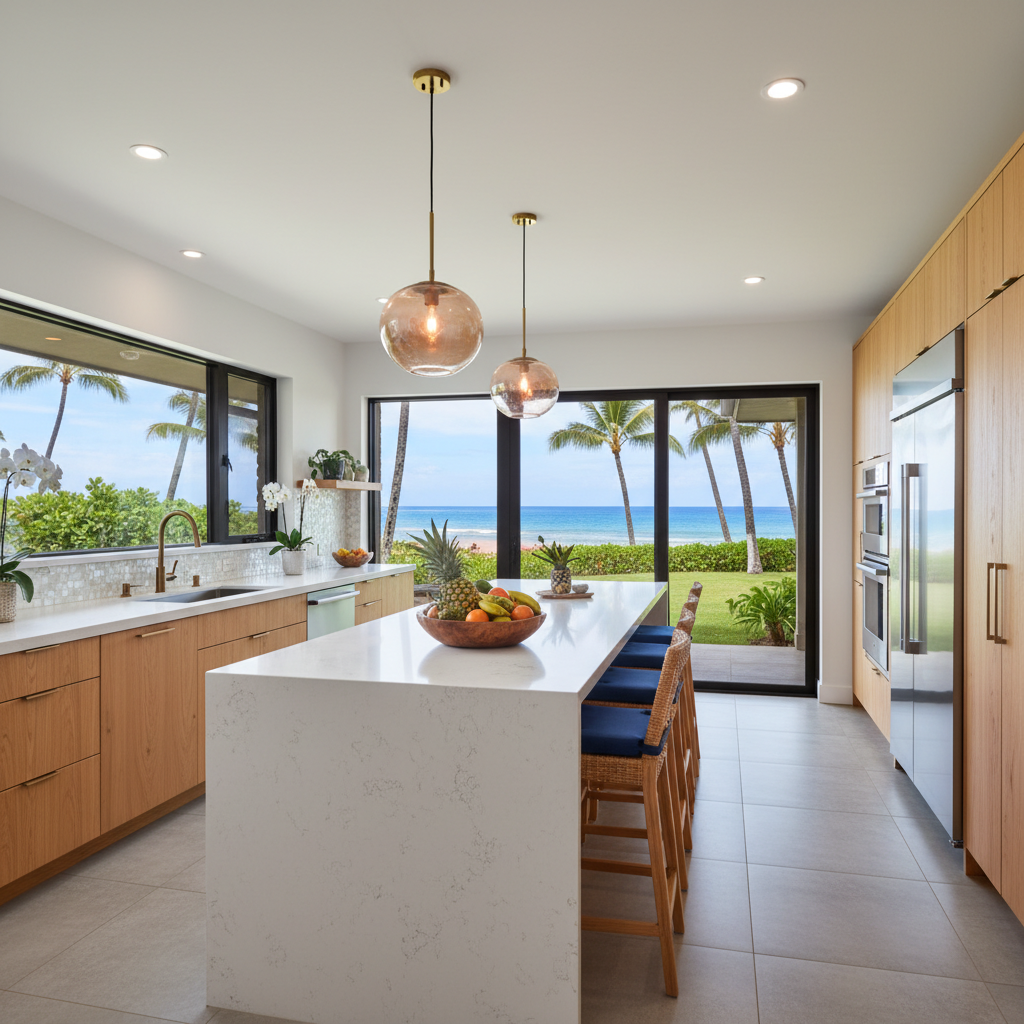
Remodeling a kitchen in Kapolei isn’t the same as doing one in, say, Arizona or Oregon. Our unique Leeward O’ahu environment presents specific challenges and opportunities that must be addressed in the design and material selection process. Ignoring these local factors can lead to materials failing prematurely, uncomfortable living conditions, and costly repairs.
Over the years, our team has developed a checklist of Kapolei-specific considerations we review with every client. These are the things that make the difference between a kitchen that just looks good on day one and one that performs beautifully for decades.
1. The Leeward Sun & Heat
Kapolei is sunny and hot. This constant UV exposure and thermal stress can wreak havoc on certain materials.
- Cabinetry: Dark-stained wood cabinets, especially those near a large, south-facing window, can fade noticeably over time. We often recommend high-quality laminates, thermofoil, or painted finishes with a UV-resistant topcoat. These tend to be more stable and easier to maintain.
- Countertops: While beautiful, some porous natural stones can be susceptible to thermal shock. A better choice for the Kapolei climate is often a high-quality engineered quartz. It’s non-porous, highly durable, and extremely resistant to heat and UV degradation.
- Ventilation: A powerful, properly vented range hood is not a luxury here; it’s a necessity. It removes heat, steam, and cooking odors, making the kitchen more comfortable and preventing moisture buildup that can lead to mold issues.
2. Salt Air & Corrosion
Even though Kapolei isn’t right on the windward coast like Kailua, we are still on an island. The air carries a certain amount of salt, which is corrosive to metals.
- Hardware & Fixtures: We always specify stainless steel (ideally 316 marine grade for maximum protection), solid brass, or finishes with a PVD coating for cabinet pulls, faucets, and light fixtures. Cheaper, plated metals will start to pit and corrode within a few years.
- Appliances: Look for appliances with high-quality stainless steel exteriors. It’s worth paying a bit more for a reputable brand known for durable finishes. A cheap stainless finish can start to show rust spots surprisingly quickly.
3. Hurricane Code & Structural Integrity
Since Hurricane Iniki, Hawaii has had some of the most stringent building codes in the nation regarding wind resistance. If your kitchen remodel involves any exterior walls, these codes come into play.
- Windows & Doors: Any new window or glass door installed as part of your kitchen project must be hurricane-rated. This means stronger frames, laminated or tempered glass, and more robust installation methods.
- Structural Connections: If we open up a wall, we are required by code to ensure the entire structure is properly tied together with hurricane straps and clips. We might need to reinforce connections from the roof rafters down to the foundation, even if it seems unrelated to the kitchen itself. This is about ensuring the integrity of the whole building envelope.
4. Island Logistics & Material Sourcing
You can’t just run to a big-box store and find everything you need. Planning for logistics is paramount.
- Lead Times: As mentioned before, cabinets, appliances, and specialty tile can take 2-4 months to arrive. We build a project schedule that front-loads all ordering to ensure materials are on-island before we begin demolition.
- Local Sourcing: Whenever possible, we try to source materials locally. This supports our island economy and can sometimes reduce lead times. We have great relationships with local cabinet makers and countertop fabricators who do excellent work right here on O’ahu.
Thinking through these Kapolei-specific issues during the planning phase is one of our six key recommendations for saving money. It’s far cheaper to choose the right materials from the start than to replace warped cabinets or rusted fixtures five years down the line.
How to Choose the Right Kitchen Remodel Contractor in Kapolei
Choosing the right kitchen contractor in Kapolei is the single most important decision you’ll make for your project’s success. A great contractor can make the process smooth and deliver a high-quality result, while the wrong one can lead to budget overruns, endless delays, and shoddy workmanship. It’s about more than just finding the lowest bid; it’s about finding a true partner for your investment.
Here is the process we recommend to every homeowner when vetting a general contractor for their kitchen renovation. This is the same process we’d use if we were hiring someone to work on our own homes.
Step 1: Verify License and Insurance
This is non-negotiable. Never work with an unlicensed contractor. You can and should verify any contractor’s license status on the Hawaii Department of Commerce and Consumer Affairs (DCCA) Professional & Vocational Licensing (PVL) website.[2] Our license, for example, is Warrior Construction, BC-34373. A valid license means the contractor has met the state’s requirements for experience, competency, and financial stability. Additionally, ask for proof of general liability insurance and workers’ compensation insurance. If an uninsured worker gets hurt on your property, you could be held liable.
Step 2: Check References and Past Projects
Don’t just rely on a glossy website portfolio. Ask for a list of 3-5 recent clients, preferably for projects similar to yours in Kapolei. Call them and ask direct questions:
- Did they finish the project on time and on budget?
- How did they handle unexpected problems or changes?
- Was the communication clear and professional?
- Were you happy with the quality of the work and the cleanliness of the job site?
- Would you hire them again?
A reputable contractor will be proud to share references. If they are hesitant, that’s a major red flag.
Step 3: Get a Detailed, Written Estimate
A bid written on the back of a business card is not a real estimate. A professional estimate should be a detailed, multi-page document that breaks down the costs for labor, materials, permits, and subcontractors. It should clearly define the scope of work, specifying the models for appliances and the types of finishes. Compare the bids you receive not just on the final price, but on the level of detail and what’s included. A low bid might be leaving out crucial items that will show up later as expensive change orders.
Step 4: Evaluate Communication and Professionalism
During the bidding process, pay attention to how the contractor communicates. Do they return your calls promptly? Do they answer your questions clearly and patiently? A kitchen remodel is a long process, and you’ll be communicating with your contractor almost daily. You want someone who is professional, organized, and easy to work with. Remember, this person and their team will be in your home for weeks. Trust and rapport are incredibly important.
Step 5: Review the Contract Carefully
Once you’ve chosen a contractor, they will provide a contract. Read it carefully before signing. A proper contract should include:
- The full names and addresses of both parties.
- A detailed description of the work to be performed (the scope).
- A breakdown of the total cost and a payment schedule.
- The estimated start and completion dates.
- A clear process for how change orders will be handled.
- Information about warranties and guarantees.
If anything is unclear, ask for clarification in writing. A solid contract protects both you and the contractor and sets clear expectations for the entire project.
Real Kapolei Kitchen Remodel Project Example
To make all this information concrete, let’s walk through a recent, typical kitchen remodel our team completed in the Makakilo area of Kapolei. This project is a perfect example of the challenges and successes of renovating a standard Hawaii home from the late 1990s.
The Homeowner: The Aina family, who have lived in their 4-bedroom home for 15 years.
The Kitchen: A 240-square-foot, U-shaped kitchen that was original to the house. It featured dated golden oak cabinets, laminate countertops, a bulky fluorescent light box, and was separated from the dining room by a non-load-bearing peninsula that created a bottleneck.
The Vision: The Aina family wanted an open, modern space that was better for entertaining and everyday family life. Their key goals were a large central island, better lighting, more durable materials, and a seamless flow into their living and dining areas.
The Plan & The Budget:
- Scope: Complete gut renovation. This included removing the peninsula, relocating the sink and dishwasher to a new island, installing all new cabinets, quartz countertops, appliances, LVT flooring, and recessed LED lighting.
- Challenges Identified Upfront: We knew that moving the sink would require cutting into the concrete slab to relocate the drain line. We budgeted for this specifically. We also planned for a full electrical upgrade in the kitchen to bring it up to modern code, including new dedicated circuits for the microwave and refrigerator.
- Initial Budget: We worked with the Aina family to set a realistic budget of $125,000, which included a 15% contingency fund ($16,300).
The Process & Timeline:
- Pre-Construction (18 weeks): This phase went smoothly. Design and material selections took about 6 weeks. The DPP permit review took 12 weeks, which was right within our expected timeframe. During this waiting period, we ordered the semi-custom cabinets and the appliance package.
- Construction (9 weeks): During demolition, we uncovered a small area of termite damage in the wall behind the old sink, which is very common. Because we had the contingency fund, this was not a crisis. We had our trusted pest control partner treat the area and our crew replaced the damaged studs for a total cost of about $2,200 from the contingency. The slab trenching for the new island plumbing took three days, followed by a successful plumbing inspection. The rest of the construction, from drywall to cabinet installation, proceeded on schedule.
The Result:
- Final Cost: The total project cost came in at $114,500, comfortably under the total budget and using only a portion of the contingency fund.
- Final Timeline: The total project duration, from our first meeting to the final walkthrough, was just under 7 months.
- Outcome: The Aina family now has a bright, open-concept kitchen that has completely transformed how they use their home. The large island is now the central hub for homework, meals, and entertaining. The professional-grade appliances and durable quartz countertops make cooking and cleanup a breeze. Most importantly, the project was completed with clear communication and no major financial surprises.
What this means for Hawaii homeowners
Navigating a kitchen remodel in Kapolei requires a shift in mindset from what you might see on mainland HGTV shows. Here, success is defined by meticulous planning, patience, and a deep understanding of local conditions. The temptation to rush or cut corners to save a few dollars upfront almost always leads to bigger costs and headaches down the road. You have to play the long game.
Here is the most critical, actionable advice our 20+ years of experience has taught us:
- Embrace the Timeline: Accept that from your first call to a contractor to your first meal in the new kitchen, it will likely be 6-9 months. The biggest variable is the Honolulu DPP. Use this time wisely. Finalize every single material selection and decision before construction starts. A change order for a different tile once work has begun can cause a multi-week delay waiting for shipment.
- Budget for Reality, Not Hope: Your budget must include three key components: the contractor’s detailed estimate, the cost of your appliances and finishes, and a 15-20% contingency fund. That contingency is not optional. On an older Kapolei home, you have a very high chance of finding termite damage, outdated wiring, or corroded plumbing once you open the walls. The contingency fund is what keeps these discoveries from derailing your project.
- Prioritize Durability Over Trends: The intense Leeward sun and humid air are unforgiving. Invest in the things that fight back against our environment. This means high-quality cabinet construction that won’t warp, UV-resistant finishes, quartz countertops, and stainless steel or PVD-coated hardware. Sacrificing quality here to afford a trendy backsplash is a mistake you’ll pay for in 5-7 years.
- Hire a Vetted, Licensed Professional: Your choice of a general contractor is paramount. Verify their license with the DCCA. Call their references. Ensure they provide a detailed contract. A good contractor manages the entire complex dance of permitting, ordering, scheduling subcontractors, and quality control. This expertise is what you’re paying for, and it’s the best insurance policy for your investment.
Ultimately, a successful kitchen remodel is a collaboration. By understanding these local realities and partnering with an experienced, trustworthy contractor, you can transform your Kapolei kitchen into a space that not only adds significant value to your home but also enhances your family’s quality of life for years to come.
Frequently Asked Questions About Kitchen Remodel in Kapolei
What is the average ROI on a kitchen remodel in Kapolei?
In the 2026 Kapolei real estate market, a mid-range kitchen remodel typically recoups about 70-80% of its cost at resale. A high-end remodel might see a slightly lower percentage, around 60-65%. However, the real value is often in marketability. A new, modern kitchen can make your home sell significantly faster and for a higher price compared to a similar home with a dated kitchen, especially in competitive neighborhoods like Ko Olina or Makakilo.
Can I save money by buying my own materials?
While it seems like a good idea, it often creates more problems and costs. Contractors get trade discounts that you don’t. More importantly, we are responsible for quantities, delivery schedules, and damaged goods. If you buy the flooring and it arrives damaged or you’re short by two boxes, the entire project can be delayed for weeks waiting for a replacement shipment, with your crew on standby. It’s usually more efficient and cost-effective to let your contractor manage all procurement.
Do I have to move out of my house during the kitchen remodel?
For a full gut renovation, we highly recommend it if possible. The construction zone will be noisy, dusty, and you won’t have a functioning kitchen for 6-12 weeks. Most families find it extremely difficult to live through that disruption. We set up dust barriers to contain the mess, but the reality of living without a sink or stove is challenging. Many clients set up a temporary kitchen in the garage or on the lanai with a microwave, hot plate, and the old refrigerator.
How do you handle unexpected issues like termite damage?
This is precisely what the 15-20% contingency fund is for. When we discover an issue, we stop work in that specific area, document it with photos, and immediately communicate with you. We’ll present a clear change order outlining the scope of the required repair, the cost, and any impact on the schedule. Once you approve, we bring in the necessary experts (like a licensed pest control company) to resolve the issue correctly before proceeding.
What cabinet style is most popular in Kapolei right now?
The clean lines of Shaker-style cabinets remain incredibly popular in Kapolei for their versatility. White and off-white are the most requested colors, as they create a bright, airy feel that complements the Hawaii lifestyle. We are also seeing a trend towards two-tone kitchens, often with a darker or wood-grain color for the island cabinets and a lighter color for the perimeter. Flat-panel, handleless cabinets are also gaining popularity for a more modern, sleek look.
How long does it really take to get a permit from the Honolulu DPP in 2026?
As of early 2026, you should realistically plan for a 10 to 20-week review period for a standard kitchen remodel permit that includes moving walls or plumbing. While the DPP has made efforts to streamline the process, backlogs persist. A simple permit might get through faster, but any complexity, such as major structural changes or being in a special design district, can extend this timeline significantly. A good contractor will know how to submit a complete and accurate application to minimize delays.
What’s the biggest mistake homeowners make when planning a kitchen remodel?
The biggest mistake is starting demolition or construction before every single material and finish has been selected, ordered, and preferably, delivered. Homeowners get excited and want to see progress, but starting work before the custom cabinets or specialty tile has arrived is a recipe for disaster. It leads to long, frustrating delays where your home is a construction zone but no work is happening. Meticulous planning upfront is the key to a smooth process.
At Warrior Construction, we believe a successful kitchen remodel is built on a foundation of trust, clear communication, and expert craftsmanship. We’ve dedicated ourselves to mastering the unique challenges of building and renovating in Hawaii, so you can have peace of mind knowing your Kapolei home is in experienced hands. If you’re ready to transform your kitchen, our team is here to guide you through every step of the process.
Ready to start planning your dream kitchen? Contact Warrior Construction today for a no-obligation consultation and estimate.