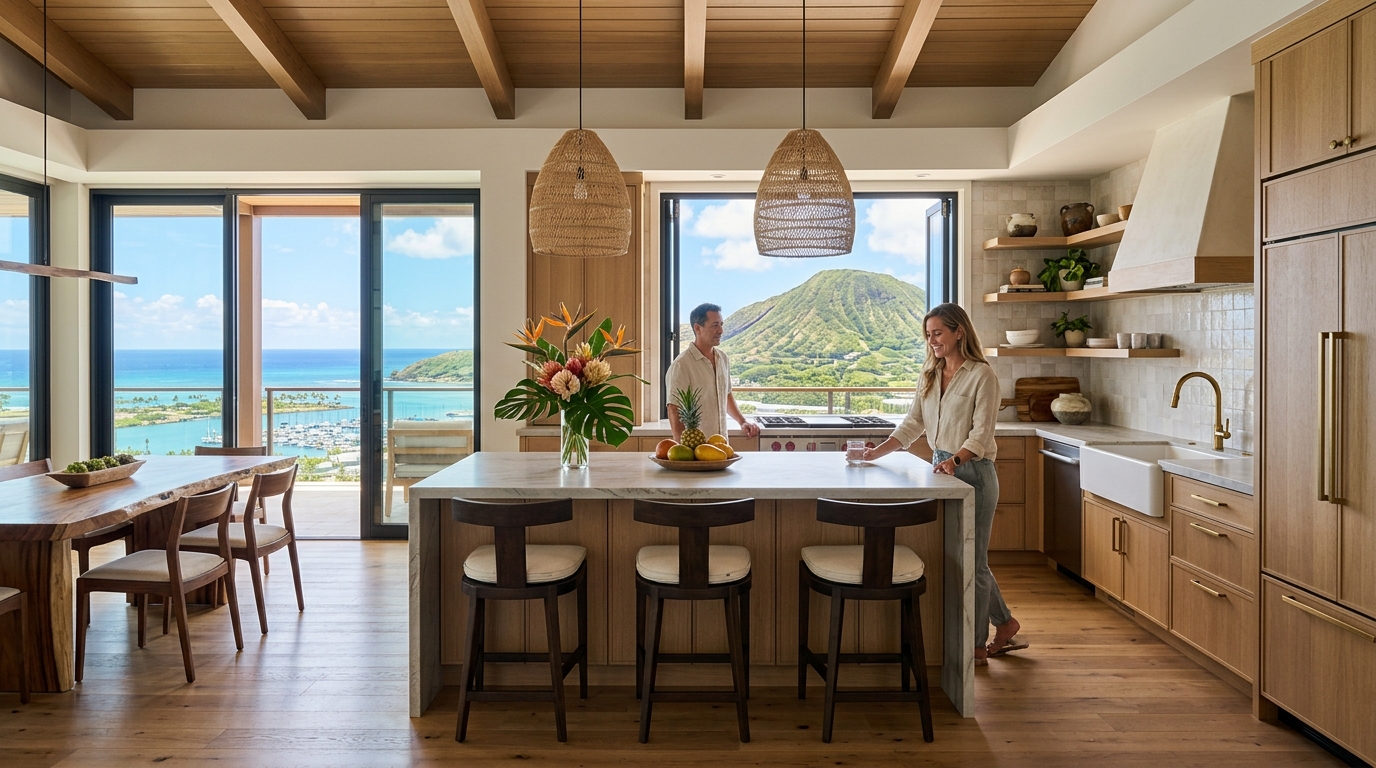
A kitchen remodel in Hawaii Kai is one of the best investments you can make in your home, but it’s a project with unique challenges here on Oʻahu. In 2026, a full-gut kitchen renovation in the area typically costs between $75,000 for a modest update to over $175,000 for a high-end, custom project, with a total timeline of 4 to 6 months from design to completion. The biggest variables are always the Honolulu DPP permit timeline and the lead time for materials shipped to the island.
For over 20 years, our team at Warrior Construction has been navigating these exact challenges for homeowners from Koko Head to Portlock. We’ve seen it all: corroded pipes hidden in concrete slabs, single-wall construction that needs structural upgrades, and the long-term effects of salt air on cheap materials. This isn’t mainland construction; it’s a different game entirely. We’re here to walk you through the real costs, timelines, and critical decisions you’ll face. These aren’t just generic tips—they’re hard-won lessons from decades of building and remodeling right here in East Honolulu.
Why Hawaii Kai Homeowners Trust Warrior Construction for Kitchen Remodel
Homeowners in Hawaii Kai trust our team for their kitchen remodels because we bring over two decades of dedicated O’ahu construction experience to every job. We’re not a mainland company with a satellite office; we live here, we build here, and we understand the specific DNA of Hawaii Kai homes. From the original Henry J. Kaiser houses from the ’60s to the newer custom homes in Portlock, we know the construction methods, the common problems, and how to solve them correctly according to current Hawaii building codes.
Our experience means we anticipate issues before they become costly change orders. On a recent project in a Koko Marina townhouse, we knew from experience that the original cast iron plumbing under the slab was likely at the end of its life. During our initial inspection, we budgeted for a camera scope of the line. Sure enough, it was severely corroded. By identifying this early, we were able to replace it during the planned demolition, saving the homeowner the nightmare of a failed pipe and a flooded kitchen months after their remodel was complete. A less experienced contractor might have just built a beautiful new kitchen right on top of a ticking time bomb.
Here’s what sets us apart:
- Local Knowledge: We understand the nuances of the Honolulu Department of Planning and Permitting (DPP), the reality of island logistics, and which materials genuinely hold up to our salt-laden air.
- Transparent Process: We provide detailed, line-item budgets. You’ll know exactly where your money is going, from the cost of Young Brothers shipping for your cabinets to the labor for your electrician.
- Licensed and Insured: Warrior Construction holds Hawaii License BC-34373, and we are fully insured. This protects you, your property, and our crew. We handle everything by the book, ensuring your remodel is safe, legal, and adds real value to your home.
- Dedicated Project Management: You get a single point of contact who manages all the subcontractors—plumbers, electricians, painters, and installers. We handle the scheduling and quality control so you don’t have to.
Choosing a kitchen contractor in Hawaii Kai is about more than just a price quote; it’s about trusting someone with your most important asset. We build relationships based on that trust, and our portfolio of successful projects across East Honolulu is a testament to that commitment.
What Does Kitchen Remodel Cost in Hawaii Kai?
In 2026, the average mid-range kitchen remodel in Hawaii Kai for a 200-square-foot space costs between $80,000 and $120,000. For a high-end, luxury kitchen renovation with custom cabinetry, professional-grade appliances, and structural changes, that cost can easily climb to $175,000 or more. These numbers often surprise homeowners who see national averages online, but they reflect the specific economic realities of building in Hawaii.
The infamous “paradise tax” is real, and it breaks down into a few key areas:
- Shipping & Logistics: Virtually everything for your kitchen—from cabinets and appliances to tile and light fixtures—has to be shipped across the Pacific. Those costs, including barge fees from a company like Young Brothers, are passed on to you.
- Material Costs: With fewer local suppliers, there’s less competition, and materials often cost 20-30% more than on the mainland.
- Labor Costs: The cost of living in Honolulu means skilled labor is expensive. A good, licensed tradesman commands a high wage, and you want the best working on your home.
Here’s a typical budget breakdown for an $95,000 mid-range kitchen remodel in Hawaii Kai:
- Design & Permitting: $7,000 – $12,000
- Cabinetry & Installation: $25,000 – $35,000 (semi-custom)
- Countertops (Quartz or Granite): $10,000 – $15,000
- Appliances: $12,000 – $18,000 (e.g., Bosch, KitchenAid)
- Plumbing & Electrical (including fixtures): $9,000 – $14,000
- Flooring (LVP or Tile): $5,000 – $8,000
- Demolition, Drywall, Paint: $6,000 – $10,000
- General Contractor Fee (includes management, insurance): $19,000 (approx. 20%)
Money-Saving Tip #1: Keep Your Existing Layout. The fastest way to inflate your budget is by moving walls, plumbing, and major electrical lines. On a recent project, a client wanted to move their sink from one wall to the opposite wall. The cost just for trenching the concrete slab, re-running the water and drain lines, and patching the concrete was nearly $9,000. By redesigning the kitchen around the existing plumbing locations, they were able to allocate that money toward higher-end appliances. If your layout is functional, stick with it.
Understanding the real `kitchen remodel cost hawaii kai` is the first step to a successful project. We believe in providing a realistic, transparent budget from day one to avoid surprises down the road.
How Long Does a Kitchen Remodel Take in Hawaii Kai?
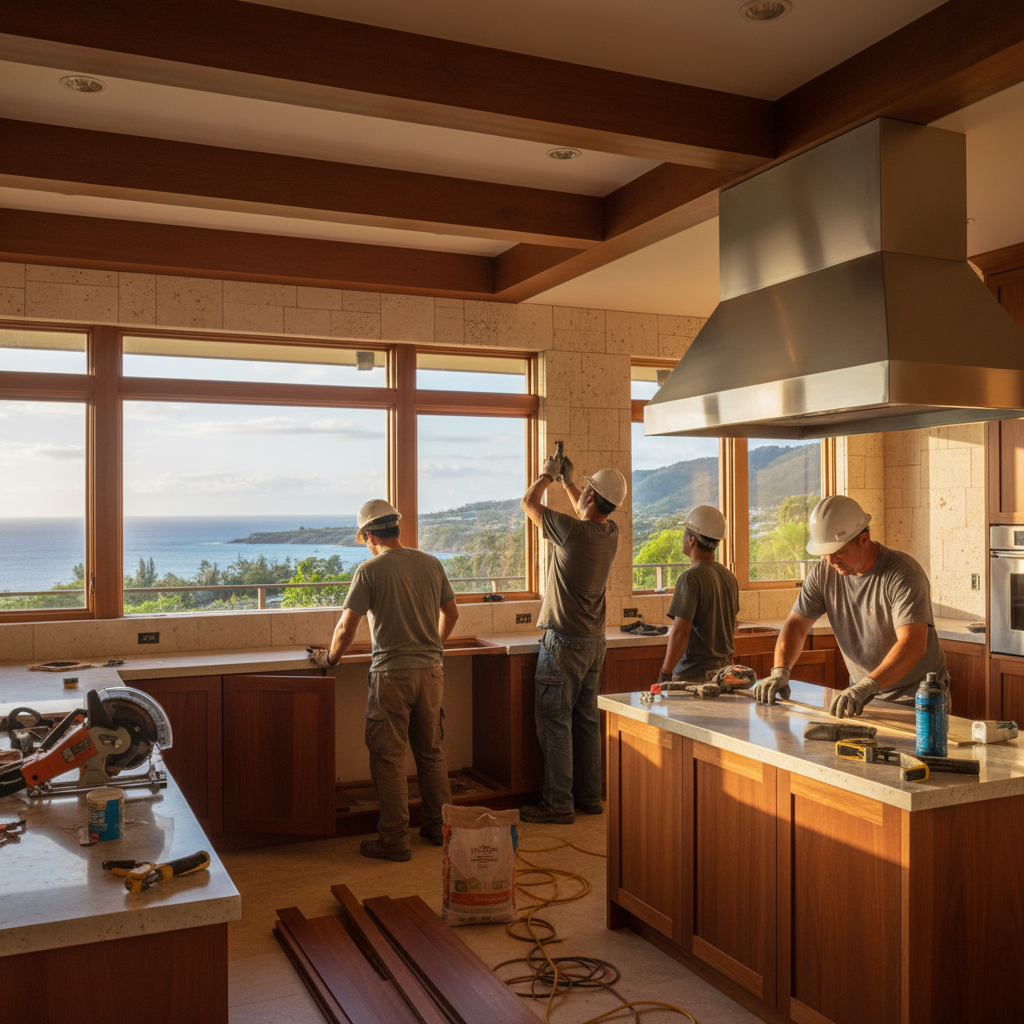
A full kitchen remodel in Hawaii Kai, from our first conversation to your first meal in the new space, realistically takes between 4 and 6 months in 2026. The actual on-site construction is only a piece of that puzzle, typically lasting 10 to 16 weeks. The biggest factors that homeowners often underestimate are the pre-construction phases: design, material selection, and, most significantly, permitting.
Here’s a breakdown of a standard timeline:
- Phase 1: Design and Planning (4-8 weeks). This is where we work with you to finalize the layout, select every single material (cabinets, counters, tile, faucets), and create the detailed architectural plans required for permitting. Making all decisions upfront is crucial to avoid delays later.
- Phase 2: Permitting (8-16 weeks). This is the big variable. Submitting plans to the Honolulu Department of Planning and Permitting (DPP) is a process. We’ve seen simple permits get approved in 8 weeks, but more complex ones, especially those involving structural changes, can take 4 months or longer. Our team manages this entire process, but the timeline is ultimately up to the city.
- Phase 3: Material Procurement (4-12 weeks). This happens concurrently with permitting. Custom or even semi-custom cabinets can have a 10-12 week lead time from the order date to landing on Oʻahu. We order everything before demolition begins to ensure all components are on-site and ready to go.
- Phase 4: Construction (10-16 weeks). This is when the crew shows up. It includes demolition, framing, plumbing and electrical rough-ins, inspections, drywall, painting, flooring, cabinet and countertop installation, final trade work, appliance installation, and the final punch list.
Money-Saving Tip #2: Make Selections Early and Stick to Them. Changing your mind on the tile or faucet after it’s been ordered can cause major delays. We recently had a project where a client decided they wanted a different model refrigerator after the custom cabinet panels had already been fabricated. Remaking the panels added three weeks to the schedule and nearly $2,000 to the cost. Finalize your choices during the design phase to keep the project on time and on budget.
The key takeaway is to be patient. A quality kitchen renovation isn’t a quick flip; it’s a carefully orchestrated process. Trying to rush it, especially in Hawaii, almost always leads to mistakes and higher costs.
What Permits Do You Need for Kitchen Remodel in Hawaii Kai?
For almost any substantive kitchen remodel in Hawaii Kai, you will need a building permit from the City and County of Honolulu’s Department of Planning and Permitting (DPP)[1]. This isn’t just bureaucratic red tape; it’s a critical process to ensure the work is done safely and to current building codes, protecting your family and your home’s value.
You definitely need a permit if your project involves:
- Moving or removing walls, especially if they are load-bearing.
- Altering the plumbing system, like moving the location of a sink or dishwasher.
- Changing the electrical system, such as adding new circuits for appliances, moving outlets, or installing new lighting.
- Modifying windows or exterior doors, which have implications for hurricane code compliance.
A simple cosmetic update—like refacing cabinets, replacing countertops in the same spot, painting, or laying new flooring—generally does not require a permit. However, the line can be blurry. For example, replacing a gas range with an induction cooktop might require a new, dedicated electrical circuit, which *does* trigger the need for a permit. As a licensed general contractor, we always err on the side of caution and verify with the DPP.
The permitting process involves submitting professional drawings that detail the architectural, structural, electrical, and plumbing plans. A DPP plan reviewer checks these against the building code. This can be a back-and-forth process that takes time. Attempting to do work without a permit is a huge risk. If you’re caught, the DPP can issue a stop-work order and impose hefty fines. Worse, you’ll have to retroactively permit the work, which might involve tearing out finished walls to show the inspectors the framing or wiring. It can also create major problems when you try to sell your home.
Money-Saving Tip #3: Hire a Design-Build Contractor. A design-build firm like Warrior Construction handles both the design and the construction, including the entire permitting process. We know the DPP’s requirements, we speak their language, and we manage the submissions, revisions, and inspections. This integrated approach is far more efficient than hiring an architect and a contractor separately, which often leads to communication gaps and delays. We take the stress of the bureaucracy off your plate.
Hawaii Kai-Specific Considerations: Climate, Materials, Regulations
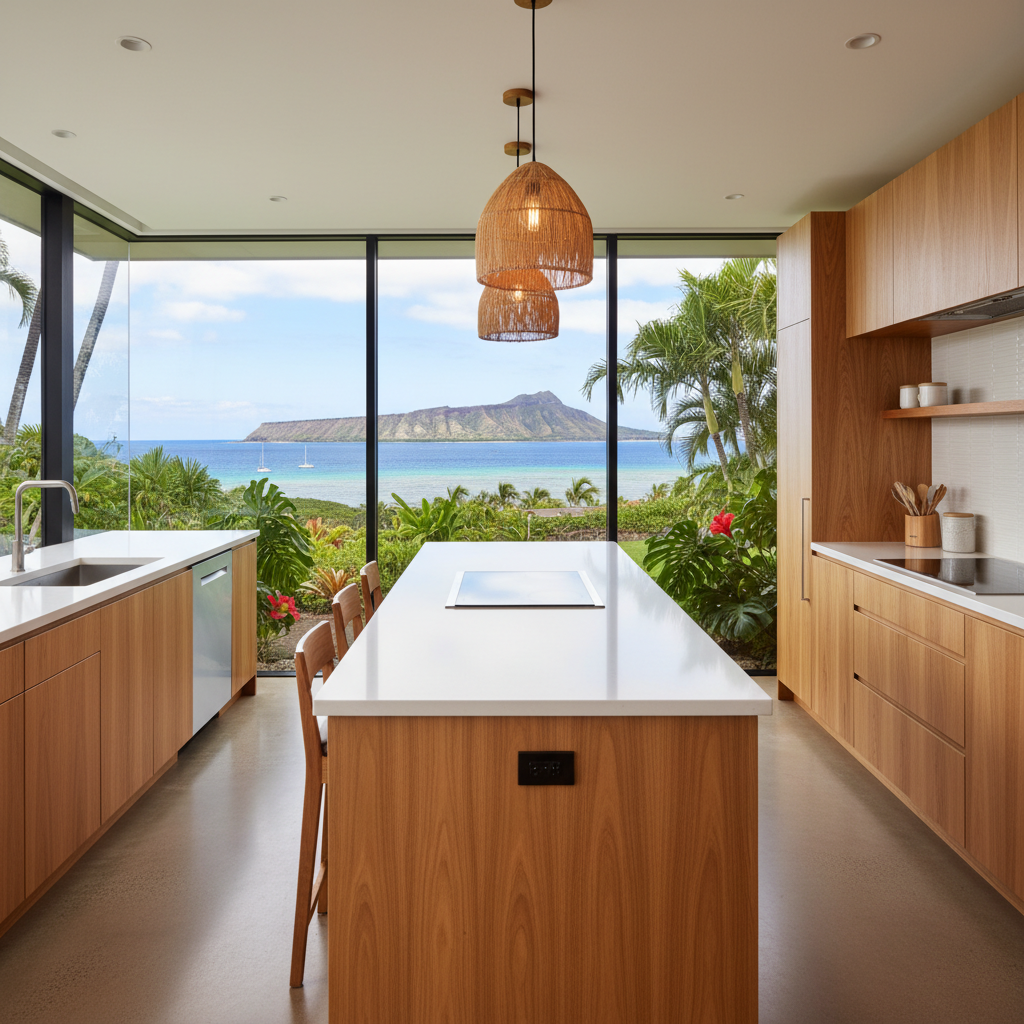
Remodeling a kitchen in Hawaii Kai isn’t the same as doing one in Arizona or Ohio. Our unique island environment demands specific materials, construction techniques, and an understanding of local regulations. Ignoring these factors is a recipe for a kitchen that looks great for a year, then quickly deteriorates.
Salt-Air Corrosion
Hawaii Kai is a marine community. That beautiful salty air that we love is incredibly corrosive. We see its effects constantly.
- Hardware: Cheap cabinet hinges, drawer slides, and handles made of low-grade metal will rust and seize up within a few years. We strongly recommend using high-quality stainless steel (ideally 316 grade for anything near an open window) or finishes with a lifetime warranty against corrosion.
- Windows & Doors: Aluminum-framed windows and doors, while common, will pit and corrode over time. We often recommend vinyl or fiberglass frames, which are impervious to salt and provide better insulation.
- Appliances: The finish on appliances can be affected, too. Keeping them clean and wiped down can help, but be prepared for a shorter lifespan on exterior finishes compared to drier climates.
Hurricane Code Compliance
Since Hurricane Iniki in 1992, Hawaii has had robust building codes designed to withstand hurricane-force winds. If your kitchen remodel involves replacing exterior windows or doors, they must meet the current wind load and impact resistance requirements. Furthermore, if we open up walls, we are required to ensure that the home’s structural connections—like hurricane straps tying the roof to the walls—are up to code. This is not optional; it’s for your safety.
Older Home Stock and Regulations
Many Hawaii Kai homes were built between the 1960s and 1980s. When we open up the walls in these properties, we often uncover issues that must be brought up to modern standards:
- Outdated Wiring: Aluminum wiring was common for a time and is a known fire hazard. It needs to be remediated by a licensed electrician.
- Galvanized Plumbing: Old galvanized steel or cast iron pipes corrode from the inside out, restricting water flow and eventually failing. We typically replace any accessible pipes with copper or PEX.
- Single-Wall Construction: Some older homes have single-wall construction, which offers little insulation and can present challenges when running new electrical or plumbing.
Money-Saving Tip #4: Invest in Durability Over Style. It’s tempting to splurge on a trendy backsplash or a designer faucet. But your money is better spent on the things you don’t see. Pay for the better window frame, the stainless steel hardware, and the proper waterproofing. On a recent project, a client chose to use high-end vinyl windows instead of standard aluminum. The upfront cost was about $3,000 more, but they will avoid the $15,000+ replacement cost they would have faced in 10-15 years when the aluminum frames corroded.
How to Choose the Right Kitchen Remodel Contractor in Hawaii Kai
Choosing the right contractor is the single most important decision you will make for your kitchen remodel. The right partner will ensure your project is built to last, on budget, and with minimal stress. The wrong one can turn your dream kitchen into a financial and emotional nightmare. A good kitchen renovation in Hawaii Kai requires a professional with deep local expertise.
Here is a checklist to follow when vetting a kitchen contractor in Hawaii Kai:
- Verify Their License and Insurance. This is non-negotiable. Use the Hawaii Department of Commerce and Consumer Affairs (DCCA) Professional & Vocational Licensing (PVL) search tool[2] to confirm their general contractor license is active and in good standing. Our license is BC-34373. Ask for copies of their general liability and workers’ compensation insurance certificates. Without this, you could be liable for any accidents on your property.
- Check Their Portfolio and References. Look for a contractor who has a strong portfolio of projects similar to yours in style and scope. Don’t just look at the pretty pictures; ask to speak with 2-3 of their recent clients. Ask them about the contractor’s communication, professionalism, and how they handled problems when they arose (because problems always arise in construction).
- Get a Detailed, Written Contract. A vague, one-page estimate is a major red flag. A professional contract will be many pages long and should specify the full scope of work, a payment schedule, material allowances, a projected timeline, and procedures for handling change orders.
- Assess Their Communication. During the bidding process, how responsive and professional are they? Do they answer your questions thoroughly? Construction is a long-term relationship. You want a partner you can communicate with effectively.
Money-Saving Tip #5: Beware of the Lowest Bid. It is tempting to jump on the lowest price, but this is often where trouble starts. An unusually low bid can mean several things: they are using cheaper, substandard materials; they are not properly licensed or insured; they have left major items out of the scope that will pop up later as expensive change orders; or they are simply desperate for work. A bid from a reputable company like Warrior Construction may not be the lowest, but it will be comprehensive, realistic, and honest.
Real Hawaii Kai Kitchen Remodel Project Example
To put all this theory into practice, let’s look at a real-world example of a kitchen remodel in Hawaii Kai our team recently completed.
- Location: A 1970s single-family home in the Hahaione Valley area.
- The Problem: The original kitchen was dark, cramped by a peninsula that cut off the room, and had failing laminate cabinets and formica countertops. The plumbing was original galvanized steel, and the electrical panel was maxed out.
- The Homeowners’ Goal: Create a bright, open-concept kitchen that connected to the dining and living areas, with modern amenities, better storage, and a large island for their family to gather around.
- Our Plan:
- Remove the non-load-bearing peninsula wall to open up the space.
- Relocate the refrigerator and create a new pantry wall for vastly improved storage.
- Design a 9-foot central island with seating for four, a prep sink, and a microwave drawer.
- Replace all plumbing lines back to the main stack and upgrade the electrical subpanel to handle new appliances, including an induction cooktop.
- Install semi-custom shaker cabinets, quartz countertops, and a glass tile backsplash.
- Replace a small window over the sink with a larger picture window to bring in more light.
The Numbers:
- Initial Budget: $110,000
- Permit & Design Phase: 15 weeks (DPP review took longer than average).
- Construction Phase: 13 weeks.
- Final Cost: $116,500. The $6,500 overage was due to discovering termite damage in the wall behind the old sink, which required structural repairs. This is exactly why a 10-15% contingency fund is essential.
The Outcome: The transformation was incredible. By removing one wall and reconfiguring the layout, we created a functional, beautiful, and modern kitchen that is now the true heart of the home. The homeowners were thrilled with the result, and the project added significant equity to their property.
What this means for Hawaii homeowners
Undertaking a kitchen remodel in Hawaii Kai is a major endeavor, but it’s one that can dramatically improve your quality of life and your home’s value. The key to success is approaching it with realistic expectations and a solid plan. After twenty years in this business, here is our most critical advice boiled down for you.
Money-Saving Tip #6: Plan Thoroughly and Build a Contingency.
The most expensive phrase in construction is “while you’re at it…” Scope creep is a budget killer. The best way to save money is to spend more time in the planning phase. Finalize every single decision—from cabinet pulls to grout color—before the first hammer swings. This allows us to order everything and create a precise schedule. And even with the best plan, surprises happen. A 10-15% contingency fund isn’t optional; it’s a necessity. On our recent Hahaione project, that fund covered the unexpected termite damage without derailing the entire project.
Here’s your action plan:
- Define Your Budget and Priorities: Know what you can realistically spend, and separate your “must-haves” from your “nice-to-haves.”
- Factor in the ‘Hawaii Time’ Multiplier: Add at least 4-6 weeks to any mainland-based timeline you see online. Permitting and shipping are the two biggest reasons.
- Prioritize Resilient Materials: Focus your budget on quality windows, corrosion-resistant hardware, and durable cabinetry that can withstand our humid, salty environment.
- Hire a Licensed, Local Pro: The most crucial step is choosing the right partner. A qualified general contractor like Warrior Construction will navigate the complexities of permitting, manage subcontractors, and ensure your investment is protected. Start your research early.
A well-executed kitchen remodel is worth the effort. It requires patience and a partnership with a contractor you trust. When you’re ready to start the conversation, our team is here to help you plan it right from the beginning.
Frequently Asked Questions About Kitchen Remodel in Hawaii Kai
Can I save money by buying my own materials?
While it might seem like a good idea, it often creates more problems and costs. Contractors get trade discounts that aren’t available to the public. More importantly, we are responsible for quantities, delivery schedules, and warranties. If a faucet you bought online arrives damaged or is the wrong part, the project can be delayed for weeks while you deal with the return, holding up the plumber and countertop installer and creating a costly scheduling nightmare.
What is the return on investment (ROI) for a kitchen remodel in Hawaii Kai?
A mid-range kitchen remodel in the Honolulu area consistently offers one of the best ROIs of any home improvement project, typically recouping 70-85% of its cost at resale. In a desirable market like Hawaii Kai, an updated, modern kitchen is a major selling point that can help your home sell faster and for a higher price. It’s an investment in both your lifestyle and your equity.
Do I need an architect for my kitchen remodel?
If you are not moving any load-bearing walls, you often don’t need a separate architect. A good design-build general contractor, like Warrior Construction, can typically handle the design, space planning, and creation of the drawings needed for DPP permitting. If your remodel involves significant structural changes or a home addition, we will bring in a structural engineer or architect as part of our integrated team.
How do you handle termite damage found during demolition?
Finding termite damage is common in older Hawaii homes. When we find it, we stop work in that area, document it with photos, and bring it to your attention immediately. We will then get a licensed pest control company to assess and treat the area. Afterward, our crew will repair the structural damage by replacing the affected wood. This is a primary reason why having a 10-15% contingency fund is crucial for any remodel project in Hawaii.
What are the most popular kitchen cabinet styles in Hawaii right now?
For 2026, we’re seeing a high demand for clean, simple styles that complement Hawaii’s natural beauty. Shaker-style doors remain timelessly popular, often in light colors like white, off-white, or light gray to keep the space feeling bright and airy. We’re also installing a lot of flat-panel, contemporary cabinets, sometimes in a light-to-medium wood grain like white oak, which adds warmth and a modern tropical feel.
Is it better to reface or replace kitchen cabinets?
Refacing can be a good option if your cabinet boxes are in excellent structural condition and you are happy with your kitchen’s current layout. However, if the boxes are old, made of particleboard, or showing signs of water damage, it’s always better to replace them. In our experience, the cost savings of refacing are often less than people think, and full replacement gives you a much higher quality, longer-lasting result and the freedom to improve the layout.
Can I live in my house during a kitchen remodel?
While it is technically possible, we strongly advise against it if you can make other arrangements. A full kitchen demolition and remodel is extremely disruptive. There will be constant noise, dust, and a parade of workers in your home. You will be without a sink, stove, or counter space for many weeks. Most clients set up a temporary kitchen in the garage or another room with a microwave and refrigerator and plan to eat out a lot, or they stay with family or in a short-term rental for the most intense phases of construction.
Planning a kitchen remodel is a complex process, but you don’t have to do it alone. With over 20 years of experience helping Hawaii Kai homeowners create spaces they love, our team at Warrior Construction has the expertise to guide you through every step.
If you’re ready to transform your kitchen, let’s start the conversation. We can help you develop a realistic budget and a beautiful design that fits your family’s needs and stands up to the demands of island life. Reach out to us to schedule your initial consultation.
Ready to start planning your Hawaii Kai kitchen remodel? Learn more about our kitchen remodeling services or request your free, no-obligation estimate today.