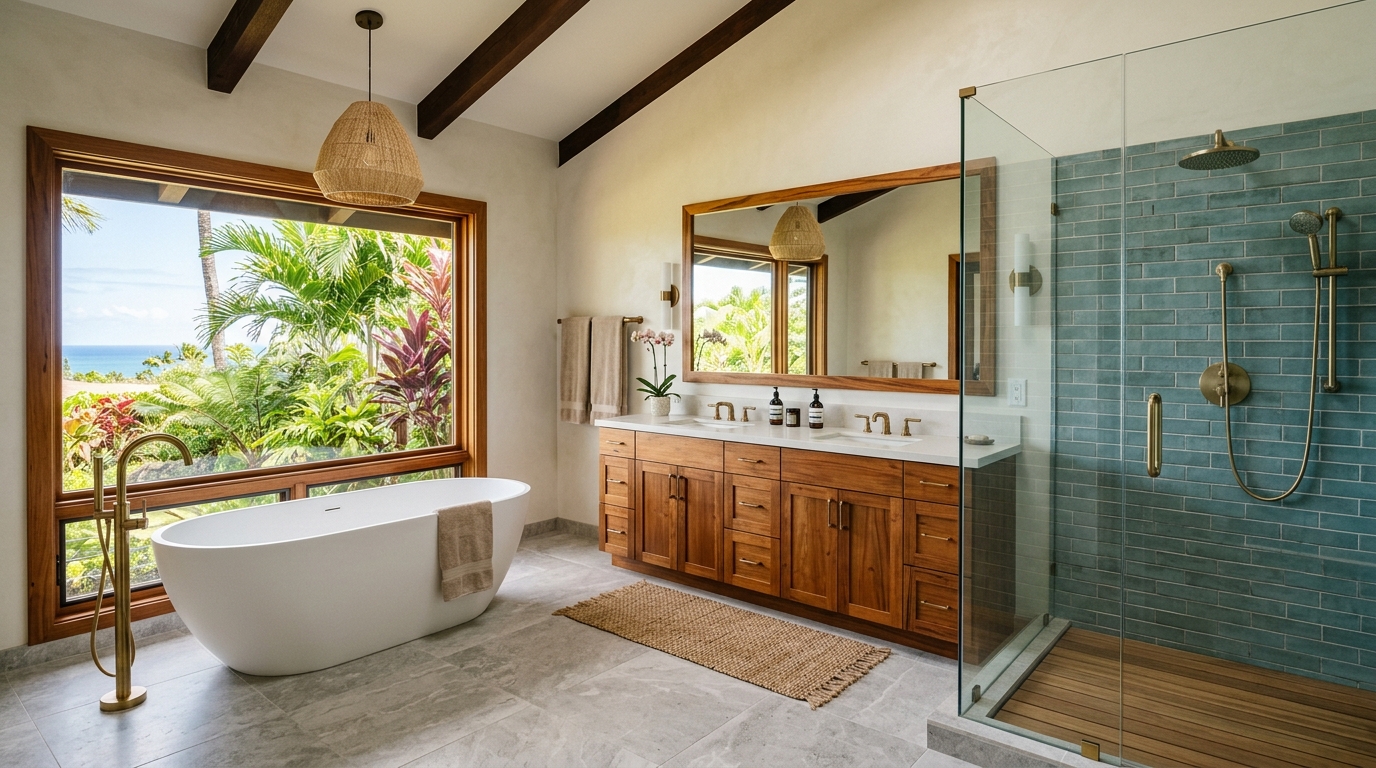
In 2026, a standard bathroom remodel in Honolulu typically costs between $25,000 and $45,000 and takes four to seven weeks from demolition to final walkthrough. For a larger master bathroom, you’re looking at $50,000 to $85,000 or more, especially if you’re moving walls or plumbing. Here on O’ahu, we’re not just dealing with lumber and tile; we’re fighting against salt air, navigating the Honolulu Department of Planning and Permitting (DPP), and managing logistics that mainland contractors can’t even imagine. It’s a different ballgame entirely.
For over two decades, our team at Warrior Construction has been in the trenches, gutting bathrooms in 1940s Manoa homes, modernizing high-rise condos in Kaka’ako, and building spa-like retreats on the North Shore. We’ve seen it all: cast-iron pipes turned to dust by corrosion, termite damage hidden behind shower walls, and shipping delays that turn a six-week project into a three-month marathon. This experience has taught us that a successful bathroom remodel Honolulu homeowners love is built on a foundation of realistic expectations and deep local knowledge. This guide walks you through the critical things you need to know before you ever pick up a sledgehammer, sharing real numbers and hard-earned advice from our job sites.
Why Honolulu Homeowners Trust Warrior Construction for Bathroom Remodels
Choosing a partner for your bathroom renovation in Honolulu is about more than just a license number and a nice portfolio. It’s about trust and local expertise. Homeowners across O’ahu trust our team because we are a licensed, insured, and bonded General Contractor (License BC-34373) with a long history of navigating the unique challenges of building in Hawaii. We live here, we work here, and we understand the nuances that can make or break a project.
For instance, working in a Waikiki or Kaka’ako high-rise isn’t the same as remodeling a single-family home in Mililani. We recently completed a master bath project in a 40-story condo. The AOAO (Association of Apartment Owners) rules were incredibly strict: work was only allowed from 9 AM to 4 PM, Monday through Friday. All water shutoffs for the entire plumbing stack required a 30-day written notice to the board and all affected residents. Debris couldn’t be left in a dumpster; it had to be hauled off-site every single day in sealed containers, using an elevator padded and reserved in advance. Our project manager coordinated every detail with the resident manager, ensuring minimal disruption. A mainland contractor, or even a less experienced local one, would be overwhelmed by these logistical hurdles. This is the kind of ingrained knowledge we bring to every job.
Our process is built around clear communication. From the initial free estimate to the final punch list, you have a direct line to your project manager. We use a transparent system for budgeting and change orders, so you’re never surprised by a hidden cost. We understand that a remodel is disruptive, and our goal is to make the process as smooth as possible by anticipating problems before they arise. Whether it’s pre-ordering long-lead-time items to account for shipping delays or having our structural engineer on standby to assess termite damage found during demolition, our proactive approach is what sets us apart. We don’t just build bathrooms; we build relationships based on professional execution and a deep respect for your home.
What Does a Bathroom Remodel Cost in Honolulu?
Let’s get straight to the point. In 2026, the cost for a bathroom remodel in Honolulu is significantly higher than what you see on mainland home improvement shows. The “Hawaii factor”—shipping, specialized labor, and material costs—is very real. Here’s a realistic breakdown of what you can expect to invest.
- Standard Guest Bathroom Remodel (approx. 40-60 sq. ft.): $25,000 – $45,000. This is your typical 5’x8′ hall bathroom. This price range generally covers a gut renovation with a new tub or a pre-fabricated shower pan, a new toilet, a standard vanity from a local supplier like Homeowners Design Center, basic ceramic or porcelain tile, new fixtures, a high-CFM exhaust fan, and fresh paint. We’re not moving walls or plumbing locations here; it’s a direct replacement of existing elements with modern, quality materials.
- Master Bathroom Renovation (approx. 100-150 sq. ft.): $50,000 – $85,000+. This is where you get into more custom features. This budget allows for a custom walk-in shower with a waterproof Schluter-KERDI system, a frameless glass enclosure, a double vanity with stone countertops, moving a non-load-bearing wall to improve layout, upgraded electrical for better lighting, and higher-end tile and fixtures. For example, a recent master bath we did in Hawaii Kai came in at $72,000. It included a large curbless shower, a freestanding tub, and custom koa cabinetry.
- Luxury Spa or Major Relocation: $100,000 and Up. If you’re dreaming of a true spa retreat with a steam shower, extensive custom cabinetry, high-end natural stone slabs, relocating the toilet and drains (which may involve saw-cutting the concrete slab), and major structural changes, your investment will start at six figures. These projects are complex, require extensive design and engineering, and involve the highest-end materials that often have to be special-ordered from off-island.
Where Does the Money Go? The Honolulu Cost Breakdown
Understanding the percentages helps clarify why costs are what they are. It’s not just the tile and the toilet.
| Cost Category | Percentage of Budget | Honolulu-Specific Notes |
|---|---|---|
| Labor | 45% – 55% | Skilled, licensed plumbers, electricians, and tilers are in high demand on O’ahu. Their rates reflect this. This is the largest chunk of your budget. |
| Materials & Fixtures | 30% – 40% | Everything from your vanity to your tile has likely taken a long ride on a Matson or Pasha barge. That shipping cost is baked into the price you pay. |
| Permits, Design & Admin | 10% – 15% | This includes architect/designer fees if needed, Honolulu DPP permit fees, insurance, and the general contractor’s overhead and profit for managing the project. |
| Contingency Fund | 15% – 20% | This is not optional in Hawaii. This covers unforeseen issues like discovering termite damage, rotted subfloors from a slow leak, or corroded cast-iron plumbing that needs replacement. On a recent Kailua job, we opened a wall and found the entire vent stack had been corroded by salt air, adding $4,000 to the budget. The client’s contingency fund covered it without derailing the project. |
How Long Does a Bathroom Remodel Take in Honolulu?
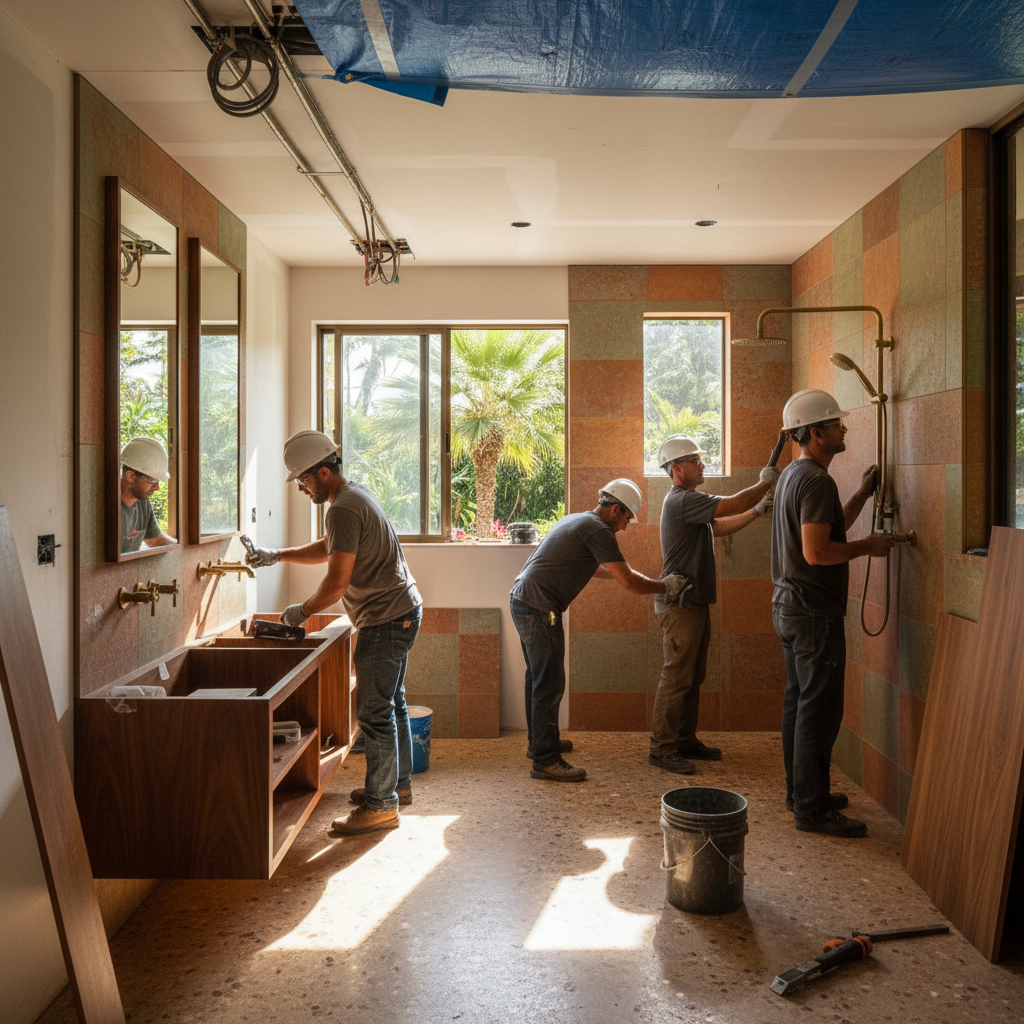
Patience is a virtue, especially when remodeling in Hawaii. The actual construction for a standard bathroom might take 4 to 7 weeks, but the total project timeline from your first phone call to us to your first shower in the new space is much longer. The biggest variable is the Honolulu permitting process and material lead times.
Here’s a realistic timeline for a full bathroom remodel in Honolulu that requires a permit:
- Phase 1: Design & Planning (4-6 weeks). This is where we work with you to finalize the layout, select all your materials (tile, vanity, fixtures, lighting), and get firm quotes. Making every decision upfront is critical. Changing your mind about the tile after it’s already been ordered from the mainland can add a month to your schedule. Our team helps you source materials from reliable local vendors to minimize these risks.
- Phase 2: Permitting (4-12 weeks, sometimes longer). If your project involves moving walls, electrical, or plumbing, we have to submit plans to the Honolulu Department of Planning and Permitting (DPP). As of 2026, the DPP is still facing significant backlogs. We prepare meticulous plans to minimize the chance of rejection or requests for more information, but a significant waiting period is unavoidable. A simple permit might take a month, while a more complex one could take three or more.
- Phase 3: Construction (4-7 weeks). Once we have the permit in hand, our crew gets to work. This phase breaks down as follows:
- Demolition & Prep: 2-4 days
- Rough-in Plumbing & Electrical: 3-5 days
- City Inspections (Rough-in): 1-3 days (We are at the mercy of the inspector’s schedule)
- Insulation, Drywall, & Waterproofing: 5-8 days (Proper waterproofing requires multiple steps and curing time)
- Tile Installation: 4-6 days
- Cabinetry, Countertops, & Painting: 3-5 days
- Final Fixture Installation (Plumbing & Electrical): 2-4 days
- Final Inspections & Punch List: 2-4 days
The biggest potential delays during construction are inspections and discovering unforeseen conditions. If an inspector wants something changed, work stops until it’s corrected and re-inspected. If we find extensive termite damage, work stops while we bring in a structural engineer and perform the necessary repairs. A well-planned project with an experienced contractor like Warrior Construction can mitigate these risks, but they can never be fully eliminated.
What Permits Do You Need for a Bathroom Remodel in Honolulu?
Navigating the Honolulu Department of Planning and Permitting (DPP)[1] is one of the most crucial parts of any significant remodel. Many homeowners wonder if they really need a permit for a bathroom. The answer is almost always yes, unless you’re doing purely cosmetic, like-for-like updates.
You WILL need a building permit in Honolulu if your bathroom remodel includes any of the following:
- Moving or removing any walls (even non-load-bearing walls).
- Changing the location of any plumbing fixture (e.g., moving a toilet, converting a tub to a shower in a different spot).
- Adding or moving any electrical outlets, switches, or light fixtures.
- Changing the size of a window or door.
- Altering any structural components of the home.
You likely DON’T need a permit for:
- Replacing a toilet or vanity in the exact same location.
- Re-tiling a floor or shower with no plumbing changes.
- Painting or refinishing cabinets.
- Replacing a faucet.
Here’s the thing: attempting to do unpermitted work is a huge risk. If the city finds out, they can issue a stop-work order and levy heavy fines. Worse, when you go to sell your home, unpermitted work can completely derail the sale or force you to tear it out and have it redone correctly. It’s simply not worth the headache. As your general contractor, our team handles the entire permitting process. We create the necessary architectural drawings, fill out all the paperwork, and manage the submission and follow-up with the DPP plan reviewers. This saves you an enormous amount of time and stress and ensures your project is legal, safe, and built to last.
Honolulu-Specific Considerations: Climate, Materials, Regulations
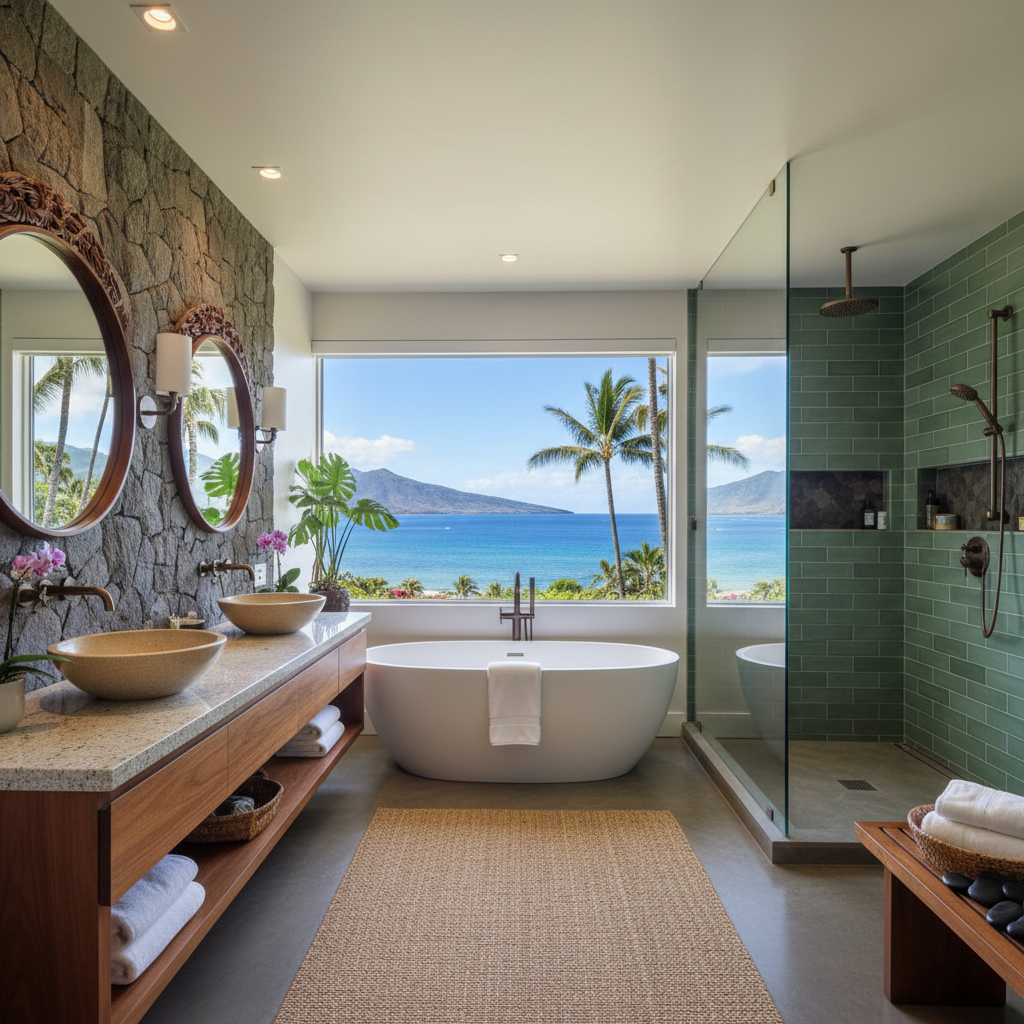
A bathroom in Honolulu has to withstand conditions that a bathroom in Arizona or Ohio will never see. Our approach is always tailored to Hawaii’s unique environment, from the corrosive salt air to the ever-present humidity.
Salt-Air Corrosion is Your Enemy
If you live anywhere on the Windward side (Kailua, Kaneohe) or near the coast in Ewa Beach or Kahala, salt is in the air, and it eats metal for breakfast. For bathroom fixtures, we guide our clients away from cheap chrome-plated hardware. We recommend materials like PVD (Physical Vapor Deposition) finishes, high-grade 316 stainless steel, or solid brass, which hold up much better. This applies to everything: showerheads, faucets, towel bars, and even the screws holding your vent cover in place. On a recent Lanikai remodel, the homeowner wanted a specific aluminum-framed window in their shower. We strongly advised against it, showing them photos of a similar window we had replaced that was pitted and seized after just five years. We installed a solid vinyl window instead, which will last decades in that environment.
Waterproofing and Ventilation: The Fight Against Mold
Humidity is a fact of life here. A bathroom that isn’t properly waterproofed and ventilated is a breeding ground for mold. Our standard practice for showers goes far beyond just putting up cement board. We use a complete waterproofing system, like the Schluter-KERDI membrane, which creates a fully sealed, watertight assembly behind the tile. This is non-negotiable for us.
Equally important is mechanical ventilation. A tiny, noisy fan won’t cut it. We calculate the required CFM (Cubic Feet per Minute) rating for your bathroom’s volume and install a properly sized, quiet Panasonic Whisper fan. We also recommend hooking it up to a humidistat, so it automatically kicks on when moisture levels get too high. This single upgrade is one of the best investments you can make for the long-term health of your home.
Regulations: Hurricane Codes and AOAO Rules
Even for an interior remodel, building codes are a major factor. Since Hurricane Iniki, Hawaii has had robust hurricane-resistant building codes. If your bathroom remodel involves an exterior wall, we may be required to upgrade the connections and install hurricane straps to bring that section of the wall up to current code. This is for your safety.
For condo dwellers, the AOAO house rules are just as important as the city building code. We obtain a copy of the rules before we even start designing. They dictate everything from approved work hours to the type of underlayment required for new flooring to minimize noise transmission to the unit below. Ignoring these can result in fines and work stoppages imposed by the building management. Our experience with dozens of AOAOs across Honolulu means we know how to work within these rules effectively. You can see some of our completed projects in our portfolio.
How to Choose the Right Bathroom Remodel Contractor in Honolulu
Hiring the right bathroom contractor in Honolulu is the single most important decision you will make. A great contractor can make the process smooth and deliver a beautiful result, while a bad one can turn your life into a nightmare of delays, cost overruns, and shoddy work.
Here’s what you should look for:
- Verify Their License and Insurance. This is the absolute minimum. Any legitimate contractor must have a Hawaii General Contractor (BC) license. You can and should verify their license status and any past complaints on the Hawaii Department of Commerce and Consumer Affairs (DCCA) Professional & Vocational Licensing (PVL) website[2]. Our license is Warrior Construction, BC-34373. They must also carry current General Liability insurance and Worker’s Compensation insurance. Ask for certificates of insurance—don’t just take their word for it.
- Look for Deep Local Experience. Ask to see a portfolio of projects they have completed *here on O’ahu*. Do they have experience with your type of home, whether it’s a 100-year-old plantation house or a modern condo? Ask them about their relationships with local suppliers. A contractor with long-standing accounts at places like The Tile Shop or Ferguson can often resolve material issues much faster than someone trying to manage everything from afar.
- Ask About Their Team and Subcontractors. Does the contractor have their own crew, or do they subcontract everything? At Warrior Construction, we have our own team of skilled carpenters and project managers, and we work with a small, trusted group of licensed plumbers and electricians who we’ve partnered with for years. This ensures quality control and reliable scheduling. Be wary of a contractor who seems to be finding their subs on the fly.
- Get a Detailed, Written Contract. A professional contract should include a detailed scope of work, a clear payment schedule, a project timeline, and a process for handling change orders. A one-page estimate scrawled on a notepad is a huge red flag. Our contracts are comprehensive documents that protect both you and our company, ensuring everyone is on the same page before work begins.
Real Honolulu Bathroom Remodel Project Example
To make this all concrete, let’s walk through a recent project that highlights many of the challenges and solutions we’ve discussed.
- The Project: Master bathroom gut remodel in a 1980s single-family home in Kailua, on the Windward side.
- The Goal: The homeowners wanted to replace their cramped, dated bathroom with a larger, more open space. Their vision included removing a small linen closet to expand the shower, replacing the tub with a large walk-in shower, installing a new double vanity, and updating all finishes for a modern, coastal feel.
- Initial Budget & Timeline: The initial approved budget was $65,000, with a planned construction timeline of 7 weeks after permit approval.
- The Discovery: As soon as we started demolition, we ran into a classic Windward O’ahu problem. Behind the old acrylic shower surround, the wall studs were damp and showed signs of both water damage and ground termite activity. Worse, when we opened the floor to rework the drain for the new shower, we discovered the original cast iron drain pipe under the slab was severely corroded and leaking—a direct result of decades of exposure to salty, sandy soil. This is exactly why we insist on a healthy contingency fund.
- The Solution: Work paused immediately. We brought in our trusted pest control company for localized termite treatment and our structural engineer to assess the damage. We then had to saw-cut a channel in the concrete slab to remove and replace about 15 feet of the old cast iron pipe with modern, durable ABS piping. The damaged wall studs were replaced with new pressure-treated lumber. The total cost for these unforeseen repairs—including the plumbing, concrete work, and termite treatment—came to $7,500.
- The Result: The unforeseen plumbing and structural work added 10 days to the project schedule. The final project cost was $72,500, which the homeowners were able to cover with their contingency fund. Because they were prepared, a potential project-killing disaster became a manageable problem. The finished bathroom is beautiful and, more importantly, it’s now structurally sound and built with materials designed to last in the Kailua climate. It features a fully waterproofed curbless shower, porcelain tile that looks like driftwood, stainless steel fixtures, and a high-power ventilation fan to handle the humidity. The homeowners were thrilled with the result and relieved that we handled the crisis professionally.
What this means for Hawaii homeowners
Undertaking a bathroom remodel on O’ahu is a significant investment of both time and money. The key to a successful outcome is to go into it with your eyes wide open, fully aware of the local realities. Rushing the process or cutting corners will almost always lead to regret.
Here are the most important takeaways for your planning process:
- Budget for Reality, Not for TV: The numbers you see on mainland reality shows are irrelevant here. Use the cost breakdowns in this guide as a starting point. Most importantly, establish a contingency fund of at least 15-20% of your total budget. In Hawaii, it’s not a question of *if* you’ll find something unexpected, but *what* you’ll find.
- Hire a Licensed, Experienced Local Pro: Your contractor’s local knowledge is their most valuable asset. A team that understands how to deal with the Honolulu DPP, knows which materials stand up to salt air, and has a network of reliable local subcontractors is worth every penny. Don’t be tempted by a lowball bid from an unlicensed or inexperienced handyman.
- Plan for the Long Haul: The timeline is not just the construction phase. Factor in months for design, material selection, and permitting before any physical work can even begin. Be patient. A well-planned project that accounts for shipping and permitting delays will be far less stressful than one built on an unrealistic schedule.
- Focus on Durability: Prioritize performance over aesthetics when they conflict. This means investing in robust waterproofing, powerful ventilation, and corrosion-resistant fixtures. A beautiful bathroom that grows mold or has rusting fixtures in two years is a failed project.
By keeping these principles in mind, you can navigate the complexities of a Honolulu renovation and create a beautiful, functional, and durable bathroom that adds real value to your home.
Frequently Asked Questions About Bathroom Remodel in Honolulu
How much does a simple shower remodel cost in Honolulu?
A simple shower remodel in Honolulu, where you’re just replacing the tile and fixtures in the same footprint without moving plumbing, typically costs between $10,000 and $18,000 in 2026. This would include demolition, proper waterproofing with a system like Schluter-KERDI, new tile, a new shower valve and head, and a new glass door. The cost can go up from there depending on the tile selection and complexity.
Can I remodel a bathroom myself in Hawaii?
You can do some cosmetic work yourself, like painting or replacing a faucet. However, any work involving plumbing, electrical, or altering walls requires a licensed professional and permits in Honolulu. Given the high stakes of water damage from improper work, and the complexities of local codes, we strongly advise against DIY for anything beyond simple surface updates. Hiring a licensed general contractor protects your investment and ensures the work is safe and legal.
What are the most durable materials for a beach house bathroom?
For a bathroom in a coastal area like Kailua or the North Shore, we recommend porcelain tile (it’s non-porous and easy to clean), quartz countertops (durable and stain-resistant), solid vinyl or fiberglass window frames, and PVD or 316-grade stainless steel fixtures to resist salt-air corrosion. Avoid porous stones like marble and metals like raw brass or aluminum, which will degrade quickly in the salty environment.
How long does it take to get a bathroom remodel permit in Honolulu in 2026?
As of early 2026, the timeline for getting a building permit from the Honolulu DPP for a bathroom remodel is typically between 4 and 12 weeks. Simple permits that are well-documented might get through faster, while complex projects or plans with errors can take much longer. A good contractor who knows how to prepare a complete and accurate submission package can help minimize these delays, but a significant wait is unfortunately standard.
Is it worth converting a tub to a walk-in shower for resale value on O’ahu?
Yes, in most cases. Many homebuyers on O’ahu, particularly in the condo market and those looking at aging-in-place, prefer a large, accessible walk-in shower over a tub-shower combo. As long as there is at least one other bathtub in the house (for families with small children), converting a master bath tub to a spacious, modern shower is generally a good investment that improves both functionality and resale appeal.
What’s the biggest mistake homeowners make in a bathroom renovation in Honolulu?
The biggest mistake is hiring an unlicensed or underqualified contractor to save money. This often leads to unpermitted work, shoddy craftsmanship (especially with critical waterproofing), and no recourse when things go wrong. The second biggest mistake is not having a large enough contingency fund (we recommend 15-20%) to handle the inevitable surprises you find in older Hawaii homes, like termite damage or corroded plumbing.
Do I need an architect for a bathroom remodel?
You don’t always need an architect, but you do need professional plans for permitting. If you are keeping the existing layout and just updating finishes, a good general contractor or design-build firm like ours can often produce the necessary drawings for the permit. If you are making significant structural changes, removing load-bearing walls, or reconfiguring the entire space, hiring an architect is highly recommended to ensure the design is safe, functional, and code-compliant.
Start Your Honolulu Bathroom Remodel with Confidence
A bathroom remodel is one of the best ways to improve your daily life and add lasting value to your Hawaii home. But it needs to be done right. It requires a team that understands the challenges of our island environment and has the experience to navigate them successfully. At Warrior Construction, we’ve built our reputation on quality craftsmanship, transparent communication, and a deep commitment to our clients.
If you’re ready to transform your bathroom, we’re here to help. Let’s talk about your vision and how we can bring it to life, on time and on budget. We invite you to explore our approach to bathroom remodeling in Honolulu and schedule your free, no-obligation estimate today.