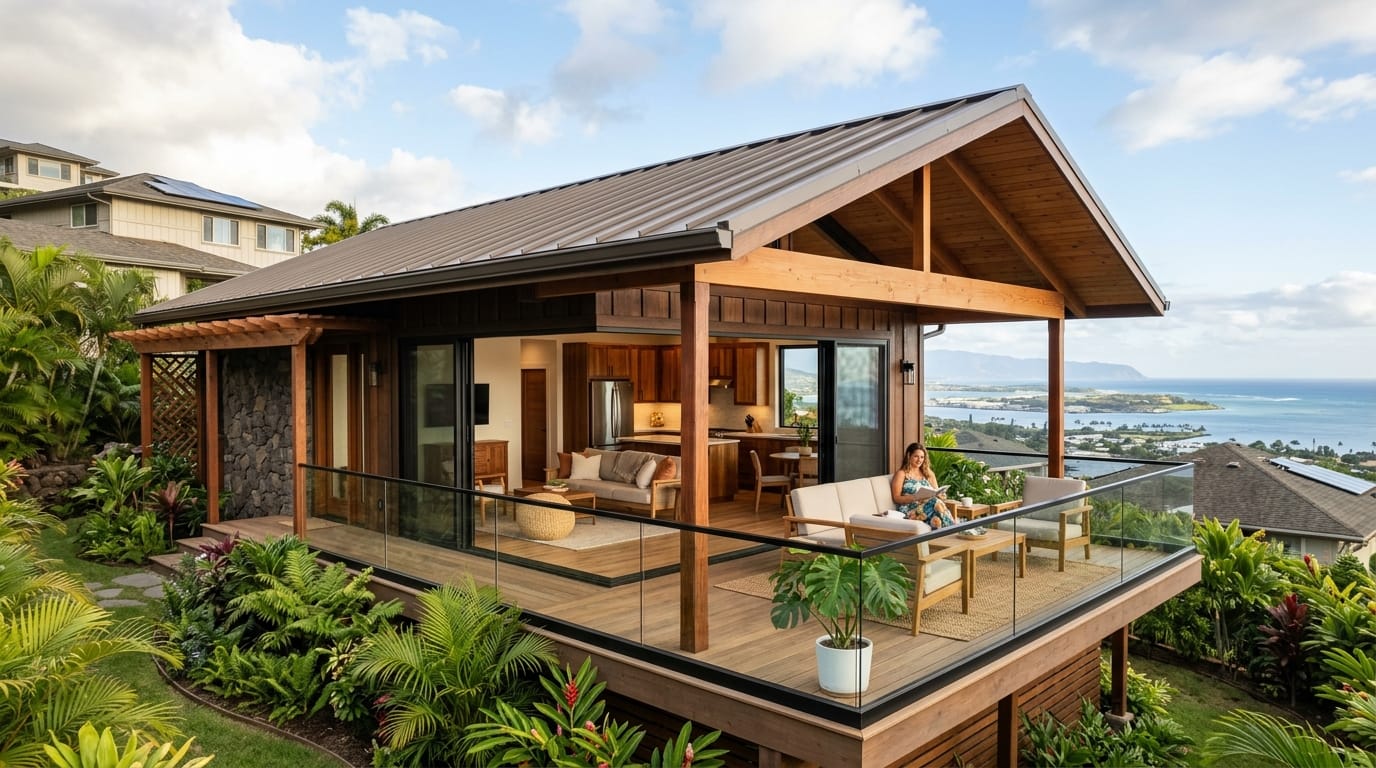
Building an Accessory Dwelling Unit (ADU) in Pearl City is one of the smartest investments an Oʻahu homeowner can make in 2026. As a dedicated adu builder pearl city, our team at Warrior Construction sees firsthand how these projects transform properties, create multi-generational living options, and generate rental income. But the process, from initial design to final inspection, is filled with unique local challenges that can trip up even the most prepared homeowner. The key is knowing what you’re getting into before you break ground.
Simply put, navigating the Honolulu Department of Planning and Permitting (DPP), understanding the specific building codes for our island, and choosing materials that withstand our salt air and intense sun requires deep local experience. This isn’t a mainland construction project where you can just order materials from a big box store and expect them to show up next week. Here, every choice has long-term consequences. For example, a poorly planned project can get stuck in permitting for over a year, and the wrong window selection can lead to rust and leaks in just a few years.
In this guide, we’ll pull back the curtain on what it really takes to build an ADU or Ohana unit in Pearl City. We’ll cover the real costs you can expect in 2026, the frustratingly realistic timelines for permitting and construction, the specific regulations you need to know about, and how to select a contractor who won’t let you down. Think of this as the conversation we’d have over coffee before we even look at a set of plans—honest, straightforward advice from a team that builds here every single day.
Why Pearl City Homeowners Trust Warrior Construction for ADU Builder
Choosing an ADU builder in Pearl City is about more than just finding someone who can swing a hammer. It’s about finding a partner who understands the DNA of Oʻahu construction. At Warrior Construction (License BC-34373), we’ve spent over two decades in the trenches, building everything from custom homes in Kailua to complex renovations in Honolulu. This isn’t just a job for us; it’s our community. We know the local DPP reviewers by name, we have long-standing relationships with the best local subcontractors, and we understand the unique challenges of building in established neighborhoods like Waimalu, Aiea Heights, and Pearl City itself.
Our approach is built on a foundation of transparency and deep local knowledge. We’ve seen homeowners get burned by off-island contractors who don’t understand things like the corrosive effect of the Pearl Harbor air on metal fasteners or the specific soil composition in the area that can affect foundation work. A few years ago, we were called in to fix a failing retaining wall for an ADU built by a mainland-based company. They used the wrong type of backfill and didn’t account for the hydrostatic pressure from our heavy rains, a rookie mistake here but a catastrophic one for the homeowner. That’s the kind of expensive lesson our clients avoid. Our team lives here, we build here, and we understand the responsibility that comes with being a trusted general contractor in Hawaii.
Furthermore, we specialize in the design-build process, which is a huge advantage for ADU projects. Instead of you having to hire an architect, then an engineer, and then bid the project out to builders, we manage the entire process under one roof. This integrated approach saves time, reduces costs, and eliminates the finger-pointing that can happen when the designer and the builder aren’t on the same team. We take full accountability from the first sketch to the final walkthrough, ensuring your project is designed to be built within your budget. As a seasoned ADU contractor pearl city, our mission is to make the process as smooth as possible, transforming your vision into a high-quality, compliant, and beautiful Ohana unit that adds lasting value to your property.
What Does ADU Builder Cost in Pearl City?
Let’s get straight to the point, because this is the number one question every homeowner has. In 2026, the all-in cost to build a standard-quality 800-square-foot ADU in Pearl City is typically between $425 and $550 per square foot. This means you should budget for a total project cost of approximately $340,000 to $440,000. Anyone quoting you significantly less is likely cutting corners, using subpar materials, or hasn’t included all the necessary costs in their estimate. We believe in providing a realistic budget from the start, so there are no painful surprises down the road.
It’s critical to understand what’s included in that per-square-foot cost. This isn’t just lumber and nails; it’s a comprehensive figure that covers the entire project lifecycle. Here’s a rough breakdown of where the money goes:
- Pre-Construction (10-15%): This covers architectural design, structural engineering, surveys, soil reports, and all the permit application fees for the Honolulu DPP. For an 800 sq. ft. ADU, expect to spend $35,000 – $60,000 before any physical work begins.
- Site Work & Foundation (15-20%): This includes excavation, grading, utility trenching (water, sewer, electrical), and pouring the concrete slab or building a post-and-pier foundation. In the clay-rich soil of Pearl City, proper site prep is non-negotiable. This phase can run $50,000 – $80,000 depending on the slope of your lot.
- Structure & Exterior (25-30%): This is the shell of the home—framing, sheathing, roofing (we recommend standing-seam metal for longevity), windows, siding, and doors. Given the cost of shipping materials to Hawaii, this is a significant portion of the budget, around $85,000 – $130,000.
- Interior & Finishes (25-30%): This includes everything inside: electrical, plumbing, HVAC (split-AC systems are standard), drywall, insulation, flooring, cabinets, countertops, paint, and fixtures. This is where your personal choices have the biggest impact on the final cost. This phase typically costs $85,000 – $130,000.
- Contingency & General Contractor Fee (15-20%): A reputable general contractor will include their overhead and profit (usually 10-15%) and a project contingency (5-10%) in the budget. The contingency covers unforeseen issues, like discovering old cesspools during excavation or HECO requiring a service upgrade. For our example, this would be $50,000 – $85,000.
On a recent Pearl City project, the homeowner’s lot required a significant electrical service upgrade to handle the new ADU’s load. HECO’s requirements added nearly $18,000 to the budget. This is a perfect example of a hidden cost that an inexperienced builder might miss in an initial estimate. Our team anticipates these potential issues during the pre-construction phase, so they are part of the conversation from day one. When you’re comparing quotes from any ohana unit builder pearl city, make sure you’re looking at an apples-to-apples comparison that includes all these potential line items.
How Long Does a ADU Builder Take in Pearl City?
If there’s one area where mainland expectations clash with island reality, it’s the project timeline. Building an ADU in Pearl City is not a quick process. A realistic timeline from the day you hire a builder to the day you get your keys is 15 to 24 months. Yes, you read that right. The actual construction is only a fraction of that time; the bulk of the schedule is spent in planning and, most significantly, waiting for permit approval from the Honolulu Department of Planning and Permitting (DPP).
Let’s break down the timeline into its three main phases:
- Phase 1: Design & Pre-Construction (4-6 months)
This is where the groundwork is laid. It involves creating the architectural plans, getting structural engineering done, and preparing all the documents needed for the permit application. This phase includes soil testing, site surveys, and detailed budgeting. Our design-build team works closely with you during this period to ensure the plans are exactly what you want and are designed to meet all local building codes. Rushing this phase is a mistake; a well-prepared plan set is the key to a smoother permit review. - Phase 2: Permitting with Honolulu DPP (8-12 months, sometimes longer)
This is the most unpredictable and often frustrating part of the process. Once we submit your plans to the DPP, they go through multiple departmental reviews.[1] Any request for clarification or changes from a reviewer can add weeks or even months to the timeline. In 2026, the backlog at the DPP is significant, and there’s simply no way to expedite it. We had a project in Kapolei where a minor zoning clarification sent the plans back to the beginning of the queue, adding three months to the wait. This is the reality of building on Oʻahu. Any ADU builder pearl city who tells you they can get a permit in a few months is not being honest. Our role during this phase is to respond to DPP comments quickly and accurately to keep the process moving forward. - Phase 3: Construction (5-8 months)
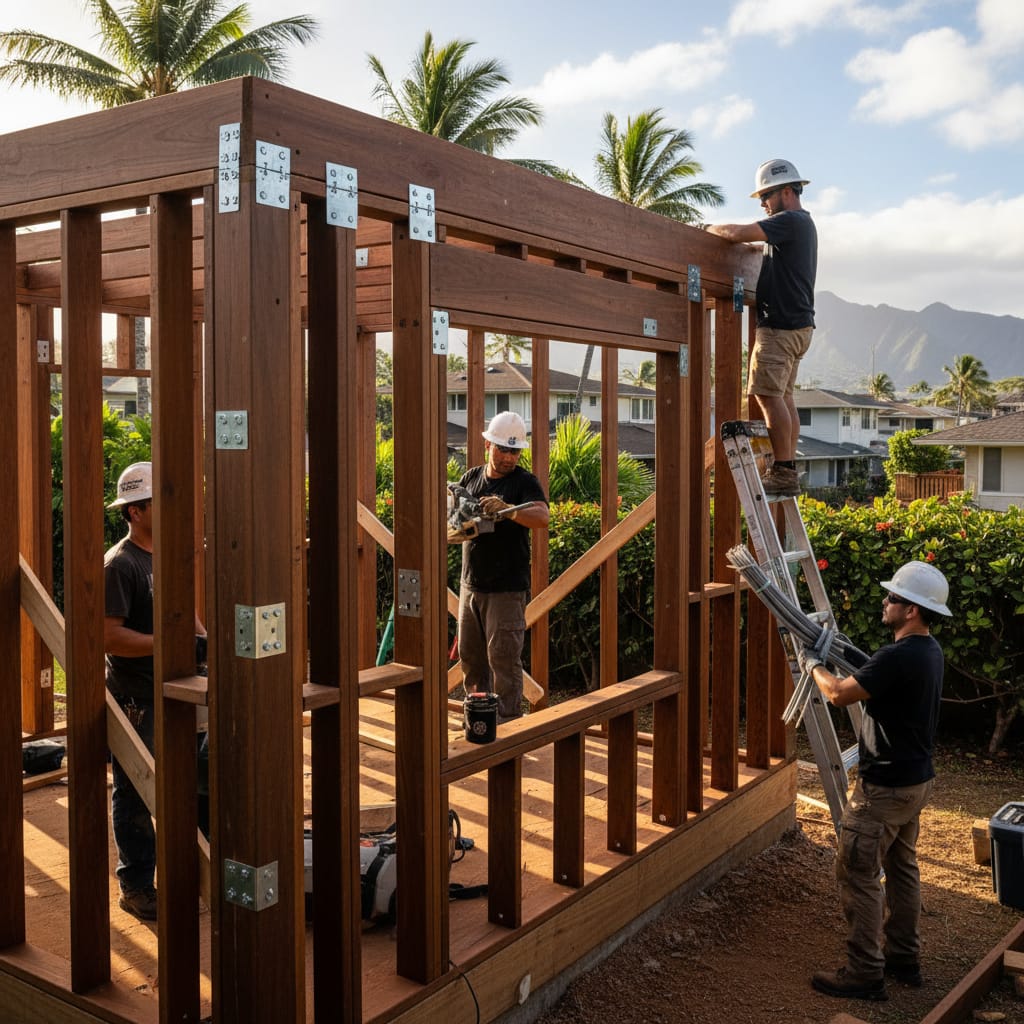
Once we have that approved permit in hand, things move much more quickly. This is the physical build-out. The timeline here depends on the complexity of the design, site conditions, and material availability. Shipping logistics are a constant factor in Hawaii. A specific window package or appliance might have a 12-week lead time. We manage our project schedules meticulously, ordering long-lead items well in advance to minimize delays. From pouring the foundation to the final coat of paint, our on-site team ensures the project is built to the highest standards, with regular progress updates for you along the way.
The key takeaway is to be patient. The desire to get started quickly is understandable, but the Oʻahu building process has its own rhythm. Partnering with a builder who sets realistic expectations and has a proven system for managing the DPP process is essential for your peace of mind.
What Permits Do You Need for ADU Builder in Pearl City?
Securing the right permits for an ADU in Pearl City is a complex and non-negotiable part of the process. You can’t just start building an Ohana unit in your backyard. The City and County of Honolulu has a rigorous review system to ensure all new construction is safe, compliant with zoning laws, and meets all building codes. As your general contractor, we manage this entire labyrinthine process, but it’s crucial for you as the homeowner to understand what’s involved.
The primary permit you’ll need is a Building Permit from the Department of Planning and Permitting (DPP). However, obtaining this single permit requires a bundle of other plans, approvals, and reviews to be completed first. Think of the building permit as the final stamp of approval on a thick stack of documents. Here’s what goes into that stack:
- Architectural Plans: These are the detailed drawings of the ADU, including floor plans, elevations, sections, and site plans showing its location on your property.
- Structural Engineering Plans: A licensed structural engineer must design the foundation, framing, and structural connections to ensure the building can withstand our specific environmental loads, including hurricane-force winds.
- Wastewater System Approval: The DPP needs confirmation that your property’s sewer connection has adequate capacity for the new dwelling. This may involve a review by the Department of Environmental Services. On older Pearl City lots, this can sometimes trigger the need for sewer line upgrades.
- Electrical and Plumbing Plans: Detailed schematics for all electrical and plumbing systems are required.
- Drainage Plan: You must show how you will manage stormwater runoff from the new roof and impervious surfaces to prevent flooding your property or your neighbors’.
- Zoning Review: The DPP will review your plans to ensure they comply with all local zoning ordinances, including setbacks from property lines, maximum lot coverage, and height restrictions. The rules governing a Bill 7 ADU pearl city project are particularly important here, as they dictate size and placement.
The process of getting these plans approved is methodical and sequential. For example, the structural review can’t be completed until the initial architectural and zoning reviews are done. A rejection or request for more information from any single department can halt the entire process. This is why having a meticulously prepared and complete permit application package is so vital. A small omission can cause a months-long delay.
We had a client in Manoa whose initial ADU plan was just six inches over the side-yard setback line. That tiny error in the initial survey required a full plan revision and resubmittal, which added four months to their permit wait time. At Warrior Construction, our pre-construction team cross-checks every detail before submission, working directly with architects and engineers who specialize in Oʻahu residential projects. We hand-carry our plans to the DPP and maintain clear communication with the plan reviewers throughout the process. It’s this hands-on, detail-oriented approach that makes a difference in navigating the system efficiently.
Pearl City-Specific Considerations: Climate, Materials, Regulations
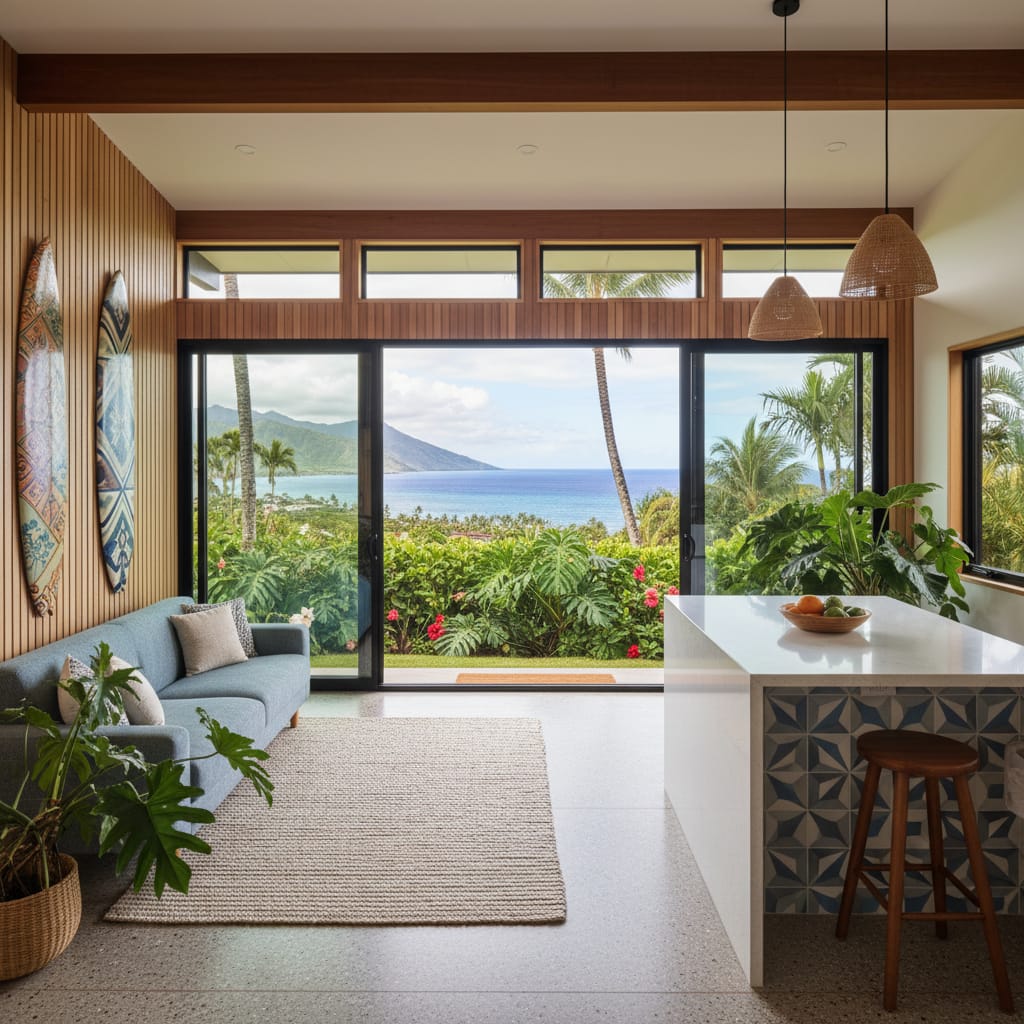
Building an ADU that will stand the test of time in Pearl City requires more than just following the building code. It demands a deep understanding of our microclimate, the local terrain, and the specific regulations that apply to the area. Every decision, from the type of foundation to the brand of paint, should be informed by these local factors.
Climate and Materials
Pearl City sits in a relatively protected area, but it still deals with Oʻahu’s classic combination of intense sun, high humidity, and the ever-present threat of termites. This environment is incredibly harsh on building materials.
- Salt-Air Corrosion: While not directly on the coast like Kailua, the air in Pearl City still carries a level of salinity from the nearby lochs. This means we have to be smart about metal components. We exclusively use stainless steel fasteners, hot-dip galvanized hurricane straps, and recommend aluminum or vinyl window frames over steel. We’ve seen improperly specified metal fixtures show signs of rust in as little as 18 months.
- Termite Resistance: Ground termites are a fact of life here. We build with termite-resistant practices from the ground up. This includes using pressure-treated lumber for all framing that contacts the foundation (the sill plate), installing a physical termite barrier like Termi-Mesh in the foundation, and ensuring proper grading away from the structure. It’s cheap insurance against a very expensive problem.
- Sun and Heat Management: The sun can be relentless. We design ADUs with features like properly sized roof overhangs to shade windows during the hottest parts of the day. We recommend light-colored standing-seam metal roofs that reflect solar radiation, and we always install radiant barriers in the attic space. For siding, fiber cement products like James Hardie are a far better choice than vinyl, which can warp and fade, or wood, which requires constant maintenance.
Local Terrain and Site Work
Many lots in Pearl City and the surrounding hillsides like Aiea Heights have some degree of slope. This isn’t flat-land construction.
- Grading and Drainage: The reddish, clay-like soil common in the area doesn’t drain quickly. Proper site grading is essential to channel our heavy seasonal rains away from the ADU’s foundation. We often incorporate French drains or other drainage solutions into the landscape plan to prevent water intrusion.
- Foundations: Depending on the slope and soil tests, a standard slab-on-grade foundation may not be appropriate. We might need to use a post-and-pier foundation or even a stepped foundation with retaining walls. This is a critical engineering decision that has a big impact on the project’s stability and cost.
Regulations and Utilities
Pearl City is a long-established community, which comes with its own set of challenges. Lot sizes can be smaller, and utility infrastructure is older.
- Bill 7 ADU Pearl City Rules: The city’s ADU ordinance, often referred to as Bill 7, has specific rules for lot size, ADU square footage (up to 800 sq. ft.), and parking requirements (one additional stall). We ensure our designs comply with every letter of the law to avoid permit rejection.
- Utility Upgrades: As mentioned before, adding an ADU often requires upgrading the electrical service to your property. Many older homes in Pearl City have 100-amp service, which is insufficient to power both the main house and a new ADU with modern appliances and A/C. Budgeting for a 200-amp service upgrade from HECO is a prudent step.
Choosing an ADU builder who understands these Pearl City-specific nuances is the difference between a project that runs smoothly and one that is plagued by costly change orders and delays.
How to Choose the Right ADU Builder Contractor in Pearl City
Selecting the right general contractor is the single most important decision you will make in your ADU project. A great contractor will guide you through the complexities, protect your investment, and deliver a high-quality home. A bad one can turn your dream project into a financial and legal nightmare. Here’s a checklist of what our team at Warrior Construction advises every homeowner to look for.
1. Verify Their License and Insurance
This is non-negotiable. Any contractor you consider must have a valid Hawaii General Contractor’s license (a B-License). You can and absolutely should verify this yourself on the Department of Commerce and Consumer Affairs (DCCA) Professional & Vocational Licensing (PVL) website.[2] Our license, for example, is BC-34373. Also, ask for proof of general liability insurance and workers’ compensation insurance. If a worker gets hurt on your property and the contractor isn’t insured, you could be held liable. Don’t just take their word for it; ask to see the insurance certificates.
2. Look for Specific ADU and Oʻahu Experience
A contractor who primarily builds commercial buildings or only works on the neighbor islands won’t have the specific experience needed for a residential ADU project in Pearl City. You want an ADU contractor pearl city who has successfully built dozens of these units on Oʻahu. Ask them:
- How many ADUs have you completed in the last three years?
- Can you provide references from 2-3 of those recent ADU clients?
- Can I see a portfolio of your completed Ohana units? A visit to a completed project is even better.
- Are you familiar with the specific requirements of the Honolulu DPP for ADU submittals?
3. Understand Their Process and Communication Style
A good building process is organized and transparent. Ask potential builders to walk you through their entire process, from design and permitting to construction and final walkthrough. How do they handle communication? Do they use project management software? Will you have a dedicated project manager? At Warrior Construction, we provide clients with regular updates, including photos and progress reports, and schedule regular site meetings. You should feel like a partner in the process, not an outsider wondering what’s happening.
4. Get a Detailed, Itemized Contract
Never sign a contract that is vague or based on a one-page estimate. A professional contract will be many pages long and should clearly detail the scope of work, a schedule of values (a breakdown of costs), a payment schedule, the specific materials to be used (down to the model numbers for faucets and windows), and procedures for handling change orders. A clear contract protects both you and the builder. We find that taking the time to create an exhaustive contract upfront prevents almost all disagreements down the line.
5. Don’t Let Price Be the Only Factor
It’s tempting to go with the lowest bid, but in construction, that is almost always a mistake. An unusually low bid often means the contractor has missed something in the scope, is using cheaper, lower-quality materials, or is cutting corners on labor and insurance. Compare the details of the bids, not just the bottom-line number. The right builder provides value through quality, good management, and long-term durability, not just a cheap initial price. A quality build will save you money for decades to come in reduced maintenance and repair costs.
Real Pearl City ADU Builder Project Example
To make all this information more concrete, let’s walk through a typical ADU project our team recently completed in the Waimalu area of Pearl City. This provides a real-world look at the numbers, timeline, and process.
The Homeowner: A local family with three generations living on a 7,500 sq. ft. lot. They wanted to build an ADU for their kupuna (elders) to live in, allowing them to age in place while maintaining their independence.
The Project Scope: A new, detached 780-square-foot, 2-bedroom, 1-bathroom ADU designed for accessibility. This included a zero-threshold shower, wider doorways, and a small, covered lanai.
Project Breakdown:
- Initial Consultation (January 2024): We met with the family to discuss their needs, budget, and the feasibility of the project on their lot. We conducted an initial site assessment and zoning check.
- Design & Pre-Construction (February – June 2024): Our design-build team worked with the family to create the architectural and engineering plans. We handled the site survey and soil report. The total cost for this phase was approximately $42,000.
- Permit Submission (July 2024): We submitted the complete permit package to the Honolulu DPP.
- Permit Purgatory (July 2024 – April 2025): The plans went through the standard review process. We received two sets of comments from the DPP—one related to a drainage calculation and another to a structural detail. Our team addressed and resubmitted revised plans within a week each time. The total wait time was 9 months, which is fairly typical for 2025-2026.
- Permit Approval (April 2025): We received the approved building permit.
- Construction Start (May 2025): Site work began with excavation and pouring the foundation.
- Construction Phase (May – November 2025): The project moved smoothly through framing, roofing, MEP (mechanical, electrical, plumbing) rough-in, and interior finishes. We had a 3-week delay waiting for the custom kitchen cabinets to arrive from the mainland, which we had anticipated in the schedule. Total construction time was 6.5 months.
- Final Inspections & Occupancy (December 2025): The ADU passed all final inspections from the city, and the family received their Certificate of Occupancy.
Final Numbers:
- Total Project Duration: 23 months (from initial meeting to move-in)
- Total Construction Cost: $386,100
- Cost Per Square Foot: $495
This project is a perfect illustration of the process. The family was patient through the long permitting phase because we set clear expectations from the beginning. Today, their kupuna are enjoying a safe, comfortable, and beautiful new home, and the family’s property value has increased significantly.
What this means for Hawaii homeowners
Building an ADU in Pearl City is a marathon, not a sprint. The most successful projects are owned by homeowners who understand the unique realities of building in Hawaii and partner with a team that has the local expertise to navigate them. Rushing the process, hiring the wrong team, or having unrealistic expectations about cost and timeline are the surest ways to end up with a frustrating and expensive experience.
Here are the key takeaways you should focus on as you begin your journey:
- Budget Realistically: Plan for a cost of $425 to $550 per square foot for a quality build in 2026. This includes everything from design fees to final fixtures. Be wary of any estimate that comes in significantly lower.
- Embrace the Timeline: Accept that the Honolulu DPP permitting process will take 8-12 months, or even longer. Your total project timeline will likely be 1.5 to 2 years. Use the waiting period to finalize your finish selections and prepare financially.
- Hire a True Local Expert: Your contractor’s experience with Oʻahu’s specific codes, climate, and permitting system is their most valuable asset. Prioritize deep local experience over a slightly lower price. Check their license, talk to their references, and make sure they have a portfolio of successful ADU projects right here on our island.
- Focus on Durable, Island-Appropriate Materials: Don’t compromise on the building envelope. Invest in a quality roof, hurricane-rated windows, and materials designed to resist salt, sun, and termites. The slightly higher upfront cost will save you tens of thousands in maintenance and repairs down the road.
Ultimately, a well-built ADU is a powerful asset for your family and your future. By approaching the project with the right knowledge and the right team, you can ensure your investment is a successful one.
Helpful resources:
City & County of Honolulu DPP ·
Hawaii DCCA Licensing
Frequently Asked Questions About ADU Builder in Pearl City
Can I build an ADU on my Pearl City property?
Generally, yes, if your lot is zoned for residential use and is at least 3,500 square feet. The City and County of Honolulu’s ADU ordinance allows for one ADU per qualifying lot. Your property must also have adequate infrastructure for water and wastewater. We can perform a free preliminary zoning check to confirm your property’s eligibility.
What is the maximum size for an ADU in Pearl City?
The maximum size depends on your lot size. For lots under 5,000 square feet, the maximum ADU size is 400 square feet. For lots 5,000 square feet or larger, the maximum is 800 square feet. These are interior living space measurements and don’t include lanais or garages. Our team designs plans that maximize usable space while adhering strictly to these DPP regulations.
Do I need to add a parking space for my ADU?
Yes. The current ordinance requires one additional off-street parking stall for the ADU, which must be at least 8.5 feet by 18 feet. This is in addition to the parking required for the main house. The new stall cannot be located in the front yard setback area. Planning for this parking spot is a critical part of the initial site design.
What are the biggest ‘hidden costs’ in an ADU project?
The most common unforeseen costs are utility upgrades. This includes upgrading your main electrical panel and service from HECO (often $15,000+), and potential upgrades to your sewer lateral or water main. Significant site work, like building retaining walls on a sloped lot or dealing with unexpected rock during excavation, can also add to the budget. A good contractor will identify these risks upfront.
Can I act as my own general contractor to save money?
While legally possible with an owner-builder permit, we strongly advise against it unless you have professional construction experience in Hawaii. You become responsible for hiring and managing all subcontractors, scheduling inspections, and are liable for any worksite accidents. The complexities of the DPP and Hawaii building codes often lead to costly mistakes and delays that negate any potential savings. The value of an experienced GC is in their management, expertise, and network.
Does Warrior Construction handle the architectural design and plans?
Yes, we operate as a full-service design-build firm. We manage the entire process from initial concept and architectural design through engineering, permitting, and construction. This integrated approach is more efficient, cost-effective, and provides a single point of accountability for the homeowner, which is ideal for complex projects like ADUs.
How does financing an ADU work in 2026?
Most homeowners finance ADUs through a home equity line of credit (HELOC), a cash-out refinance on their existing mortgage, or a construction loan. Local credit unions are often very familiar with ADU projects and can be a great resource. We recommend having your financing pre-approved early in the process, as this will help set a realistic project budget.
Ready to Start Your Pearl City ADU Project?
Building an ADU is a significant undertaking, but the rewards—whether it’s keeping family close or generating new income—are immense. The key is having an experienced, trustworthy partner to guide you every step of the way. At Warrior Construction, we combine decades of on-the-ground Oʻahu construction experience with a commitment to transparency and quality.
If you’re considering adding an Ohana unit to your Pearl City property, let’s talk. We can help you understand your options, develop a realistic budget, and create a plan for success. Our team is ready to put our expertise to work for you.
Learn more about our approach to building ADU & Ohana Units or contact us today for a no-obligation consultation.