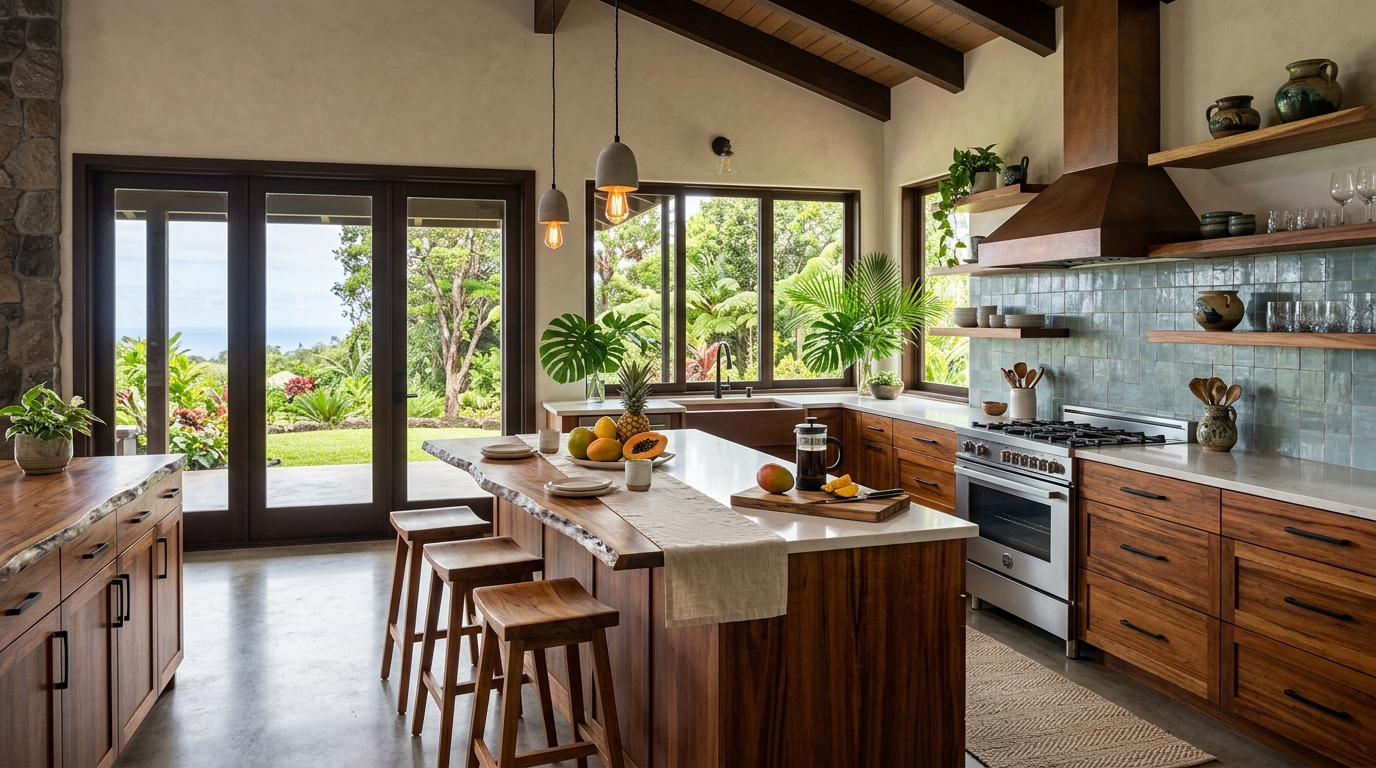
“A kitchen remodel in Pahoa is one of the most rewarding investments you can make in your home, but it’s a project with unique challenges specific to the Big Island. The average mid-range kitchen renovation in Pahoa costs between $75,000 and $125,000 in 2026 and typically takes 6 to 9 months from initial design to final walkthrough. Success hinges on understanding local material logistics, Hawaii County permitting, and building for our humid, vog-prone climate. At Warrior Construction, we’ve managed countless projects here in Puna, and we know that proper planning is everything.\n\nThis isn’t like remodeling on the mainland. Here, you’re dealing with barge schedules, a limited pool of specialized subcontractors, and building codes designed for seismic and hurricane activity. Getting it right means partnering with a general contractor who has deep roots and a proven track record on Hawai’i Island. We’re going to walk you through the entire process, from realistic budgeting and timelines to choosing the right materials that will stand up to the Puna environment for decades. These are the eight key areas every Pahoa homeowner needs to master before tearing out a single cabinet.\n\n
Why Pahoa Homeowners Trust Warrior Construction for Kitchen Remodel
\n\nWhen you undertake a major project like a kitchen remodel Pahoa, you’re not just hiring someone to hang cabinets. You’re bringing a partner into your home for months, and trusting them with a significant financial investment. At Warrior Construction, we’ve built our reputation on the Big Island by being that trusted partner. Our team understands the specific nuances of building in Puna, from the red dirt of Hawaiian Paradise Park to the custom homes in Kapoho.\n\nFirst and foremost, we are a fully licensed and insured general contractor in the state of Hawaii (License BC-34373). You can and should verify any contractor’s license with the Department of Commerce and Consumer Affairs’ Professional and Vocational Licensing Division[1]. This isn’t just a piece of paper; it means we’ve met the state’s rigorous standards for experience, financial stability, and knowledge of the building code. It also means we are accountable for the quality and safety of our work. For example, we recently took over a stalled project in Kurtistown where the previous unlicensed handyman had improperly wired the kitchen island, creating a serious fire hazard that we had to completely redo. That’s a costly mistake a licensed professional would never make.\n\nOur experience on Hawai’i Island is our biggest asset. We have long-standing relationships with local suppliers in Hilo and Kona, which is crucial for managing the supply chain. We know which cabinet lines hold up best in our humidity and which countertop suppliers have the most reliable inventory. When a specific type of tile is backordered on the mainland, we know the local alternatives that can keep a project on schedule. This deep local knowledge is something a contractor based on Oahu simply can’t replicate. They don’t understand the challenges of getting a delivery truck down a gravel road in Fern Forest or coordinating a concrete pour around Puna’s unpredictable rain showers.\n\nFurthermore, our process is built on clear communication. From the initial estimate to the final punch list, you’ll have a dedicated project manager. We provide detailed, itemized budgets so you know exactly where your money is going. We also build realistic timelines that account for neighbor island shipping delays and the Hawaii County permitting process. A kitchen renovation Pahoa project is a collaboration, and our team is committed to making sure you’re informed and confident at every stage. We’ve been building and remodeling here for over 20 years, and that experience is what we bring to every single Pahoa kitchen we transform.\n\n
What Does a Kitchen Remodel Cost in Pahoa?
\n\nA common question we hear is, \”What’s the real kitchen remodel cost Pahoa homeowners can expect in 2026?\” The truth is, it’s a significant investment, and costs on the Big Island are higher than on the mainland due to shipping. Here’s a realistic breakdown based on our recent projects in the Puna district.\n\nFor a clearer picture, we break projects down into three general tiers:\n\n
- \n
- Minor / Cosmetic Remodel ($25,000 – $45,000): This is more of a facelift. We’re talking about refacing or painting existing cabinet boxes, installing new countertops (perhaps a good quality laminate or entry-level quartz), a new tile backsplash, a new sink and faucet, and fresh paint. We aren’t moving walls, plumbing, or electrical. This is a great way to update the look and feel of your kitchen without the cost and time of a full gut renovation.
- Mid-Range / Full Remodel ($75,000 – $125,000): This is the most common type of project we do in Pahoa. This involves a full tear-out of the old kitchen. It includes all new semi-custom cabinets (think plywood boxes and solid wood doors), quality quartz or granite countertops, a full suite of mid-range appliances (like Bosch or KitchenAid), new LVP or tile flooring, and moving some electrical outlets or plumbing lines to improve the layout. This price point delivers the best return on investment and a completely transformed space.
- High-End / Luxury Remodel ($150,000+): In this tier, the sky’s the limit. This involves custom-built cabinetry, professional-grade appliances (Sub-Zero, Wolf, Thermador), natural stone countertops like quartzite or marble, potentially moving load-bearing walls to create an open-concept space, and high-end fixtures. These projects often involve a kitchen designer or architect and result in a true showpiece kitchen.
\n
\n
\n
\n\nSo, where does the money go? Here’s a typical cost allocation for a mid-range Pahoa kitchen remodel:\n
- \n
- Cabinetry & Installation: 30-35%
- Labor & General Contracting: 25-30% (This includes demolition, framing, drywall, project management)
- Appliances & Ventilation: 15%
- Countertops: 10%
- Plumbing & Electrical: 5-10%
- Flooring, Fixtures, Paint & Backsplash: 5-10%
\n
\n
\n
\n
\n
\n
\n\nIt’s crucial to remember the \”Big Island factor.\” Every single item, from the cabinet screws to the 300-pound refrigerator, has to be shipped here on a barge. This adds a 15-20% premium compared to mainland prices. That’s why working with an experienced local kitchen contractor Pahoa team is so important—we know how to bundle orders and work with local distributors to minimize these costs as much as possible.\n\n
How Long Does a Kitchen Remodel Take in Pahoa?
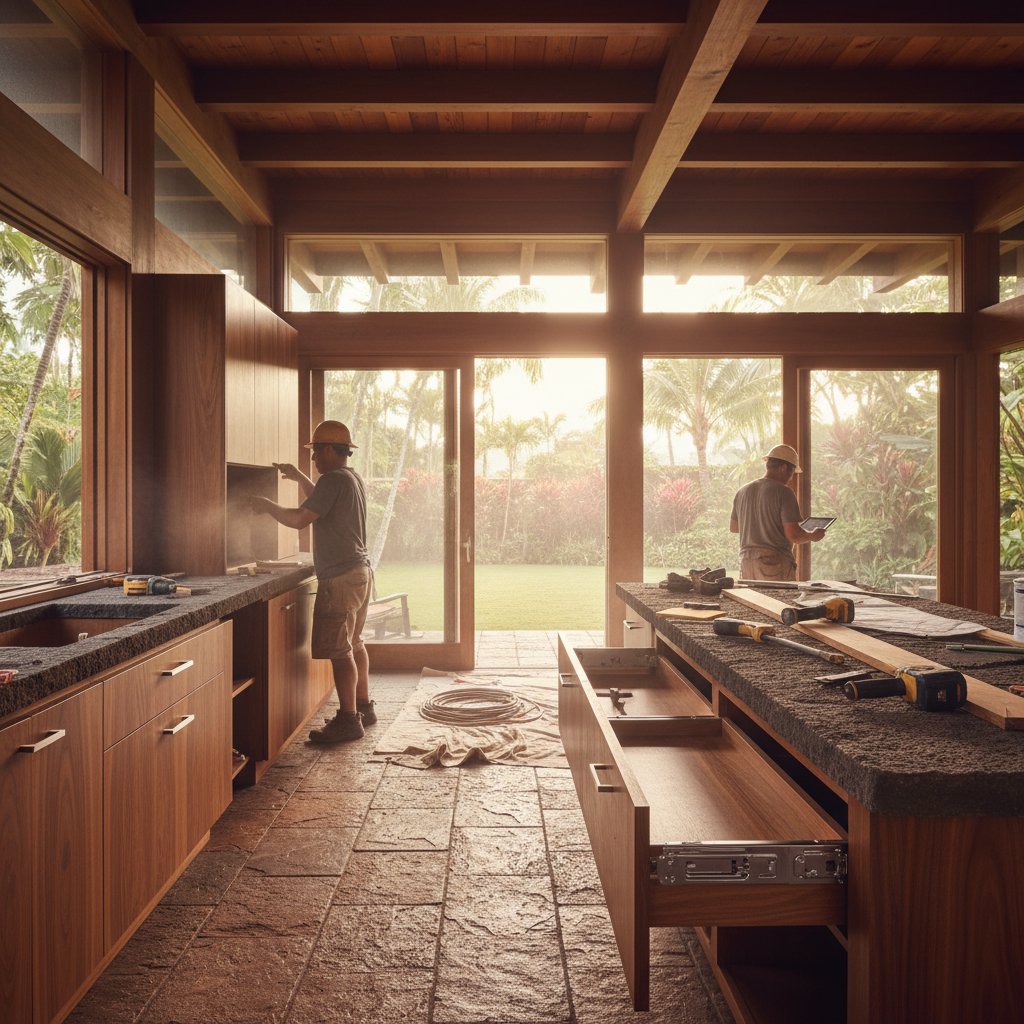
\n\nIn Hawaii, patience isn’t just a virtue; it’s a project requirement. The actual construction phase of a kitchen remodel is often the shortest part of the process. The real time is spent in planning, permitting, and waiting for materials to cross the Pacific. Homeowners who expect a mainland timeline are often surprised, so we believe in setting realistic expectations from day one.\n\nHere is a typical 2026 timeline for a mid-range kitchen remodel in the Pahoa area:\n\n
- \n
- Phase 1: Design & Planning (4-8 weeks): This is where we work with you to define the scope of the project. We’ll finalize the layout, select all the materials (cabinets, countertops, appliances, flooring, fixtures), and create detailed construction plans. Making all these decisions upfront is critical to avoid delays later. Changing your mind about the faucet model after it’s already been ordered can add weeks to the schedule.
- Phase 2: Permitting (6-12 weeks): Once the plans are finalized, we submit them to the Hawaii County Department of Public Works. Unlike the City and County of Honolulu’s DPP[2], which has its own system, the Big Island process has its own quirks. The review time can vary depending on their workload and the complexity of your project. If you’re moving walls or making significant electrical or plumbing changes, the plans will need a thorough review. There is no way to rush this part of the process.
- Phase 3: Material Procurement & Shipping (8-16 weeks): This phase often runs concurrently with permitting. As soon as we have finalized selections, especially for cabinets and appliances, we place the orders. Custom or semi-custom cabinets can take 6-10 weeks to be built on the mainland. Then, you have to add 2-4 weeks for them to be packed, shipped to Hilo, and delivered to your job site. We learned long ago never to start demolition until every single item, down to the last box of tile, is physically on island and inspected for damage.
- Phase 4: Construction (6-10 weeks): This is the part everyone gets excited about. Once permits are in hand and materials are on site, our crew gets to work. This includes:\n
- \n
- Demolition and site prep (1 week)
- Rough-in for electrical, plumbing, and framing (1-2 weeks)
- Drywall, mudding, and priming (1 week)
- Flooring and cabinet installation (1-2 weeks)
- Countertop templating and installation (This can take 2-3 weeks from template to install)
- Appliance installation, finish plumbing, and electrical (1 week)
- Backsplash, painting, and final details (1 week)
\n
\n
\n
\n
\n
\n
\n
\n
\n
\n
\n
\n
\n\nAll told, a full kitchen remodel in Pahoa typically takes **6 to 9 months** from our first conversation to you cooking your first meal. It seems like a long time, but properly front-loading the planning and procurement phases is the secret to a smooth, efficient construction phase and a result you’ll love for years.\n\n
What Permits Do You Need for Kitchen Remodel in Pahoa?
\n\nNavigating the permitting process is one of the most important jobs a general contractor handles. In Pahoa, all building permits are issued by the Hawaii County Department of Public Works, Building Division. It’s a common misconception that you only need a permit if you’re building an addition. In reality, the rules for a kitchen remodel are quite specific.\n\nYou will almost certainly need a building permit if your project includes any of the following:\n\n
- \n
- Moving or removing any walls: Even if a wall isn’t load-bearing, altering the structure of your home requires a permit. This ensures the changes don’t compromise the home’s integrity, especially with the Big Island’s seismic considerations.
- Altering plumbing locations: If you’re moving the sink to a new island or relocating the dishwasher, you’re changing the drain, waste, and vent (DWV) system. This requires a plumbing permit, which must be pulled by a licensed plumber.
- Changing the electrical layout: Adding new outlets for an appliance garage, installing under-cabinet lighting, or running a dedicated circuit for a new induction cooktop all require an electrical permit. Just like with plumbing, this must be pulled by a licensed electrician.
- Relocating gas lines: If you have a propane range and want to move it, a permit is absolutely mandatory for safety reasons.
- Altering windows or exterior doors: If your kitchen remodel involves changing the size or location of a window, this impacts the building envelope and requires a permit to ensure it meets current hurricane code requirements for wind resistance and water intrusion.
\n
\n
\n
\n
\n
\n\nSo, when do you *not* need a permit? Generally, for cosmetic updates. This includes:\n
- \n
- Painting cabinets or walls
- Refacing existing cabinets
- Replacing countertops (as long as the sink stays in the same spot)
- Swapping out a faucet or light fixture in the same location
- Installing a new tile backsplash
- Replacing flooring
\n
\n
\n
\n
\n
\n
\n\nAttempting to do permitted work without a permit is a costly mistake. If the county finds out, they can issue a stop-work order, levy significant fines, and may require you to tear out completed work to have it inspected. It can also create huge problems when you eventually sell your home. As your general contractor, Warrior Construction manages the entire permitting process. We prepare the architectural drawings, fill out the applications, and coordinate with the licensed electricians and plumbers to pull their respective permits. This ensures your project is fully compliant, safe, and built to last.\n\n
Pahoa-Specific Considerations: Climate, Materials, Regulations
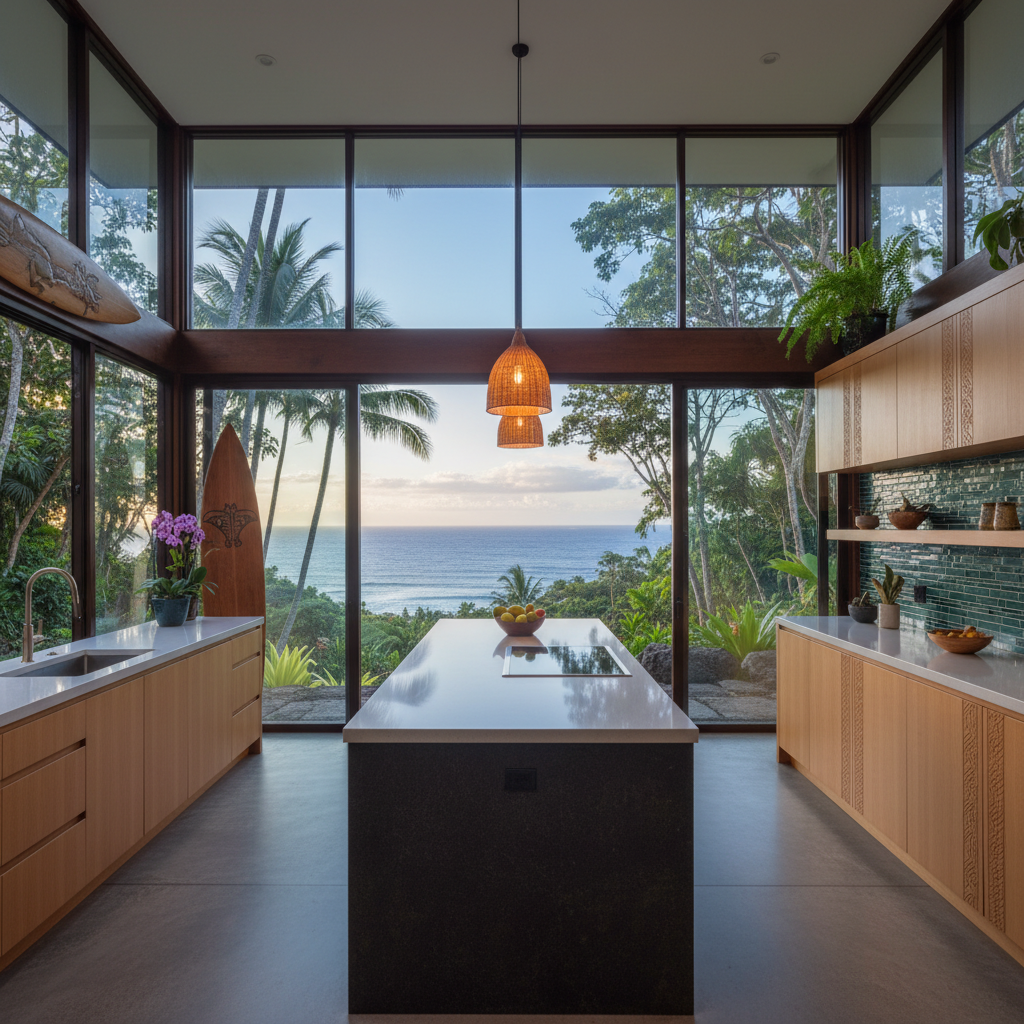
\n\nRemodeling a kitchen in Pahoa is fundamentally different from doing one in, say, Arizona or even Honolulu. Our unique Puna environment demands specific choices in materials and building practices. Ignoring these local factors can lead to a beautiful new kitchen that starts to fail within a few years.\n\n
Fighting the Humidity and Vog
\nThe number one enemy of any home in East Hawaii is moisture. The constant high humidity, combined with the occasional vog (volcanic smog), can be brutal on building materials.\n
- \n
- Cabinetry: We strongly advise against solid wood cabinet doors for most Pahoa projects. They tend to swell and shrink with the humidity, leading to warped doors and cracked paint finishes. A better choice is cabinets with medium-density fiberboard (MDF) panels or high-quality engineered wood, which are more dimensionally stable. The cabinet boxes themselves should always be plywood, never particle board, which acts like a sponge in our climate.
- Ventilation: A powerful, properly vented range hood is not a luxury here; it’s a necessity. It removes grease, cooking odors, and most importantly, a tremendous amount of moisture from the air. A ductless, recirculating fan just doesn’t cut it. We always duct hoods to the exterior.
- Hardware: Cheap hinges and drawer slides will rust. We specify stainless steel or hardware with a high-quality, corrosion-resistant finish for all our projects. It’s a small detail that makes a huge difference over time.
\n
\n
\n
\n\n
Material Selection and Logistics
\nEverything takes longer to get here, and some materials just aren’t practical.\n
- \n
- Countertops: Porous stones like marble are a tough sell in Pahoa. They can stain easily and require constant sealing. Engineered quartz is a fantastic, non-porous alternative that stands up to everything. Granite is also a durable choice. We have good relationships with the countertop fabricators in Hilo, which is key to getting accurate templates and timely installations.
- Flooring: Luxury Vinyl Plank (LVP) is our go-to flooring for Pahoa kitchens. It’s 100% waterproof, durable, and comes in countless realistic wood and stone looks. Tile is also great, but the grout needs to be sealed properly to prevent mold and mildew. We generally steer clients away from hardwood or laminate flooring in kitchens here.
\n
\n
\n\n
Local Regulations and Building Science
\nBeyond permits, there are other factors to consider.\n
- \n
- Seismic Activity: Being on an active volcano means building with earthquakes in mind. For kitchens, this translates to ensuring heavy upper cabinets are securely fastened to studs and that gas lines for appliances have flexible connectors.
- Hurricane Code: While we’re not touching the whole house, any new windows or exterior doors in the kitchen must meet the latest hurricane-resistant standards. This involves specific framing, fasteners, and often, impact-rated glass.
- Catchment Water: Many homes in Puna are on rainwater catchment systems. We take this into account when selecting plumbing fixtures, recommending efficient models, and ensuring proper filtration systems are integrated for safe, clean drinking water right at the kitchen sink.
- Verify Their License and Insurance. This is non-negotiable. Ask for their Hawaii contractor license number (ours is BC-34373) and verify it’s active and in good standing on the state’s PVL website[1]. Also, ask for a Certificate of Insurance showing they carry both General Liability and Worker’s Compensation. If an uninsured worker gets hurt on your property, you could be held liable. We provide all this documentation upfront.
- Demand Big Island-Specific Experience. A contractor from Honolulu or Maui might do great work there, but they won’t understand the unique logistics of Puna. Ask them: \”How many kitchen remodels have you completed in the Pahoa/Puna area in the last three years?\” Ask about their relationships with Hilo-based suppliers and subcontractors. If they can’t answer confidently, they’re not the right fit.
- Ask for Local References. Don’t just look at a portfolio of pretty pictures. Ask to speak with 2-3 of their recent clients in East Hawaii. Ask those references about the contractor’s communication, how they handled unexpected problems (because they always come up), and whether they stuck to the budget and timeline.
- Insist on a Detailed, Itemized Bid. Never accept a one-page bid with a single number on it. A professional contractor will provide a multi-page proposal that breaks down the costs for demolition, framing, electrical, plumbing, cabinetry, countertops, etc. This transparency protects you and shows they’ve thoroughly thought through your project. If a bid seems unusually low, it’s often because they’ve left things out that will come back later as expensive change orders.
- Evaluate Their Communication. During the bidding process, how responsive are they? Do they return your calls and emails promptly? Do they answer your questions clearly and patiently? This initial experience is a strong indicator of how they will communicate during the stress of a multi-month construction project.
- Discuss Their Process for Delays. Ask them directly: \”What is your process when a shipment of materials is delayed or an item arrives damaged?\” A seasoned Hawaii contractor will have a plan. They’ll talk about inspecting all materials upon arrival, having backup suppliers, and building buffer time into the schedule. Their answer will reveal their level of experience with island logistics.
- Layout Change: Removed the peninsula and created a 7-foot island. We relocated the dishwasher to the island and moved the refrigerator to a more logical spot on the main wall, creating a classic work triangle (sink-range-fridge).
- Cabinets: We used semi-custom shaker-style cabinets in a light grey finish. Crucially, the doors were a high-quality thermofoil over MDF for maximum moisture resistance, and the boxes were all-plywood construction.
- Countertops: They chose a durable, light-colored quartz with subtle veining. It brightened the space immensely and is virtually maintenance-free.
- Electrical & Lighting: We removed the old fluorescent box and installed six recessed LED can lights on a dimmer switch. We also added two pendant lights over the new island and installed under-cabinet LED strip lighting. This layered lighting approach completely transformed the feel of the room.
- Flooring: New waterproof Luxury Vinyl Plank (LVP) flooring was installed throughout the kitchen and adjoining dining area, creating a seamless look.
- Ventilation: We installed a new, properly sized stainless steel range hood and ducted it straight out through the roof, a critical upgrade for moisture control.
- Total Project Cost: Approximately $98,500
- Timeline: The project took just under 8 months from the first phone call to completion. (3 months for design/permitting, 3.5 months for material procurement, 8 weeks for the actual construction).
- Start Early and Plan Thoroughly: Begin the planning process at least 9-12 months before you hope to have a finished kitchen. Use this time to research, gather ideas, and make all your material selections before any demolition begins.
- Budget for the ‘Island Tax’: Expect to pay 15-20% more for materials than you see on mainland websites. Build a 10-15% contingency fund into your total budget to cover unforeseen shipping costs or the inevitable surprises found behind old walls.
- Prioritize Durability Over Trends: Focus on materials proven to work in East Hawaii. Choose plywood cabinet boxes, moisture-resistant doors, quartz countertops, and waterproof LVP flooring. A powerful, externally-ducted range hood is a non-negotiable investment.
- Hire a Licensed, Local, and Experienced Contractor: Your single most important decision is choosing a general contractor with a deep understanding of the Big Island. Verify their license, check their local references, and ensure they have a robust plan for managing the supply chain. This is where a team like Warrior Construction makes all the difference.
\n
\n
\n\nBuilding smart in Pahoa means respecting the power of the local environment. We build our kitchens to work with the climate, not against it.\n\n
How to Choose the Right Kitchen Remodel Contractor in Pahoa
\n\nChoosing your contractor is the single most important decision you’ll make for your kitchen remodel. A great contractor can make the process smooth and deliver a fantastic result, while the wrong one can turn your dream project into a nightmare of delays, budget overruns, and shoddy work. Here’s a checklist for vetting any potential `kitchen contractor pahoa`.\n\n
- \n
\n
\n
\n
\n
\n
\n
\n\nYour home is your biggest investment. Taking the time to thoroughly vet your contractor is the best way to protect it and ensure your `kitchen renovation pahoa` is a success.\n\n
Real Pahoa Kitchen Remodel Project Example
\n\nTo make this all more concrete, let’s walk through a recent project our team at Warrior Construction completed in Hawaiian Paradise Park (HPP), just outside Pahoa.\n\n
The Homeowner & The Problem: A couple who bought a home built in the late 1980s. The kitchen was original: dark wood laminate cabinets that were peeling from the humidity, a cramped layout with poor workflow, cracked formica countertops, and fluorescent box lighting that made the space feel like an office. The appliances were failing, and there was almost no functional counter space for food prep.
\n\n
The Plan & Our Solution: Their goal was a bright, open, and durable kitchen that would be easy to maintain in Pahoa’s climate. After our initial consultation, we developed a design-build plan. The key move was to remove a non-load-bearing peninsula that chopped the kitchen off from the small dining area. This instantly created a more open feel and allowed for a large, single-level island with seating for three.
\n\n
Here were the key elements of the project:
\n
- \n
\n
\n
\n
\n
\n
\n
\n\n
The Numbers:
\n
- \n
\n
\n
\n\n
The Outcome: The homeowners were thrilled. They went from a dark, frustrating space to a bright, functional, and beautiful kitchen that is the true heart of their home. Most importantly, it was built with the right materials and techniques to last for decades in the Puna climate. This project is a perfect example of how a well-planned kitchen remodel in Pahoa can dramatically improve both your home’s value and your quality of life.
\n\n
What this means for Hawaii homeowners
\n
Embarking on a kitchen remodel in Pahoa requires a mindset shift from mainland-style renovations. The unique combination of island logistics, a humid climate, and specific county regulations means planning and patience are your most valuable tools. Rushing the process or cutting corners on materials is a recipe for frustration and long-term problems. The success of your project depends less on the latest trends and more on solid, climate-appropriate construction principles.
\n
Here is your action plan:
\n
- \n
\n
\n
\n
\n
\n
A well-executed kitchen remodel is one of the best investments you can make. By following these principles, you can navigate the process confidently and create a space that brings you joy for years to come.
\n
\n\n
Frequently Asked Questions About Kitchen Remodel in Pahoa
\n
Can I do a kitchen remodel myself in Pahoa to save money?
\n
You can certainly handle cosmetic tasks like painting, changing hardware, or installing a simple backsplash yourself. However, any work involving electrical, plumbing, or moving walls must be done by licensed professionals and requires a permit from Hawaii County. Attempting this work yourself is unsafe, illegal, and can jeopardize your homeowner’s insurance and the future sale of your property.
\n
\n
How much value does a kitchen remodel add to my Pahoa home?
\n
While the exact return on investment varies, homeowners in Hawaii can typically expect to recoup between 60% and 75% of the cost of a mid-range kitchen remodel upon resale. More importantly, in a market with many older homes, a modern, updated kitchen is a major selling point that can make your property sell much faster. The primary value, however, is the daily enjoyment and improved functionality for your family.
\n
\n
What is the biggest unexpected cost in a Big Island kitchen remodel?
\n
The most common surprise for homeowners is the true cost and timeline of shipping. An appliance that’s \”in stock\” on a mainland website might take 6 weeks to arrive in Hilo. Freight charges for heavy items like cabinets and countertops can add thousands to the budget. The second biggest surprise is often discovering old, unpermitted work, termite damage, or rot once we open up the walls, which requires proper remediation before we can proceed.
\n
\n
What are the best cabinet materials for Pahoa’s humid climate?
\n
We strongly recommend cabinet boxes made from marine-grade or high-quality plywood—never particle board. For doors, the most stable and moisture-resistant options are high-quality thermofoil, painted MDF, or engineered wood veneers. Solid wood doors are beautiful but are highly susceptible to warping and cracking in Puna’s consistent humidity.
\n
\n
Do I need an architect or a designer for my kitchen remodel?
\n
If you are moving load-bearing walls or changing the home’s footprint, you will need an architect or structural engineer to draw the plans for the permit. For most kitchen remodels that stay within the existing space, a skilled design-build contractor like Warrior Construction can handle the layout, design, and permitting. A dedicated kitchen designer can also be a great asset for optimizing space and selecting finishes.
\n
\n
How does being in a specific Lava Zone affect my remodel project?
\n
For an interior kitchen remodel, your lava zone designation (e.g., Zone 1, 2, or 3) doesn’t typically affect the building permit process itself. However, it can significantly impact your homeowner’s insurance options and the financing available for the project. It’s always wise to speak with your insurance agent before beginning a major renovation in a higher-risk lava zone.
\n
\n
Is it cheaper to buy materials from big box stores in Hilo?
\n
It depends on the item. For in-stock items like basic plumbing fixtures, paint, or some flooring, local stores can be faster and cheaper. However, for semi-custom items like cabinets, specific appliances, and most countertops, a contractor can often get better pricing and, more importantly, can manage the complex logistics of ordering, shipping, and inspecting the materials, which saves you time, money, and major headaches in the long run.
\n
\n
\n\n
Ready to Transform Your Pahoa Kitchen?
\n
A kitchen remodel is a major undertaking, but you don’t have to do it alone. The team at Warrior Construction has the local knowledge, technical expertise, and trusted process to guide you every step of the way. We build beautiful, durable kitchens designed to thrive in the unique environment of East Hawaii.
\n
If you’re ready to start the conversation about planning your Pahoa kitchen renovation, contact our team today. We’ll provide a clear, comprehensive estimate and show you why we’re the trusted kitchen contractor for homeowners across the Big Island.
\n
\n
\n\n
References
\n