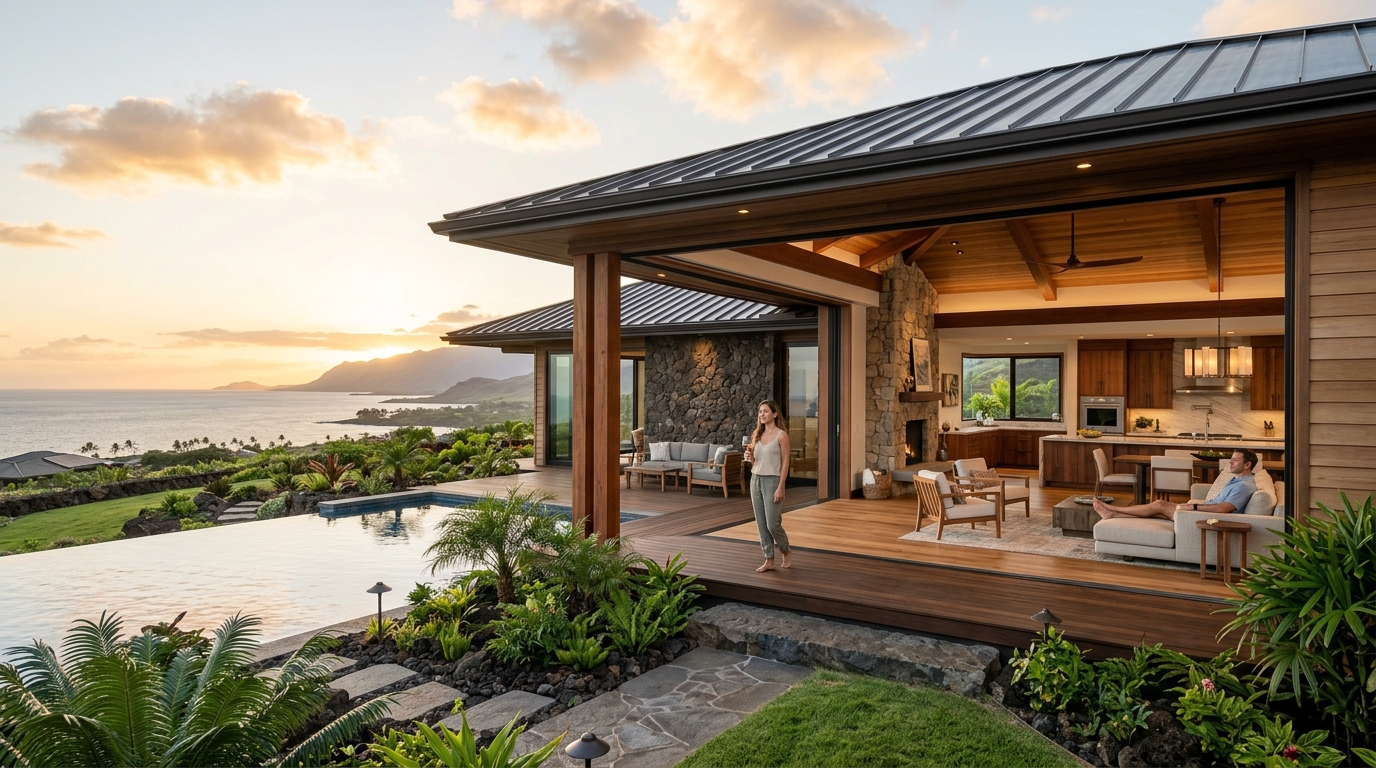
Building a custom home in Kapolei means bringing your unique vision to life on O’ahu’s vibrant West side. The most critical decision you’ll make is choosing your custom home builder Kapolei. A local, experienced general contractor is non-negotiable for navigating Honolulu’s tough permitting process, understanding Kapolei’s specific soil and climate conditions, and managing the complex logistics of building in Hawaii. Without a team that has been on the ground here for decades, your dream home project can quickly turn into a nightmare of delays and budget overruns.
At Warrior Construction, our team has spent over 20 years building, remodeling, and creating dream homes right here on O’ahu. We’ve seen it all, from the red dirt of Central O’ahu to the corrosive salt spray of the Windward coast. For homeowners in Kapolei, Makakilo, and Ko Olina, hiring a builder who understands the local landscape isn’t a luxury—it’s the foundation of a successful project. This guide breaks down the five core reasons why a local expert is your best investment, covering everything from real 2026 costs and timelines to navigating the Department of Planning and Permitting (DPP) and choosing materials that will stand up to our island environment. We’re not just building houses; we’re building homes designed for the way we live in Hawaii.
Why Kapolei Homeowners Trust Warrior Construction for Custom Home Building
Choosing a home builder in Kapolei is about more than just finding someone who can swing a hammer. It’s about finding a partner who has deep roots in the community and a fundamental understanding of what it takes to build successfully on this island. Here are the five key reasons our clients in Kapolei and across West O’ahu choose Warrior Construction.
1. We Have Deep Relationships with the Honolulu DPP
The Honolulu Department of Planning and Permitting (DPP) is legendary for its complexity and long review times. A mainland builder, or even one from a neighbor island, will be starting from scratch. They don’t know the plan reviewers, the specific code interpretations favored by certain departments, or the informal processes that can save months of waiting. Our team has been submitting plans and pulling permits at the DPP for over two decades. We know the people, we know the process, and we know how to prepare a permit package that anticipates reviewers’ questions, which minimizes back-and-forth and reduces delays. Just last year, on a new home construction Kapolei project, a reviewer flagged an issue with a retaining wall setback. Because we knew him, we were able to get on a quick call, clarify the engineering, and get the flag removed in a day. For an outside builder, that same issue could have meant a formal rejection and a two-month resubmittal process.
2. We Understand Kapolei’s Unique Soil and Geography
Kapolei isn’t Manoa or Kailua. The soil here, particularly as you move up into Makakilo or deal with the flatlands of the Ewa Plain, has its own personality. We’ve encountered everything from expansive clays that swell and shrink with moisture to hard caprock that requires heavy equipment to break. A builder who isn’t familiar with these conditions might bid a foundation based on generic assumptions, only to hit you with a massive change order when the excavation starts. We always insist on a geotechnical report early in the design phase. This tells us exactly what we’re dealing with, allowing us to design the right foundation—be it a monolithic slab, post-tension, or a pier and beam system—from the very beginning, ensuring your budget stays intact.
3. Our Subcontractor Network is Proven and Reliable
In Hawaii, your project is only as good as your subcontractors. There’s a limited pool of truly skilled electricians, plumbers, and concrete crews. We don’t just find our subs on Craigslist. We’ve built a loyal network of craftsmen over 20 years—people we trust, who show up on time, and whose work meets our standards. When you hire a mainland builder, they’re forced to bid out every job to the lowest common denominator, often resulting in crews who are unreliable or unfamiliar with Hawaii’s building codes. Our long-standing relationships mean we can get our trusted teams scheduled reliably, which is critical for keeping a complex new build on schedule.
4. We Master Hawaii’s Material Logistics
Everything from engineered lumber and windows to specialty tile and appliances has to get here on a boat. This is a simple fact that trips up countless off-island builders. They don’t understand the lead times, the cost of shipping, or how to properly coordinate orders to ensure everything arrives when it’s needed—not too early to get damaged on-site, and not too late to hold up the entire project. We manage a complex procurement schedule, ordering windows 6-8 months in advance and coordinating with our suppliers to consolidate shipments. On a recent luxury home builder Kapolei project in Ko Olina, our client wanted a specific brand of Italian cabinetry. We handled all the logistics, from factory to freighter to job site, timing it perfectly to arrive the week our drywall finishers were done. That’s a level of coordination that only comes from local experience.
5. We Design for the Kapolei Climate
The Leeward side is hot and sunny. Building a home designed for a Pacific Northwest climate here would be a disaster. We design for the environment. This means orienting the home to capture the tradewinds for natural ventilation, using wide eaves to shade windows from the high afternoon sun, and specifying insulation and roofing materials with high Solar Reflectance Index (SRI) values to keep the home cool. We also understand the nuances of salt-air corrosion. Even though Kapolei is drier than the Windward side, the marine layer can be harsh. We specify corrosion-resistant materials like 316 stainless steel fasteners, vinyl or fiberglass window frames, and robust paint systems to ensure the home you build in 2026 still looks great in 2046.
What Does a Custom Home Build Cost in Kapolei?
Let’s get straight to the point, because this is the first question every homeowner asks. As of 2026, building a new custom home in Kapolei will typically cost between $550 and $850 per square foot. This is for the vertical construction itself—from the foundation up to the roof. It does not include the cost of the land, major site work, landscaping, a pool, or soft costs like architectural design and permits.
For a 2,800-square-foot, four-bedroom, three-bath home with good quality, but not ultra-luxury finishes, you should budget around $625 per square foot. Here’s how that math breaks down:
- Home Construction Cost: 2,800 sq ft x $625/sq ft = $1,750,000
This cost covers all the hard construction elements: foundation, framing, roofing, windows, plumbing, electrical, drywall, flooring, paint, cabinets, and fixtures. Where you land in that $550-$850 range depends heavily on your choices.
Here’s a more detailed breakdown of what drives the cost of a custom home build:
Hard Costs (60-70% of Budget)
These are the bricks and mortar of the project. This is the labor and materials to construct the home itself.
- Foundation: On average, a slab-on-grade foundation for a 2,800 sq ft home in Kapolei will run $60,000 – $90,000. If your geotechnical report requires a more complex foundation, like a post-tension slab or deep footings due to expansive soil, this could increase by 30-50%.
- Framing: This is the skeleton of your house. For wood-frame construction, expect to pay $45-$65 per square foot of living area. Light-gauge steel framing, a great choice for termite resistance, might add another $5-$10 per square foot.
- Exterior Finishes: Stucco and siding are common in Kapolei. A three-coat stucco system will run about $15-$20 per square foot of wall area. High-quality siding like James Hardie is similar. Windows and doors are a huge variable. A standard vinyl window package could be $40,000, while hurricane-rated, thermally broken aluminum windows for a luxury home could easily exceed $150,000.
- Interior Finishes: This is where you have the most control. A luxury kitchen with custom cabinets and high-end appliances can cost $100,000-$200,000 alone. Flooring, tile work, countertops, and lighting choices can swing the budget by hundreds of thousands of dollars across the entire home.
Site Work (10-20% of Budget)
This is everything needed to prepare your lot before the foundation can be poured.
- Grading and Excavation: A relatively flat lot might only need $15,000 in grading. A sloped lot in Makakilo requiring significant cuts, fills, and retaining walls could easily cost over $100,000.
- Utilities: Bringing water, sewer, and electrical service from the street to your house can range from $20,000 to $50,000, depending on the distance and complexity.
- Driveway & Flatwork: A simple broom-finished concrete driveway might cost $15 per square foot. Stamped or stained concrete will be more.
Soft Costs (10-15% of Budget)
These are the necessary expenses that aren’t physical materials or labor.
- Architectural & Engineering Fees: Expect to pay 8-15% of the total construction cost. For our $1.75M home example, this would be $140,000 – $262,500.
- Permit Fees: For new home construction Kapolei, Honolulu DPP fees are significant. A building permit alone can run $25,000 – $40,000, plus fees for grading, electrical, and plumbing permits.
- Surveys: You’ll need a boundary survey and a topographical survey ($4,000 – $7,000) and likely a geotechnical report ($5,000 – $8,000).
How Long Does a Custom Home Build Take in Kapolei?
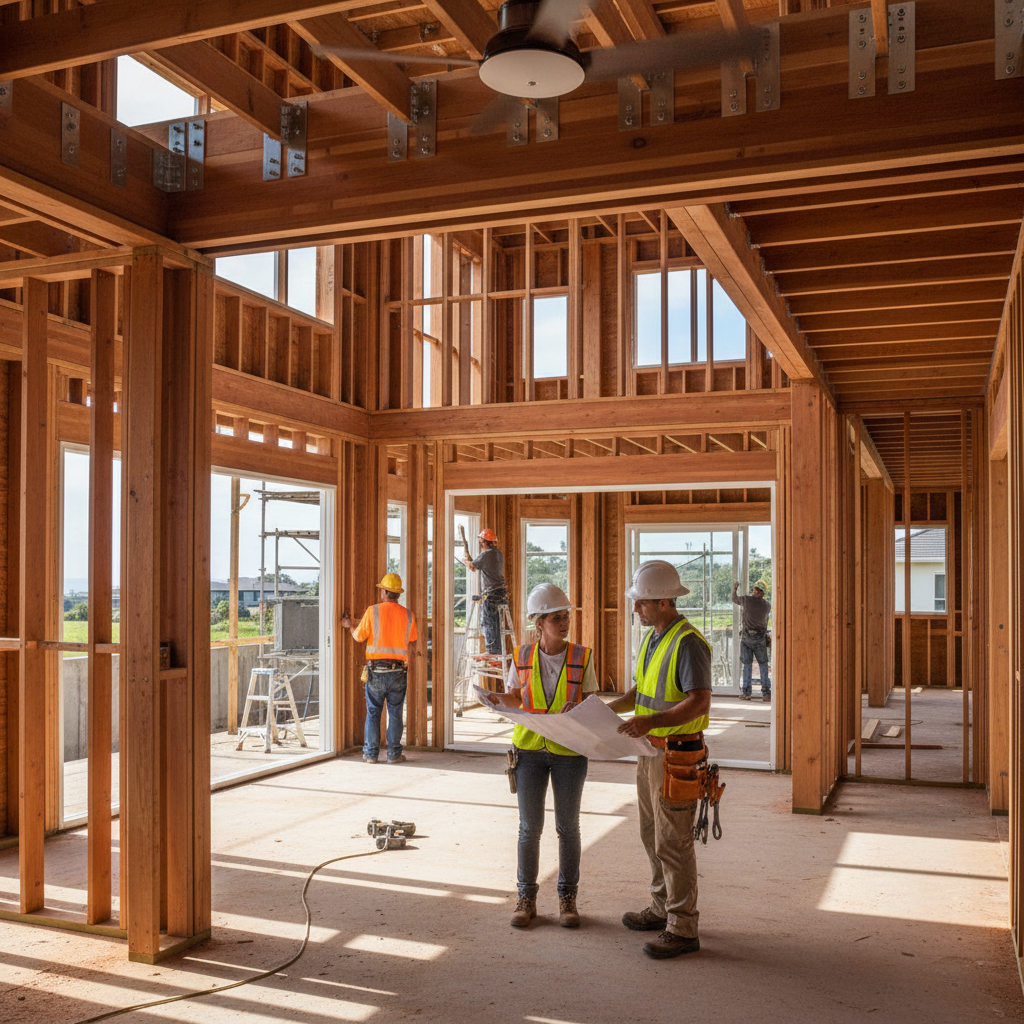
Building a custom home is a marathon, not a sprint, especially on O’ahu. A realistic timeline from the day you hire an architect to the day you move in is currently between 21 and 33 months in 2026. Anyone who tells you they can do it in a year is either inexperienced or not being honest. The process is broken into two main phases: pre-construction and construction.
Phase 1: Pre-Construction (Design & Permitting) – 9 to 15 Months
This phase is often the most frustrating for homeowners because it feels like nothing is happening, but it’s arguably the most important. Getting this part right saves immense time and money later.
- Architectural Design (4-6 months): This involves selecting your architect, developing initial concepts, refining the floor plans and elevations, and producing the detailed construction drawings. There’s a lot of back-and-forth here to get every detail just right.
- Engineering & Consultants (2-3 months): Once the architectural plans are largely set, they go to a structural engineer. You’ll also engage other consultants during this time, like your geotechnical engineer and maybe a landscape architect.
- Honolulu DPP Permit Review (3-6+ months): This is the biggest variable in the entire timeline. Once we submit the complete package to the DPP, it enters a queue. A clean, well-prepared set of plans for a straightforward home might get through in 3 months. However, if the project is complex, located in a special management area, or gets flagged for multiple revisions, this stage can stretch to 6, 8, or even 12 months. We’ve seen it happen. This is where having a builder who knows the DPP system is invaluable to keep the process moving.
Phase 2: Construction (Groundbreaking to Move-In) – 12 to 18 Months
Once you have that magic stamped permit in hand, the physical work can begin. For a typical 2,500 to 4,000-square-foot home, the construction itself takes about a year to a year and a half.
- Months 1-3: Site Work & Foundation: Clearing the lot, grading, digging trenches for utilities, and pouring the concrete foundation and slab.
- Months 4-6: Framing, Roofing, and Rough-ins: The structure of the house goes up. Walls are framed, the roof is sheathed and waterproofed, and windows are installed. Plumbers and electricians run all the pipes and wires inside the walls.
- Months 7-9: Exterior & Interior Drywall: The exterior siding or stucco is applied. Inside, insulation is installed, and the drywall is hung, taped, and textured.
- Months 10-14: Finishes: This is the most transformative stage. Flooring is installed, cabinets and countertops go in, plumbing and electrical fixtures are set, and interior and exterior painting is completed.
- Months 15-16: Final Details & Landscaping: Driveways and walkways are poured. Appliances are installed. The final punch list items—all the little touch-ups and adjustments—are completed.
- Month 17-18: Final Inspections & Occupancy: The city inspectors come for their final sign-offs on all work. Once we pass everything, the DPP issues the Certificate of Occupancy, and you get your keys.
It’s important to remember that this timeline can be affected by weather, material shipping delays (a constant reality in Hawaii), or unforeseen site conditions. A good home builder Kapolei will build buffer time into the schedule and communicate with you constantly about progress and any potential delays.
What Permits Do You Need for a Custom Home Build in Kapolei?
Navigating the permitting process with the Honolulu Department of Planning and Permitting (DPP)[1] is one of the biggest hurdles in any new home construction Kapolei project. It’s not just a single permit; it’s a comprehensive package of approvals that must be secured before a single shovelful of dirt can be moved. A seasoned local general contractor is your guide through this maze.
Here’s a rundown of the primary permits and approvals you’ll need:
- Building Permit: This is the main one. It’s an approval of the architectural and structural plans for the house itself. The DPP reviews these plans for compliance with the building code, zoning laws (like setbacks and height limits), and all other applicable regulations. This is the most time-consuming permit to obtain.
- Grading, Grubbing, and Stockpiling Permit: If you are moving more than 100 cubic yards of soil or clearing a significant amount of vegetation, you’ll need this permit. For most custom homes on raw land, this is a requirement. It ensures your site work won’t cause erosion or drainage problems for your neighbors.
- Electrical Permit: A licensed electrical contractor must pull this permit to cover all the wiring, panels, and fixtures in your home. It requires a separate review and inspection process.
- Plumbing Permit: Similar to the electrical permit, a licensed plumber must obtain this for all the supply lines, drains, vents, and fixtures.
- Driveway Permit: If you are creating a new access point from a public road, you’ll need a separate permit from the Department of Transportation Services to ensure the driveway apron is built to city standards.
- Wastewater System Approval: You’ll need to submit plans to the Department of Environmental Services to connect to the city’s sewer system. If you’re in a rural part of the Kapolei region without sewer access, you’ll need to go through the much more complex process of designing and permitting an individual wastewater system (septic system).
The process generally involves submitting multiple sets of detailed plans prepared by your architect and engineers. Each department reviews the plans concurrently or sequentially. Any time a reviewer has a question or requires a correction, they issue a comment. Your architect or builder must then address the comment, revise the plans, and resubmit them, which can restart the review clock for that department. This is why having a clean, complete, and professionally prepared submission is so critical to minimizing delays.
Our role as your general contractor is to manage this entire process. We coordinate with the architect, engineers, and surveyors to assemble the submission package, and our dedicated permit expediter hand-carries the plans to the DPP and interfaces directly with the plan reviewers to resolve issues quickly. This hands-on management can easily save 2-3 months compared to an out-of-state builder trying to navigate the system remotely.
Kapolei-Specific Considerations: Climate, Materials, and Regulations
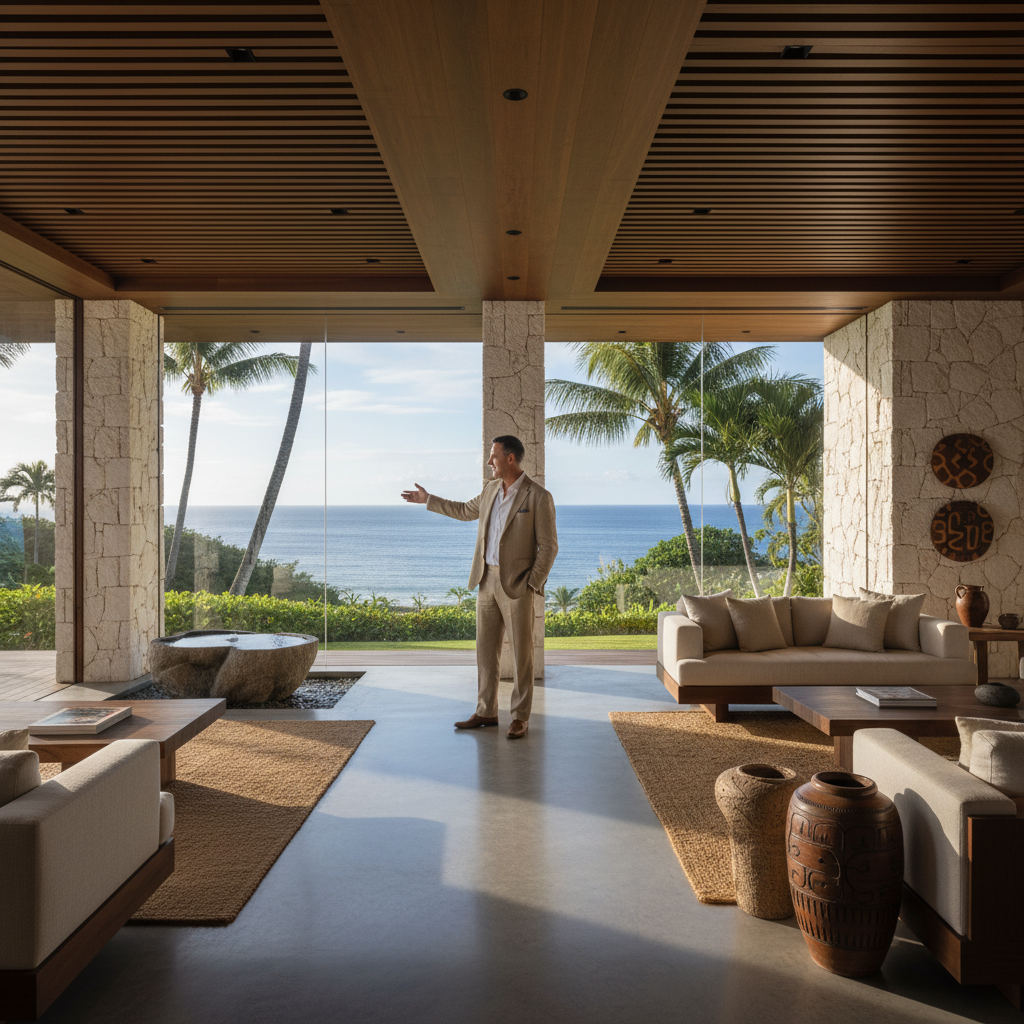
Building in Kapolei requires a specific approach that’s different from building in other parts of O’ahu. An experienced local builder understands these nuances and incorporates them into the design and construction from day one. Ignoring them leads to a home that’s uncomfortable, inefficient, and prone to premature aging.
Climate and Design
Kapolei is on the Leeward side, known for being hotter, drier, and sunnier than the Windward side or Honolulu proper. This climate dictates several key design choices:
- Passive Cooling: We design homes to work with the environment, not against it. This means orienting the house and placing windows to capture the prevailing tradewinds, creating cross-ventilation that can cool the home naturally.
- Solar Heat Management: Wide roof overhangs (eaves) are critical to shade windows and walls from the intense midday and afternoon sun. We also specify high-performance, low-E coated windows that reflect infrared heat while letting visible light in.
- Insulation: While Hawaii has a mild climate, proper insulation is key to comfort and energy efficiency. We focus on insulating the attic or roof deck heavily, as that’s where most heat gain occurs. A well-insulated roof can lower your air conditioning bills by 20-30%.
Material Selection
The materials you choose must be able to withstand the unique challenges of a tropical, marine environment.
- Termite Resistance: Ground termites are a massive problem across O’ahu. We build with termite-resistant materials from the ground up. This includes using treated lumber for the foundation sill plates (the wood that sits on the concrete), and often using light-gauge steel framing instead of wood studs. All soil around the foundation is also professionally treated before the slab is poured.
- Corrosion Resistance: Even though you might not be right on the beach, the salt in the air is carried for miles inland. All exterior metal—from nails and screws to window frames and railings—must be corrosion-resistant. We specify hot-dip galvanized or, preferably, 316 stainless steel fasteners for all exterior work. For hardware like gate hinges and light fixtures, stainless steel or high-quality powder-coated aluminum is a must.
- Roofing: A standing seam metal roof is an excellent choice for Kapolei. It’s durable, long-lasting, and can be ordered in light colors with high solar reflectivity to help keep the house cool.
Local Regulations and Codes
Hawaii has some of the most stringent building codes in the nation, largely due to our vulnerability to hurricanes.
- Hurricane Code: Ever since Hurricane Iniki in 1992, Hawaii’s building codes have been continuously updated to improve wind resistance. As a luxury home builder Kapolei, we are experts in these requirements. This involves using specific metal connectors (hurricane straps and ties) to create a continuous load path that anchors the roof to the foundation. It also means windows and large glass doors must be impact-rated or protected by rated shutters.
- Bill 7 and ADUs: While you’re building a primary custom home, it’s worth considering Honolulu’s progressive rules for Accessory Dwelling Units (ADUs). It might be strategic to design your site plan to accommodate a future ADU, or even build one at the same time for family or rental income. A builder familiar with the specifics of Bill 7 can help you maximize the potential of your property.
How to Choose the Right Custom Home Builder Contractor in Kapolei
Selecting your builder is the single most important decision for your project’s success. This is a long-term relationship, and you need a partner you can trust. Here’s a checklist to follow when vetting potential contractors.
- Verify Their License and Insurance: This is non-negotiable. Any contractor you consider must have a valid Hawaii General Contractor license (a “B” license). You can and should verify their license status, as well as any complaints filed against them, on the Hawaii Department of Commerce and Consumer Affairs (DCCA) Professional & Vocational Licensing (PVL) website[2]. For example, our license is BC-34373. They must also carry substantial General Liability and Worker’s Compensation insurance. Ask for their certificates of insurance.
- Look for Kapolei-Specific Experience: Ask to see a portfolio of custom homes they have built specifically in Kapolei, Ewa Beach, or Ko Olina. A beautiful home in Manoa is great, but it doesn’t prove they understand the unique conditions of the Leeward side. Check out our portfolio of projects to see our work across O’ahu.
- Interview and Check References: Don’t just get a list of references—call them. Ask previous clients about their experience. Was the builder communicative? Did they stay on budget? How did they handle problems when they arose? What would they do differently? A reputable builder will be happy to connect you with past clients.
- Understand Their Process: Ask detailed questions about their process. How do they handle budgeting and billing? What project management software do they use to keep you updated? How are change orders handled? A professional builder will have clear, documented systems for every stage of the project.
- Evaluate Communication and Chemistry: You will be talking to your builder multiple times a week for nearly two years. You need to have a good rapport. Do they listen to your concerns? Do they explain complex construction issues in a way you can understand? If you feel like they’re talking down to you or dismissing your questions during the interview process, it’s a major red flag.
Real Kapolei Custom Home Builder Project Example
To make this all more concrete, let’s walk through a typical project we might undertake in Kapolei.
The Project: A 3,500 sq. ft. modern two-story home for a family in one of the newer subdivisions in Kapolei. The clients wanted an open-concept living space, an indoor-outdoor lanai with a pool, and materials that were durable and low-maintenance.
The Challenge: The lot, while relatively flat, had expansive clay soil, which was identified in the geotechnical report. The clients also wanted large, multi-panel sliding glass doors facing west for the sunset view, which posed a challenge for both solar heat gain and meeting hurricane wind load requirements.
Our Solution:
- Foundation: To handle the expansive soil, our structural engineer designed a post-tensioned slab foundation. This type of foundation is reinforced with steel cables that are tightened after the concrete cures, creating a rigid slab that can resist movement from the soil swelling or shrinking beneath it. It’s a more expensive solution upfront but prevents catastrophic foundation failure down the road.
- Windows & Shading: We specified high-performance, double-pane, low-E coated glass for the entire home. For the large west-facing doors, we used a commercial-grade, impact-rated sliding door system. To manage the afternoon sun, we worked with the architect to design a deep, 12-foot lanai roof supported by a steel beam, which completely shades the glass during the hottest part of the day.
- Materials: We used light-gauge steel framing for all walls to eliminate any possibility of termite damage. The exterior was finished with a smooth acrylic stucco system, and all railings and exterior hardware were 316 marine-grade stainless steel to prevent any corrosion.
The Outcome:
- Timeline: The design and permitting phase took 11 months. Construction was completed in 16 months.
- Cost: The final construction cost came in at approximately $2.45 million, which works out to about $700 per square foot, reflecting the upgraded foundation, high-performance windows, and steel framing.
- Result: The family moved into a beautiful, durable, and energy-efficient home perfectly suited to the Kapolei climate. The post-tension slab provides peace of mind, and the passive cooling design means their AC runs far less than their neighbors’.
What this means for Hawaii homeowners
Building a custom home in Kapolei is a significant investment of time and money, and your success hinges on hiring a team with authentic, on-the-ground experience in Hawaii. The complexities of our island—from the slow-moving DPP to the corrosive salt air and aggressive termites—are not things a builder can learn from a manual. They are learned over decades of working here, solving problems, and building relationships.
Here are your key takeaways:
- Budget Realistically: Plan for a cost of $550-$850 per square foot for construction in 2026, and don’t forget to add 20-35% on top of that for soft costs and site work.
- Be Patient with the Timeline: A 2-to-3-year process from start to finish is normal. The permitting phase alone can take a year, so it’s critical to start with a builder who knows how to navigate the DPP efficiently.
- Prioritize Local Expertise: When interviewing builders, focus your questions on Kapolei-specific challenges. Ask about their experience with local soil conditions, material logistics, and hurricane code compliance.
- Invest in Durability: Don’t cut corners on materials. Using termite-resistant framing, corrosion-proof fasteners, and high-performance windows will pay for itself many times over in reduced maintenance and repair costs down the line.
Frequently Asked Questions About Custom Home Building in Kapolei
What is the very first step to building a custom home in Kapolei?
The first practical step, after you have your financing in order, is to hire your core team: a licensed architect and a licensed general contractor. In Hawaii, bringing the builder on board early in the design process (a method called design-build) is highly recommended. We can provide real-time cost feedback to the architect, ensuring the home being designed is one you can actually afford to build.
How much should I budget for landscaping and a pool?
These costs are separate from the home construction budget. For a new build in Kapolei, a professional landscape package (including design, irrigation, soil, sod, and plants) will typically start around $50,000-$80,000 for a standard lot. A professionally installed in-ground gunite swimming pool will cost between $100,000 and $150,000 in 2026, depending on size and features.
Are steel frame homes a good choice for Kapolei?
Yes, light-gauge steel framing is an excellent choice for any new home construction Kapolei. It is 100% termite-proof, which is its single biggest advantage. It’s also dimensionally stable (it doesn’t warp or shrink) and non-combustible. While it may add about 5-8% to the overall framing cost compared to wood, the peace of mind and protection against termites make it a very smart long-term investment for Hawaii homeowners.
Can I use a mainland architect for my Kapolei home?
You can, but it’s often not the best idea. A mainland architect will not be familiar with Hawaii’s unique building codes, the Honolulu DPP’s specific submission requirements, or designing for our climate. If you do hire one, they will almost always need to partner with a local, licensed Hawaii architect to review, stamp, and submit the plans, which adds cost and complexity. We strongly recommend hiring an architect based here on O’ahu.
How does the cost of building in Kapolei compare to Kailua or Manoa?
Generally, the cost per square foot for construction itself is fairly similar across O’ahu, as labor and material costs don’t change much from one side of the island to the other. However, site work costs can be much higher in areas like Manoa or on Kailua hillsides due to sloped lots requiring extensive retaining walls and excavation. Flat lots in Kapolei and Ewa Beach often have lower site development costs, though the land itself can be expensive.
What are the most common mistakes homeowners make?
The biggest mistake is underestimating the total project cost and timeline. The second is not hiring a local, reputable builder early in the process, which leads to designs that are over budget or difficult to permit. Finally, many homeowners focus too much on cosmetic finishes and not enough on the ‘bones’ of the house—like waterproofing, termite protection, and a solid foundation—which are far more important in the long run.
How do you handle the logistics of shipping materials to O’ahu?
We have dedicated logistics staff and long-term relationships with both mainland suppliers and local distributors like Honsador and HPM. We use project management software to track lead times for every single item, from foundation rebar to finish plumbing fixtures. We order long-lead items like windows and trusses months in advance and coordinate container shipments to ensure materials arrive on a ‘just-in-time’ basis to minimize on-site storage and prevent damage or theft.
Building your dream home in Kapolei is a journey, and having the right guide makes all the difference. Our team at Warrior Construction combines decades of local, hands-on experience with a professional, transparent process to deliver exceptional homes built to last. We understand the challenges and opportunities of building in West O’ahu because this is our home, too.
If you’re ready to start the conversation about your new custom home, our team is here to help. Explore our custom home building services and let’s schedule a time to discuss your vision.