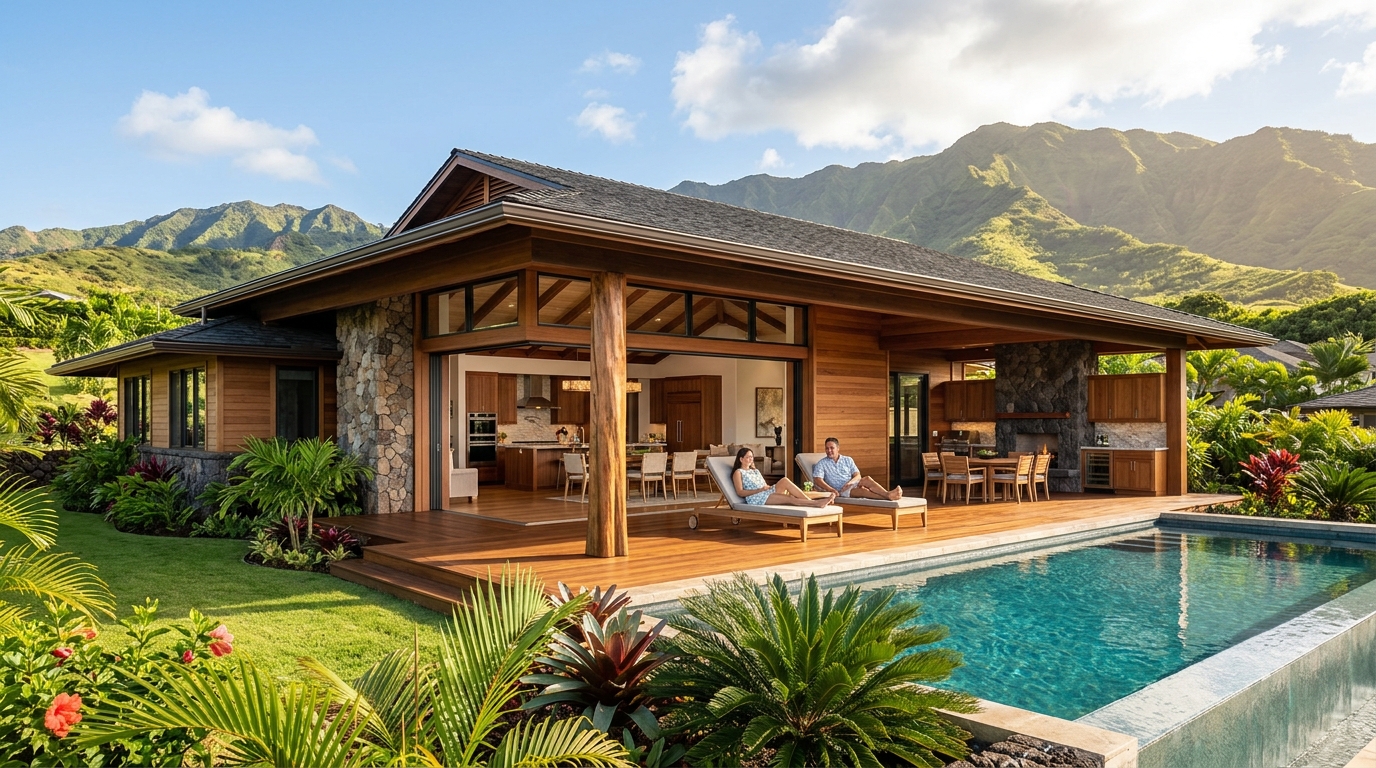
Building a custom home in Mililani in 2026 typically costs between $450 and $650 per square foot for construction and takes 24 to 36 months from initial design to moving in. As a custom home builder in Mililani for over two decades, our team at Warrior Construction has seen it all, from navigating Mililani Town Association (MTA) design reviews to engineering foundations for Central O’ahu’s unique red dirt soil. It’s a rewarding process, but it’s a marathon, not a sprint, especially with Honolulu’s permitting timelines.
The dream of a home built exactly for your family, on a lot you chose, is a powerful one. Unlike buying a tract home, every detail is yours to decide. But that freedom comes with complexity. Success hinges on understanding the real costs, timelines, and local hurdles before you ever break ground. This isn’t like building on the mainland; everything from material logistics to labor costs and weather patterns is different here on O’ahu.
We’ve put this guide together to give you the insider perspective we share with our clients. We’ll walk you through the realistic costs and timelines for new home construction in Mililani, explain the critical permitting process with the Department of Planning and Permitting (DPP), and cover Mililani-specific challenges you need to anticipate. Think of this as the conversation we’d have over coffee before you sign any contracts.
Why Mililani Homeowners Trust Warrior Construction for Custom Home Builder
Homeowners in Mililani choose to work with us because we’re not just a general contractor; we’re a local partner who understands the specific nuances of building in this community. Building a home here is about more than just concrete and lumber. It’s about knowing how to get plans approved by the Mililani Town Association on the first pass, understanding the drainage requirements for mauka-side lots, and having the long-standing relationships with suppliers and subcontractors to keep a project moving despite island-wide logistical challenges. Our Hawaii General Contractor license, BC-34373, is a mark of our commitment and qualification, but our reputation is built on the ground, one successful project at a time.
Our approach is rooted in transparency. From the very first meeting, we lay out the entire process—the good, the bad, and the frustrating. For instance, we make it clear that the Honolulu DPP permitting process is currently a significant bottleneck, often taking 12 months or more. We recently helped a client in Mililani Mauka whose previous builder downplayed this; they were shocked when their project stalled for over a year waiting for a permit. We prefer to set realistic expectations upfront, building a foundation of trust that’s as solid as the foundations we pour.
Furthermore, we operate as a cohesive team, integrating design, planning, and construction. This design-build model streamlines communication and avoids the common conflicts that arise when the architect, engineer, and builder are separate entities pointing fingers at each other. For a custom home, where every detail matters, this integrated approach is crucial. It means when a site condition inevitably surprises us—like hitting unexpected rock during excavation—our team can collaborate on a solution immediately, keeping the budget and schedule impacts to a minimum. This level of on-the-ground problem-solving is what makes a local, experienced home builder mililani essential.
What Does Custom Home Builder Cost in Mililani?
The direct answer is that in 2026, building a custom home in Mililani will cost between $450 and $650 per square foot in direct construction (or “hard”) costs. So, for a 2,500-square-foot home, you should budget between $1.125 million and $1.625 million for the structure itself. This range is driven by the complexity of the design, the slope of your lot, and the level of finishes you choose. Luxury home builder Mililani projects with high-end materials like imported tile, custom cabinetry, and extensive smart home automation can easily exceed $700 per square foot.
However, that’s only part of the financial picture. Homeowners must also budget for “soft costs” and site work, which are often overlooked.
Soft Costs (15-25% of Hard Costs):
These are the professional services and fees required before any dirt is moved. It’s a mistake to underestimate them.
- Architectural & Engineering Fees: Typically 8-15% of the construction cost. For a $1.2M build, that’s $96,000 to $180,000. This includes the architect, structural engineer, and sometimes civil or electrical engineers.
- Permitting & Government Fees: The Honolulu DPP charges fees based on project valuation. Plan for $20,000 to $40,000 for a typical custom home. This includes the building permit, plan review fees, and potential wastewater system fees.
- Surveys & Reports: You’ll need a topographical survey ($3,000 – $5,000) and likely a geotechnical report ($5,000 – $10,000) to analyze Mililani’s red soil and inform the foundation design.
- Financing & Insurance: Construction loan fees, appraisals, and builder’s risk insurance all add up.
Site Work & Landscaping (Variable):
This is the biggest variable. A flat, clear lot is much cheaper to prep than a sloped lot with dense vegetation. On a recent project on a sloped lot in Mililani Mauka, site prep, including a significant retaining wall and grading, added over $150,000 to the budget before the foundation was even poured. Budget for:
- Grading and Excavation: $25,000 – $100,000+
- Utility Connections (Water, Sewer, Electric): $20,000 – $50,000, assuming utilities are at the street.
- Driveway and Flatwork: $15 – $25 per square foot for concrete work.
- Landscaping and Irrigation: A basic package starts around $15,000 and goes up from there.
Finally, there’s the “Hawaii Factor.” Materials shipped to the island cost 20-30% more than on the mainland due to freight. Skilled labor is in high demand, which means higher wages. These costs are baked into our estimates, but it’s important for homeowners to understand why building here is more expensive than in Arizona or Texas. When you combine hard costs, soft costs, and site work, the true all-in cost for new home construction in Mililani is often in the $600 to $900 per-square-foot range.
How Long Does a Custom Home Builder Take in Mililani?
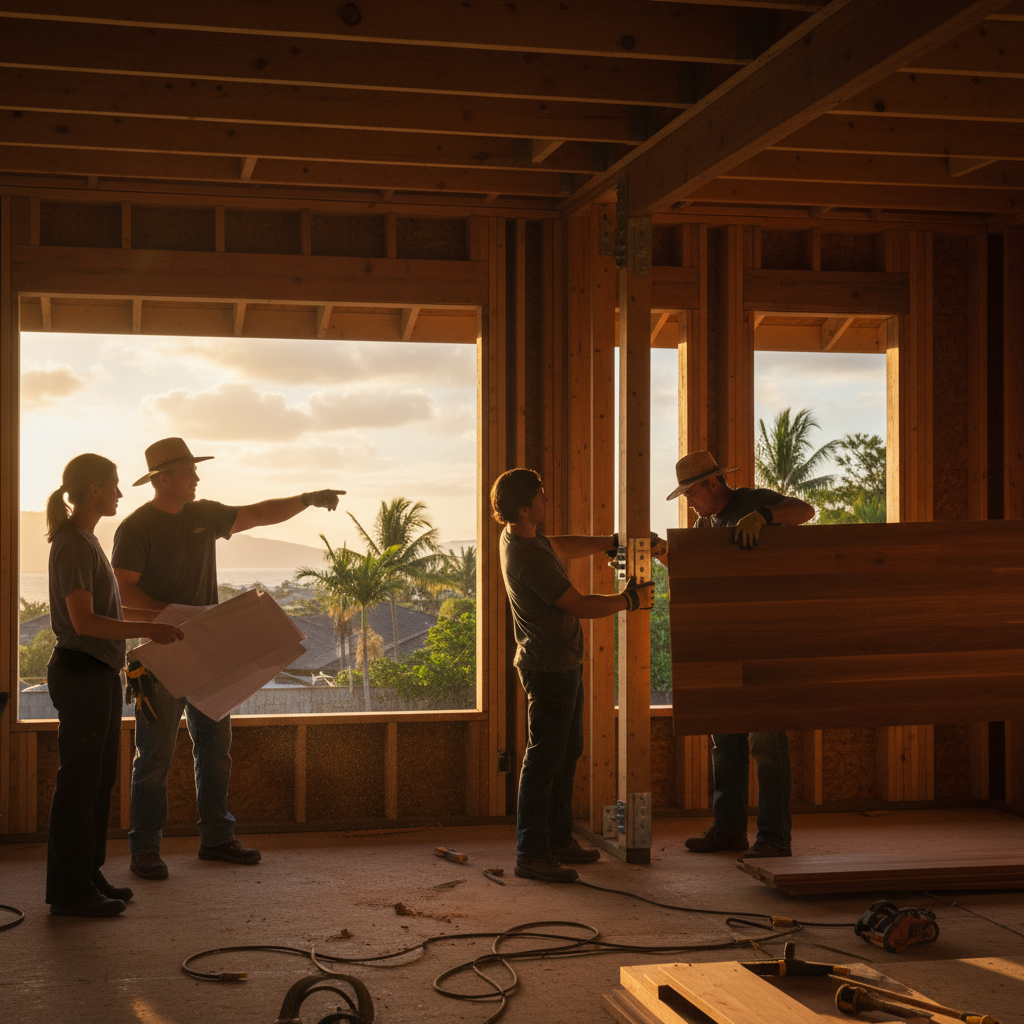
From our first conversation to you getting the keys, a realistic timeline for a custom home project in Mililani is 24 to 36 months in 2026. Many homeowners are surprised by this, assuming the construction itself is the longest part. In reality, the pre-construction phase, especially permitting, often takes longer than the actual build. It’s critical to have a patient, long-term perspective.
Here’s a phase-by-phase breakdown of a typical project timeline on O’ahu:
Phase 1: Design and Planning (4-7 Months)
This is where your vision takes shape. It’s an exciting, collaborative process but it takes time to get right.
- Initial Meetings & Conceptual Design (1-2 months): We meet with you and the architect to discuss your goals, budget, and lifestyle. The architect develops initial floor plans and exterior concepts.
- Design Development (2-3 months): We refine the plans, select major materials, and bring in the structural engineer. This involves a lot of back-and-forth to balance design with budget. On a recent project, we went through three revisions of the roofline to meet both the client’s aesthetic goals and hurricane code requirements without breaking the bank.
- Construction Documents (1-2 months): The architect and engineer create the final, detailed blueprints that will be submitted for permits and used by our team for construction.
Phase 2: Permitting and Approvals (12-16 Months)
This is the most unpredictable and often frustrating phase for homeowners. The City and County of Honolulu’s Department of Planning and Permitting (DPP) is notoriously backlogged.
- Mililani Town Association (MTA) Review (1-2 months): Before even going to the city, your plans must be approved by the MTA’s architectural committee to ensure they comply with community covenants. This can involve feedback on paint colors, fence styles, and landscaping.
- DPP Permit Submission & Review (10-14 months): Once submitted, your plans enter the DPP queue. A city plan reviewer will eventually be assigned, who will check for compliance with building codes, zoning, energy codes, and more. They almost always come back with comments or required revisions, which adds time. We tell clients to expect a minimum of 10 months here, but we plan for 12-14 to be safe.
Phase 3: Construction (12-18 Months)
Once the permit is in hand, we can finally break ground. The timeline here depends on the home’s size, complexity, and weather.
- Site Prep & Foundation (1-2 months): Clearing the lot, grading, and pouring the concrete foundation.
- Framing & Rough-ins (3-4 months): The skeleton of the house goes up, followed by plumbing, electrical, and HVAC systems.
- Exterior & Interior Finishes (6-9 months): This is the longest part of the build, including roofing, windows, drywall, flooring, cabinets, paint, and fixtures. Delays here are common due to shipping times for special-order materials from the mainland.
- Final Touches & Inspections (1-2 months): Landscaping, final city inspections, and creating the final punch list.
Adding it all up, the path to a custom home is a long one. A contractor who isn’t transparent about the 12+ month DPP wait is not being honest. Patience and a great team are your two most important assets.
What Permits Do You Need for Custom Home Builder in Mililani?
Securing the right permits for new home construction in Mililani is a non-negotiable, multi-step process managed by the Honolulu Department of Planning and Permitting (DPP)[1]. Attempting to build without a full set of approved permits is illegal and will result in stop-work orders, heavy fines, and potentially having to tear down unpermitted work. As your general contractor, a huge part of our job is managing this complex process for you.
For a new single-family home, you don’t just get one “permit.” You get a primary building permit that encompasses several sub-permits and requires a comprehensive set of documents. Here’s what the submission package typically includes:
- Complete Architectural Plans: These are the main blueprints showing floor plans, elevations, sections, and details.
- Structural Engineering Plans & Calculations: Stamped by a Hawaii-licensed structural engineer, these show the foundation, framing, and connections designed to withstand local conditions, including seismic activity and hurricane-force winds.
- Site Plan & Drainage Plan: Shows how the house sits on the lot, property lines, setbacks, and how stormwater will be managed to prevent runoff onto neighboring properties. This is especially important in the hillier parts of Mililani.
- Energy Code Compliance Form (R-3): Demonstrates that the home’s design (insulation, window types, etc.) meets Hawaii’s energy efficiency standards.
- Wastewater System Approval: Confirmation of connection to the city sewer system.
- Mililani Town Association (MTA) Approval Letter: The DPP will not accept your application without proof that the MTA has already approved your design.
Once this package is submitted, the DPP conducts a series of reviews across different departments. A plan reviewer will check for zoning compliance, building code adherence (based on the International Building Code with Hawaii amendments), and life-safety issues. This is where having a contractor and architect who know the local codes inside and out is invaluable. They can anticipate a reviewer’s questions and design accordingly, minimizing the rounds of revisions.
After the main building permit is issued, our subcontractors will pull their own trade-specific permits under our master permit. These include:
- Electrical Permit
- Plumbing Permit
- Mechanical (HVAC) Permit
Throughout the construction process, a city inspector will visit the site at key milestones (e.g., foundation, framing, final) to ensure the work matches the approved plans. Passing these inspections is required to move on to the next phase. The permitting process on O’ahu is a formidable beast, but with thorough preparation and professional management, it is navigable.
Mililani-Specific Considerations: Climate, Materials, Regulations
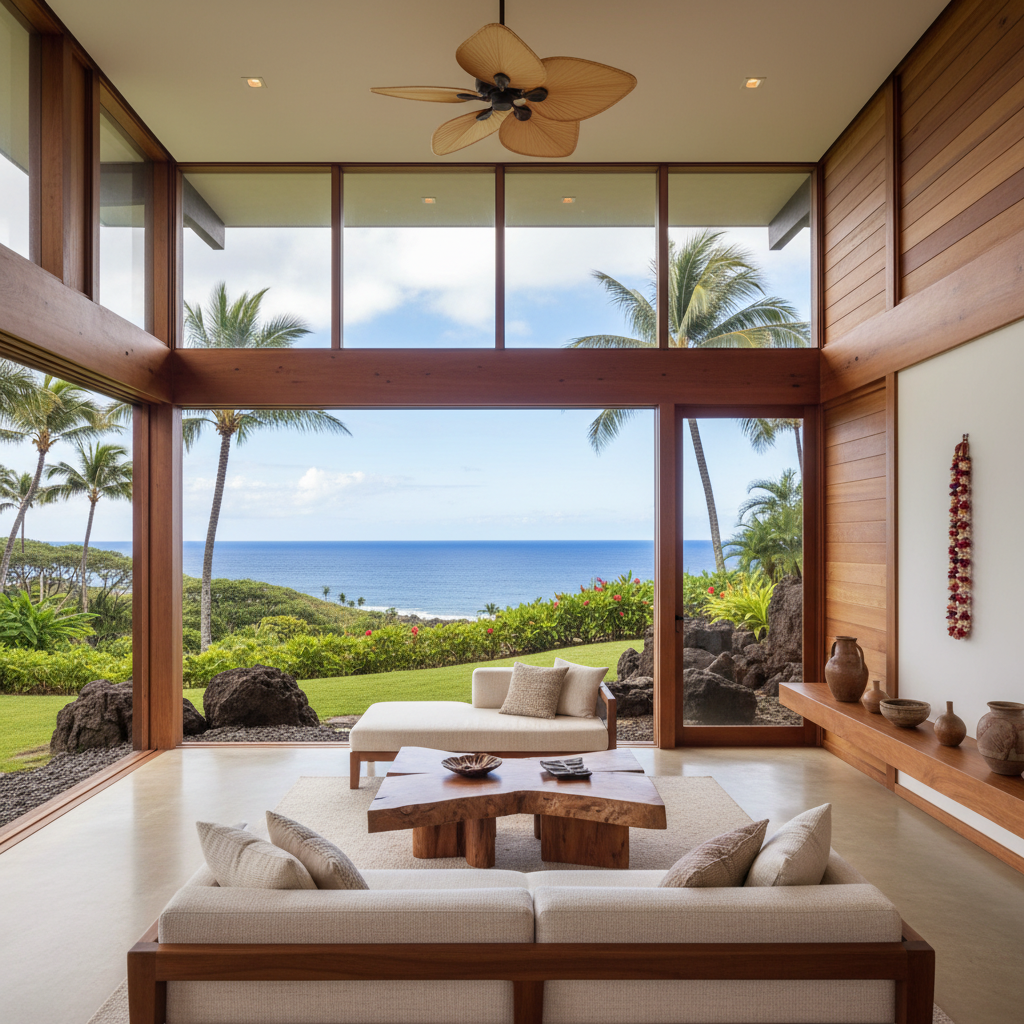
Building a home that will stand the test of time in Hawaii means building specifically for the local environment. Mililani has its own unique set of conditions that are different from beachfront Kailua or dry Ewa Beach. A smart custom home builder mililani will design and build with these factors in mind from day one.
Climate and Environment:
Mililani sits in Central O’ahu, with a climate that gets more rainfall and humidity than the leeward side. This has major implications for construction.
- Moisture Management: We design homes with larger roof overhangs to protect walls from driving rain. We also use high-quality house wrap and flashing details around every window and door to create a bulletproof building envelope. Good ventilation, both passive (e.g., operable windows placed to catch tradewinds) and active (high-quality bath fans and HVAC systems), is critical to prevent mold and mildew.
- Termites: Subterranean termites are a relentless force across Hawaii. We build with termite resistance as a core principle. This means using a combination of treated lumber (like borate-treated wood for framing), physical barriers (like Termimesh around plumbing penetrations in the slab), and ground treatment before the foundation is poured. Steel framing is another excellent, albeit more expensive, option we often recommend.
Recommended Materials:
Material selection is about longevity, not just initial appearance.
- Roofing: We almost always recommend standing-seam metal roofing over asphalt shingles. It costs more upfront but lasts 50+ years, reflects solar heat better, and holds up far better in a hurricane.
- Siding: Fiber cement siding (like James Hardie) is an excellent choice. It’s resistant to moisture, termites, and fire, and it holds paint well in our high-UV environment.
- Windows: We specify high-quality vinyl or fiberglass windows. Unlike wood, they won’t rot or swell in the humidity. Unlike aluminum, they don’t conduct heat as much and are less prone to corrosion, though Mililani doesn’t have the intense salt-air corrosion problem of coastal areas.
Local Regulations and Community Rules:
Beyond the city’s building code, Mililani has its own layer of governance.
- Mililani Town Association (MTA): The MTA has a comprehensive set of architectural design guidelines that govern everything from house color and roof material to fence height and landscaping. Every new home plan must be submitted for their review and approval. They are primarily concerned with maintaining a consistent and high-quality aesthetic throughout the community. We’ve learned to work closely with their committee, presenting plans that respect the guidelines to ensure a smooth approval process.
- Soil Conditions: Mililani’s red volcanic soil (oxisols) can have unique properties. It’s why we insist on a geotechnical report for every new build. This report tells our structural engineer how to design the foundation to prevent issues with soil expansion or settling over time, protecting your investment for the long haul.
- Hurricane Code: Hawaii’s building code is one of the strictest in the nation regarding wind resistance. Since Hurricane Iniki in 1992, all new construction must include features like steel hurricane straps connecting the roof to the walls and the walls to the foundation, creating a continuous load path to keep the house together in extreme winds.
How to Choose the Right Custom Home Builder Contractor in Mililani
Choosing your builder is the single most important decision you’ll make in your custom home journey. The right contractor acts as your trusted advisor, project manager, and quality control expert. The wrong one can turn your dream into a nightmare of delays, budget overruns, and shoddy workmanship. Here’s a practical checklist our team recommends for vetting any potential home builder mililani.
1. Verify Their License and Insurance—No Exceptions.
This is non-negotiable. Any legitimate contractor in Hawaii will have a valid license issued by the Department of Commerce and Consumer Affairs (DCCA). You can and absolutely should verify their license online[2]. For a project like this, they need a “BC” license, which is a General Building Contractor. Warrior Construction’s license is BC-34373. Also, ask for a certificate of insurance showing they carry both General Liability (we recommend a minimum of $2 million) and active Worker’s Compensation policies. If a worker gets hurt on your property and the contractor isn’t covered, you could be held liable.
2. Scrutinize Their Local Portfolio.
Ask to see examples of their completed custom homes, specifically on O’ahu. A mainland company might have a beautiful portfolio, but it means nothing if they don’t have experience with Hawaii’s unique building challenges. Look for projects similar in scope and style to what you envision. Pay attention to the quality of the finish work in their photos. Even better, ask if you can do a drive-by of a few completed projects. You can see some of our diverse O’ahu projects in our online portfolio.
3. Talk to Their Past Clients.
This is more valuable than any marketing material. A good builder will happily provide you with a list of 3-5 recent clients. When you call them, don’t just ask if they were happy. Ask specific, tough questions:
- How was the communication throughout the project?
- How did the builder handle unexpected problems or changes?
- How accurate were their initial budget and timeline estimates?
- Were there any major issues after move-in, and how did the builder respond to warranty claims?
4. Understand Their Process and Communication Style.
During your initial meetings, pay attention to how they operate. Do they listen to your ideas? Do they explain complex topics clearly and patiently? Do they have a structured process for selections, change orders, and progress updates? Our team uses project management software to give clients a real-time view of the schedule, budget, and daily progress logs with photos. This level of transparency is key to a low-stress building experience.
5. Get a Detailed, Apples-to-Apples Bid.
Never choose a builder based on a cheap, one-page estimate. A professional bid will be dozens of pages long, breaking down the costs by construction phase (e.g., foundation, framing, electrical) with specific allowances for items like appliances, flooring, and light fixtures. When comparing bids, make sure the allowances and specifications are the same. One builder might seem cheaper because they’ve included a low-ball allowance for cabinets, which you’ll end up paying for later. A thorough, transparent bid is a sign of a professional and honest builder.
Real Mililani Custom Home Builder Project Example
To make all this information more concrete, let’s walk through a typical project we recently completed. This fictionalized example, the “Sato Residence,” is a composite of several new home construction projects our team has managed in Mililani Mauka, reflecting the real-world challenges and outcomes.
The Vision: The Sato family owned a 7,800-square-foot lot with a moderate slope. They wanted a 4-bedroom, 3.5-bathroom single-story home of about 2,900 square feet. Their goal was a modern plantation style, with a large covered lanai for indoor-outdoor living, an open-concept kitchen and living area, and durable, low-maintenance materials suitable for their active family.
The Challenges:
- Site Conditions: The lot sloped significantly from back to front, requiring a substantial amount of grading and a 6-foot-high moss rock retaining wall along the back property line to create a level building pad. This added $135,000 to the site work budget.
- MTA Review: The initial design included a dark bronze standing-seam metal roof. The Mililani Town Association’s design committee requested a color change to a lighter gray to better match the neighborhood aesthetic. This was a simple change, but their review process added about six weeks to the pre-construction timeline.
- Permitting Delays: Despite submitting a complete and thorough package, the project spent 13 months in the DPP’s review queue before the building permit was issued. We tracked it weekly and responded to the city reviewer’s comments within 48 hours to keep it moving, but the backlog was unavoidable.
The Process and Timeline:
- Design & MTA Approval: 6 months
- DPP Permitting: 13 months
- Construction: 15 months (This was slightly extended by a 3-week shipping delay on their custom-ordered windows from the mainland).
- Total Project Duration: 34 months from the first design meeting to move-in day.
The Financials:
- Hard Costs (Construction): $1,479,000 (approx. $510/sq ft)
- Soft Costs (Design, Engineering, Permits): $210,000
- Site Work (Grading, Retaining Wall, Utilities): $185,000
- Total Project Cost (excluding land): ~$1,874,000
The Outcome: The Sato family moved into a beautiful, high-quality home built exactly to their specifications. Because they were prepared for the long timeline and had a realistic budget that included significant contingencies for site work, the process was smooth and predictable. They have a durable, termite-resistant, and energy-efficient home perfectly suited to the Mililani climate that will serve their family for generations.
What this means for Hawaii homeowners
Building a custom home in Mililani is a significant undertaking, but it’s entirely achievable with the right planning and professional team. The key is to go in with your eyes wide open to the local realities of cost, time, and regulation. Don’t rely on mainland TV shows or national cost averages; Hawaii is a completely different world.
- Budget Comprehensively: Your budget must account for more than just the cost per square foot. Factor in 15-25% for soft costs and have a healthy contingency fund (at least 10% of construction cost) for site work and unexpected issues.
- Plan for the Wait: The longest part of your project will likely be waiting for the building permit. Accept the 12-16 month permitting timeline as a reality and use that time productively to finalize material selections and finishes.
- Hire a True Local Expert: Your builder must have deep experience not just on O’ahu, but specifically with the DPP and community associations like the MTA. Their local knowledge is your best defense against costly mistakes and delays.
- Build for the Climate: Prioritize durability over trendy finishes. Invest in a high-quality roof, proper waterproofing, and termite-resistant materials. A home designed for Hawaii’s climate will cost less to maintain and be more comfortable to live in for years to come.
Your journey to a new home starts with a realistic plan. A great local builder will help you create one before you spend a dime on blueprints.
Frequently Asked Questions About Custom Home Builder in Mililani
How much are permitting fees for a new custom home in Mililani?
For a typical 2,500-3,000 square foot custom home in Mililani, you should budget between $20,000 and $40,000 for all government permitting fees in 2026. This includes the main building permit from the Honolulu DPP, plan review fees, and separate fees for electrical and plumbing permits. The final cost is calculated based on the total valuation of the construction project.
Can I use an architect from the mainland for my Mililani home?
While you can, it’s often not the best approach. An architect must be licensed in the State of Hawaii to stamp plans for submission. More importantly, a local architect will have intimate knowledge of Hawaii’s unique building codes, hurricane-resistant design requirements, and the specific quirks of the Honolulu DPP, which can save you months in revisions and delays. We strongly recommend partnering with a Hawaii-based architect or a design-build firm like ours.
What is the biggest mistake people make when building a custom home in Hawaii?
The most common mistake is underestimating the timeline, particularly the permitting phase. Homeowners often see a 12-month construction schedule and think that’s the total duration. They fail to account for the 4-7 months of design and the 12-16 months of waiting for the building permit from the DPP. A realistic total timeline is 2 to 3 years, and starting with that expectation makes the entire process much less stressful.
Are steel-framed homes a better choice for Mililani?
Light-gauge steel framing is an excellent option for Hawaii and one we often use. Its main advantages are that it’s 100% termite-proof and perfectly straight, which can result in very clean drywall lines. The cost is typically 10-15% higher than traditional wood framing, but it provides ultimate peace of mind against termites. It’s a trade-off between upfront cost and long-term durability and pest resistance.
How much influence does the Mililani Town Association (MTA) have on my home’s design?
The MTA has significant influence. Their architectural standards are part of the covenants on your property and are legally enforceable. They review and must approve your plans before you can even submit them to the city. Their guidelines cover aspects like exterior paint colors, roofing materials, fence design, setbacks, and overall architectural style to maintain community consistency. Ignoring their rules will stop your project before it starts.
What is the difference between a custom home builder and a large tract home builder?
A tract builder, like those who built much of original Mililani, builds many homes at once from a limited set of pre-designed plans on land they own. A custom home builder, like Warrior Construction, builds a one-of-a-kind home specifically for a single client on their own lot. With a custom builder, you have complete control over the design, layout, and materials, offering endless personalization at a higher cost per square foot.
What kind of warranty do you provide on a new custom home?
We provide a comprehensive warranty that meets and exceeds industry standards. This typically includes a “bumper-to-bumper” warranty for one year covering all labor and materials. Additionally, we provide a two-year warranty on major systems like plumbing, electrical, and HVAC, and a ten-year structural warranty on the foundation and framing. We stand behind our work because our reputation on O’ahu is everything.
Build Your Vision in Mililani
Building a custom home is one of the most significant investments you’ll ever make. Don’t leave it to chance. Partner with a licensed, local, and experienced team that understands the unique landscape of construction on O’ahu. At Warrior Construction (BC-34373), we bring decades of expertise to every foundation we pour and every home we build.
If you’re ready to start the conversation about your dream home in Mililani, our team is here to provide a clear, honest, and comprehensive assessment of your project. Let’s build something that lasts.