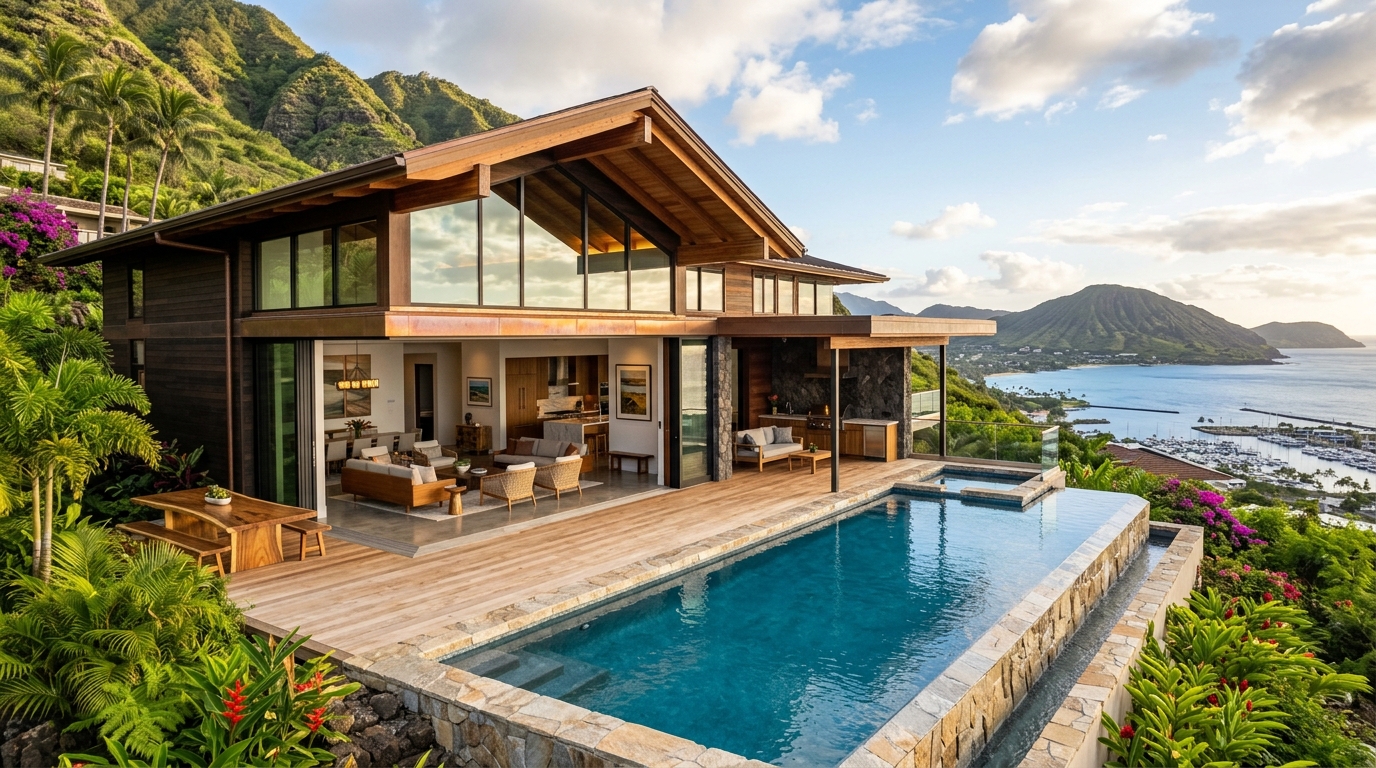
Building a custom home in Hawaii Kai in 2026 generally costs between $450 and $700 per square foot for the construction itself, with total project costs often reaching $800+ per square foot once you factor in design, permits, and site work. For a 3,000 square foot home, you’re looking at a total investment of $1.8 million to $2.5 million or more. As a dedicated custom home builder in Hawaii Kai, our team at Warrior Construction has managed these projects for over two decades. We’ve learned that success isn’t just about beautiful design; it’s about understanding the unique challenges of building here—from the salt-laden air along the marina to navigating the Honolulu Department of Planning and Permitting (DPP). This is where an experienced local general contractor makes all the difference.
Many homeowners are surprised by the nuances. They see the beautiful finished homes in Portlock or along Kalanianaʻole Highway and underestimate the journey. For example, the timeline isn’t just the 12-18 months of construction; you first have to budget 9-18 months, sometimes longer, just for the permitting process in Honolulu. Furthermore, material choices that work on the mainland can fail in just a few years here due to our intense UV exposure and corrosive salt spray. We’ve been called in to fix projects where off-island builders used the wrong grade of stainless steel, only to see it rust within three years. This guide pulls from our years on job sites across O’ahu, giving you the real numbers, timelines, and insider tips you need before breaking ground. We’ll cover everything from realistic budgeting and permit timelines to material selection that withstands the Hawaii Kai climate and how to choose a builder who truly understands this slice of paradise.
Why Hawaii Kai Homeowners Trust Warrior Construction for Custom Home Builder
When you decide to build a custom home in a place as unique as Hawaii Kai, you’re not just hiring a builder; you’re choosing a partner to navigate a complex local landscape. Homeowners trust our team at Warrior Construction (License BC-34373) because we’ve spent more than 20 years focused exclusively on O’ahu. This isn’t a side gig for us; it’s our entire business. That local focus means we have deep-seated relationships with architects, engineers, and suppliers who know the island. More importantly, we have a working understanding of the people and processes at the Honolulu DPP[1]. We know which reviewers specialize in what, how to prepare plans for a smoother review, and how to anticipate the questions they’ll ask about things like shoreline setbacks or drainage plans for hillside lots near Koko Head.
A mainland builder, or even one based primarily on a neighbor island, simply can’t replicate this experience. On a recent project in the Koko Villas community, the initial plans from an out-of-state architect didn’t account for the specific covenants of that particular HOA, which have strict rules on rooflines and exterior finishes. We caught it during our pre-construction review, saving the client months of redesign and potential fines. It’s this kind of proactive, on-the-ground knowledge that prevents costly delays. We understand the logistical realities of Hawaii Kai—the traffic patterns for material deliveries, the limited staging areas on smaller lots, and the importance of being a good neighbor during a long construction process. Our superintendents know how to manage a clean and respectful job site, which is critical in tight-knit communities like Queen’s Gate or Mariners Cove.
Ultimately, our reputation is built on transparency and expertise. We live here, our kids go to school here, and we are part of this community. When you work with Warrior Construction, you’re getting a team that understands everything from the structural requirements to withstand hurricane-force winds to the best type of window sealant to use against corrosive salt air. This isn’t just another project for us; it’s about building lasting, high-quality homes for our neighbors.
What Does a Custom Home Builder in Hawaii Kai Typically Charge?
Let’s get straight to the numbers for 2026, because vague answers don’t help you plan. For a complete custom home project in Hawaii Kai, the all-in cost per square foot typically lands between $600 and $900. This figure is composed of two main parts: hard costs and soft costs. Understanding this breakdown is the first step to creating a realistic budget.
Hard Costs: $450 – $700+ per square foot. This is the budget for the physical construction—the labor and materials to build the house itself. Here’s a rough breakdown of where that money goes for a quality, mid-to-high-end build:
- Site Work & Foundation: $50,000 – $150,000+. This includes grading, excavation, utility trenching, and the concrete slab or post-and-pier foundation. In Hawaii Kai, if you’re on a sloped lot or dealing with a high water table near the marina, these costs can easily be on the higher end. Volcanic rock can also increase excavation expenses significantly.
- Framing (Wood or Steel): $45 – $70 per sq. ft. This is the skeleton of your home. Light-gauge steel framing is becoming more popular as a termite-resistant option, but it comes at a premium of about 15-20% over traditional wood.
- Exterior (Roofing, Siding, Windows): $60 – $110 per sq. ft. This is a critical area for investment in Hawaii Kai. We strongly recommend standing-seam metal roofing, impact-rated fiberglass or vinyl windows, and high-quality siding with a robust paint system to fight salt-air corrosion. Cutting corners here means expensive repairs in 5-10 years.
- Interior Finishes (Drywall, Flooring, Cabinets, Counters): $150 – $300+ per sq. ft. This is the category with the widest variance. It all depends on your choices. Custom koa cabinetry, imported Italian marble, and high-end Sub-Zero/Wolf appliances will push you to the top of this range, while quality LVP flooring and semi-custom cabinets can keep costs more moderate.
- MEP (Mechanical, Electrical, Plumbing): $50 – $85 per sq. ft. This includes your HVAC system (split AC is standard), all wiring, lighting fixtures, plumbing lines, and fixtures. Solar and battery backup systems can add another $30,000 – $60,000.
Soft Costs: 15% – 25% of your hard cost budget. These are the essential expenses outside of the physical construction. Homeowners often underestimate these.
- Architectural & Engineering Fees: 8% – 15% of the construction cost.
- Permit Fees (Honolulu DPP): Expect to pay $20,000 – $50,000 or more for a new home. This includes building, electrical, plumbing, and potentially SMA (Special Management Area) permits if you’re near the shoreline.
- Hawaii General Excise Tax (GET): 4.5% on O’ahu, applied to virtually every dollar you spend on labor and materials. This is a significant line item that must be in your budget from day one.
- Landscaping, Hardscaping & Pool: $75,000 – $250,000+. A pool alone can easily cost $100,000 – $150,000.
- Financing Costs & Contingency: It’s wise to hold a 10-15% contingency fund for unexpected issues, like discovering unforeseen ground conditions or supply chain price spikes.
So, for a 3,500 sq. ft. luxury home builder Hawaii Kai project, the math might look like this: 3,500 sq. ft. x $550/sq. ft. (hard cost) = $1,925,000. Add 20% for soft costs ($385,000) and your initial budget should be around $2.31 million, before landscaping and a pool. Building here is a serious investment, and having a builder who is upfront about every single cost is non-negotiable.
How Long Does a Custom Home Builder Take in Hawaii Kai?
Patience is a virtue in Hawaii construction, and building a custom home in Hawaii Kai is a marathon, not a sprint. A realistic total timeline, from the day you hire an architect to the day you move in, is typically 24 to 36 months. Anyone who tells you they can do it in a year is either inexperienced or not being truthful. The timeline breaks down into three distinct phases, and only one of them involves actual construction.
Phase 1: Design & Engineering (4-8 Months)
This is where your vision takes shape. It involves working with an architect to develop schematic designs, refine them into detailed construction drawings, and engage structural and civil engineers. This phase is highly collaborative and depends heavily on your decision-making speed. We’ve seen this take as little as three months for clients who know exactly what they want, and over a year for those who require multiple major revisions. During this time, we as the general contractor can provide pre-construction services, offering feedback on constructability and cost to ensure the design aligns with your budget.
Phase 2: Permitting with Honolulu DPP (9-18 Months)
This is the infamous Honolulu bottleneck and the part of the process that surprises most homeowners. Once your architectural plans are complete, they are submitted to the Department of Planning and Permitting (DPP).[1] The plans go through numerous departmental reviews: zoning, building, electrical, plumbing, fire, and sometimes the Board of Water Supply or State Historic Preservation. Each department can have a backlog. In 2026, we are seeing initial review times of 4-6 months, followed by another 4-6 months for corrections and resubmittals, and then a final processing period. If your property is in a Special Management Area (SMA) along the marina or coast, that adds another layer and several months to the process. There is very little a contractor can do to speed this up, but submitting a perfectly prepared, error-free plan set is the best way to avoid unnecessary delays.
Phase 3: Construction (12-20 Months)
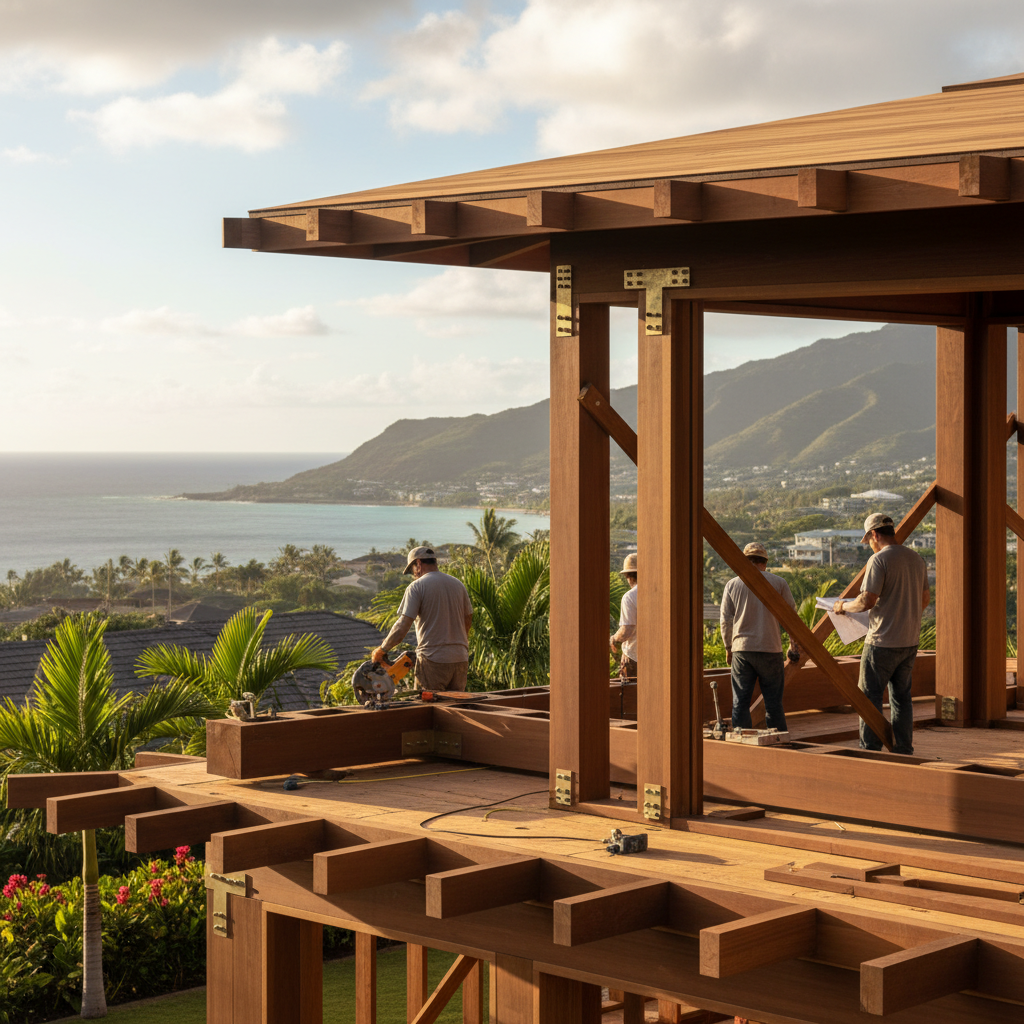
Only after the permit is in hand can we break ground. The actual build time for a typical 2,500 to 4,000 square foot custom home in Hawaii Kai is about a year to a year and a half. This timeline can be affected by several factors:
- Site Complexity: A flat, clear lot is faster. A steep hillside lot requiring extensive excavation and retaining walls adds months.
- Material Availability: Almost everything is shipped to Hawaii. If you specify a particular tile from Spain or a special-order window package, we are at the mercy of ocean freight. We recently had a project in Kailua delayed by three months waiting for a container of custom-milled siding that was held up in the Port of Long Beach.
- Weather: While we have great weather most of the time, a particularly rainy winter season can delay foundation work and framing.
- Change Orders: Every time a change is made after construction begins, it can create a ripple effect on the schedule, impacting material orders and subcontractor timing.
Building a home is a long-term commitment. A good home builder in Hawaii Kai will provide you with a detailed schedule using project management software and give you regular updates so you always know where things stand.
What Permits Do You Need for Custom Home Builder in Hawaii Kai?
Navigating the permitting process for new home construction in Hawaii Kai is one of the most critical and often underestimated hurdles. It’s not just one permit; it’s a series of approvals from different city and county departments, all funneled through the Honolulu Department of Planning and Permitting (DPP). Having a general contractor who knows this system inside and out can be the difference between breaking ground in nine months or waiting nearly two years.
First, it’s essential to understand that every single aspect of your build requires official sign-off. The primary permit is the Building Permit. To get this, your architect and engineers must submit a comprehensive set of drawings that detail everything from the foundation design to the roof structure. These plans are then reviewed by multiple agencies for compliance with a host of codes:
- Zoning Review: This ensures your home’s size, height, and placement on the lot (setbacks) comply with Hawaii Kai’s specific zoning regulations. They’ll also look at Bill 7 compliance to prevent so-called “monster homes,” though this is less of an issue on the larger lots typical of the area compared to denser neighborhoods like Kaimuki.
- Structural Review: A city engineer will scrutinize your structural plans to ensure they meet Hawaii’s stringent building codes, which include requirements for hurricane resistance (e.g., hurricane straps, shear walls) and seismic activity.
- Electrical & Plumbing Review: Separate reviews ensure all wiring and plumbing plans are up to code for safety and function.
- Fire Department Review: The Honolulu Fire Department checks for proper access, smoke detector placement, and other life-safety features.
Beyond the main building permit, several other permits are almost always required for a new build:
- Grading, Grubbing, and Stockpiling Permit: If you are moving more than 50 cubic yards of soil—which is virtually guaranteed on a new build—you’ll need this permit before any site work can begin.
- Demolition Permit: If there’s an existing structure on the lot that needs to be torn down, this is a separate permit that must be secured first.
- Trenching Permit: This is required for digging trenches to connect to public utilities like sewer, water, and electrical lines.
- Special Management Area (SMA) Permit: This is a big one for Hawaii Kai. If your property is near the shoreline, which includes the marina, it falls within the SMA. This triggers an additional, more intensive environmental and design review process that can add 6-9 months to your permitting timeline.
Our role at Warrior Construction is to coordinate this complex process. We work with your architect to ensure the plan set submitted to the DPP is complete and accurate, minimizing the chance of it being rejected on the first pass. We then track the application through the various departments, respond to reviewer comments promptly, and manage the paperwork until that stamped, approved permit is in our hands. Trying to manage this yourself or with an off-island firm that doesn’t know the system is a recipe for frustration and extreme delays.
Hawaii Kai-Specific Considerations: Climate, Materials, Regulations
Building in Hawaii Kai isn’t like building anywhere else, not even like building in Manoa or Kapolei. This specific area has a unique microclimate and set of environmental factors that demand specialized knowledge. A successful custom home here is one that’s designed and built from the ground up to handle these local conditions. Overlooking them leads to premature aging, constant maintenance, and costly repairs.
1. The Battle Against Salt-Air Corrosion
This is the number one challenge. Hawaii Kai is surrounded by saltwater – from Maunalua Bay to the intricate marina system. The salty, moist air is incredibly corrosive. We’ve seen metal components on homes built by inexperienced contractors start to pit and rust within 18 months. Here’s our standard approach:
- Fasteners and Connectors: All nails, screws, flashing, and structural connectors (like hurricane straps) must be stainless steel, preferably grade 316, or heavily hot-dip galvanized. Anything less will fail.
- Windows and Doors: We advise against standard aluminum frames, which will oxidize and pit. High-quality fiberglass or vinyl frames are far superior. If a client insists on aluminum for its modern look, it must be AAMA 2605 powder-coated for maximum protection.
- Exterior Lighting and Railings: Again, marine-grade stainless steel, powder-coated aluminum, or specialized composites are the only viable options. Even a high-quality painted steel will eventually succumb to the salt.
2. Hurricane Code and Wind Resistance
Ever since Hurricane Iniki in 1992, Hawaii’s building codes have been some of the strictest in the nation regarding wind resistance. In Hawaii Kai, which is exposed to open water, this is paramount. Your home must be designed as a continuous load path, from the roof to the foundation. This means using specific metal connectors (hurricane straps and ties) at every critical joint to ensure your roof doesn’t lift off in high winds. It also means impact-rated windows and doors are a wise investment, if not a code requirement depending on the specific location. We build to exceed code, ensuring your home is a safe haven during a storm.
3. Intense Sun and UV Exposure
The sun in Hawaii Kai is relentless. It fades paint, degrades wood, and breaks down plastics. Material selection is key:
- Roofing: A standing-seam metal roof with a Kynar 500 paint finish is one of the best long-term investments. It reflects heat and the finish is highly resistant to UV degradation and fading.
- Siding: Hardie board (fiber cement) siding is an excellent choice as it’s resistant to sun, salt, and termites. If using wood, it needs to be a durable species like teak or ipe and will require regular maintenance (oiling).
- Paint: We only use top-of-the-line, 100% acrylic latex exterior paints with high UV inhibitors. Proper prep work and application are just as important as the paint itself.
4. Marina and Waterway Regulations
Building on a marina-front lot comes with its own set of rules. As mentioned, you’ll be in the Special Management Area (SMA), which has strict guidelines on what can be built, how close to the water you can be, and how you must manage drainage and runoff during construction. If you’re planning a new boat dock, that’s a whole separate permitting process involving the Department of Land and Natural Resources (DLNR). Our team has experience with these specific regulations and can guide you through the additional layers of bureaucracy.
How to Choose the Right Custom Home Builder Contractor in Hawaii Kai
Choosing your general contractor is the single most important decision you’ll make in your custom home journey. The right choice leads to a smooth process and a beautiful, well-built home. The wrong choice can lead to years of stress, budget overruns, and legal battles. Here in Hawaii, local experience is everything. Don’t be tempted by a slick website from a mainland firm; you need a builder with their boots on the ground in O’ahu.
Here are the non-negotiable steps we recommend every homeowner take:
-
Verify Their License and Insurance.
This is the absolute first step. Any legitimate contractor must have a Hawaii State General Contractor’s License. Our license at Warrior Construction is BC-34373. You can and should verify any contractor’s license status online using the Hawaii Department of Commerce and Consumer Affairs (DCCA) Professional & Vocational Licensing (PVL) search tool.[2] Ask for proof of general liability insurance and worker’s compensation insurance. If they can’t provide these documents instantly, walk away. It’s a massive red flag. -
Demand Local, Hawaii Kai-Specific References.
Don’t just ask for references; ask for references for recent custom homes they built in Hawaii Kai or a similar coastal O’ahu community like Kailua or the North Shore. A contractor who primarily builds in Kapolei might not have the same level of experience with the salt-air and marina-front challenges of Hawaii Kai. Call those references and ask detailed questions: How was their communication? Did they stick to the budget? How did they handle problems when they arose? Would you hire them again? If possible, ask to see one of their completed projects. -
Evaluate Their Communication and Professionalism.
From the very first phone call, pay attention. Do they answer their phone? Do they respond to emails promptly? Do they provide clear, detailed answers to your questions? A custom build is a long-term relationship. You need a partner who is transparent, organized, and professional. We use modern project management software to give our clients 24/7 access to schedules, progress photos, and financial tracking. This level of transparency should be the standard for any luxury home builder in Hawaii Kai. -
Review Their Portfolio of Work.
Look closely at the quality and style of their past projects. Do they align with the vision you have for your home? Look for consistency in quality and attention to detail. A good portfolio showcases not just beautiful finished photos, but also demonstrates a range of capabilities, from modern designs to more traditional Kama’aina-style architecture. You can see some of our completed projects here. -
Get a Detailed, Line-Item Bid.
Never accept a one-page bid with a single number on it. A professional contractor will provide a detailed, multi-page proposal that breaks down the costs by category (e.g., foundation, framing, electrical, finishes). This allows you to see exactly where your money is going and compare bids on an apples-to-apples basis. Be wary of a bid that is significantly lower than the others. It often means they’ve missed something or are using substandard materials, and you’ll pay for it later in change orders or repairs.
Choosing the right builder comes down to trust, and trust is earned through proven local experience, transparency, and a solid track record of successful projects in your specific community.
Real Hawaii Kai Custom Home Builder Project Example
To make these concepts concrete, let’s walk through a typical new home construction Hawaii Kai project we recently completed. The client was a family moving back to O’ahu who purchased a 10,000-square-foot marina-front lot in the Koko Marina area. Their goal was a modern, 4-bedroom, 3.5-bath home of approximately 3,800 square feet with a focus on indoor-outdoor living and durable, low-maintenance materials.
The Challenge: The lot was incredible, but it presented classic Hawaii Kai challenges. First, it was in the SMA, requiring an extensive additional permit application. Second, the existing 1970s house had to be demolished, which involved asbestos abatement. Third, the clients wanted a large, covered lanai with an outdoor kitchen and a new boat dock, all of which needed to withstand the direct salt spray from the marina.
Our Process & Solutions:
- Pre-Construction (12 months): We worked with the family and their architect for a full year before we even touched the property. This involved providing cost estimates during the design phase to keep the project on budget. We managed the entire SMA permit application, coordinating with a coastal engineer to ensure the plans met all shoreline regulations. We also handled the demolition and asbestos abatement permits. This long pre-construction phase was critical; it front-loaded all the planning and approvals, ensuring a smooth build.
- Material Selection: We guided the client toward materials built for the coast. We used a standing-seam metal roof with a 25-year Kynar finish, fiberglass-framed Fleetwood sliding doors for the massive lanai openings, and all-stainless steel (grade 316) hardware and railings. The outdoor kitchen cabinetry was made from a marine-grade polymer, and all exterior structural connectors were stainless steel.
- Construction (16 months): Once permits were in hand, our team managed the entire build. The foundation required special attention due to the proximity to the water table. We built the new ipe wood boat dock concurrently with the house construction to streamline the timeline. Throughout the process, we held bi-weekly site meetings with the clients and provided constant updates through our project management portal.
The Result:
- Total Project Timeline: 28 months from architect engagement to move-in.
- Final Construction Cost (Hard Costs): Approximately $620 per square foot.
- Total Project Cost (All-in): Around $2.9 million.
The family now has a stunning, durable home perfectly suited to the Hawaii Kai lifestyle. By investing in the right materials and partnering with a local builder who understood the specific environmental and regulatory challenges, they avoided the common pitfalls that can turn a dream home project into a nightmare.
What this means for Hawaii homeowners
Building a custom home in Hawaii Kai is a significant undertaking, but it’s one of the most rewarding investments you can make. The key is to go into it with a clear understanding of the local realities of cost, timeline, and climate. Don’t rely on information from mainland sources or TV shows; the rules and costs here are completely different. Your success hinges on meticulous planning and partnering with a team that has proven, on-the-ground experience in this unique environment.
Here are your key takeaways and action steps:
- Budget Realistically: Plan for an all-in cost of $600-$900 per square foot for 2026. This includes not just construction, but also design fees, a long permitting process, GE Tax, and a healthy 10-15% contingency fund. Do not start the process without this financial clarity.
- Embrace the Timeline: Accept that the total process will likely take 2 to 3 years. The majority of that time is spent in design and permitting before a single shovel of dirt is moved. Patience during the DPP review is non-negotiable.
- Prioritize Durable Materials: In Hawaii Kai, investing in materials designed to resist salt, sun, and wind is not a luxury—it’s a necessity. Specify stainless steel 316, fiberglass windows, and high-quality roofing and paint. It will save you tens of thousands in maintenance and repairs down the road.
- Hire a True Local Expert: Your most important decision is choosing a general contractor. Vet them thoroughly. Verify their Hawaii license (ours is BC-34373), check their local references, and ensure they have a portfolio of successfully completed projects right here in coastal O’ahu. An experienced local team is your best defense against costly mistakes and delays.
By focusing on these principles, you can navigate the complexities of new home construction in Hawaii Kai and create a home that is not only beautiful but also built to last for generations.
Frequently Asked Questions About Custom Home Builder in Hawaii Kai
What is the biggest hidden cost when building a custom home in Hawaii Kai?
The most commonly underestimated costs are site work and the 4.5% Hawaii General Excise Tax (GET). On a $2 million build, GET alone adds $90,000. Site work can also be a major variable. If your lot is on a slope or has unexpected volcanic rock just below the surface, excavation and foundation costs can increase by $50,000 to $100,000 very quickly. Always budget a healthy contingency for unforeseen ground conditions.
Can I use an architect from the mainland for my Hawaii Kai home?
Yes, you can, but it’s crucial they partner with a local general contractor and structural engineer early in the process. An off-island architect may not be familiar with Hawaii’s specific building codes, hurricane-resistant design requirements, or the nuances of the Honolulu DPP submission process. We often work with mainland architects, providing that essential local expertise to ensure their beautiful designs are also buildable and compliant here in Hawaii.
How much should I budget for a contingency fund?
We strongly recommend a contingency fund of 10% to 15% of your total hard construction costs. For a $1.5 million construction budget, that means having $150,000 to $225,000 set aside. This fund covers unforeseen circumstances like supply chain price spikes on materials, unexpected site conditions, or any design changes you decide to make after construction has started. It’s the best tool for protecting your budget and reducing stress.
Is it more expensive to build on a marina-front lot?
Yes, it is typically more expensive for a few key reasons. First, the permitting process is longer and more costly due to SMA requirements. Second, the material specifications are higher—you must use marine-grade materials like stainless steel 316 to fight corrosion, which are more expensive. Finally, if you are building a new boat dock or seawall, that is a significant additional cost on top of the home construction itself.
How does the Honolulu permitting timeline in 2026 compare to previous years?
In 2026, we’re still seeing significant backlogs at the Honolulu DPP. A standard new home construction permit is taking between 9 to 18 months for approval. While the city has made efforts to digitize the process, the volume of applications and thoroughness of reviews keep the timeline extended. It is slightly better than the peak delays seen in 2022-2023, but homeowners should not expect a quick turnaround.
Are there any specific Hawaii Kai HOA or community building restrictions I should know about?
Absolutely. Many of the planned communities within Hawaii Kai, such as Queen’s Gate, Mariners Cove, and Koko Villas, have their own set of Covenants, Conditions, and Restrictions (CC&Rs). These can dictate everything from exterior paint colors and roofing materials to fence heights and landscaping. It is critical that your architect and builder review these documents before design begins to ensure your plans will be approved by the community association.
Is steel framing a better choice than wood for a custom home in Hawaii Kai?
Steel framing is an excellent choice for its resistance to termites, which are a major issue on O’ahu. It’s also dimensionally stable and won’t warp or rot. However, it comes at a 15-20% cost premium over traditional wood framing and requires specialized labor. For homeowners prioritizing longevity and pest resistance, the extra investment in light-gauge steel framing can provide significant long-term peace of mind.
Ready to Build Your Dream Home in Hawaii Kai?
Building a custom home is a complex journey, but you don’t have to navigate it alone. With over 20 years of experience as a trusted home builder in Hawaii Kai, Warrior Construction (BC-34373) has the local knowledge and expertise to bring your vision to life, on time and on budget. We manage every detail, from navigating DPP permits to selecting materials that will last a lifetime in our coastal climate. If you’re ready to discuss your project, our team is here to help.
Learn More About Our Custom Home Building Services or contact us today for a complimentary consultation.