“
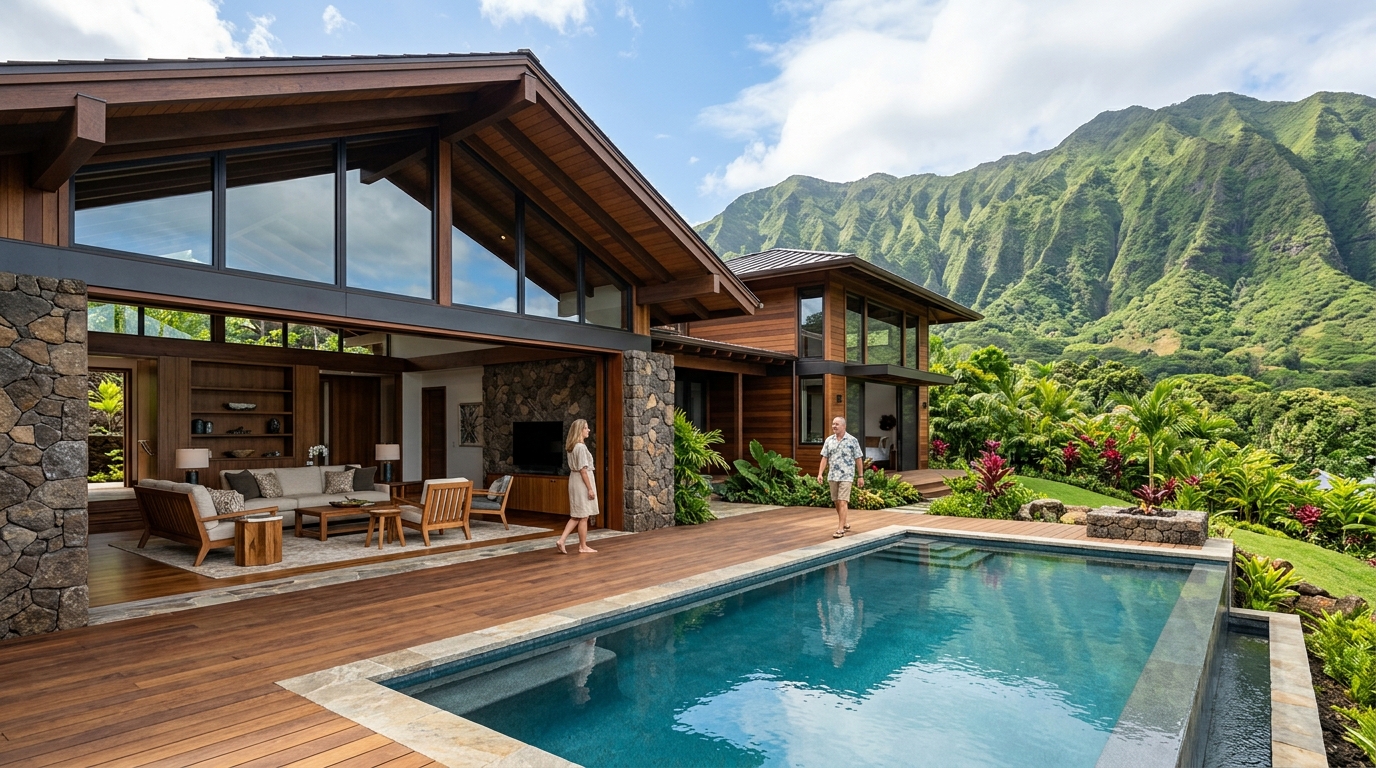
Building a custom home in Manoa in 2026 typically costs between $450 and $700 per square foot and takes 18 to 24 months from the first design sketch to handing you the keys. As a custom home builder in Manoa for over two decades, our team at Warrior Construction has seen it all: the steep, rain-soaked lots, the surprisingly tricky permitting process at the Honolulu DPP, and the joy on a family’s face when they walk into their brand-new home for the first time. Manoa isn’t like building in a flat, dry area like Ewa Beach. The valley has its own set of rules, dictated by the near-daily rain, the rich volcanic soil, and the established character of the neighborhood.
\n
Getting it right requires more than just a good set of plans; it demands a deep understanding of local conditions. You need a partner who knows how to engineer a foundation for a hillside, how to properly waterproof a home against 150 inches of annual rainfall, and how to present a permit package to the DPP that gets approved without endless cycles of corrections. This isn’t just about building a house—it’s about creating a home that will stand strong and comfortable in one of Oʻahu’s most beautiful and challenging environments. Furthermore, a successful project hinges on managing costs, timelines, and materials with precision, which is especially critical with Hawaii’s unique supply chain logistics. In this guide, we’ll walk you through the real costs, timelines, and crucial considerations for your Manoa new home construction, sharing insights we’ve gained from years of building right here in the islands.
\n\n
Why Manoa Homeowners Trust Warrior Construction for Custom Home Builder
\n
Manoa homeowners choose our team because we bring over 20 years of specific, on-the-ground experience building in this unique valley. We’re not a mainland firm trying to apply mainland solutions to island problems. We are a licensed Hawaii general contractor (BC-34373) that lives and works here, and we understand the nuances that make or break a project in this part of O’ahu. Building in Manoa means preparing for constant moisture, challenging hillside lots, and navigating the specific requirements of older, established neighborhoods. Our entire process is built around mastering these local challenges.
\n
For example, on a recent project near the Lyon Arboretum, the lot had a significant slope and was saturated with water from a natural spring. A less experienced builder might have proposed a standard cut-and-fill approach, which could have led to long-term erosion and stability issues. Instead, our team worked with a geotechnical engineer from the very beginning. We designed a pier-and-beam foundation that touched the ground lightly, preserving the natural topography and creating a robust, stable base for the home. Additionally, we engineered an extensive French drain and swale system to channel water safely around the structure, keeping the crawlspace dry and preventing hydrostatic pressure on the foundation. This kind of proactive, site-specific problem-solving is standard for us, not an exception.
\n
This deep experience translates directly into a smoother process for our clients. We have long-standing relationships with the plan reviewers at the Honolulu Department of Planning and Permitting (DPP)[1]. They know our drawings are thorough and our engineering is sound, which helps streamline the notoriously slow permit approval process. We handle everything in-house, from initial design concepts and budgeting to the final punch list, operating as a true design-build firm. This integrated approach means the architect, engineer, and construction team are all on the same page from day one, ensuring the design is not only beautiful but also buildable within your budget. Ultimately, homeowners trust Warrior Construction because we build homes designed for Manoa’s reality—strong, dry, and built to last for generations.
\n\n
What Does Custom Home Builder Cost in Manoa?
\n
In 2026, the construction cost for a custom home in Manoa typically ranges from $450 to $700 per square foot, not including the land itself. This means for a 3,000-square-foot home, you should budget between $1.35 million and $2.1 million for the construction portion of the project. This is a significant investment, and understanding where that money goes is the first step toward a successful build. Unlike spec homes in planned communities, every single detail in a custom build is chosen by you, which directly influences the final cost.
\n
The total project cost is generally broken down into three main categories:
\n
- \n
- Hard Costs (60-70%): This is the most substantial part of the budget and covers all physical aspects of construction. It includes labor, lumber, concrete, roofing, windows, plumbing fixtures, electrical wiring, and all finishes like flooring, cabinets, and countertops. In Hawaii, material costs are higher due to shipping from the mainland, which we always factor into our initial estimates. For instance, a container of high-end windows or custom cabinetry can add thousands in shipping and freight forwarding fees alone.
- Soft Costs (15-25%): These are the necessary but less visible costs. This category includes architectural design fees, structural engineering, geotechnical surveys (almost always required in Manoa), surveyor fees, and—most significantly—Honolulu DPP permit fees. For a new single-family home in 2026, expect to pay between $25,000 and $45,000 in permit fees alone, depending on the project’s size and complexity.
- Site Work (10-15%): In Manoa, site work is a critical and often underestimated expense. This isn’t just clearing a flat lot. It often involves extensive grading, building retaining walls to manage slopes, trenching for utilities, and installing sophisticated drainage systems to handle the heavy rainfall. On a recent project on a sloped lot, the engineered retaining walls and drainage system added nearly $120,000 to the budget—a necessary expense to protect the home for the long term.
\n
\n
\n
\n
Here’s a practical look at how different levels of finishes affect the per-square-foot cost for a new home construction in Manoa:
\n
| Finish Level | Cost Per Square Foot (2026) | Example Features |
|---|---|---|
| Builder-Grade Custom | $450 – $550 | Vinyl windows, asphalt shingle roof, laminate countertops, standard-grade appliances, basic lighting and plumbing fixtures. |
| Mid-Range Custom | $550 – $650 | Aluminum or composite windows, standing seam metal roof, quartz countertops, high-quality cabinetry, upgraded appliance package, designer fixtures. |
| Luxury / High-End | $650 – $700+ | Custom wood windows, extensive lanai spaces with Fleetwood doors, natural stone countertops, custom millwork, professional-grade appliances, smart home automation. |
\n
Most importantly, we always advise our clients to hold a 10-15% contingency fund. This isn’t a slush fund; it’s a crucial safety net for unforeseen circumstances, like hitting unexpected blue rock during excavation or dealing with a sudden spike in lumber prices. As your dedicated home builder in Manoa, our job is to provide a transparent, detailed budget from the start so there are no major surprises along the way. Planning for these costs upfront is the key to a low-stress building experience.
\n\n
How Long Does a Custom Home Builder Take in Manoa?
\n
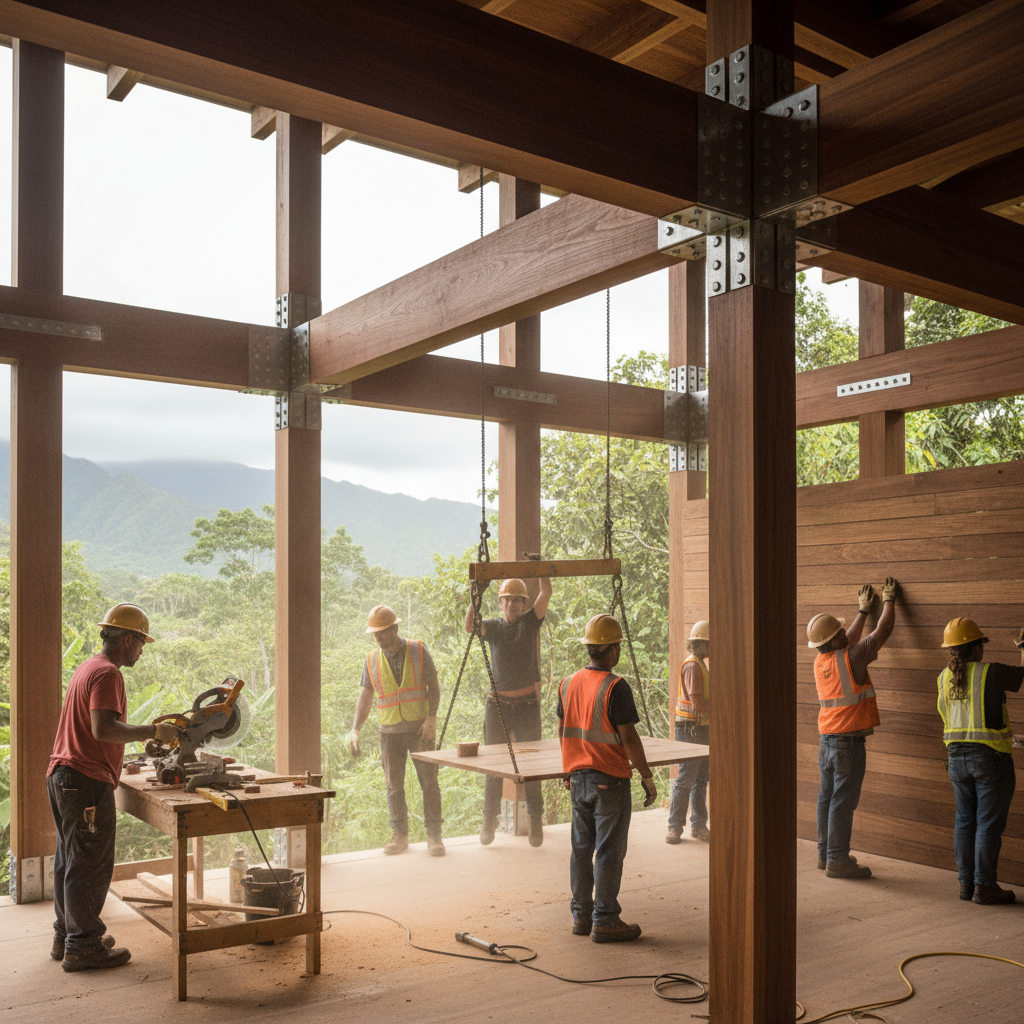
A realistic timeline for a custom home build in Manoa is between 18 and 24 months from our first meeting to your move-in day. Many homeowners are surprised by this, often underestimating the critical pre-construction phase. The actual on-site construction is only about half the journey. The other half is dedicated to meticulous planning, design, engineering, and navigating the permitting process, which is especially thorough in Honolulu.
\n
Here is a detailed breakdown of the typical project timeline our team at Warrior Construction follows:
\n
- \n
- Phase 1: Design & Pre-Construction (6-9 months): This is the foundation of the entire project. Rushing this phase is the most common mistake we see. \n
- \n
- Initial Consultation & Budgeting (1-2 months): We meet with you to understand your vision, needs, and budget. Our team develops a detailed preliminary budget based on your desired square footage and finish level.
- Architectural Design & Engineering (3-5 months): We work with our architectural partners or yours to translate your vision into construction-ready blueprints. This involves multiple revisions to get every detail right, from the floor plan to the window placements. Simultaneously, structural engineers design the foundation and framing to meet Hawaii’s strict hurricane code.
- Permit Package Preparation (1-2 months): Once plans are finalized, we assemble the comprehensive package for the Honolulu DPP. This isn’t just the blueprints; it includes structural calculations, energy code compliance forms, soil reports, and more. A complete, accurate submission is vital.
\n
\n
\n
\n
- Phase 2: Permitting (4-6 months, runs concurrently with design): Once submitted, the Honolulu DPP begins its review process. This is often the biggest bottleneck in any O’ahu construction project. Your plans are routed to multiple departments—building, electrical, plumbing, zoning, and sometimes public works. Each department reviews the plans for code compliance. Even a small error can trigger a correction, sending the plans back and causing delays. Our experience helps us anticipate reviewer comments and minimize these cycles, but patience is essential.
- Phase 3: Construction (12-15 months): Once the permit is in hand, we can finally break ground. \n
- \n
- Site Prep & Foundation (1-2 months): We clear and grade the lot, bring in utilities, and form and pour the concrete foundation. In Manoa, this may also involve building retaining walls.
- Framing and Rough-Ins (3-4 months): The skeleton of the house goes up. This is a visually exciting phase where you see the home take shape. After framing, plumbers, electricians, and HVAC technicians run all the pipes, wires, and ducts through the walls.
- Exterior & Interior Finishes (5-7 months): The house gets its skin. We install the roof, windows, and siding. Inside, insulation and drywall go up, followed by flooring, tile, cabinets, and countertops. Painting, plumbing fixture installation, and electrical trim-out happen here. This is the longest part of the construction phase, where material lead times from the mainland can become a factor.
- Final Touches & Landscaping (1-2 months): We complete the final punch list, conduct thorough quality control checks, install appliances, and finish the landscaping and driveway. After passing all final inspections, we receive the Certificate of Occupancy.
\n
\n
\n
\n
\n
\n
\n
\n
\n
Rushing any of these steps, especially the planning and permitting, almost always leads to longer delays and higher costs down the road. Our commitment as your custom home builder in Manoa is to manage this timeline proactively, keeping you informed every step of the way.
\n\n
What Permits Do You Need for Custom Home Builder in Manoa?
\n
For a ground-up custom home in Manoa, you need a comprehensive building permit from the City and County of Honolulu’s Department of Planning and Permitting (DPP)[1]. This isn’t a single piece of paper but rather an approval package that confirms your project complies with all relevant building codes, zoning laws, and safety regulations. Navigating the DPP is one of the most complex parts of any build on O’ahu, and getting it wrong can delay a project for months or even years. As a seasoned general contractor, we manage this entire process for our clients.
\n
The main building permit application triggers a series of reviews by different city agencies. Your architectural and engineering plans are scrutinized to ensure they meet all requirements. The core components you’ll need approved include:
\n
- \n
- Building Permit: This is the primary permit covering the structure itself. It’s reviewed for compliance with the International Building Code, residential code, and all local amendments, including Hawaii’s stringent hurricane code requirements for wind resistance.
- Zoning Review: The DPP zoning division checks your plans against Manoa’s specific zoning rules. They verify setbacks from property lines, maximum building height, lot coverage, and parking requirements. This is where regulations like Ordinance 23-8 (formerly Bill 7), which restricts the size of so-called “monster homes,” come into play. We design within these rules from the start to avoid rejection.
- Electrical Permit: A licensed electrical contractor must file for this permit, which details the entire electrical system, from the service panel to the location of every outlet and switch.
- Plumbing Permit: Similarly, a licensed plumber files for this permit, outlining the full water supply and drainage system, including connections to the Board of Water Supply main.
- Grading, Grubbing, and Stockpiling Permit: Given Manoa’s hilly terrain, this permit is almost always required. It regulates how you clear the land (grubbing), move earth (grading), and temporarily store it (stockpiling) to prevent erosion and runoff into neighboring properties or city storm drains.
- Sewer Connection Permit: This permit is required to connect your new home’s sewer line to the city’s main sewer system. The Department of Environmental Services reviews this to ensure the connection is done correctly.
\n
\n
\n
\n
\n
\n
\n
The process involves submitting a highly detailed set of documents. A mistake or omission in any part of the application can result in a \”deferred\” status, requiring revisions and resubmission, which adds significant time. For example, if the structural engineer’s calculations for hurricane tie-downs are not perfectly clear, the building plan reviewer will send it back. If the site plan doesn’t accurately show the slope and proposed drainage, the grading permit will be denied. Our role as your home builder in Manoa is to submit a complete and bulletproof package the first time, leveraging our experience to anticipate what reviewers are looking for.
\n\n
Manoa-Specific Considerations: Climate, Materials, Regulations
\n
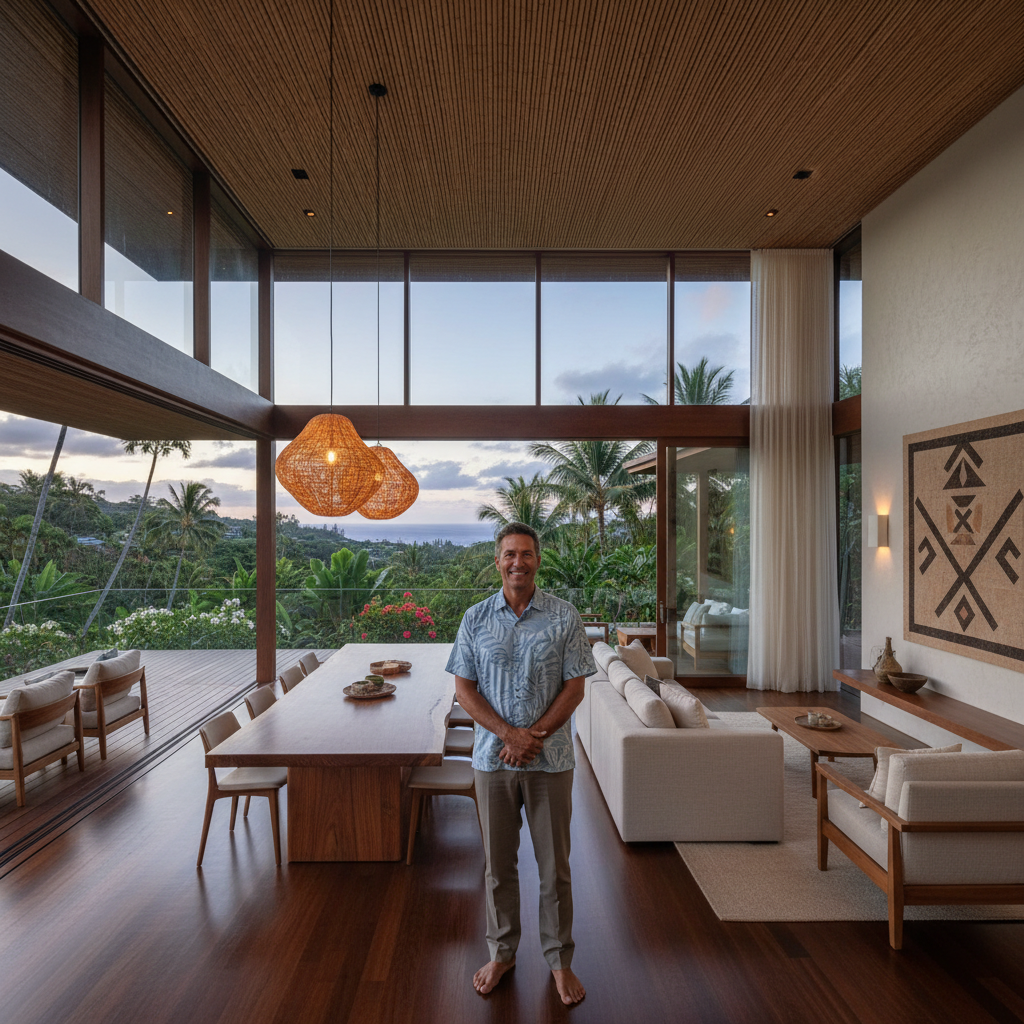
Building in Manoa is unlike building anywhere else on O’ahu. The unique microclimate, topography, and community character demand a specialized approach. A home designed for the dry plains of Kapolei would fail quickly in the lush, wet conditions of Manoa Valley. As a luxury home builder in Manoa, our designs and building practices are tailored specifically to these challenges.
\n
Climate: Managing the Rain
\n
Manoa is famous for its rainbows, which are a direct result of its rainfall—often exceeding 150 inches per year. This constant moisture is the single most important factor to manage.
\n
- \n
- Waterproofing and Drainage: This is non-negotiable. We design homes with a “belt and suspenders” approach to water management. This includes robust foundation waterproofing, properly flashed windows and doors using high-quality sealing tapes, and designing roof overhangs that protect the walls. Critically, we engineer comprehensive site drainage, using French drains, catch basins, and graded swales to actively move water away from the foundation.
- Humidity and Ventilation: High humidity can lead to mold and mildew. We design for excellent cross-ventilation to take advantage of the valley’s trade winds. We also recommend high-quality, energy-efficient split AC systems that have excellent dehumidifying capabilities, ensuring indoor comfort and air quality.
- Material Selection: Every exterior material must be chosen for its ability to withstand moisture. We avoid materials that absorb and hold water. For example, standing seam metal roofing is far superior to asphalt shingles in this climate, as it sheds water quickly and resists moss growth.
\n
\n
\n
\n
Materials: Durability Against the Elements
\n
Beyond rain, the warm, humid air creates a perfect environment for two of a house’s biggest enemies: corrosion and termites.
\n
- \n
- Salt-Air Corrosion: While not beachfront, Manoa is close enough to the ocean that a humid, salt-tinged breeze is common. We specify 316-grade stainless steel for all exterior hardware, fasteners, and railings. Using cheaper, lower-grade steel will result in rust streaks and structural weakness in just a few years.
- Termite-Resistant Building: Formosan subterranean termites are incredibly destructive in Hawaii. Building to resist them is not an option; it’s a requirement. Our standard practice includes using borate-treated lumber for the entire building frame, installing termite-proof barriers like Termimesh around plumbing penetrations, and treating the ground before the foundation is poured. For homeowners wanting the ultimate protection, we often recommend steel framing.
\n
\n
\n
Regulations and Lot Challenges
\n
Manoa’s established neighborhoods and hilly terrain present their own set of rules and physical hurdles.
\n
- \n
- Topography and Soil: Many available lots in Manoa are on steep slopes. This requires a geotechnical report to analyze soil stability and inform foundation design. Foundations may require deep piers drilled into bedrock or extensive retaining walls, both of which add complexity and cost.
- Zoning and Community Character: Manoa is not a master-planned community with a strict HOA, but there’s a strong sense of neighborhood character. Furthermore, DPP zoning rules regarding setbacks and height can be complex on irregularly shaped lots. We often design homes that respect the scale and style of the surrounding properties, ensuring a smoother design review process and a home that feels like it belongs in the valley.
\n
\n
\n\n
How to Choose the Right Custom Home Builder Contractor in Manoa
\n
Choosing the right contractor is the single most important decision you will make for your custom home project. The right builder acts as your partner, advocate, and expert guide through a complex and lengthy process. The wrong one can turn your dream project into a nightmare of delays, budget overruns, and shoddy workmanship. As a prospective client, you need to do your homework and look for a few key indicators of a professional and reliable custom home builder in Manoa.
\n
Here are the steps our team at Warrior Construction recommends every homeowner take:
\n
- \n
- Verify Their License and Insurance: This is the absolute first step. Any legitimate contractor in Hawaii must have a valid contractor’s license. You can and should verify their license number on the Hawaii Department of Commerce and Consumer Affairs (DCCA) Professional & Vocational Licensing (PVL) website[2]. For example, our license is BC-34373. A valid license means they have met the state’s requirements for experience, examination, and financial stability. Also, ask for certificates of general liability and workers’ compensation insurance. Without proper insurance, you could be held liable for accidents on your property.
- Demand Manoa-Specific Experience: As we’ve discussed, Manoa is not a typical building environment. Don’t just ask if they’ve built custom homes; ask if they’ve built them *in Manoa* or on similar hillside lots with high rainfall, like in Tantalus or St. Louis Heights. Ask specific questions:\n
- \n
- \”Can you show me a project you completed on a sloped lot?\”
- \”How do you approach foundation waterproofing for this climate?\”
- \”What is your experience with the Honolulu DPP’s grading permit requirements?\”
\n
\n
\n
\n Their answers will quickly reveal their level of local expertise.
- Review Their Portfolio and Visit a Job Site: A picture is worth a thousand words. A quality builder will be proud to show you their past work. Look for projects that are similar in style, size, and quality to what you envision. Pay attention to the details in the craftsmanship. If possible, ask if you can visit a current job site. A clean, organized, and safe site is a strong indicator of a professional operation.
- Speak with Past Clients: References are invaluable. A good builder will happily provide you with a list of recent clients. Don’t just ask if they were happy. Ask detailed questions about their experience:\n
- \n
- \”How was the communication throughout the project?\”
- \”How did the builder handle unexpected issues or changes?\”
- \”Was the final project cost close to the initial budget? Were all changes documented with change orders?\”
- \”Was the project completed on schedule?\”
\n
\n
\n
\n
\n
- Understand Their Process and Communication Style: Building a home requires a strong partnership. You will be communicating with your builder for over a year. Make sure their style aligns with yours. Do they use project management software? Do they hold regular site meetings? Are they responsive to calls and emails? At Warrior Construction, we use a transparent, design-build process where we are involved from the very beginning, ensuring the design aligns with the budget. This avoids the common scenario where an architect designs a beautiful home that ends up being 30% over budget.
\n
\n
\n
\n
\n
\n
Choosing a builder based solely on the lowest bid is often a recipe for disaster. Look for the best value, not the lowest price. A well-managed project with a professional, experienced team will almost always be more cost-effective in the long run.
\n\n
Real Manoa Custom Home Builder Project Example
\n
To make these concepts concrete, let’s walk through a representative project our team recently completed. This illustrates the typical challenges and solutions involved in a new home construction in Manoa.
\n
The Client and Vision: A professional couple, both originally from O’ahu, were returning to the islands to raise their family. They purchased a 12,000-square-foot lot on a quiet street off Manoa Road. Their dream was a modern, 4-bedroom, 3.5-bathroom home of about 3,200 square feet. Key priorities were an open-concept living area, large windows to capture the valley views, and a seamless indoor-outdoor connection with a spacious lanai for family gatherings.
\n
The Challenge: The lot was a classic Manoa property: beautiful, lush, but challenging. It had a 20-degree upslope from the street and a soil report that indicated high moisture content and a need for careful water management. The clients were also on a firm budget and wanted to avoid major cost overruns.
\n
The Warrior Construction Solution: We were brought in during the early design phase, a key part of our design-build process. This early collaboration proved crucial.
\n
- \n
- Site-Specific Engineering: Instead of a massive, expensive cut-and-fill foundation, we worked with our structural engineer to design a terraced foundation. This involved a combination of a traditional slab-on-grade for the lower level (garage and entry) and a post-and-pier system for the main living area uphill. This minimized soil disturbance and created a more elegant integration with the hillside.
- Proactive Water Management: Before any foundation work began, we installed a comprehensive drainage system. This included a deep French drain along the entire uphill side of the building footprint to intercept subsurface water, connected to a series of catch basins that channeled runoff safely to the street’s storm drain system.
- Budget-Conscious Design: During the design process, the initial plans came in slightly over budget. Because we were at the table with the architect, we could provide real-time cost feedback. We suggested modifying the complex roofline to a simpler, more elegant design that saved nearly $50,000 in framing and roofing costs without sacrificing aesthetic appeal. We also guided the clients toward high-value material selections, like choosing a high-quality standing seam metal roof that offered superior longevity for the Manoa climate.
\n
\n
\n
\n
The Numbers:
\n
- \n
- Initial Budget: $1.8 Million (Construction only)
- Final Construction Cost: $1.85 Million
- Reason for Overage: The $50,000 increase was due to client-approved change orders mid-project, primarily an upgrade to a premium series of Fleetwood windows and doors to maximize the views. This was a conscious decision, not an unforeseen cost.
- Total Project Timeline: 22 months (7 months for design/permitting, 15 months for construction).
\n
\n
\n
\n
\n
The Outcome: The family moved into a stunning modern home perfectly adapted to its Manoa environment. The terraced design gives them breathtaking views from every room, and the robust water management system provides peace of mind. By collaborating early and focusing on smart, site-specific solutions, we delivered their dream home on time and on budget.
\n\n
What this means for Hawaii homeowners
\n
Building a custom home in Manoa is a deeply rewarding but highly complex undertaking. Success hinges on acknowledging the unique challenges of the valley and partnering with a team that has proven experience in this exact environment. Simply put, you can’t afford to learn on the job here. The stakes are too high, and the potential for costly mistakes is significant.
\n
Here is our most direct advice for anyone considering this journey:
\n
- \n
- Prioritize Pre-Construction: The most important work happens before a single shovel hits the dirt. Invest your time and resources heavily in the design, engineering, and planning phase. Rushing to get a permit will only lead to delays and change orders later. Hire your builder early in the design process to get crucial cost and buildability feedback.
- Budget for the Unseen: In Manoa, the “unseen” is almost always related to water and soil. Your budget must realistically account for extensive site work, potential retaining walls, and a top-tier waterproofing and drainage system. Earmark a 15% contingency fund specifically for these potential site-related costs. It’s the best insurance policy you can have.
- Choose Materials for Longevity, Not Just Looks: The relentless humidity and rain will test every component of your home’s exterior. Opt for materials designed to endure: standing seam metal roofing, stainless steel fasteners, high-performance windows, and termite-treated lumber or steel framing. A slightly higher upfront cost for these materials will save you tens of thousands in repairs and maintenance down the road.
- Trust Local Expertise: Your builder’s familiarity with the Honolulu DPP, local suppliers, and the specific challenges of Manoa’s terrain is invaluable. A team with deep roots in the community will know how to navigate the system efficiently and solve problems creatively, saving you time, money, and stress. Choose a partner, not just a contractor.
\n
\n
\n
\n
\n
Ultimately, a successful custom home build in Manoa comes down to a partnership built on trust, transparency, and deep local knowledge. By following these principles, you can navigate the process with confidence and create a home that is truly built for the valley.
\n\n
Frequently Asked Questions About Custom Home Builder in Manoa
\n
Is it cheaper to buy an existing home or build a new custom home in Manoa in 2026?
\n
Building a new custom home is often more expensive upfront on a per-square-foot basis compared to buying an older, existing home in Manoa. However, a new build gives you a home designed exactly for your needs, built to the latest hurricane and electrical codes, with all-new systems (plumbing, electrical, HVAC) under warranty. Over the first decade, the lower maintenance, repair, and utility costs of a new home can significantly close that initial price gap.
\n
\n
What are the biggest unforeseen costs when building a custom home in Manoa?
\n
The biggest surprises almost always come from site work and foundations. Unforeseen soil conditions, like hitting hard blue rock that requires expensive excavation, or discovering underground water that needs extensive dewatering and drainage systems, can add $50,000 to $150,000 to a project. This is why a thorough geotechnical report and a healthy 15% contingency fund are absolutely critical for any Manoa build.
\n
\n
How does building a custom home in Manoa differ from building in Kapolei?
\n
The primary differences are climate and topography. Manoa demands a design focused on managing extreme rainfall, high humidity, and sloped lots. This means prioritizing waterproofing, drainage, and ventilation. Kapolei is hot, dry, and flat, so the focus shifts to solar heat gain management, drought-tolerant landscaping, and dealing with expansive soil. Additionally, many Kapolei neighborhoods are in master-planned communities with strict design review boards, which is less common in Manoa’s older, more eclectic neighborhoods.
\n
\n
Do I need to hire an architect before I talk to a builder?
\n
You can, but we strongly recommend the design-build approach where you engage a firm like ours that provides both services. When the builder, architect, and client are a team from day one, the design is developed with the budget in mind. This prevents the common and heartbreaking scenario of falling in love with an architectural plan that you later discover you can’t afford to build.
\n
\n
What is the best type of foundation for Manoa’s wet soil?
\n
There isn’t one single ‘best’ type; it depends entirely on the specific lot’s geotechnical report. However, foundations that elevate the main structure are often favored. This can be a post-and-pier foundation or a well-ventilated crawlspace on a robust concrete footing. For sloped lots, an engineered slab-on-grade combined with piers or retaining walls is also common. The key is to have a licensed geotechnical engineer analyze the soil and recommend the right solution.
\n
\n
How difficult is it to get a construction loan in Hawaii in 2026?
\n
It is more complex than a standard mortgage but very manageable with the right preparation. Local banks like First Hawaiian Bank, Bank of Hawaii, and American Savings Bank have dedicated construction loan departments. They require detailed building plans, a signed contract with a licensed general contractor like Warrior Construction (BC-34373), and a comprehensive budget. We have extensive experience working with these local lenders and can provide all the necessary documentation to support your loan application.
\n
\n
Can I build an ADU (Accessory Dwelling Unit) at the same time as my main custom home?
\n
Yes, and it’s the most cost-effective time to do it. Building an ADU simultaneously allows you to save significantly on mobilization, excavation, and utility trenching costs. The project must be designed carefully to comply with all DPP regulations for setbacks, lot coverage, and parking for both dwellings. We have built many homes with integrated ADUs and can guide you through the specific planning requirements.
\n
\n
\n\n
Ready to build your dream home in the beautiful Manoa Valley? The process is complex, but with the right partner, it can be one of the most rewarding experiences of your life. Don’t leave your investment to chance. Our team at Warrior Construction (BC-34373) has the local, hands-on expertise to navigate the unique challenges of Manoa’s environment, from the permitting office to the final touches. We build homes designed to last for generations.
\n
If you’re ready to discuss your vision, learn more about our custom home building services or contact us today for a straightforward, no-obligation consultation and estimate. Let’s build something great together.
\n\n
References
\n