“
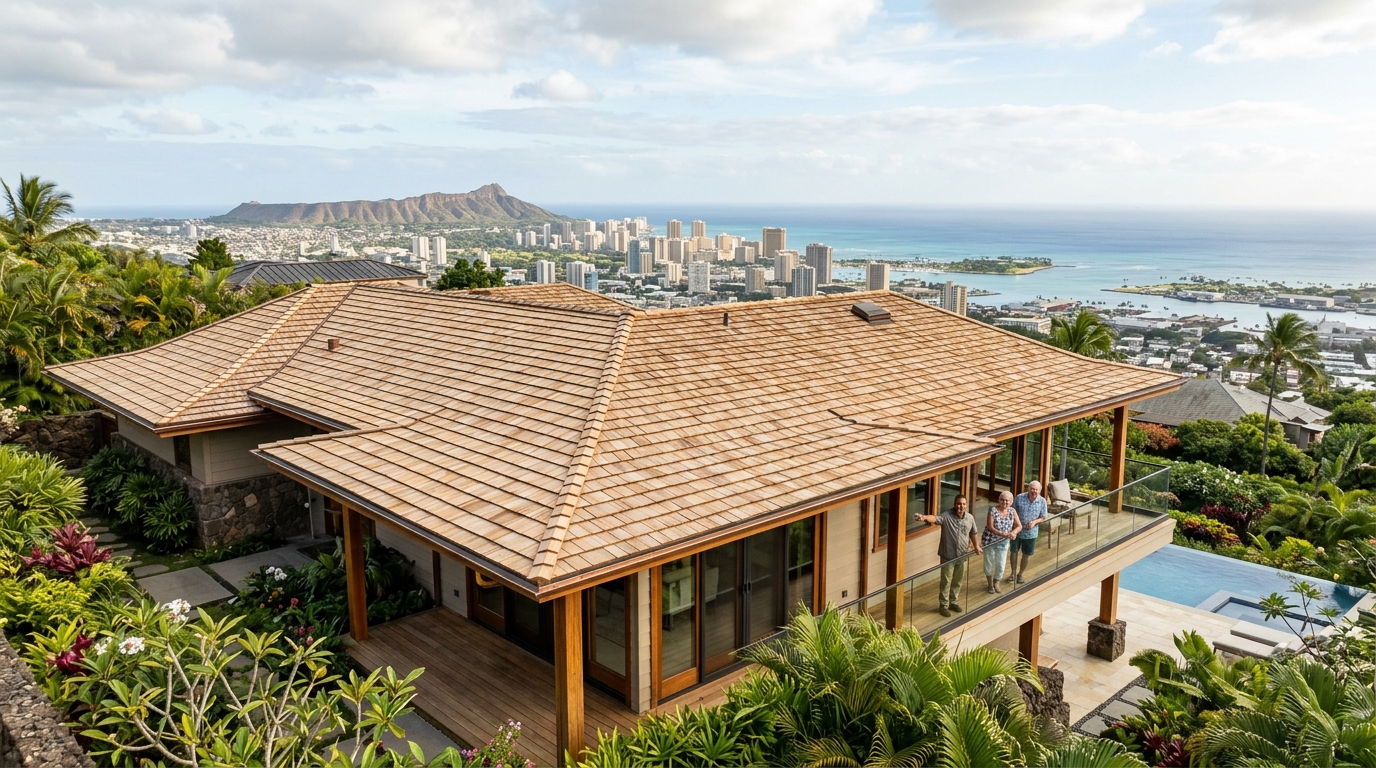
A top-tier roofing contractor in Honolulu does more than just nail down shingles; they manage a complex system designed to protect your home from hurricane-force winds, torrential rain, and relentless UV rays. At Warrior Construction, we see the roof as the first line of defense in your home’s entire building envelope. For over 20 years on O’ahu, our team has approached every roofing project not just as roofers, but as licensed general contractors (BC-34373) who understand how the roof, walls, and foundation all work together. This distinction is critical in Hawaii, where a simple leak can quickly lead to catastrophic structural rot and termite infestation if not addressed comprehensively.
Replacing your roof in Honolulu is a significant investment, one that demands a deep understanding of local conditions, from the corrosive salt spray in Kailua to the intense sun in Kapolei. The process involves much more than choosing a color. It requires navigating Honolulu’s Department of Planning and Permitting (DPP), sourcing materials that can withstand our tropical climate, and ensuring every component—from the underlayment to the hurricane straps—meets or exceeds Hawaii’s stringent building codes. This guide walks you through the eight most important upgrades and considerations our team recommends, drawing from decades of experience on job sites across the island. We’ll cover real 2026 costs, permitting timelines, material choices, and how to spot a contractor who truly knows O’ahu construction.
\n\n
Why Honolulu Homeowners Trust Warrior Construction for Roofing Contractor
\n
Homeowners on O’ahu trust our team for roofing projects because we are licensed General Contractors, not just roofing specialists. This means we have the expertise and legal authority to address any issue we uncover during a roof replacement, from rotted structural beams to termite damage in the trusses. A contractor who only holds a C-42 roofing specialty license can only perform work directly related to the roof covering itself. If they find a compromised rafter, they legally have to stop work and tell you to hire a separate general contractor. This causes major delays, cost overruns, and a huge headache for you.
At Warrior Construction (License BC-34373), we hold a B-General Contractor license. When we perform a tear-off and find that years of slow leaks have destroyed the underlying sheathing and even compromised the roof trusses, our team can handle it all. We don’t have to put your project on hold. We can re-frame the damaged sections, replace the sheathing, and install the new roof seamlessly under one contract and one line of communication. This integrated approach saves homeowners significant time and money and prevents the project from spiraling out of control.
For example, on a recent project in Manoa, we were hired for a standard asphalt shingle roof replacement. Once we removed the old, waterlogged layers, we discovered that the previous roofer had simply covered up severe termite damage in the eaves. The fascia boards were like paper. For a roofer-only company, this would have been a project-stopping disaster. For our team, it was part of a normal Tuesday. Our carpenters came in, surgically removed and replaced the damaged structural members, and then our roofing crew proceeded with the new installation. The homeowner was relieved they didn’t have to go out and find another contractor to coordinate with mid-project. That’s the peace of mind you get when your roofing contractor is also a full-service general contractor. We manage the entire scope, from permitting with the DPP to the final inspection, ensuring every part of your home’s structure is sound, not just the part you can see.
\n\n
What Does Roofing Contractor Cost in Honolulu?
\n
In 2026, the cost for a professional roof replacement in Honolulu typically runs from $12 to $35 per square foot, installed. This price includes tear-off of the old roof, any minor sheathing repairs, new underlayment, the roofing material itself, flashing, and labor. The final price tag depends heavily on the material you choose, the complexity of your roof’s design, and the condition of the underlying structure. Be wary of any quote that seems dramatically lower; it often signals an unlicensed operator or someone cutting corners on materials or insurance.
\n
Here’s a realistic breakdown of costs for a typical 2,500 square-foot roof on a single-story home in Honolulu:
\n
- \n
- Architectural Asphalt Shingles: This is the most common choice for affordability. Expect to pay between $12 and $18 per square foot. For our 2,500 sq. ft. example home, this comes out to $30,000 – $45,000. We only use shingles with high wind ratings (130 mph) and algae resistance, which are essential for O’ahu.
- Standing Seam Metal Roofing: This is a premium option, but its longevity in our salt-air environment is unmatched. The cost is significantly higher, ranging from $22 to $35 per square foot. For the same home, the total would be $55,000 – $87,500. We insist on using 24-gauge steel with a Kynar 500 or other PVDF factory finish to prevent rust, especially for homes on the windward side or near the coast.
- Concrete or Clay Tile: Popular in neighborhoods like Hawaii Kai and certain parts of Kapolei, tile offers a classic look. The cost is generally between $20 and $30 per square foot, putting our example project in the $50,000 – $75,000 range. The main consideration with tile is weight; we often need to verify that the existing roof structure can support the additional load.
\n
\n
\n
\n
Several factors can increase these base costs:
\n
- \n
- Structural Repairs: If we discover significant rot or termite damage in the plywood sheathing or rafters, repairs are billed on a time and materials basis. Our rate for a skilled carpenter in 2026 is around $95 per hour, plus materials. We always document this with photos and get your approval before proceeding.
- Steep Pitch or Multiple Stories: A roof that’s difficult or dangerous to work on requires more safety equipment and slower, more careful labor, which adds 15-25% to the labor cost.
- Solar Panels: If you have a PV system, it needs to be professionally removed and reinstalled. This typically costs between $3,000 and $5,000, depending on the system size.
\n
\n
\n
\n
When you get a quote from our team at Warrior Construction, it will be a comprehensive proposal detailing every one of these line items. There are no hidden fees. We believe an informed homeowner is the best partner, so we walk you through the numbers to make sure you understand exactly what your investment covers. A quality `roof replacement honolulu` is an investment that pays off in safety and property value for decades.
\n\n
How Long Does a Roofing Contractor Take in Honolulu?
\n
A full roof replacement in Honolulu, from signing the contract to final inspection, takes an average of 3 to 5 months in 2026. This timeline often surprises homeowners who expect a crew to show up the week after they sign. The physical work of tearing off the old roof and installing the new one is actually the shortest part of the process. The main drivers of the timeline are permitting and material logistics, two realities of building in Hawaii that mainland contractors don’t face.
\n
Here is a typical project schedule for a roof replacement on O’ahu:
\n
- \n
- Phase 1: Planning & Permitting (4-8 weeks): Once we have a signed contract, our team drafts the necessary plans and documents for the building permit application. We then submit this to the Honolulu Department of Planning and Permitting (DPP)[1]. In 2026, the DPP review process for a straightforward roofing permit is taking about a month, but any complexity can extend this. We manage this entire process for you.
- Phase 2: Material Sourcing & Shipping (6-10 weeks): This phase runs concurrently with permitting. Nearly all quality roofing materials—from the specific standing seam metal panels to the high-performance underlayment—are manufactured on the mainland. We place the order as soon as the contract is signed, but it takes time to be fabricated, packaged, and shipped via ocean freight to Honolulu. Port congestion and shipping schedules are a constant variable we have to manage.
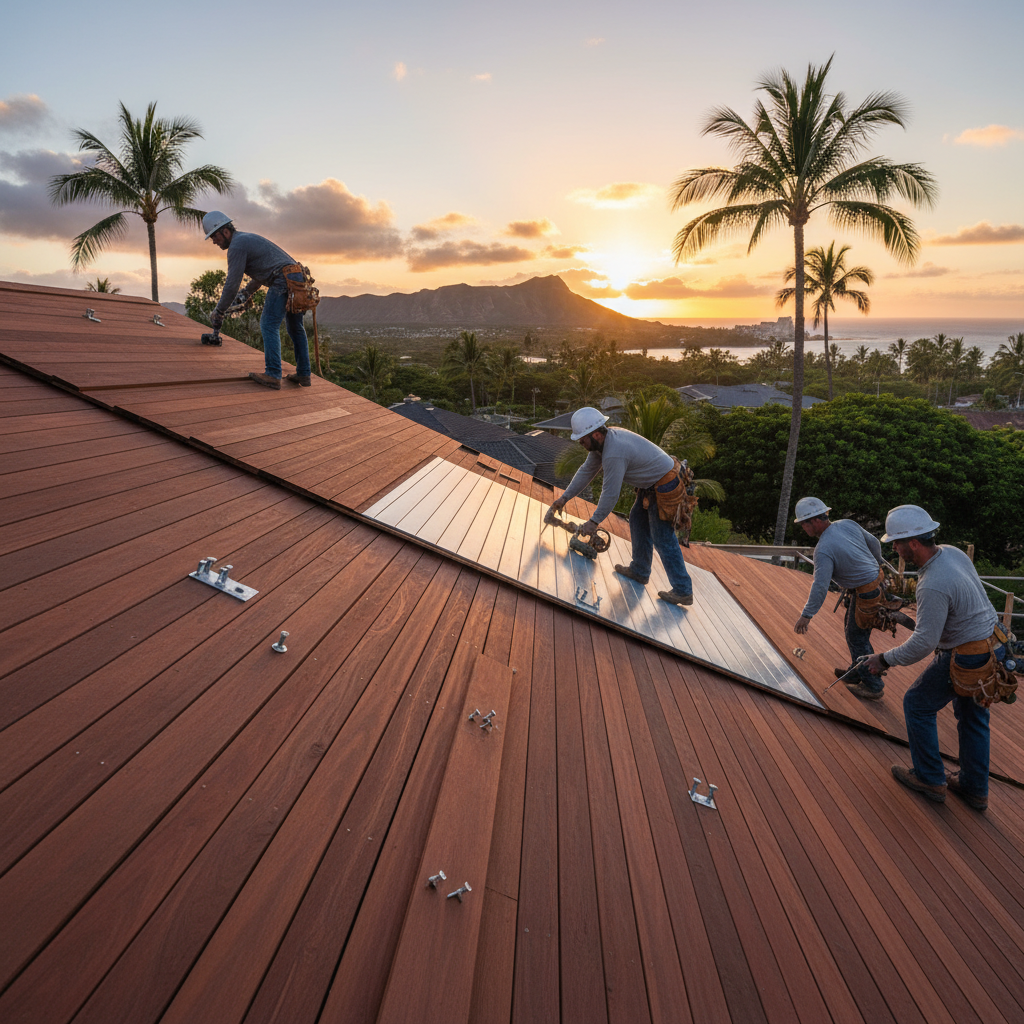
- Phase 3: On-Site Work (1-2 weeks): This is the part you see. For an average-sized home (around 2,500-3,000 sq. ft.), our crew can typically complete the full tear-off and installation in 5 to 10 working days. This includes protecting your landscaping, tearing off all old materials down to the rafters, inspecting the structure, replacing any damaged sheathing, installing new underlayment and flashing, and finally installing the new roof itself.
- Phase 4: Inspections & Finalization (1 week): After the installation is complete, we coordinate with the DPP inspector for the required inspections (like nailing patterns and flashing). Once we pass the final inspection, the project is officially complete.
\n
\n
\n
\n
\n
As you can see, the on-site work is less than 10% of the total project duration. A less experienced contractor might not be upfront about these logistical realities, leading to frustration. Our project managers at Warrior Construction provide you with a detailed schedule from day one and give you regular updates on your permit status and material ETA. We build these island-specific delays into our timeline so there are no surprises.
\n\n
What Permits Do You Need for Roofing Contractor in Honolulu?
\n
In Honolulu, any time you replace more than one square of roofing (a 10-foot by 10-foot area) or perform a complete tear-off and replacement, you are required to obtain a building permit from the Honolulu Department of Planning and Permitting (DPP). A simple `roof repair honolulu` affecting a small patch might not require a permit, but the threshold is very low. As a rule, we assume any full replacement project will need a permit, and we manage that entire process as part of our service.
\n
Attempting to replace a roof without a permit is a major risk. If caught, the DPP can issue a stop-work order, levy significant fines, and even require you to tear off the new, unpermitted roof. Furthermore, when you go to sell your home, the lack of a finalized permit for a major capital improvement like a new roof can cause serious problems with lenders and buyers.
\n
The permitting process on O’ahu involves more than just filling out a form. It requires:
\n
- \n
- Plan Drawings: We have to submit drawings that show the roof layout, materials to be used, and details on how it will be attached to meet hurricane code requirements.
- Structural Verification: If we are switching to a heavier material (like from shingles to concrete tile), the permit application may require a structural engineer’s stamp to verify the existing framing can handle the load.
- Contractor Information: The permit must be pulled by a licensed contractor in good standing, like Warrior Construction. The DPP verifies our license (BC-34373) and insurance are active. You can verify any contractor’s license yourself through the Hawaii DCCA PVL portal[2].
\n
\n
\n
\n
One of the biggest red flags of a questionable contractor is if they ask you, the homeowner, to pull the permit yourself as an “owner-builder.” This is often a tactic used by unlicensed or uninsured individuals to sidestep liability. When you pull an owner-builder permit, you are legally acting as the general contractor and assume all responsibility for the project, including worker injuries and code compliance. A professional, licensed `roofing contractor honolulu` will always pull the permit under their own license. At Warrior Construction, we see permit management as a core part of our job, shielding you from the complexities of dealing with the city and ensuring your project is fully compliant from start to finish.
\n\n
Honolulu-Specific Considerations: Climate, Materials, Regulations
\n
Roofing in Honolulu isn’t like roofing anywhere on the mainland. Our unique island environment presents a combination of challenges that demand specific materials and installation techniques. A contractor who uses mainland methods or materials will deliver a roof that fails prematurely. Our team at Warrior Construction has spent over two decades mastering the science of `tropical roofing honolulu` to ensure our projects last.
\n
Here are the top five considerations for any O’ahu roofing project:
\n
- \n
- Extreme Salt-Air Corrosion: For homes anywhere on the windward coast (Kailua, Kaneohe) or along the south shore (Hawaii Kai, Ewa Beach), salt spray is a relentless enemy. It will eat through low-quality metal fasteners, flashings, and panels in just a few years. This is why we specify stainless steel fasteners for all coastal projects and recommend standing seam metal roofs with a Kynar 500 (PVDF) coating. This thick, factory-applied finish provides the best possible protection against rust and color fading from the constant salt exposure.
- Hurricane-Force Wind Resistance: Since Hurricane Iniki devastated Kauai in 1992, Hawaii’s building codes have been some of the strictest in the nation regarding wind resistance. A Honolulu roof must be installed as a complete system to resist uplift. This includes using code-compliant hurricane straps to tie the rafters to the wall top plates, specific nailing patterns (typically 6 nails per shingle in high-wind zones), and using shingles or panels rated for at least 130 mph winds. We often go above the minimum code, ensuring your roof is as secure as possible.
- Intense UV Radiation: The sun in Hawaii is incredibly powerful. This UV radiation breaks down the asphalt in standard shingles, making them brittle and causing the protective granules to flake off. A cheap shingle that might last 20 years in a mild mainland climate can be cooked to failure in less than 10 years here. We recommend architectural shingles with advanced polymer blends and UV-blocking granules specifically formulated for southern climates.
- Torrential Rain and High Humidity: We don’t get gentle showers; we get torrential downpours that can drop inches of rain in an hour. This puts immense pressure on a roof’s water-shedding ability. The most vulnerable areas are valleys, vent pipe penetrations, and wall flashings. We use high-quality, self-adhering ice-and-water shield underlayment in all valleys and around all penetrations as a critical secondary layer of defense. Proper ventilation is also key to combatting the high humidity, which can lead to mold growth in the attic and rot the roof sheathing from the inside out.
- Termites: O’ahu has some of the most aggressive ground and drywood termite species in the world. A roof replacement is the single best opportunity to inspect the “bones” of your roof—the trusses, rafters, and sheathing—for any signs of termite damage. Our crews are trained to identify this damage. Because we are a general contractor, we can perform the necessary structural repairs on the spot, ensuring your new roof is attached to a solid, pest-free foundation.
\n
\n
\n
\n
\n
\n
Choosing the right materials and techniques to address these five points is the difference between a roof that lasts 10 years and one that lasts 30 or more. It’s an expertise earned on local job sites, not from a manual.
\n\n
How to Choose the Right Roofing Contractor Contractor in Honolulu
\n
Choosing the right contractor is the most important decision you’ll make for your roofing project. A great contractor using quality materials can give you a roof that lasts for decades, while a poor one can leave you with leaks and structural damage within the first year. In Hawaii’s market, it’s crucial to look beyond a low price and vet your contractor thoroughly.
\n
Here’s our checklist for hiring a trustworthy `roofing contractor honolulu`:
\n
- \n
- Verify Their License is a B-General Contractor License: This is the most critical step. Don’t just take their word for it. Go to the Hawaii Department of Commerce and Consumer Affairs (DCCA) Professional & Vocational Licensing (PVL) website[2] and search their company name or license number. Ensure the license is “Active” and that it’s a “General Building Contractor” (B license), not just a specialty roofing license (C-42). A B-license, like our BC-34373, means they are legally able to handle any structural repairs that might be needed.
- Confirm They Carry Proper Insurance: A reputable contractor must carry two types of insurance. The first is General Liability insurance, which protects your property from damage. The second, and arguably more important, is Workers’ Compensation insurance. If a worker is injured on your property and the contractor doesn’t have workers’ comp, you could be held liable for their medical bills. Ask for a Certificate of Insurance (COI) that names you as an additional insured.
- Ask for Local, Relevant References: Don’t just ask for references; ask for references for projects similar to yours that were completed in the last 2-3 years on O’ahu. A contractor who primarily does new construction in Kapolei might not be the best fit for a historic home remodel in Manoa. Call the references and ask about communication, cleanliness of the job site, and how they handled unexpected issues.
- Get a Detailed, Itemized Proposal: A one-page quote with a single price is a red flag. A professional proposal from a contractor like Warrior Construction will be several pages long and detail the full scope of work: the exact materials being used (manufacturer and product line), tear-off and disposal procedures, underlayment type, flashing details, ventilation plan, warranty information, and a clear payment schedule.
- Evaluate Their Communication and Professionalism: How did they behave during the initial consultation? Did they show up on time? Did they listen to your concerns and answer your questions clearly? The way a contractor communicates before you sign a contract is a strong indicator of how they will communicate once the project is underway.
\n
\n
\n
\n
\n
\n
Taking the time to check these boxes will protect your investment and ensure a smooth process. A true professional will welcome these questions and be ready with all the necessary documentation.
\n\n
Real Honolulu Roofing Contractor Project Example
\n
To illustrate how these principles work in the real world, let’s look at a project our team completed last year in Aina Haina. The homeowner had a 1980s single-family home with its original asphalt shingle roof, which was well past its service life. They were experiencing several small leaks and knew it was time for a full replacement.
\n
Initial Scope & Quote:\nThe initial request was for a straightforward `roof replacement honolulu`. The roof area was approximately 2,800 square feet. We provided a detailed proposal for a complete tear-off and installation of a new architectural shingle system with a 130-mph wind rating and proper ventilation upgrades. The quoted price was $48,500, with an estimated project duration of 4 months, accounting for permitting and material shipping.
\n
The Discovery:\nOur crew began the tear-off as scheduled. As soon as the first layer of old shingles and felt paper came off, we hit a major problem. The plywood sheathing around the entire perimeter of the roof was soft and delaminated from decades of slow water intrusion. Worse, we found significant termite damage and rot in several of the rafter tails—the ends of the structural beams that support the roof. This is a classic O’ahu issue, where moisture and termites can cause hidden destruction.
\n
The General Contractor Advantage:\nIf the homeowner had hired a company with only a C-42 roofing license, the project would have come to a dead halt. That contractor would have been legally obligated to stop work and tell the homeowner to find and hire a separate general contractor to perform the structural repairs. This would have meant weeks of delays, the stress of vetting and hiring another company, and potential conflicts between the two contractors.
\n
Because the homeowner chose Warrior Construction, a licensed B-General Contractor, the solution was simple. Our project manager documented the damage with photos, explained the situation to the homeowner, and provided a clear change order for the necessary structural repairs. The cost for replacing the rotted rafter tails and all new perimeter sheathing came to an additional $9,200.
\n
The Resolution:\nWith the homeowner’s approval, our in-house carpentry team came in the very next day. They surgically removed the damaged wood and sistered new, pressure-treated lumber alongside the compromised rafters, restoring the home’s structural integrity. Within three days, the repairs were complete and passed a framing inspection. Our roofing crew then resumed their work on the now-solid structure. The project was completed with only a one-week addition to the on-site schedule. The homeowner avoided a massive logistical nightmare and had the peace of mind that their beautiful new roof was built on a solid foundation, all handled by one team, under one contract.
\n\n
What this means for Hawaii homeowners
\n
For homeowners in Honolulu, understanding the complexities of a roofing project is key to protecting your home and your investment. The biggest takeaway is that a roof is not just a cosmetic covering; it’s an integrated system that is part of your home’s primary structure. Choosing a contractor based on price alone, without verifying their license and expertise in handling Hawaii’s specific challenges, is the most expensive mistake you can make.
\n
Here are the actionable steps you should take:
\n
- \n
- Prioritize a General Contractor: When seeking a `roofing contractor honolulu`, make your first filter a B-General Contractor license. This single qualification ensures they can legally and competently handle the common but serious structural issues hidden under old roofs.
- Budget for the Unknown: Assume there will be some sheathing or wood rot. A smart homeowner will have a contingency fund of 10-15% of the roofing contract price set aside for potential structural repairs. It’s better to have it and not need it than to be caught unprepared.
- Invest in Salt- and Sun-Resistant Materials: Don’t try to save a few thousand dollars on cheaper materials. In our climate, the performance difference between standard and premium products is dramatic. Opt for the Kynar 500-coated metal or the best architectural shingles you can afford. This is an investment that pays for itself in longevity.
- Trust the Process: Be patient with the permitting and material shipping timeline. A good contractor will build this into the schedule. Rushing these steps or trying to bypass them with an unpermitted job will only lead to bigger problems later on.
\n
\n
\n
\n
\n
Your roof is what keeps your family and your belongings safe from the elements. Giving this project the due diligence it deserves will ensure you have a secure, watertight, and long-lasting system protecting your home for decades to come.
\n
\n\n
Frequently Asked Questions About Roofing Contractor in Honolulu
\n
Do I need to replace my whole roof or can I just get a roof repair in Honolulu?
\n
A `roof repair honolulu` is a good option for isolated damage, like a few shingles blown off or a leak around a single vent pipe. However, if your roof is over 15-20 years old, has multiple leak areas, or shows widespread granule loss, a full replacement is almost always the more cost-effective solution. Patching an old, failing roof is often a temporary fix that costs more in the long run.
\n
\n
How much does a building permit for a roof replacement cost in Honolulu?
\n
As of 2026, the permit fees charged by the Honolulu DPP are calculated based on the total job cost. For a typical residential roof replacement costing around $40,000, you can expect the permit fees to be between $500 and $1,000. Our team at Warrior Construction handles the entire application process and includes these fees transparently in our project proposal.
\n
\n
What is the best type of roof for Hawaii’s climate?
\n
For longevity and resistance to salt, sun, and wind, a properly installed standing seam metal roof with a Kynar 500 (PVDF) coating is widely considered the premium choice for Hawaii. It can last 50 years or more. High-quality architectural asphalt shingles are a more budget-friendly option that can provide excellent service for 20-25 years if installed correctly with all the necessary hurricane-rated components.
\n
\n
My home is part of an AOAO/HOA. Do I need their approval?
\n
Yes, absolutely. Almost all AOAOs and HOAs in Honolulu have specific rules regarding roofing materials, colors, and even the contractors you can use. You must get written approval from your association’s architectural review committee before we can even apply for the DPP permit. We can provide all the necessary material specs and drawings to help you with your AOAO submission.
\n
\n
What happens if you find termite damage during the roof replacement?
\n
This is a very common occurrence in Honolulu. As a licensed General Contractor, our team is equipped to handle it. We will stop work in the affected area, document the damage for you, and provide a clear change order for the necessary structural repairs. We can then coordinate with a pest control company for spot treatment before we close up the roof, ensuring the problem is fully resolved.
\n
\n
Does a new roof increase my home’s value in Honolulu?
\n
Yes, a new roof provides one of the highest returns on investment of any home improvement project in the Honolulu market. A 2026 cost-vs-value report would likely show a homeowner can recoup 60-70% of the cost of a new roof at resale. More importantly, it makes your home far more attractive to buyers and can be a major selling point, especially if it includes hurricane-resistant upgrades.
\n
\n
How long does the on-site work take and how disruptive is it?
\n
The actual on-site phase for a typical home takes 1 to 2 weeks. It is noisy and there will be debris. However, our crews take extensive precautions to protect your home and landscaping with tarps and plywood. We conduct a thorough magnetic sweep of the property every day to collect stray nails and maintain a clean, safe job site for your family.
\n
\n
\n\n
Your roof is your home’s most critical defense against Hawaii’s challenging climate. Entrusting it to a qualified, experienced, and properly licensed general contractor is essential. At Warrior Construction, we bring over 20 years of O’ahu-specific experience to every project, ensuring your new roof is not only beautiful but also engineered to withstand the unique pressures of island life.
\n
If you’re ready to secure your home with a roof built to last, our team is here to help. Learn more about our approach to building durable, hurricane-resistant construction and schedule a free, no-obligation estimate for your Honolulu home.
\n\n
References
\n