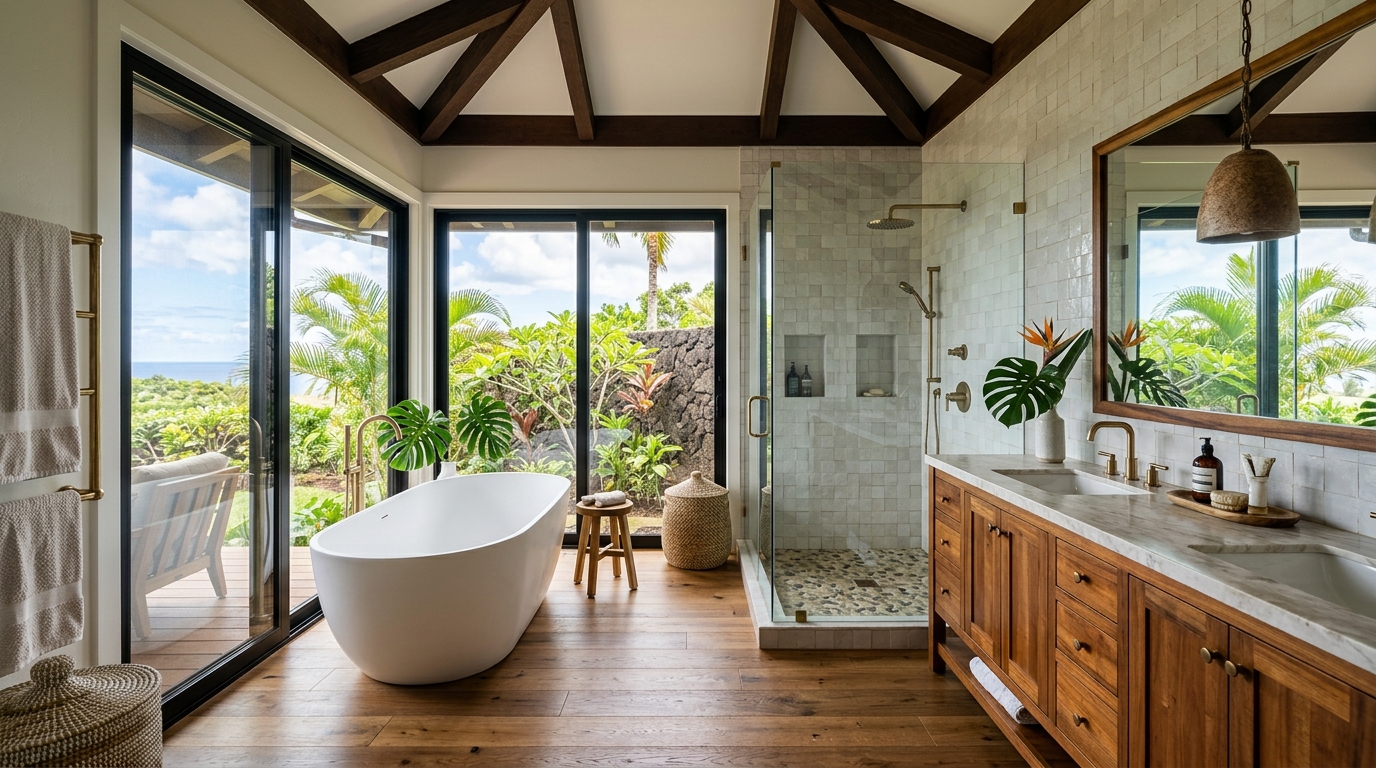
A bathroom remodel in Po’ipu, Kaua’i generally costs between $35,000 for a standard guest bathroom and can exceed $120,000 for a luxury master suite in 2026. The entire process, from initial design to final walkthrough, typically takes 5 to 8 months due to island-specific logistics like permitting with Kaua’i County and shipping materials across the Pacific. Here at Warrior Construction, we’ve spent over two decades navigating these exact challenges for homeowners across the islands, and we know what it takes to get a Po’ipu project done right—on time and on budget.
Remodeling on Kauaʻi isn’t like building on the mainland. The constant salt air, the high humidity, and the supply chain realities require a completely different approach. Too often, we see homeowners get advice meant for Arizona or California, leading to peeling finishes, corroded fixtures, and budgets that spiral out of control. This guide is different. It’s built from our direct, on-the-ground experience as a licensed bathroom contractor po’ipu trusts. We’ll walk you through realistic costs, timelines, permitting headaches, and the material choices that actually stand up to the South Shore climate. We will also share seven key money-saving tips that can make a huge difference to your bottom line without compromising quality.
Why Po’ipu Homeowners Trust Warrior Construction for Bathroom Remodel
When you undertake a bathroom remodel po’ipu project, you’re not just hiring someone to lay tile; you’re trusting a team with your home, your investment, and your peace of mind. Homeowners in Po’ipu, from the condos in Po’ipu Kai to the custom homes near Brennecke’s Beach, choose Warrior Construction because we’re not just builders; we’re Hawaii-based problem solvers. Our license, BC-34373, is more than just a number—it represents over 20 years of building and renovating in the unique conditions of the Hawaiian Islands.
What does that experience mean for you? It means we know that the beautiful, porous travertine tile a mainland designer loves will become a moldy, stained mess in Po’ipu’s humidity within a few years. It means we automatically specify 316 marine-grade stainless steel for all exterior-facing hardware because we’ve seen standard fixtures rust into oblivion from the salt spray. Our team understands the nuances of Kaua’i’s red dirt, the behavior of volcanic soil during heavy rains, and the specific building codes that came into effect after Hurricane Iniki devastated the island. We build to a higher standard because we have to.
Furthermore, our relationships on Kaua’i are a huge asset. We have a network of trusted local subcontractors—plumbers, electricians, and painters who show up on time and do quality work. We know the staff at the Kauaʻi County Building Division in Lihuʻe and understand how to prepare permit applications that get approved without endless revisions. On a recent project in Koloa, our client was set on a specific freestanding tub that had a 16-week lead time from a mainland supplier. Because we knew this upfront, we structured the entire project schedule around its arrival, ensuring that the delay didn’t cause a work stoppage or cost the client extra in labor charges. That’s the kind of proactive planning that only comes from years of hands-on experience right here.
What Does Bathroom Remodel Cost in Po’ipu?
Let’s get straight to the point, because this is the first question every homeowner asks. In 2026, the cost for a professional bathroom renovation po’ipu is significantly higher than mainland averages due to shipping, labor, and material requirements. A complete gut-and-remodel is a major investment, and understanding the numbers is the first step.
Here’s a realistic breakdown of what you can expect to budget for different types of bathrooms in the Po’ipu area:
- Small Powder Room or Half-Bath (30-50 sq. ft.): For a simple fixture-and-finish swap (new toilet, vanity, flooring, paint), you’re looking at a starting point of $18,000 – $25,000. This assumes the plumbing locations stay put.
- Standard Guest Bathroom (60-80 sq. ft.): This is your typical full bath with a tub/shower combo. A complete remodel, including a new tub, tile surround, vanity, toilet, flooring, and proper ventilation, will typically run from $35,000 to $50,000.
- Master Bathroom Remodel (100-150 sq. ft.): For a primary suite project involving a walk-in shower, a freestanding tub, a double vanity, and higher-end materials, the budget will be in the $75,000 to $120,000 range. Features like custom cabinetry, natural stone (used cautiously), and relocating major plumbing lines will push the cost toward the higher end.
- Luxury Spa-Like Retreat (200+ sq. ft.): High-end projects with steam showers, smart home integration, custom lighting, and premium imported finishes can easily exceed $150,000.
Why are these costs what they are? Several factors are at play:
- Inter-Island Shipping & Logistics: Virtually everything—from the tile to the toilet to the screws—has to be barged to Nawiliwili Harbor and then trucked to your home in Po’ipu. This adds 15-25% to material costs right off the bat compared to mainland prices.
- Skilled Labor Costs: The pool of licensed, insured, and highly skilled tradespeople on Kauaʻi is smaller than on Oʻahu or the mainland. This high demand for quality craftsmanship commands a premium wage.
- Durable, Climate-Appropriate Materials: We don’t use builder-grade MDF vanities that will swell and delaminate in six months. We insist on solid wood or marine-grade plywood cabinetry, high-performance waterproofing systems like Schluter-KERDI for showers, and corrosion-resistant fixtures. These cost more upfront but save you a fortune in the long run.
- General Excise Tax (GET): Remember that Hawaii’s 4.712% GET (on Kauaʻi) is applied to both materials and labor, which gets factored into the final project cost.
Money-Saving Tip #1: The single most effective way to control costs is to keep your existing plumbing layout. Moving a toilet or a shower drain can add $5,000 to $15,000 to a project, as it involves cutting into the concrete slab and extensive re-plumbing and inspection.
Money-Saving Tip #2: Opt for high-quality porcelain tile instead of natural stone. Modern porcelain can mimic the look of marble or travertine beautifully for a fraction of the cost and, most importantly, it’s non-porous and far more resistant to moisture and staining—a critical advantage in our humid climate.
How Long Does a Bathroom Remodel Take in Po’ipu?
Patience is a virtue in any construction project, but it’s an absolute necessity when remodeling in Hawaii. A realistic timeline for a full bathroom remodel po’ipu project, from our first conversation to your first shower in the new space, is typically between 5 and 8 months. Mainland TV shows that portray a bathroom being transformed in a week are pure fantasy here.
Here is a phase-by-phase breakdown of a typical Po’ipu project timeline:
- Phase 1: Design & Planning (4-8 weeks): This is where we work with you to define the scope, create the layout, and select every single material, from the tile grout color to the cabinet pulls. A thorough plan is the foundation of a smooth project.
- Phase 2: Permitting (6-12 weeks): Once the plans are finalized, we submit them to the Kauaʻi County Building Division. The review process can be lengthy, and this phase is often the biggest variable in the schedule. Simple cosmetic updates might not need a permit, but most full renovations will.
- Phase 3: Material Procurement & Shipping (4-10 weeks): This phase happens concurrently with permitting. We order everything as soon as selections are finalized. Special order tiles from Italy or a custom vanity from the mainland can take months to arrive. We’ve seen shipping containers get delayed in Long Beach for weeks, which is completely out of our control.
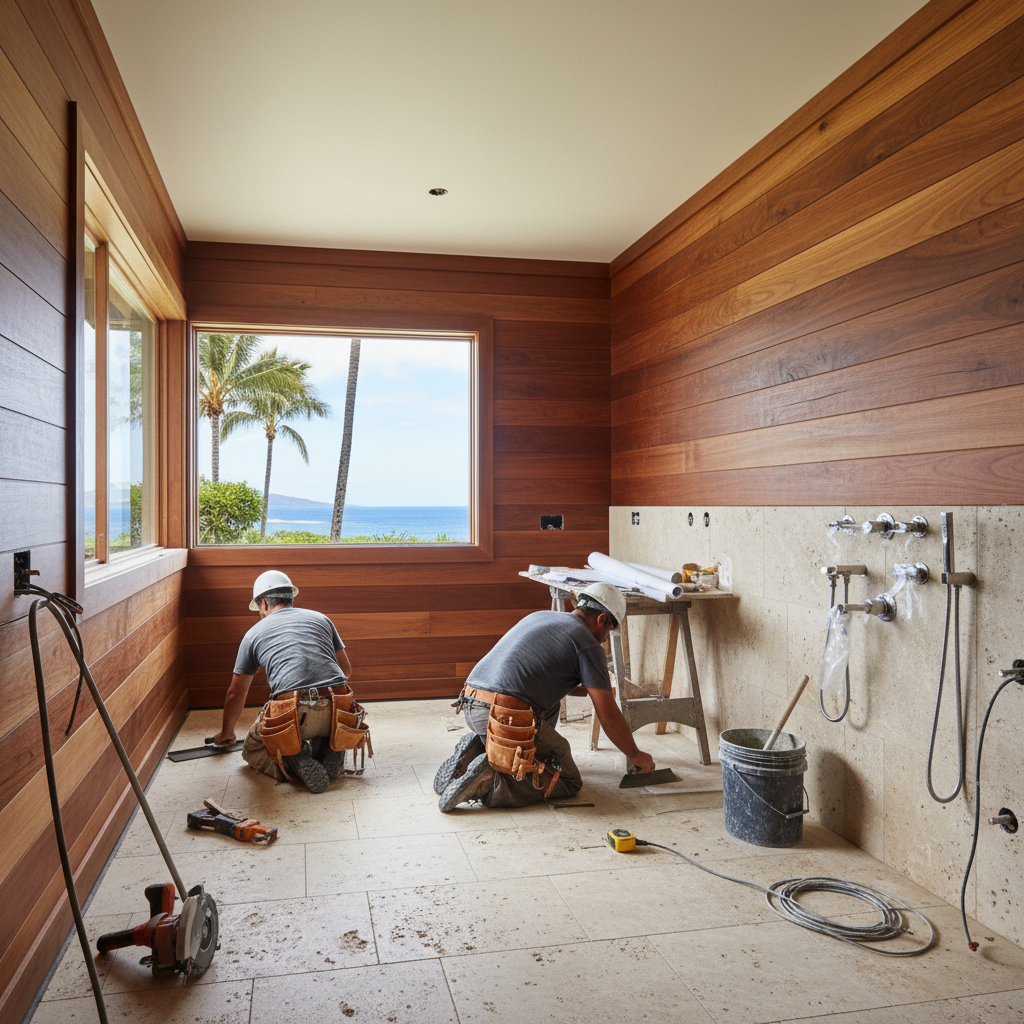
- Phase 4: Construction (6-10 weeks): This is the active, on-site part of the job. It includes demolition, framing, rough-in plumbing and electrical, inspections, drywall, waterproofing, tile setting, painting, and final fixture installation. This timeline is for a standard bathroom; a complex master suite can take longer.
The total time from start to finish is often a surprise to homeowners. The key takeaway is that the actual “construction” is just one piece of a much larger puzzle. The upfront planning and waiting for materials and permits constitute the bulk of the timeline. We once had a project in Po’ipu where the client’s custom-ordered soaking tub was on a ship that got rerouted due to a storm, adding three weeks to the schedule before we even started demo. We used that time to double-check our other material orders and get ahead on coordinating subcontractors.
Money-Saving Tip #3: Never, ever start demolition until every single material and fixture is on-site and inspected. We store everything in our warehouse or a designated spot at your property. Starting work before the materials arrive is the number one cause of costly delays, as you end up paying for a crew to stand around waiting for a faucet to be delivered.
What Permits Do You Need for Bathroom Remodel in Po’ipu?
Navigating the permitting process is one of the most crucial roles a general contractor plays. For a Po’ipu bathroom remodel, you’ll be dealing with the Kauaʻi County Department of Public Works, Building Division. While some mainland jurisdictions are relaxing permit rules, Hawaii’s are stringent, especially regarding plumbing, electrical, and structural work—and for good reason, given our unique environmental challenges.
So, when do you need a permit? Here’s a simple guide:
- Permit Almost Always Required:
- Moving or adding walls (structural changes).
- Relocating plumbing fixtures (e.g., moving a toilet, converting a tub to a shower).
- Changing the electrical layout (e.g., adding new outlets, circuits for a heated floor, or new lighting).
- Altering the size of a window or door.
- Permit Generally Not Required:
- Replacing a faucet or toilet in the same location.
- Painting or wallpapering.
- Replacing flooring.
- Replacing a vanity of the same size and in the same spot (as long as plumbing isn’t moved).
The process involves submitting detailed architectural plans for review. These plans must show the existing layout and the proposed changes, including all plumbing, electrical, and structural details. The county plan reviewer will check them for compliance with all current building codes. For comparison, the system on Oʻahu is run by the Honolulu Department of Planning and Permitting (DPP)[1], and while the specific reviewers are different, the core principles of code compliance are similar across the state. Once the permit is issued, multiple inspections are required at key stages (e.g., after rough-in plumbing/electrical, before closing up the walls) to ensure the work is done to code.
Attempting to do work without a required permit is a huge risk. If you’re caught, the county can issue a stop-work order, levy heavy fines, and even require you to tear out all the completed work. More importantly, unpermitted work can void your homeowner’s insurance and create major problems when you try to sell your home. It’s simply not worth the risk.
Money-Saving Tip #4: Hire a licensed general contractor who manages the entire permitting process as part of their service. We handle the drafting, submission, and communication with the county. This saves you the immense headache of trying to navigate the bureaucracy yourself and prevents simple mistakes on the application from causing months of delays.
Po’ipu-Specific Considerations: Climate, Materials, Regulations
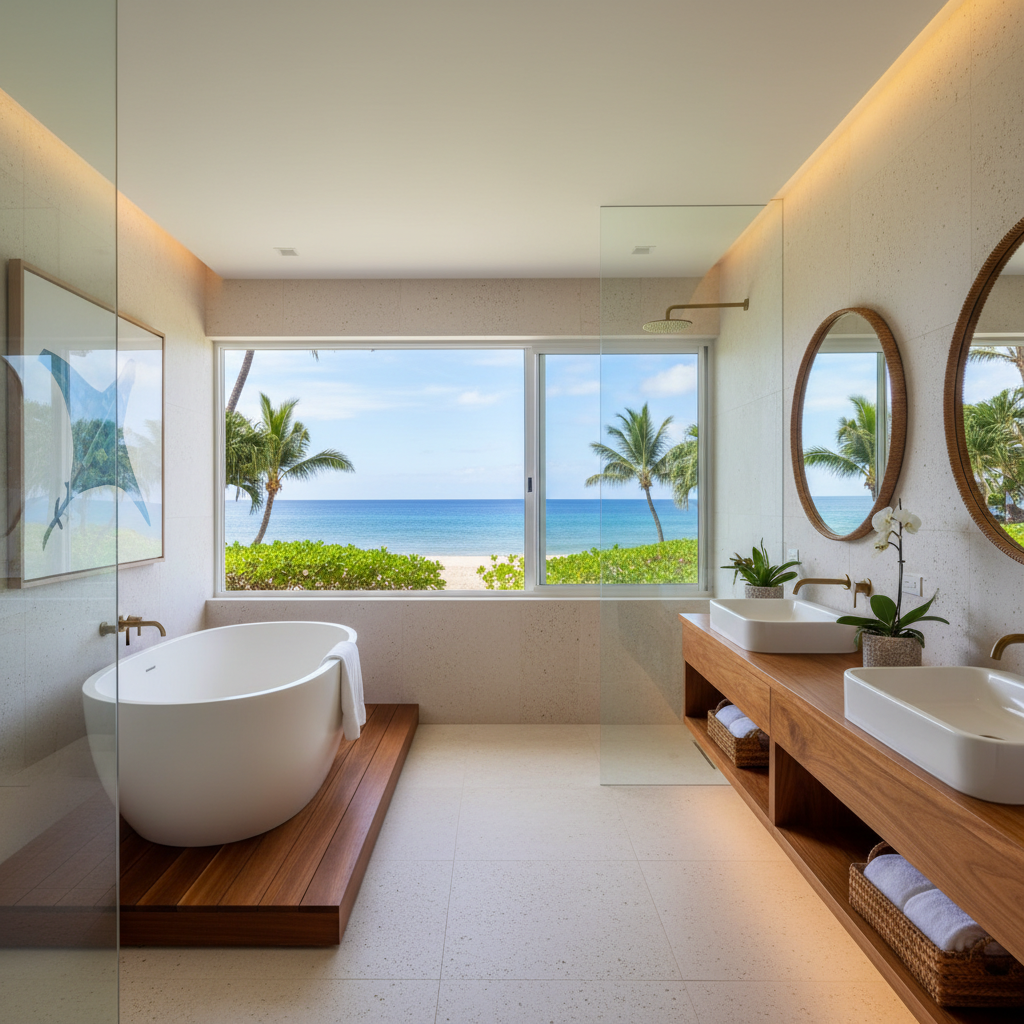
A bathroom in Po’ipu faces a relentless assault from the environment. The combination of intense sun, high humidity, and salty air creates a uniquely corrosive environment that will destroy standard building materials. A successful shower remodel po’ipu or full bathroom renovation hinges on selecting materials and using techniques specifically designed for these conditions.
- Humidity and Mold Control: This is priority number one. We install high-powered, properly vented exhaust fans (we like Panasonic’s WhisperGreen line) in every bathroom we build, no exceptions. We also use moisture and mold-resistant drywall (green board or purple board) and apply robust waterproofing membranes behind all tile in wet areas. Good ventilation and waterproofing aren’t luxuries; they’re essential to protecting your home’s structure.
- Material Selection for Salt-Air Corrosion: Anything metal will try to rust. We guide our clients toward materials that fight back:
- Fixtures: Look for PVD (Physical Vapor Deposition) finishes, which are far more durable than standard chrome plating. For ultimate longevity, especially on hardware near windows, specify 316 marine-grade stainless steel.
- Cabinetry: Avoid MDF (medium-density fiberboard) like the plague. It will act like a sponge in the humidity. We recommend solid wood, marine-grade plywood, or high-end composite materials for vanities and storage.
- Lighting & Electronics: All light fixtures should be rated for damp or wet locations. We also recommend GFCI (Ground Fault Circuit Interrupter) outlets near any water source, which is a code requirement but also a critical safety feature.
- Hurricane Code Compliance: Kauaʻi’s building codes were significantly strengthened after Hurricane Iniki in 1992. If your bathroom remodel involves an exterior wall, any new windows must be impact-rated or have a rated shutter system. We also ensure that any new framing is properly tied into the existing structure with hurricane straps and clips, even for an interior project. This structural integrity is non-negotiable.
- Resort & AOAO Regulations: Many properties in Po’ipu are part of a condominium association (AOAO) or resort community. These often have their own set of rules regarding construction hours, noise, debris disposal, and even what materials can be used on the exterior. We always coordinate directly with the building manager or AOAO board to ensure our work plan is in full compliance, preventing any issues for you.
Money-Saving Tip #5: Invest in durability now to avoid costly repairs later. Spending a little more on a high-CFM exhaust fan, a better waterproofing system, or corrosion-resistant fixtures might add 5% to the upfront budget, but it will save you from a $15,000 mold remediation or a full fixture replacement in five years. This is the definition of a smart investment.
How to Choose the Right Bathroom Remodel Contractor in Po’ipu
Choosing the right bathroom contractor po’ipu is the most important decision you’ll make for your project. A great contractor will protect your investment, while a bad one can turn your dream remodel into a nightmare. Here’s a checklist to help you vet potential partners:
- Verify Their License and Insurance: This is the absolute first step. Any legitimate contractor in Hawaii will have a license number. Ours is BC-34373. You can and should verify any contractor’s license status on the Hawaii Department of Commerce and Consumer Affairs (DCCA) Professional & Vocational Licensing (PVL) website[2]. Also, ask for certificates of general liability insurance and worker’s compensation insurance. Without these, you could be held liable for any accidents on your property.
- Look for Local, Relevant Experience: A contractor from Honolulu might be great, but do they understand the specific supply chain and subcontractor relationships on Kauaʻi? Ask to see a portfolio of projects they have completed *on Kauaʻi*, preferably in the Po’ipu area. Ask for references from those local clients.
- Evaluate Their Communication: During the bidding process, how responsive are they? Do they provide a detailed, itemized estimate, or is it a vague, one-page document? A professional contractor will communicate clearly and proactively. You should feel like you’re entering a partnership, not just a transaction.
- Understand Their Process: Ask them to walk you through their process from start to finish. How do they handle material selections? How do they manage the schedule and communicate updates? Who will be your main point of contact? A well-defined process is a sign of an organized and experienced company. Our team utilizes project management software to give clients real-time visibility into schedules, selections, and daily progress logs.
- Discuss Their Warranty: A reputable contractor will stand behind their work. Ask about their warranty on workmanship. A typical warranty is for one year, covering any defects related to the installation. Material warranties are separate and provided by the manufacturer.
Money-Saving Tip #6: Don’t fall for the low-bid trap. If you get three bids and one is significantly lower than the others, it’s a massive red flag. It likely means they missed something in the scope, are using inferior materials, are uninsured, or are planning to hit you with a string of expensive change orders later. A quality remodel costs what it costs. Choosing a contractor based on competence and trust, not just the lowest price, is the best way to protect your budget in the long run.
Real Po’ipu Bathroom Remodel Project Example
To make this all feel more concrete, let’s walk through a typical project we recently completed. It was a 120-square-foot master bathroom in a Kiahuna Plantation condo, originally built in the early 1990s and in desperate need of an update.
- The Client’s Goal: The homeowners wanted to create a brighter, more open space. Their primary goals were to replace the cramped, tiled shower stall with a spacious walk-in shower, improve the terrible ventilation, and use materials that wouldn’t degrade in the coastal environment. They also wanted better storage.
- The Challenges: As a condo, we had to work within the AOAO’s strict rules, including limited work hours (9 AM to 4 PM, Monday-Friday) and protocols for debris removal. The biggest challenge was the discovery of old, corroded copper pipes behind the shower wall during demolition—a common issue in older Hawaii properties.
- The Warrior Construction Solution: Our plan included a curbless, walk-in shower with a linear drain, fully waterproofed with the Schluter-KERDI system. We specified large-format porcelain tiles for the walls and floor to minimize grout lines and make cleaning easier. We installed a new, high-CFM Panasonic fan and vented it properly to the exterior. For the vanity, we used a custom-built unit made from solid teak with marine-grade stainless steel hardware. When we discovered the corroded pipes, we immediately notified the client, got a change order approved for the re-plumbing work, and had our licensed plumber replace the affected section, preventing a future leak that could have been catastrophic.
- The Numbers:
- Initial Budget: $85,000
- Final Cost: $91,500 (The increase was due to the necessary re-plumbing work, which the client’s contingency fund covered).
- Timeline: 7.5 months from initial contract signing to final walkthrough. (2 weeks for design, 10 weeks for permits/AOAO approval, 8 weeks for material delivery, 8 weeks for construction).
Money-Saving Tip #7: Always have a contingency fund. We recommend setting aside 15-20% of your total construction budget for unforeseen issues. On this project, that fund meant the discovery of bad plumbing was a manageable problem, not a budget-breaking disaster. In Hawaii construction, it’s not a matter of *if* you’ll find something unexpected, but *when*.
What this means for Hawaii homeowners
Undertaking a bathroom remodel po’ipu is a complex but incredibly rewarding process. For homeowners on Kauaʻi, success comes down to embracing the realities of building in paradise and planning accordingly. You can’t fight the salt air or the shipping schedules, but you can work with them by partnering with a contractor who knows the landscape.
Here are the key takeaways for your project:
- Budget Realistically: Acknowledge that costs here are higher. Use the figures in this guide as a starting point for your financial planning. An underfunded project is a stressful project.
- Plan for the Timeline: The process will take months, not weeks. Start the conversation with a contractor 6-9 months before you hope to begin construction. Patience and proactive planning are your best tools.
- Prioritize Climate-Proof Materials: Your number one priority should be fighting moisture and corrosion. Invest in the best waterproofing, ventilation, and materials you can afford. This is not the place to cut corners.
- Hire a Licensed, Local Pro: The value of a contractor who understands Kauaʻi—from the permit office to the local suppliers to the climate—cannot be overstated. Do your homework, check their license, and hire a team you trust to be your advocate through the entire process.
A well-executed bathroom remodel will not only improve your daily life but will also add significant value to your Po’ipu home. By following these principles, you can ensure your project is a successful, long-term investment.
Frequently Asked Questions About Bathroom Remodel in Po’ipu
How much does a basic shower remodel cost in Po’ipu?
In 2026, a basic shower remodel po’ipu, where you are just replacing the tile and fixtures in an existing stall of standard size (around 3’x5′), typically starts between $12,000 and $18,000. This assumes you are using quality porcelain tile and not moving any plumbing. The cost includes professional waterproofing, which is absolutely critical and should never be skipped.
Can I do a bathroom remodel myself (DIY) to save money?
While you can save on labor by doing cosmetic updates like painting or replacing a vanity yourself, we strongly advise against DIY for anything involving plumbing, electrical, or waterproofing. Mistakes in these areas can lead to catastrophic leaks, mold, and electrical hazards that cost far more to fix than hiring a pro from the start. Plus, any work requiring a permit must be done by a licensed contractor.
What is the single biggest mistake Po’ipu homeowners make in bathroom remodels?
The biggest mistake is choosing materials based on mainland aesthetics without considering our climate. We often see people install beautiful but porous natural stone that quickly gets stained by our water, or fixtures with a cheap finish that starts pitting from salt air in a year. Prioritizing durable, non-porous, and corrosion-resistant materials is the key to a remodel that lasts.
How long does it really take for materials to ship to Kaua’i?
It varies greatly, but you should plan for 4 to 10 weeks for most items coming from the mainland. In-stock items from Honolulu suppliers might arrive in 1-2 weeks. However, custom-ordered items like vanities, special tile, or high-end fixtures can easily take 12-16 weeks. These shipping logistics are a major reason why local project timelines are longer.
Are walk-in showers more expensive than tubs in Po’ipu?
Yes, generally a properly constructed walk-in shower is more expensive than a standard alcove tub installation. This is due to the extensive labor involved in custom tiling, creating a sloped mortar bed for drainage, and installing a comprehensive waterproofing system. A simple tub/shower combo is often a more budget-friendly option, while a custom walk-in shower can run from $15,000 to $25,000+ just for the shower system itself.
Do I need an architect for a bathroom remodel in Po’ipu?
For a simple cosmetic update or a remodel within the existing layout, you typically do not need an architect. A design-build firm like Warrior Construction can handle the design and plans. However, if you are moving walls, changing the roofline, or reconfiguring a large, complex space, bringing an architect on board is a wise investment to ensure the design is sound and the plans are detailed enough for permitting.
A bathroom remodel is a significant undertaking, but you don’t have to navigate it alone. With decades of experience on Kauaʻi and across Hawaii, our team at Warrior Construction (BC-34373) knows how to manage the unique challenges of building in Po’ipu. We focus on durable materials, transparent communication, and quality craftsmanship to ensure your new bathroom is not only beautiful but built to last.
If you’re ready to transform your space, let’s talk about your project. Learn more about our approach to expert bathroom remodeling services or reach out today to schedule your free, no-obligation estimate.