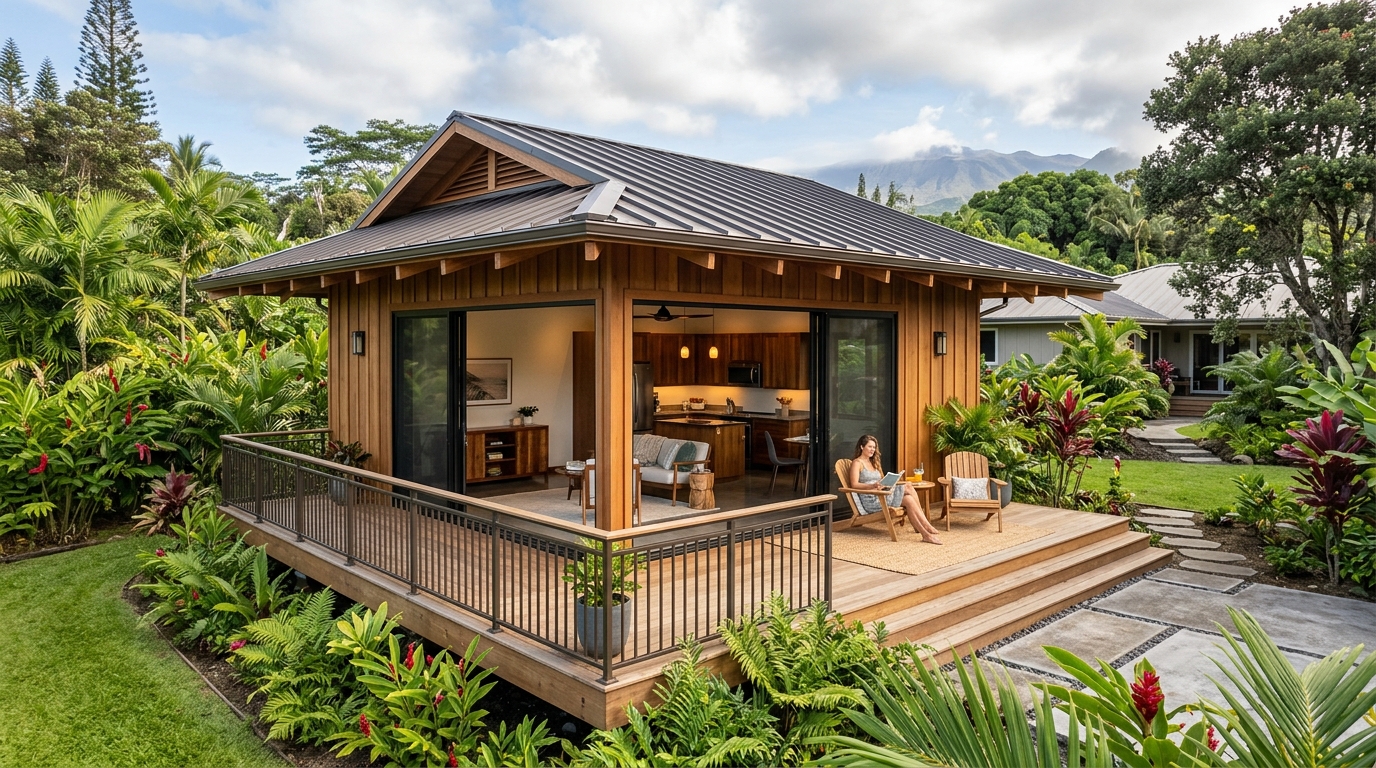
As a leading adu builder hilo homeowners have come to trust, we can tell you that building an Accessory Dwelling Unit in Hilo in 2026 typically costs between $375 and $550 per square foot and takes 11 to 19 months from the first design sketch to final inspection. The final numbers depend heavily on your specific lot, the materials you choose, and the complexity of the design. But unlike building on Oahu or Maui, Hilo presents its own unique set of challenges and opportunities, from the constant rain and volcanic soil to the specific permitting process at the Hawaiʻi County Department of Public Works. Getting it right requires more than just a general contractor license; it demands deep, on-the-ground experience with Big Island conditions.
For over two decades, our team at Warrior Construction has been navigating these exact challenges across the islands. We’ve managed projects from the rainy slopes of Waiākea Uka to the lava fields of Puna, and we understand what it takes to build a durable, comfortable, and compliant ohana unit on the Windward side of the Big Island. This isn’t just about putting up four walls and a roof. It’s about designing a structure that can handle 150 inches of rain a year without a single leak, building a foundation that’s stable on shifting volcanic rock, and selecting materials that won’t rust, rot, or grow mold in Hilo’s relentless humidity. Furthermore, it’s about knowing the ins and outs of the local building code and having the relationships to keep a project moving forward.
In this guide, we’ll walk you through the entire process from a contractor’s perspective. We’ll break down the real costs you can expect in 2026, map out a realistic timeline, explain the specific permits you’ll need for Hilo, and share insider strategies for choosing the right materials and contractor for your project. This is the conversation we have with our clients over coffee, pulling from years of experience to give you the information you need to make smart decisions for your property and family.
Why Hilo Homeowners Trust Warrior Construction for ADU Builder
When you’re looking for an adu builder hilo residents can recommend, you’re not just looking for someone with a truck and some tools. You’re looking for a partner with proven experience in this unique environment. At Warrior Construction, our reputation is built on a deep understanding of Big Island construction, especially on the challenging Hilo side. Our license, BC-34373, is a mark of our commitment to professional standards, but our real value comes from the decades of hands-on problem-solving across the Hawaiian archipelago. We are an Oahu-based company, but our project management systems and logistics network are specifically designed to execute complex projects seamlessly on the neighbor islands.
One of the biggest hurdles in any neighbor island build is logistics. We’ve seen mainland-based or Oahu-centric contractors fail because they underestimate the complexities of shipping materials to Hilo, coordinating with local subcontractors, and managing inspections. Our team has spent years refining this process. We have established relationships with Hilo-based suppliers, barge companies, and skilled tradespeople. This means we’re not starting from scratch on your project. For instance, on a recent project near Kaumana, we were able to source high-quality, locally-milled ʻōhiʻa for interior finishes and coordinate the concrete pour with a trusted local company, avoiding the costly delays that can happen when trying to manage everything from another island. This integration saves our clients time and money.
Moreover, our expertise is tailored to Hilo’s specific environmental demands. We don’t use the same building envelope design here that we would in dry Kapolei. Here are some key areas where our Hilo-specific experience makes a difference:
- Moisture Management: We design for Hilo’s rain. This means incorporating larger roof overhangs, meticulous flashing details around every window and door, and creating a building envelope that includes a rainscreen system. We prioritize ventilation strategies that reduce indoor humidity and prevent mold growth, a constant battle in East Hawaiʻi.
- Foundation Expertise: The ground in and around Hilo can be anything from deep soil to solid lava rock. We don’t believe in a one-size-fits-all foundation. We assess each site individually, often recommending a post-and-pier foundation to improve airflow, minimize site disturbance on rocky lots, and lift the structure away from ground moisture and pests.
- Material Selection: We guide our clients toward materials that last in this climate. This often means specifying stainless steel fasteners to fight salt-air corrosion, standing-seam metal roofing instead of asphalt shingles that would quickly grow moss, and fiber cement siding that resists moisture and termites far better than traditional wood siding.
Choosing an ADU contractor in Hilo is a major decision. Our approach is to be a transparent partner, leveraging our statewide experience and local know-how to protect your investment and build a space that will serve your family for generations. We handle the complexities of inter-island logistics so you can focus on the vision for your new ohana unit.
What Does ADU Builder Cost in Hilo?
The most pressing question for anyone considering an ADU is always about cost. For a new ADU in Hilo in 2026, you should budget for a total project cost between $375 and $550 per square foot. For a standard 800-square-foot, 2-bedroom, 1-bathroom ohana unit, this translates to a turnkey cost of approximately $300,000 to $440,000. This figure includes both hard costs (labor and materials) and soft costs (design, engineering, permits, and surveys). It’s a significant investment, and it’s critical to understand where that money goes.
Let’s break down the costs for a hypothetical 800 sq. ft. ADU in Hilo:
Hard Costs (Roughly 75-80% of Total Budget): $225,000 – $352,000
- Site Work & Foundation: $25,000 – $50,000. This is highly variable in Hilo. A flat, clear lot with good soil is on the lower end. A sloped lot requiring extensive excavation, rock hammering, or a complex post-and-pier foundation will be on the higher end.
- Framing & Structure: $40,000 – $65,000. This includes lumber, hurricane straps, shear walls, and all the structural components required to meet Hawaiʻi’s stringent hurricane code.
- Exterior (Roofing, Siding, Windows): $50,000 – $80,000. Investing in quality here is non-negotiable in Hilo. A standing-seam metal roof might cost $20,000, while high-performance windows rated for wind-driven rain could be another $15,000.
- Interior Finishes (Drywall, Flooring, Paint): $35,000 – $60,000. The range depends entirely on your choices—vinyl plank flooring is more affordable than engineered hardwood; standard drywall is cheaper than mold-resistant paperless drywall.
- Plumbing & Electrical: $30,000 – $45,000. This includes all wiring, fixtures, panel upgrades, and plumbing lines. If a new septic system is required (common for Hilo properties), add another $15,000 – $25,000.
- Kitchen & Bath: $25,000 – $52,000. Cabinets, countertops, appliances, tile, and fixtures can vary wildly in price.
Soft Costs (Roughly 20-25% of Total Budget): $75,000 – $88,000
- Design & Architectural Fees: 8-15% of construction cost ($24,000 – $52,800). This covers blueprints, structural engineering, and site planning.
- Permits & Fees: $7,000 – $18,000. Hawaiʻi County building permit fees are based on the valuation of the project. This also includes fees for plan review, plumbing, electrical, and potential driveway permits.
- Surveys & Geotechnical Reports: $3,000 – $8,000. A boundary survey is almost always needed. If your property is on a steep slope or has questionable soil, a geotechnical report may be required by the county.
- Contingency: We always advise clients to hold a 10-15% contingency fund ($30,000 – $44,000). This isn’t a fee we charge; it’s your safety net for unforeseen issues, like hitting unexpected blue rock during excavation or dealing with a sudden spike in material costs due to shipping issues.
As an experienced ADU contractor hilo families rely on, we help you value-engineer your project from the start, identifying areas where you can save without compromising the long-term durability of your home. For example, opting for a simpler roofline can save thousands in framing and roofing labor, freeing up budget for better waterproofing or more efficient windows.
How Long Does a ADU Builder Take in Hilo?
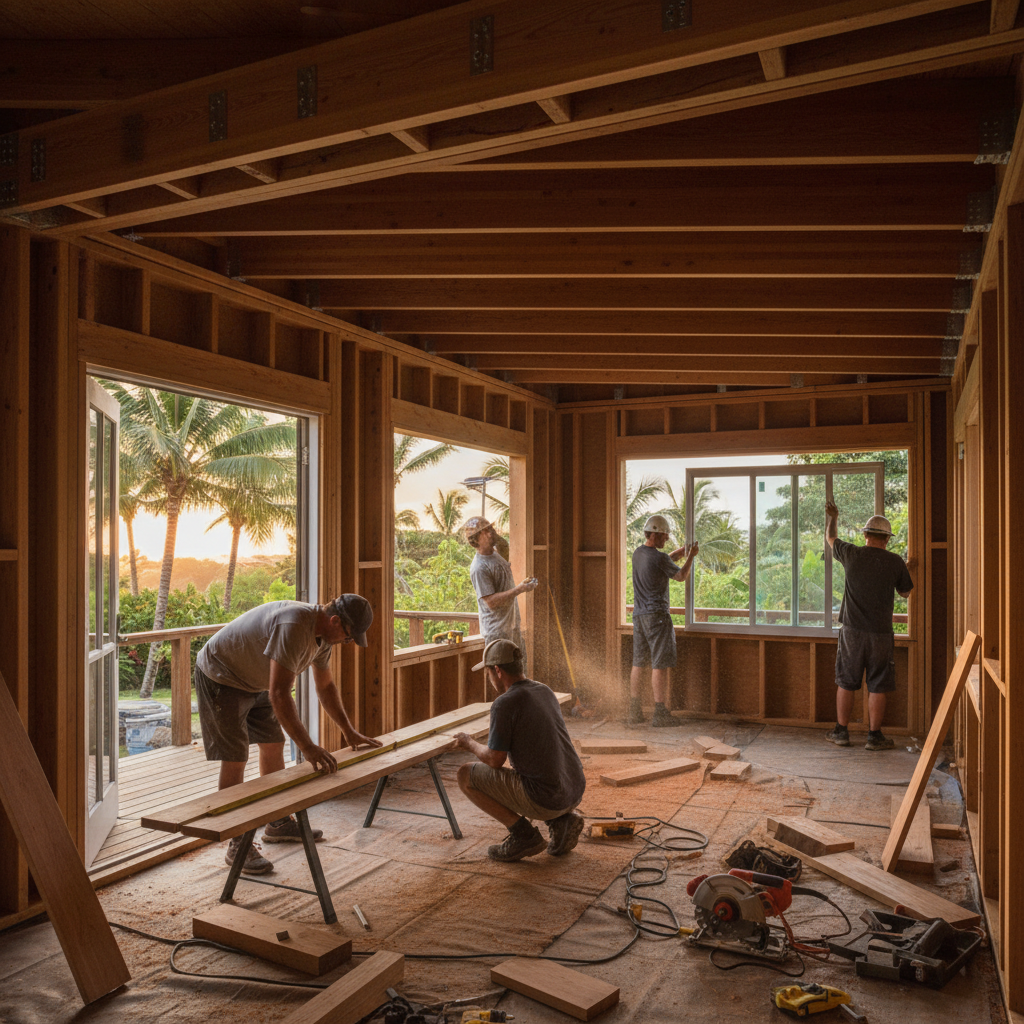
Building an ADU in Hilo is a marathon, not a sprint. A realistic timeline from your first conversation with an architect to receiving your certificate of occupancy is typically 11 to 19 months. While the physical construction might only take 5-7 months, the pre-construction phase, especially permitting, is what often extends the schedule on the Big Island. Homeowners who expect to be breaking ground a month after they have drawings are often surprised by the reality of the process. At Warrior Construction, we believe in setting clear expectations from day one.
Here’s a phase-by-phase breakdown of a typical Hilo ADU project timeline in 2026:
Phase 1: Design and Planning (2-4 Months)
- Initial Consultation & Feasibility: 1-2 weeks. We discuss your goals, budget, and review your property for any obvious red flags (e.g., zoning issues, difficult access, location in a high-risk lava zone).
- Schematic Design: 3-6 weeks. Your architect or designer develops floor plans and exterior elevations based on your vision. This involves a lot of back-and-forth to get it just right.
- Construction Documents: 6-10 weeks. This is the heavy lifting of the design phase. The initial sketches are turned into detailed blueprints that include structural engineering, electrical plans, plumbing layouts, and all the specific details needed for permitting and construction.
Phase 2: Permitting and Approvals (4-8 Months)
- Permit Application Submission: 1 week. Once the plans are complete, we compile the entire application package and submit it to the Hawaiʻi County Department of Public Works, Building Division.
- County Plan Review: 4-8 months. This is the longest and most unpredictable part of the timeline. The plans go through multiple departments for review: planning, building, fire, and sometimes public works or health. Each department may have comments or require revisions, which adds time. Unlike Honolulu’s DPP, which has a more digitized system, the process in Hilo can sometimes feel more manual. Having a contractor who knows the reviewers and understands what they’re looking for can help avoid unnecessary delays.
- Permit Issuance: Once all departments have signed off, the building permit is issued.
Phase 3: Construction (5-7 Months)
- Site Prep & Foundation: 3-5 weeks. Clearing the site, excavation, and pouring the foundation (slab-on-grade) or setting the posts (post-and-pier). Hilo’s weather can cause delays here; you can’t pour concrete in a downpour.
- Framing and Rough-ins: 4-6 weeks. The structure of the ADU takes shape. Walls go up, the roof is framed, and plumbers and electricians run their pipes and wires through the walls.
- Exterior and Interior Finishes: 8-12 weeks. This is where the house starts to look like a home. Roofing, siding, windows, insulation, drywall, flooring, painting, cabinets, and countertops are all installed.
- Final Inspections & Occupancy: 2-3 weeks. We coordinate a series of final inspections with the county inspector. Once everything passes, the county issues a Certificate of Occupancy, and you can move in.
Patience and a proactive approach are key. By having a complete and thoroughly engineered set of plans, we can minimize back-and-forth with the county during the review process. And once construction starts, our meticulous scheduling and management of subcontractors and material deliveries keep the project on track, even with the logistical challenges of building on the Big Island.
What Permits Do You Need for ADU Builder in Hilo?
Navigating the permitting process for an ADU in Hilo requires precision and a thorough understanding of Hawaiʻi County regulations. It’s not just a single permit, but a series of approvals from different agencies. As your general contractor, we manage this entire process, but it’s important for homeowners to know what’s involved. Attempting to build without the proper permits can lead to stop-work orders, hefty fines, and even being forced to tear down the structure.
The primary authority is the Hawaiʻi County Department of Public Works (DPW), Building Division. Their job is to ensure your new ADU is safe, structurally sound, and complies with all relevant building codes. Here’s a checklist of the typical permits and approvals needed for a Hilo ADU project:
- Building Permit: This is the main permit that covers the construction of the ADU itself. The application requires a complete set of architectural and structural plans, signed and stamped by a licensed Hawaiʻi architect and engineer. The plans are reviewed for compliance with the International Building Code, as amended by Hawaiʻi County. This includes verifying everything from the foundation design to the hurricane straps holding the roof on.
- Electrical Permit: A separate permit is required for all electrical work. It must be pulled by a licensed electrician and covers everything from the new subpanel to the location of every outlet and switch.
- Plumbing Permit: Similarly, a licensed plumber must pull a permit for all plumbing work, including water supply lines, drain-waste-vent (DWV) systems, and gas lines if applicable.
- Planning Department Review: Before the Building Division even looks at the plans, the Planning Department must confirm that your project complies with zoning regulations. They will verify setbacks from property lines, maximum building height, lot coverage, and confirm that an ADU is allowed on your specific property. Hawaiʻi County Code Chapter 25 is the governing document here.
- Wastewater System Approval: This is a critical step for many properties in Hilo, which may not be connected to the county sewer system.
- If you are connecting to the sewer, you’ll need approval from the Department of Environmental Management.
- If you are on-site disposal, you’ll need a permit from the State Department of Health (DOH) for a new individual wastewater system (IWS), commonly known as a septic system. It’s important to note that new cesspools have been banned in Hawaiʻi for years, and properties with existing cesspools may be required to upgrade to a septic system when undertaking major construction. This process alone can add months to your timeline.
A note on “Bill 7 ADU Hilo”: This is a common point of confusion. Bill 7 was a landmark piece of legislation passed in 2019 for the City and County of Honolulu (Oahu) that significantly eased restrictions on ADUs to address the housing crisis. While the term is well-known, Bill 7 does not apply to Hilo or Hawaiʻi County. The Big Island has its own set of rules, primarily Ordinance 2019-71, which updated the ADU regulations. These rules are generally favorable but have different specifics regarding size, setbacks, and owner-occupancy requirements. An experienced local contractor will know the difference and ensure your project is designed to meet Hawaiʻi County’s code, not Honolulu’s.
Securing these permits is a complex, sequential process. We handle the paperwork, coordinate with the various agencies, and respond to plan reviewer comments efficiently to keep your project moving forward. It’s one of the most significant behind-the-scenes services a qualified general contractor provides.
Hilo-Specific Considerations: Climate, Materials, Regulations
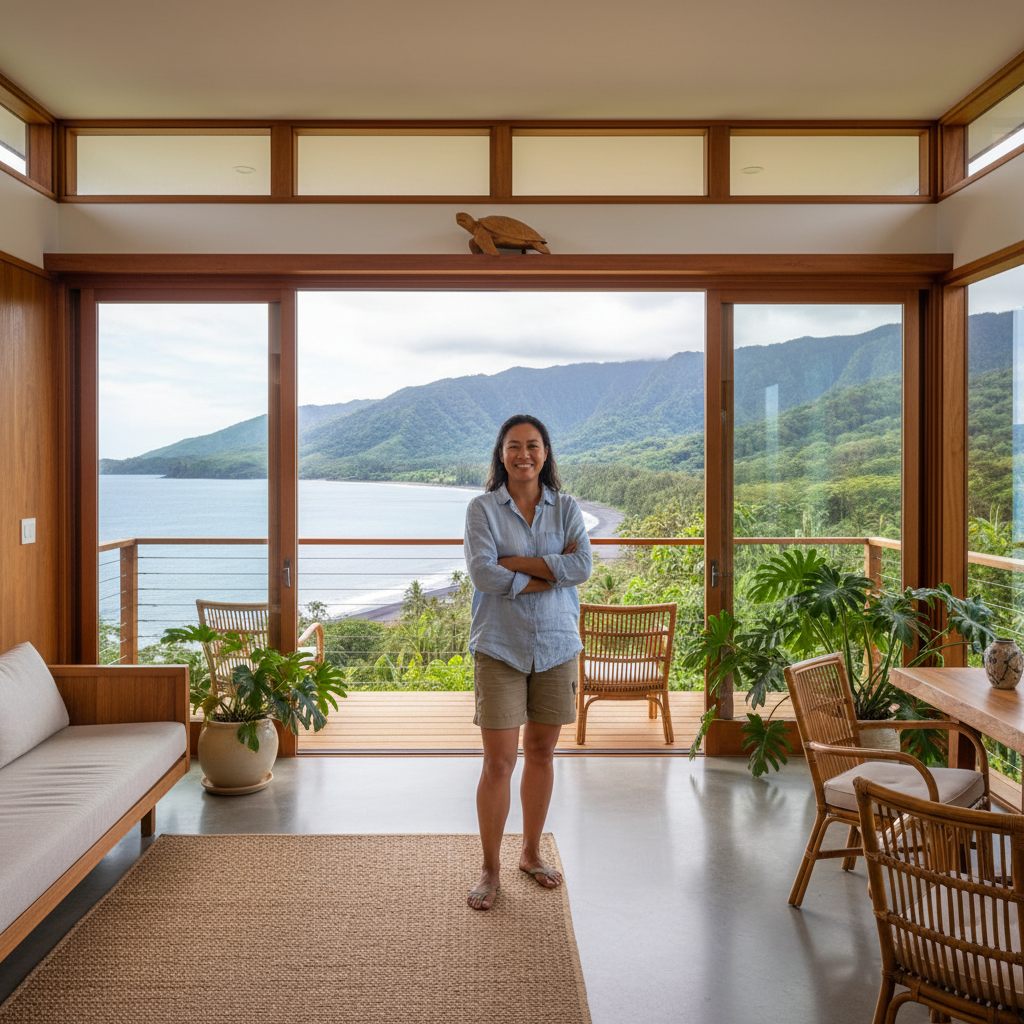
Building in Hilo is unlike building anywhere else in Hawaiʻi, let alone the mainland. The unique combination of extreme rainfall, high humidity, volcanic geology, and specific local regulations dictates every decision we make as an ohana unit builder hilo homeowners work with. Ignoring these factors leads to homes that degrade quickly, suffer from mold and water damage, and ultimately fail to provide a safe, comfortable living space. At Warrior Construction, we build with these Hilo-specific challenges at the forefront of our strategy.
Climate: The Relentless Rain and Humidity
Hilo receives an average of 120-200 inches of rain per year. This isn’t just a number; it’s a fundamental design parameter. Our approach includes:
- Robust Waterproofing: We use a “belt and suspenders” approach. This includes high-quality self-adhering membranes under roofing and siding, liquid-applied flashing at all window and door openings, and properly sloped hardscaping to direct water away from the foundation.
- Raised Foundations: A post-and-pier foundation is often the superior choice in Hilo. It elevates the living space above ground moisture, termites, and potential flooding. The open space underneath promotes constant airflow, which helps dry out the structure and prevent rot and mold.
- Ventilation is Key: We design for passive ventilation with operable windows placed to catch prevailing trade winds. In addition, high-quality, quiet exhaust fans in kitchens and bathrooms are ducted directly to the exterior. We also often recommend mini-split AC systems that have a “dry” mode to help dehumidify the air even when cooling isn’t needed.
Materials: Choosing for Longevity, Not Just Looks
The wrong materials can fail in a few short years in Hilo. Our material palette is chosen for durability in a wet, corrosive environment.
- Roofing: Standing-seam metal roofing with a Kynar finish is our standard recommendation. It sheds water efficiently, resists rust, and holds up to high winds. Asphalt shingles are a poor choice here, as they are prone to lifting in storms and quickly develop issues with moss and algae.
- Siding: Fiber cement siding (like HardiePlank) is an excellent choice. It’s impervious to rot, termites, and moisture. For clients who want a wood look, we use engineered wood products that have been treated to resist moisture and pests.
- Fasteners and Hardware: Every nail, screw, and connector matters. We specify hot-dip galvanized or, preferably, stainless steel fasteners for all exterior applications. This prevents the ugly rust streaks and structural weakening that occurs when standard fasteners corrode.
- Interior Materials: We often recommend mold-resistant (paperless) drywall in bathrooms and other wet areas. For flooring, luxury vinyl tile (LVT) or tile are excellent waterproof options.
Regulations: Lava Zones and Wastewater Rules
Beyond standard building codes, Hilo has unique regulatory landscapes.
- Lava Flow Hazard Zones: Much of the Puna district and parts of Hilo are in designated lava zones. Building in Zones 1 or 2 carries significant challenges. It can be difficult and expensive to get financing and homeowners insurance. The county may also have additional building requirements. We help clients understand the risks and requirements associated with their specific lava zone.
- Wastewater Management: As mentioned, Hawaiʻi is actively phasing out cesspools to protect our groundwater. If your property has an old cesspool, building an ADU will almost certainly trigger the requirement to install a modern, DOH-approved septic system. This can be a substantial undertaking, requiring percolation tests, system design, and significant excavation. We have extensive experience managing this process and can factor it into the overall project plan from the very beginning.
Successfully building an ADU in Hilo means embracing these challenges with smart design, the right materials, and a deep understanding of the local rulebook. This is the expertise we bring to every project.
How to Choose the Right ADU Builder Contractor in Hilo
Selecting the right contractor is the single most important decision you will make for your ADU project. The right partner will not only build a high-quality structure but also make the entire process smoother, more transparent, and less stressful. The wrong one can turn your dream project into a nightmare of delays, budget overruns, and shoddy workmanship. As a seasoned general contractor, here is the advice we give to friends and family when they’re vetting potential builders for a project in Hilo.
1. Verify License and Insurance. No Exceptions.
This is the absolute baseline. Any contractor you consider must have a valid Hawaiʻi General Contractor license (a B-license). You can and should verify their license status, as well as check for any complaints, on the state’s Professional & Vocational Licensing (PVL) website.[1] Our license is BC-34373. Ask for proof of general liability insurance and workers’ compensation insurance. If a worker gets injured on your property and the contractor isn’t properly insured, you could be held liable. Don’t just take their word for it; ask to see the insurance certificates.
2. Demand Hilo-Specific Experience.
Hawaiʻi is not a monolith. A contractor who has only ever built in the dry, flat suburbs of Ewa Beach is not automatically qualified to build in the rainy, rugged terrain of Hilo. Ask potential contractors these specific questions:
- “Can you show me three ADU or custom home projects you’ve completed on the Hilo side of the Big Island in the last five years?”
- “Can I speak with the owners of those projects?”
- “What are the biggest challenges you’ve faced with Hilo’s rain and soil, and how did you solve them on past projects?”
- “Describe your process for managing neighbor island logistics, including material procurement and subcontractor coordination.”
Their answers will reveal whether they have true local knowledge or are just trying to expand their territory. A confident, experienced builder will have clear, detailed answers and be happy to provide references.
3. Review Their Portfolio and Quality of Work.
Look beyond the pretty pictures on their website, which you can see in our portfolio. If possible, ask to visit a completed project or one that is currently under construction. On a job site, you can see the quality of their work up close. Is the site clean and organized? Is the framing straight and precise? How are they protecting materials from the rain? Pay attention to the details. The quality of their flashing, the straightness of their siding lines, and the overall fit and finish are indicators of their commitment to craftsmanship.
4. Understand Their Communication and Project Management Style.
A construction project involves hundreds of decisions and constant communication. You need a builder who has a clear process for keeping you informed. Ask them:
- “Who will be my primary point of contact?”
- “How often will we have meetings or updates?”
- “How are change orders handled and documented?”
- “What project management software or tools do you use to track the schedule and budget?”
At Warrior Construction, we use a cloud-based project management system that gives our clients 24/7 access to the project schedule, daily logs with photos, budget tracking, and all project documents. This level of transparency is essential, especially for clients who may not be on the Big Island full-time during construction.
Choosing your builder is about finding a team with the right technical skills, local experience, and a professional process you can trust. Take your time, do your homework, and choose a partner who will protect your investment.
Real Hilo ADU Builder Project Example
To make all of this more concrete, let’s walk through a typical project that mirrors many of the ADUs we’ve built in the Hilo area. This example showcases the common challenges and solutions involved in building an ohana unit in East Hawaiʻi.
The Client & Goal: A couple in their 60s living in the Waiākea Uka area of Hilo. Their goal was to build a single-story, 750-square-foot, 1-bedroom, 1-bathroom ADU for their aging mother. The top priorities were accessibility (no stairs), durability, and creating a comfortable, dry living space that was easy to maintain.
The Property & Challenges: Their one-acre property was beautiful but challenging. It was moderately sloped and dotted with large lava rock outcroppings. The proposed building site was located behind the main house, with limited access for large equipment. The entire property was also unsewered, with an old, undersized cesspool that would need to be addressed.
Our Solution & Process:
- Foundation Design: A concrete slab-on-grade was not practical due to the slope and rock. We designed a post-and-pier foundation. This allowed us to place concrete footings strategically between the lava rocks, minimizing costly rock-breaking and excavation. It also elevated the structure, which was ideal for Hilo’s climate.
- Accessibility: To achieve a no-stair entry, we designed a gently sloped, ADA-compliant concrete ramp leading from the driveway to the front door. Inside, the ADU featured wider 36-inch doorways, a curbless walk-in shower with grab bars, and reinforced walls for future grab bar installation elsewhere.
- Wastewater System: As anticipated, the county required a full wastewater system upgrade. We worked with a local civil engineer to design a new septic system that would serve both the main house and the new ADU. Our team managed the entire DOH permitting process and coordinated the installation, which included a new septic tank and leach field.
- Material Selection: We used a standing-seam metal roof, fiber cement lap siding, and vinyl-framed, dual-pane windows with a low-E coating. Inside, we installed luxury vinyl plank flooring throughout for its waterproof properties and ease of maintenance. All exterior fasteners were stainless steel.
The Outcome:
- Total Project Timeline: 14 months (3.5 months for design, 6 months for permitting including the septic system design/approval, and 4.5 months for construction).
- Total Project Cost: Approximately $348,750. This broke down to about $465 per square foot, a figure influenced by the extensive site work and the new septic system.
- Result: The client’s mother now has a safe, accessible, and comfortable home of her own, just steps away from family. The ADU is dry, bright, and built with materials designed to withstand the Hilo climate for decades. The project not only met the family’s immediate needs but also significantly increased the property’s long-term value and utility.
This project is a perfect example of how an experienced ADU contractor in Hilo can navigate site challenges, regulatory hurdles, and climate demands to deliver a successful outcome.
What this means for Hawaii homeowners
Building an ADU in Hilo is one of the smartest investments a homeowner can make in 2026. It can provide much-needed space for ohana, generate significant rental income, and increase your property value. However, the unique challenges of building on the Big Island—from permitting and lava zones to the ever-present rain—mean that you cannot afford to cut corners. Success depends on meticulous planning, smart design, and choosing a building partner with proven local expertise.
Here are your key takeaways and actionable next steps:
- Budget Realistically: Plan for a turnkey cost of $375 to $550 per square foot. Don’t forget to include a 10-15% contingency fund for the unexpected. A well-built ADU is a long-term asset; trying to save a few thousand dollars by using cheap materials or an inexperienced builder will cost you far more in the long run through repairs and maintenance.
- Embrace the Timeline: Understand that the process will likely take over a year, with permitting being the longest phase. Start the design and planning process long before you hope to break ground. Patience and a good contracting partner who can navigate the county bureaucracy are your greatest assets.
- Design for Hilo, Not Honolulu: Your ADU’s design must respond directly to the Hilo climate. Prioritize a raised foundation, large roof overhangs, excellent ventilation, and materials that resist moisture, rot, and rust. This is not the place to replicate a design you saw in a dry, sunny climate.
- Vet Your Builder Rigorously: Don’t just hire the cheapest bidder. Hire the most qualified. Verify their license and insurance, check their Hilo-specific references, and make sure they have a transparent process for communication and project management. A great builder is a problem-solver who will guide you through every step of the process.
The path to a new ADU in Hilo is complex, but the rewards are immense. By arming yourself with the right information and choosing the right team, you can add a beautiful, durable, and valuable addition to your property.
Frequently Asked Questions About ADU Builder in Hilo
What are the 2026 size limits for an ADU in Hawaiʻi County?
In Hawaiʻi County, an Accessory Dwelling Unit is generally limited to a maximum of 800 square feet of living area. However, the specific size can be influenced by your property’s zoning and the size of the primary dwelling. It’s crucial to have a professional review the county zoning code (Chapter 25) as it applies to your specific TMK (Tax Map Key) to confirm the exact limitations before starting the design process.
Can I build an ADU myself in Hilo using an owner-builder permit?
Yes, Hawaiʻi law allows for owner-builder permits, but we strongly advise against it for a project as complex as an ADU. You become legally and financially responsible for the entire project, including liability for worker injuries, complying with all building codes, and passing dozens of inspections. Any mistakes can lead to costly rework and delays, and you may face difficulties selling the property in the future. Hiring a licensed general contractor like Warrior Construction (BC-34373) protects you from these risks.
How does building in a Lava Flow Hazard Zone affect my ADU project in Hilo?
Building in a high-risk lava zone (especially Zones 1 and 2, common in the Puna district near Hilo) presents significant challenges. You will likely face much higher costs for homeowner’s insurance, and some lenders may be unwilling to finance the project. The county may also have specific foundation or structural requirements. It is essential to verify your property’s lava zone and speak with your insurance agent and lender before investing in architectural plans.
What is the difference between an ADU and an Ohana Unit in Hilo?
Functionally and colloquially, the terms are often used interchangeably. Legally, however, the structure is defined as an “Accessory Dwelling Unit” by Hawaiʻi County’s ordinances. The term “Ohana Unit” or “Ohana Dwelling” was used under older regulations and had different restrictions, particularly regarding whether the unit could be rented to non-family members. The current ADU ordinance is generally more flexible, making it the relevant legal term for new construction today.
Will I need to upgrade to a septic system for my ADU?
If your Hilo property is not connected to the county sewer system and has an existing cesspool, it is highly likely that building a new ADU will trigger the requirement to upgrade to a modern septic system. The State Department of Health requires these upgrades during major renovations or new construction to protect groundwater. This process involves soil testing, engineering design, and DOH approval, and can add $15,000-$25,000 and several months to your project.
Does the Honolulu “Bill 7 ADU” law apply in Hilo?
No, it does not. “Bill 7” was a City and County of Honolulu (Oahu) ordinance that dramatically changed ADU rules there. Hilo and the rest of the Big Island are governed by Hawaiʻi County ordinances, specifically Ordinance 2019-71. While the goals are similar—to increase housing supply—the specific rules regarding setbacks, parking, and owner-occupancy are different. Relying on information about Oahu’s rules will lead to incorrect assumptions and design errors for a Hilo project.
How much rental income can an ADU in Hilo generate in 2026?
Rental income varies by location, size, and quality, but a new, well-built 2-bedroom ADU in a desirable Hilo neighborhood could realistically generate between $1,800 and $2,500 per month in 2026. A 1-bedroom unit might fetch $1,400 to $1,900. This potential income can often offset a significant portion of the mortgage payment for the project, making it a powerful financial tool for homeowners.
Build Your Hilo Ohana Unit with Confidence
Navigating the complexities of building an ADU in Hilo requires a partner with proven experience and a commitment to quality. At Warrior Construction, we bring over 20 years of Hawaii-wide construction expertise to every Big Island project, ensuring your new ohana unit is built to last. From initial design and permitting to the final coat of paint, our team is ready to guide you.
If you’re ready to explore the possibilities for your property, let’s start the conversation. Learn more about our ADU & Ohana Unit construction services and see how we can help you achieve your goals.