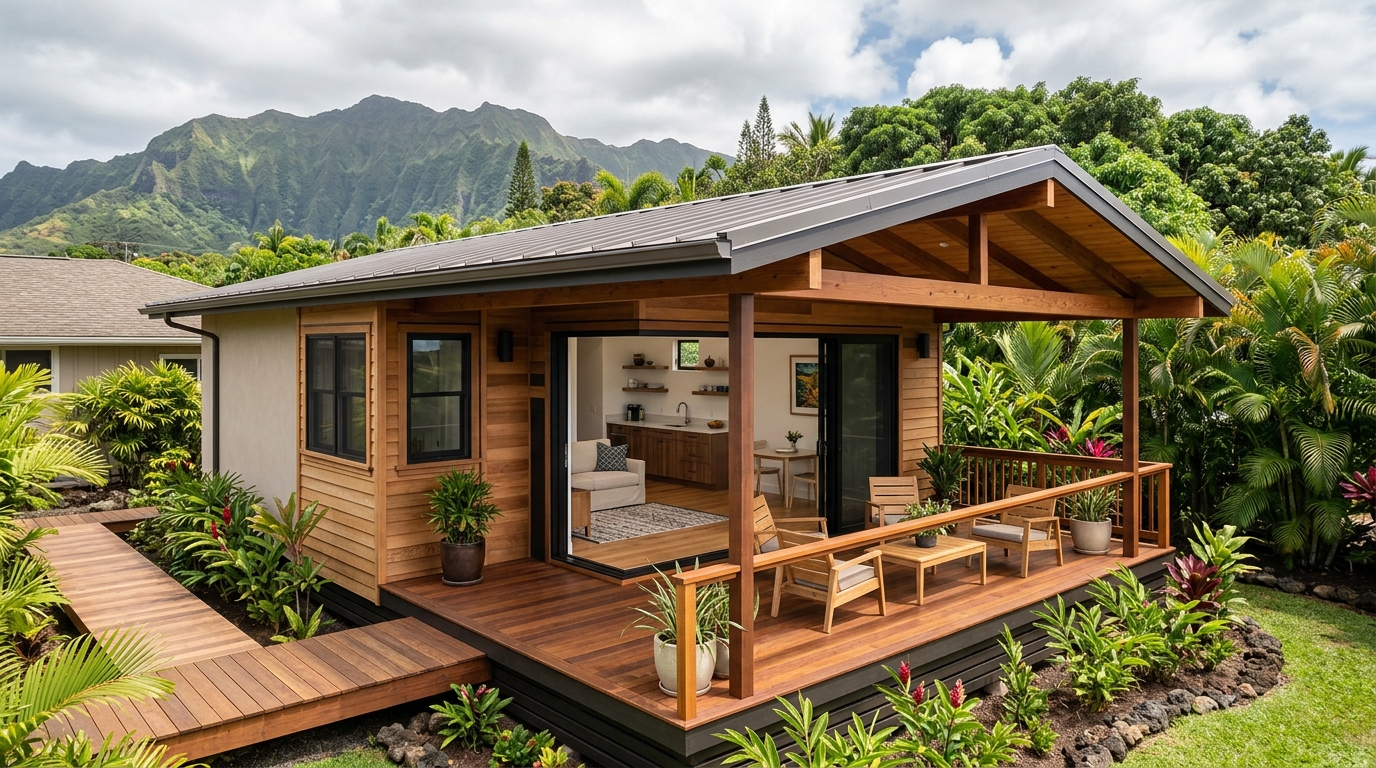
As an experienced adu builder kaneohe homeowners have trusted for over two decades, we can tell you that building an Accessory Dwelling Unit (ADU) in 2026 costs between $350,000 for a simple 600 sq. ft. unit and can exceed $550,000 for a larger 800 sq. ft. unit with higher-end finishes. The total timeline, from initial design sketches to handing you the keys, typically runs between 14 and 24 months, with Honolulu’s Department of Planning and Permitting (DPP) review being the most significant time variable. Here at Warrior Construction, we’ve guided countless O’ahu families through this process, navigating everything from the Windward side’s unique climate challenges to the specifics of Honolulu’s Bill 7 regulations.
Building an ADU, or as many locals still call it, an ohana unit, is one of the smartest investments a Kaneohe homeowner can make. It can provide a home for aging parents, give adult children a foothold in Hawaii’s tough housing market, or generate significant rental income. However, the path is filled with potential pitfalls, from budget overruns caused by unforeseen site conditions to material choices that won’t stand up to Kaneohe’s legendary rain and salt air. This guide is built from our on-the-ground experience. We’ll walk you through realistic costs and timelines, demystify the permitting process, and share nine critical cost-saving tips that can save you thousands without compromising quality. We’ll also break down the specific challenges of building on this side of the island and show you how to choose a contractor who truly understands them.
Why Kaneohe Homeowners Trust Warrior Construction for ADU Builder
Choosing the right ADU builder in Kaneohe goes far beyond finding someone who can swing a hammer. It’s about partnering with a team that has deep, firsthand knowledge of the Windward O’ahu environment. At Warrior Construction (License BC-34373), our reputation is built on more than just quality construction; it’s built on a foundation of local expertise that mainland-style contractors simply can’t replicate. We live here, we work here, and we understand the unique forces at play in Kaneohe, from the ground up.
For example, Kaneohe’s high humidity and frequent rainfall aren’t just a weather forecast—they’re a primary consideration in every phase of our building process. We’ve seen what happens when builders use standard mainland techniques: mold blooming in wall cavities within a few years, wood rot compromising structural integrity, and water intrusion causing thousands in damage. That’s why our standard practice includes specifying robust waterproofing membranes, ensuring proper attic and wall ventilation, and recommending materials designed for a marine environment. On a recent project near Ho’omaluhia Botanical Garden, our initial site survey revealed a significant subsurface water flow after a heavy rain. A less experienced builder might have proceeded with a standard slab foundation, leading to future moisture problems. Our team immediately pivoted, working with the engineer to design a raised foundation with an integrated drainage system, protecting the homeowner’s investment for the long term.
Furthermore, our decades of work on O’ahu mean we have established relationships with local suppliers and subcontractors. This is a huge advantage when it comes to scheduling and material procurement. Island logistics can be a nightmare; we know which suppliers stock salt-air-resistant hardware and who can get us a barge shipment of specific windows without a three-month delay. We also have a long track record with the Honolulu DPP. Our architects and permit runners know the plan reviewers and understand precisely what they need to see to approve a set of ADU plans. This familiarity helps streamline what is often the most frustrating and prolonged part of the process for homeowners. When you work with us, you’re not just hiring a builder; you’re hiring a team that has already solved the problems unique to building an ADU in Kaneohe.
What Does ADU Builder Cost in Kaneohe?
In 2026, the all-in cost for a turnkey ADU in Kaneohe typically falls between $500 and $700 per square foot. For a standard 800-square-foot, 2-bedroom unit, this puts the total project cost in the range of $400,000 to $560,000. This figure shocks many homeowners who see mainland cost guides online, but it reflects the real-world expenses of building in Hawaii: high labor costs, the Jones Act inflating shipping prices for materials, and comprehensive engineering required for our hurricane-prone region.
Understanding where this money goes is the first step to controlling your budget. Here’s a typical cost breakdown for an 800 sq. ft. ADU project in Kaneohe:
- Pre-Construction (Soft Costs): $30,000 – $45,000. This includes architectural design, structural engineering, soil testing (if needed), surveyor costs, and all DPP permit fees.
- Site Work & Foundation: $55,000 – $90,000. This covers excavation, grading, trenching for utilities (water, sewer, electrical), and pouring the concrete foundation. Costs can escalate quickly here if you’re on a sloped lot or have difficult volcanic soil conditions.
- Framing & Exterior (The Shell): $140,000 – $200,000. This is the structural frame, sheathing, roofing, siding, windows, and exterior doors. Material choice here is critical for longevity in Kaneohe’s climate.
- Interior Systems & Finishes: $120,000 – $180,000. This includes all plumbing, electrical, HVAC (usually split-AC systems), insulation, drywall, flooring, paint, cabinetry, countertops, and appliances. This is the area with the most cost variability based on your taste.
- Contingency: We always advise clients to hold a 10-15% contingency fund ($40,000 – $84,000) for unforeseen issues. On a recent Kaneohe project, we discovered an old, undocumented cesspool during excavation, which required proper decommissioning and added about $12,000 to the site work budget. The contingency fund covers surprises like this without derailing the project.
With these costs in mind, here are 9 cost-saving tips every Kaneohe homeowner should know:
- Optimize Your Footprint: A simple rectangular footprint is far cheaper to build than a complex design with multiple corners and rooflines. Every corner adds complexity to foundation, framing, and roofing, increasing both labor and material costs.
- Design for Standard Material Sizes: Design rooms and ceiling heights around standard material dimensions (e.g., 4×8 drywall sheets, 12-foot lumber). This minimizes waste and the labor required to cut materials.
- Consider a Pre-Designed Plan: Using a stock ADU plan and having an architect adapt it to your site can save you $10,000-$15,000 in design fees compared to a fully custom design from scratch.
- Place the ADU Near Existing Utilities: The cost to trench and run sewer, water, and electrical lines can be over $200 per foot. Siting your ADU as close as legally possible to the main house’s utility connections can save you thousands.
- Use a Slab-on-Grade Foundation: If your lot is relatively flat, a monolithic slab foundation is the most cost-effective option. Post-and-pier or complex foundations for sloped lots can add $30,000 or more.
- Choose Durable, Low-Maintenance Materials: While vinyl siding or a standing seam metal roof might have a higher upfront cost than asphalt shingles, they will save you money over the long term in Kaneohe. They resist rust, rot, and wind damage, avoiding costly repairs down the line.
- Think Smart About Finishes: You can get a high-end look without the price tag. For example, choose luxury vinyl tile (LVT) flooring instead of engineered hardwood—it’s more durable in our humid climate and costs less. Opt for quality, mid-range appliances instead of luxury brands.
- Plan Your Electrical Layout Carefully: Minimize long runs and complex circuits. Every recessed can light, outlet, and switch adds cost. A simple, efficient lighting plan can save a surprising amount on your electrical bid.
- Bundle Your Project with a Reputable ADU Contractor Kaneohe: Working with a design-build firm like Warrior Construction integrates the design and construction phases. This collaboration from day one helps value-engineer the project, preventing costly changes and delays that often occur when the architect and builder are separate entities.
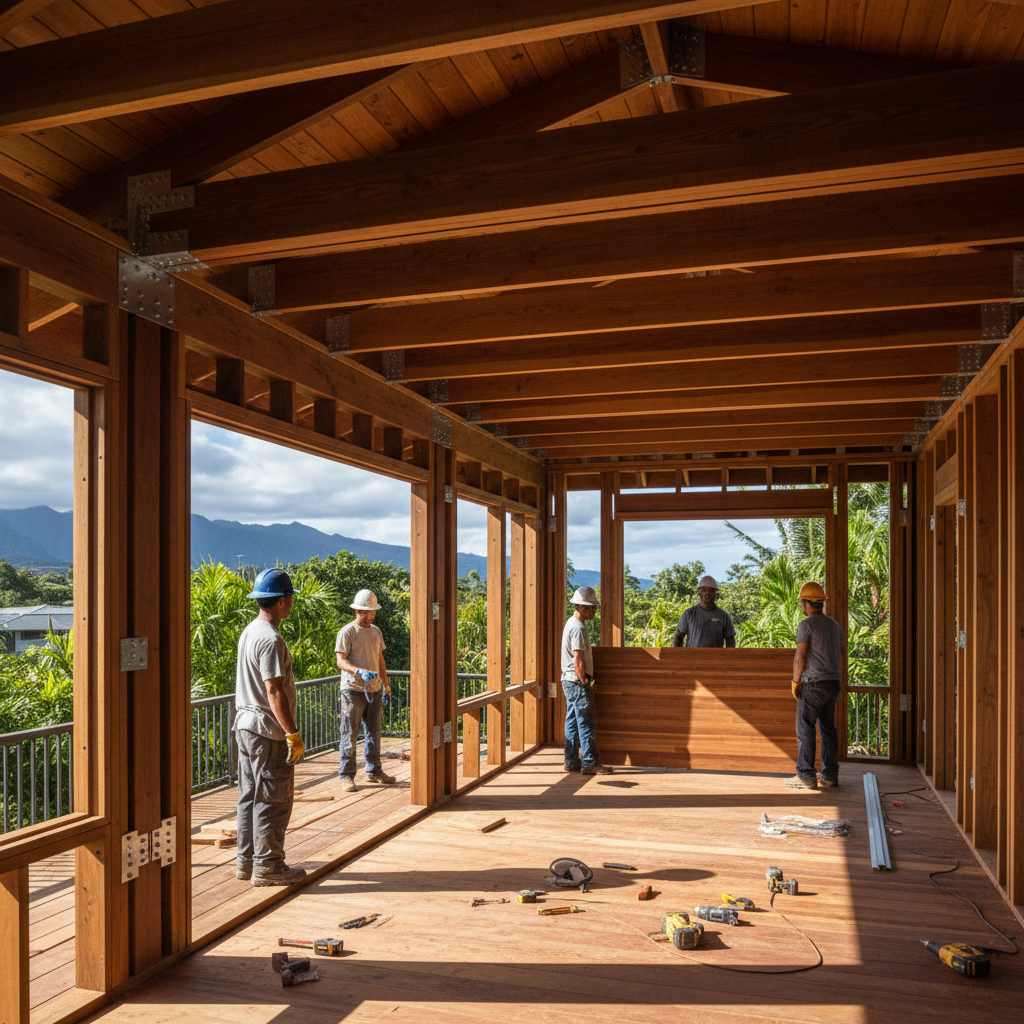
How Long Does a ADU Builder Take in Kaneohe?
One of the most common questions we get is, “How long will it take?” For an ADU project in Kaneohe, a realistic timeline from our first conversation to your final walk-through is between 14 and 24 months in 2026. The single biggest factor in this timeline is not the construction itself, but the permitting process with the Honolulu Department of Planning and Permitting (DPP).
It’s essential to break the project into distinct phases to understand the timeline:
-
Phase 1: Design and Pre-Construction (2 – 4 months)
This is the planning stage where we work with you and our architectural partners. It involves initial consultations, site analysis, developing the floor plan and elevations, and selecting major materials. Once the design is finalized, the structural engineer gets involved to create the calculations and drawings needed for the permit application. This phase is collaborative and its speed depends heavily on how quickly decisions can be made.
-
Phase 2: Permitting with Honolulu DPP (8 – 12 months)
This is the great waiting game and the biggest source of frustration for homeowners. As of 2026, the DPP is facing a significant backlog. Even with a perfect, complete set of plans submitted by an experienced professional, you should budget for at least 8 months for the plans to be reviewed and the building permit to be issued. If the reviewer requests corrections or clarifications (which is common), this can add several more months to the timeline. We manage this process closely, responding to reviewer comments immediately, but the timeline is largely out of our hands. This is why it’s critical to hire an ADU contractor kaneohe who has experience navigating this specific bureaucracy.
-
Phase 3: Construction (5 – 8 months)
Once we have the permit in hand, things start moving quickly. This is the physical build of the ADU. The timeline here can vary based on a few factors:
- Site Complexity: A flat, clear lot is much faster to work on than a tight, sloped lot that requires extensive excavation and retaining walls.
- Material Availability: While we pre-order major components like trusses and windows, island supply chain disruptions can still cause delays. We recently had a project delayed three weeks waiting for a specific type of siding to arrive at the port of Honolulu.
- Weather: Kaneohe’s rainy season can slow down exterior work like foundation pours, framing, and roofing. We build buffer days into our schedule to account for this, but an unusually wet winter can impact the timeline.
- Inspection Scheduling: The project requires multiple inspections from DPP officials at various stages (foundation, framing, electrical, plumbing, etc.). We have to schedule these and wait for the inspector to be available, which can sometimes add a day or two between phases.
So, a typical best-case scenario might look like this: 3 months design + 8 months permitting + 5 months construction = 16 months. A more complex project could be: 4 months design + 12 months permitting + 8 months construction = 24 months. Understanding this upfront helps set realistic expectations and prevents a lot of stress down the road.
What Permits Do You Need for ADU Builder in Kaneohe?
Navigating the permitting process for an ADU in Kaneohe is one of the most critical steps, and it must be done correctly. All ADU construction on O’ahu is governed by the City and County of Honolulu’s Department of Planning and Permitting (DPP)[1]. Attempting to build without the proper permits can result in massive fines, stop-work orders, and even mandates to tear down the unpermitted structure. As your general contractor, we manage this entire process for you.
The core of the application is the Building Permit. However, obtaining this one permit requires a comprehensive package of documents and plans. You can’t just submit a simple floor plan. Here’s what the DPP requires for a typical Kaneohe ADU project:
- Complete Architectural Plans: This includes fully detailed and dimensioned floor plans, elevations from all four sides, a roof plan, and cross-section drawings showing construction details.
- Site Plan: A drawing prepared by a licensed surveyor showing the entire property, property lines, the location of the existing house, the proposed ADU, and all required setbacks from boundaries and other structures. This is critical for proving compliance with zoning and the specific rules for ADUs.
- Structural Engineering Plans & Calculations: A licensed structural engineer must design the foundation, framing, and structural connections to meet Hawaii’s strict building codes, which include requirements for hurricane resistance (e.g., hurricane straps and clips).
- Electrical Plans: A schematic showing the entire electrical system, including the panel, circuits, outlet locations, lighting, and load calculations.
- Plumbing Plans: Drawings that detail the water supply lines, drain/waste/vent (DWV) system, and connection points to the main house’s sewer or septic system.
- Energy Code Compliance Forms: Calculations and specifications demonstrating that the ADU meets Hawaii’s energy efficiency standards for insulation, windows, and lighting.
- Wastewater System Approval: You must provide a form from the Board of Water Supply confirming your property’s sewer connection can handle the additional load from the ADU. If you are on a septic system, you will need approval from the Department of Health, which can be a much more involved and lengthy process.
Once this entire package is assembled, it is submitted to the DPP for review. The plans go through multiple departments—zoning, building, electrical, plumbing—each of which checks for compliance with their respective codes. The rise of ADUs following the passage of ordinances like Bill 7 has significantly increased the DPP’s workload, which is the primary reason for the long review times we see in 2026.
The rules for a Bill 7 ADU kaneohe project are specific. For instance, ADUs are generally allowed on residentially zoned lots of at least 3,500 square feet, up to a maximum size of 800 square feet (or 400 square feet on smaller lots). There are also specific parking and setback requirements that your plans must strictly adhere to. Our team stays current on every amendment and policy interpretation from the DPP to ensure our submissions are accurate, minimizing the chance of rejection or requests for major revisions that would further delay your project.
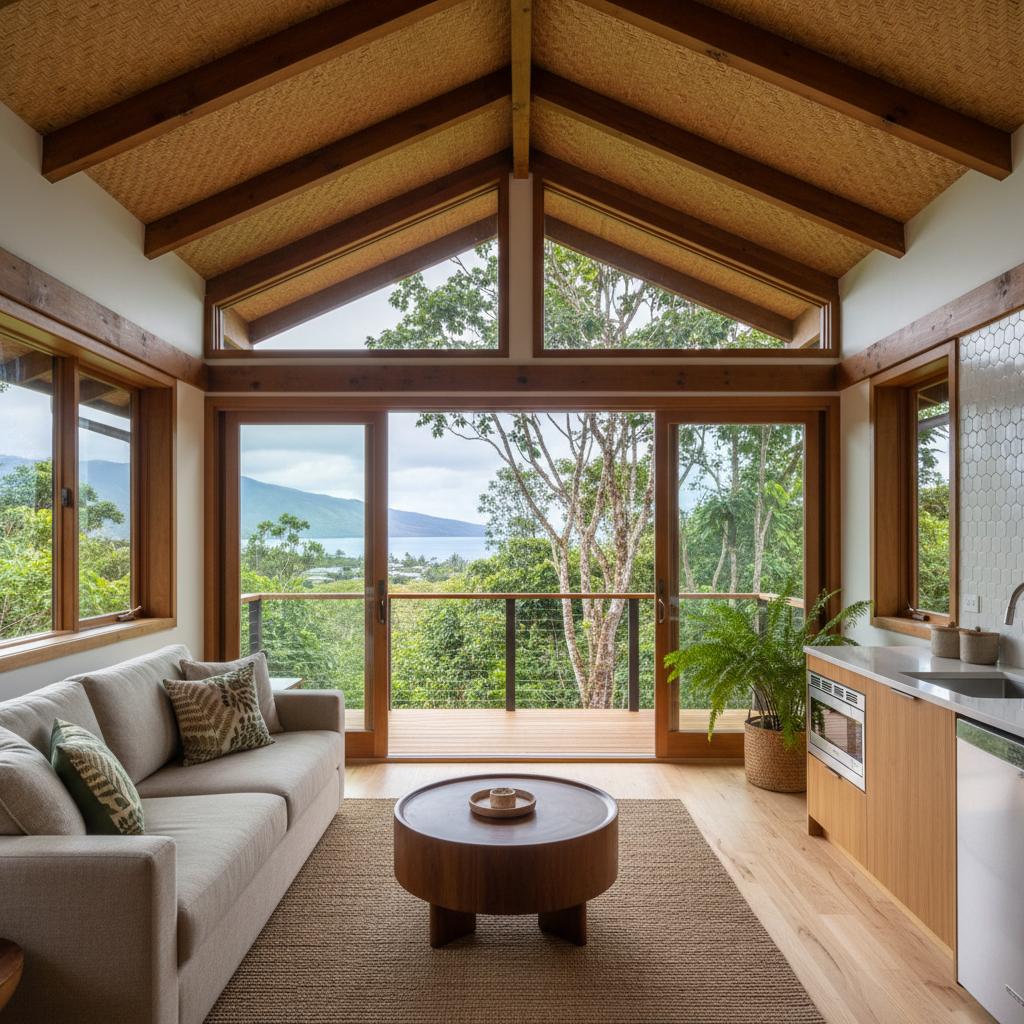
Kaneohe-Specific Considerations: Climate, Materials, Regulations
Building on the Windward side is a different world than building in Ewa Beach or Kapolei. The constant moisture, salt-laden air, and unique topography of Kaneohe demand specific knowledge and construction techniques. As a local ADU builder, we design and build every project to withstand these unique environmental pressures, ensuring your investment lasts for generations.
Climate: The Kaneohe Rain
Kaneohe is one of the rainiest spots on O’ahu. This constant moisture is the enemy of a poorly constructed home. We combat this on several fronts:
- Robust Roofing and Waterproofing: We almost always recommend a standing seam metal roof for Kaneohe projects. Its interlocking panels and concealed fasteners offer far superior protection against wind-driven rain compared to asphalt shingles. Underneath the roof and siding, we use a high-quality, self-adhering waterproofing membrane, especially around all window and door openings. This creates a completely sealed building envelope.
- Moisture Management: We design for ventilation. Proper ridge and soffit vents in the attic, along with correctly installed vapor barriers in the walls, allow the structure to breathe and dry out, preventing mold and mildew growth inside the walls. For homes built on a hillside, we incorporate robust foundation drainage systems like French drains to divert water away from the structure.
- Material Selection: We avoid materials that absorb and hold moisture. For example, fiber cement siding (like James Hardie) is a far better choice than wood siding, as it doesn’t rot, swell, or get eaten by termites.
Materials: Fighting Salt-Air Corrosion
The trade winds carry a fine mist of salt that blankets everything in Kaneohe. This salt is incredibly corrosive to metal. Anyone who has lived here has seen metal gates, window frames, and light fixtures turn into rusted-out eyesores in just a few years.
- Hardware and Fasteners: This is a non-negotiable for us. All exterior screws, nails, bolts, and hurricane straps must be, at a minimum, hot-dip galvanized steel. For homes closer to Kaneohe Bay, we insist on using 316-grade stainless steel for all exterior hardware. It costs more upfront but prevents the ugly rust streaks and structural weakening that will happen with cheaper materials.
- Windows and Doors: We steer our clients away from standard aluminum-frame windows, which will pit and corrode quickly. Vinyl or fiberglass frames are the superior choice for the Windward side as they are impervious to salt.
- Exterior Finishes: Even the paint matters. We use high-quality acrylic latex paints specifically formulated for coastal environments. These paints create a more durable, chalk-resistant finish that can stand up to the combination of intense UV radiation and salt spray.
Regulations: Navigating Local Rules
Beyond the standard building codes, Kaneohe has specific zoning overlays and community plan considerations. The rules for an ohana unit builder kaneohe must follow can be nuanced. For example, properties located in special flood hazard areas or near streams have additional restrictions on foundation height and site work. We perform a thorough zoning and code analysis before we even begin design to identify any potential regulatory hurdles. This includes verifying setbacks, height limits, and any specific requirements related to your property’s unique location. This upfront due diligence prevents major redesigns and costly delays during the permitting process.
How to Choose the Right ADU Builder Contractor in Kaneohe
Choosing the right contractor is the single most important decision you will make for your ADU project. A great contractor can make the process smooth and deliver a high-quality home, while a bad one can lead to a nightmare of delays, budget overruns, and shoddy workmanship. Here’s a checklist to use when vetting potential builders for your Kaneohe ADU.
-
Verify Their License and Insurance
This is the absolute first step. Never consider hiring anyone who is not a licensed general contractor in the state of Hawaii. You can and should verify any contractor’s license status on the Department of Commerce and Consumer Affairs (DCCA) Professional & Vocational Licensing (PVL) website[2]. Our license, Warrior Construction, is BC-34373. A valid license means the contractor has met state requirements for experience and testing. Equally important, ask for proof of general liability insurance and workers’ compensation insurance. Without this, you could be held liable for any accidents that happen on your property.
-
Confirm They Have Specific ADU and Kaneohe Experience
Don’t just hire a general remodeler. Building a new dwelling unit from the ground up is much more complex than a kitchen renovation. Ask potential contractors: “How many ground-up ADUs have you built on O’ahu in the last three years?” Then, follow up with: “Can I see your portfolio of projects specifically on the Windward side?” A builder who primarily works in the dry climate of Kapolei may not have the deep expertise in waterproofing and corrosion resistance needed for a Kaneohe project.
-
Request and Compare Detailed, Itemized Bids
Do not accept a one-page estimate with a single bottom-line number. A professional contractor should provide a detailed, multi-page proposal that breaks down the costs by category (e.g., excavation, concrete, framing, plumbing, electrical, finishes). This allows you to compare apples to apples between bids and understand exactly what is included. Be wary of a bid that is significantly lower than others; they are likely cutting corners on materials, using unlicensed subs, or will hit you with expensive change orders later.
-
Check Their References
Don’t just rely on online reviews. Ask the contractor for the names and phone numbers of their three most recent ADU clients. Call them and ask direct questions: Did the project stay on budget? How did the contractor handle problems when they arose? Was the communication clear and consistent? How was the quality of the final product?
-
Evaluate Their Communication and Professionalism
From your very first interaction, pay attention to their professionalism. Do they return your calls promptly? Do they answer your questions clearly and patiently? Do they use a professional contract and project management system? A construction project is a long-term relationship. You want a partner who is organized, transparent, and easy to work with. The building process will have its challenges; a good communicator will navigate them with you, not leave you in the dark.
Real Kaneohe ADU Builder Project Example
To make these concepts more concrete, let’s look at a recent project we completed in the Haiku Village area of Kaneohe. This provides a real-world example of the process, timeline, and costs involved.
The Client: The Tanaka family, who wanted to build a home for their elderly parents on their 9,000 sq. ft. property.
The Project: A single-story, 780-square-foot ADU with two bedrooms, one ADA-compliant bathroom, and a small, covered lanai. The design focused on accessibility and low-maintenance materials suited for aging-in-place.
The Timeline:
- Design & Engineering: 3.5 months (July – October 2024)
- DPP Permitting: 10 months (November 2024 – September 2025). The plans required one round of minor revisions requested by the DPP’s electrical reviewer, which added about 6 weeks to the process.
- Construction: 6 months (October 2025 – April 2026)
- Total Project Duration: 19.5 months
The Challenge: During the initial site work, our excavation crew discovered that the rear portion of the proposed foundation area was on expansive clay soil, a common issue in some Kaneohe valleys. This type of soil swells and shrinks with moisture content and can crack a standard slab foundation over time. The original plans, based on a standard soil assumption, were no longer adequate.
Our Solution: We immediately paused work and brought our structural engineer back to the site. After analyzing the new soil data, he redesigned the foundation to include deeper, reinforced footings and a structural slab with post-tensioned cables. This engineering solution created a much more rigid foundation that would “float” on the expansive soil without cracking. We managed the change order process transparently with the Tanaka family. The foundation redesign added $18,500 to the project cost and about three weeks to the schedule, but it was a critical change to ensure the long-term structural integrity of their parents’ new home. This is a perfect example of why a healthy contingency fund is so important.
Final Project Cost: The total, all-in cost for the Tanaka family’s ADU, including design, permits, construction, and the foundation change order, came to $462,000. This equates to approximately $592 per square foot, a typical figure for a well-built, custom ADU in Kaneohe using durable, climate-appropriate materials.
What this means for Hawaii homeowners
For Kaneohe homeowners considering an ADU in 2026, the path forward is clearer than ever, but it requires careful planning and a realistic mindset. The combination of high demand, a lengthy permitting process, and Hawaii’s unique construction challenges means this isn’t a project to be taken lightly. Rushing into it with unrealistic budget expectations or the wrong building partner is a recipe for disaster. However, with the right approach, building an ADU remains one of the most powerful tools available to create multi-generational housing, generate rental income, and increase your property’s value.
Here are the essential, actionable takeaways you should focus on right now:
- Start the Process Early: The 8-12 month wait for DPP permits is not an exaggeration. If you hope to break ground in late 2027, you need to be selecting your architect and builder and starting the design process now in mid-2026. The sooner your application is in the queue, the better.
- Budget for Reality, Not for Hope: Use a conservative planning figure of at least $550 per square foot for your total project cost. This number should include a 15% contingency fund for unexpected issues like the soil problems or material price spikes we often encounter. Securing your financing based on this realistic figure will prevent major stress and potential work stoppages down the road.
- Prioritize Performance Over Aesthetics: When making material selections, your first priority should be durability in Kaneohe’s climate. Invest in the best roofing, windows, and weather-resistant siding you can afford. These elements form the protective shell of your home. You can always upgrade countertops or light fixtures later, but fixing a leaky roof or rotten wall is a massive and expensive undertaking.
- Hire a Local, Specialized Expert: Your choice of an ADU builder in Kaneohe is paramount. Look for a licensed contractor with a deep portfolio of completed ADU projects, specifically on the Windward side. They will have the experience to navigate the DPP, anticipate site-specific challenges, and recommend the right materials to ensure your ohana unit stands strong for decades to come.
Frequently Asked Questions About ADU Builder in Kaneohe
Can I build an ADU on my Kaneohe property?
Generally, yes, if your property is zoned for residential use and is at least 3,500 square feet. The maximum size for an ADU is 800 square feet on lots 5,000 square feet or larger, and 400 square feet for lots between 3,500 and 4,999 square feet. Our team can perform a quick zoning check to confirm your property’s eligibility before you commit to the design process.
How much rental income can an ADU in Kaneohe generate in 2026?
Based on current market trends, a new 2-bedroom, 1-bathroom ADU in Kaneohe can generate between $2,800 and $3,500 per month in rental income. This can significantly offset mortgage costs or provide a substantial income stream, making the initial investment pay for itself over time.
What is the difference between an ADU and an Ohana Unit?
Functionally, they are very similar. “Ohana Dwelling” was an older zoning term with more restrictions, particularly one that required the occupant to be related by blood, marriage, or adoption to the main homeowner. The new ADU ordinances, like Bill 7, removed this restriction, allowing homeowners to rent the unit to anyone. Most people now use the terms interchangeably, but legally, we build to the ADU code.
Do I need a separate utility meter for my ADU?
You are not required to have separate meters for water and electricity; you can tie into the main house’s utilities. However, if you plan to rent the unit out, we highly recommend installing sub-meters. This allows you to accurately track the tenant’s usage and bill them accordingly, which is much simpler than trying to estimate their portion of a single utility bill.
Can I save money by acting as my own general contractor?
While technically possible with an owner-builder permit, we strongly advise against it unless you have significant construction management experience. You become legally responsible for the job site, coordinating dozens of subcontractors, scheduling inspections, and troubleshooting complex problems. The potential savings are often wiped out by costly mistakes, project delays, and immense personal stress.
How does the Bill 7 ADU kaneohe regulation affect parking?
The City and County of Honolulu’s Bill 7 (now Ordinance 19-19) requires one dedicated off-street parking stall for the ADU, in addition to the two required for the primary dwelling. This parking space must be on a paved surface and cannot obstruct access to the main home’s parking. Fulfilling this requirement is a critical part of the design and permitting process.
What are the biggest unforeseen costs when building an ADU in Kaneohe?
The most common surprises are related to site work. These can include needing to upgrade an old, undersized electrical panel in the main house, discovering that the sewer line connection is deeper or more complicated than expected, or encountering difficult soil conditions that require more extensive foundation engineering. This is precisely why we insist our clients budget a 10-15% contingency fund.
Start Planning Your Kaneohe ADU Today
Building an ADU is a significant undertaking, but it’s a powerful investment in your family’s future and your property’s value. Having an experienced, trustworthy partner to guide you through the complexities of design, permitting, and construction is essential. At Warrior Construction, we specialize in building beautiful, durable ADUs that are specifically designed to thrive in Kaneohe’s unique environment. Our team is ready to help you navigate every step of the process with clarity and confidence.
If you’re ready to explore the possibilities for your property, let’s talk. Contact us to discuss your project and learn more about our ADU & Ohana Unit construction services. Let us show you how to add value, space, and opportunity to your Kaneohe home.