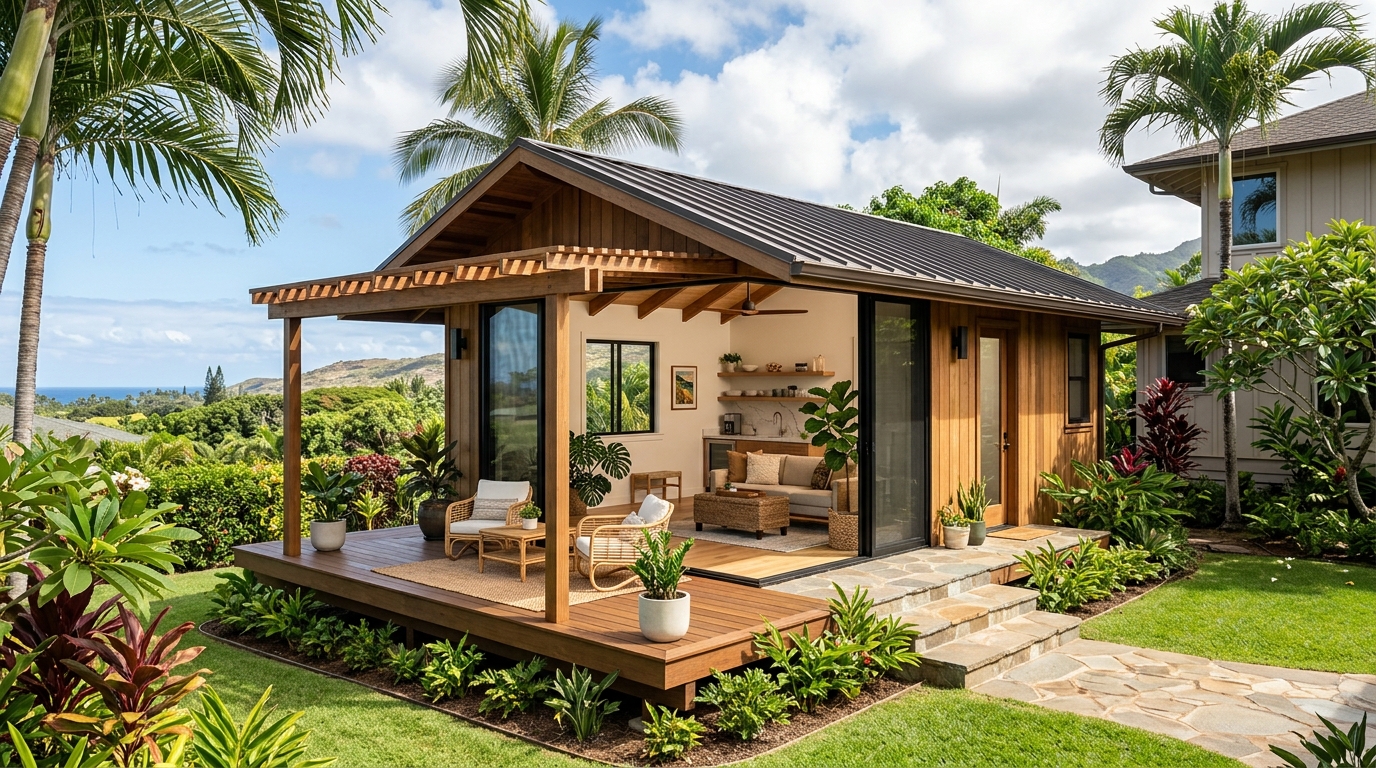
Hiring an ADU builder in Kapolei in 2026 means navigating a process that typically costs between $380,000 and $550,000 and takes anywhere from 14 to 22 months from the first sketch to handing you the keys. It’s a serious undertaking, but one that more and more West Oʻahu families are finding essential. Whether you’re looking to create rental income, bring kupuna closer to home, or give your adult kids a place to start, building an Accessory Dwelling Unit (ADU) is one of the smartest long-term investments you can make in your Kapolei property. But it’s not as simple as just hiring a crew and pouring a slab.
The path is filled with specific challenges unique to our island, from the lengthy Honolulu Department of Planning and Permitting (DPP) wait times to understanding the nuances of building on the Ewa Plain’s coral base. At Warrior Construction, we’ve been navigating this landscape for over two decades. We’ve seen the rules change, the costs evolve, and we know exactly what it takes to get an ADU project from concept to reality in Kapolei without the budget-busting surprises. This isn’t about vague advice; it’s about sharing real numbers, realistic timelines, and the hard-won lessons from our job sites. We’ll cover the true costs, the permit labyrinth, Kapolei-specific building considerations, and how to spot a qualified adu builder kapolei who can actually deliver on their promises.
Why Kapolei Homeowners Trust Warrior Construction for ADU Builder
When you’re choosing an ADU builder, you’re not just hiring someone to stack 2x4s. You’re bringing on a partner to manage a complex, multi-stage project that represents a significant investment in your family’s future. Homeowners in Kapolei, from Makakilo down to the Ko Olina coastline, trust our team at Warrior Construction because we bring boots-on-the-ground Oʻahu experience that mainland-based or newer companies simply can’t replicate. Our General Contractor license, BC-34373, isn’t just a number; it’s a testament to years of building to Hawaii’s unique and demanding standards.[2]
Our approach is built on a design-build philosophy. What does this mean for you? It means we’re with you from the very beginning. Instead of you having to hire an architect, then a structural engineer, then bid the project out to multiple contractors, we handle it all under one roof. This integrated process saves immense time and prevents the common finger-pointing that happens when the architect’s plans don’t align with the builder’s budget. We design your ADU with your budget in mind from day one, ensuring the final construction documents are both beautiful and buildable within your financial reality.
Here’s a real-world example of why this matters. On a recent project in a newer Kapolei subdivision, the client came to us with plans from an independent architect. The design was stunning, but it called for specialty windows that had a 9-month lead time from the mainland and a custom-milled siding that added nearly $40,000 to the budget. Because we weren’t involved in the design phase, the client had already spent $25,000 on plans that were 20% over their construction budget. We had to go back to the drawing board, a process that cost them time and money. With our design-build service, that conversation about material lead times and costs happens in the first meeting, not after the plans are stamped. We’ve built strong relationships with local suppliers, and we know what materials are readily available, what stands up to the intense Leeward sun, and how to value-engineer a project without sacrificing quality. That’s the kind of local knowledge that makes all the difference.
What Does ADU Builder Cost in Kapolei?
Let’s get straight to the numbers, because that’s what every homeowner wants to know. In 2026, the all-in cost for a turnkey ADU in Kapolei is not what you see on mainland HGTV shows. Due to island logistics, material shipping costs, and the high demand for skilled labor, you should budget for a total project cost between $475 and $650 per square foot. For a standard 800-square-foot, 2-bedroom, 1-bathroom ADU, this translates to a total budget of $380,000 to $520,000.
It’s critical to understand where that money goes. A reliable ADU contractor in Kapolei will provide a transparent breakdown, which looks something like this:
Cost Breakdown for a Typical 800 sq. ft. Kapolei ADU (2026 Estimates)
- Soft Costs (Design & Permitting): $40,000 – $60,000
- Architectural & Engineering Plans: $20,000 – $35,000
- Honolulu DPP Plan Review & Permit Fees: $18,000 – $25,000. These fees have been steadily increasing and are a significant line item.
- Site Prep & Foundation: $35,000 – $70,000
- This is a major variable in West Oʻahu. The Ewa Plain is notorious for its hard coral and limestone base. Standard excavation can quickly become more expensive if heavy equipment and rock-breaking are required.
- Utility Trenching (water, sewer, electrical): $15,000 – $30,000 depending on the distance from the main house.
- Concrete Slab Foundation: $20,000 – $40,000.
- Hard Costs (Vertical Construction): $280,000 – $360,000
- Framing, Roofing, Siding: ~$90,000
- Windows & Doors: ~$25,000 (Hurricane-rated is standard)
- Plumbing, Electrical, HVAC: ~$75,000
- Insulation & Drywall: ~$30,000
- Interior Finishes (flooring, cabinets, countertops, paint, fixtures): $60,000 – $140,000. This is where you have the most control over the budget.
- Contingency Fund (10-15%): $35,000 – $55,000
- We insist on this. It’s not a slush fund; it’s a safety net for the unknowns. An unexpected patch of hard rock during excavation or a sudden price spike on shipped materials can derail a project without it.
Many homeowners are surprised by the site prep and soft costs. They focus on the house itself, but getting the groundwork and paperwork done right is a huge part of the budget. An experienced ohana unit builder Kapolei will walk you through these costs upfront, so you have a realistic financial picture from the start.
How Long Does a ADU Builder Take in Kapolei?
Building an ADU is a marathon, not a sprint, especially on Oʻahu. The biggest misconception we encounter is the timeline. In 2026, the single longest phase of your project will be waiting for the Honolulu Department of Planning and Permitting (DPP). A realistic timeline from our first conversation to move-in day is 14 to 22 months.
Here’s a phase-by-phase breakdown based on our recent Kapolei projects:
-
Phase 1: Feasibility, Design & Engineering (2-4 Months)
This is where we work with you to design an ADU that fits your property, your family’s needs, and your budget. We conduct a site analysis, develop floor plans and elevations, and work with a structural engineer to produce the construction documents required by the DPP. This is an active, collaborative phase with lots of decisions to be made.
-
Phase 2: Permitting with Honolulu DPP (8-12 Months)
This is the waiting game. Once we submit the completed plans to the DPP, they enter a long queue for review. In 2026, the backlog is significant. An 8-month wait is considered fast; 10-12 months is more typical.[1] An experienced ADU contractor Kapolei can’t speed up the city’s review, but we can ensure the submitted plans are 100% complete and correct, avoiding rejection and re-submission that can add months to the process. We’ve seen simple clerical errors on a form send an application to the back of the line. We don’t let that happen.
-
Phase 3: Bidding & Contractor Finalization (1 Month)
If you’re using our design-build service, this phase is seamless. If you’ve brought us existing plans, this is when we finalize the construction contract, order long-lead materials like windows and trusses, and schedule our subcontractors.
-
Phase 4: Construction (5-7 Months)
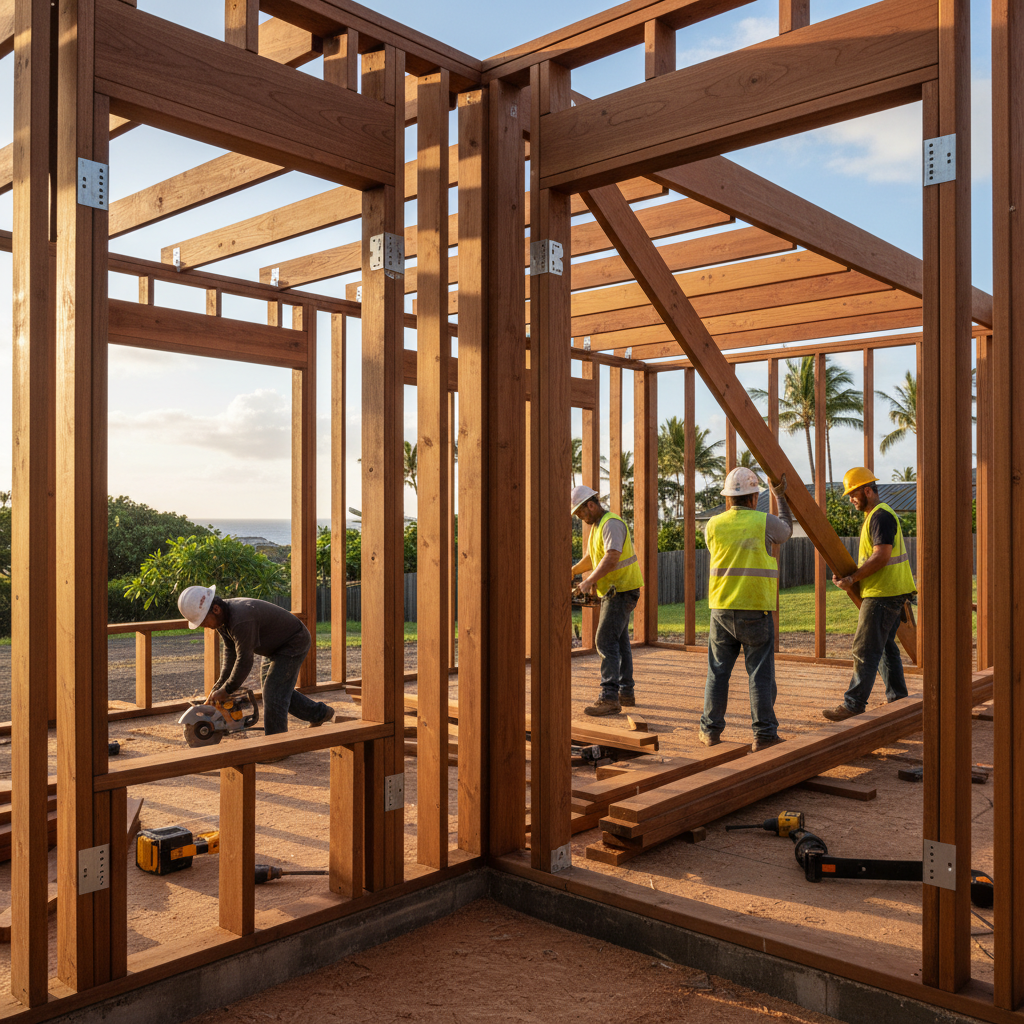
Once we have the approved permit in hand, our crews can finally break ground. This is the exciting part where you see daily progress. The timeline for construction itself is fairly predictable, barring major weather events. It includes excavation, foundation, framing, roofing, rough-in of utilities, insulation, drywall, and finally, all the interior and exterior finishes.
So, the total time adds up: 3 months for design + 10 months for permitting + 6 months for construction = 19 months. It’s a long-term commitment, and understanding this timeline from the outset is crucial for managing your expectations and finances.
What Permits Do You Need for ADU Builder in Kapolei?
Navigating the permitting process for an ADU on Oʻahu is arguably the most difficult part of the entire project. This isn’t a DIY weekend project; it’s a formal construction process that requires a stack of approved documents from the City and County of Honolulu’s Department of Planning and Permitting (DPP). As your general contractor, we manage this entire process for you. Missing a single step can lead to costly delays or stop-work orders.
The primary document you need is the Building Permit. But to get that one permit, you first need a whole set of approved plans and prerequisite clearances. The application package we submit on your behalf typically includes:
- Full set of architectural drawings: These include floor plans, elevations, sections, and site plans showing exactly where the ADU will be located on your property, including setbacks from property lines.
- Structural engineering plans and calculations: A licensed structural engineer in Hawaii must design the foundation, framing, and roof to withstand our specific environmental loads, including hurricane-force winds.
- Electrical plans: Showing all wiring, outlets, fixtures, and the main panel connection.
- Plumbing plans: Detailing water supply lines, drain-waste-vent (DWV) systems, and sewer or septic connections.
- Wastewater system approval: You must have a form from the city confirming your property’s sewer connection can handle the additional load of the ADU. This can sometimes require an expensive sewer capacity upgrade if the city main is old.
- Grading and trenching permits: If your project involves significant earthwork or long utility trenches, separate permits are often required.
One of the most important regulatory frameworks we work with is the City’s ordinance related to ADUs, often associated with past legislation like Bill 7 ADU kapolei rules. These ordinances dictate the maximum size (typically 800 square feet in residential zones), the number of bedrooms, parking requirements (often one additional stall), and owner-occupancy rules. While these rules were designed to encourage ADU construction, they come with strict compliance requirements. We ensure your design adheres to every single one of these rules before we even think about submitting to the DPP, because a design that violates a zoning rule is an automatic rejection. Getting these details right is a core part of what a professional ADU builder brings to the table.
Kapolei-Specific Considerations: Climate, Materials, Regulations
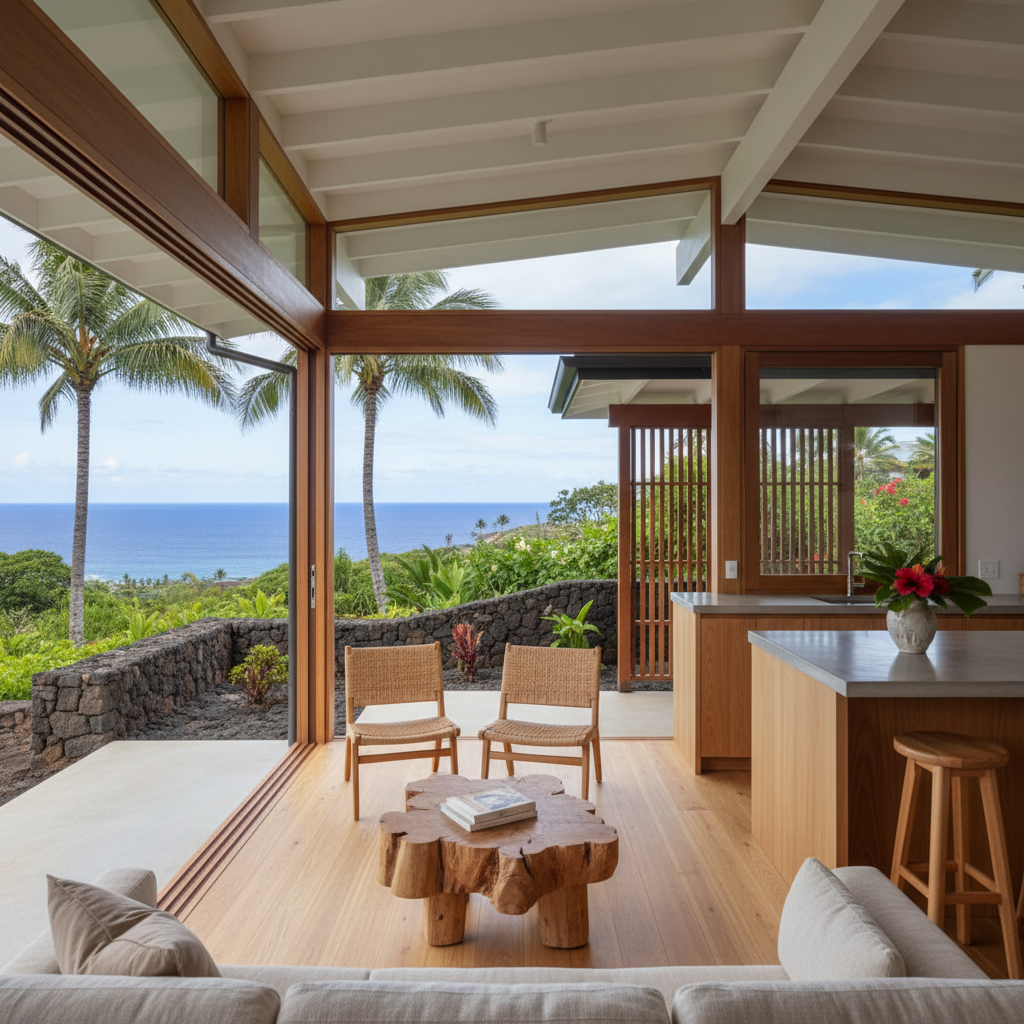
Building on Oʻahu isn’t a one-size-fits-all job. A home built for the wet, salty air of Kailua requires different materials and techniques than one built for the hot, dry climate of Kapolei. As a dedicated Kapolei ADU builder, we tailor every project to the specific challenges and opportunities of the Leeward side.
Climate and Materials
The defining feature of the Kapolei climate is the sun. It’s intense, relentless, and can wreak havoc on inferior building materials. We guide our clients to make smart choices that will last:
- Roofing: We often recommend standing-seam metal roofing with a high-quality, reflective Kynar paint finish. It reflects solar heat far better than standard asphalt shingles, lowering your cooling costs, and the finish is warrantied against fading for 30 years or more.
- Windows: Dual-pane, low-emissivity (Low-E) vinyl windows are our standard recommendation. They are excellent at blocking UV rays and insulating against heat gain. We also ensure proper flashing and sealing to prevent leaks during the occasional Kona storm.
- Siding: HardiePlank fiber cement siding is a workhorse in Hawaii. It’s impervious to termites, doesn’t rot, and holds paint exceptionally well under the harsh sun. We avoid using dark colors which absorb more heat and can fade unevenly over time.
- Cooling: A split-AC system is a must. We carefully calculate the required tonnage based on the unit’s square footage, window placement, and insulation levels to ensure the system runs efficiently without being overworked.
Regulations and Local Nuances
Beyond the city-wide DPP rules, Kapolei has its own layer of considerations:
- Homeowner Associations (HOAs): Many Kapolei communities, especially newer ones like Ho’opili or Ka Makana, have strict HOA design covenants. Your ADU’s exterior appearance, from paint color to roofline, must often be approved by the HOA design review committee *before* we can even submit for a city permit. We handle this coordination as part of our pre-construction service.
- Soil Conditions: As mentioned, the Ewa Plain’s geology is unique. While it provides a stable base, excavation can be challenging. We perform soil tests when necessary to determine the best foundation design and avoid costly surprises after we break ground.
- Solar Mandates: Hawaii’s solar water heater mandate applies to new dwellings, including ADUs. We incorporate this into the design from the start, planning for the panel location on the roof and the tank placement to be both efficient and aesthetically pleasing.
Understanding these local details is what separates a knowledgeable ohana unit builder Kapolei from a generic contractor. It’s about building a home that is not just permitted, but is perfectly suited for its environment.
How to Choose the Right ADU Builder Contractor in Kapolei
Choosing your contractor is the single most important decision you will make in your ADU journey. A great contractor can make a complex process feel manageable, while a bad one can turn your dream project into a financial and emotional nightmare. Here’s a simple checklist we encourage every homeowner to use, whether you hire us or someone else.
- Verify Their License and Insurance. This is non-negotiable. Any legitimate contractor in Hawaii must have a valid license from the Department of Commerce and Consumer Affairs (DCCA). You can and should verify their license number online. Our license is BC-34373.[2] Ask for proof of general liability insurance and workers’ compensation insurance. If a worker gets hurt on your property and the contractor isn’t insured, you could be held liable.
- Look for Specific ADU Experience in Your Area. A contractor who primarily builds commercial spaces downtown or renovates condos in Waikiki might not understand the unique challenges of residential ADU construction in Kapolei. Ask to see a portfolio of completed ADU or ohana unit projects. Better yet, ask for addresses of projects they’ve built in West Oʻahu so you can drive by and see their work in person.
- Speak to Their Past Clients. Testimonials on a website are nice, but a real conversation is better. A confident contractor will gladly provide you with a list of 2-3 recent ADU clients. Ask them the tough questions: Did the project stay on budget? How did the contractor handle unexpected problems? Was communication clear and consistent? How was the final quality?
- Demand a Detailed, Itemized Proposal. Be very wary of any contractor who gives you a single, lump-sum price on the back of a napkin. A professional proposal should be several pages long, breaking down the costs for each phase of the project: demolition, foundation, framing, plumbing, electrical, finishes, etc. This transparency is crucial for understanding what you’re paying for and for comparing bids accurately.
- Assess Their Communication Style. During the initial meetings, are they listening to your needs? Do they explain complex construction concepts in a way you can understand? The construction process is long, and you’ll be communicating with your contractor for over a year. Make sure it’s someone you trust and can have an open, honest dialogue with.
Ultimately, you are looking for a partner, not just a hired hand. Taking the time to do this due diligence upfront is the best way to ensure a successful project.
Real Kapolei ADU Builder Project Example
To make all these numbers and timelines concrete, let’s walk through a project we completed recently in the Makakilo area of Kapolei. This provides a real-world look at the process from start to finish.
The Client: The Akana family, who owned their home for 25 years and wanted to build a place for their elderly parents to age in place gracefully.
The Goal: An 800-square-foot, single-story, two-bedroom, one-bathroom ADU designed with accessibility in mind. Key features included a zero-threshold shower, wider doorways, and a ramp instead of stairs leading to the entrance.
The Challenge: Their property was on a moderately sloped lot. This required a more complex foundation design, including a small concrete retaining wall to create a flat building pad. This added about $22,000 to the site prep costs compared to a flat lot, a factor we identified in our initial feasibility study.
The Process & Timeline:
- Design & Engineering: 3.5 months. We went through three design iterations to get the floor plan just right for the parents’ mobility needs.
- DPP Permitting: 11 months. This was a standard wait time for 2024-2025. The plans were approved on the first submission because we meticulously checked them against all zoning and building codes.
- Construction: 6 months. Our crew was on site and managed the build efficiently. The foundation and retaining wall took about 4 weeks, framing went up quickly after that, and the interior work proceeded smoothly.
Total Project Duration: 20.5 months.
The Final Numbers:
- Soft Costs (Design & Permitting): $52,000
- Site Prep & Foundation (including retaining wall): $68,000
- Hard Costs (Vertical Construction): $345,000
- Total All-In Cost: $465,000
This came out to approximately $581 per square foot, a realistic figure for a custom, accessible-friendly build on a sloped lot.
The Outcome: The Akana family’s parents moved into their new home, just steps away from their children and grandchildren. The family avoided the high cost of assisted living, increased their property value significantly, and kept their ohana together. It’s a perfect example of how an ADU, when planned and executed correctly, can be a powerful tool for multigenerational living in Hawaii.
What this means for Hawaii homeowners
Building an ADU in Kapolei is a major commitment of time and resources, but the rewards—whether financial through rental income or personal through keeping family close—are undeniable. The key to a successful project is entering the process with a clear understanding of the realities of building in Hawaii in 2026.
Here is your action plan:
- Start with Your ‘Why’: Be crystal clear on your goal. Is this for rental income, for family, or for flexible future use? Your goal will dictate the design, level of finishes, and budget. For a rental, durability and ROI are key. For kupuna, accessibility and comfort are paramount.
- Understand the True Budget: Don’t just think about the construction cost. Your all-in budget must account for design fees, the ever-increasing DPP permit fees, site prep, and a healthy 10-15% contingency. For a standard 800 sq. ft. unit, having access to between $400,000 and $550,000 is a realistic starting point.
- Accept the Timeline: The 8-12 month wait at the Honolulu DPP is unavoidable. Plan for a total project timeline of 1.5 to 2 years. Anyone promising to get you a permit in 3 months is not being truthful. Patience is a requirement.
- Hire an Integrated Team: The most efficient path forward is a design-build contractor. Having one point of contact from the initial sketches through the final walkthrough eliminates confusion, reduces delays, and keeps the project accountable to your budget from day one.
- Focus on Local Expertise: Choose an ADU contractor Kapolei who understands West Oʻahu’s specific climate, soil conditions, and HOA regulations. This specialized knowledge prevents costly mistakes and results in a home that is truly built for its location.
Navigating this process on your own is overwhelming. By partnering with an experienced team, you can transform this complex challenge into a straightforward and rewarding investment in your property and your family’s future.
Frequently Asked Questions About ADU Builder in Kapolei
How much value does an ADU add to a Kapolei property in 2026?
While it varies, a well-built, permitted 800 sq. ft. ADU can add between $300,000 and $450,000 to your property value, as appraised. More importantly, it can generate significant rental income, often between $2,800 and $3,500 per month in the Kapolei area, providing a strong return on investment over time.
Can I build a two-story ADU in Kapolei?
This depends entirely on your property’s specific zoning and any HOA restrictions. Most residential zones on Oʻahu have height limits (typically 25-30 feet). A two-story ADU is possible if it fits within these limits and meets all setback requirements, but it often increases construction costs and can face more scrutiny during the design review process.
What’s the difference between an Ohana Unit and an ADU?
Historically, “Ohana Dwelling” was a specific zoning term with restrictions, often requiring the occupant to be related to the primary homeowner. “ADU” (Accessory Dwelling Unit) is the modern legal term established by city ordinances (like those following Bill 7) which broadened the rules, allowing for non-family renters and standardizing size and parking requirements to encourage more housing.
How much are the actual permit fees for an ADU in 2026?
For a typical $450,000 ADU project, you can expect the Honolulu DPP fees to be between $18,000 and $25,000. This isn’t one single fee, but a collection of charges including the plan review fee, the building permit fee itself (calculated based on project valuation), and separate fees for electrical, plumbing, and sewer connection review.
Do I need a separate utility meter for my ADU?
Yes, in almost all cases, the City and County of Honolulu and Hawaiian Electric (HECO) require separate water and electric meters for a new ADU. This ensures proper billing and confirms the infrastructure can support the additional load. The cost for these new meter installations is part of your site prep budget.
Can I build an ADU myself to save money?
While technically possible if you act as an owner-builder, it’s highly discouraged unless you are a licensed contractor yourself. The process involves complex code requirements, structural engineering, and managing multiple subcontractors. Mistakes can lead to failed inspections, costly rework, and a final product that is unsafe. The financial savings are often less than people think and the risk is enormous.
How does financing an ADU work in Hawaii?
Most homeowners finance ADUs using one of three methods: a home equity line of credit (HELOC), a cash-out refinance on their existing mortgage, or a new construction loan. Each has its own pros and cons regarding interest rates and repayment terms. We recommend speaking with a Hawaii-based mortgage broker who is experienced with construction financing early in the planning process.
Ready to Build Your Kapolei ADU?
Building an ADU is one of the most significant projects you can undertake as a homeowner. Doing it right requires a team with deep local roots, a transparent process, and a commitment to quality. At Warrior Construction, we’ve spent more than 20 years helping Oʻahu families expand their homes and invest in their futures. We combine our design-build expertise with a practical, no-nonsense approach to construction.
If you’re considering adding an ADU to your Kapolei property, the first step is a simple conversation. Let’s discuss your vision, evaluate your property’s potential, and provide you with a clear, realistic picture of the costs and timeline. Reach out to our team to learn more about our ADU & Ohana Unit construction services and to schedule your complimentary consultation.
Get Your Free ADU Estimate Today