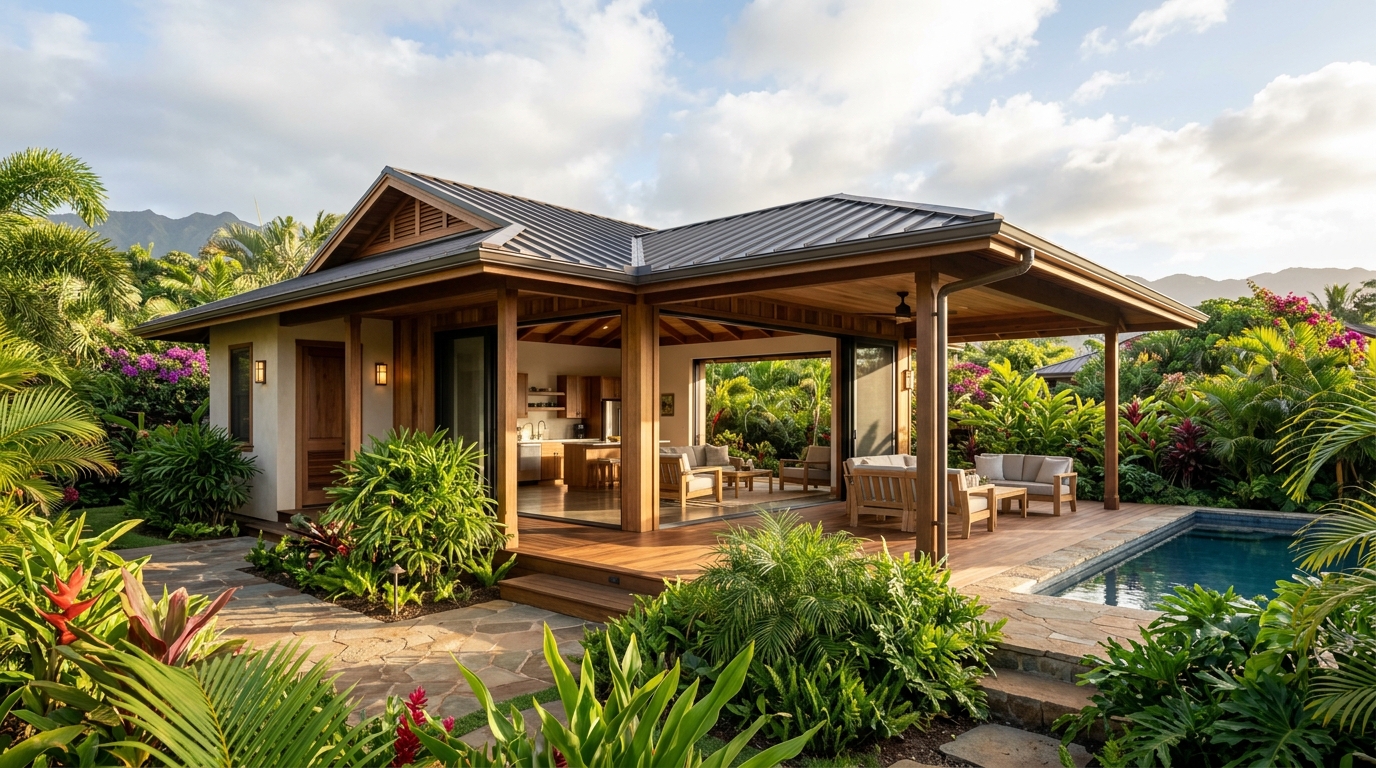
Building an Accessory Dwelling Unit (ADU) in Po’ipu requires a seasoned local contractor who understands Kaua’i’s unique environment, from the red dirt to the county permitting office. A successful project hinges on six key steps: realistic budgeting, island-specific design, navigating Kaua’i County permits, sourcing materials intelligently, construction that withstands the coastal climate, and final inspections. As a dedicated adu builder po’ipu, our team at Warrior Construction has seen firsthand how a well-planned ohana unit can transform a property, whether it’s for generating rental income or providing a home for family.
The biggest questions we get from homeowners on Kaua’i’s South Shore are always about cost and timeline. In 2026, you should budget between $450 and $650 per square foot for a quality build in Po’ipu, factoring in the higher costs of shipping and labor on a neighbor island. From the first sketch to handing over the keys, the entire process typically takes 14 to 22 months, with a significant portion of that time spent in the Kaua’i County Planning Department’s queue. Understanding these realities upfront is the first step toward a smooth and successful build. Our goal is to guide you through this process with the transparency and expertise earned from over two decades of building across Hawaii.
Why Po’ipu Homeowners Trust Warrior Construction for ADU Builder
Choosing an ADU builder in a place as unique as Po’ipu isn’t just about finding someone who can swing a hammer. It’s about partnering with a team that has deep roots in the local construction landscape. At Warrior Construction, we’ve spent years understanding the specific challenges and opportunities that come with building on Kaua’i’s sunny South Shore. Our license, BC-34373, is more than just a number; it’s a testament to our commitment and longevity in Hawaii’s demanding market.
First and foremost, our experience is hyper-local. We know that building in Po’ipu means dealing with more than just beautiful views. It means planning for the relentless sun and corrosive salt air. It means managing the iconic red dirt during excavation so it doesn’t permanently stain a new concrete driveway. It also means navigating the unique culture and processes of the Kaua’i County Planning Department in Lihue, which operates very differently from Honolulu’s DPP. For example, on a recent project near Po’ipu Beach, our familiarity with the county’s drainage plan requirements for volcanic soil saved our client two months in revisions. A mainland or even an Oahu-based contractor might not anticipate that specific hurdle.
Furthermore, our network on Kaua’i is a critical asset. Island logistics are no joke. Everything from specialty lumber to high-end appliances has to come over on a barge. We have long-standing relationships with suppliers in both Lihue and Honolulu, allowing us to better forecast shipping times from Young Brothers and secure materials efficiently. This helps mitigate the delays that can plague neighbor island projects. We also work with a trusted circle of Kaua’i-based subcontractors—plumbers, electricians, and masons who know the local codes inside and out. This integrated team approach ensures a higher level of quality control and a smoother construction process than trying to fly in crews from another island. We’re not just building a structure; we’re building your home with local hands and local knowledge.
What Does ADU Builder Cost in Po’ipu?
Let’s get right to it: building an ADU in Po’ipu in 2026 is a significant investment, and costs are higher here than on Oahu due to logistics. A realistic all-in budget for a quality, code-compliant ADU will range from $450 to $650 per square foot. For a standard 800-square-foot, two-bedroom unit, this means you should plan for a total project cost between $360,000 and $520,000. It’s crucial to understand where that money goes.
We break down costs into several key categories for our clients:
Soft Costs (10-15% of Total Budget)
These are the expenses you incur before we even break ground. They are foundational to a successful project.
- Architectural & Engineering Plans: For a custom ADU, expect to pay between $18,000 and $35,000 for a full set of stamped plans. This includes architectural design, structural engineering (critical for hurricane codes), and sometimes a topographical survey if your lot has any slope.
- Permitting Fees: Kaua’i County fees are calculated based on the project’s valuation. Plan for roughly $5,000 to $12,000 for plan review, building permits, electrical, plumbing, and potential wastewater review fees.
- Geotechnical Report: Depending on your specific lot in Po’ipu, the county may require a soil report to assess the volcanic soil’s stability and drainage properties. This can cost an additional $3,000 – $6,000.
Hard Costs (75-85% of Total Budget)
This is the brick-and-mortar part of the build, covering all labor and materials.
- Site Preparation: This can vary dramatically. A flat, clear lot might only cost $10,000 for light grading and utility trenching. A lot with significant lava rock or slope could easily run $30,000+ for excavation and retaining walls.
- Foundation: A standard concrete slab-on-grade foundation will typically cost $25 – $35 per square foot, so around $20,000 – $28,000 for an 800 sq ft unit.
- Structure & Framing: This includes the lumber, hurricane straps, shear walls, and labor to put it all together. Expect this to be about 15-20% of your hard costs.
- Exterior Finishes: In Po’ipu’s salt-laden air, material choice is everything. Using James Hardie siding, stainless steel fasteners, and a standing seam metal roof will cost more upfront but save you thousands in long-term maintenance. This portion can range from $50,000 to $90,000.
- Interior Finishes: This is where your personal taste most affects the budget. A basic package with vinyl plank flooring, laminate countertops, and stock cabinets will be on the lower end. Choosing custom cabinetry, quartz countertops, and tile showers will push you toward the higher end of the per-square-foot cost.
- MEP (Mechanical, Electrical, Plumbing): Plan for $40,000 to $70,000 for all wiring, fixtures, plumbing lines, a split AC system, and connection to existing utilities.
Other Costs (5-10% of Total Budget)
- Neighbor Island Logistics: We bake this into our numbers, but it’s important to recognize it. There’s a 15-25% premium on materials and specialty labor shipped to Kaua’i compared to Honolulu.
- Landscaping & Hardscaping: This includes a driveway, walkways, fencing, and basic planting. Budget at least $15,000 – $25,000.
- Contingency: We always advise our clients to hold a 10% contingency fund for unforeseen issues, like discovering an unexpected lava tube during excavation or a sudden price increase on a specific material.
Understanding this breakdown is the first step in creating a realistic budget with an experienced ADU contractor po’ipu. Our pre-construction process involves a detailed line-item budget so you see exactly where every dollar is allocated before signing a contract.
How Long Does a ADU Builder Take in Po’ipu?
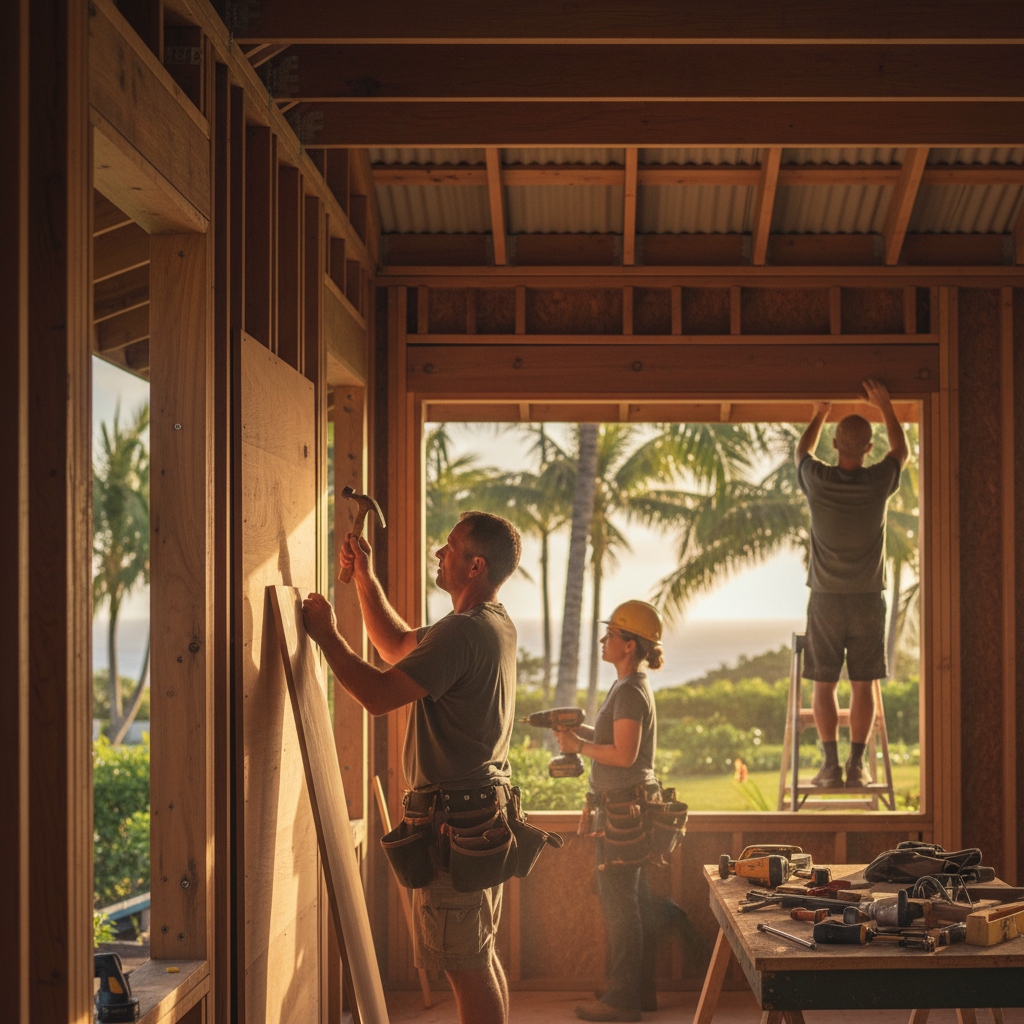
Patience is a virtue in Hawaii construction, especially on the neighbor islands. A realistic timeline for building an ADU in Po’ipu, from our first conversation to you moving in, is between 14 and 22 months. Anyone promising a 6-month build is either using a prefabricated kit with pre-approved plans or isn’t being realistic about the permitting process on Kaua’i.
Here’s a phase-by-phase breakdown of a typical ADU project timeline in 2026:
Phase 1: Design and Planning (2-4 Months)
This is the collaborative stage where we work with you and an architect to design a unit that fits your property, budget, and needs. It involves initial sketches, design development, material selections, and the creation of final construction documents. This phase can move quickly if you have a clear vision, but it’s worth taking the time to get it right. Rushing here leads to expensive changes later.
Phase 2: Permitting with Kaua’i County (6-10 Months)
This is the most variable and often longest phase of the project. Once we submit the completed plans to the Kaua’i County Planning Department, they enter a review queue. The timeline depends entirely on their backlog. In our experience, a straightforward ADU permit can take six months on the fast end, but it’s safer to plan for eight or nine months. If your property is in a Special Management Area (SMA) or has other zoning complexities, this can extend even further. We manage this process, responding to any comments from the plan reviewers to keep things moving as efficiently as possible.
Phase 3: Site Preparation and Foundation (4-6 Weeks)
Once we have the approved permit in hand, physical work can begin. This includes clearing and grading the site, trenching for utilities (water, sewer, electrical), and forming and pouring the concrete foundation. Weather in Po’ipu is generally cooperative, but a few days of heavy rain can cause minor delays here.
Phase 4: Framing and Rough-Ins (8-12 Weeks)
This is when you see your ADU really take shape. The walls go up, the roof structure is built, and windows and doors are installed to make the structure watertight. Following this, plumbers and electricians run all the pipes and wires through the walls, floors, and ceilings. This is a period of intense activity on site.
Phase 5: Exterior and Interior Finishes (10-14 Weeks)
This is the longest construction phase. On the outside, we’ll install siding, roofing, and paint. Inside, insulation and drywall go up, followed by flooring, tile work, cabinet installation, countertop templating and installation, painting, and fixture installation (lights, faucets, toilets). The timeline here is heavily dependent on material availability and shipping schedules.
Phase 6: Final Inspections, Utilities, and Punch List (3-4 Weeks)
After construction is substantially complete, we schedule final inspections with the county inspector for building, electrical, and plumbing. Once those are passed, we can get the new utility meters connected. The final step is the “punch list” walk-through, where we identify and correct any minor cosmetic issues to ensure everything is perfect. After that, we hand you the keys to your new ohana unit.
What Permits Do You Need for ADU Builder in Po’ipu?
Navigating the permitting process is one of the most critical services an ADU builder provides. In Po’ipu, all new construction, including an ohana unit, requires a series of approvals from the Kaua’i County Planning Department and Department of Public Works. The process is meticulous and non-negotiable. Trying to build without permits will result in massive fines, tear-down orders, and a property that’s impossible to insure or sell.
Here’s a rundown of the essential permits and documents we secure for our clients:
- Zoning Verification & Plan Review: Before we even submit for a building permit, we confirm that your property is zoned to allow for an ADU. We check setbacks, lot coverage limitations, and any specific rules for your neighborhood. Kaua’i has its own set of ordinances, sometimes referred to as the local equivalent of Oahu’s famous Bill 7 ADU po’ipu rules, which define size and placement requirements for accessory dwellings.
- Building Permit Application: This is the main application. It requires multiple sets of professionally stamped architectural and structural plans. The plans must show everything from the foundation design and hurricane tie-down schedule to the location of every electrical outlet. The county reviews these plans for compliance with the International Building Code and all local amendments.
- Electrical Permit: A separate permit is required for all electrical work. This is filed by our licensed electrical subcontractor and is reviewed to ensure the system is safe and meets code.
- Plumbing Permit: Similar to the electrical permit, all plumbing work requires its own permit, filed by our licensed plumber. This includes water supply lines, drain-waste-vent (DWV) systems, and gas lines if applicable.
- Wastewater System Clearance: You must prove you have adequate wastewater capacity. If you’re on the county sewer system, this involves a review to ensure the main line can handle the additional load. If you have a septic system, you will likely need a licensed engineer to certify that the existing system can support the extra bedroom and bathroom count, or you may be required to install a new, larger system. This can be a major hidden cost and timeline factor.
- Grading and Grubbing Permit (If Applicable): If your project involves moving a significant amount of earth (typically more than 50 cubic yards on Kaua’i), a separate grading permit is required to ensure proper drainage and erosion control.
While the Honolulu Department of Planning and Permitting (DPP)[1] is a well-known entity on Oahu, it’s critical to remember that the Kaua’i County Planning Department is a completely separate organization with its own staff, forms, and review timelines. As your general contractor, we act as the official agent, managing all submissions, responding to departmental queries, and scheduling the required inspections at each phase of construction. This management is a core part of our service and is essential for keeping the project on track.
Po’ipu-Specific Considerations: Climate, Materials, Regulations
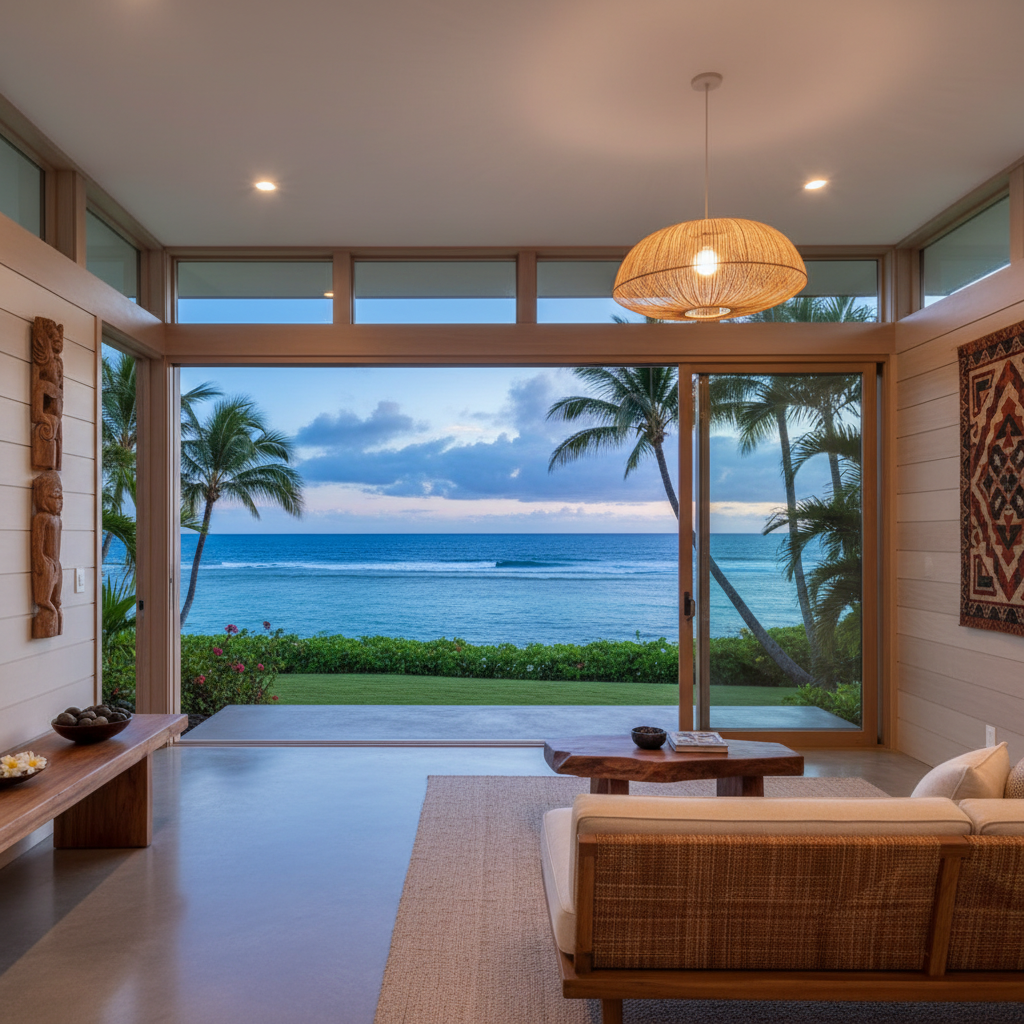
Building in Po’ipu is unlike building anywhere else. The unique combination of intense sun, salt-laden trade winds, and specific local regulations requires a tailored approach. A design that works in a temperate mainland climate or even in a drier part of Hawaii like Kapolei can fail quickly here without the right specifications. As your local ohana unit builder po’ipu, we engineer every project to thrive in this specific environment.
Climate and Material Selection
Po’ipu is on Kaua’i’s South Shore, known for being sunnier and drier than the North Shore. However, it’s still a tropical coastal environment with unique challenges:
- Salt-Air Corrosion: This is the number one enemy of coastal homes. Salt spray is carried on the wind and settles on every surface, accelerating rust and corrosion. To combat this, we mandate the use of Type 316 stainless steel for all exterior fasteners, connectors, and hardware. Standard galvanized metal will show rust within a few years. We also recommend high-performance paint coatings and fiberglass or vinyl window frames instead of aluminum, which can pit and corrode over time. Even the outdoor AC condenser unit needs to be a coastal-rated model or be placed in a protected location.
- UV Radiation and Heat: The sun in Po’ipu is intense. This requires materials that won’t fade, crack, or warp. We often recommend fiber cement siding (like James Hardie) over wood siding, as it holds paint longer and is impervious to termites. For roofing, a light-colored standing seam metal roof not only holds up to the sun but also reflects heat, reducing cooling costs. Dual-pane, Low-E coated windows are a must to keep the interior comfortable without running the AC constantly.
- Hurricane Code Compliance: Since Hurricane Iniki devastated Kaua’i in 1992, the building codes have become incredibly stringent. Every ADU we build is engineered to withstand hurricane-force winds. This involves a continuous load path from the roof to the foundation, using specific hurricane straps, reinforced shear walls, and impact-rated windows and doors if the design calls for them. This is not an area to cut corners.
Logistics and Sourcing
You can’t just run down to a big-box store for specialty materials on Kaua’i. Everything is a logistical puzzle.
- Barge Schedules: Most building materials—from framing lumber to cabinetry to appliances—arrive in Lihue via barge from Oahu or the mainland. A delay at the port can have a domino effect on the construction schedule. We build float time into our schedules and order critical items well in advance to account for this.
- Local vs. Shipped: We prioritize sourcing from local Kaua’i suppliers whenever possible to support the local economy and reduce shipping delays. However, for many specialty finishes or custom items, we have to source from off-island. Our logistics team manages this entire supply chain to ensure materials arrive on time and in good condition.
Local Regulations and Community Rules
Beyond the county building codes, Po’ipu has its own layers of regulation:
- Design Review Committees: Many neighborhoods in Po’ipu, especially resort communities like Po’ipu Kai or Kukui’ula, have their own design review committees with strict aesthetic guidelines. These rules can dictate everything from paint color and roof material to landscaping plant choices. We have extensive experience preparing submission packages for these committees and presenting projects for their approval.
- Shoreline Management Area (SMA): If your property is close to the ocean, it may fall within the SMA. Building in the SMA requires an additional, often lengthy, permit process to ensure the project does not negatively impact the coastal environment.
Successfully building an ADU in Po’ipu means designing for all these factors from day one. It’s a holistic approach that balances aesthetics, budget, and durability against the backdrop of one of the world’s most beautiful but demanding environments.
How to Choose the Right ADU Builder Contractor in Po’ipu
Selecting the right contractor is the single most important decision you’ll make for your ADU project. A great contractor can make the process smooth and deliver a high-quality product, while the wrong one can lead to budget overruns, endless delays, and constant stress. As you look for an adu builder po’ipu, here are the critical steps to take and the questions you must ask.
Step 1: Verify They Are Licensed and Insured
This is non-negotiable. Any contractor you consider must have a valid Hawaii General Contractor license. You can and should verify this yourself using the Hawaii Professional & Vocational Licensing (PVL) search tool.[2] Our license at Warrior Construction is BC-34373. A valid license means the contractor has met the state’s requirements for experience and testing. Additionally, ask for proof of:
- General Liability Insurance: This protects your property from damage caused by the contractor’s operations. A minimum of $1 million per occurrence is standard.
- Workers’ Compensation Insurance: This covers the contractor’s employees if they are injured on your property, protecting you from liability.
Never hire a contractor who cannot provide current certificates for both.
Step 2: Insist on Kaua’i-Specific Experience
Hawaii is not a monolith. A contractor who has only built on Oahu or the Big Island will face a steep learning curve on Kaua’i. You need an ADU contractor po’ipu who has a proven track record on this island. Ask potential builders:
- “Can you show me a portfolio of projects you have completed here on Kaua’i, specifically on the South Shore?” (You can see some of our work here).
- “Who are your primary material suppliers in Lihue?”
- “Which local subcontractors (electricians, plumbers, masons) do you typically work with?”
- “Describe your experience navigating the Kaua’i County Planning Department. What’s the longest permit wait time you’ve experienced?”
Their answers will quickly reveal their level of local knowledge. A contractor with deep Kaua’i roots will have ready answers and established relationships.
Step 3: Review Their Communication and Process
A construction project is a long-term relationship. You need a builder who communicates clearly and has a defined process.
- Clarity of Contract: Ask for a sample contract. Is it detailed? Does it clearly outline the scope of work, payment schedule, change order process, and warranty? Vague contracts are a major red flag.
- Pre-construction Services: A professional builder doesn’t just give you a number. They should offer pre-construction services, including detailed budgeting, value engineering (suggesting cost-saving alternatives), and project scheduling.
- Communication Protocol: How will they keep you updated? Do they use a project management software? Will you have a single point of contact? Regular, scheduled updates are a sign of a well-run company.
Step 4: Check References Thoroughly
Don’t just rely on testimonials on a website. Ask the contractor for a list of 3-4 recent clients, preferably from ADU projects on Kaua’i. When you call them, ask specific questions:
- “Was the project completed on time and on budget?”
- “How did the contractor handle unexpected problems or changes?”
- “How was the communication throughout the project?”
- “Were you happy with the quality of the workmanship and the professionalism of the crew?”
- “Would you hire them again?”
Choosing a builder is about finding a partner you trust. By following these steps, you can vet potential contractors and find a team that has the experience, professionalism, and local knowledge to bring your Po’ipu ADU to life successfully.
Real Po’ipu ADU Builder Project Example
To make this more concrete, let’s walk through a recent project our team completed. It’s a perfect example of a typical Po’ipu ADU build and highlights the real-world challenges and solutions involved.
The Client and the Goal: A couple with a 15,000-square-foot property in a planned community near Po’ipu Beach wanted to build an ohana unit for their aging parents. Their primary goals were accessibility (single-story, no steps, wide doorways), durability against the coastal climate, and a design that would blend seamlessly with their main home and meet the strict requirements of their homeowners’ association.
The Project Scope: A custom-designed 780-square-foot, two-bedroom, one-bathroom ADU with an attached carport. The design featured an open-concept living and kitchen area, an ADA-compliant bathroom with a zero-threshold shower, and a small, covered lanai.
The Numbers and Timeline:
- Initial Budget: $450,000
- Final Cost: $472,000 (The increase was due to a client-approved upgrade to a high-efficiency split AC system and some unforeseen lava rock during excavation that required extra equipment).
- Cost per Square Foot: Approximately $605/sqft.
- Timeline:
- Design & HOA Approval: 3.5 months
- Kaua’i County Permitting: 8 months
- Construction: 7 months
- Total Project Duration: 18.5 months
Po’ipu-Specific Challenges & Our Solutions:
- HOA Design Review: The homeowners’ association had very specific rules about roof pitch, window style, and exterior colors. Our team prepared a detailed submission package, including material samples and 3D renderings, which led to a swift approval at the first review meeting.
- Corrosion-Proofing: Given the property’s proximity to the ocean, we implemented a full coastal build package. This included a standing seam aluminum roof (more corrosion-resistant than steel), fiberglass window frames, Type 316 stainless steel fasteners on all exterior surfaces, and hot-dip galvanized hurricane hardware.
- Red Dirt Management: During excavation and foundation work, we established strict site controls. This included laying down gravel for a temporary construction driveway and using silt fences to prevent red dirt runoff from staining the existing property’s landscaping and the street during rain showers.
- Supply Chain Snags: The custom, ADA-compliant shower fixtures had a 12-week lead time from the mainland. We ordered them the day the foundation was poured, ensuring they arrived on island and were ready for the plumbers exactly when needed, preventing a potential month-long delay in the finishing stages.
The Outcome: The family now has a beautiful, functional, and durable home for their parents that perfectly matches the main house. The ADU not only provides a safe and comfortable living space but has also significantly increased the property’s overall value. This project is a testament to the importance of meticulous planning, local expertise, and proactive problem-solving when building in a place as special as Po’ipu.
What this means for Hawaii homeowners
Building an ADU in Po’ipu is one of the smartest investments you can make in your property, but it’s a marathon, not a sprint. Success hinges on embracing the realities of construction on Kaua’i from the very beginning. Here’s what you need to focus on:
- Budget Realistically for Logistics. Don’t use Oahu or mainland cost estimators. Materials, shipping, and skilled labor simply cost more on Kaua’i. Your budget should reflect a 15-25% premium. Factor in a 10% contingency fund for the unexpected—it will almost certainly be needed.
- Start the Permit Process Immediately. The 6 to 10-month wait for a permit from Kaua’i County is the biggest hurdle. The moment you decide to move forward, the first step is to engage an architect and builder to get your plans drafted and into the county’s queue. The sooner you’re in line, the sooner you can break ground.
- Prioritize Durability Over Flash. The Po’ipu climate is unforgiving. Spending extra on stainless steel fasteners, high-quality paint, and fiberglass windows might not be as exciting as choosing quartz countertops, but it will save you tens of thousands of dollars in repairs and maintenance down the road. Build for the environment you’re in, not the one you see in a magazine.
- Hire a True Kaua’i Builder. Your project’s success depends on a contractor who has existing relationships with the Kaua’i County inspectors, local suppliers, and reliable subcontractors. An off-island builder will be learning on your dime. Vet your contractor’s local experience rigorously. Ask for Kaua’i-specific project addresses and references.
An ADU can provide invaluable space for ohana or a steady stream of rental income in a high-demand area. By approaching the project with clear eyes, a solid budget, and the right local team, you can navigate the complexities and create a lasting asset for your family.
Frequently Asked Questions About ADU Builder in Po’ipu
What are the size limits for an ADU in Po’ipu?
Under Kaua’i County ordinance, ADUs are generally limited to a maximum of 800 square feet of living area. This does not include garages, carports, or lanais. However, the exact size allowed can also be constrained by your lot size and the maximum allowable lot coverage in your specific zoning district. We always perform a thorough zoning check before beginning design.
How much value does an ADU add to a property in Po’ipu?
While it varies, an ADU in a high-demand visitor area like Po’ipu can add significant value. Appraisers often see a 1.5x to 2x return on investment, meaning a $450,000 ADU could increase your property value by $675,000 to $900,000. It also provides a potential rental income stream, which further enhances its value proposition to future buyers.
Can I build a two-story ADU on Kaua’i?
Yes, two-story ADUs are possible in many areas, but they are subject to height restrictions for your zoning district (typically 25 or 30 feet). Building a two-story unit can be a great way to maximize space on a smaller lot or capture ocean views. However, the engineering and construction costs will be higher than for a single-story, slab-on-grade unit.
Do I need a separate utility meter for my Po’ipu ohana unit?
Yes, Kaua’i County requires a separate electric meter for a permitted ADU. A separate water meter is also typically required. This ensures the unit is billed correctly for its utility usage and is treated as a distinct dwelling unit by the county. Sub-metering from the main house is generally not permitted for a new ADU.
What’s the main difference between building an ADU on Kaua’i vs. Oahu?
The two biggest differences are cost and time. Material and labor costs on Kaua’i run 15-25% higher than on Oahu due to shipping and a smaller labor pool. Secondly, the permitting process with the Kaua’i County Planning Department, while thorough, often has a longer backlog than Honolulu’s DPP, leading to a longer pre-construction phase.
What is the Kaua’i equivalent of Oahu’s Bill 7 for ADUs?
While Oahu’s “Bill 7” is a specific piece of legislation, Kaua’i has its own set of ordinances under the Comprehensive Zoning Ordinance (CZO) that govern ADUs, often called “Additional Dwelling Units.” These rules were updated to encourage more housing and specify requirements for size, setbacks, parking, and ownership. As your contractor, we stay current on all amendments to ensure your project is fully compliant.
Can I act as my own general contractor to save money?
While Hawaii has an owner-builder exemption, we strongly advise against it for a project of this complexity, especially on a neighbor island. Managing the logistics, scheduling subcontractors on Kaua’i, navigating the permitting and inspection process, and ensuring compliance with hurricane codes requires full-time, professional expertise. Mistakes made by an inexperienced owner-builder often cost far more to fix than the money saved on a contractor’s fee.
Start Your Po’ipu ADU Project with Confidence
Building an ohana unit in Po’ipu is a journey with unique challenges and incredible rewards. Having the right partner to guide you through the process is essential. At Warrior Construction, we combine decades of statewide experience with deep, on-the-ground knowledge of the Kaua’i construction environment. From initial design and permitting to handing you the keys, our team is committed to a transparent, professional, and high-quality build.
If you’re ready to explore the potential of an ADU on your Po’ipu property, we’re here to help. Learn more about our ADU & Ohana Unit construction services or contact us today for a no-obligation consultation to discuss your vision.